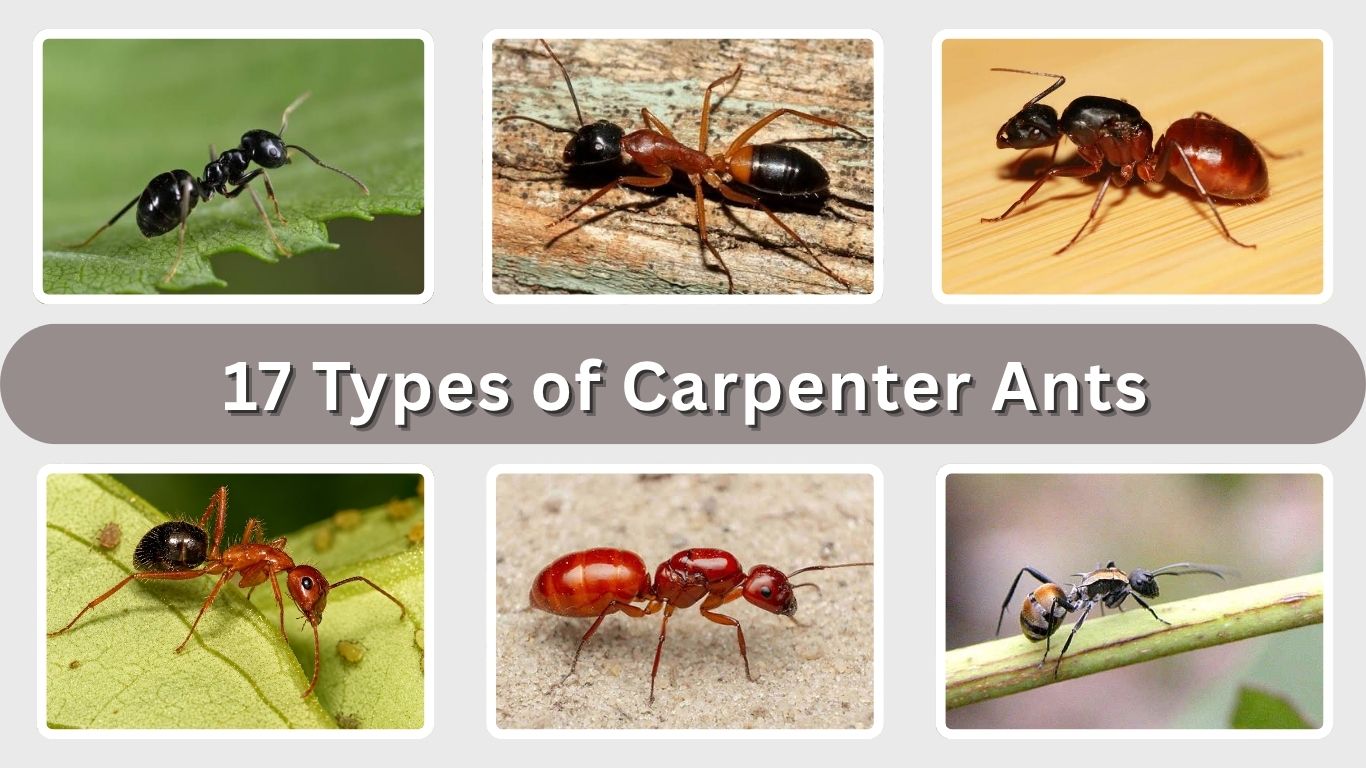
Carpenter ants are large wood-nesting ants found in forests, gardens, yards, and sometimes homes. They do not eat wood like termites, but they tunnel through soft, damp, or decaying wood to build nests. Different types vary in color, size, and habitat, from black carpenter ants to reddish, brown, and two-colored species. Knowing these carpenter ants helps with basic identification and pest awareness.
1. Black Carpenter Ant
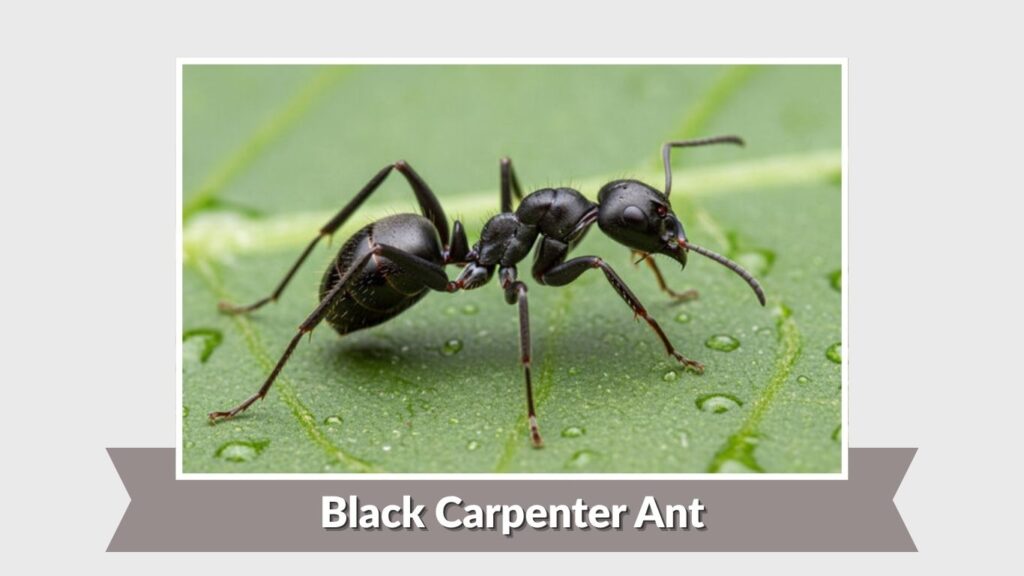
The black carpenter ant is one of the most recognized carpenter ant species in North America. It is known for its large body, dark color, and habit of nesting in moist or damaged wood. Unlike termites, it does not eat wood, but it tunnels through it to build galleries for the colony.
Identification
- Large ant, usually about 6–13 mm long
- Shiny black body with a rounded thorax
- Bent antennae and strong mandibles
- Workers vary in size within the same colony
- Winged ants may appear during mating season
Habitat and Distribution
Black carpenter ants are commonly found in forests, yards, wooden structures, and homes with damp wood problems. They often nest in tree stumps, logs, fence posts, wall voids, and roof areas where moisture has softened the wood. In homes, their presence may indicate leaks, poor ventilation, or decaying wood.
Behavior and Diet
These ants are active foragers, especially at night. They eat sweets, honeydew, dead insects, meats, grease, and household food scraps. Outdoors, they help break down dead wood, but indoors they can become a serious pest when colonies grow inside walls or structural wood.
Life Cycle
A black carpenter ant colony begins when a fertilized queen finds a safe nesting site. She lays eggs that develop into larvae, pupae, and adult workers. Mature colonies may produce winged males and queens, which leave the nest to mate and start new colonies.
2. Florida Carpenter Ant
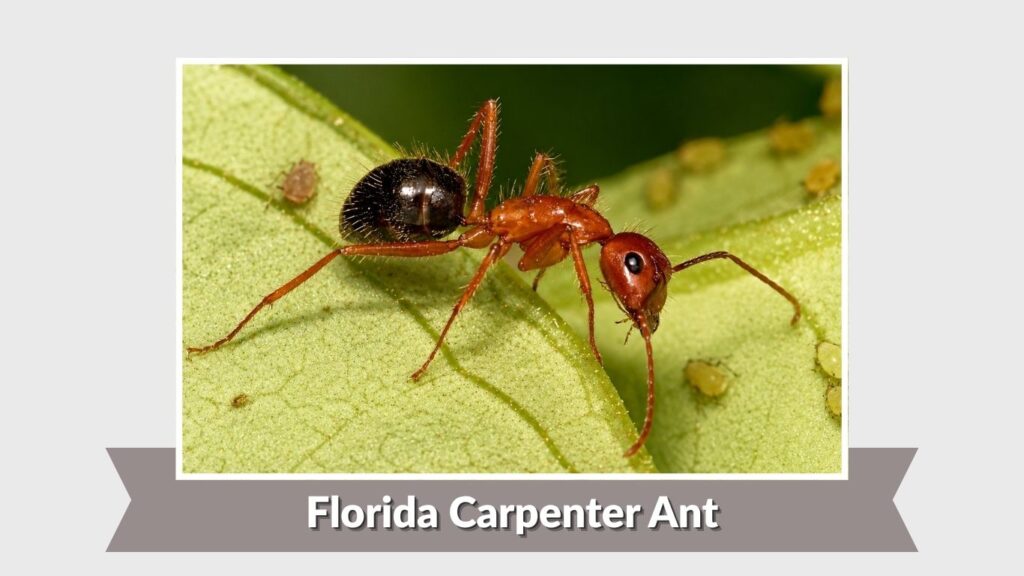
The Florida carpenter ant is a large, colorful carpenter ant species often found in warm and humid areas. It is common around homes, gardens, trees, and decaying wood. Although it can enter houses, it usually nests in soft, moist, or damaged materials rather than dry, solid wood.
Identification
- Large worker ants with reddish-brown and black coloring
- Smooth, rounded thorax when viewed from the side
- Workers vary in size within the same colony
- Winged reproductive ants may appear during warm months
- Often confused with other large household ants
Habitat and Distribution
Florida carpenter ants are most common in Florida and nearby southeastern regions. They prefer warm, humid environments with plenty of moisture. Outdoors, they nest in tree cavities, rotting logs, mulch, and old wood. Indoors, they may settle near windows, attics, wall voids, or areas with water damage.
Behavior and Diet
These ants are active foragers and often search for food at night. They feed on sweet liquids, honeydew, insects, meats, grease, and leftover human food. They do not eat wood, but their tunneling can weaken already damaged materials over time.
Life Cycle
A colony begins when a fertilized queen starts a small nest and lays eggs. The eggs hatch into larvae, then develop into pupae and adult workers. As the colony grows, it may produce winged males and queens that leave to mate and form new colonies.
3. Red Carpenter Ant
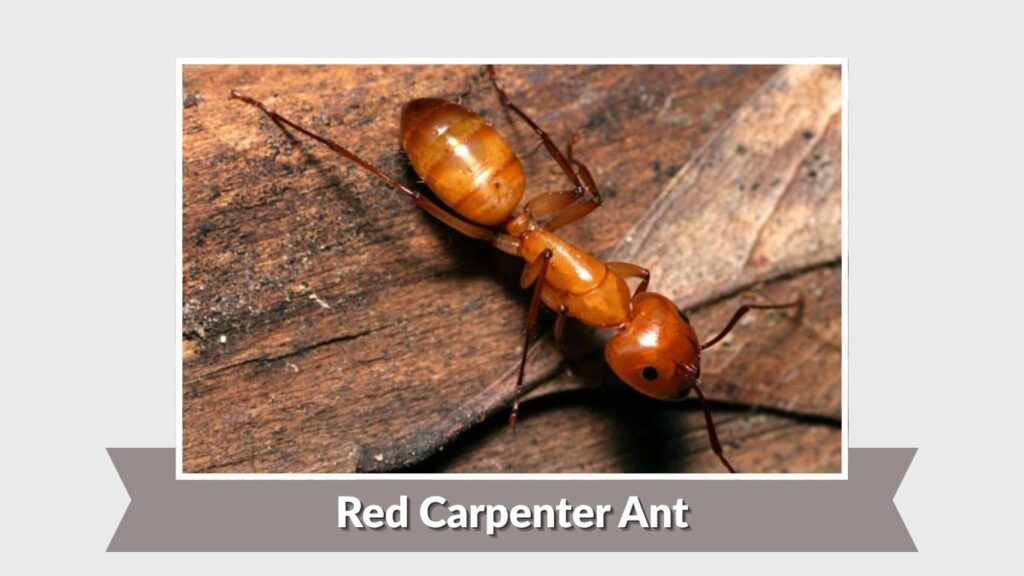
The red carpenter ant is known for its reddish body color and strong nesting behavior in wood. It is usually found outdoors but can become a household pest when it enters damp wooden areas. Like other carpenter ants, it excavates wood for nesting but does not consume it like termites.
Identification
- Medium to large ant with red or reddish-brown body parts
- Bent antennae and narrow waist
- Strong jaws used for digging galleries
- Workers may appear in different sizes
- Winged forms may be seen during breeding season
Habitat and Distribution
Red carpenter ants often live in forests, gardens, yards, and wooded areas. They nest in dead trees, stumps, fallen branches, and moist wooden structures. Around homes, they may be found near decks, porches, window frames, or places where wood has been softened by moisture.
Behavior and Diet
These ants usually forage for food outside and may enter homes looking for sweets or protein. Their diet includes honeydew, small insects, plant juices, meat, grease, and food crumbs. They are most active during warm weather and may travel long distances from the nest.
Life Cycle
The life cycle starts with a queen that establishes a colony in a protected nesting site. Eggs hatch into larvae, which are cared for by workers. After pupation, adult ants emerge and help expand the colony. Mature nests can produce winged ants for reproduction.
4. Pennsylvania Carpenter Ant
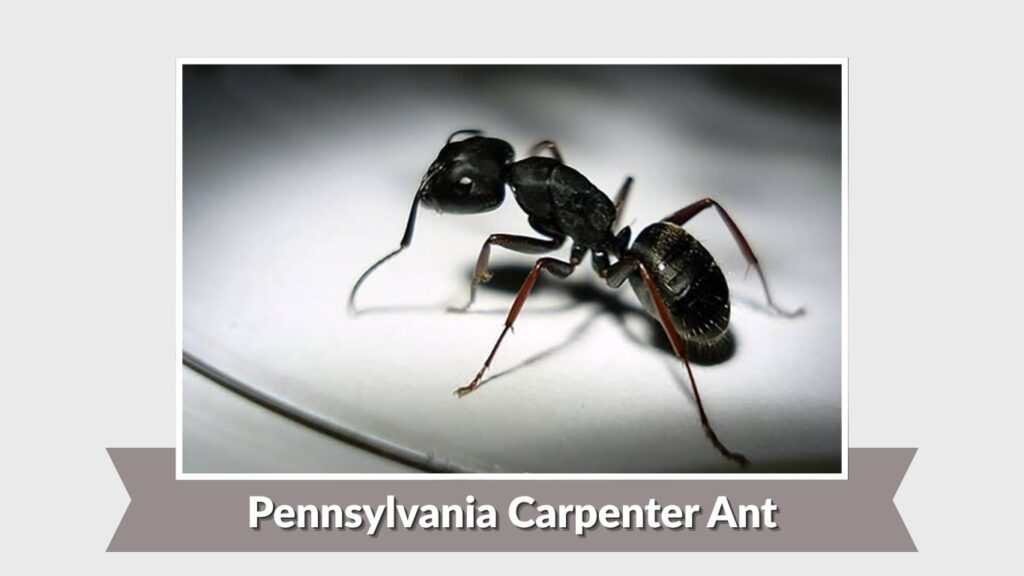
The Pennsylvania carpenter ant is a well-known black carpenter ant species found in many parts of the eastern United States. It is one of the most common carpenter ants found near homes. Its presence indoors often suggests moisture-damaged wood or nearby outdoor colonies.
Identification
- Large black ant with a shiny body
- Workers often measure around 6–13 mm long
- Rounded upper thorax without sharp bumps
- Single node between the thorax and abdomen
- Winged ants are larger and may appear indoors
Habitat and Distribution
Pennsylvania carpenter ants live in forests, woodlots, yards, and buildings. They commonly nest in rotting logs, tree hollows, stumps, and damp structural wood. In houses, they may be found around bathrooms, kitchens, attics, crawl spaces, and window frames where moisture is present.
Behavior and Diet
This species forages mostly at night and follows trails between food sources and nests. It eats honeydew, insects, sweets, meats, pet food, and grease. Outdoors, it plays a useful role in breaking down decaying wood, but indoors it can damage wooden structures by creating tunnels.
Life Cycle
A fertilized queen starts the colony by laying eggs in a small nesting chamber. Workers develop through egg, larva, pupa, and adult stages. Over time, the colony grows and may produce winged males and queens that leave the nest during mating flights.
5. Western Carpenter Ant
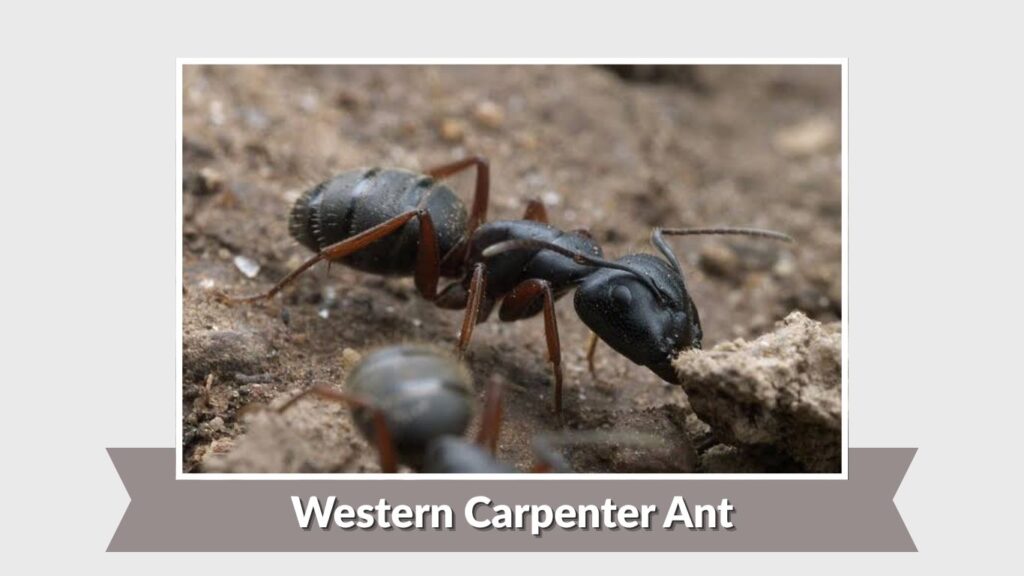
The western carpenter ant is a large carpenter ant species found in western North America. It is commonly seen in forests, homes, and wooden landscapes. This ant prefers moist or decaying wood for nesting and can become a problem when colonies develop inside buildings.
Identification
- Large ant, usually black or dark brown
- Smooth, evenly rounded thorax
- Workers can vary greatly in size
- Strong mandibles for excavating wood
- Winged reproductive ants may appear seasonally
Habitat and Distribution
Western carpenter ants are found across many western regions, especially in wooded areas. They nest in logs, dead trees, stumps, utility poles, and damp wooden structures. Around homes, they may use decks, siding, crawl spaces, and wall voids if moisture-damaged wood is available.
Behavior and Diet
These ants are mainly nocturnal and often forage after dark. They feed on honeydew, plant sap, dead insects, sweets, proteins, and greasy foods. Although they do not eat wood, their nesting galleries can expand over time and cause structural concerns.
Life Cycle
The colony begins with a queen that lays eggs in a protected site. Larvae hatch and are fed by the queen or workers. After pupation, adult workers emerge and support the colony. Mature colonies produce winged ants that leave during mating flights.
6. Modoc Carpenter Ant
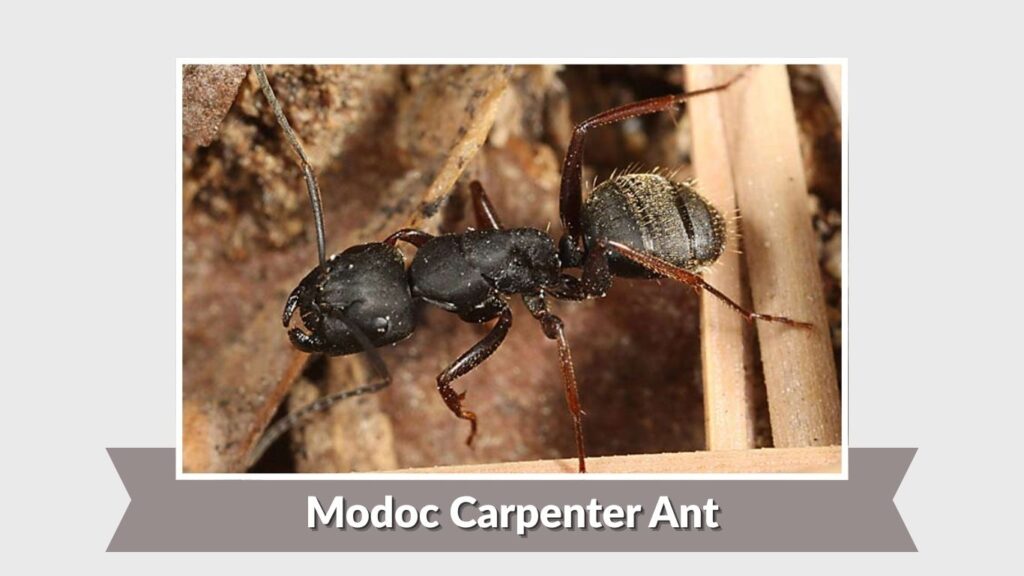
The Modoc carpenter ant is a dark-colored carpenter ant often found in western forests and wooded neighborhoods. It is closely associated with dead or decaying wood. When it enters houses, it may indicate hidden moisture problems or nearby nesting sites in damaged wood.
Identification
- Dark brown to black body color
- Large workers with strong jaws
- Rounded thorax and narrow waist
- Different worker sizes within one colony
- Winged males and queens may appear in spring or summer
Habitat and Distribution
Modoc carpenter ants are common in western North America, especially in forested areas. They nest in logs, stumps, tree cavities, lumber, and sometimes buildings. In homes, they are often linked to damp crawl spaces, leaking roofs, wet insulation, or wooden areas affected by decay.
Behavior and Diet
This species forages for sweets, honeydew, insects, meats, and household scraps. Workers may travel in visible trails from nests to feeding areas. Outdoors, they help decompose dead wood, but indoors their tunneling can enlarge damaged spaces and create long-term pest issues.
Life Cycle
A new colony starts when a mated queen finds a suitable nesting place. She lays eggs that develop into larvae and pupae before becoming adult workers. As the colony matures, it can create satellite nests and later produce winged reproductive ants.
7. Nearctic Carpenter Ant
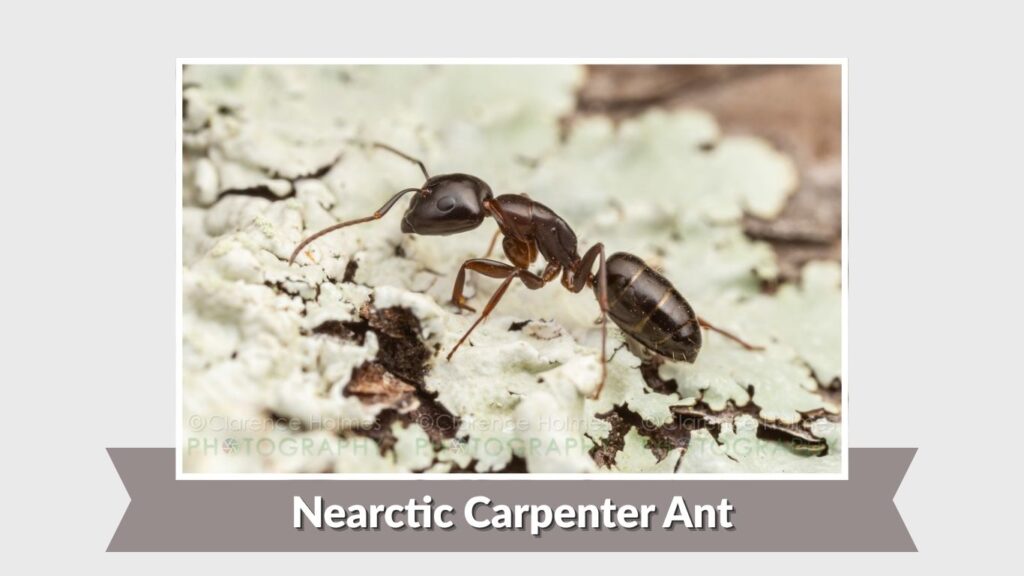
The Nearctic carpenter ant is a wood-nesting ant found in parts of North America. It usually lives outdoors in natural wooden shelters, but it may move close to homes when suitable nesting spots and food sources are available. Like other carpenter ants, it makes tunnels in wood but does not eat the wood.
Identification
- Medium to large carpenter ant
- Dark body, often black or brownish-black
- Bent antennae and narrow waist
- Rounded thorax when viewed from the side
- Workers may appear in different sizes
Habitat and Distribution
Nearctic carpenter ants are mostly associated with woodland areas, gardens, and places where old wood is present. They may nest in logs, tree stumps, hollow branches, fence posts, and damp wooden materials. Around homes, they are more likely to appear where moisture has weakened wood.
Behavior and Diet
These ants forage for both sweet and protein-rich foods. They may feed on honeydew, small insects, plant fluids, grease, meat, and crumbs. Workers often travel along trails and can become noticeable when they search indoors for food during warm months.
Life Cycle
A new colony begins with a mated queen that chooses a protected nesting site. She lays eggs that hatch into larvae, which later become pupae and adults. As the colony grows, workers expand the nest and care for young ants until reproductive ants are produced.
8. Smaller Carpenter Ant
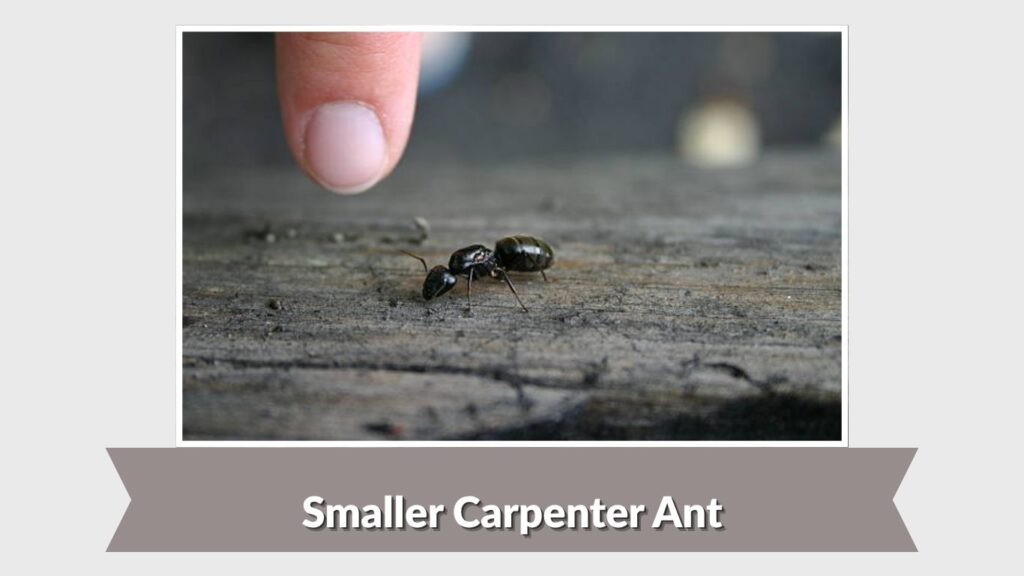
The smaller carpenter ant is not as large as some well-known carpenter ant species, but it can still form active colonies in wood. It often nests in soft, decaying, or moisture-damaged materials. Because of its size, it may be overlooked until workers are seen moving in trails.
Identification
- Smaller than many common carpenter ants
- Body color may be dark brown, black, or reddish-brown
- Rounded thorax and elbowed antennae
- Narrow waist with a single node
- Workers may vary slightly in size
Habitat and Distribution
Smaller carpenter ants are often found in forests, yards, gardens, and wooded landscapes. Their nests may be located in rotting logs, tree bark, old stumps, wooden posts, or damp structures. Indoors, they may use wall voids, window frames, or areas affected by leaks.
Behavior and Diet
This species searches for food both outdoors and indoors. It feeds on sweet liquids, honeydew, dead insects, meats, oils, and leftover food. Although it does not consume wood, its tunneling can make already damaged wood weaker over time.
Life Cycle
The queen starts the colony after mating and finding a safe wooden space. Eggs hatch into larvae, and workers care for them as they grow. After the pupal stage, adult workers emerge and begin foraging, nest cleaning, and expanding the colony.
9. Hercules Carpenter Ant
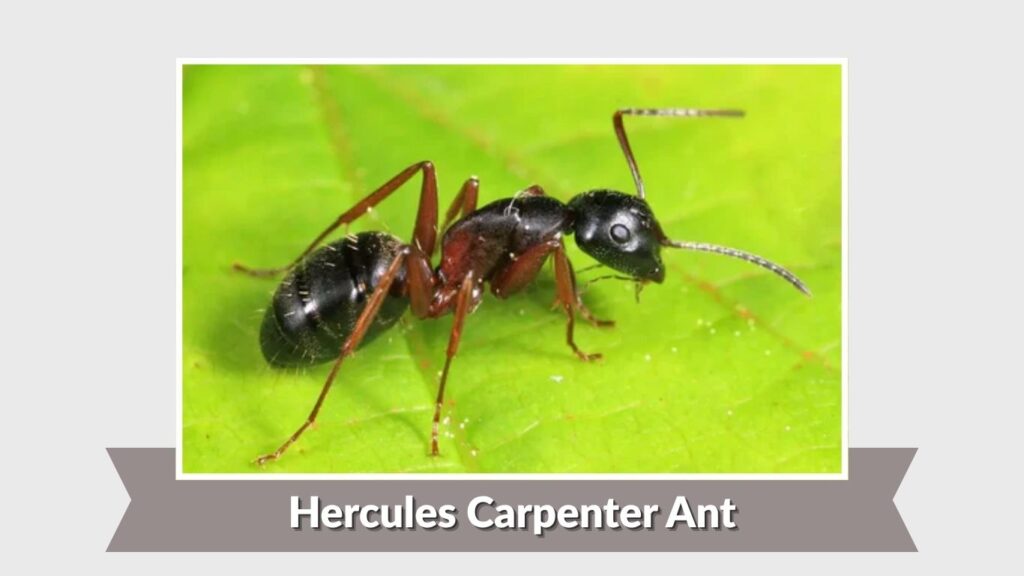
The Hercules carpenter ant is known for its large size and strong appearance. It is mostly connected with wooded habitats where dead trees and decaying wood provide nesting space. Its name reflects its robust body, but its behavior is similar to other carpenter ants.
Identification
- Large, strong-bodied carpenter ant
- Usually dark brown to black in color
- Powerful mandibles for cutting wood fibers
- Smooth, rounded upper body profile
- Winged adults may appear during mating season
Habitat and Distribution
Hercules carpenter ants usually live in forests, woodland edges, and areas with old trees. They prefer dead trunks, stumps, logs, and softened wood for nesting. If they appear near buildings, they may be using damp wood, old lumber, or hidden wooden voids as shelter.
Behavior and Diet
These ants are active foragers and often search for food away from the nest. Their diet includes honeydew, insects, plant juices, fruit, sweets, grease, and animal-based foods. They play a useful role outdoors by helping break down dead wood in natural habitats.
Life Cycle
A mated queen establishes the first nesting chamber and lays eggs. The young pass through egg, larva, pupa, and adult stages. Workers then expand the nest and collect food. Mature colonies may produce winged males and queens for reproduction.
10. Golden-Tailed Carpenter Ant
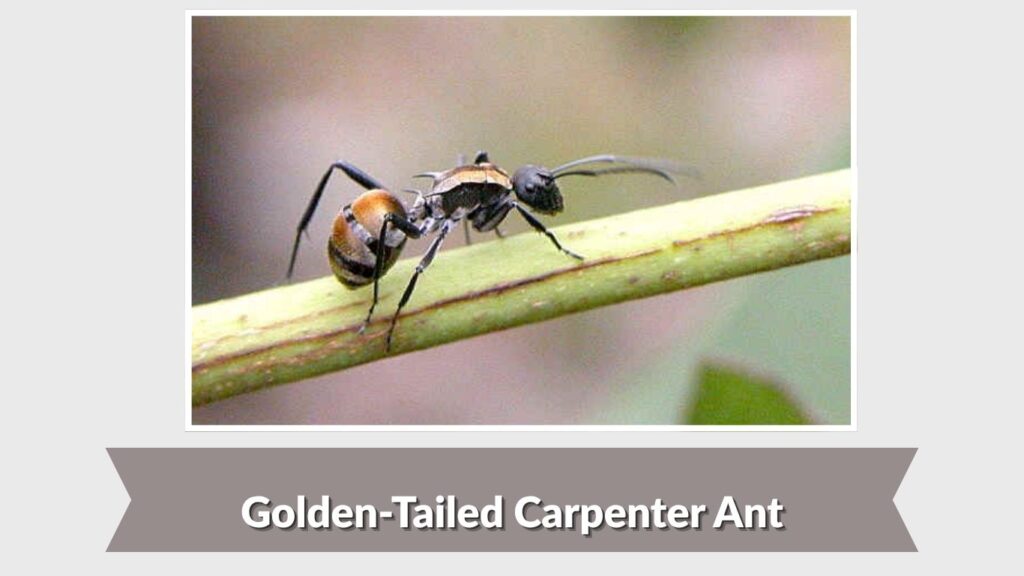
The golden-tailed carpenter ant is recognized for its attractive body markings and carpenter-ant nesting habits. It is usually found in natural habitats where wood, trees, and plant materials provide shelter. Its appearance may vary, but the lighter rear coloring helps make it stand out.
Identification
- Carpenter ant with dark body and lighter golden-toned abdomen or rear area
- Medium to large worker size
- Bent antennae and strong jaws
- Smooth thorax without sharp spines
- Winged forms may appear when colonies mature
Habitat and Distribution
Golden-tailed carpenter ants are often linked with wooded areas, gardens, and warm outdoor environments. They may nest in dead branches, tree cavities, logs, and old wooden materials. Near homes, they may be found around damp wood, mulch, fences, or stored timber.
Behavior and Diet
These ants forage for sweet and protein-based foods. They may collect honeydew from plant-feeding insects and also eat dead insects, fruit juices, grease, and food scraps. Workers may travel in trails, especially during warmer parts of the year.
Life Cycle
The colony starts when a fertilized queen finds a protected nesting space. Eggs develop into larvae, then pupae, and finally adult workers. Once the colony becomes mature, it can produce winged reproductive ants that leave to mate and begin new colonies.
11. Banded Sugar Ant
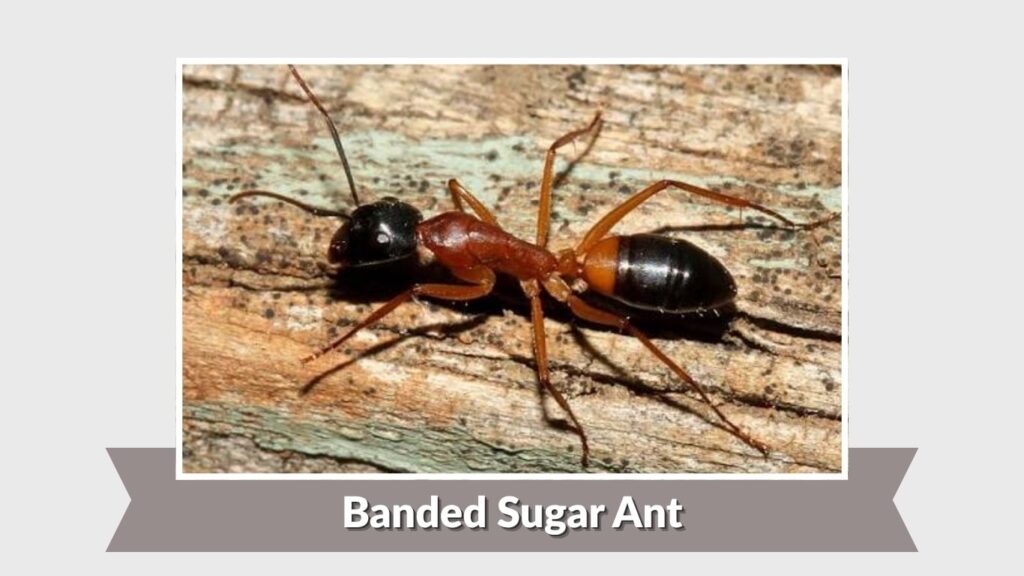
The banded sugar ant is a well-known carpenter ant relative from Australia. It is famous for its strong foraging behavior and attraction to sweet foods. While it often lives outdoors, it can enter homes in search of sugar, crumbs, and other available food sources.
Identification
- Large ant with a dark body and orange-brown banding
- Noticeable golden or rusty band around the abdomen
- Strong legs and active movement
- Bent antennae and narrow waist
- Workers are usually seen foraging at night
Habitat and Distribution
Banded sugar ants are common in Australia and live in open woodlands, gardens, lawns, and urban areas. They usually nest in soil, under rocks, near roots, or around wooden materials. They may enter houses through cracks, gaps, doors, and windows while searching for food.
Behavior and Diet
This ant is strongly attracted to sweet substances, including nectar, honeydew, and sugary household foods. It also eats insects and other protein sources. Workers often forage after dark and may create visible trails between the nest and food.
Life Cycle
A colony begins when a queen lays eggs in a protected nest. Larvae hatch and are cared for by workers. They later become pupae and adult ants. Mature colonies produce reproductive males and queens, which leave the nest during mating flights.
12. Giant Carpenter Ant
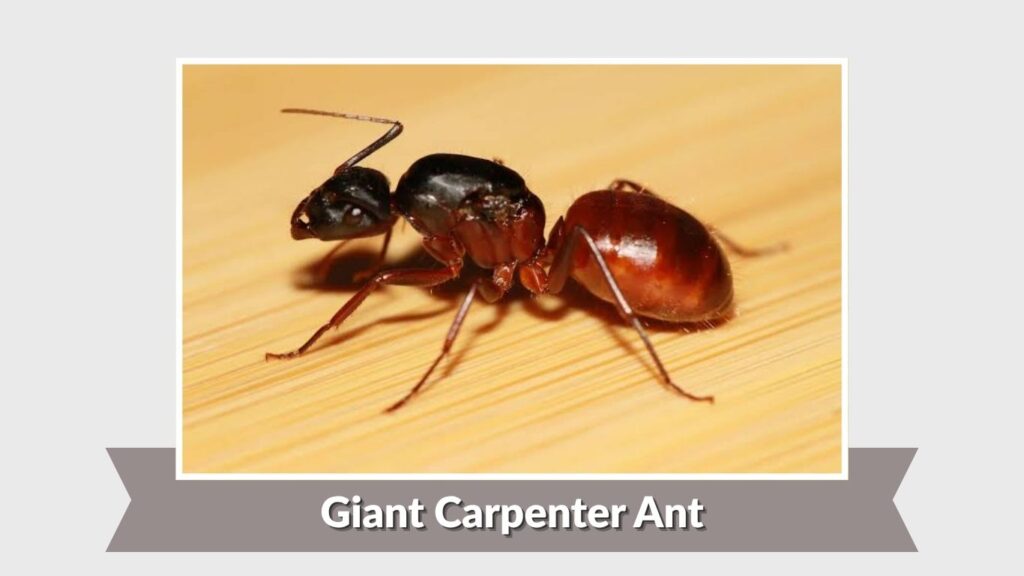
The giant carpenter ant is a large wood-nesting ant known for its strong body and active foraging behavior. It usually lives in forests, gardens, and places with dead or damp wood. When it appears indoors, it may suggest moisture-damaged wood or a nearby outdoor colony.
Identification
- Large ant with a strong, heavy-looking body
- Usually black, dark brown, or reddish-black
- Bent antennae and powerful jaws
- Smooth, rounded thorax from the side
- Workers may appear in different sizes
Habitat and Distribution
Giant carpenter ants are commonly found in wooded areas, tree hollows, logs, stumps, and old wooden materials. Around homes, they may nest in decks, fences, porches, roof edges, or wall spaces where wood has been softened by leaks or decay.
Behavior and Diet
These ants forage mostly for sweet and protein-rich foods. They eat honeydew, dead insects, fruit juices, grease, meat, pet food, and crumbs. They do not eat wood, but they carve tunnels inside it to create nesting galleries for the growing colony.
Life Cycle
A mated queen begins the colony in a protected nesting site. She lays eggs that hatch into larvae, then become pupae and adult workers. As the colony expands, workers gather food, care for young, and enlarge the nest before winged ants are produced.
13. Jet-Black Carpenter Ant
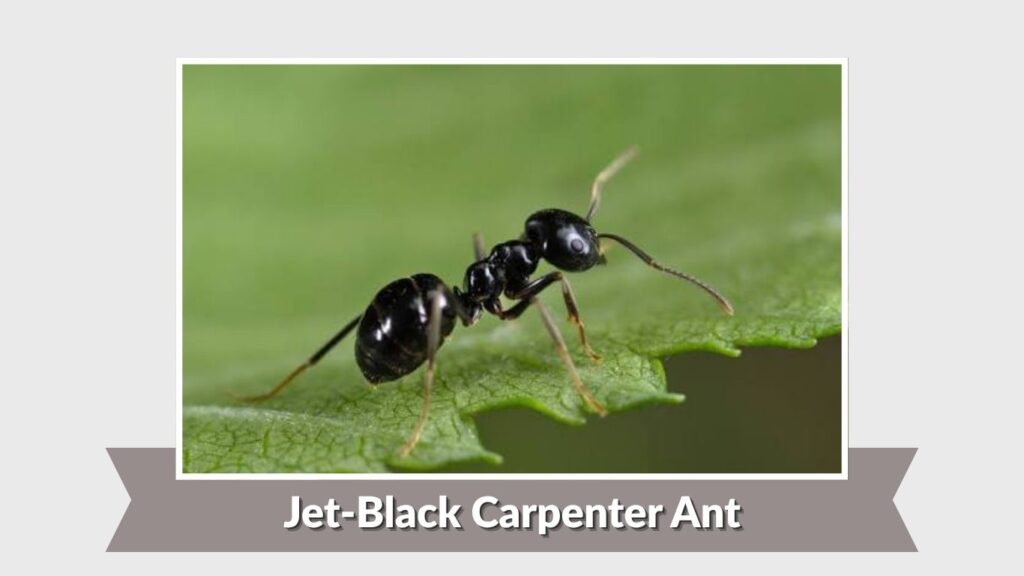
The jet-black carpenter ant is recognized by its deep black color and polished body. It is often found around wooden habitats where moisture, decay, and shelter are available. Although it is useful outdoors in breaking down old wood, it can become a pest inside buildings.
Identification
- Shiny jet-black body
- Medium to large worker size
- Rounded thorax and narrow waist
- Elbowed antennae
- Winged adults may appear during mating season
Habitat and Distribution
Jet-black carpenter ants often nest in dead trees, rotten logs, fence posts, and damp wooden structures. They may move into homes through cracks, utility lines, or tree branches touching the roof. Indoors, they are usually linked with wet wood near windows, bathrooms, kitchens, or attics.
Behavior and Diet
This ant usually forages at night and follows trails to food sources. It feeds on honeydew, sweets, insects, meat, grease, and household leftovers. Workers may travel far from the nest, so seeing ants indoors does not always mean the main colony is inside.
Life Cycle
The colony starts when a fertilized queen finds a safe wood cavity. She lays eggs, which develop into larvae, pupae, and adult workers. Mature colonies can create satellite nests and produce winged males and queens for reproduction.
14. Brown Carpenter Ant
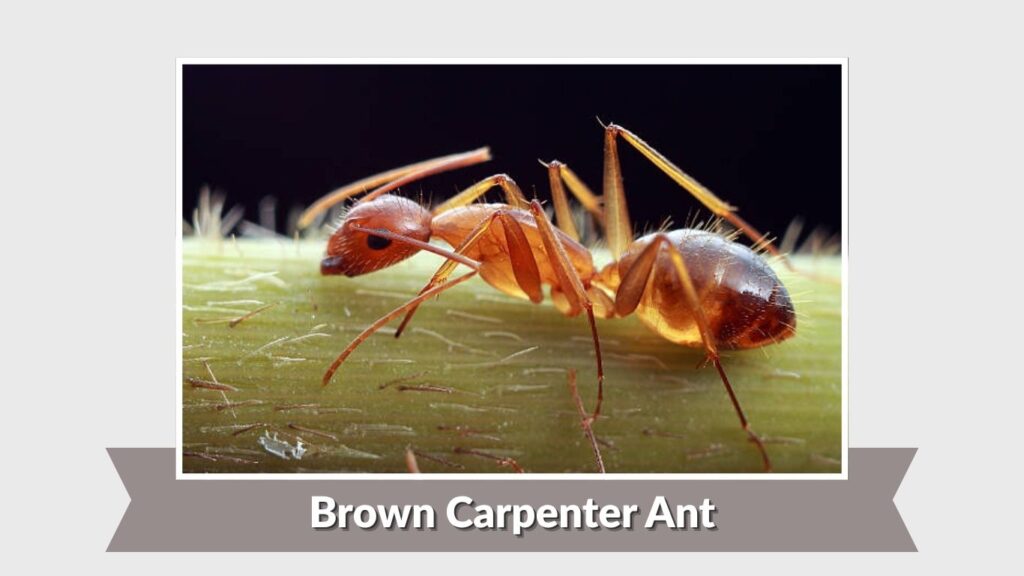
The brown carpenter ant has a darker brown body and the same wood-excavating habits seen in many carpenter ant species. It is commonly found in outdoor wooden materials but may enter houses when moisture damage creates good nesting areas.
Identification
- Brown to dark brown body color
- Medium to large worker ants
- Smooth, curved thorax
- Strong mandibles for digging galleries
- Single node between the body sections
Habitat and Distribution
Brown carpenter ants prefer areas with decaying wood, soft tree cavities, old logs, and damp wooden structures. They may be found in gardens, forests, sheds, fence posts, and firewood piles. In homes, they may nest behind walls, under floors, or near leaking pipes.
Behavior and Diet
These ants search for food along trails and often become more active in warm weather. Their diet includes honeydew, small insects, sweets, grease, meat, and food scraps. They can enter kitchens, pantries, and pet feeding areas when easy food is available.
Life Cycle
A queen begins the colony after mating and choosing a protected nesting site. Eggs hatch into larvae that are fed until they pupate. Adult workers emerge and begin foraging, nest maintenance, and colony care. Mature nests later produce winged reproductive ants.
15. Two-Colored Carpenter Ant
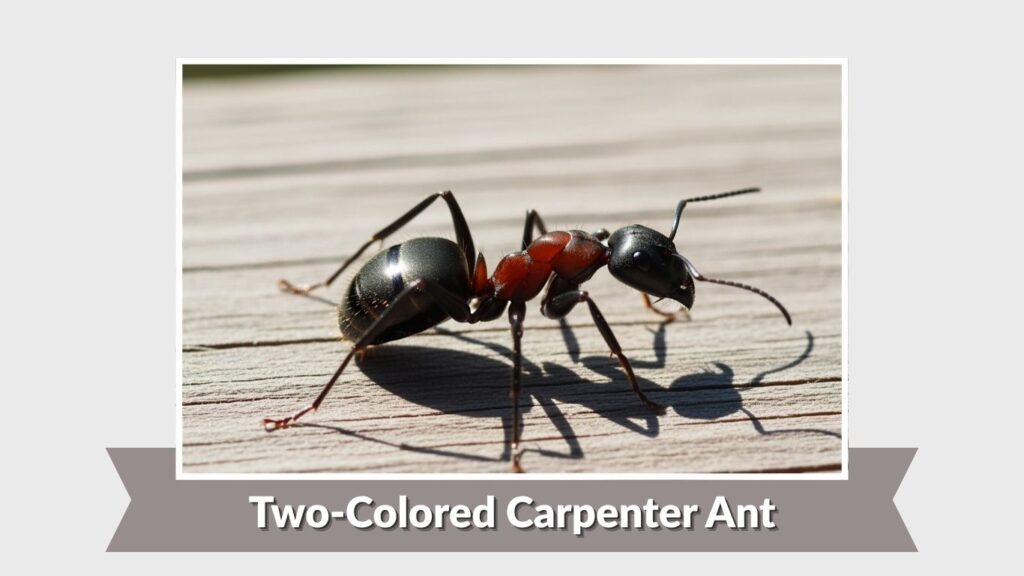
The two-colored carpenter ant is known for having two noticeable body colors, often with reddish or brown sections mixed with black. Its attractive appearance can make it easier to recognize than plain dark carpenter ants. It still has the same wood-nesting behavior.
Identification
- Body usually shows two colors, such as red and black
- Medium to large worker size
- Smooth, rounded thorax
- Elbowed antennae and narrow waist
- Workers may vary in size within the colony
Habitat and Distribution
Two-colored carpenter ants are usually found in forests, yards, gardens, and wooden landscapes. They nest in logs, stumps, tree cavities, old branches, and moisture-softened wood. Around buildings, they may use porches, window frames, roof edges, or damp wall spaces.
Behavior and Diet
This species forages for sweet liquids and protein-based foods. It may feed on honeydew, insects, nectar, fruit, meat, grease, and crumbs. Workers often travel in trails and may enter homes when outdoor food becomes limited or indoor food is easy to access.
Life Cycle
The life cycle begins when a mated queen starts a nest in a safe wooden space. Eggs hatch into larvae and later become pupae. Adult workers then care for the queen, gather food, and expand the colony until reproductive ants are produced.
16. Chestnut Carpenter Ant
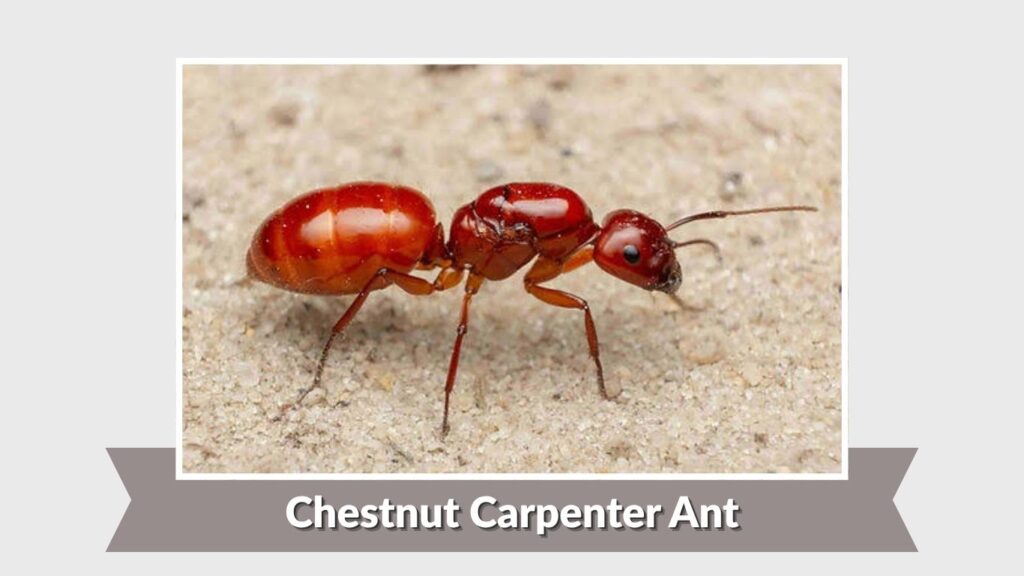
The chestnut carpenter ant is named for its warm reddish-brown or chestnut-colored appearance. It is often associated with trees, logs, and old wood. While it mostly lives outdoors, it can become a concern when it nests in damp parts of a home.
Identification
- Chestnut, reddish-brown, or brown body color
- Medium to large carpenter ant
- Rounded thorax without sharp projections
- Strong jaws and bent antennae
- Winged forms may appear in mature colonies
Habitat and Distribution
Chestnut carpenter ants live in wooded areas, gardens, parks, and places with old trees. They nest in hollow branches, fallen logs, stumps, and soft wooden materials. Near homes, they may be found around damp siding, wooden steps, decks, or stored firewood.
Behavior and Diet
These ants are active foragers and may search for food during evening or nighttime hours. They eat honeydew, nectar, dead insects, sugary foods, grease, and protein-rich scraps. Outdoors, they help recycle decaying wood, but indoors they may create unwanted tunnels.
Life Cycle
A fertilized queen selects a protected nesting space and lays the first eggs. The young pass through larval and pupal stages before becoming adult workers. As the colony grows, workers maintain the nest and care for new brood until winged ants develop.
17. Ashy Carpenter Ant
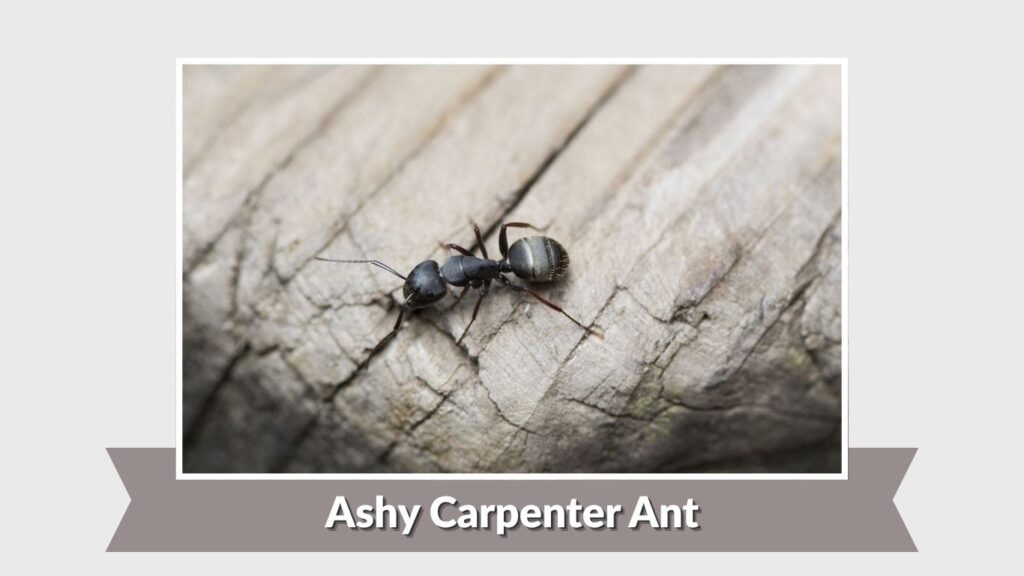
The ashy carpenter ant is a darker carpenter ant that may have a dull grayish or ash-toned look. It is usually found in natural wooden habitats, but it may come near houses where old wood, moisture, and food sources are available.
Identification
- Dark body with a dull gray or ashy tone
- Medium to large workers
- Smooth, rounded thorax
- Elbowed antennae and strong jaws
- Workers may vary in size
Habitat and Distribution
Ashy carpenter ants often nest in logs, stumps, dead trees, wooden debris, and damp structural wood. They are more likely to appear around homes with moisture issues, old lumber, mulch, or firewood stored close to the building.
Behavior and Diet
This ant searches for sweet and protein-based foods, including honeydew, insects, plant juices, grease, meat, and crumbs. Workers may forage at night and follow trails between the nest and food. They do not eat wood, but they hollow it for nesting.
Life Cycle
The colony begins with a queen that lays eggs inside a safe nesting chamber. Eggs develop into larvae, pupae, and adult workers. A mature colony may later produce winged males and queens, which leave during mating flights to start new colonies.