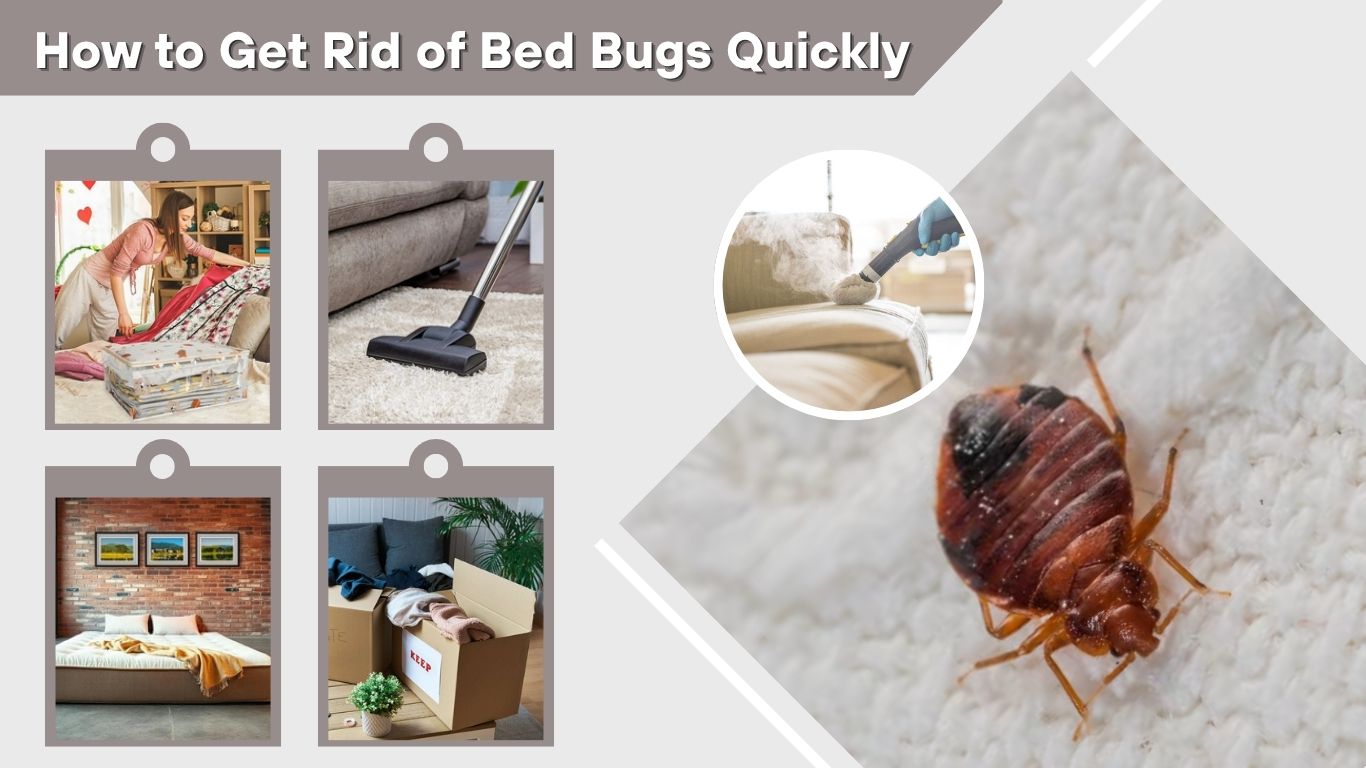
Bed bugs are stressful because they bite at night, hide in tiny cracks, and spread through bedding, clothes, luggage, couches, and furniture. If you want to get rid of bed bugs quickly, the best approach is not one spray or one home remedy. You need fast action: inspect the room, heat-treat fabrics, vacuum hiding places, isolate the bed, use encasements, and monitor for new activity.
Can You Get Rid of Bed Bugs Quickly?
Getting rid of bed bugs quickly is possible when the infestation is small and you act early. However, “quickly” does not always mean overnight. Bed bugs hide in mattress seams, box springs, bed frames, couches, baseboards, cracks, luggage, and furniture joints. Eggs can also be difficult to reach.
The fastest plan is to kill as many bugs as possible on day one, stop them from reaching you, and continue checking for new signs. A heavy infestation may need professional pest control because bed bugs can spread into walls, furniture, and nearby rooms.
Quick control depends on three things: how early you find them, how many hiding places they have, and whether you treat the whole sleeping area instead of only the mattress.
Step 1: Confirm the Bed Bug Problem
Before starting treatment, confirm that you are dealing with bed bugs. Bites alone are not enough because flea bites, mosquito bites, mites, and skin allergies can look similar. Look for physical signs around beds, couches, and sleeping areas.
Common Signs of Bed Bugs
- Live reddish-brown bugs near mattress seams
- Tiny white eggs in cracks and folds
- Dark spots on sheets or mattress edges
- Small blood stains on bedding
- Shed skins around the bed frame
- Musty smell in heavy infestations
- New bites after sleeping
Adult bed bugs are about the size of an apple seed. Baby bed bugs are smaller and lighter in color. Use a flashlight and check slowly, especially around seams, corners, screw holes, and fabric folds.
Step 2: Stop Bed Bugs from Spreading
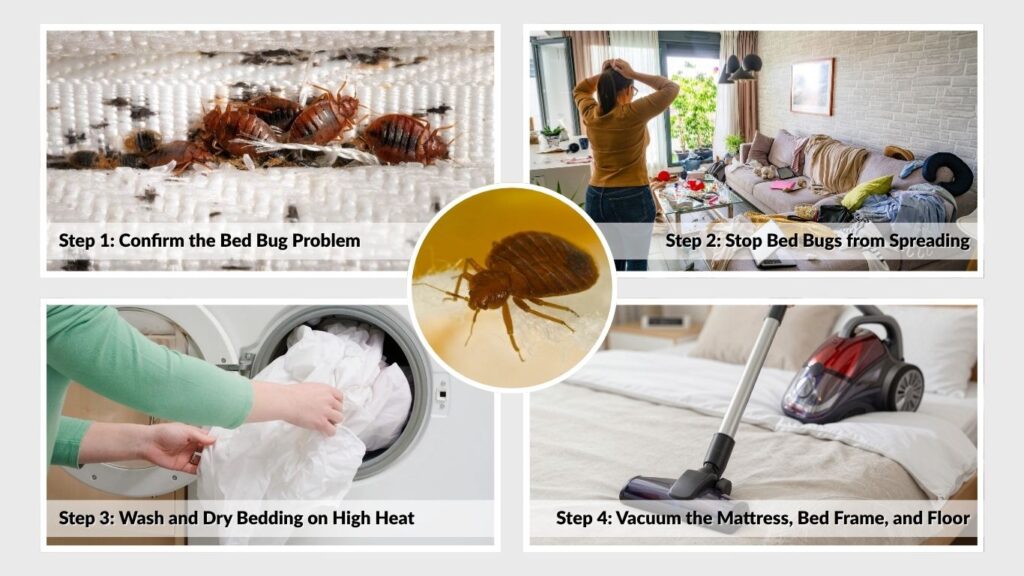
The first quick action is to stop moving bed bugs around your home. Do not carry bedding, clothes, pillows, or bags from the bedroom to other rooms without sealing them first. Bed bugs can hitchhike on fabric and spread easily.
Place washable items into plastic bags before taking them to the washing machine. After washing and drying, put the clean items in new sealed bags or plastic containers.
Do This Immediately
- Do not move infested furniture to another room.
- Do not place bedding on the floor.
- Do not sleep in another room.
- Seal dirty clothes before moving them.
- Keep clean clothes separate from untreated items.
- Reduce clutter around the bed.
Many people make the problem worse by sleeping on the couch after finding bed bugs in the bed. This can attract bugs to a new area and spread the infestation.
Step 3: Wash and Dry Bedding on High Heat
Heat is one of the fastest ways to kill bed bugs on washable items. Remove sheets, pillowcases, blankets, mattress covers, curtains, and nearby clothes. Wash them in hot water if the fabric allows. The dryer is especially important because high heat can kill bed bugs and eggs.
Dry items on high heat for at least 30 minutes when safe for the fabric. If something is already clean but may have bed bugs, you can place it directly in the dryer instead of washing it first.
Items to Heat-Treat
- Bed sheets
- Pillowcases
- Blankets
- Comforters
- Clothes near the bed
- Curtains
- Soft toys
- Fabric bags
After drying, store these items in clean sealed bags until the room is treated. Do not put them back on an untreated mattress or couch.
Step 4: Vacuum the Mattress, Bed Frame, and Floor
Vacuuming is a fast way to remove visible bed bugs, shed skins, and some eggs. It will not solve the whole problem alone, but it reduces the number of bugs quickly.
Use a crevice tool and vacuum slowly. Focus on tight spaces where bed bugs hide. After vacuuming, empty the vacuum contents into a sealed plastic bag and throw it away outside. If your vacuum has a canister, wash it carefully.
Vacuum These Areas
- Mattress seams and corners
- Box spring edges
- Bed frame joints
- Headboard cracks
- Baseboards near the bed
- Carpet edges
- Couch seams
- Nightstands and drawers
Vacuuming should be repeated during the treatment period. It is most useful when combined with heat, steam, encasements, and monitoring.
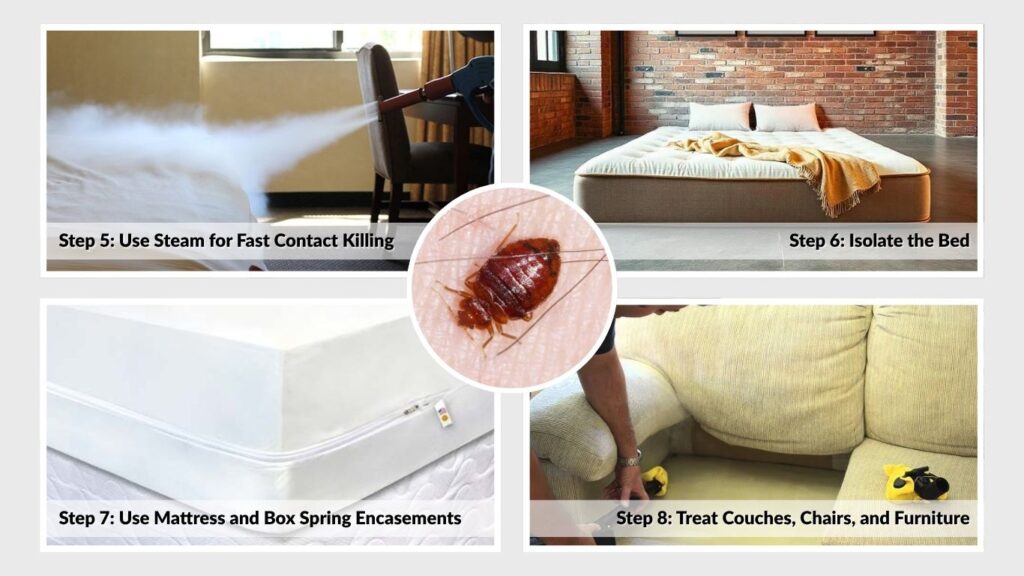
Step 5: Use Steam for Fast Contact Killing
Steam can help kill bed bugs quickly on contact when used properly. It works best on mattress seams, couch seams, bed frames, baseboards, and cracks where heat can reach. Move the steamer slowly so the heat has time to penetrate.
Do not use steam near electrical outlets, switches, or delicate surfaces. Also avoid soaking furniture or mattresses too much, because moisture can cause damage or mold.
Best Places to Steam
- Mattress seams
- Box spring corners
- Couch folds
- Bed frame joints
- Baseboard cracks
- Carpet edges
- Chair seams
- Luggage seams
Steam is a useful DIY method, but it only kills the bugs it reaches. Hidden eggs and deep cracks may still need follow-up treatment.
Step 6: Isolate the Bed
If you want quick relief from bites, isolate the bed after cleaning and treating it. This makes it harder for bed bugs to climb onto the bed while you sleep.
Move the bed a few inches away from walls and furniture. Make sure blankets and sheets do not touch the floor. Remove items stored under the bed. Place bed bug interceptors under the bed legs to trap bugs that try to climb up or down.
Bed Isolation Checklist
- Pull the bed away from the wall.
- Keep bedding off the floor.
- Remove storage from under the bed.
- Use interceptors under bed legs.
- Inspect the headboard and frame.
- Avoid placing bags on the bed.
- Use a mattress encasement.
This step does not remove all bed bugs, but it can reduce bites and help you monitor the infestation.
Step 7: Use Mattress and Box Spring Encasements
A bed bug encasement is a zippered cover that seals the mattress or box spring. It traps hidden bed bugs inside and prevents new bugs from hiding deep in the mattress. Encasements also make future inspections easier because bugs are easier to spot on the smooth cover.
Use encasements made specifically for bed bugs. A regular mattress protector may not be enough because bed bugs can escape through gaps or loose zippers.
Do not remove the encasement too soon. Bed bugs can survive for a long time without feeding, so the cover should stay on for many months.
Step 8: Treat Couches, Chairs, and Furniture
Bed bugs are not always limited to the bed. If you rest on a couch, recliner, or chair, inspect those areas too. Bed bugs can hide in fabric folds, seams, zippers, wooden joints, and underneath cushions.
Remove cushions and vacuum all seams. Use steam if the material can handle heat and moisture. Check wooden frames, stapled fabric, screw holes, and cracks.
Furniture Hiding Spots
- Cushion seams
- Recliner folds
- Zipper lines
- Wooden joints
- Fabric edges
- Drawer corners
- Screw holes
- Under couch frames
Do not drag infested furniture through the home. If furniture must be thrown away, wrap it first and mark it clearly so no one else takes it.
Step 9: Use Safe Bed Bug Products Carefully
Bed bug sprays and powders can help, but they must be used safely. Only use products labeled for bed bugs and for the specific area you are treating. Do not spray bedding, pillows, or mattresses unless the product label clearly says it is safe.
Avoid using outdoor pesticides indoors. Also avoid using too much product. More chemical does not mean better results and can create health risks.
Safety Tips
- Read the product label first.
- Use only indoor-approved products.
- Keep sprays away from food and dishes.
- Do not spray pillows or sheets.
- Keep children and pets away during application.
- Ventilate the room if needed.
- Never mix pesticides.
Bug bombs or foggers are usually not a good main solution. They often fail to reach deep hiding spots and may push bed bugs into walls or other rooms.
Quick DIY Bed Bug Control Plan
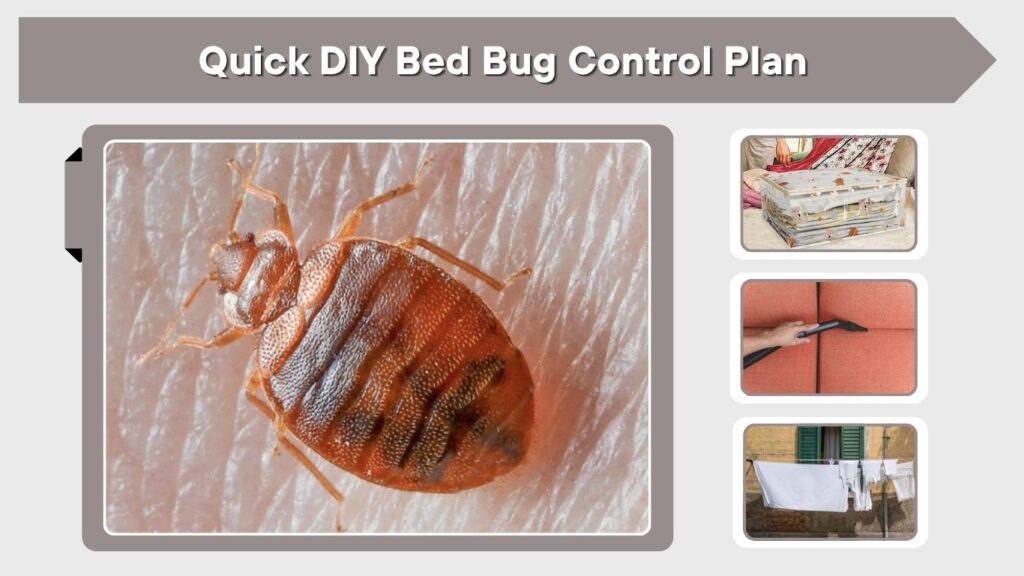
A quick DIY plan should combine several methods in the right order. Doing only one step usually gives poor results. The goal is to reduce bugs quickly, protect your sleeping area, and keep checking until the infestation is gone.
| Step | Action | Purpose |
| 1 | Inspect mattress and furniture | Confirm bed bugs |
| 2 | Bag clothes and bedding | Stop spreading |
| 3 | Wash and dry on high heat | Kill bugs on fabric |
| 4 | Vacuum seams and cracks | Remove visible bugs |
| 5 | Steam hiding places | Kill bugs on contact |
| 6 | Use encasements | Trap hidden bugs |
| 7 | Add interceptors | Monitor activity |
| 8 | Repeat inspections | Catch survivors |
This plan is best for early or small infestations. If bed bugs are in multiple rooms, walls, or apartments, professional treatment is usually faster and more reliable.
How to Get Rid of Bed Bugs Quickly in Clothes
Clothes are easier to treat than furniture. Put clothes directly into sealed bags before moving them. Empty the bag into the washer carefully. Wash with hot water if the fabric allows, then dry on high heat.
For clothes that cannot be washed, use the dryer if safe for the fabric, or take them to a professional cleaner. Keep treated clothes sealed until the room is under control.
Do not put clean clothes back into untreated drawers or closets. Inspect drawers, closet corners, laundry baskets, and bags first.
How to Get Rid of Bed Bugs Quickly in a Mattress
To treat a mattress quickly, remove all bedding and heat-dry it. Vacuum the mattress seams, corners, labels, and folds. Use steam if the mattress material can handle it. Then cover the mattress with a bed bug encasement.
Remember that bed bugs often hide in the box spring, bed frame, and headboard, not just the mattress. Treating only the mattress may not stop the bites.
If the mattress is badly torn or heavily infested, ask a pest control expert before deciding whether to discard it.
How to Get Rid of Bed Bugs Quickly in a Couch
Couches can be difficult because bed bugs hide deep inside fabric and frames. Remove cushions and vacuum every seam. Use steam slowly along folds and edges. Check underneath the couch and around the legs.
If the couch is used for sleeping, treat it like a bed. Keep blankets off the floor, avoid storing items underneath, and use interceptors if possible.
For heavy couch infestations, professional treatment may be needed because sprays and vacuuming may not reach deep hiding spots.
Home Remedies: What Helps and What Does Not
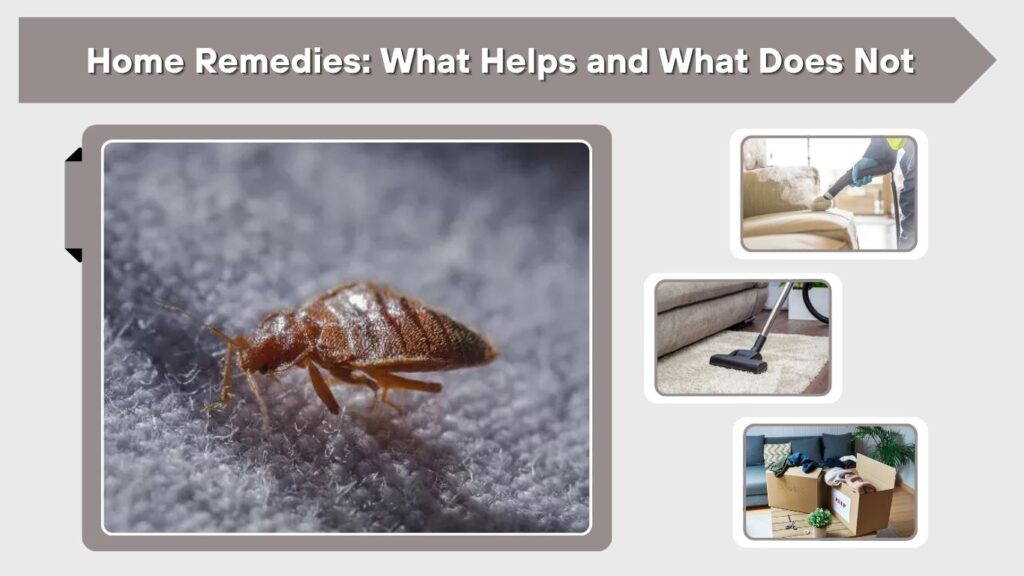
Some home remedies can support bed bug control, but many popular ideas are weak or unsafe. Heat, steam, vacuuming, washing, encasements, and interceptors are the most useful non-chemical methods.
Baking soda, vinegar, lemon juice, essential oils, and alcohol sprays are often suggested online, but they are not reliable for full infestations. Alcohol is also flammable and can be dangerous.
Better Home Methods
- Hot dryer treatment
- Steam cleaning
- Vacuuming
- Decluttering
- Mattress encasements
- Bed bug interceptors
- Sealing cracks
- Careful inspection
Natural methods can help, but they must be part of a complete control plan.
Can You Get Rid of Bed Bugs in One Day?
You can kill many bed bugs in one day, but full removal usually takes longer. Washing, drying, vacuuming, and steaming can make a big difference quickly. However, hidden eggs and bugs in deep cracks may survive.
Professional heat treatment may remove an infestation faster than DIY methods, but even professional work may require follow-up inspections.
The safest answer is this: you can start controlling bed bugs immediately, but you should monitor for several weeks before assuming they are gone.
How to Get Rid of Bed Bug Bites Quickly
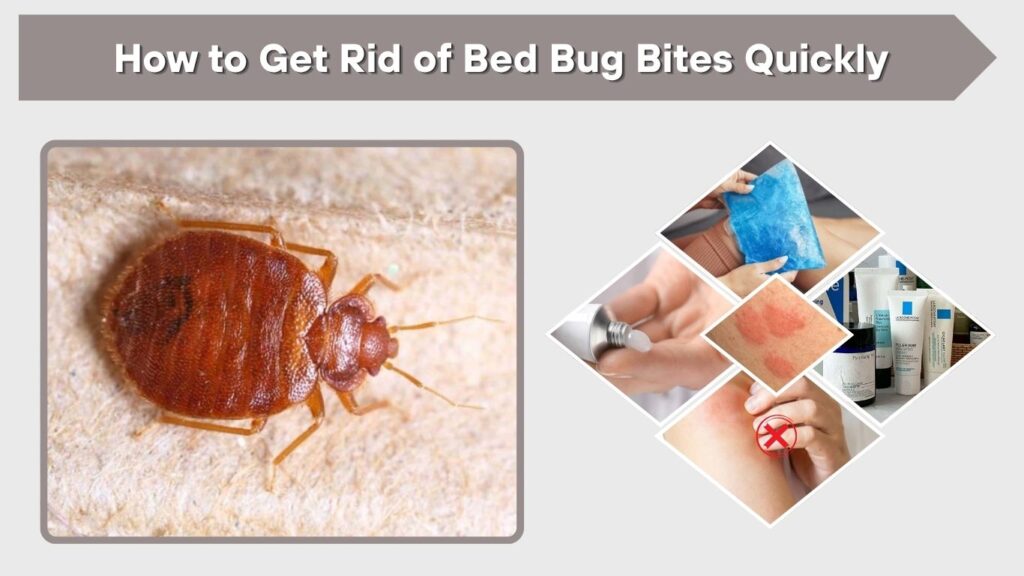
Bed bug bites are different from bed bug control. Treating bites helps your skin, but it does not remove the insects. To calm bites quickly, wash the skin with soap and water, use a cold compress, and apply anti-itch cream.
Bite Relief Tips
- Wash bites gently.
- Apply cold compresses.
- Use hydrocortisone cream.
- Try calamine lotion.
- Avoid scratching.
- Keep nails short.
- Cover open bites.
- See a doctor for infection signs.
Most bed bug bites fade within one to two weeks. If bites keep appearing, the infestation is still active.
When to Call a Professional Exterminator
Call a pest control professional if DIY treatment is not working or the infestation is spreading. Professional help is especially important in apartments, shared housing, hotels, dorms, or homes with many hiding places.
Call a Professional If
- You see bed bugs in multiple rooms.
- Bites continue after treatment.
- Bed bugs are inside couches or walls.
- You live in an apartment building.
- You find many eggs or shed skins.
- You cannot safely treat the home.
- DIY sprays are not working.
Professional exterminators may use heat, steam, insecticides, dusts, encasements, and follow-up visits. This is often the fastest way to handle a serious infestation.
How to Know Bed Bugs Are Gone
Do not assume bed bugs are gone after one night without bites. Keep checking for live bugs, fresh droppings, blood stains, eggs, shed skins, and new bites. Bed bug interceptors can help confirm whether bugs are still active.
If several weeks pass without new signs, the infestation is likely under control. Continue using mattress encasements and keep the sleeping area clean and easy to inspect.
FAQs
What is the quickest way to get rid of bed bugs?
The quickest method is to combine heat, vacuuming, steam, mattress encasements, bed isolation, and monitoring. Wash and dry bedding on high heat, vacuum cracks and seams, steam hiding places, and use interceptors. Severe infestations usually need professional pest control.
Can I get rid of bed bugs quickly by myself?
You may control a small infestation yourself if you act early and use several methods together. DIY treatment works best when bed bugs are limited to one area. If they are in multiple rooms, couches, walls, or apartments, professional help is usually faster.
What kills bed bugs quickly at home?
High heat, steam, and direct vacuuming can remove or kill many bed bugs quickly. A hot dryer is useful for clothes and bedding. Steam can kill bugs on seams and cracks if applied slowly. Sprays may help, but only when used safely and correctly.
How do I get rid of bed bugs quickly in a mattress?
Remove all bedding and dry it on high heat. Vacuum mattress seams, steam edges if safe, inspect the box spring and frame, then seal the mattress in a bed bug encasement. Also treat the headboard and bed frame because bed bugs often hide there.
Why do bed bugs come back after treatment?
Bed bugs may return if eggs survive, hiding spots are missed, or untreated items are brought back too soon. They can also spread from nearby rooms or apartments. Follow-up inspection, interceptors, encasements, and repeated treatment are important for complete control.