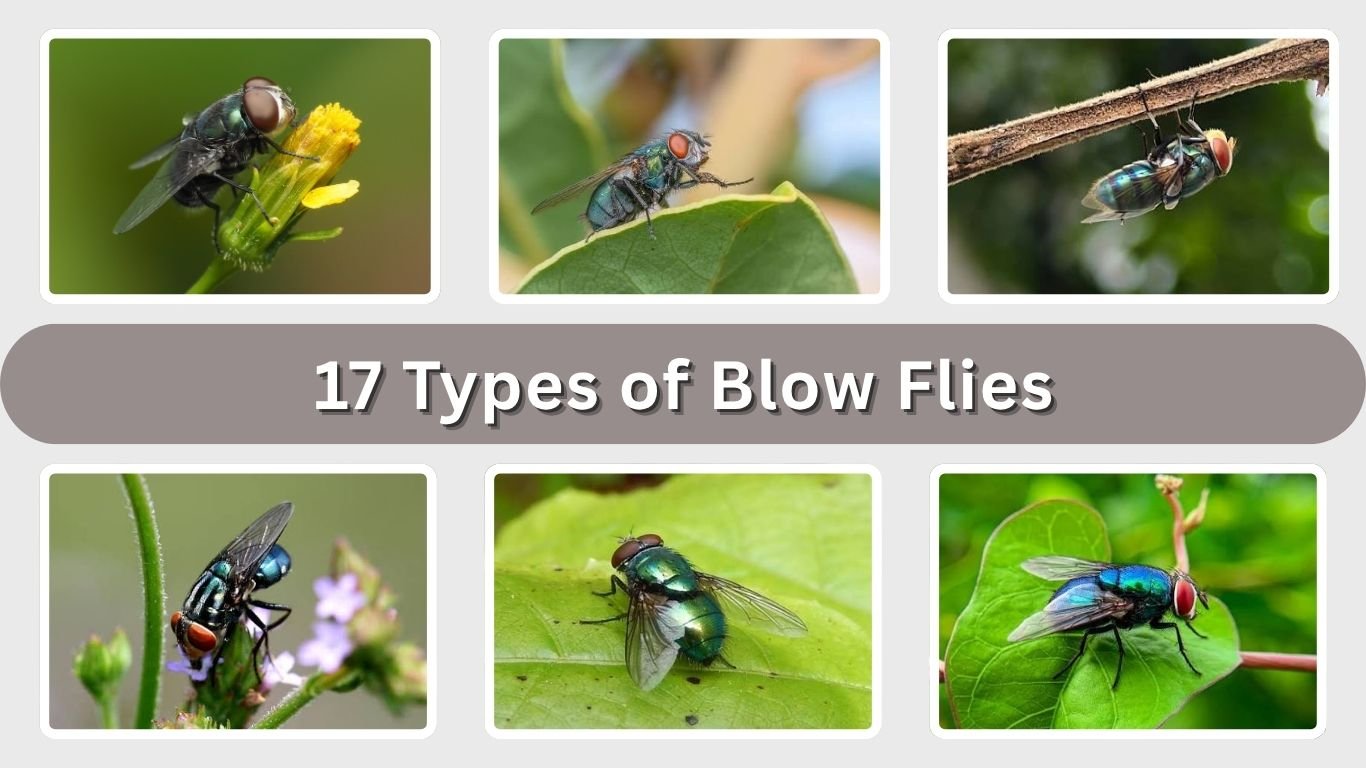
Blow flies are a diverse group of insects known for their metallic green, blue, bronze, or dark-colored bodies. They live in urban areas, forests, farmland, wetlands, and tropical environments around the world. Many species help decompose dead animals and recycle nutrients, while others can infest wounds or living tissue. This guide explores 17 types of blow flies, including green bottle flies, blue bottle flies, screwworm flies, sheep blowflies, and the African tumbu fly. Learn about their identification, habitats, feeding habits, life cycles, and ecological or medical importance.
1. Common Green Bottle Fly
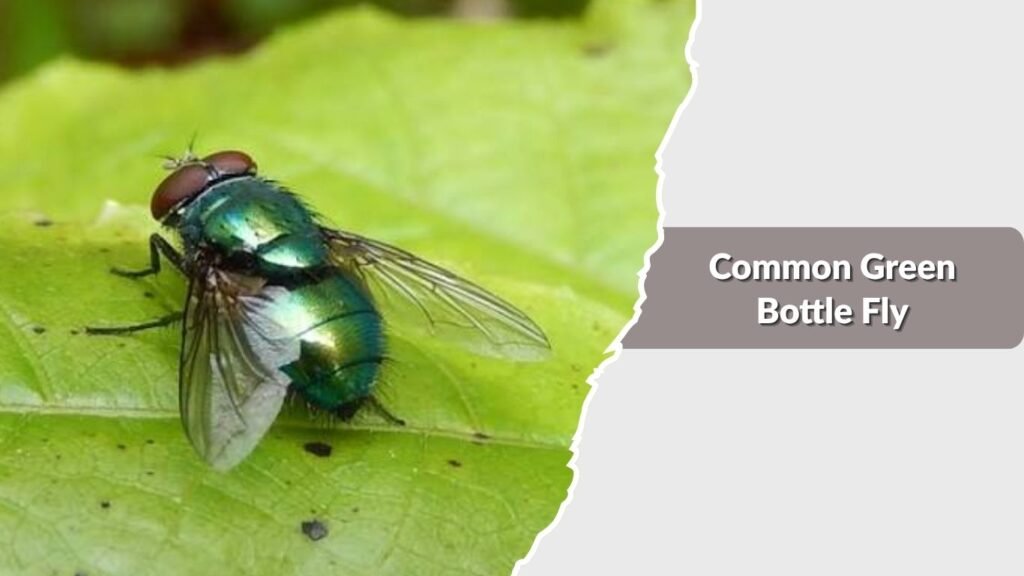
The common green bottle fly (Lucilia sericata) is a metallic-colored blow fly found across many parts of the world. It commonly appears near garbage, animal waste, carrion, and other decaying organic materials. Although often considered a nuisance, its larvae also have important medical and forensic uses.
Identification
- Bright metallic green or greenish-gold body
- Large reddish-brown compound eyes
- Transparent wings with visible veins
- Black legs covered with short bristles
- Adult body length of approximately 10–14 millimeters
- Produces a noticeable buzzing sound while flying
Habitat and Distribution
Common green bottle flies live in urban areas, farmland, forests, gardens, and locations where animals are kept. They are especially common around garbage containers, slaughterhouses, compost piles, animal carcasses, and pet waste. Adults prefer warm conditions and become most active during spring and summer.
Diet and Feeding Behavior
Adult flies feed on nectar, sugary liquids, feces, and fluids from decaying organic matter. Females visit carrion and open wounds to find suitable egg-laying sites. Their larvae feed on decomposing tissue, helping break down dead animals and return nutrients to the environment.
Life Cycle and Importance
Females lay clusters of pale eggs on meat, carcasses, or wounds. The eggs may hatch within a day under warm conditions. After passing through several larval stages, the maggots pupate and emerge as adults. This species is valuable in forensic investigations and controlled maggot therapy.
2. Blue Bottle Fly
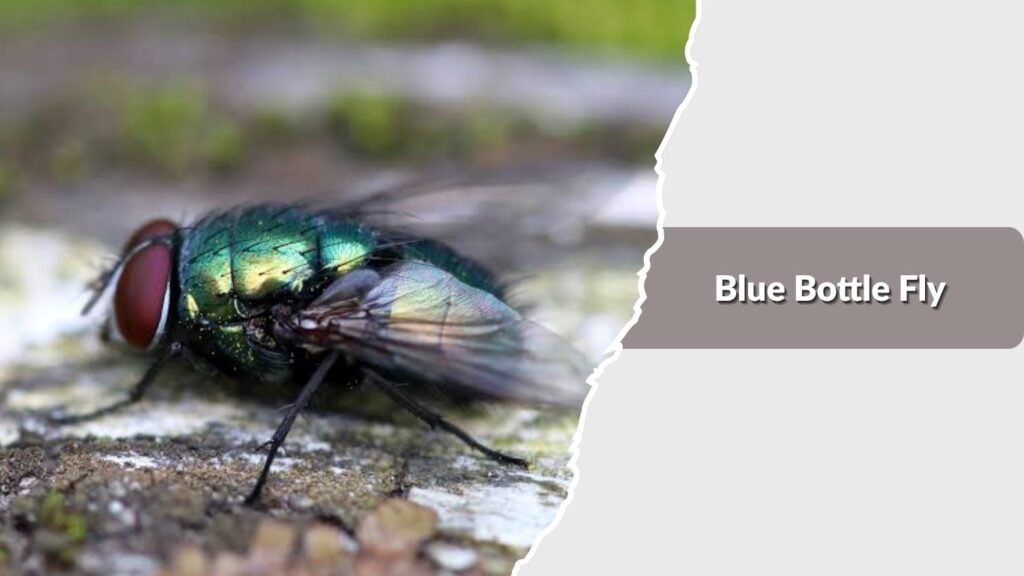
The blue bottle fly (Calliphora vomitoria) is a large blow fly recognized by its shiny blue abdomen and loud buzzing flight. It commonly gathers around garbage, animal remains, feces, and decaying food. The species is widespread and plays an important role in decomposition and forensic investigations.
Identification
- Metallic blue abdomen
- Dark head and thorax
- Orange or reddish hairs around the cheeks
- Large red compound eyes
- Transparent wings with dark veins
- Adult body length of about 10–14 millimeters
Habitat and Distribution
Blue bottle flies occur throughout Europe, Asia, and North America. They inhabit forests, farmland, gardens, towns, and buildings. Adults are frequently noticed near garbage bins, meat-processing areas, dead animals, and other places containing decomposing organic material.
Diet and Feeding Behavior
Adults consume nectar, plant juices, fecal matter, and liquids released by decaying animals. Females are strongly attracted to carrion because it provides food for their offspring. The maggots feed mainly on decomposing flesh and contribute to the natural recycling of nutrients.
Life Cycle and Importance
Females deposit clusters of eggs on carcasses or exposed meat. The eggs hatch into maggots that feed rapidly before leaving the food source to pupate in nearby soil. Investigators can examine their developmental stages to help estimate how long an animal or person has been dead.
3. Black Blow Fly
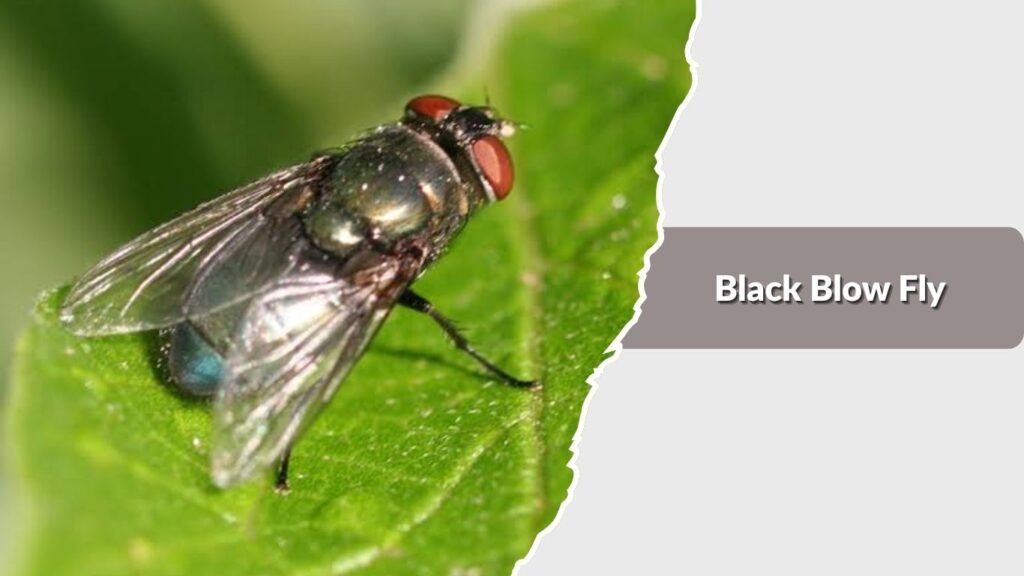
The black blow fly (Phormia regina) is a dark-colored species native to North America. Unlike brightly metallic bottle flies, it has a mostly black body with a blue-green sheen. It is commonly associated with carrion and is one of the most important insects used in forensic studies.
Identification
- Shiny black or dark blue-green body
- Orange hairs near the base of the wings
- Large reddish compound eyes
- Grayish facial area
- Transparent wings
- Adult length of approximately 7–11 millimeters
Habitat and Distribution
Black blow flies are widespread throughout North America, particularly in cooler and temperate regions. They occur in forests, rural areas, farms, towns, and coastal environments. Adults are frequently found near animal remains, garbage, manure, and outdoor food waste.
Diet and Feeding Behavior
Adults feed on nectar, animal fluids, feces, and liquids produced by decomposition. Females search for fresh carrion on which to lay their eggs. Their larvae consume soft decomposing tissue and often become abundant on exposed animal remains.
Life Cycle and Importance
Eggs hatch soon after being deposited, especially during warm weather. The larvae pass through three growth stages before moving away from the carcass and pupating in soil. Because the black blow fly often reaches remains quickly, forensic specialists use its age to help estimate the postmortem interval.
4. Secondary Screwworm Fly
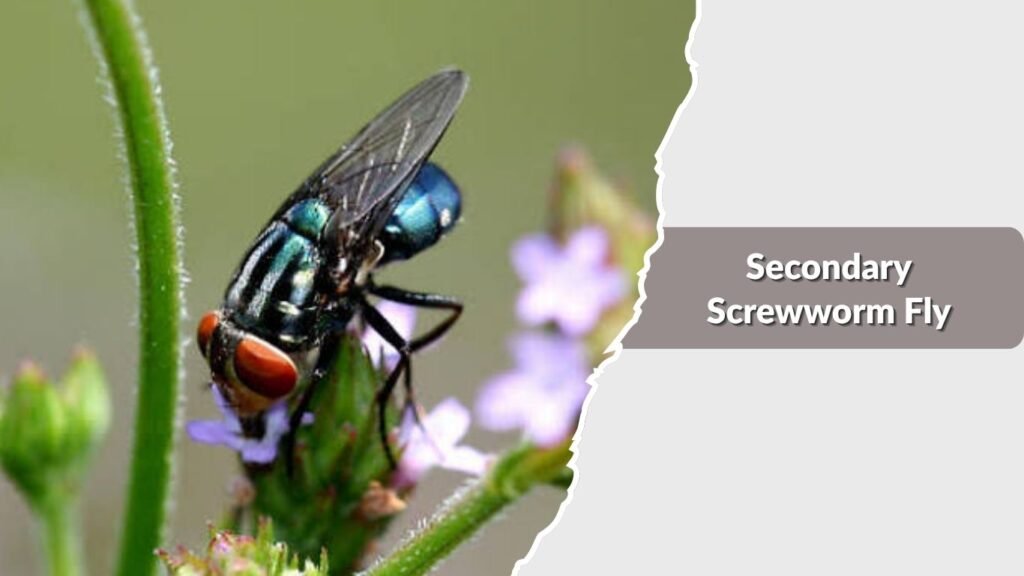
The secondary screwworm fly (Cochliomyia macellaria) is a metallic blow fly found throughout the Americas. Its larvae mainly consume dead or decomposing tissue, unlike those of the primary screwworm fly, which attack living tissue. It may still invade untreated wounds containing damaged or dying flesh.
Identification
- Metallic blue-green body
- Three dark stripes on the thorax
- Reddish-orange compound eyes
- Pale face and mouthparts
- Transparent wings
- Adult body length of about 6–9 millimeters
Habitat and Distribution
This species occurs from the southern United States through Central America and into South America. It thrives in warm climates and can be found around farms, livestock facilities, slaughter areas, garbage, carrion, and outdoor markets where meat is exposed.
Diet and Feeding Behavior
Adult secondary screwworm flies consume nectar, animal secretions, and fluids from decomposing material. Females lay eggs on dead animals or damaged tissue. The maggots usually feed together on decaying flesh and rarely invade completely healthy tissue.
Life Cycle and Importance
A female can lay hundreds of eggs in several batches. The larvae hatch quickly, feed through three stages, and then enter the soil to pupate. This fly contributes to decomposition, but infestations in dirty wounds can cause irritation and delay healing in animals.
5. Primary Screwworm Fly
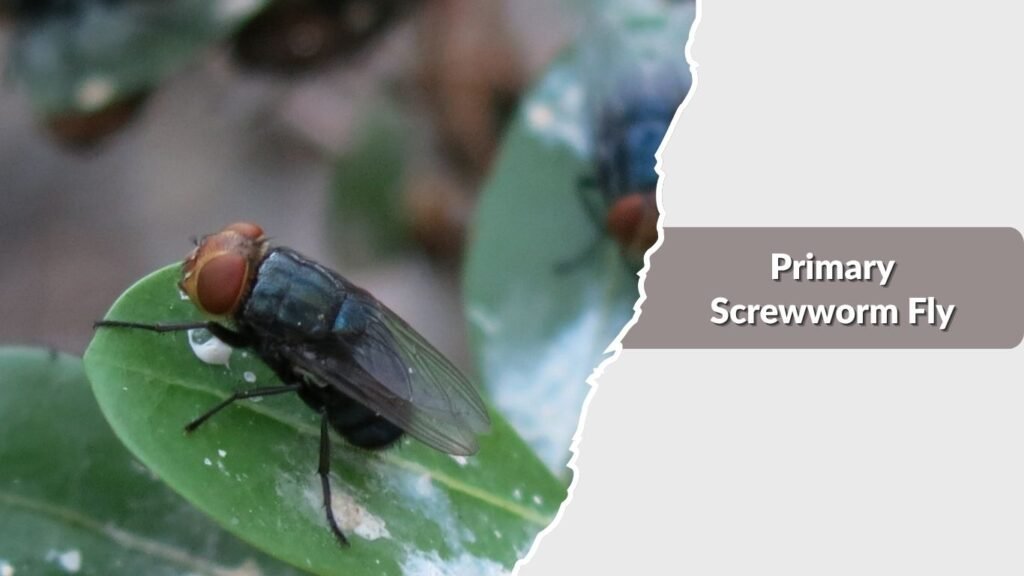
The primary screwworm fly (Cochliomyia hominivorax) is a dangerous parasitic blow fly whose larvae feed on the living tissue of warm-blooded animals. It can infest livestock, wildlife, pets, and humans. Early detection and veterinary treatment are essential because an untreated infestation can become severe.
Identification
- Metallic blue-green body
- Three dark stripes across the thorax
- Orange-red compound eyes
- Yellowish face
- Dark hairs on the body
- Adult length of approximately 8–10 millimeters
Habitat and Distribution
Primary screwworm flies favor warm tropical and subtropical environments. They remain established in parts of South America and the Caribbean, although eradication programs have removed them from several regions. Adults often occur near livestock, wildlife, and animals with open wounds.
Diet and Feeding Behavior
Adult flies feed on nectar and other sugary liquids. Females are attracted to wounds, body openings, and damaged skin, where they deposit eggs. After hatching, the larvae burrow into living flesh and feed in tightly packed groups.
Life Cycle and Importance
Larvae enlarge a wound as they develop, causing pain, bleeding, infection, and tissue destruction. Mature larvae fall to the ground and pupate in soil. Sterile insect programs have successfully controlled this destructive pest by releasing males that cannot produce viable offspring.
6. Australian Sheep Blowfly
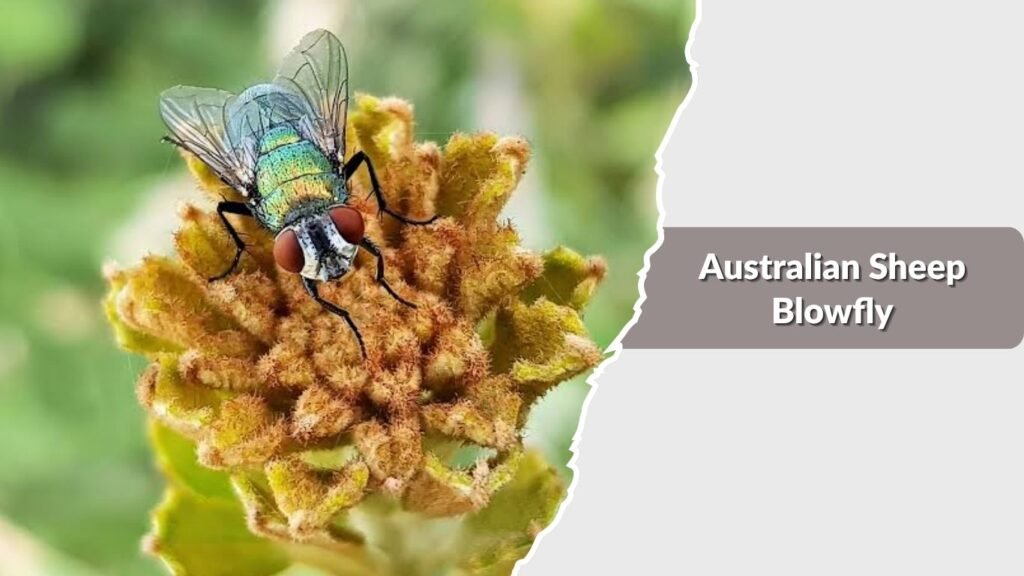
The Australian sheep blowfly (Lucilia cuprina) is a metallic green species known for causing flystrike in sheep. Females lay eggs in damp, dirty, or injured wool, and the larvae feed on skin and tissue. Serious infestations require rapid treatment to prevent suffering and possible death.
Identification
- Shiny copper-green or bronze-green body
- Reddish compound eyes
- Dark legs with stiff bristles
- Transparent wings
- Compact, rounded abdomen
- Adult body length of approximately 6–10 millimeters
Habitat and Distribution
This blow fly is widespread in Australia and also occurs in Africa, Asia, and parts of the Americas. It favors warm conditions and is especially common in sheep-farming regions. Populations increase when rainfall and temperature create moist conditions suitable for larval development.
Diet and Feeding Behavior
Adults consume nectar, animal secretions, fecal material, and fluids from carrion. Females are attracted to moist wool contaminated with urine or feces. They may also select wounds, skin folds, or areas affected by bacterial infections.
Life Cycle and Importance
Eggs hatch into larvae that feed on skin secretions and living tissue, producing flystrike. The larvae eventually drop to the ground and pupate in soil. Farmers control this species through regular inspection, improved hygiene, wool management, insecticides, and prompt treatment of affected sheep.
7. European Green Bottle Fly
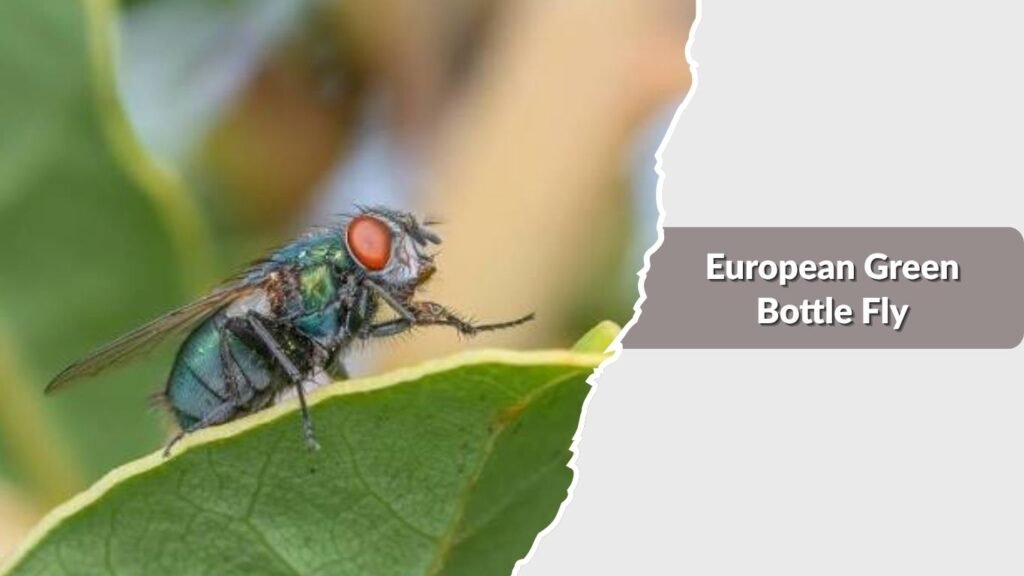
The European green bottle fly (Lucilia caesar) is a bright metallic blow fly commonly found across Europe and parts of Asia. Adults are often seen resting on leaves, flowers, fences, and sunlit surfaces. Its larvae mainly develop in carrion, where they help break down decomposing animal tissue.
Identification
- Brilliant metallic green body
- Bronze or golden reflections under sunlight
- Large reddish compound eyes
- Dark legs covered with short hairs
- Clear wings with light-brown veins
- Adult body length of approximately 8–12 millimeters
Habitat and Distribution
European green bottle flies inhabit woodlands, grasslands, farms, gardens, parks, and urban areas. They are especially active during warm weather. Adults frequently visit flowers but may also gather around garbage, animal droppings, exposed meat, and dead animals.
Diet and Feeding Behavior
Adults obtain energy from nectar, pollen, plant juices, and other sugary substances. They also consume liquids from feces and decomposing remains. Females use their strong sense of smell to locate carrion suitable for egg laying.
Life Cycle and Importance
Females lay pale eggs in clusters on animal remains or rotting meat. The maggots hatch and feed together before entering nearby soil to pupate. This species supports nutrient recycling and may also provide useful evidence during forensic investigations involving decomposed remains.
8. Oriental Latrine Fly
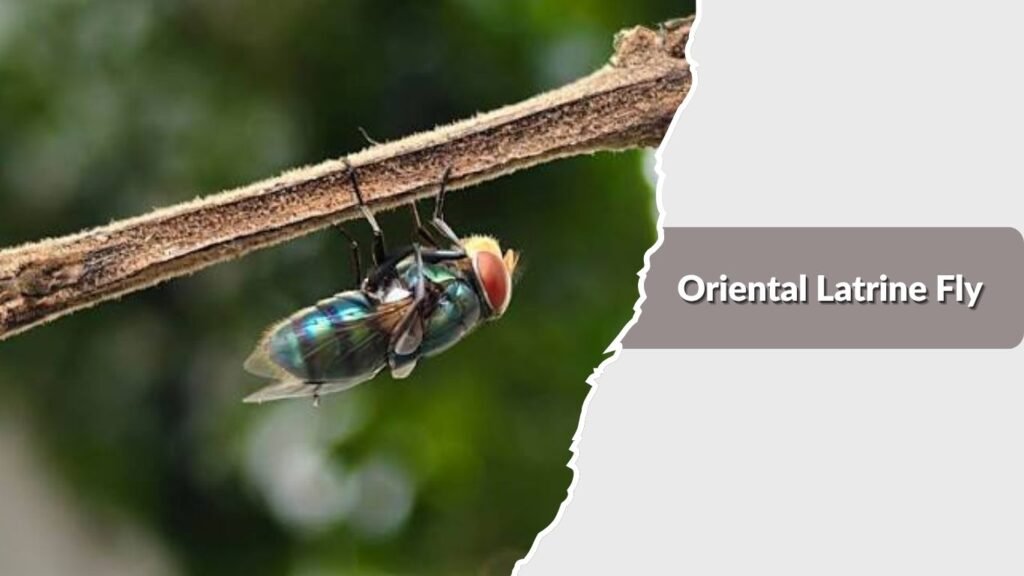
The Oriental latrine fly (Chrysomya megacephala) is a metallic blow fly associated with garbage, feces, carrion, and exposed food. It is common in warm urban and tropical environments. Because adults move between contaminated materials and human food, they may carry disease-causing microorganisms.
Identification
- Metallic blue-green abdomen
- Large bright-red compound eyes
- Eyes positioned close together in males
- Dark thorax with a greenish sheen
- Clear wings with dark veins
- Adult body length of about 8–12 millimeters
Habitat and Distribution
This species occurs widely across Asia, Africa, Australia, the Pacific region, and parts of the Americas. It thrives near human settlements, markets, slaughterhouses, landfills, public toilets, farms, and fishing areas where organic waste is readily available.
Diet and Feeding Behavior
Adults feed on feces, carrion fluids, garbage, sugary liquids, and human food. Females deposit their eggs on decomposing meat, animal remains, or waste. The developing maggots consume moist organic material and can complete their growth rapidly in warm conditions.
Life Cycle and Importance
Eggs may hatch within a day, followed by three active larval stages. Mature larvae leave the food source and pupate in dry soil. The fly contributes to decomposition and forensic investigations, but its contact with unsanitary material makes it a potential mechanical carrier of pathogens.
9. Hairy Maggot Blow Fly
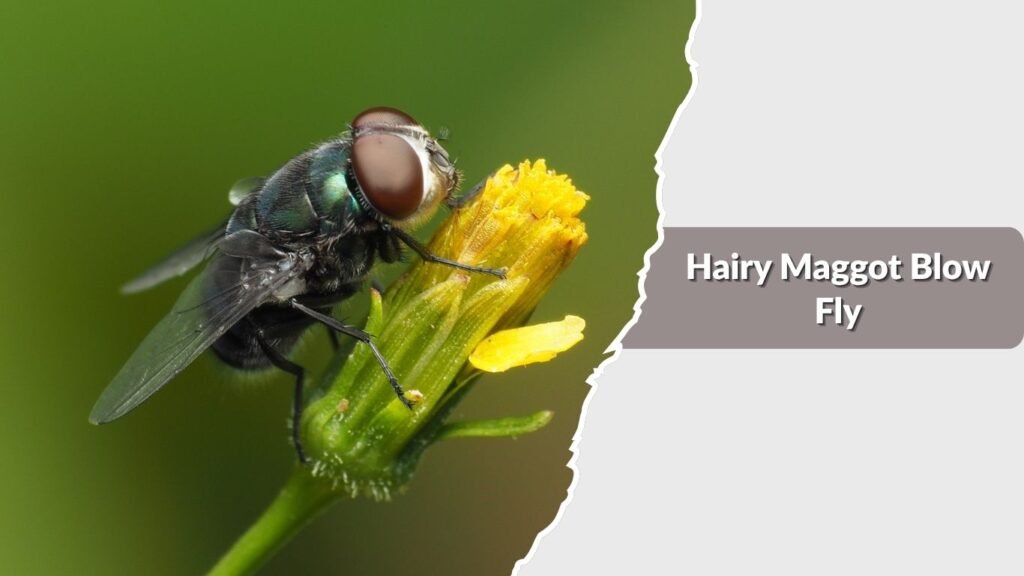
The hairy maggot blow fly (Chrysomya rufifacies) is named for the fleshy projections covering its larvae. It is a metallic species commonly associated with carrion. Its maggots feed on decomposing tissue but may also attack and consume the larvae of other flies sharing the same food source.
Identification
- Metallic blue-green body
- Dark bands along the abdominal segments
- Large reddish compound eyes
- Pale-colored face
- Clear wings
- Larvae covered with distinctive fleshy projections
Habitat and Distribution
Hairy maggot blow flies occur in Australia, Asia, Africa, and much of the Americas. They prefer warm climates and inhabit urban areas, farmland, forests, and coastal environments. Adults often gather near animal carcasses, garbage, manure, and slaughter waste.
Diet and Feeding Behavior
Adults consume nectar and fluids from feces or decomposing animals. Young larvae mainly feed on carrion, while older larvae may prey on other maggots. This predatory behavior can influence which fly species survive and develop within a carcass.
Life Cycle and Importance
Females lay batches of eggs on carrion, sometimes after other blow flies have already arrived. The larvae develop quickly before pupating in nearby soil. Their unusual appearance and predictable development make them useful in forensic investigations for estimating the time since death.
10. Red-Cheeked Blow Fly
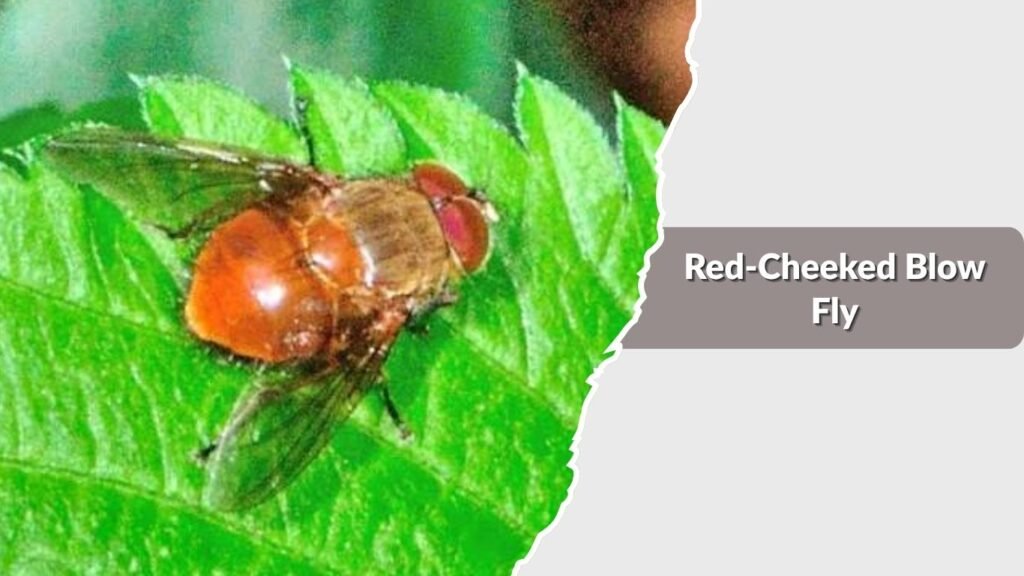
The red-cheeked blow fly (Calliphora vicina) is a large, dark-blue species commonly found near houses, garbage, and carrion. It is particularly active during cooler weather and may enter buildings in autumn or winter. The species is important in decomposition studies and forensic investigations.
Identification
- Metallic dark-blue abdomen
- Dull gray thorax
- Reddish-orange cheeks
- Large red compound eyes
- Black legs with stiff bristles
- Adult body length of approximately 9–13 millimeters
Habitat and Distribution
This fly is widespread across Europe, North America, and other temperate regions. It inhabits cities, farmland, forests, gardens, and coastal areas. Adults commonly appear around waste containers, dead animals, exposed meat, animal feces, and sheltered buildings.
Diet and Feeding Behavior
Adults consume nectar, sugary liquids, fecal material, and fluids released by decaying tissue. Females locate carrion by detecting odors from decomposition. They typically place their eggs inside wounds or protected openings where the larvae have easy access to moist tissue.
Life Cycle and Importance
The eggs hatch into maggots that pass through three feeding stages before moving away to pupate. Cooler temperatures can slow their development considerably. Forensic specialists study their age and growth conditions to help estimate when colonization of human or animal remains occurred.
11. Northern Blow Fly
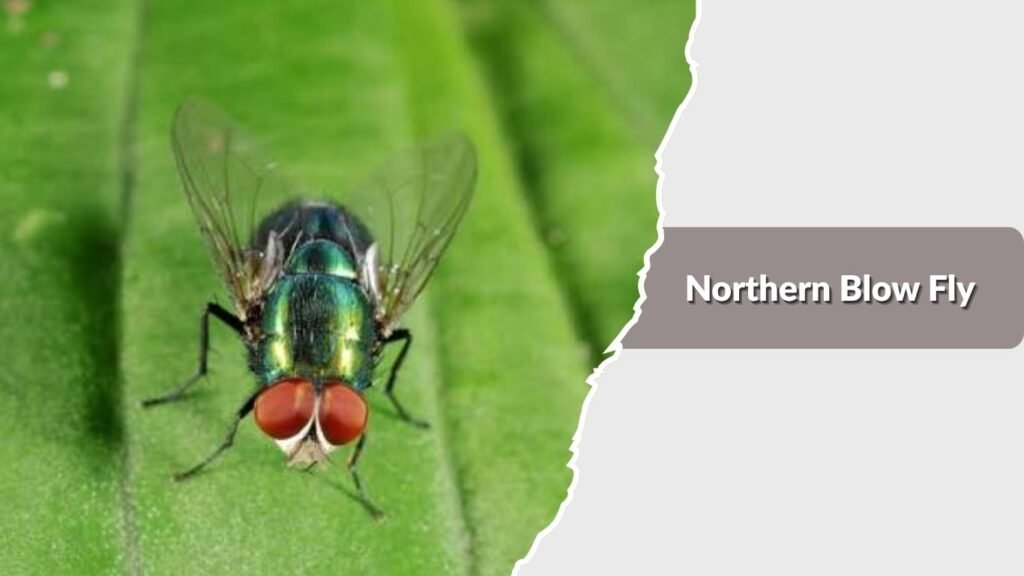
The northern blow fly (Calliphora terraenovae) is a cold-adapted species found mainly across northern temperate and subarctic regions. It has a robust body and metallic blue abdomen. Adults are attracted to animal remains, feces, garbage, and other decomposing organic materials.
Identification
- Metallic dark-blue abdomen
- Grayish-black thorax
- Reddish compound eyes
- Dark face and legs
- Strong body bristles
- Adult length of approximately 9–13 millimeters
Habitat and Distribution
Northern blow flies occur across Canada, Alaska, northern Europe, and other cool parts of the Northern Hemisphere. They inhabit forests, tundra edges, rural communities, farms, and coastal locations. Their tolerance of low temperatures allows them to remain active in conditions unsuitable for many tropical blow flies.
Diet and Feeding Behavior
Adults feed on flower nectar, animal waste, carrion fluids, and other available liquids. Females search for dead animals or exposed decomposing tissue on which to lay their eggs. The larvae consume soft tissue and help accelerate decomposition.
Life Cycle and Importance
After hatching, the maggots grow through three larval stages. Mature larvae leave the remains and pupate in soil or sheltered material. Because this species can colonize remains in cold environments, investigators may use its development to evaluate forensic cases in northern regions.
12. Urban Blue Bottle Fly
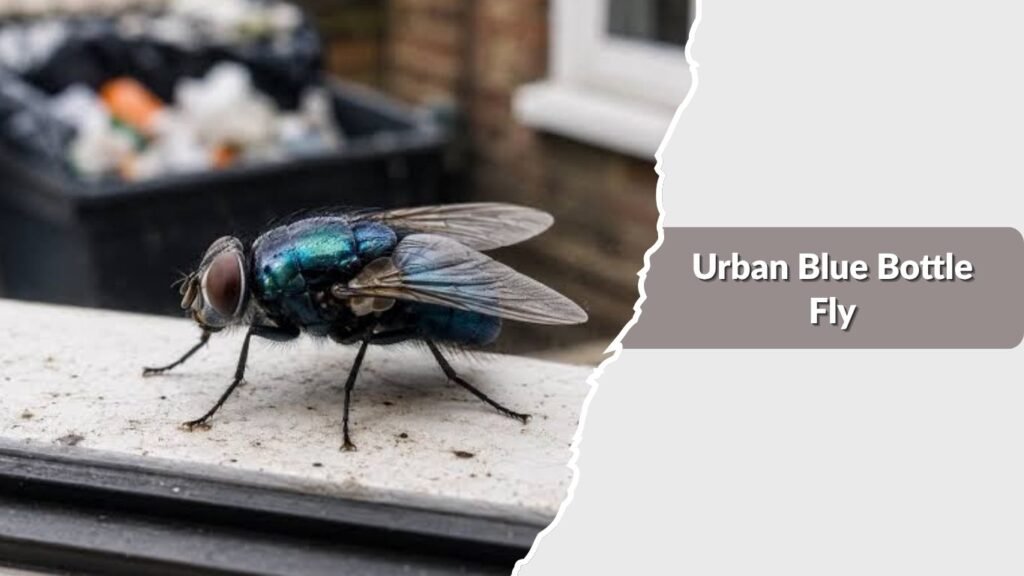
The urban blue bottle fly (Calliphora vicina) is a large blow fly frequently found around homes, restaurants, garbage containers, and other developed areas. Its metallic blue abdomen makes it easy to recognize. It remains active in relatively cool conditions and may enter buildings while searching for food or breeding materials.
Identification
- Metallic blue abdomen
- Dark-gray thorax
- Orange or reddish cheeks
- Large red compound eyes
- Transparent wings with visible veins
- Adult length of approximately 9–13 millimeters
Habitat and Distribution
Urban blue bottle flies are widespread across temperate regions of Europe, Asia, North America, and other continents. They inhabit cities, suburbs, farms, gardens, and woodland edges. Adults commonly gather near waste bins, carrion, pet waste, kitchens, and exposed meat.
Diet and Feeding Behavior
Adults consume nectar, sugary liquids, feces, and fluids from decomposing organic matter. Females use strong odors to locate animal remains or spoiled meat. Their larvae feed mainly on decaying tissue, although they occasionally develop in infected wounds.
Life Cycle and Importance
Females lay clusters of eggs in protected areas of carrion or rotting meat. The larvae hatch, feed through three stages, and then pupate in nearby soil. Their development is frequently examined in forensic investigations to estimate the minimum time since death.
13. Yellow-Faced Blow Fly
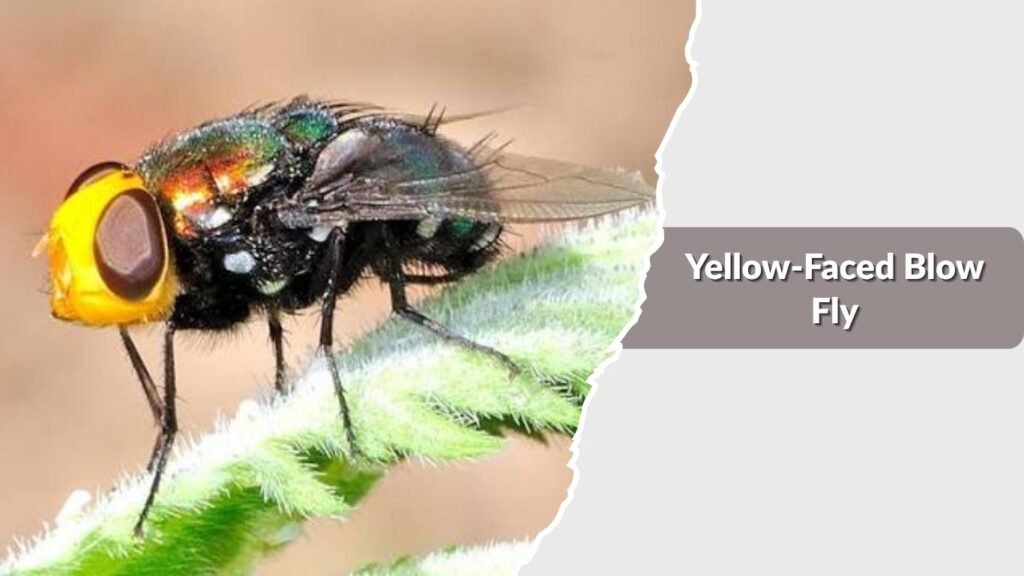
The yellow-faced blow fly (Calliphora augur) is a robust Australian blow fly recognized by its yellowish facial area and metallic blue abdomen. It is frequently encountered around carrion, garbage, animal waste, and outdoor food. The larvae usually develop in decomposing tissue but may occasionally infest wounds.
Identification
- Yellow or golden facial area
- Metallic dark-blue abdomen
- Dull grayish thorax
- Large reddish-brown eyes
- Clear wings with dark veins
- Adult body length of about 8–12 millimeters
Habitat and Distribution
This species is primarily found in Australia, including urban neighborhoods, farmland, forests, and coastal environments. It prefers warm conditions and becomes particularly noticeable around garbage bins, roadkill, livestock facilities, and locations containing exposed animal remains.
Diet and Feeding Behavior
Adult flies feed on flower nectar, feces, animal secretions, and liquids produced by decomposition. Females are attracted to strong odors from carrion and contaminated wounds. Their maggots consume moist animal tissue and may develop alongside other blow fly species.
Life Cycle and Importance
Eggs are deposited in batches on carrion or damaged tissue. The larvae hatch quickly, pass through three feeding stages, and move into soil to pupate. The yellow-faced blow fly contributes to decomposition and can also provide useful evidence in Australian forensic investigations.
14. Metallic Blue Blow Fly
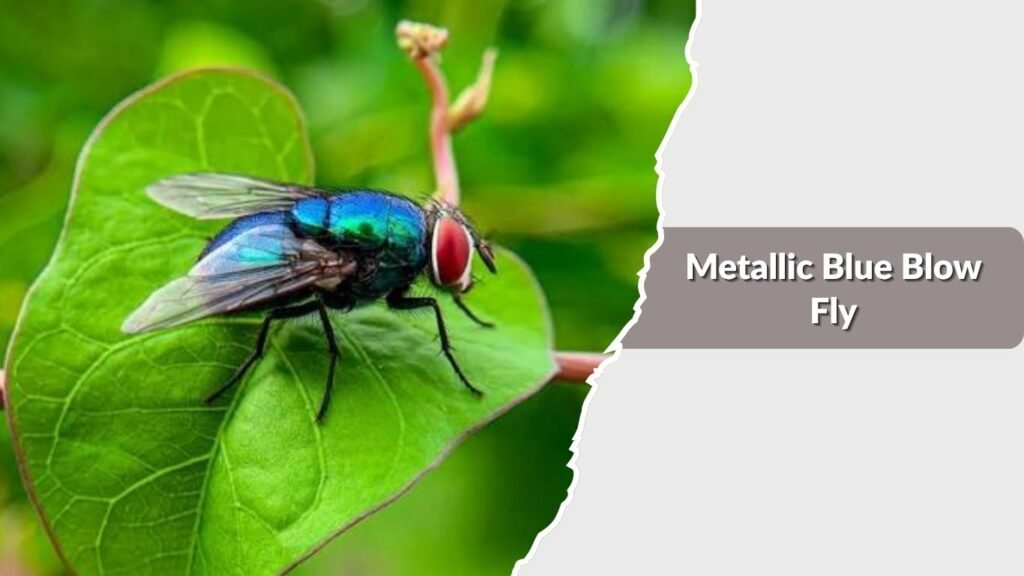
The metallic blue blow fly (Calliphora livida) is a cold-tolerant species distinguished by its shiny blue abdomen. It is mainly associated with animal remains and other decomposing organic material. Adults may appear around farms, woodland habitats, garbage, and buildings located in cooler regions.
Identification
- Glossy metallic-blue abdomen
- Dark-gray or black thorax
- Large reddish compound eyes
- Black bristly legs
- Clear wings
- Adult body length of approximately 8–12 millimeters
Habitat and Distribution
Metallic blue blow flies are found across northern and temperate areas of North America and Eurasia. They inhabit forests, grasslands, agricultural areas, and rural settlements. Adults tolerate cooler temperatures and may become active early or late in the typical fly season.
Diet and Feeding Behavior
Adults feed on nectar, feces, carrion fluids, and sugary substances. Females locate dead animals by following odors produced during decomposition. They place their eggs on moist, protected areas where newly hatched larvae can immediately begin feeding.
Life Cycle and Importance
The larvae pass through three stages while consuming decomposing tissue. Once fully developed, they leave the food source and pupate in soil or leaf litter. Their presence on animal or human remains can help forensic investigators understand insect colonization under cool environmental conditions.
15. Toad Blow Fly
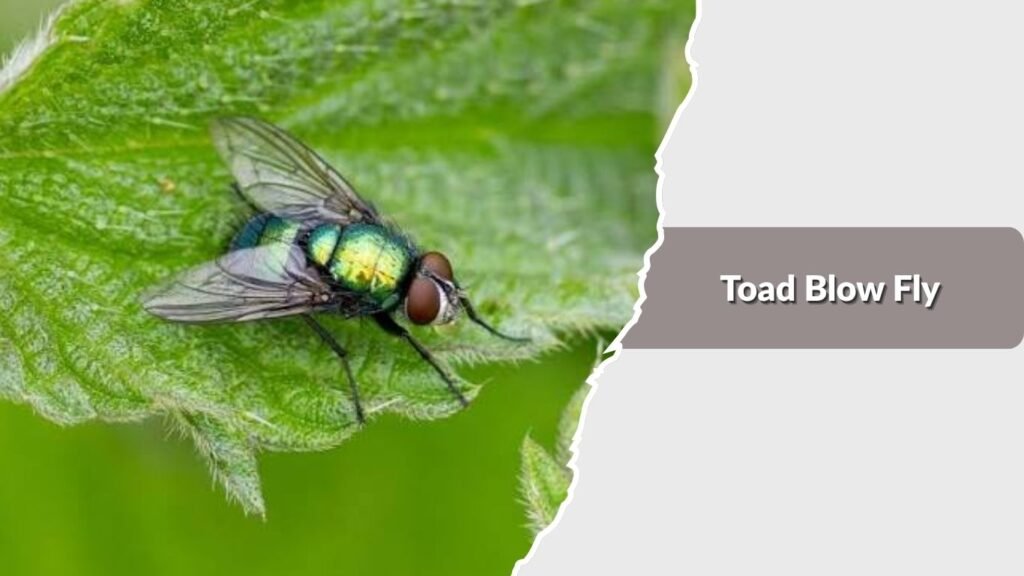
The toad blow fly (Lucilia bufonivora) is a parasitic species whose larvae infest living frogs and toads. Females usually lay eggs near the host’s nostrils, eyes, or wounds. After hatching, the maggots enter the tissue and can cause severe injury, infection, or death.
Identification
- Bright metallic green body
- Bronze reflections on the abdomen
- Large red compound eyes
- Clear wings
- Dark legs covered with bristles
- Adult length of approximately 7–10 millimeters
Habitat and Distribution
Toad blow flies occur mainly in Europe and parts of western Asia and North Africa. They inhabit wetlands, gardens, forests, meadows, and other places supporting amphibian populations. Adults are most active during warm months when frogs and toads are above ground.
Diet and Feeding Behavior
Adult flies feed primarily on nectar and other sugary liquids. Females search for suitable amphibian hosts and deposit eggs on their skin. The larvae enter through the nostrils or damaged tissue and feed on living flesh inside the head or body.
Life Cycle and Importance
Larval infestation is known as myiasis. Affected amphibians may show visible wounds, unusual behavior, difficulty breathing, or tissue loss. Mature larvae eventually leave the host and pupate in soil. This fly can have a significant effect on local frog and toad populations.
16. Cluster Blow Fly
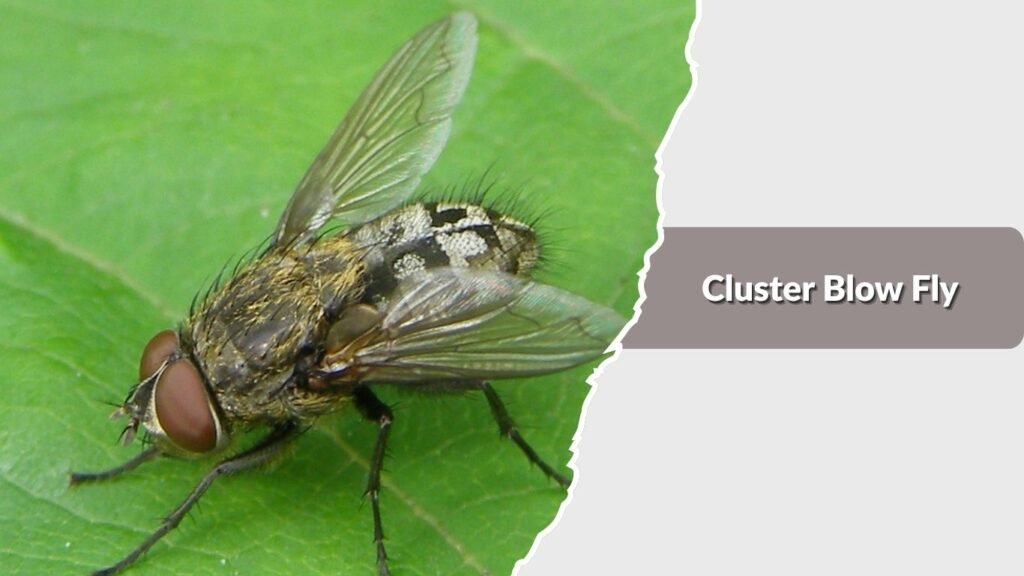
The cluster blow fly (Pollenia rudis), commonly called the cluster fly, is known for gathering inside buildings in large numbers. Unlike common bottle flies, its larvae parasitize earthworms rather than developing in garbage or carrion. Adults are slow-moving and do not reproduce indoors.
Identification
- Dull gray or olive-colored abdomen
- Golden hairs covering the thorax
- Irregular light and dark abdominal markings
- Reddish compound eyes
- Wings overlapping while at rest
- Adult length of approximately 7–10 millimeters
Habitat and Distribution
Cluster flies are widespread throughout Europe, North America, Australia, and New Zealand. Adults live in gardens, lawns, fields, and woodland edges. During autumn, they enter attics, wall spaces, and upper rooms to find protected places for overwintering.
Diet and Feeding Behavior
Adults feed on nectar, fruit juices, and other sugary liquids. Females lay eggs in soil containing earthworms. After hatching, the larvae locate earthworms, enter their bodies, and feed internally until they complete their development.
Life Cycle and Importance
Several generations may develop during warmer months. In autumn, adults gather on sunny walls before entering cracks around windows, roofs, or siding. They do not damage structures or contaminate food, but their large indoor clusters can create a considerable nuisance.
17. African Tumbu Fly
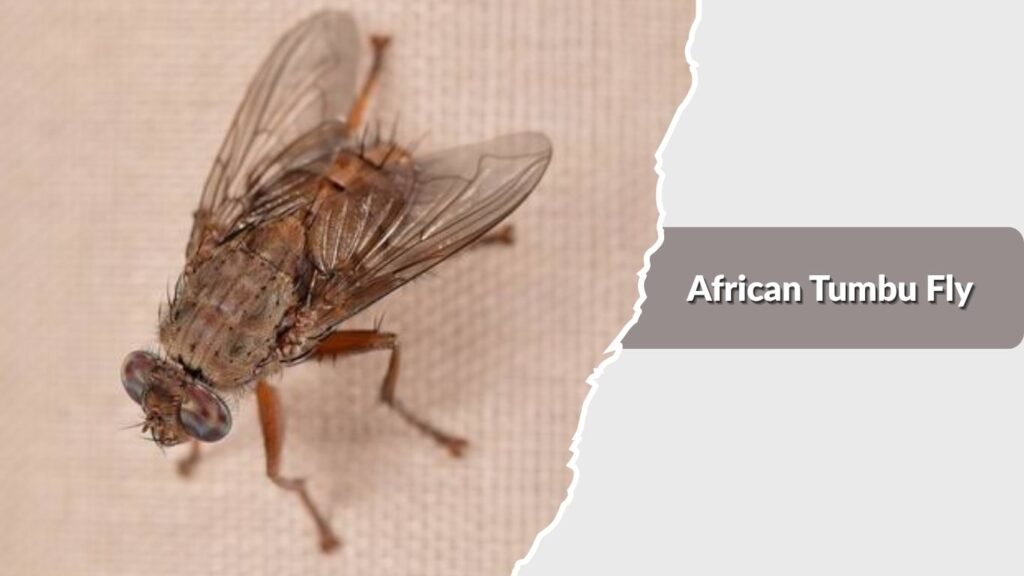
The African tumbu fly (Cordylobia anthropophaga) is a parasitic blow fly whose larvae develop beneath the skin of mammals. It can infest dogs, rodents, livestock, and humans. The resulting condition produces painful, boil-like swellings with small openings that allow the larvae to breathe.
Identification
- Yellowish-brown body
- Dark markings across the abdomen
- Reddish-brown compound eyes
- Short, strong body bristles
- Clear wings
- Adult body length of approximately 8–12 millimeters
Habitat and Distribution
The tumbu fly occurs mainly in tropical and subtropical regions of sub-Saharan Africa. It is common in warm environments with sandy soil and animal activity. Adults may be found around homes, livestock shelters, wildlife habitats, and places where clothing is dried outdoors.
Diet and Feeding Behavior
Adult flies consume plant juices and other sugary liquids. Females lay eggs on dry soil, contaminated fabric, or bedding containing traces of urine or sweat. Hatched larvae penetrate the skin when a suitable host makes contact with the material.
Life Cycle and Importance
The larvae remain beneath the skin while feeding and growing. Once mature, they emerge, fall to the ground, and pupate in soil. Infestation can be prevented by keeping clothing off the ground and ironing garments dried outdoors in areas where the fly is common.
FAQs
1. What is a blow fly?
A blow fly is a member of a large group of flies commonly associated with carrion, garbage, animal waste, and decomposing organic material. Many species have shiny metallic bodies. Their larvae, called maggots, help break down animal remains and recycle nutrients.
2. Are blow flies dangerous to humans?
Most blow flies do not bite or directly attack humans. However, adults can carry harmful microorganisms after contacting feces, garbage, or carrion. Certain species, such as screwworm and tumbu flies, have larvae capable of infesting living tissue and causing myiasis.
3. Why are blow flies found inside houses?
Blow flies enter houses while following odors from spoiled meat, garbage, dead rodents, pet waste, or other decomposing material. A sudden appearance of numerous adults may indicate that an animal has died inside a wall, attic, chimney, or another concealed area.
4. How long does a blow fly live?
An adult blow fly generally lives for two to four weeks, although temperature, food availability, and species can affect its lifespan. Its complete life cycle—from egg to adult—may take approximately two to three weeks under warm, favorable environmental conditions.
5. How can you prevent blow flies?
Prevent blow flies by keeping garbage containers sealed, cleaning food spills, removing pet waste, and storing meat properly. Repair window screens and seal openings around doors and roofs. Any dead animal found near or inside the building should be safely removed as soon as possible.