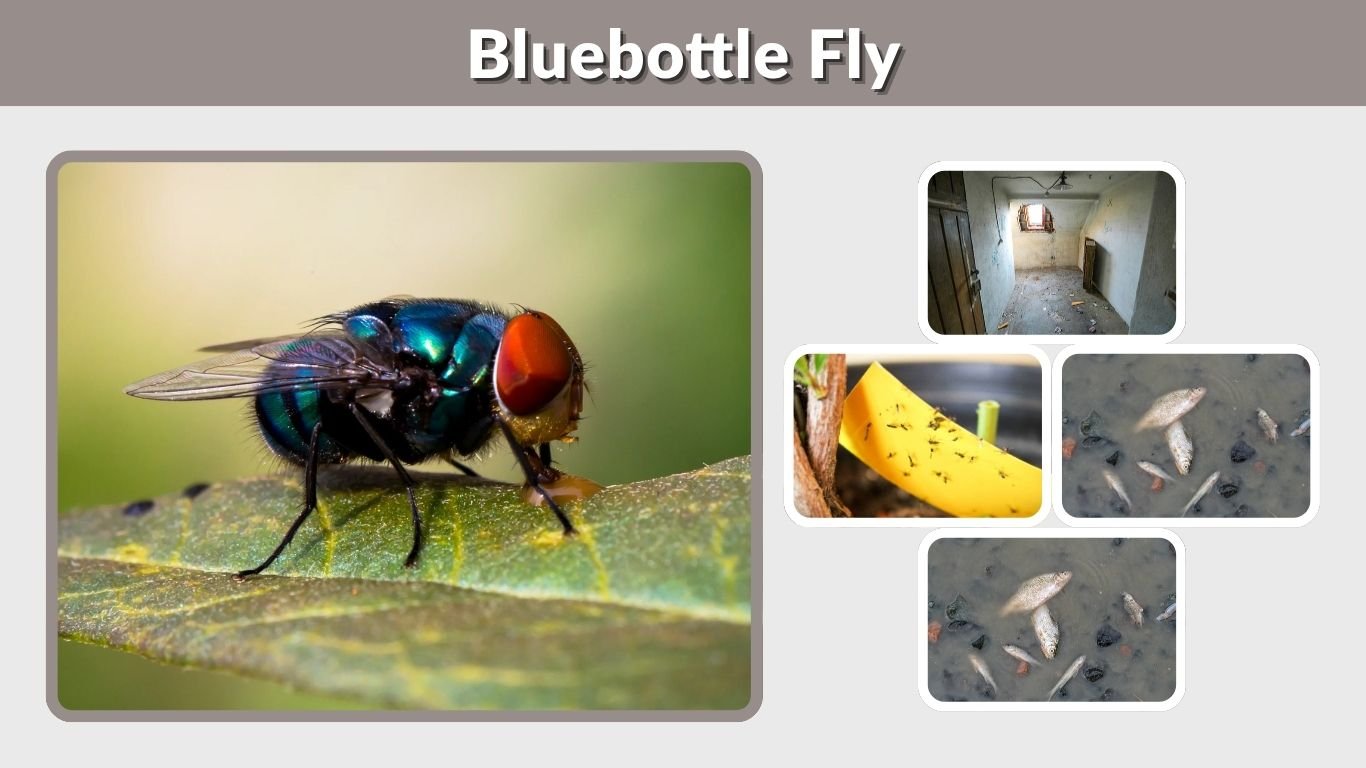
The bluebottle fly is a large blow fly recognized by its shiny metallic-blue abdomen and loud buzzing flight. These flies usually live outdoors, where they help break down dead animals and other decomposing material. However, they may enter homes when attracted to garbage, spoiled meat, pet waste, or a hidden animal carcass. Although bluebottle flies do not normally bite or sting people, their association with decaying matter makes them an important sanitation concern.
What Is a Bluebottle Fly?
“Bluebottle fly” is a common name used for several metallic-blue flies in the genus Calliphora. Two well-known species are Calliphora vomitoria and Calliphora vicina. Both belong to the blow fly family, Calliphoridae.
Bluebottle flies are natural decomposers. Their larvae consume dead animal tissue, helping recycle nutrients back into the environment. Adults may also visit flowers and feed on nectar, but females search for protein-rich decaying material on which to lay their eggs.
In Australia, the word “bluebottle” is also commonly used for a stinging marine animal related to the Portuguese man-of-war. The bluebottle fly is an insect and is completely different from that ocean-dwelling animal.
Bluebottle Fly Identification
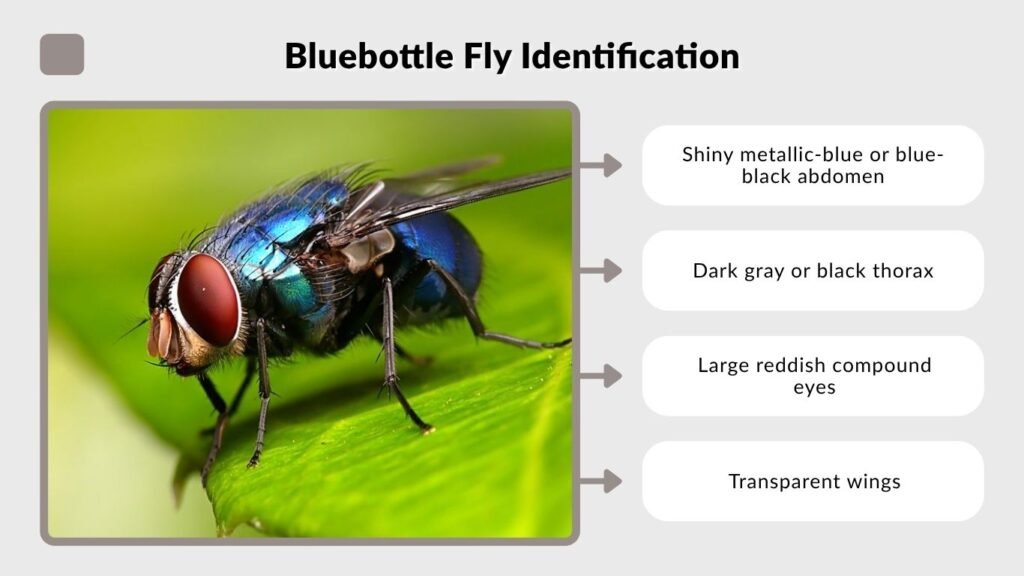
An adult bluebottle fly is noticeably larger and more strongly colored than a typical housefly. It usually measures approximately 10–14 millimeters long.
Common Identification Features
- Shiny metallic-blue or blue-black abdomen
- Dark gray or black thorax
- Large reddish compound eyes
- Transparent wings
- Short black antennae
- Dark legs covered with stiff hairs
- Thick, bristly body
- Loud buzzing sound during flight
Calliphora vomitoria often has orange or yellowish hairs below and behind its eyes, creating what is sometimes described as a ginger beard. Closely related species can be difficult to separate without examining small anatomical details.
Bluebottle Fly vs. Housefly
| Feature | Bluebottle Fly | Housefly |
| Body color | Metallic blue | Dull gray |
| Typical size | About 10–14 mm | About 6–8 mm |
| Flight sound | Loud buzzing | Softer buzzing |
| Breeding material | Carrion, meat and animal waste | Garbage, manure and food waste |
| General appearance | Large and glossy | Smaller and dull-colored |
Where Do Bluebottle Flies Come From?
Bluebottle flies normally come from an outdoor source of decaying organic material. A single fly may simply enter through an open door or window. However, numerous flies appearing over several days can indicate that they developed somewhere inside or close to the building.
Common breeding sources include:
- A dead mouse, rat, bird or other animal
- Spoiled meat or fish
- Uncovered household garbage
- Dirty outdoor bins
- Pet feces or animal bedding
- Forgotten wet pet food
- Compost containing animal products
- Dead animals in chimneys, attics or wall cavities
Indoor outbreaks sometimes begin when a rodent dies in a wall, ceiling, crawl space or attic. Adult flies emerge from the hidden carcass and move toward windows because they are attracted to light. Mississippi State University Extension notes that indoor blow fly infestations can be associated with dead rodents, pet feces, forgotten pet food and similar materials.
Bluebottle Flies in the House
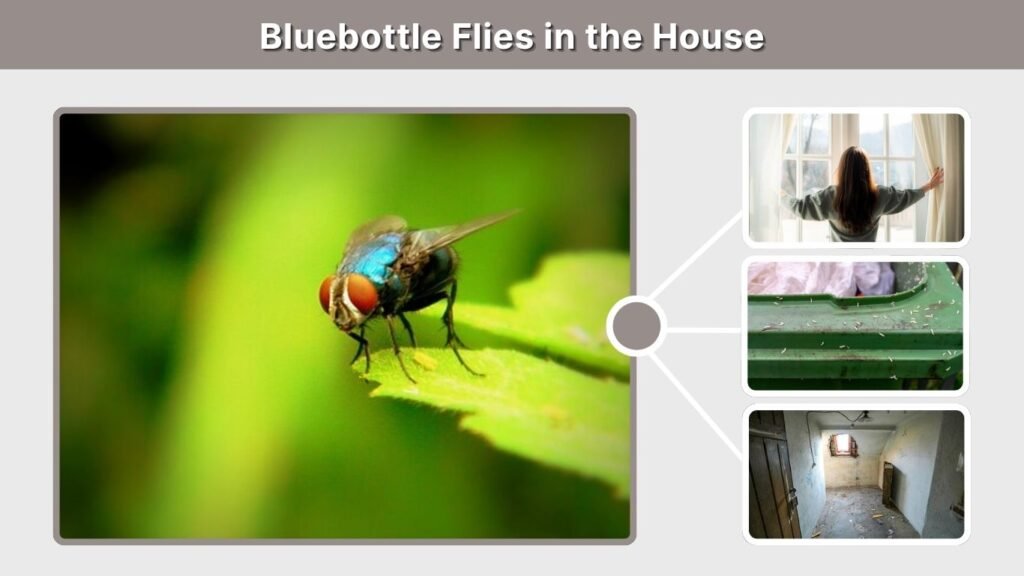
Finding one bluebottle fly does not necessarily mean there is an infestation. It may have flown indoors from a garden or garbage area. A larger problem is more likely when several flies suddenly appear in the same room.
Warning Signs of an Infestation
- Multiple adult flies near windows
- Persistent loud buzzing indoors
- Maggots near bins, cupboards or appliances
- Small brown pupal cases along floor edges
- A rotting or unpleasant smell
- Flies repeatedly emerging from one room
- Increased activity around a chimney or attic entrance
During winter, bluebottle flies may appear indoors after developing in a protected, temperature-controlled area. Warm indoor conditions can allow development to continue even when outdoor temperatures are low.
Bluebottle Fly Eggs, Maggots, and Pupae
Female bluebottle flies lay groups of small, creamy-white eggs directly on suitable food. This may include carrion, meat scraps, animal wounds, feces or other moist decomposing material.
The eggs hatch into pale, legless larvae known as maggots. These maggots feed actively and pass through three main larval stages. When fully developed, they leave the wet food source and crawl toward a dry, protected location.
There, the outer larval skin hardens into a brown, capsule-like structure called a puparium. The developing fly changes into an adult inside it.
Bluebottle Fly Life Cycle
Bluebottle flies undergo complete metamorphosis through four major stages:
- Egg: Eggs are placed on moist, decomposing material.
- Larva: Maggots hatch and feed on the material.
- Pupa: Mature maggots move away and pupate in a dry location.
- Adult: The winged fly emerges, mates and begins the cycle again.
Development speed depends heavily on temperature, moisture, species and food quality. Blow flies may complete development from egg to adult in approximately 16–35 days under suitable conditions. Warmer temperatures generally accelerate development, while cold conditions slow it considerably.
An adult bluebottle fly may survive for several weeks when it has access to moisture and food. Its exact lifespan varies with temperature, predators and environmental conditions.
What Do Bluebottle Flies Eat?
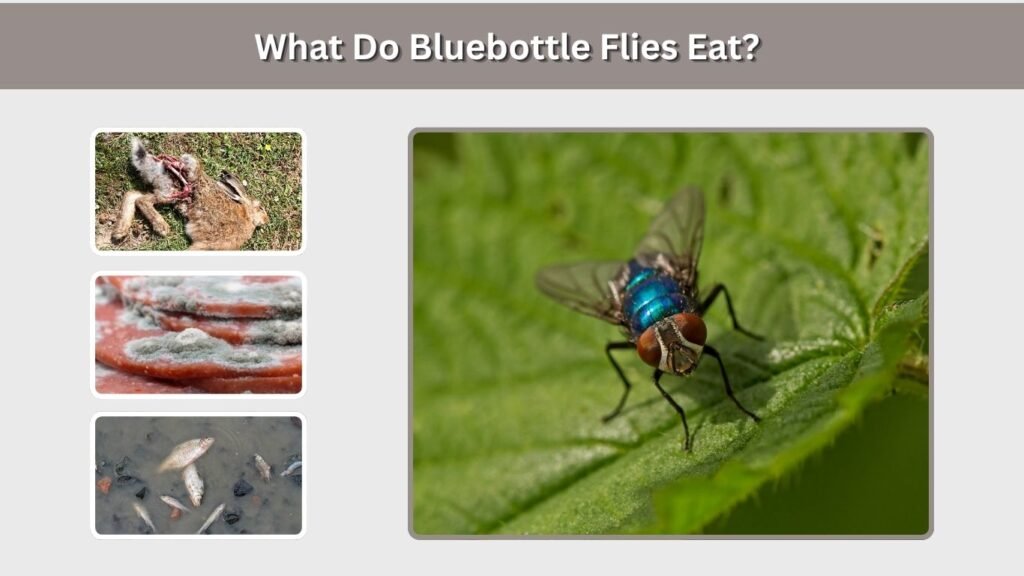
Adult bluebottle flies primarily consume liquids. They may feed on flower nectar, sugary liquids, juices from decomposing material and moisture found around garbage.
Bluebottle fly maggots require moist, protein-rich material. Their food may include:
- Dead animal tissue
- Spoiled meat
- Fish remains
- Animal waste
- Carrion fluids
- Infected or damaged animal tissue
Because their mouthparts are adapted for consuming liquid or softened food, adult bluebottle flies may release digestive fluid onto solid material before feeding.
Do Bluebottle Flies Bite or Sting?
Bluebottle flies do not normally bite people. They lack the piercing mouthparts used by mosquitoes, horse flies and stable flies. They also do not possess a stinger.
A fly landing on the skin may create a tickling sensation, but this should not be confused with a bite. Reports of a “bluebottle fly bite” are often caused by another biting fly or insect.
Rarely, some blow fly larvae can infest wounds in humans or animals, producing a condition called myiasis. This is different from an adult fly biting and is most likely to affect untreated wounds or neglected animals.
Are Bluebottle Flies Dangerous?
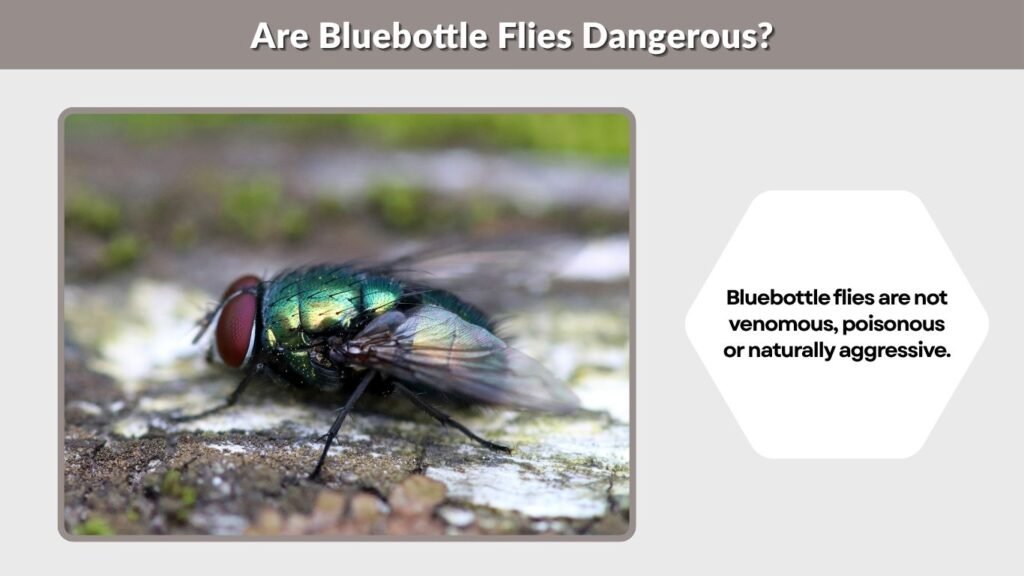
Bluebottle flies are not venomous, poisonous or naturally aggressive. Their main danger comes from contamination rather than biting.
A fly may land on animal waste, carrion or garbage and later walk across food, dishes or kitchen surfaces. Microorganisms can potentially be carried on its feet, body hairs or mouthparts.
Food on which flies have been feeding or laying eggs should be discarded. Kitchen counters, cutting boards and utensils exposed to heavy fly activity should be thoroughly cleaned.
How to Get Rid of Bluebottle Flies
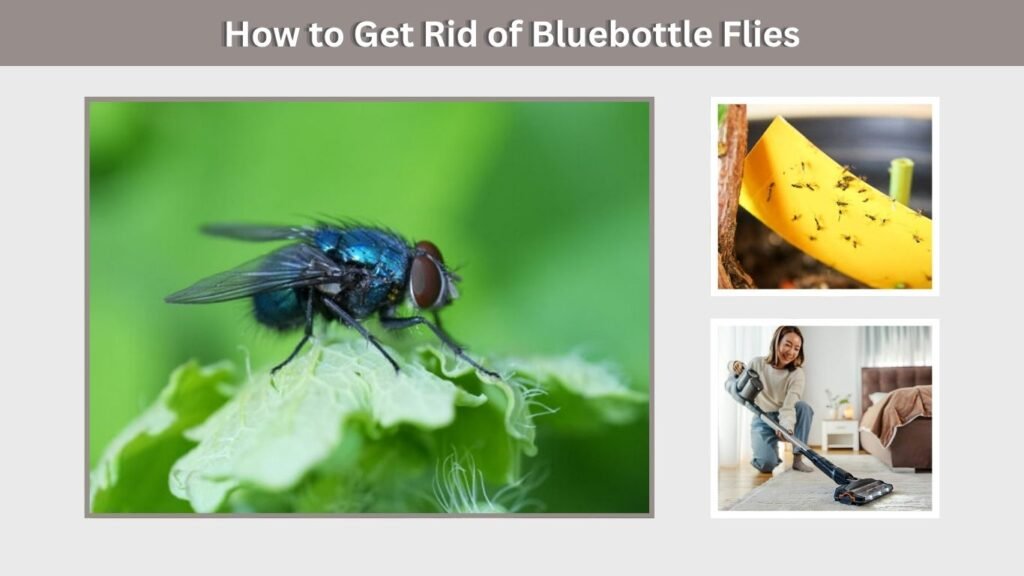
Killing adult flies may provide immediate relief, but removal of the breeding material is the most important step. New adults will continue emerging while the source remains.
Find and Remove the Source
Check garbage bins, pet feeding areas, food storage spaces, attics, chimneys, wall cavities and areas beneath appliances. Dispose of spoiled food, feces or dead animals safely.
A hidden carcass may be difficult to reach. When necessary, contact a pest-control professional or building specialist to locate and remove it.
Clean the Area
Wash contaminated surfaces with warm water and an appropriate household cleaner. Empty bins regularly and clean any liquid collected at the bottom. Place meat waste in sealed bags before disposal.
Control Adult Flies
Adult flies can be reduced with:
- Fly screens
- Sticky traps
- Electric fly traps
- Covered garbage containers
- A vacuum cleaner
- Properly labeled indoor fly sprays
Never spray insecticides directly onto food, food-preparation surfaces, pets or aquariums. Follow all product instructions.
Prevent Future Problems
Keep doors and windows screened, repair gaps around pipes and vents, store food in closed containers, collect pet waste promptly and keep outdoor bins away from doors. Avoid placing meat, bones or animal products in poorly maintained compost piles.
FAQs
Why are there suddenly lots of bluebottle flies in my house?
A sudden group of flies often means adults have recently emerged from a nearby breeding source. Check for spoiled meat, dirty bins, pet waste or a dead rodent in an attic, chimney, wall cavity or crawl space.
Do bluebottle flies make nests?
Bluebottle flies do not build organized nests. Females lay eggs directly on decaying animal material or other suitable food. Several flies may emerge from one location, making the area appear like a nest.
Can bluebottle flies lay eggs on food?
Yes. They may lay eggs on exposed meat, fish or other suitable animal-based foods. Food containing fly eggs or maggots should be sealed and discarded rather than washed and eaten.
Why do bluebottle flies gather around windows?
Newly emerged flies move toward daylight while trying to leave a building. This is why adults from a hidden indoor carcass are frequently found buzzing against windows.
How can I kill bluebottle flies quickly?
Use a vacuum, sticky trap or appropriately labeled fly spray for immediate control. However, killing adults alone will not solve the problem. Locate and remove the decaying material where the flies are breeding.