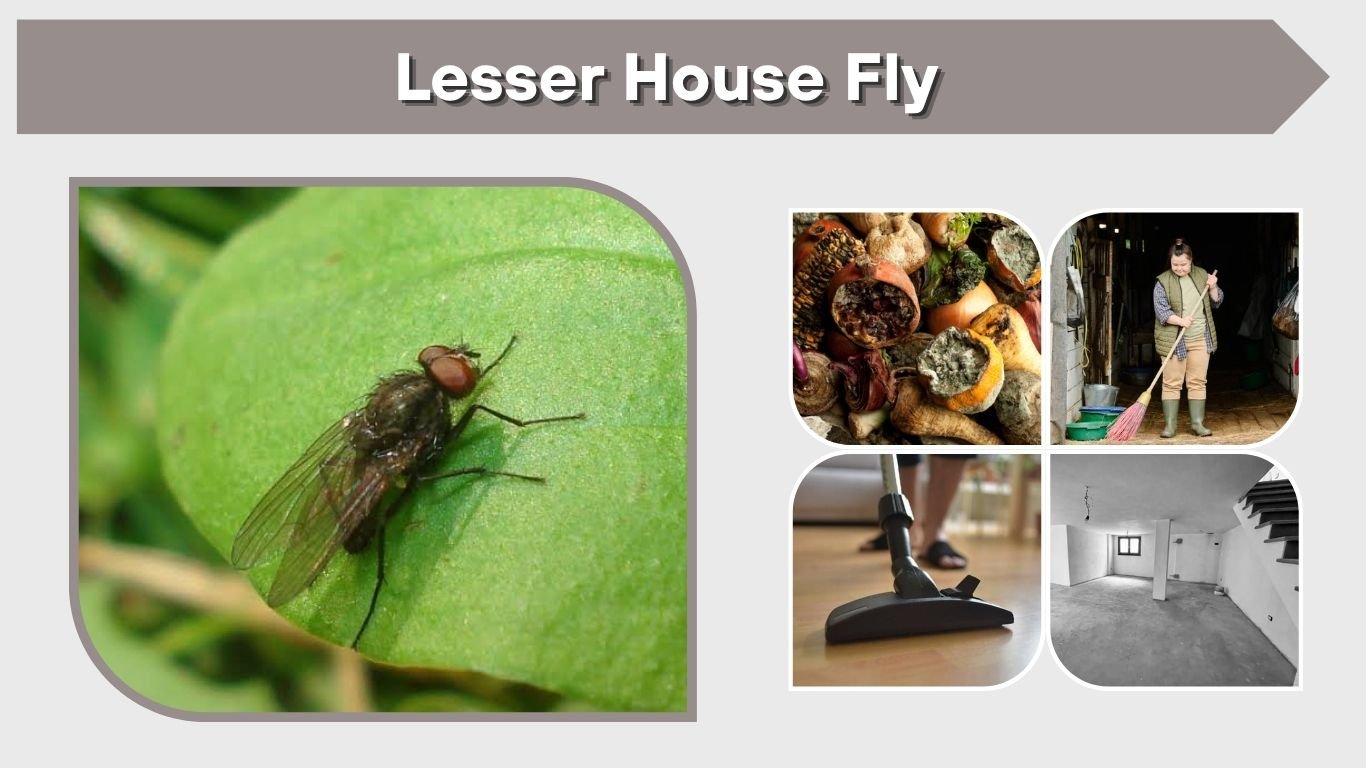
The lesser house fly is a small, persistent fly commonly found inside homes, poultry facilities, barns, restaurants, and other buildings. It is especially noticeable because males often circle beneath lights or hover repeatedly in the middle of a room. Although lesser house flies do not normally bite people, their presence may indicate that moist, decomposing organic material is nearby. Proper identification and removal of the breeding source are essential for controlling an infestation. This guide covers the lesser house fly’s appearance, behavior, breeding sites, life cycle, and the most effective ways to eliminate it.
What Is a Lesser House Fly?
The lesser house fly (Fannia canicularis) is also known as the little house fly. It belongs to the family Fanniidae and occurs in many parts of the world, including North America, Europe, Australia, and New Zealand.
It frequently enters houses and other buildings during warm weather. Lesser house flies are generally more tolerant of cool indoor conditions than common house flies, so they may become active earlier in spring.
Lesser House Fly Identification
Adult lesser house flies resemble common house flies but have narrower bodies and slightly different behavior. Their flight pattern is often the easiest way to recognize them.
Identification characteristics include:
- Approximately 4–7 millimeters long
- Slender gray or grayish-black body
- Three faint stripes on the thorax
- Clear wings with yellowish bases
- Large reddish-brown compound eyes
- Pale or yellowish areas on the abdomen
- Quick, irregular flight pattern
- Habit of circling beneath ceiling lights
Males frequently fly in repetitive circles around hanging lamps, fans, doorways, and open spaces. Females are less active and more likely to remain near breeding materials.
Lesser House Fly Size
The lesser house fly is usually smaller than the common house fly. Adults typically measure between ⅛ and ¼ inch long.
Its narrow body and small size can make it appear similar to several other indoor flies. Observing how it moves is helpful: lesser house flies frequently hover and circle rather than repeatedly landing on food and surfaces.
Do Lesser House Flies Bite?
Lesser house flies do not bite people or animals. They do not possess piercing mouthparts and therefore cannot feed on blood.
However, large populations can become a serious nuisance. Because the flies breed in decaying organic material and animal waste, they may pick up microorganisms and carry them to nearby surfaces. Keeping them away from kitchens, food-storage areas, and animal facilities remains important.
Lesser House Fly vs. Common House Fly
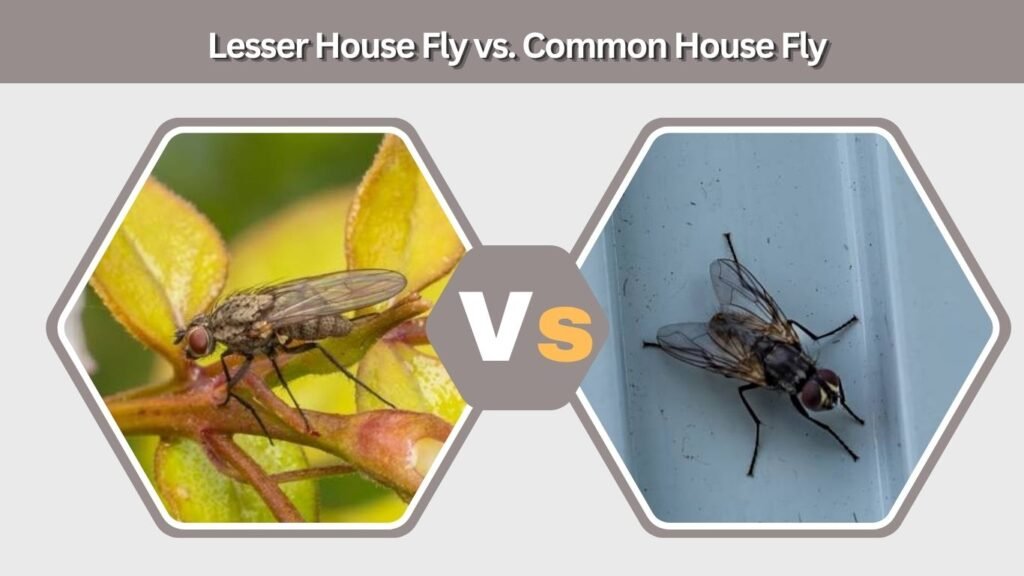
The lesser house fly and common house fly may occupy the same buildings, but they differ in size, appearance, flight behavior, and breeding preferences.
| Feature | Lesser House Fly | Common House Fly |
|---|---|---|
| Scientific name | Fannia canicularis | Musca domestica |
| Typical size | 4–7 mm | 6–8 mm |
| Body shape | Slender | Broader and more robust |
| Flight behavior | Circles and hovers indoors | Flies between surfaces and food |
| Thorax | Three faint stripes | Four distinct dark stripes |
| Common breeding source | Poultry manure and moist decay | Garbage, manure and food waste |
| Bites people | No | No |
A fly repeatedly circling in the center of a room is more likely to be a male lesser house fly. Common house flies are more likely to land on windows, countertops, garbage, food, and people.
Lesser House Fly Behavior and Habitat
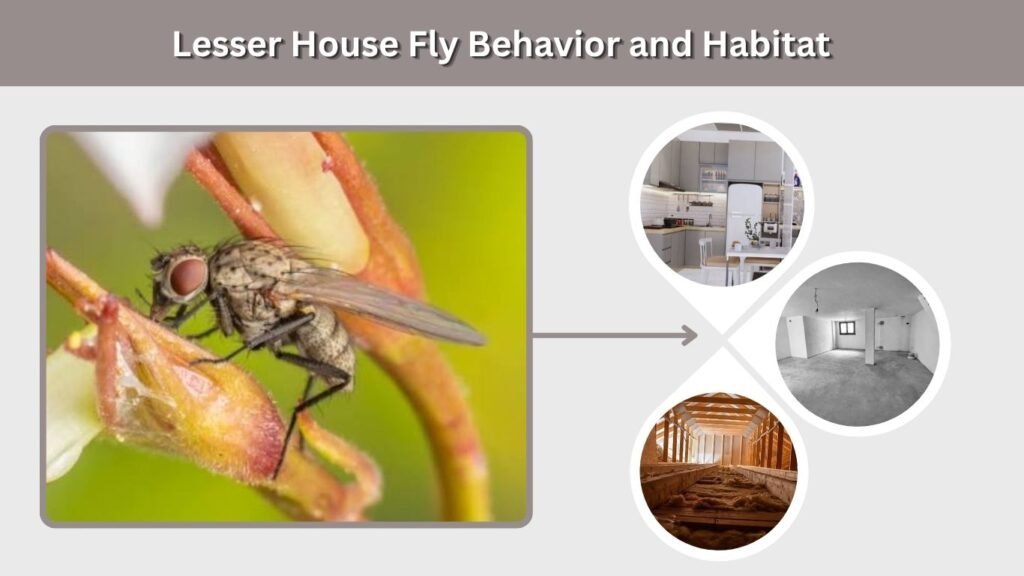
Adult lesser house flies can live indoors or around agricultural buildings. Males are known for their distinctive aerial displays. They may fly in slow circles for extended periods, usually beneath ceiling fixtures or in shaded locations.
These circular flights help males establish small territories and locate females. Their repeated hovering can make them appear unusually fearless because they may continue circling even when people walk through the area.
Where Are Lesser House Flies Found?
Lesser house flies occur in homes, poultry houses, farms, kennels, livestock buildings, restaurants, hospitals, garbage areas, and food-processing facilities. They are particularly associated with locations containing animal manure.
Inside a house, adults may gather in:
- Kitchens and utility rooms
- Bathrooms and basements
- Attics and wall spaces
- Rooms with hanging light fixtures
- Areas near open doors and windows
- Enclosed patios and porches
- Spaces close to animal housing
Finding one or two flies does not always indicate indoor breeding. However, flies appearing continuously usually mean that a breeding source exists inside or close to the building.
What Attracts Lesser House Flies?
Lesser house flies are attracted to moist organic material suitable for egg laying and larval development. Adults may also enter buildings because of odors, warmth, light, or accessible openings.
Common attractants include animal manure, spoiled food, decomposing vegetation, wet pet waste, poultry bedding, compost, and neglected garbage. Males may gather beneath lights even when the breeding source is somewhere else.
Lesser House Fly Breeding Sites
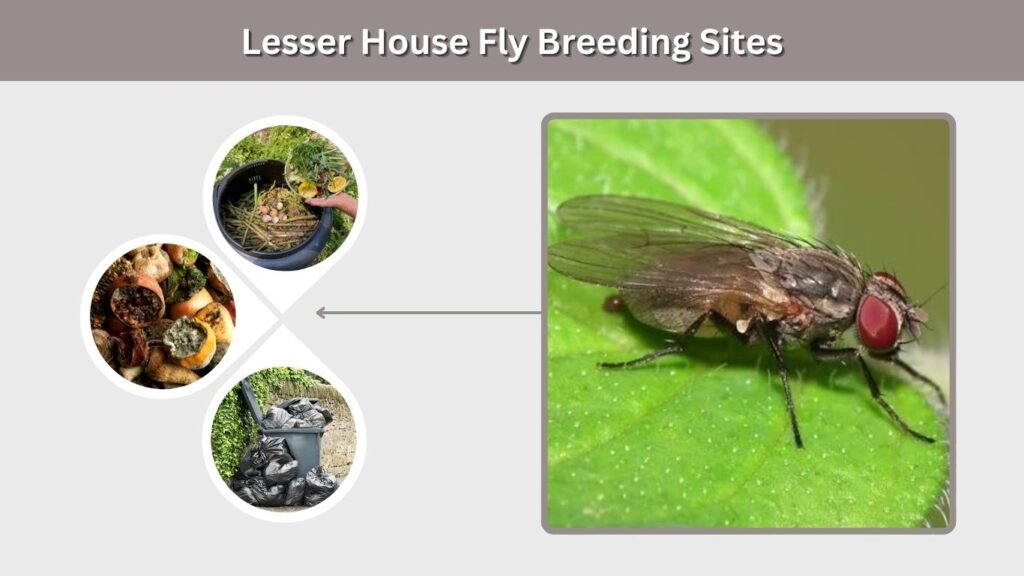
Locating the breeding material is the most important part of controlling an infestation. Lesser house flies generally develop in damp, decomposing organic matter.
Common breeding sites include:
- Poultry, pig, and livestock manure
- Wet animal bedding
- Pet feces and soiled litter
- Compost containing food waste
- Rotting fruits and vegetables
- Decaying grass and vegetation
- Garbage containers
- Spilled animal feed
- Dead animals
- Accumulations inside dirty drains
- Sewage and contaminated soil
Poultry manure is an especially important breeding source. Farms and properties with backyard chickens may experience considerable activity when manure is allowed to remain wet and undisturbed.
Indoor infestations may occasionally originate from a dead rodent, bird, or other animal in an attic, chimney, wall cavity, or crawl space.
Lesser House Fly Life Cycle
The lesser house fly undergoes complete metamorphosis with four developmental stages: egg, larva, pupa, and adult. Its development speed depends on temperature, moisture, and food availability.
Eggs
Female flies lay clusters of narrow, white eggs on moist organic material. Manure mixed with bedding or animal feed provides particularly favorable conditions.
The eggs can hatch within approximately one or two days when temperatures are warm. Females may choose concealed breeding sites, making the source difficult to locate.
Larvae
Lesser house fly larvae look very different from the smooth maggots of common house flies. They are flattened and possess numerous feathery or spiny projections along the sides of their bodies.
These projections help larvae move through moist material and provide a useful identification feature. The larvae feed on decomposing organic matter and microorganisms rather than living plants or healthy animal tissue.
Pupae and Adults
After passing through three larval stages, the maggots move to a relatively dry location and pupate. The pupal case is dark and retains many of the larva’s spiny projections.
An adult fly later emerges and begins feeding, mating, and searching for suitable breeding sites. A complete generation may develop within approximately three to four weeks under favorable conditions. Cooler weather can lengthen development considerably.
How to Get Rid of Lesser House Flies
Removing adult flies provides temporary relief, but lasting control requires finding and eliminating the material where larvae are developing.
Find and Remove the Breeding Source
Begin by inspecting garbage containers, compost bins, drains, animal areas, and spaces where food waste could accumulate. Check beneath appliances, behind storage containers, and around pet cages.
For a thorough inspection:
- Remove pet waste from yards and litter areas.
- Clean poultry houses and replace soiled bedding.
- Keep livestock manure dry and manage it regularly.
- Discard spoiled fruits and vegetables.
- Clean underneath garbage and recycling containers.
- Remove decaying grass or vegetation.
- Inspect attics and crawl spaces for dead animals.
- Repair plumbing leaks and improve drainage.
- Clean spills beneath animal feeders.
- Wash dirty bins with detergent and water.
Dispose of contaminated materials in sealed bags or move them to an appropriately managed composting area. Simply applying insecticide to the surface may not kill larvae developing deeper inside organic waste.
Use Lesser House Fly Traps
Sticky traps can capture adults inside rooms, barns, and poultry facilities. Place them near windows, lights, entrances, or observed flight areas, but keep them away from children, pets, birds, and food-preparation surfaces.
UV insect-light traps may also catch lesser house flies. Their performance depends on placement. Position them away from competing sunlight and avoid installing them where they could draw outdoor flies deeper into the building.
Food-based baits may be less effective against lesser house flies than against common house flies because of differences in their behavior and feeding preferences.
Use a Vacuum for Immediate Removal
A vacuum cleaner is an effective, chemical-free option when adults are circling inside a room or resting on windows. Empty the collection container outdoors afterward.
A fly swatter can kill individual flies, but male lesser house flies may be difficult to hit because of their quick, irregular flight.
Clean Drains and Waste Areas
If flies appear near a bathroom, kitchen, or utility room, inspect the drains for accumulated organic residue. Scrub the drain walls mechanically with a stiff brush and an appropriate cleaning product.
Pouring vinegar or bleach into a drain usually does not remove the entire layer of material supporting larvae. Never combine household cleaning chemicals, as dangerous gases can result.
Seal Entry Points
Repair damaged window screens, seal cracks around doors, and close openings around utility pipes. Install weatherstripping where exterior doors do not close tightly.
Air curtains and properly positioned fans can reduce fly entry in frequently opened commercial or agricultural doorways. Lesser house flies are relatively weak against strong, continuous airflow.
Consider Professional Treatment
A persistent infestation may originate from an inaccessible wall cavity, large manure accumulation, sewage problem, or neighboring animal facility. A pest-management professional can identify hidden breeding sites and recommend a suitable treatment.
Insecticide sprays should be used only as directed on their labels. Avoid applying them around food, animals, nesting birds, or water sources unless the product is specifically approved for that location.
Getting Rid of Lesser House Flies Naturally
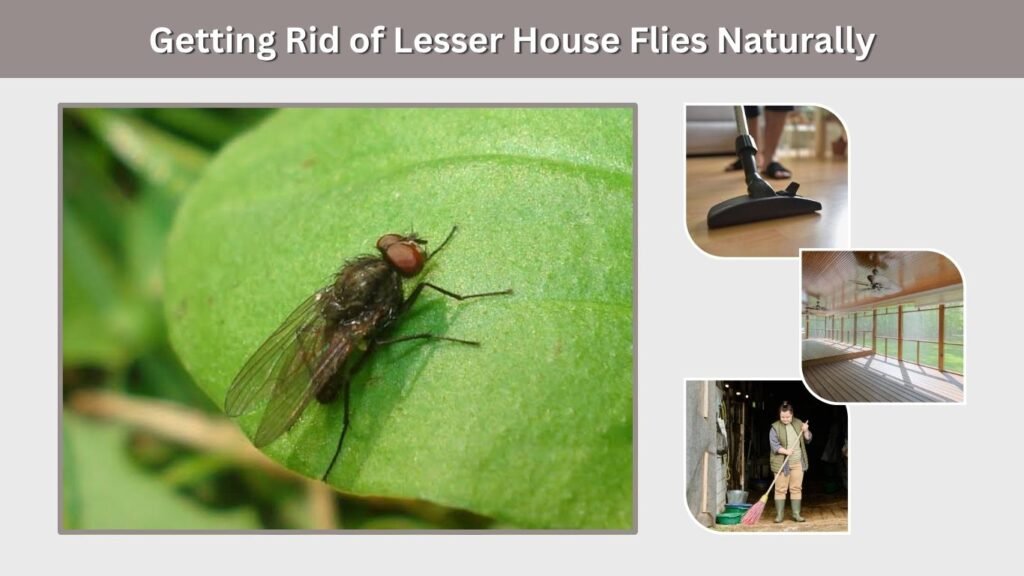
Sanitation is the safest and most effective natural control method. Remove decaying material, keep garbage covered, clean pet areas, and allow wet locations to dry.
Other low-chemical methods include:
- Vacuuming adult flies
- Installing fine-mesh screens
- Using covered garbage containers
- Placing sticky traps in flight areas
- Improving ventilation and drainage
- Using fans on patios and porches
- Cleaning animal housing frequently
- Keeping compost properly balanced and covered
A bowl of vinegar may catch a few flies, but it is generally more effective for fruit flies. It should not be relied upon to resolve a lesser house fly infestation.
How to Prevent Lesser House Flies
Prevention depends on denying the flies access to wet breeding materials. Garbage should be removed regularly, and containers should have tight-fitting lids. Pet feces, spilled feed, and soiled bedding should never be allowed to accumulate.
Manure management is especially important around poultry and livestock. Improve ventilation, repair leaking water systems, and prevent manure from becoming excessively wet. Regularly inspect compost, drains, crawl spaces, and storage areas throughout the warmer months.
FAQs
Why do lesser house flies circle in a room?
Male lesser house flies perform repeated circling flights beneath lights or in open indoor spaces. This behavior helps them establish territories and encounter females. The circling pattern is one of the best ways to distinguish them from common house flies.
Where do lesser house flies lay their eggs?
Females lay eggs in moist, decomposing organic materials such as poultry manure, wet animal bedding, pet waste, rotting vegetation, garbage, compost, sewage, and spoiled feed. They may also use material surrounding a dead animal.
Are lesser house flies attracted to UV light?
Yes, adult lesser house flies can be attracted to UV insect-light traps. Proper placement is important. Install traps away from competing sunlight and in locations where they will not attract additional outdoor flies through open doors or windows.
How long do lesser house flies live?
Adult lifespan varies with temperature, food, and environmental conditions, but adults may survive for several weeks. The entire life cycle can sometimes be completed in three to four weeks, allowing multiple generations to develop during warm weather.
What is the best lesser house fly control?
The best control is locating and removing the breeding source. Clean up manure, pet waste, spoiled food, wet bedding, garbage, and decaying vegetation. Combine sanitation with screens, sticky traps, vacuuming, drainage improvements, and professional treatment when necessary.