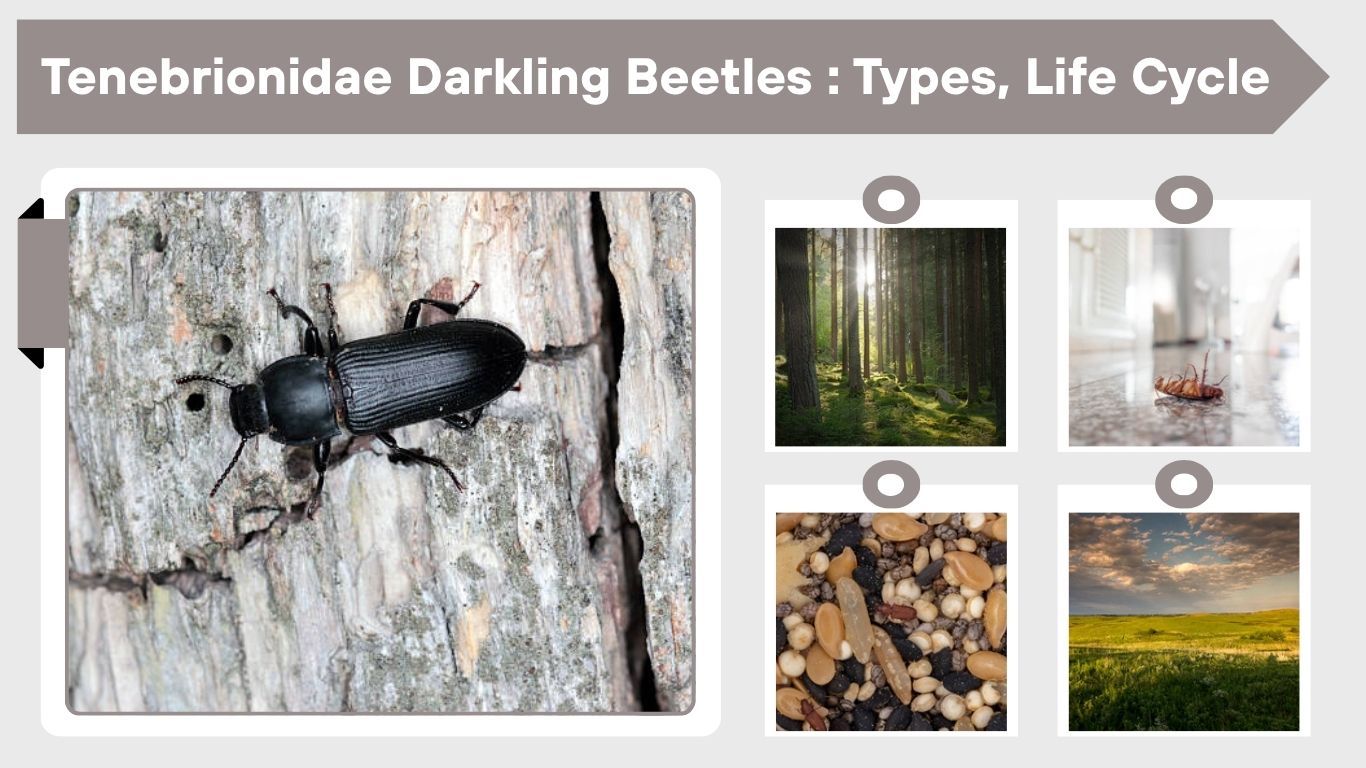
Tenebrionidae, commonly known as darkling beetles, are one of the largest and most diverse families of beetles in the world. With over 20,000 known species, these insects can be found in a wide range of environments, from dry deserts to forests and even inside homes.
Darkling beetles play an important role in ecosystems by breaking down organic matter and recycling nutrients. They are also widely studied in science and used in education, especially because of their connection to mealworms. Understanding their characteristics, habitat, and behavior helps explain why they are so widespread and adaptable.
What Are Tenebrionidae (Darkling Beetles)?
Tenebrionidae is a large family of beetles that includes a wide variety of species commonly referred to as darkling beetles. The name “Tenebrionidae” comes from a Latin word meaning “dark,” which reflects their typically dark-colored bodies.
These beetles are known for their hard outer shells, slow movement, and ability to survive in tough environments. While many species share similar features, their size, shape, and behavior can vary depending on their habitat.
Darkling beetles are found on every continent except Antarctica. They are especially common in dry regions, where they have developed unique adaptations to survive with limited water and extreme temperatures.
Physical Characteristics of Darkling Beetles
Darkling beetles have several defining physical traits that make them easy to recognize, although their appearance can vary across species.
Body Structure
Most darkling beetles have a hard, protective exoskeleton that helps them survive in harsh conditions. Their bodies are usually oval or elongated, giving them a simple but sturdy shape.
Their antennae are short and segmented, and their legs are well-developed for walking rather than jumping or flying. In many species, the wings are reduced or fused, meaning they cannot fly.
Size and Variations
The size of darkling beetles can range from just a few millimeters to several centimeters, depending on the species. Some are small and barely noticeable, while others are larger and easier to identify.
Color is usually dark brown or black, but slight variations can occur. This dark coloration helps them blend into their surroundings and avoid predators.
Unique Features
One interesting feature of many darkling beetles is their defense mechanism. Some species can release a foul-smelling chemical to deter predators. Others raise their bodies or heads in a defensive posture when threatened.
These adaptations help them survive in environments where predators are common and resources are limited.
Types and Common Species of Tenebrionidae

The Tenebrionidae family includes thousands of species, but a few are especially well-known due to their role in education, research, or unique habitats.
Mealworm Beetle (Tenebrio molitor)
The mealworm beetle is one of the most recognized species of darkling beetles. Its larval stage, known as the mealworm, is widely used as pet food and in scientific studies.
This species is commonly found in stored grains and dry food products. It is also frequently used in classrooms to demonstrate insect life cycles because it is easy to raise and observe.
Desert Darkling Beetles
Many darkling beetles are specially adapted to desert environments. These species have developed unique survival strategies to deal with extreme heat and lack of water.
Some desert species collect moisture from the air or conserve water by reducing activity during the hottest parts of the day. Their bodies are designed to minimize water loss, allowing them to thrive in harsh conditions.
Other Notable Species
Beyond mealworms and desert beetles, the Tenebrionidae family includes a wide variety of species with different behaviors and habitats. Some live in forests, while others are found in grasslands or agricultural areas.
This diversity is one of the reasons why darkling beetles are considered one of the largest beetle families in the world.
Habitat and Distribution

Darkling beetles are highly adaptable and can be found in many different environments across the globe. Their ability to survive in both natural and human-made habitats makes them particularly successful.
They are most commonly associated with dry environments such as deserts and arid regions. However, many species also live in forests, grasslands, and even coastal areas.
Indoors, darkling beetles are often found in stored grains, flour, and other dry food products. They may also appear in basements, attics, or storage areas where organic materials are present.
Their wide distribution is a result of their ability to adapt to different climates and food sources. This flexibility allows them to thrive in both natural ecosystems and human environments.
Diet and Feeding Behavior

Darkling beetles are scavengers, which means they feed on a variety of organic materials. Their diet plays an important role in maintaining ecological balance.
They commonly eat decaying plant matter, dead insects, and stored grains. In natural environments, they help break down organic debris, returning nutrients to the soil.
In human environments, their feeding habits can sometimes make them pests, especially when they infest stored food products. However, their overall role in decomposition makes them beneficial in many ecosystems.
Life Cycle of Darkling Beetles
Darkling beetles go through a complete metamorphosis, which includes four distinct stages: egg, larva, pupa, and adult. Each stage plays a specific role in their growth and development.
Stages of Development
The life cycle begins when a female beetle lays eggs in a suitable environment such as soil, grain, or organic material. These eggs hatch into larvae, which are commonly known as mealworms.
The larval stage is the longest and most active phase. During this time, the larvae feed continuously, grow in size, and shed their outer skin multiple times. After reaching full development, they enter the pupal stage.
In the pupa stage, the insect undergoes major transformation. It does not feed or move much, as its body changes into the adult form. Finally, the adult beetle emerges, ready to reproduce and continue the cycle.
Duration of Life Cycle
The complete life cycle can take anywhere from several weeks to a few months. The exact duration depends on factors such as temperature, food availability, and environmental conditions. Warmer conditions generally speed up development, while colder environments slow it down.
Behavior and Adaptations
Darkling beetles have developed a range of behaviors and adaptations that help them survive in different environments.
Nocturnal Behavior
Many species are nocturnal, meaning they are most active at night. This helps them avoid predators and reduces water loss in hot environments.
Survival in Harsh Conditions
Darkling beetles are especially well adapted to dry climates. Some species can survive with very little water by conserving moisture and reducing activity during extreme heat.
Defense Mechanisms
When threatened, some darkling beetles release a strong-smelling chemical to deter predators. Others may raise their bodies or remain still to avoid detection. These strategies increase their chances of survival in the wild.
Importance of Tenebrionidae in Ecosystems
Darkling beetles play a crucial role in maintaining ecological balance. Their activities support natural processes that benefit the environment.
Decomposition and Nutrient Recycling
By feeding on decaying plants and organic matter, they help break down materials and return nutrients to the soil. This process supports plant growth and soil health.
Role in Food Chains
Darkling beetles and their larvae serve as a food source for many animals, including birds, reptiles, and small mammals. This makes them an important part of the food chain.
Scientific and Educational Value
Because of their simple life cycle and ease of observation, darkling beetles are widely used in research and education. They help scientists study insect development, behavior, and environmental adaptation.
Are Darkling Beetles Harmful?

Darkling beetles are generally not harmful to humans, but they can sometimes become a nuisance in certain situations.
Impact on Humans
They do not bite or sting and are not considered dangerous. Most species are harmless and avoid direct contact with humans.
Impact on Homes and Food
In some cases, they may infest stored grains, flour, or dry food products. This can lead to contamination and spoilage, especially if the infestation is not controlled.
While they are not dangerous, proper storage and cleanliness can prevent them from becoming a problem indoors.
Uses of Darkling Beetles
Darkling beetles are useful in several ways, especially in education, agriculture, and research.
Pet Food and Farming
The larval stage, known as mealworms, is widely used as food for birds, reptiles, and fish. They are also farmed commercially due to their high nutritional value.
Scientific Research
Darkling beetles are commonly used in experiments to study life cycles, behavior, and environmental effects. Their predictable development makes them ideal for research.
Waste Decomposition
In some systems, they are used to help break down organic waste. Their ability to consume and recycle materials makes them valuable in sustainable practices.
Interesting Facts About Tenebrionidae
Darkling beetles have several unique characteristics that make them fascinating to study.
- They are one of the largest beetle families with over 20,000 species
- Some species are specially adapted to survive in deserts
- Mealworms are one of the most commonly farmed insect larvae
- Many species cannot fly due to fused wings
These features highlight their adaptability and importance in both natural and human environments.
FAQs
What are Tenebrionidae beetles?
Tenebrionidae are a large family of beetles known as darkling beetles. They include thousands of species found worldwide, many of which are adapted to dry and harsh environments.
Where do darkling beetles live?
They live in a wide range of habitats, including deserts, forests, and grasslands. Many species prefer dry environments, but some can also be found indoors in stored food or organic materials.
Are darkling beetles dangerous?
Darkling beetles are not dangerous to humans. They do not bite or sting, although they can become a nuisance if they infest stored grains or food products.
What do darkling beetles eat?
They feed on organic matter such as grains, decaying plants, and dead insects. This diet helps them play an important role in decomposition and nutrient recycling.
How many species of Tenebrionidae are there?
There are over 20,000 known species of darkling beetles worldwide, making them one of the largest beetle families on Earth.