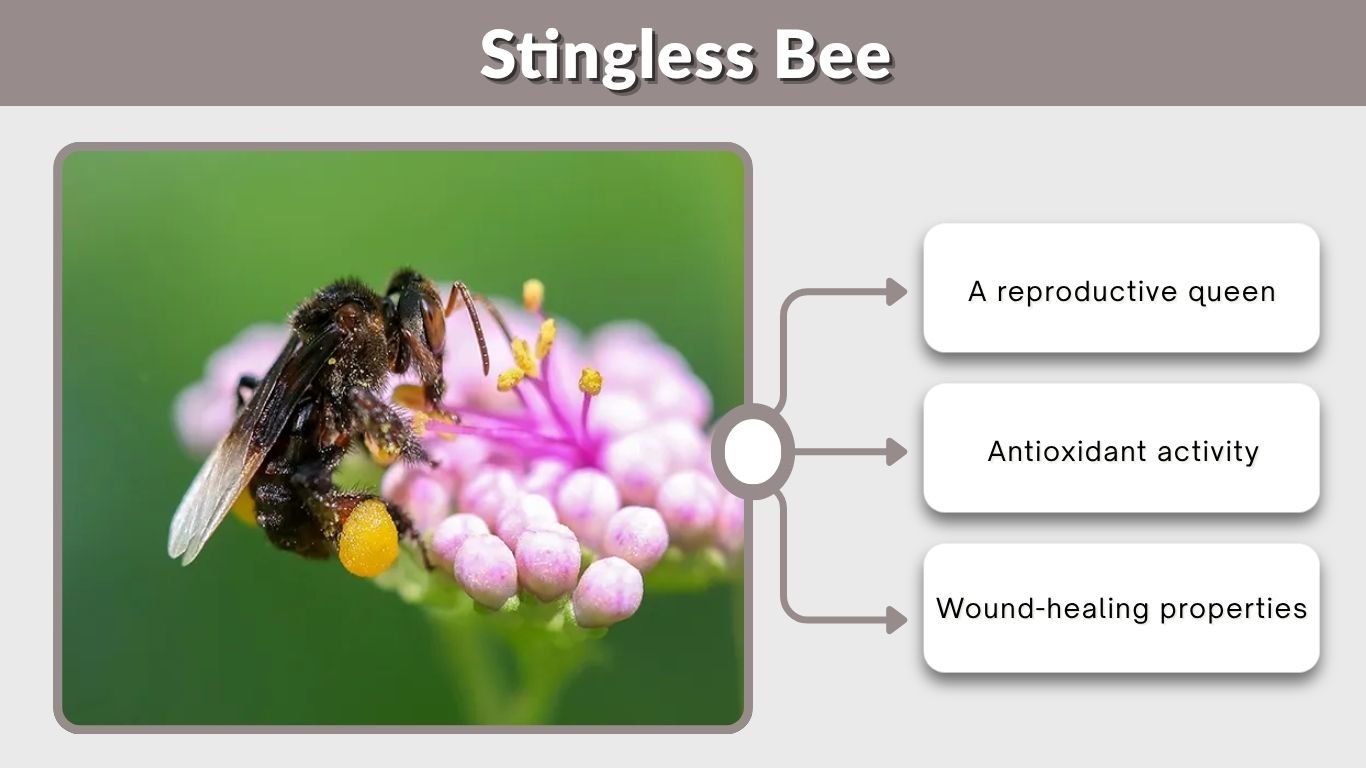
Stingless bees are small social bees best known for producing a distinctive sweet-and-sour honey and pollinating tropical plants. They belong mainly to the tribe Meliponini and occur throughout warm regions of Australia, Asia, Africa, and the Americas. Although they lack a functional sting, some species can defend their colonies by biting or using sticky resin. Their unusual hive structures, valuable honey, complex colonies, and importance as native pollinators have made stingless bees increasingly popular among beekeepers and researchers.
What Is a Stingless Bee?
Stingless bees are relatives of honey bees and bumblebees, but their stingers are greatly reduced and generally cannot be used for defense. There are hundreds of species, including bees in genera such as Melipona, Tetragonula, Trigona, and Heterotrigona. Most live in tropical and subtropical climates where flowers are available for much of the year.
Stingless Bee Identification
Common characteristics include:
- Size: Usually much smaller than common honey bees
- Color: Often black or dark brown, though markings vary
- Body: Compact with relatively little visible hair in some species
- Stinger: Reduced and generally nonfunctional
- Colonies: Social colonies containing queens, workers, and males
- Food: Nectar and pollen
- Nest: Often inside hollow trees or artificial hive boxes
- Honey storage: Rounded or oval wax-resin pots rather than conventional honeybee comb cells
- Defense: Biting, swarming, resin, or other species-specific behaviors
Because there are many species, size, coloration, and temperament vary considerably.
Where Do Stingless Bees Live?
Stingless bees are primarily found in warm climates, including:
- Central and South America
- Mexico
- Southeast Asia
- Malaysia
- Indonesia
- The Philippines
- India
- Tropical Africa
- Northern and eastern Australia
They commonly build nests inside hollow trees, logs, rock cavities, wall spaces, and other protected cavities.
Stingless Bee Hive and Colony
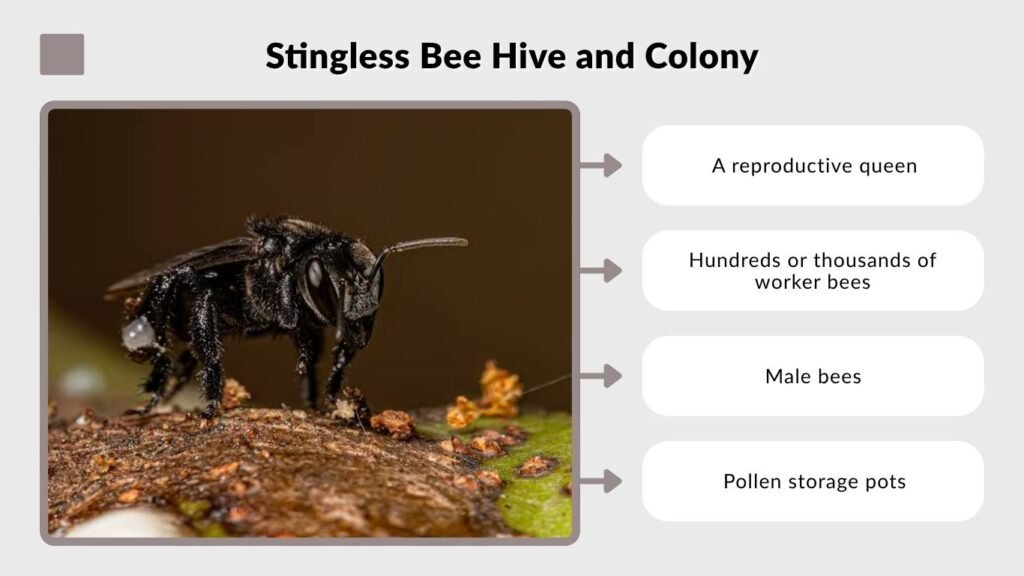
A stingless bee hive can look very different from a familiar honeybee hive. Instead of storing honey in flat sheets of perfectly arranged hexagonal comb, many species construct clusters of rounded storage pots from wax mixed with plant resin. Brood cells may form horizontal layers, clusters, or beautiful spiral patterns in the center of the colony.
Stingless Bee Hive Structure
A typical colony may contain:
- A reproductive queen
- Hundreds or thousands of worker bees
- Male bees
- Brood cells containing developing young
- Pollen storage pots
- Honey pots
- Resin and propolis
- Protective entrance tubes
- Wax-resin structures surrounding the brood
The exact design depends heavily on the bee species.
Honey and pollen are normally stored separately from the developing brood. Workers continuously maintain the hive, gather food, defend the entrance, and care for young bees.
Stingless Bee Queen
The queen is responsible for producing most of the colony’s eggs.
After mating, a reproductive queen can develop a greatly enlarged abdomen, making her much larger than workers. She usually remains deep within the protected nest while workers gather nectar, pollen, resin, and other materials.
A healthy queen is essential to colony survival because replacing her may be difficult depending on the species and condition of the colony.
Stingless Bee Honey
Stingless bee honey is sometimes called meliponine honey, kelulut honey, or pot honey. It differs noticeably from standard honeybee honey.
It is commonly thinner, more acidic, and more tangy. Its exact taste and composition vary according to flower sources, climate, bee species, geographic location, and storage conditions.
What Makes Stingless Bee Honey Different?
Some common differences include:
- Higher moisture content
- Thinner consistency
- Noticeably acidic or tangy flavor
- Different sugar composition
- Storage inside wax-resin pots
- Smaller quantities produced per colony
- Flavor strongly influenced by local flowers
- Greater tendency to ferment when poorly stored
Researchers have identified trehalulose as an important sugar in honey produced by several stingless bee species. Its composition, however, varies greatly between honeys and regions.
Because colonies generally produce much less harvestable honey than commercial Apis honeybee colonies, genuine stingless bee honey can also be relatively expensive.
Stingless Bee Honey vs Normal Honey
Both are produced from flower nectar, but they should not be considered identical products.
Honeybee honey is typically thicker and sweeter. Stingless bee honey tends to contain more water and often has a sharper sweet-and-sour flavor.
Their chemical composition also varies because different bee species process nectar differently and forage on different plants.
Neither type can simply be declared universally “healthier.” Quality and composition depend on botanical source, geographic region, bee species, handling, and storage.
Stingless Bee Honey Benefits
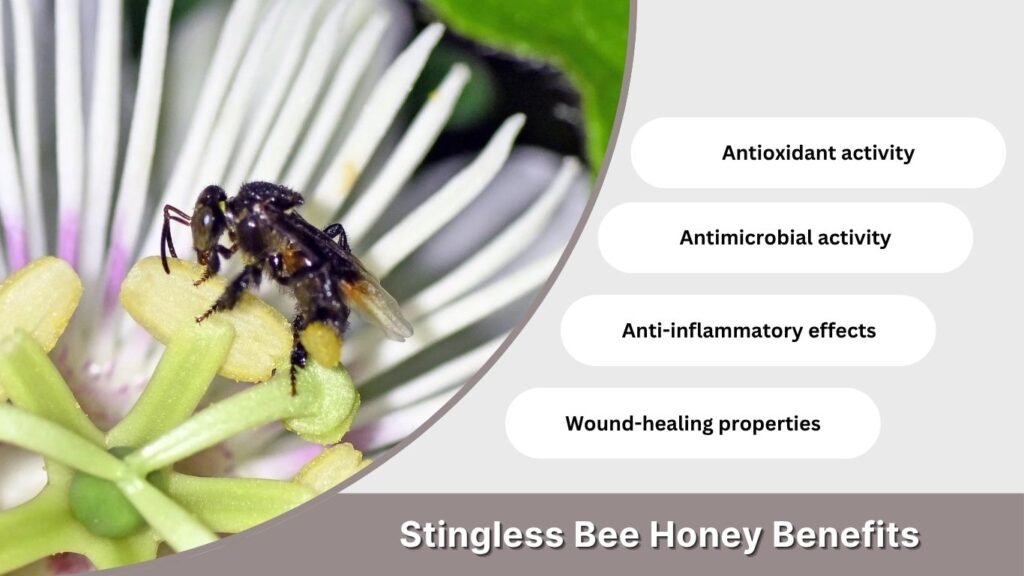
Stingless bee honey contains sugars, organic acids, minerals, and numerous plant-derived compounds. Laboratory and animal studies have investigated possible antioxidant, antimicrobial, anti-inflammatory, and metabolic effects.
However, promising experimental results should not be confused with proof that the honey can treat human diseases.
Potential Benefits Being Studied
Research has investigated possible:
- Antioxidant activity
- Antimicrobial activity
- Anti-inflammatory effects
- Wound-healing properties
- Effects on blood lipids
- Effects related to glucose metabolism
- Protection associated with plant phenolic compounds
A scientific review found encouraging laboratory and animal findings but emphasized that clinical trials are still needed to establish medicinal benefits in humans.
Stingless bee honey is therefore better viewed as a food with interesting bioactive properties rather than a proven treatment for medical conditions.
Is Stingless Bee Honey Good for Diabetics?
People with diabetes should remember that stingless bee honey is still a source of carbohydrates and sugars.
Some research has examined its unusual sugar composition and potential effects on glucose metabolism, and laboratory evidence is interesting. However, current evidence does not justify using stingless bee honey as a diabetes treatment or assuming unlimited amounts are safe for someone managing blood sugar.
Anyone with diabetes should count honey as part of overall carbohydrate intake and follow individualized dietary advice.
Stingless Bee Honey for Eyes
Traditional use of stingless bee honey for eye problems has generated considerable interest, especially searches for stingless bee honey eye drops. However, putting ordinary raw honey directly into the eyes is very different from using a sterile ophthalmic product manufactured specifically for eye use.
Should You Put Stingless Bee Honey in Your Eyes?
Do not put raw or food-grade stingless bee honey directly into your eyes.
Natural honey is not sterile and can contain microorganisms. A published case report documented serious corneal infection following the use of natural honey as an eye drop. Sterile honey-based ophthalmic preparations have been studied separately, but that does not make ordinary bottled honey safe for ocular use.
For eye irritation, infection, injury, or changes in vision, use appropriate ophthalmic products and seek professional eye care rather than making homemade honey drops.
Do Stingless Bees Bite?
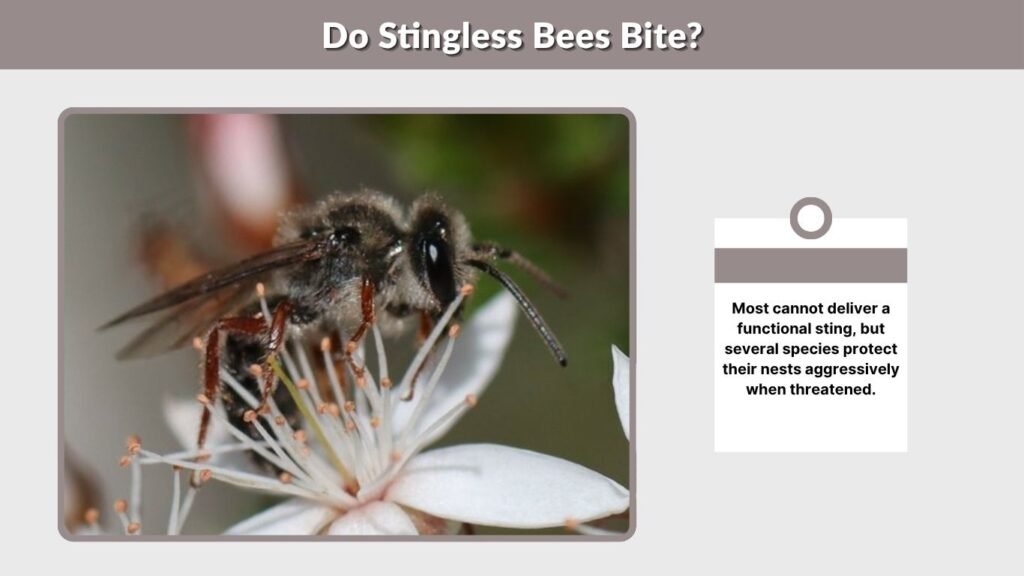
The word “stingless” does not mean completely defenseless.
Most cannot deliver a functional sting, but several species protect their nests aggressively when threatened. Workers may grab skin or hair with their mandibles, swarm around an intruder, or apply sticky resin.
Stingless Bee Defense Methods
Depending on species, they may:
- Bite with their jaws
- Pull hair
- Crawl into hair or clothing
- Swarm around an intruder
- Apply sticky plant resin
- Guard their nest entrance
- Produce defensive substances
For most people, encounters are much less concerning than encounters with highly defensive stinging bees.
Nevertheless, colonies should be handled carefully because defensive behavior varies among species.
Australian Stingless Bees
Australia is home to several native stingless bee species, particularly in warmer northern and eastern regions. Tetragonula carbonaria and Tetragonula hockingsi are among the better-known species used in native-bee keeping.
They are valued primarily for pollination, conservation, education, and small-scale honey production.
Australian Stingless Bee Hives
Native-bee keepers may maintain colonies in specially designed wooden boxes that allow colonies to be inspected or divided.
A good hive location usually provides protection from:
- Extreme afternoon heat
- Prolonged direct sunlight
- Heavy rain
- Pesticide exposure
- Ant infestations
- Other serious disturbances
Keeping local native species is particularly important because moving colonies far outside their natural range can create ecological and husbandry problems.
Stingless Bees and Pollination
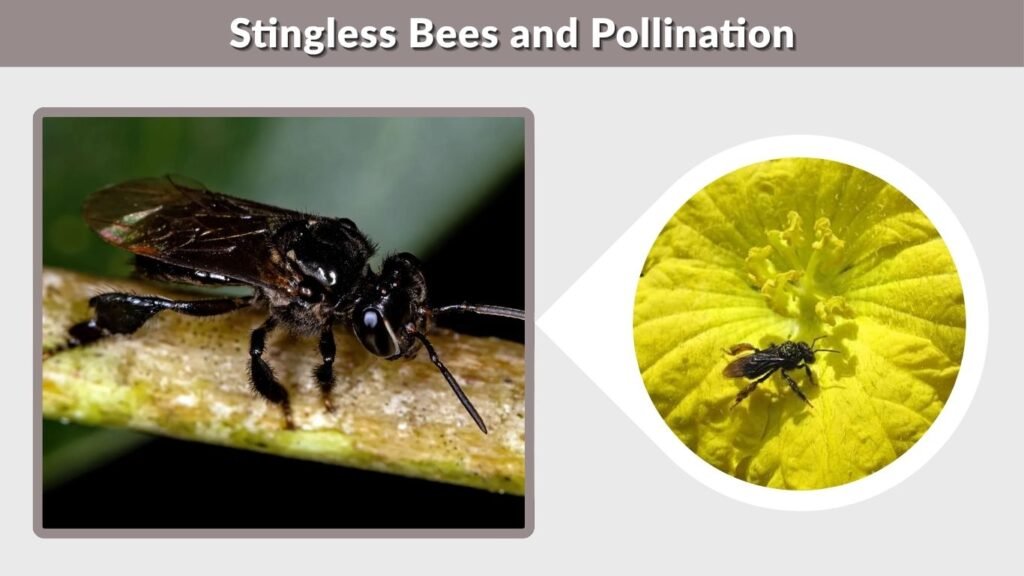
Honey production attracts attention, but pollination is arguably the more important ecological role of stingless bees.
Workers repeatedly visit flowers to collect pollen and nectar, moving pollen between flowers in the process.
Why Stingless Bees Matter
Their ecological roles include:
- Pollinating native plants
- Supporting fruit and seed production
- Helping maintain tropical plant diversity
- Providing food-system pollination
- Supporting forest regeneration
- Contributing to biodiversity
Stingless bees have also attracted interest for managed crop pollination, particularly in tropical regions where native species are adapted to local climate and vegetation.
Protecting natural nesting cavities and maintaining diverse flowering plants are two practical ways to support wild populations.
FAQs
1. Can stingless bees sting?
Generally, no. Their stingers are reduced and cannot function like the stinger of a honey bee. Some species can still defend themselves by biting or applying sticky resin.
2. Do stingless bees make honey?
Yes. They produce honey from nectar and store it in small wax-resin pots. The honey is usually thinner and more acidic than conventional honeybee honey.
3. What does stingless bee honey taste like?
It commonly has a sweet, tangy, and slightly acidic flavor. Taste varies considerably with bee species and the flowers visited.
4. Is stingless bee honey safe for the eyes?
Food-grade or raw stingless bee honey should not be placed directly into the eyes because it is not a sterile ophthalmic preparation and may introduce microorganisms.
5. Where do stingless bees build their nests?
Most species naturally use protected cavities such as hollow trees, logs, rock spaces, and other enclosed areas. Managed colonies can also live in appropriately designed stingless-bee hive boxes.