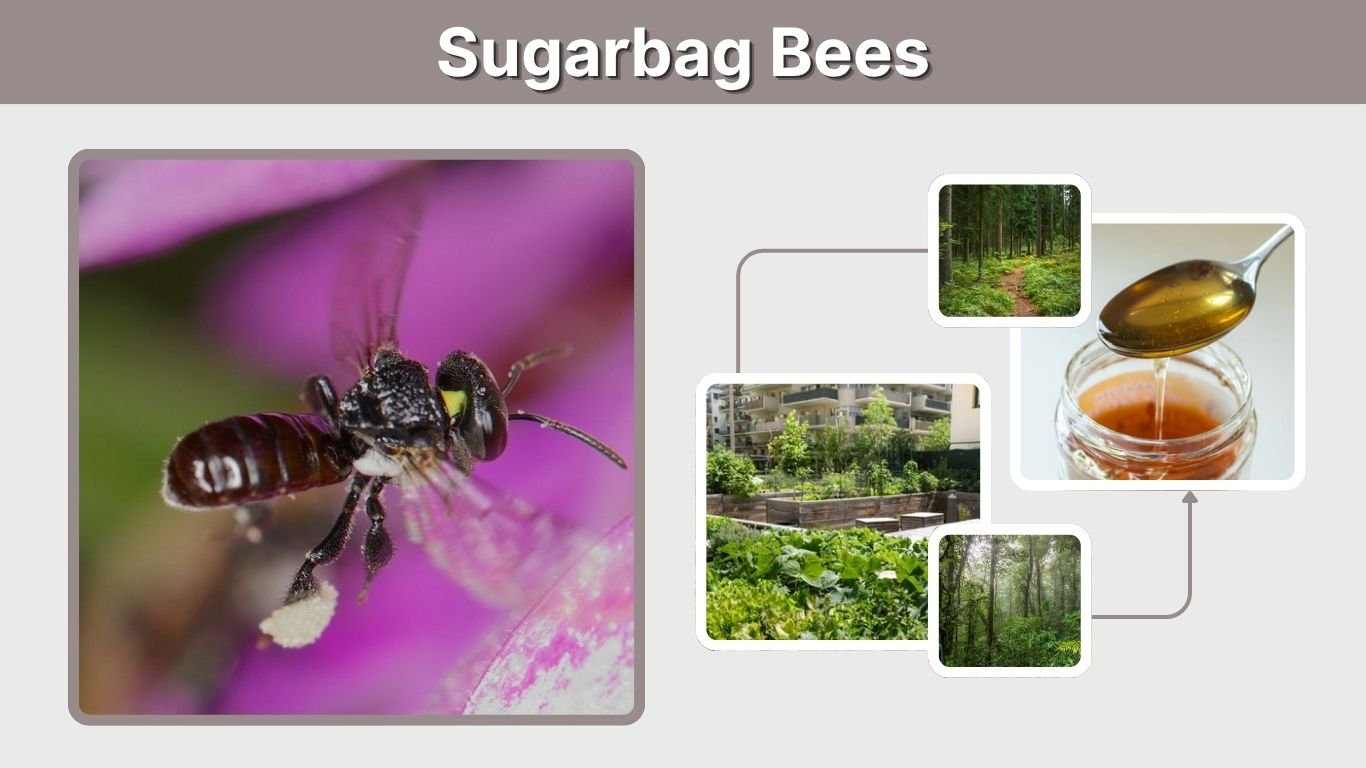
Sugarbag bees are tiny Australian native stingless bees best known for living in large social colonies and producing a distinctive tangy honey called sugarbag. The name is commonly associated with species such as Tetragonula carbonaria, one of Australia’s best-known native stingless bees. Unlike European honey bees, sugarbag bees cannot deliver a functional sting, although they can still defend their nests in other ways. These small pollinators live mainly in warm parts of Australia, nesting in hollow trees or managed hive boxes and collecting nectar, pollen, and plant resins.
What Are Sugarbag Bees?
Sugarbag bees are Australian native stingless bees that live socially in permanent colonies. The name “sugarbag” has long been associated with the honey produced by native stingless bees and is also commonly used for the bees themselves. Tetragonula carbonaria is especially associated with the sugarbag bee name and occurs naturally along Australia’s eastern coastal regions.
Sugarbag Bee Identification
Common characteristics include:
- Size: Usually only about 3–5 mm long
- Color: Mostly black or very dark brown
- Body: Small and compact
- Sting: No functional sting
- Diet: Nectar and pollen
- Lifestyle: Highly social
- Colony: May contain thousands of individuals
- Nest: Usually built inside hollow trees or cavities
- Honey: Stored in small wax-and-resin pots
- Queen: One reproductive queen normally lives within a healthy colony
Because they are so small, sugarbag bees can easily be mistaken for tiny flies or other insects when seen individually.
Are Sugarbag Bees the Same as Stingless Bees?
Sugarbag bees are stingless bees, but not every stingless bee in the world would normally be called a sugarbag bee.
In Australia, the term is particularly associated with native social bees such as Tetragonula carbonaria. Australia has 11 species of social stingless bees belonging to Tetragonula and Austroplebeia.
The vast majority of Australia’s other native bee species are solitary rather than colony-forming stingless bees.
Sugarbag Bee Habitat and Distribution
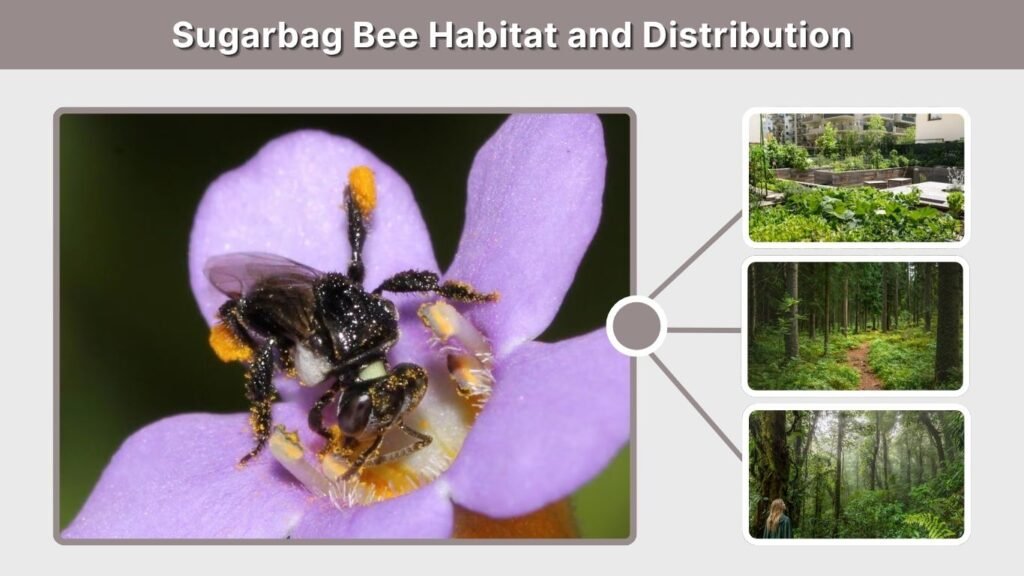
Sugarbag bees favor warm environments where flowering plants provide nectar and pollen throughout much of the year. Natural nesting cavities are equally important because colonies can survive in the same protected location for years. Australia’s tropical and subtropical regions provide especially suitable conditions, although some species extend into warmer temperate areas.
Where Do Sugarbag Bees Live?
Suitable habitats include:
- Tropical forests
- Subtropical forests
- Open woodland
- Heathland
- Coastal vegetation
- Rural properties
- Urban gardens
- Hollow trees
- Hollow logs
- Protected cavities in structures
Tetragonula carbonaria occurs from Queensland southward along coastal New South Wales and lives in forests, woodland, heath, and urban and rural environments.
Sugarbag Bees in Brisbane and Sydney
Brisbane and surrounding southeast Queensland provide very favorable conditions for native stingless bees, and managed hives are popular among gardeners and native-bee enthusiasts.
Tetragonula carbonaria also reaches the Sydney region, where the Australian Museum describes it as the only truly social native bee occurring locally.
Colony management becomes more difficult farther south or inland because prolonged cold temperatures can threaten tropical and subtropical stingless bees.
Sugarbag Bee Hive and Nest Structure
The inside of a sugarbag bee hive looks very different from a European honey-bee hive. Instead of building flat vertical honeycomb sheets, stingless bees construct complex brood and food-storage structures using wax mixed with plant resin. Some species create spectacular spiral brood patterns surrounded by pots containing honey and pollen.
Inside a Sugarbag Bee Hive
A healthy hive can contain:
- A reproductive queen
- Thousands of worker bees
- Male bees
- Brood cells
- Larvae and pupae
- Pollen storage pots
- Honey pots
- Wax
- Plant resin
- Protective nest material
In Tetragonula carbonaria, the central brood structure is famously arranged in a spiral. Honey and pollen are stored in pot-like containers around the outer part of the nest.
Sugarbag Bee Nest Entrance
Nest entrances can be surprisingly small.
Workers construct the entrance with resin and other hive materials, and guard bees often remain nearby. Different species can produce entrance tubes of different lengths and shapes.
A small entrance provides protection while still allowing workers to leave and return rapidly during foraging trips.
Sugarbag Bee Honey
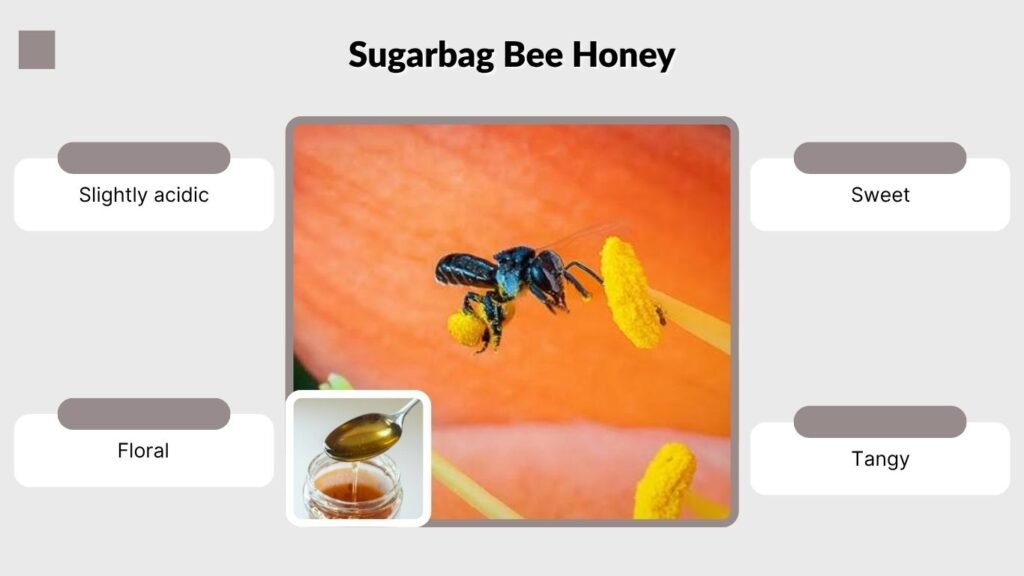
Sugarbag honey is produced from nectar collected by stingless bee workers. It is highly valued because each colony produces relatively little harvestable honey compared with a European honey-bee hive.
The flavor also differs noticeably from conventional honey, making genuine sugarbag honey a distinctive Australian food.
What Does Sugarbag Honey Taste Like?
Sugarbag honey is generally:
- Sweet
- Tangy
- Slightly acidic
- Floral
- More runny than regular honey
- Variable in color
- Strongly influenced by local flowers
Its color can range from pale yellow to deep reddish-brown.
Australian stingless bee colonies generally produce less than about 1 kg of honey annually, and in cooler areas much of that honey needs to remain in the hive for the colony’s own survival.
How Sugarbag Bees Store Honey
Sugarbag bees do not fill traditional honeycomb with honey.
Instead, they construct clusters of rounded storage pots from wax and resin. Some pots contain nectar or mature honey, while others contain pollen.
These structures usually surround the central brood area where developing young bees are raised.
Sugarbag Bee Wax and Resin
Sugarbag bees use an unusual construction material made from bee-produced wax combined with plant resins collected from their surroundings.
This material helps form nest walls, storage pots, entrance structures, and protective layers around the colony.
What Do Sugarbag Bees Use Resin For?
Resin can help bees:
- Construct nest entrances
- Seal unwanted openings
- Build food-storage pots
- Strengthen nest structures
- Isolate contaminated material
- Protect the brood area
- Maintain the internal nest environment
Workers gather resin from plants and carry it back to the colony, just as they transport pollen on their hind legs.
Sugarbag Bee Queen and Colony Life
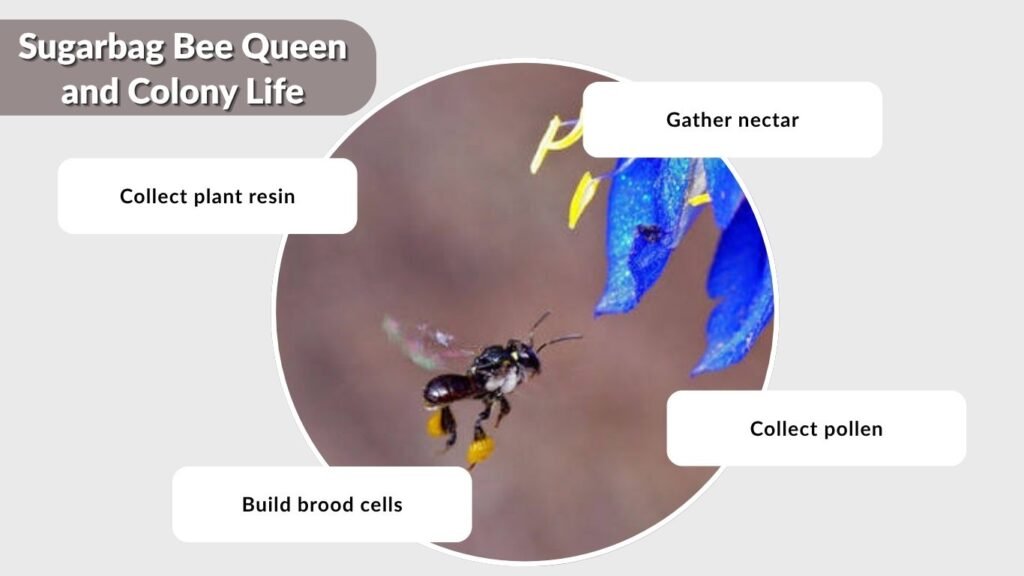
Sugarbag bees are highly social insects. Their colony organization includes a reproductive queen supported by large numbers of female workers.
Workers perform nearly every everyday task required to maintain the colony.
Jobs Inside a Sugarbag Bee Colony
Workers may:
- Gather nectar
- Collect pollen
- Collect plant resin
- Build brood cells
- Build honey pots
- Feed developing young
- Clean the nest
- Guard the entrance
- Maintain nest structures
- Search for new food sources
A Tetragonula carbonaria colony can contain thousands of bees, with some natural nests estimated at roughly 5,000–10,000 individuals.
The queen remains primarily responsible for reproduction.
Keeping Sugarbag Bees in Australia
Native stingless beekeeping has become popular in suitable parts of Australia. Managed colonies may be kept for garden pollination, education, conservation, enjoyment, colony propagation, and limited honey harvesting.
However, climate is an important consideration when deciding whether a hive will thrive.
Basic Sugarbag Bee Hive Care
Important considerations include:
- Provide morning sun with protection from extreme afternoon heat.
- Protect the hive from heavy rain.
- Avoid exposure to pesticides.
- Maintain plenty of flowering plants nearby.
- Keep the hive secure and stable.
- Avoid unnecessarily opening the colony.
- Choose a species suited to your climate.
- Do not harvest excessive honey.
- Protect colonies from prolonged cold conditions.
In cooler parts of New South Wales, experienced native-bee resources recommend extra insulation and caution with honey harvesting because colonies need their stored food during winter.
Can You Buy Sugarbag Bees?
Managed colonies are available from specialist native-bee keepers in suitable Australian regions.
Buying an established, responsibly propagated boxed hive is preferable to removing wild colonies from trees.
Potential keepers should also confirm that the species being offered naturally suits their climate. For example, some tropical species may perform poorly when moved much farther south than their normal range.
Why Sugarbag Bees Are Important
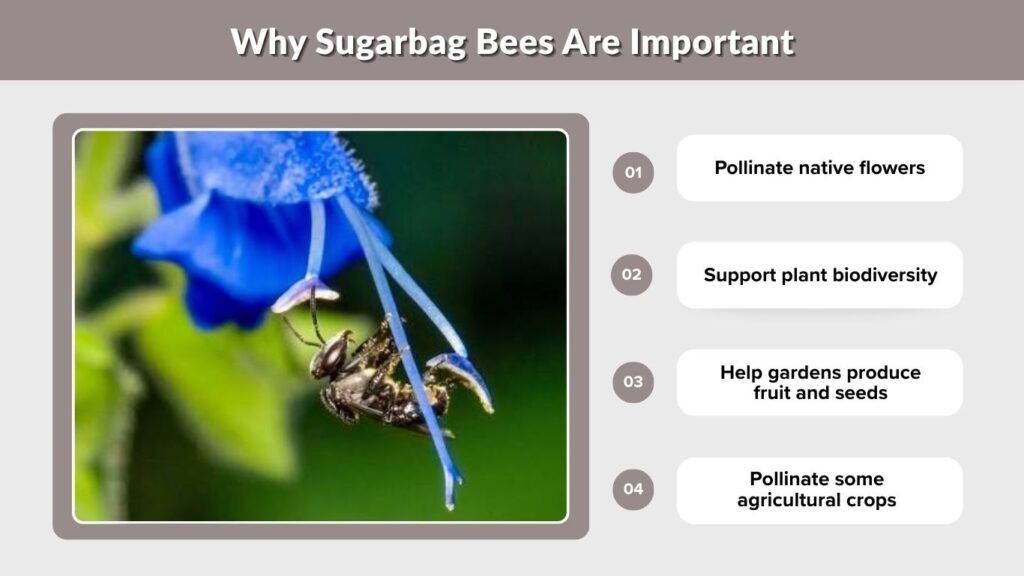
Sugarbag bees are valuable pollinators of Australian native plants as well as garden and agricultural crops. Workers carry pollen between flowers while searching for nectar and pollen, helping plants reproduce.
Honey production is therefore only one small part of their ecological value.
Benefits of Sugarbag Bees
Sugarbag bees can:
- Pollinate native flowers
- Support plant biodiversity
- Help gardens produce fruit and seeds
- Pollinate some agricultural crops
- Provide educational opportunities
- Produce small quantities of native honey
- Increase awareness of Australian native bees
- Support healthy local ecosystems
Only a tiny proportion of Australia’s native bee species make honey, making social sugarbag bees particularly unusual.
FAQs
1. Do sugarbag bees sting?
No. Australian sugarbag bees such as Tetragonula carbonaria do not have a functional sting. They are considered harmless to people, although workers can still defend their colony through other behaviors.
2. What is a sugarbag bee?
Sugarbag bee is a common Australian name associated with native stingless bees, particularly Tetragonula carbonaria. They are tiny social bees that live in colonies and produce sugarbag honey.
3. What is sugarbag bee honey?
Sugarbag honey is the honey produced by Australian native stingless bees. It is usually thinner and more tangy than conventional honey and is stored in small wax-and-resin pots.
4. Where do sugarbag bees live?
They occur mainly in warm parts of Australia, especially Queensland and coastal New South Wales. Natural colonies usually establish nests inside hollow trees and other protected cavities.
5. Can you keep sugarbag bees at home?
Yes, managed stingless bee hives can be kept in suitable Australian climates. A healthy colony needs an appropriate hive, protection from extreme weather, plentiful flowering plants, and a bee species suited to the local climate.