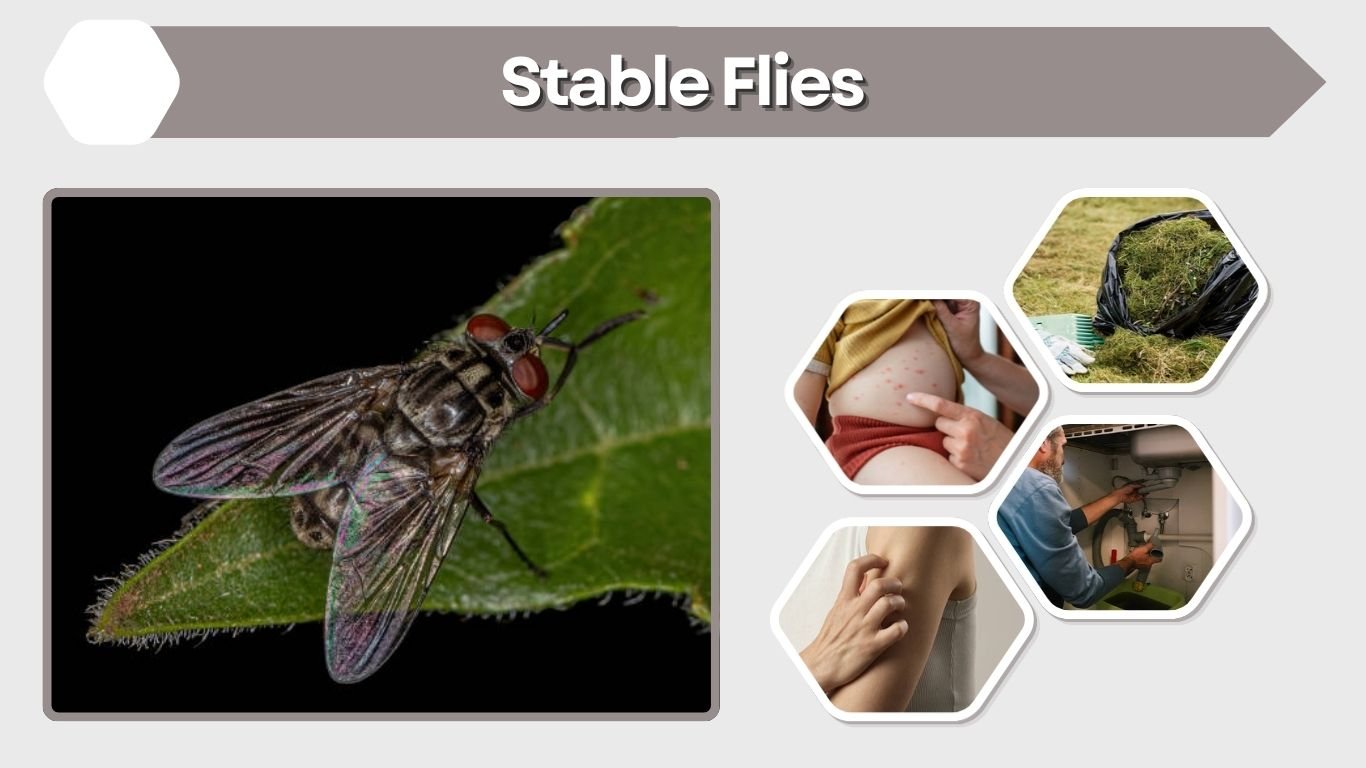
Stable flies are blood-feeding insects commonly found around farms, horse stables, livestock facilities, beaches, parks, and residential properties. Unlike ordinary house flies, stable flies bite both animals and humans. Their painful bites usually affect the legs and ankles, causing irritation, redness, and itching. Learning how to identify stable flies, understand where they breed, and remove their breeding materials is essential for effective control. This guide explains stable fly appearance, behavior, bites, life cycle, health risks, traps, repellents, and practical prevention methods.
What Is a Stable Fly?
The stable fly (Stomoxys calcitrans) is a biting fly found throughout much of the world. Although its name suggests that it lives exclusively in stables, it can appear anywhere suitable breeding material and warm-blooded hosts are available.
Both male and female stable flies feed on blood. They attack horses, cattle, dogs, humans, and various wild animals. Adult flies are most active during warm daylight hours, particularly when conditions are sunny and relatively calm.
Stable Fly Identification
Stable flies are sometimes mistaken for house flies because they have similar body shapes and coloring. However, a stable fly has a rigid, needle-like mouthpart that projects forward from its head.
Important identification features include:
- Approximately 5–8 millimeters long
- Gray body with darker stripes on the thorax
- Several dark, rounded spots on the abdomen
- Clear or slightly smoky wings
- Large reddish-brown compound eyes
- Long, pointed mouthpart used for drinking blood
- Tendency to rest with its head slightly raised
Stable flies frequently land on the lower portions of a person’s body. Persistent biting around the ankles is one of the strongest indications that stable flies are present.
Stable Fly Size
An adult stable fly is generally about the same size as a common house fly, although it may look slightly broader or more robust. Most adults measure approximately ¼ inch long.
Size alone is not sufficient for identification. The projecting mouthpart and spotted abdomen provide more reliable clues.
Where Are Stable Flies Found?
Stable flies are associated with locations containing moist, decomposing plant material mixed with animal waste. Common habitats include horse stables, dairy farms, feedlots, kennels, poultry facilities, campgrounds, and coastal recreation areas.
They may also develop around homes in:
- Wet lawn clippings
- Decaying hay or straw
- Compost piles
- Animal bedding
- Spilled livestock feed
- Poorly maintained manure piles
- Moist vegetation accumulating under equipment
Adult stable flies can travel considerable distances, so their breeding site may not be directly beside the location where people are being bitten.
Stable Fly vs. House Fly
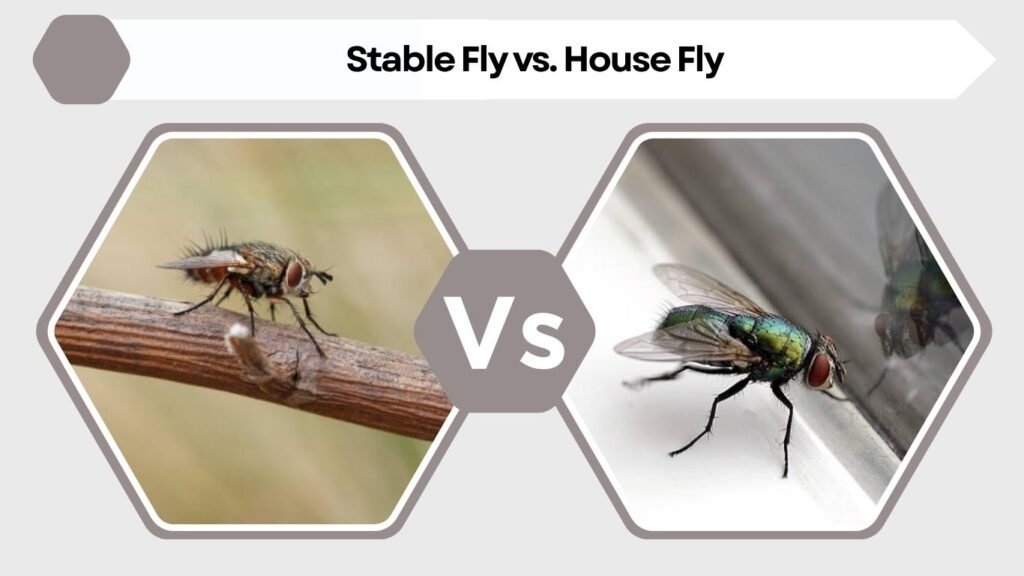
Stable flies and house flies look similar, but their feeding habits and mouthparts are very different.
| Feature | Stable Fly | House Fly |
|---|---|---|
| Scientific name | Stomoxys calcitrans | Musca domestica |
| Bites humans | Yes | No |
| Mouthpart | Pointed and piercing | Soft and sponge-like |
| Food | Blood | Liquid and decomposing organic matter |
| Abdomen | Usually spotted | Generally unspotted |
| Common behavior | Bites legs and ankles | Lands on food and surfaces |
House flies cannot pierce skin. If a fly resembling a house fly causes a sharp, painful bite, it is more likely to be a stable fly.
Stable Fly vs. Horse Fly
Stable flies and horse flies both consume blood, but they are not the same insect. Horse flies are generally much larger and possess broad, powerful bodies with noticeable eyes. Stable flies are smaller and closely resemble house flies.
A horse fly cuts the skin with blade-like mouthparts, while a stable fly repeatedly pierces it with a narrow proboscis. Horse fly bites can create larger wounds, but stable flies may attack repeatedly and in considerable numbers.
Do Stable Flies Bite Humans?
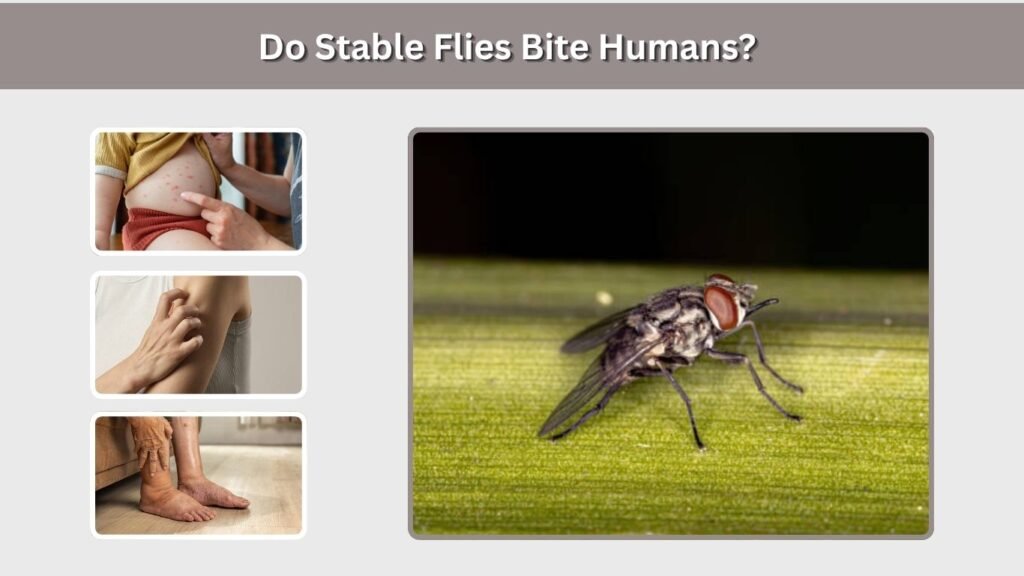
Yes, stable flies readily bite humans when they are available. They generally target the legs, ankles, and lower body, although exposed skin elsewhere may also be bitten.
The bite often feels like an immediate, sharp needle prick. A person may notice the pain before seeing the fly. Stable flies are persistent feeders and may return quickly after being disturbed.
What Does a Stable Fly Bite Look Like?
A stable fly bite may produce a small red bump with a visible central puncture. The surrounding skin can become swollen, warm, tender, or itchy. Several bites may appear close together when multiple flies are active.
Common symptoms include:
- Sudden sharp pain
- Small red or raised bump
- Mild swelling
- Itching or burning
- Tenderness around the puncture
- Minor bleeding immediately after the bite
Reactions vary between individuals. Some people develop only a small mark, while others experience more noticeable swelling and irritation.
How to Treat Stable Fly Bites
Wash the affected skin with soap and clean water. Applying a cold compress for approximately 10–15 minutes may reduce discomfort and swelling. An over-the-counter anti-itch cream or oral antihistamine may help when itching is troublesome, provided it is safe for the affected person.
Avoid scratching because broken skin can develop a secondary bacterial infection. Seek medical assistance if there is severe swelling, breathing difficulty, dizziness, spreading redness, pus, fever, or worsening pain.
Are Stable Fly Bites Dangerous?
Most stable fly bites are painful but not medically serious. However, repeated bites can cause considerable discomfort, stress, and skin irritation. Heavy fly activity can be particularly disruptive to children, outdoor workers, pets, and people caring for livestock.
Stable flies can mechanically carry certain disease-causing organisms between animals. Their role in transmitting serious human disease is considered limited. The greater everyday concerns for humans are painful bites, allergic reactions, and infections resulting from scratched skin.
Stable Fly Life Cycle
Understanding the life cycle is important because killing adult flies alone rarely provides lasting control. Stable flies undergo complete metamorphosis through four stages: egg, larva, pupa, and adult.
Eggs and Larvae
Female stable flies lay eggs in damp, fermenting organic materials. The larvae, commonly called maggots, feed within this material. They do not normally develop in fresh manure alone; they prefer manure mixed with straw, hay, feed, grass, or other decomposing vegetation.
Warm temperatures and abundant moisture can accelerate development. A small accumulation of wet bedding or spoiled hay may produce hundreds of flies.
Pupae and Adult Flies
After feeding and growing, the larvae move into a slightly drier area and form reddish-brown pupae. Adult flies later emerge and begin seeking blood meals.
Under favorable summer conditions, the entire life cycle may be completed in approximately three to four weeks. Cooler temperatures can slow development. Adults may survive several weeks, allowing multiple generations to develop during a warm season.
How to Get Rid of Stable Flies
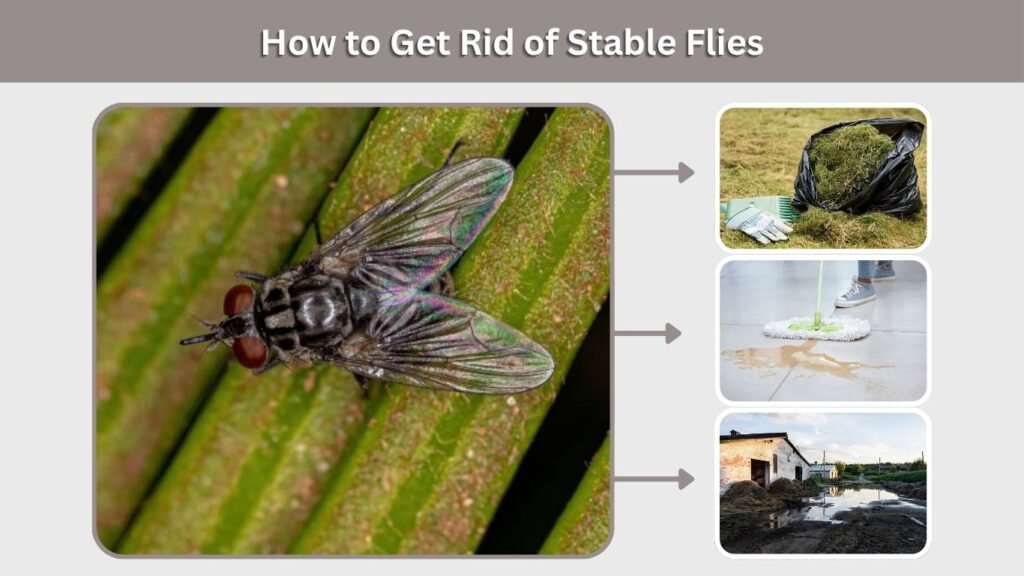
Successful stable fly control begins with sanitation. Traps, repellents, and insecticides may reduce adult activity, but they cannot overcome continuously active breeding sites.
Remove Breeding Materials
Inspect the property for moist organic waste and remove it before larvae complete their development. Give particular attention to areas around barns, feeding stations, kennels, compost piles, and stored equipment.
Effective sanitation steps include:
- Remove wet animal bedding frequently.
- Dispose of spoiled hay and silage.
- Prevent grass clippings from remaining in thick, damp piles.
- Clean spilled feed around troughs and storage areas.
- Manage manure before it mixes with straw and rainwater.
- Improve drainage around barns and pens.
- Turn compost regularly and control excessive moisture.
- Keep unused feed and bedding protected from rain.
- Clean underneath feeders, trailers, pallets, and equipment.
Collected material should be properly composted, spread thinly where permitted, or transported away from the occupied area.
Use Stable Fly Traps
Stable flies are attracted to certain colors and vertical surfaces. Commercial traps frequently use sticky panels or specialized visual targets to capture adults.
Position traps around the perimeter of the affected area, near resting locations, or between breeding sites and animals. Avoid placing traps where horses, pets, children, or wildlife could touch the adhesive.
Traps are useful for monitoring activity and reducing adult populations, but they work best when combined with breeding-site removal.
Apply Stable Fly Repellent
Repellents labeled for biting flies can temporarily protect people or animals. Always select a product intended for the specific user. A livestock spray should not automatically be applied to human skin, and products made for people may not be suitable for every animal.
People can also reduce bites by wearing long trousers, socks, closed shoes, and light-colored clothing. Because stable flies commonly attack the ankles, covering the lower legs is especially helpful.
Use Fly Sprays Carefully
Residual insecticides may be applied to stable fly resting surfaces when the product label permits. Barn or stable sprays may also offer temporary relief, but repeated applications are often ineffective if large breeding sites remain nearby.
Never apply insecticides near animal feed, drinking water, food-preparation areas, or sensitive animals unless expressly allowed by the label. Follow all mixing rates, ventilation requirements, and safety instructions.
Preventing Stable Fly Infestations
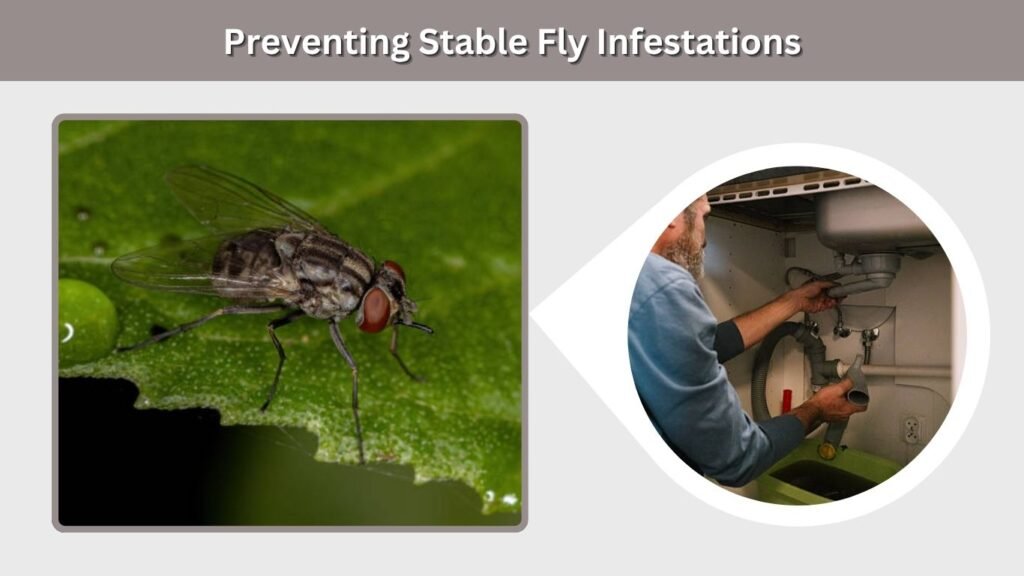
Stable fly prevention requires regular maintenance, especially during warm and humid weather. Inspect wet organic materials at least weekly and address problems before larvae mature.
Keep animal facilities dry, remove soiled bedding, repair leaking pipes, and prevent rain from entering stored hay or feed. Compost should be managed correctly rather than allowed to remain as a wet, compact pile.
When stable flies are arriving from a neighboring farm, beach, or unmanaged property, local sanitation may not eliminate every fly. In that situation, combine protective clothing, repellents, traps, screens, fans, and coordinated area-wide management.
FAQs
Why are stable flies around my house?
Stable flies may be breeding in wet grass clippings, compost, animal bedding, decaying vegetation, or spoiled feed. They can also travel from nearby farms, stables, beaches, and livestock facilities. Inspect moist organic material around the entire property.
Do stable fly bites itch?
Yes. A bite may initially feel sharp and painful before becoming itchy. Mild redness and swelling are common. Washing the area, using a cold compress, and avoiding scratching can help prevent irritation from worsening.
How long do stable flies live?
Adult stable flies commonly live for several weeks, although their survival depends on temperature, moisture, food availability, and environmental conditions. Multiple generations may develop during summer because the complete life cycle can take only three to four weeks.
What is the best stable fly control?
The most effective approach is removing wet, decomposing organic materials where larvae develop. Regular sanitation should be combined with sticky traps, drainage improvements, protective clothing, appropriate repellents, and carefully selected insecticides when necessary.
Can stable flies bite dogs and horses?
Stable flies commonly bite dogs, horses, cattle, and other warm-blooded animals. They often target horses’ legs and dogs’ ears or lower bodies. Heavy activity can cause pain, restlessness, skin damage, reduced feeding, and defensive behavior.