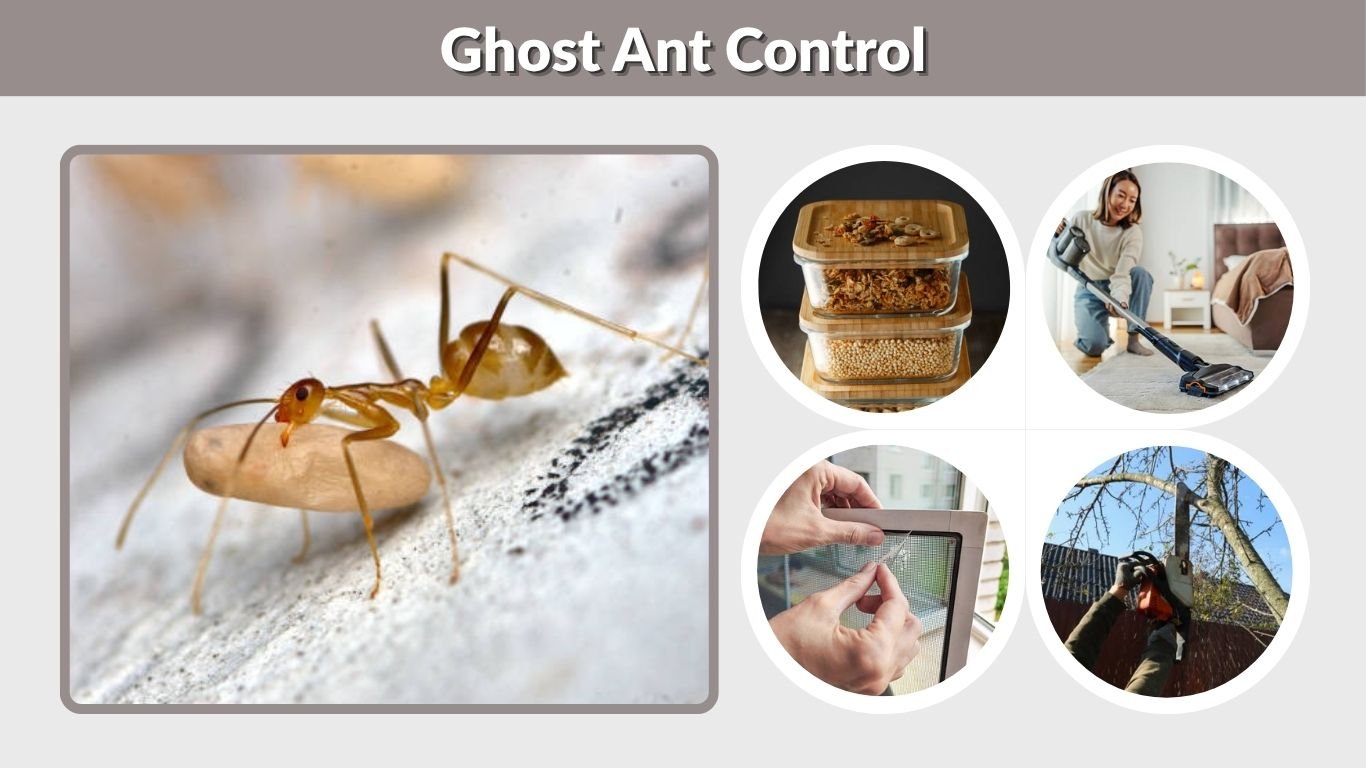
Ghost ant control can be challenging because these tiny ants often maintain several hidden nests containing multiple queens. Workers may appear in kitchens, bathrooms, wall voids, potted plants, and other warm, humid areas. Spraying the ants you see may provide temporary relief, but it rarely reaches the main colony. The most effective approach combines correct identification, slow-acting bait, sanitation, moisture reduction, outdoor inspection, and exclusion. Large or persistent infestations may require a licensed pest-control professional.
Ghost Ant Identification
Ghost ants are scientifically known as Tapinoma melanocephalum. Workers are extremely small, measuring approximately 1.3–1.5 millimeters long. Their heads and thoraxes are dark brown, while their legs and abdomens are pale or milky white. This contrasting coloration makes the ants difficult to see on light surfaces.
Common Identification Features
Ghost ants usually have:
- A dark head and middle body section
- Pale, nearly transparent legs and abdomen
- One hidden waist node
- Twelve-segmented antennae
- No stinger
- Fast, irregular movement when disturbed
- A rotten-coconut odor when crushed
They are frequently noticed on kitchen counters, sinks, bathroom floors, cabinets, and windowsills. Their appearance separates them from Pharaoh ants, which have more uniformly yellow or reddish bodies.
Why Ghost Ants Are Difficult to Control
Ghost ant colonies may contain numerous reproductive females and several connected nesting sites. Workers, queens, larvae, and pupae can move between these subcolonies along established scent trails. New colonies may also develop through budding, when queens and workers leave an existing nest to establish another one nearby.
Common nesting locations include:
- Wall voids
- Spaces behind cabinets
- Gaps around baseboards
- Potted plants
- Cracks around plumbing
- Moist grass and leaf litter
- Loose tree bark
- Palm-frond bases
- Soil beneath outdoor objects
Killing only the workers on a counter leaves queens and developing ants protected inside these hidden areas.
Best Ghost Ant Control Methods
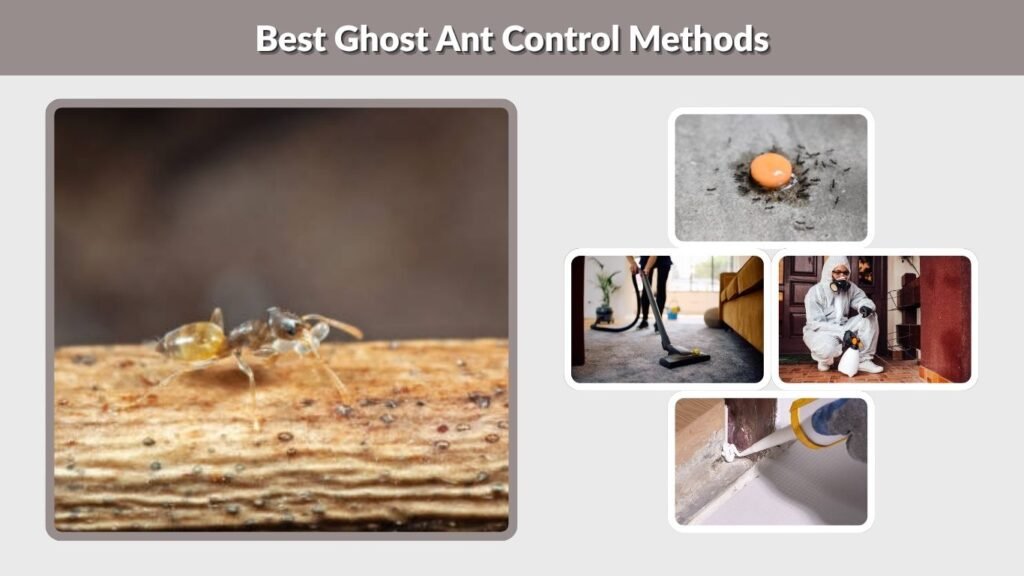
Long-term control requires an integrated approach rather than relying on one spray or household remedy.
| Control method | Effectiveness | Main purpose |
| Slow-acting ant bait | High | Targets workers, larvae, and queens |
| Food sanitation | High | Removes competing food sources |
| Moisture control | High | Makes nesting areas less attractive |
| Sealing entry points | Moderate | Reduces future indoor invasions |
| Vacuuming or soapy water | Temporary | Removes visible workers and trails |
| Contact insecticide spray | Temporary | Kills exposed ants but may miss nests |
| Professional pest control | High | Treats large or hidden infestations |
Use Slow-Acting Ghost Ant Bait
Bait is generally the most effective treatment because foraging workers carry it back to their hidden nests. The bait is then shared with other workers, larvae, and queens.
A suitable product must work slowly. When the active ingredient kills ants too quickly, workers die before distributing it throughout the colony. Properly used bait may take several days or weeks to produce complete control.
Where to Place the Bait
Place labeled bait close to active trails or suspected entry points, including:
- Under kitchen sinks
- Along cabinet edges
- Behind appliances
- Near plumbing openings
- Beside bathroom fixtures
- Around windows and doors
- Near exterior foundations
- Close to infested potted plants
Keep stations away from food-preparation surfaces and anywhere children or pets could reach them.
Choose the Right Bait Type
Ghost ants commonly prefer sweet foods, so liquid or gel sugar-based baits are often effective. However, ant food preferences can change. A colony may ignore one formulation while accepting another.
When ants do not feed on the bait:
- Move it closer to an active trail.
- Replace dried or contaminated bait.
- Remove competing sweets and food residue.
- Try another labeled liquid, gel, or protein-based product.
- Check the station again within one or two days.
UF/IFAS recommends relocating bait when ghost ants are not feeding from it.
Avoid Spraying Ghost Ant Trails
Spraying visible ants can quickly reduce the number on a countertop, but it usually provides only temporary control. Queens and most workers remain inside protected nesting sites.
Sprays may also contaminate nearby bait or repel workers from feeding. Do not apply contact insecticides, essential oils, bleach, or strong cleaners near active bait stations. Ant baits depend on workers willingly returning to the treated area.
Visible workers can instead be removed with a vacuum or wiped away using soapy water after useful trails have been located and bait has been placed.
Remove Food Sources
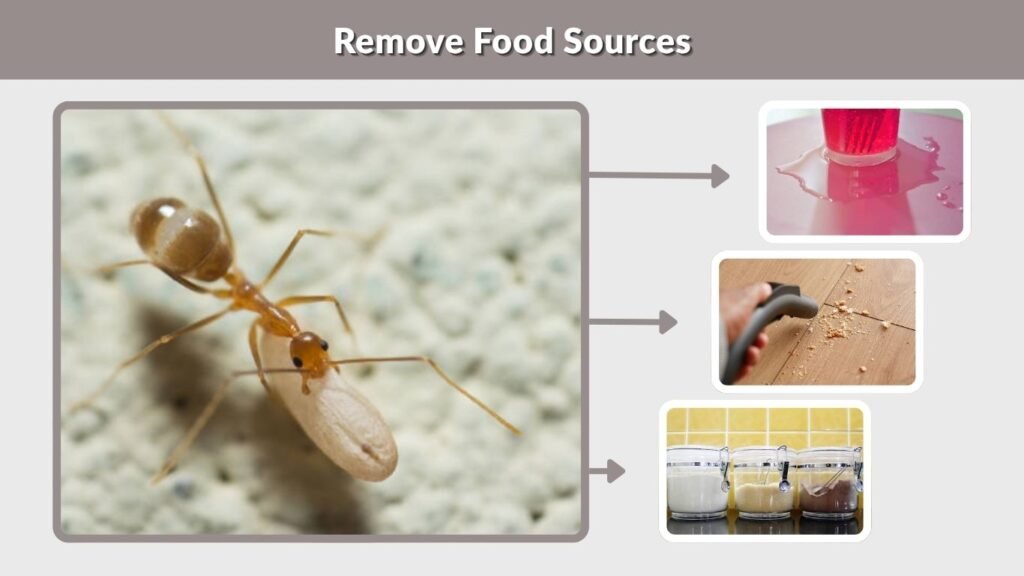
Ghost ants feed on household foods but show a strong preference for sweets such as sugar, syrup, and baked products. Outdoors, they collect honeydew from aphids, whiteflies, scales, and other sap-feeding insects.
Improve sanitation by:
- Cleaning syrup, juice, and soft-drink spills
- Removing crumbs from counters and floors
- Storing sugar and baked foods in sealed containers
- Washing pet-food dishes
- Emptying rubbish regularly
- Cleaning beneath appliances
- Rinsing recycling containers
- Keeping countertops dry overnight
Food sanitation makes bait more competitive and reduces the resources supporting the colony.
Reduce Moisture
Ghost ants thrive around warm, humid locations. Kitchens and bathrooms provide water from sinks, condensation, leaking pipes, wet cloths, and plant saucers.
To reduce moisture:
- Repair leaking taps and pipes
- Dry sinks and counters
- Empty standing water from plant trays
- Improve bathroom ventilation
- Replace damaged caulk around fixtures
- Check beneath dishwashers and refrigerators
- Correct outdoor irrigation leaks
UF/IFAS recommends reducing leaks and condensation as part of household ghost ant management.
Ghost Ant Control in Potted Plants
Potted plants are common nesting sites. Ghost ants may occupy the soil, drainage holes, spaces beneath containers, or nearby wall cracks.
Inspect plants before bringing them indoors. Move an infested outdoor pot away from the building, and control aphids, mealybugs, scales, or whiteflies producing honeydew on the plant.
Only use treatments labeled for potted plants. Do not pour ordinary household ant spray, bleach, or concentrated borax into the soil because these substances may damage the plant or create unnecessary exposure risks.
Outdoor Ghost Ant Control
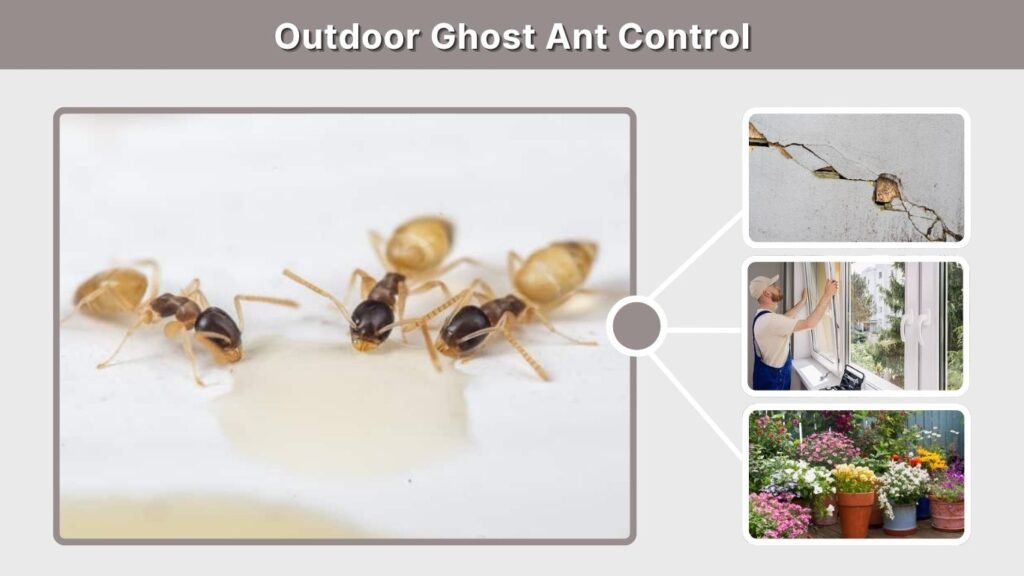
Indoor workers may be entering from nests near the foundation or from vegetation touching the house. Ghost ants can use shrubs, tree branches, plumbing lines, and utility cables as pathways indoors.
Inspect the exterior for trails around:
- Foundation cracks
- Window frames
- Exterior plumbing
- Utility connections
- Flowerpots
- Palm trees
- Mulch and leaf litter
- Shrubs touching walls
Trim branches away from the structure, move mulch slightly back from the foundation, and seal small openings after ant activity has declined. Outdoor bait stations may be placed near trails when the product label permits it.
Natural Ghost Ant Control
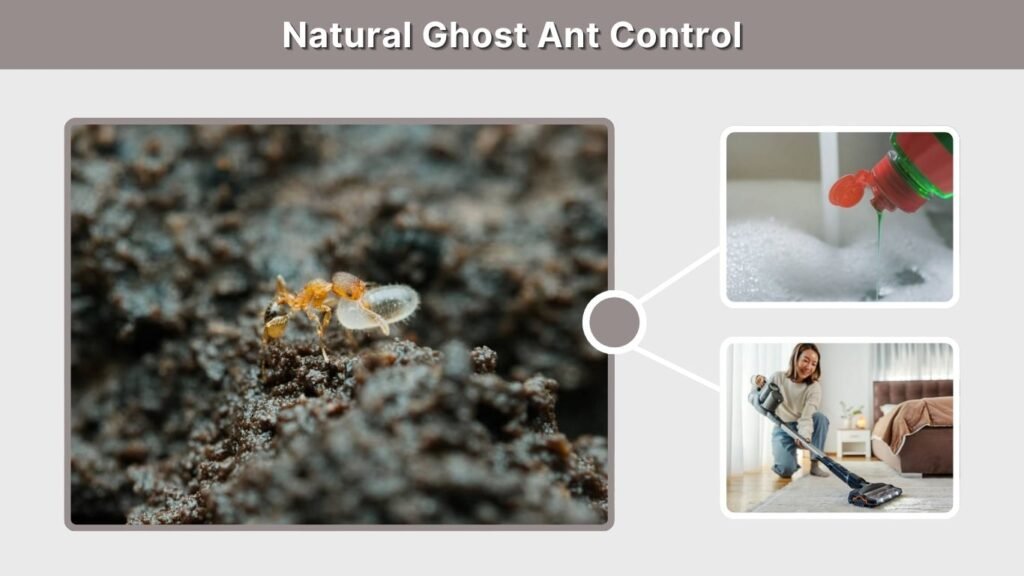
Natural methods can reduce visible activity, but they do not always eliminate hidden queens.
Soapy Water
Soapy water removes workers and erases the odor trails ants use for navigation. It works best for cleaning surfaces after bait placement, not as a complete colony treatment.
Vacuuming
Vacuuming provides fast removal when many workers appear around food or appliances. Empty the vacuum contents outside immediately.
Homemade Borax Bait
Borax is used in some commercial ant baits, but homemade mixtures can be unreliable. A mixture that is too strong may kill workers before they reach the colony, while one that is too weak may not provide control.
Ready-to-use bait stations provide clearer application and safety instructions. All pesticide products should be used according to their labels and kept away from children and pets.
Professional Ghost Ant Control in Florida
Ghost ants are important household pests throughout central and southern Florida. Warm temperatures allow them to maintain outdoor colonies while repeatedly entering homes and commercial buildings.
Professional treatment may be appropriate when:
- Ants occur in several rooms
- Baiting has failed after several weeks
- Nests appear to be inside walls
- The infestation affects multiple apartments
- Ants repeatedly return from outside
- Safe bait placement is difficult
- The species cannot be confidently identified
Florida residents should select a properly licensed pest-control company. UF/IFAS recommends checking licensing, comparing several companies, requesting written quotes, and making sure recommendations are based on an inspection rather than only the size of the property.
How to Prevent Ghost Ants From Returning
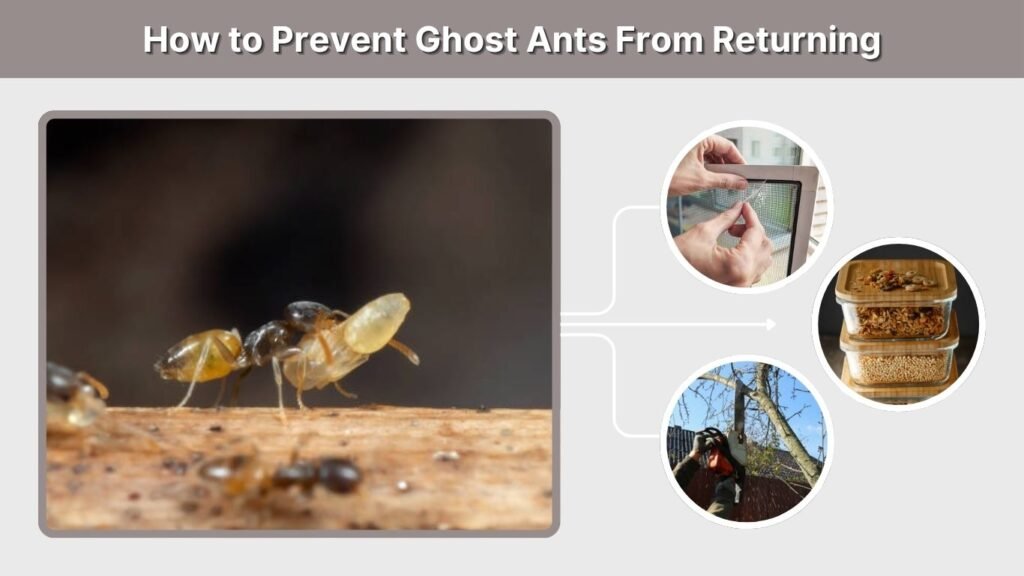
After the infestation is controlled:
- Seal openings around pipes and cables
- Repair damaged screens and weather stripping
- Caulk gaps around windows and doors
- Keep vegetation away from exterior walls
- Inspect potted plants before bringing them inside
- Store food in sealed containers
- Correct plumbing and irrigation leaks
- Clean kitchens regularly
- Monitor previous trail locations
Prevention is particularly important in warm regions where outdoor ghost ant colonies can remain active for much of the year.
FAQs
What is the most effective ghost ant control?
Slow-acting liquid or gel bait combined with sanitation and moisture control is usually the most effective approach. Workers must carry the bait back to the colony so it can reach queens and developing ants.
How long does ghost ant control take?
You may notice fewer ants within approximately 5–10 days, but complete control can take several weeks. Large infestations with multiple connected nests generally require more time and repeated bait monitoring.
Why do ghost ants keep returning?
They may have several indoor and outdoor nests containing multiple queens. Food residue, plumbing leaks, unsealed openings, and untreated outdoor colonies can also support repeated invasions.
Can pest-control sprays eliminate ghost ants?
Sprays kill exposed workers but may not reach the hidden queens. They can also interfere with baiting by repelling ants or contaminating the bait. Targeted bait treatment usually provides better colony control.
When should I hire a ghost ant exterminator?
Call a professional when ants persist after several weeks of correct baiting, occur throughout several rooms, or appear to be nesting inside inaccessible walls. Shared buildings may require coordinated treatment across multiple units.