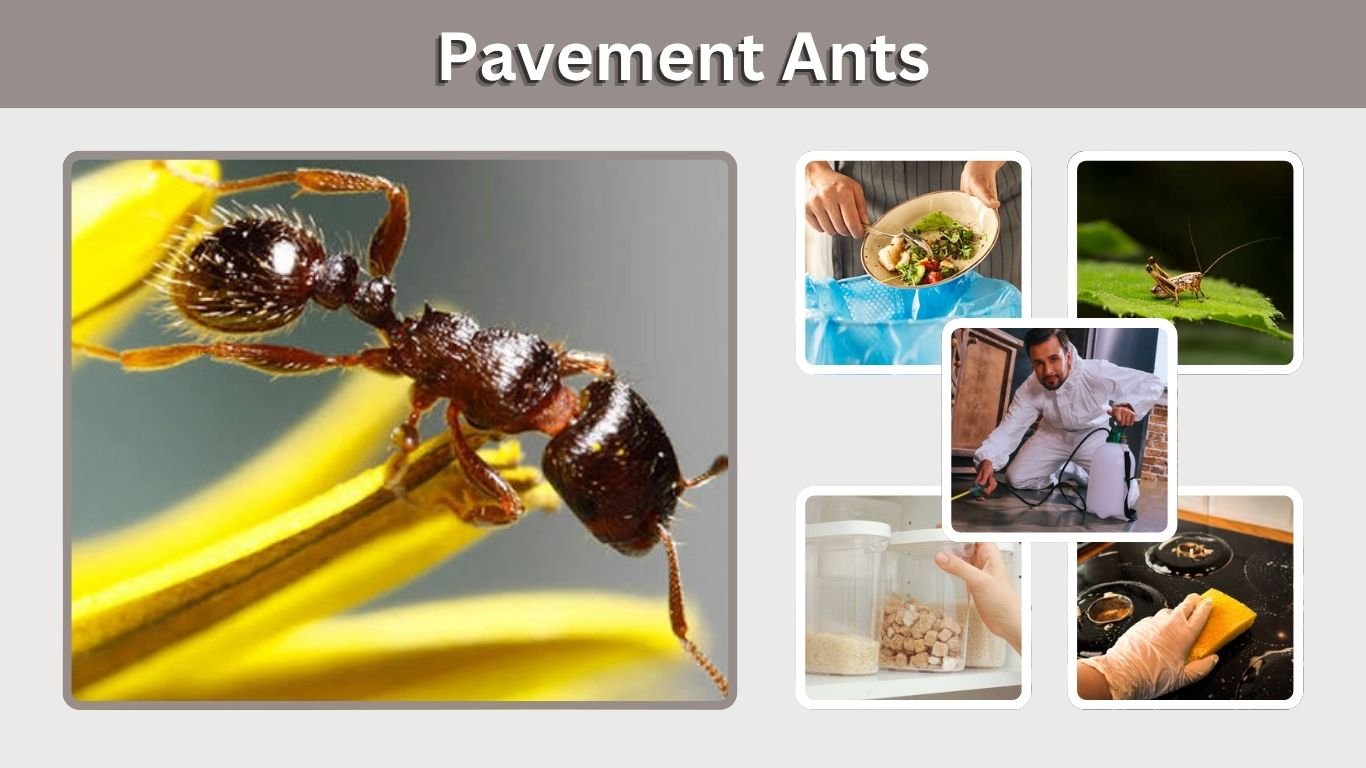
Pavement ants are small, dark-colored ants commonly found beneath sidewalks, driveways, patios, foundations, and concrete slabs. They usually live outdoors but often enter homes while searching for food, water, or warmth. Small soil piles beside pavement cracks are a common sign of an active nest. Although pavement ants are mainly nuisance pests, large colonies can repeatedly invade kitchens, basements, garages, and other indoor spaces. Proper identification, sanitation, baiting, and nest treatment are the most effective ways to control them.
Pavement Ant Overview
The pavement ant commonly found in North America is Tetramorium immigrans. Older references may identify it as Tetramorium caespitum, but these names do not always refer to the same species. Pavement ants were introduced from Europe and are now widespread in urban and suburban environments.
| Feature | Description |
| Scientific name | Tetramorium immigrans |
| Worker size | About 2.5–4 mm |
| Color | Reddish brown, dark brown, or nearly black |
| Body nodes | Two |
| Nest location | Beneath pavement, stones, slabs, and foundations |
| Diet | Sweets, grease, seeds, pet food, and insects |
| Main problem | Indoor food invasion and persistent nesting |
| Best control | Nest treatment or slow-acting bait |
What Do Pavement Ants Look Like?
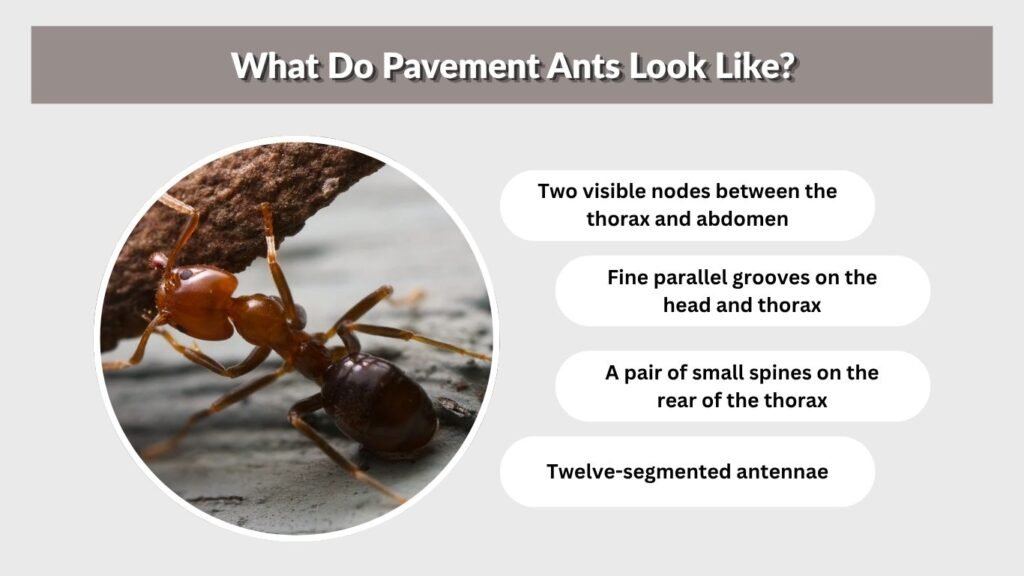
Pavement ants are small enough to enter buildings through narrow cracks around foundations, doors, windows, pipes, and concrete joints. Workers are similar in size and usually travel in organized trails between the nest and a food source.
Size
Adult workers measure approximately 2.5–4 millimeters, or about 1/10 to 1/8 inch long. Winged queens and males are considerably larger and may be about twice the size of workers.
Color
Most workers are reddish brown, dark brown, or almost black. The legs and antennae may appear slightly lighter than the main body. Color alone is not enough for identification because odorous house ants, little black ants, and several other species can look similar.
Identification Features
Under magnification, pavement ants have several useful features:
- Two visible nodes between the thorax and abdomen
- Fine parallel grooves on the head and thorax
- A pair of small spines on the rear of the thorax
- Twelve-segmented antennae
- An antennal club formed by three enlarged segments
- Workers that are nearly uniform in size
The grooves and thoracic spines are difficult to see without magnification. Nest location and the presence of soil beside concrete cracks are therefore often more useful clues for homeowners.
Where Do Pavement Ants Build Nests?
Pavement ants received their common name from their habit of nesting beneath paved surfaces. Colonies excavate soil from below concrete, stones, and foundations, pushing loose material through cracks and leaving small piles near nest entrances.
Outdoor Nesting Sites
Common outdoor nest locations include:
- Beneath sidewalks and driveways
- Under patios and concrete steps
- Along foundation edges
- Beneath landscape stones and bricks
- Under logs, boards, and other objects
- Around curbs and pavement cracks
- In soil near garages or sheds
- Beneath concrete slab foundations
The colony may use cracks in concrete as pathways into a building. Small, crater-like piles of sand or soil beside these openings can indicate an active nest.
Indoor Nesting Sites
Although pavement ants normally nest in soil, they can establish colonies beneath heated slabs or in protected spaces inside buildings. Indoor nests may occur in wall voids, insulation, foundation cracks, or gaps beside heating pipes.
Ants nesting beneath a heated concrete slab may remain active throughout winter. Swarming ants that appear indoors during cold weather can indicate a nest under the building rather than an outdoor colony temporarily entering for food.
Pavement Ant Habitat
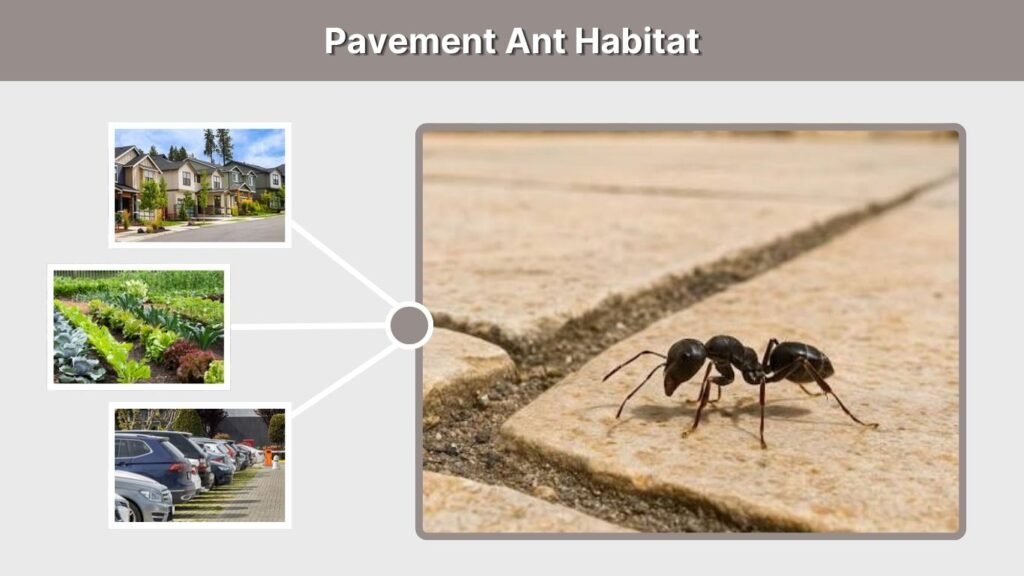
Pavement ants are strongly associated with places changed by human activity. They thrive in cities, residential neighborhoods, commercial properties, gardens, parking areas, and other locations containing concrete or stone.
Suitable habitats provide:
- Soil beneath protected surfaces
- Warmth from pavement or buildings
- Cracks that serve as nest entrances
- Regular sources of food and water
- Nearby vegetation or honeydew-producing insects
Colonies can become especially noticeable during warm weather when workers forage above ground and neighboring colonies engage in territorial fights.
What Do Pavement Ants Eat?
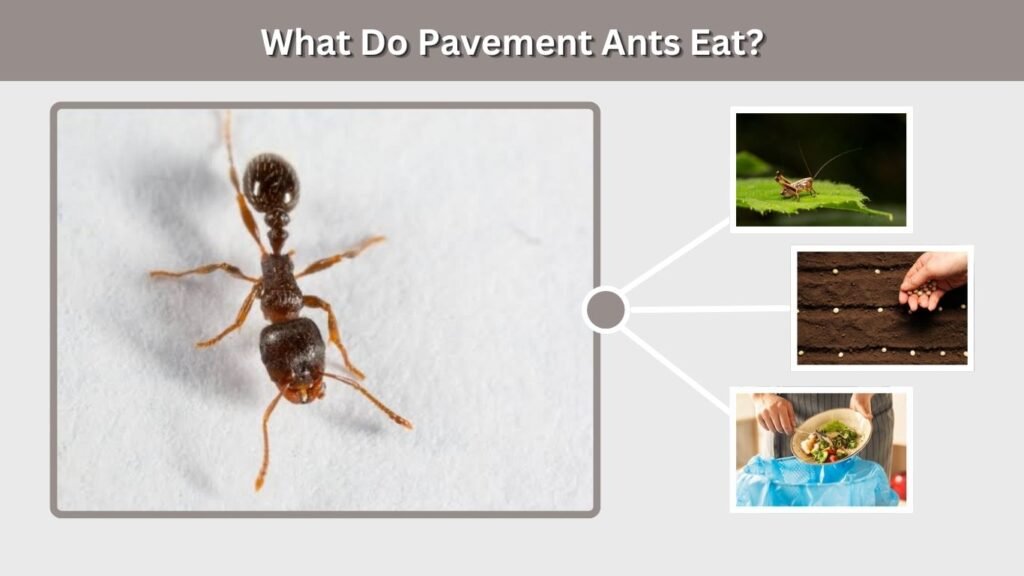
Pavement ants are opportunistic omnivores. They collect both sweet and protein-rich foods, allowing them to survive around homes, restaurants, gardens, and rubbish areas.
Outdoor Food Sources
Outdoors, pavement ants may consume:
- Dead and living insects
- Small seeds
- Honeydew from aphids
- Plant material
- Food waste
- Animal remains
Their feeding on small insects and organic debris can have a minor scavenging benefit, but this does not offset the nuisance created when colonies invade buildings.
Foods Inside Homes
Indoors, pavement ants are attracted to:
- Sugar and syrup
- Bread and baked goods
- Meat and grease
- Cheese and dairy products
- Nuts and seeds
- Pet food
- Food crumbs
- Dead insects
Their food preference may change according to the nutritional needs of the colony. Ants attracted to sweets one week may seek greasy or protein-rich foods later.
Pavement Ant Colonies and Swarming
A mature pavement ant colony includes workers, developing larvae, males, and one or more reproductive queens. Workers gather food, maintain the nest, care for immature ants, and defend the colony.
Winged reproductive ants commonly swarm from late spring through summer. In many northern areas, swarming is most frequent from May through July. Colonies beneath heated slabs may produce indoor swarmers during winter.
Pavement Ants Fighting
Groups of pavement ants are sometimes seen fighting on sidewalks or driveways. These battles occur when workers from neighboring colonies meet and compete over territory. Hundreds of ants may form a dark, moving cluster that can look like a swarm, although the ants involved are usually wingless workers.
Do Pavement Ants Bite or Sting?
Pavement ants can defend themselves when trapped or their nest is disturbed. A bite or sting may produce a mild pinching or burning sensation, but serious reactions are uncommon. They are not normally aggressive toward people and are mainly considered nuisance pests rather than dangerous ants.
Wash an irritated area with soap and water and apply a cold compress when needed. Seek medical care for breathing difficulty, widespread swelling, dizziness, or another severe reaction.
Signs of a Pavement Ant Infestation
Common signs include:
- Small dark ants traveling in trails
- Soil piles beside cracks in pavement
- Ants appearing around kitchen counters
- Activity near pet-food bowls
- Workers entering through foundation gaps
- Winged ants emerging indoors
- Ants beneath stones, bricks, or concrete edges
- Repeated activity in basements or garages
Winged ants have narrow waists, bent antennae, and front wings longer than their rear wings. Termite swarmers have broad waists, straight antennae, and four wings of similar length.
How to Control Pavement Ants
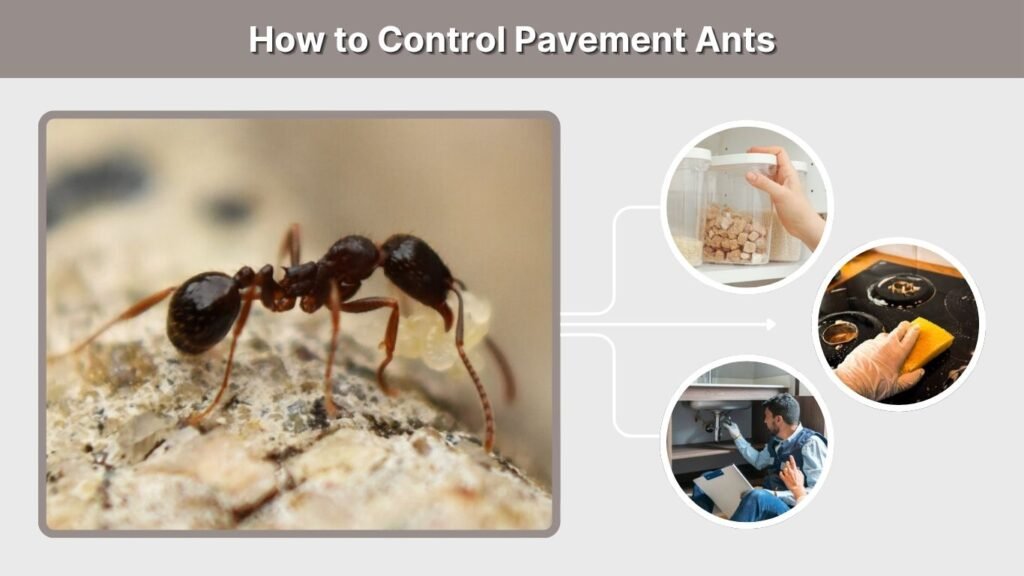
The most effective treatment targets the nest and queen rather than only killing visible workers. Only a small percentage of colony members are outside foraging at one time, so wiping out a trail rarely eliminates the infestation.
Find the Nest
Follow active trails toward cracks, foundation edges, soil piles, or outdoor objects. Inspect both sides of exterior walls because ants seen in a kitchen may be coming from a nest beneath a nearby sidewalk or slab.
A visible outdoor nest can be treated with a pesticide labeled for ants and the specific treatment location. Always follow the label, especially around children, pets, edible plants, and water.
Use Slow-Acting Ant Bait
Bait is particularly useful when the nest is hidden beneath a slab or inside a wall. Workers collect the bait and carry it into inaccessible nesting areas, where it is shared with other colony members.
Place bait close to active trails without blocking them. Pavement ants may accept either sweet or protein-based bait, depending on their current needs. Do not spray insecticide near bait because repellent residues can stop workers from feeding and carrying it back to the colony. Baiting may require several weeks.
Remove Food and Water
- Store food in tightly sealed containers.
- Clean grease, crumbs, and spills promptly.
- Rinse food containers before recycling.
- Avoid leaving pet food out overnight.
- Repair leaking pipes and faucets.
- Empty indoor rubbish regularly.
- Vacuum ants instead of crushing them near food surfaces.
Sanitation will not destroy an established nest, but it removes competing food and improves bait acceptance.
Seal Entry Points
After ant activity has declined, seal cracks around foundations, windows, doors, pipes, cables, and slab joints. Install door sweeps and repair damaged screens. Trim branches touching the building and remove thick mulch or debris from foundation walls.
Avoid Ineffective Home Remedies
Flooding nests, pouring fuel into openings, or relying on cinnamon, orange peel, essential oils, and similar repellents will not reliably eliminate a colony. Gasoline is dangerous, polluting, and should never be placed in an ant nest.
When to Call a Professional
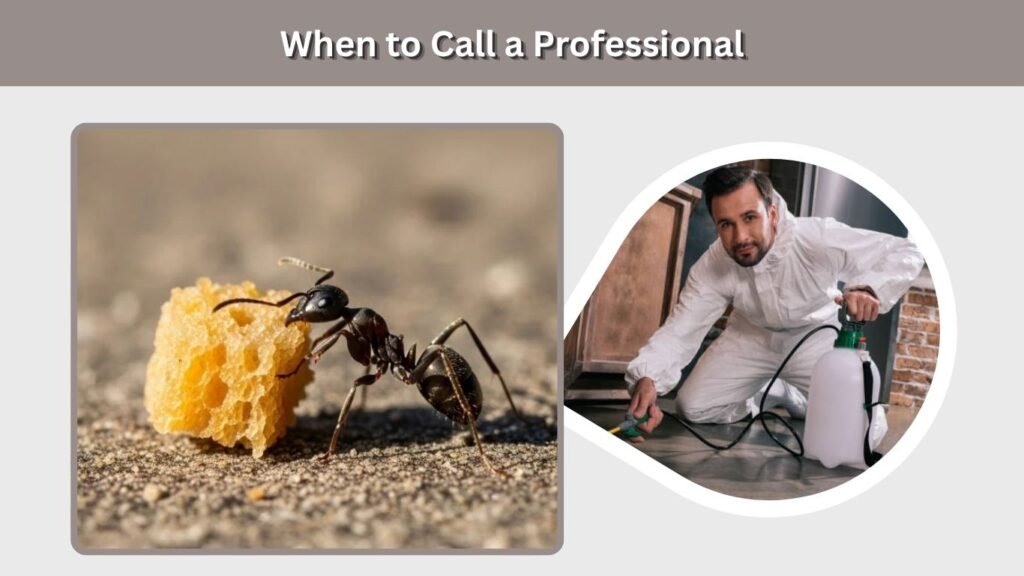
Professional control may be needed when ants repeatedly return, appear in several rooms, emerge through cracks in a heated slab, or continue feeding despite correctly placed bait. A pest-control professional can identify the species, locate likely nests, and select treatments suitable for the structure.
FAQs
Are pavement ants harmful?
Pavement ants are mainly nuisance pests. They can enter food packages and contaminate food surfaces while foraging, but they do not damage structural wood like carpenter ants or consume wood like termites.
Why are pavement ants entering my house?
They usually enter while searching for food, water, or warmth. Open food, pet bowls, leaking plumbing, foundation cracks, and a nearby outdoor nest can all encourage indoor activity.
What are the small dirt piles beside my sidewalk?
Pavement ants excavate soil from beneath concrete and push it through cracks. The resulting small piles of sand or soil often mark the entrance to an underground nest.
What is the best bait for pavement ants?
The best option is a slow-acting bait labeled for household ants and placed beside an active trail. Since food preferences change, trying both sweet and protein- or grease-based formulations may improve results.
How long does pavement ant control take?
A directly treated outdoor nest may decline quickly, but baiting a hidden colony can take several weeks. Continue monitoring and replacing bait until activity has stopped, then seal entrances and maintain sanitation.