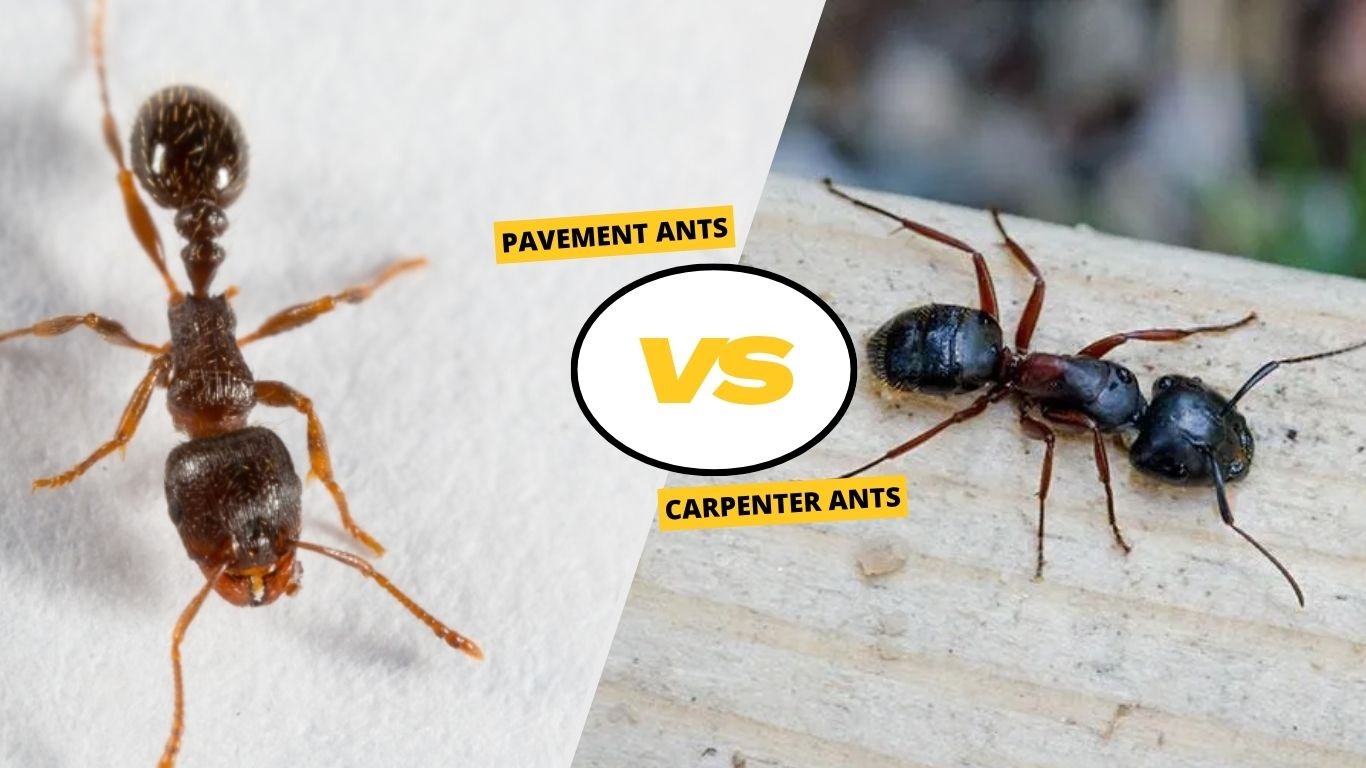
Pavement ants and carpenter ants often enter homes, but they differ greatly in size, nesting habits, appearance, and potential damage. Pavement ants typically nest beneath concrete, sidewalks, and foundations, while carpenter ants excavate damp or damaged wood to create nesting galleries. Correct identification is important because treatments that work for one species may not solve the other problem. This guide explains how to distinguish pavement ants from carpenter ants and determine which type may be invading your property.
Pavement Ants vs Carpenter Ants at a Glance
The easiest differences to notice are body size and nesting location. Pavement ants are tiny and commonly travel in large trails near floors or concrete cracks. Carpenter ants are much larger and are frequently associated with damp wood, wall voids, roof areas, and damaged structures.
| Feature | Pavement ant | Carpenter ant |
| Typical worker size | About 1/8 inch | About 1/4–1/2 inch |
| Common color | Brown to nearly black | Black, reddish, brown, or mixed |
| Waist nodes | Two | One |
| Thorax shape | Uneven or ridged | Smooth and rounded |
| Typical nest | Soil beneath pavement or slabs | Damp, hollow, or damaged wood |
| Structural risk | Generally low | Can damage wood over time |
| Common indoor food | Grease, sweets, crumbs, protein | Sweets, protein, insects |
| Visible debris | Small soil or sand piles | Sawdust-like wood shavings |
Differences in Size and Appearance
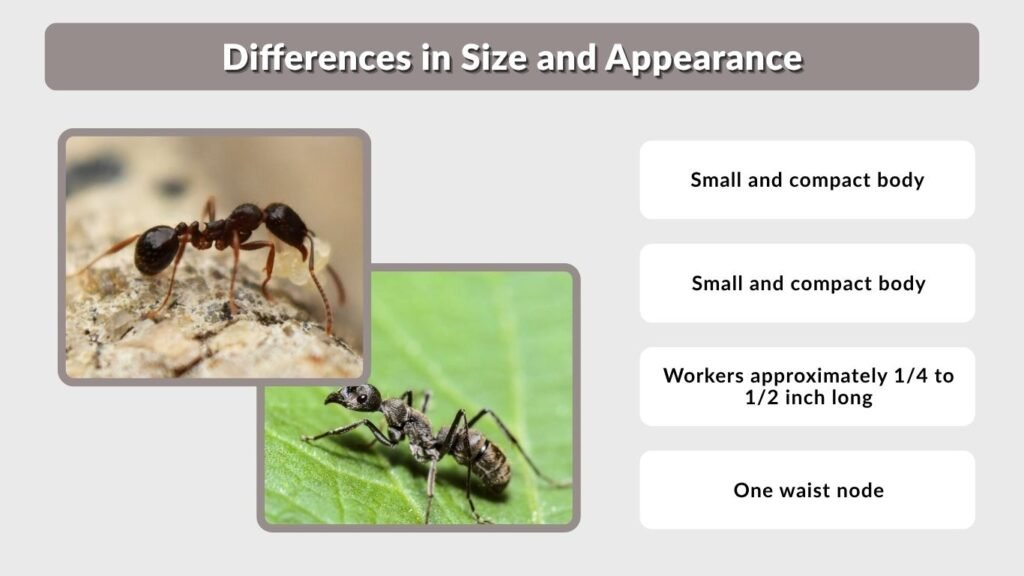
Although both species may appear dark from a distance, their size and body structure make them relatively easy to separate when viewed closely.
Pavement Ant Identification
Pavement ants are small, usually measuring around 1/8 inch long. Their bodies range from reddish brown to dark brown or nearly black. Workers have two small nodes between the thorax and abdomen.
Common identification features include:
- Small and compact body
- Two waist nodes
- Grooved head and thorax
- Tiny spines near the back of the thorax
- Brown, reddish-brown, or black coloration
- Parallel trails containing many workers
Because of their small size, pavement ants are sometimes confused with odorous house ants, little black ants, and other common household species.
Carpenter Ant Identification
Carpenter ants are among the largest ants commonly found in homes. Workers vary in size because a single colony may contain both small and large individuals.
Their main features include:
- Workers approximately 1/4 to 1/2 inch long
- One waist node
- Smooth, evenly rounded upper thorax
- Large head and strong jaws
- Black, dark brown, reddish, or mixed coloration
- Bent antennae
Large black ants found indoors are often assumed to be carpenter ants, but size alone does not confirm identification. The rounded thorax and single waist node provide stronger evidence.
Size Comparison
| Ant type | Small workers | Large workers | Queens |
| Pavement ant | Around 1/8 inch | Little variation | Larger than workers |
| Carpenter ant | Around 1/4 inch | Up to 1/2 inch | Often 1/2 inch or larger |
Pavement Ants vs Carpenter Ant Nesting Habits
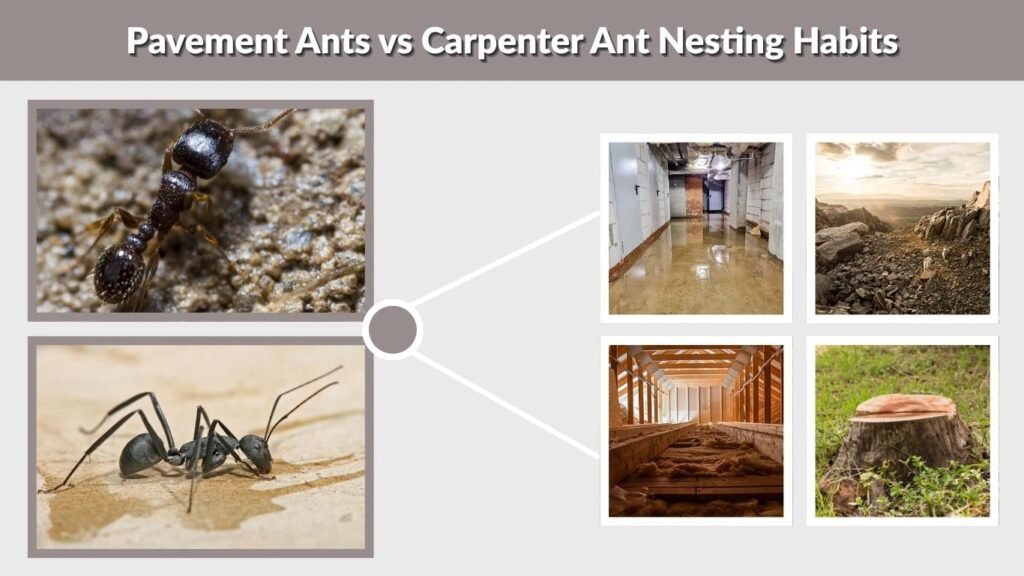
Nesting location is one of the most important differences between pavement ants and carpenter ants.
Where Pavement Ants Nest
Pavement ants usually build colonies in soil beneath hard surfaces. Their name comes from their habit of nesting under sidewalks, patios, driveways, concrete foundations, and paving stones.
They may also nest beneath:
- Garage floors
- Basement slabs
- Landscape rocks
- Pool decking
- Curbs
- Building foundations
- Patio blocks
Workers often push soil, sand, or dirt through cracks, creating small piles beside the nest opening. They may enter homes through foundation gaps while searching for food and water.
Where Carpenter Ants Nest
Carpenter ants typically create nests in moist, decaying, or previously damaged wood. They do not eat wood. Instead, they remove wood to create smooth tunnels and chambers.
Common nesting areas include:
- Water-damaged wall framing
- Window and door frames
- Roof eaves
- Attics
- Porches and decks
- Tree stumps
- Hollow trees
- Areas around leaking pipes
- Foam insulation and wall voids
A property may contain a main colony outdoors and one or more satellite colonies indoors. Satellite colonies can survive in relatively dry locations when workers have access to moisture elsewhere.
Which Ant Causes More Damage?
Pavement ants are mainly nuisance pests, while carpenter ants can become a structural concern when a colony remains inside wooden parts of a building.
Damage Caused by Pavement Ants
Pavement ants do not consume wood or create extensive structural galleries. However, they can become persistent indoor pests and may contaminate food.
Possible problems include:
- Ant trails across kitchen surfaces
- Soil pushed through concrete cracks
- Colonies under patios and paving stones
- Repeated invasion of basements
- Food contamination
- Nesting around pool decks and foundations
Large colonies may shift small amounts of soil beneath pavement, but serious structural damage is uncommon.
Damage Caused by Carpenter Ants
Carpenter ants excavate wood to enlarge their nests. A mature colony occupying structural lumber for several years may weaken affected areas, especially when moisture damage is already present.
Warning signs include:
- Coarse sawdust-like material
- Wood fragments mixed with insect parts
- Rustling noises inside walls
- Large ants active at night
- Winged ants emerging indoors
- Smooth tunnels inside damp wood
- Repeated ants near plumbing or roof leaks
Carpenter-ant damage is generally slower than termite damage, but it should not be ignored.
Damage Comparison
| Type of problem | Pavement ants | Carpenter ants |
| Eats wood | No | No |
| Excavates wood | No | Yes |
| Contaminates food | Yes | Possible |
| Produces soil piles | Common | No |
| Produces wood shavings | No | Common |
| Structural concern | Low | Moderate if established |
| Moisture association | Sometimes | Strong |
Behavior and Food Preferences
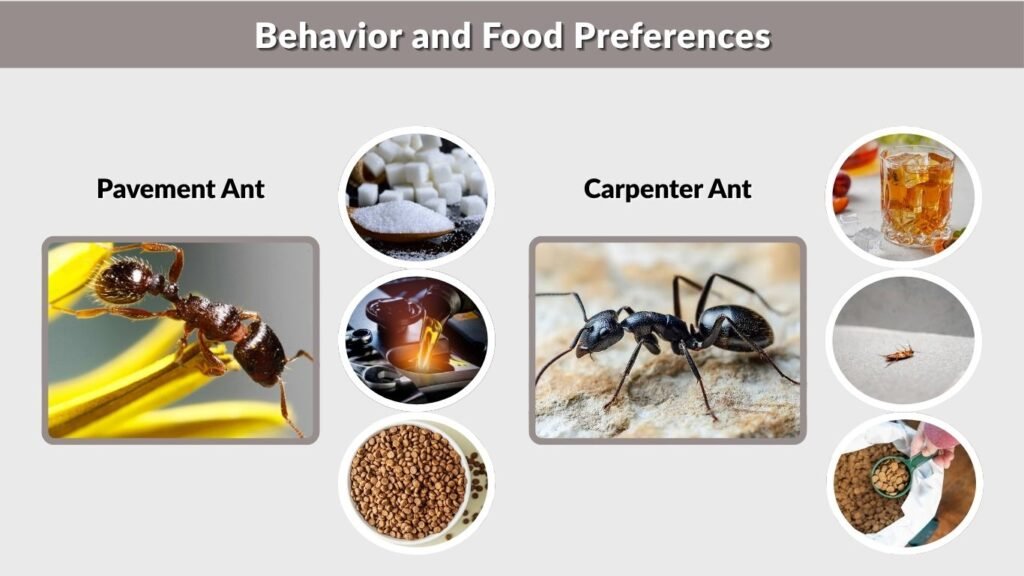
Both ants are social insects that send workers away from the nest to collect food. However, their foraging behavior may look different inside a home.
Pavement Ant Behavior
Pavement ants frequently form long, organized trails along baseboards, counters, foundation edges, and pavement cracks. They eat many foods, including:
- Sugar and syrup
- Grease
- Meat
- Pet food
- Bread crumbs
- Seeds
- Dead insects
Pavement-ant colonies may fight neighboring colonies. These battles can create large moving groups of ants on sidewalks or driveways.
Carpenter Ant Behavior
Carpenter ants are often most active from evening through nighttime. Workers may travel considerable distances between their nest and a food source.
They feed on:
- Honeydew produced by plant-feeding insects
- Sweet liquids
- Dead and living insects
- Meat and protein-rich foods
- Syrup and sugary spills
- Pet food
Seeing a few carpenter ants indoors does not always mean they are nesting in the building. However, frequent nighttime activity, especially during winter, can indicate an indoor colony.
Pavement Ants vs Carpenter Ant Bites
Both species can bite, but neither normally seeks people as prey.
Do Pavement Ants Bite?
Pavement ants can bite when trapped or handled, but their jaws are small. A bite is usually mild and may cause little more than a tiny red spot or brief irritation.
They are not considered aggressive toward humans and are more likely to flee than attack.
Do Carpenter Ants Bite?
Carpenter ants have larger jaws and can deliver a more noticeable pinch. Some may also release formic acid into the irritated area, creating a temporary burning sensation.
A carpenter-ant bite may cause:
- Brief pain
- Redness
- Mild swelling
- Burning or itching
Serious reactions are uncommon. Wash the area with soap and water, apply a cold compress, and seek medical care if severe swelling, breathing difficulty, or signs of infection occur.
Pavement Ant Swarmers vs Carpenter Ant Swarmers
Winged ants are reproductive males and females leaving mature colonies to mate. Their appearance indoors can provide clues about where a colony is located.
Pavement-ant swarmers are relatively small and may emerge through concrete cracks, basement floors, or foundation openings. Carpenter-ant swarmers are much larger and are often mistaken for winged termites.
Carpenter-ant swarmers have:
- Narrow waists
- Bent antennae
- Front wings larger than rear wings
Termites have broad waists, straight antennae, and wings of approximately equal length.
Large winged carpenter ants emerging indoors are an important warning sign because they may indicate a mature colony inside the structure.
How to Get Rid of Pavement Ants
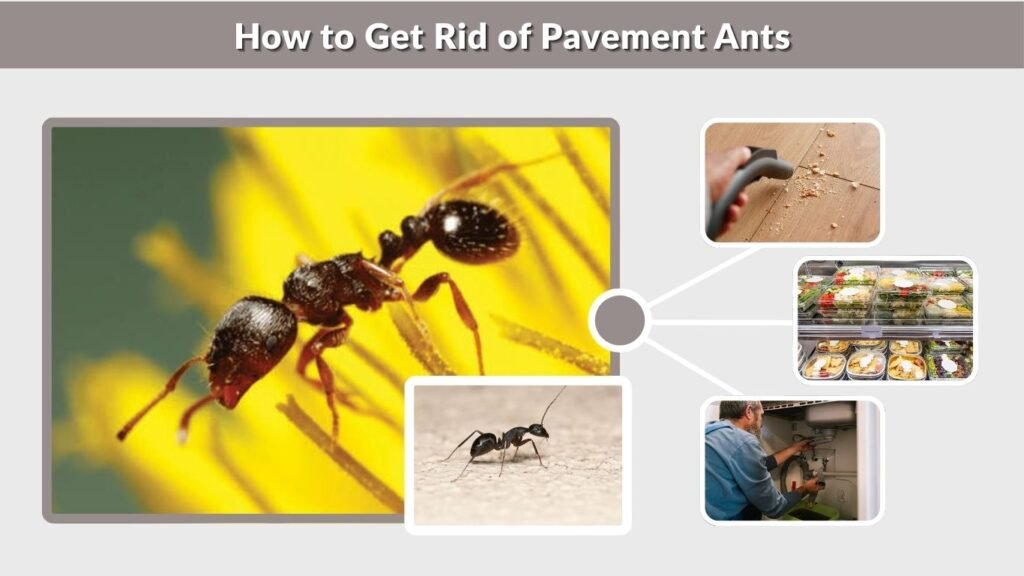
Baiting is usually the most effective method because workers carry the bait back to the colony.
Indoor Pavement Ant Control
Place slow-acting ant bait near active trails, baseboards, cabinets, and entry cracks. Avoid spraying around the bait because repellent insecticides can stop workers from feeding.
Also:
- Clean food crumbs and grease
- Store food in sealed containers
- Repair leaking pipes
- Empty pet bowls overnight
- Seal cracks after activity declines
Outdoor Pavement Ant Control
Place outdoor bait near trails and confirmed nest entrances. Repair pavement joints and foundation gaps once the colony has been controlled.
Avoid pouring boiling water, gasoline, bleach, or other dangerous substances into nests.
How to Get Rid of Carpenter Ants
Carpenter-ant control requires locating the nest and correcting the moisture problem that made the location suitable.
Find the Nest
Follow workers during evening hours when they are most active. Look for ants moving toward wall voids, window frames, roof areas, decks, or plumbing openings.
Sawdust-like debris may appear below the nest, although hidden colonies do not always produce visible material.
Repair Moisture and Damaged Wood
Fix roof leaks, plumbing problems, condensation, clogged gutters, and poor drainage. Replace severely damaged wood and improve ventilation in damp areas.
Use Appropriate Baits or Nest Treatments
Carpenter-ant bait may work when workers are actively feeding on it, but food preferences can change. Direct treatment of a confirmed nest may be necessary.
A licensed pest-control professional should inspect the property when:
- The nest is inside a wall or roof
- Several colonies may be present
- Winged ants emerge indoors
- Structural wood is damaged
- DIY baiting does not reduce activity
Carpenter Ant vs Pavement Ant vs Odorous House Ant
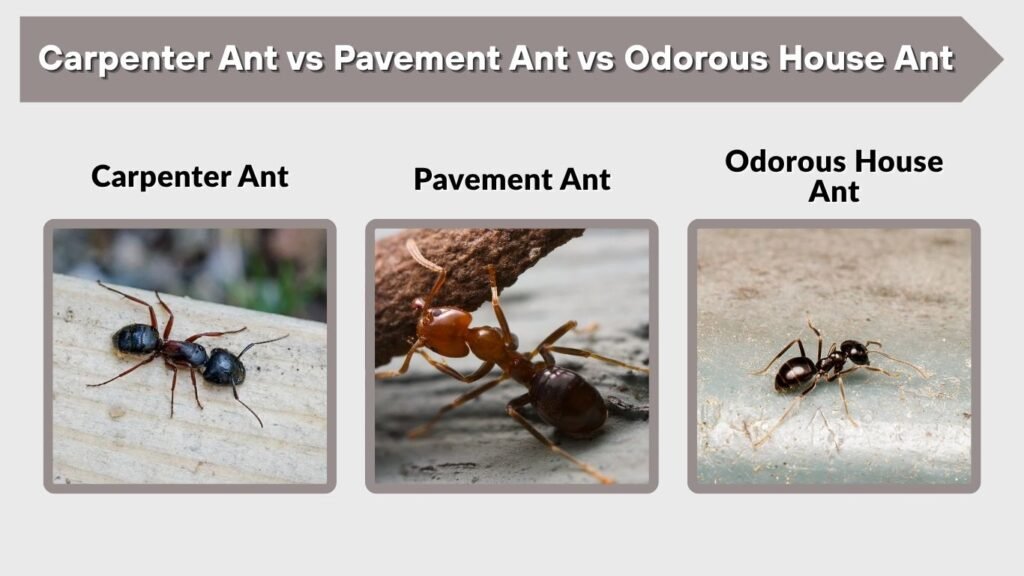
Odorous house ants are another small species commonly confused with pavement ants.
| Feature | Carpenter ant | Pavement ant | Odorous house ant |
| Size | Large | Small | Small |
| Waist nodes | One | Two | One, difficult to see |
| Nest | Wood or wall voids | Soil beneath hard surfaces | Wall voids, soil, mulch |
| Odor when crushed | Mild acidic odor | No distinctive odor | Rotten coconut-like odor |
| Structural damage | Possible | Unlikely | Unlikely |
| Typical trail | Fewer large ants | Dense trails | Dense trails |
FAQs
Are pavement ants smaller than carpenter ants?
Yes. Pavement-ant workers are usually about 1/8 inch long, while carpenter-ant workers generally range from 1/4 to 1/2 inch. Carpenter-ant colonies also contain workers of noticeably different sizes.
How can I tell whether ants are damaging my house?
Look for coarse wood shavings, rustling inside walls, large nighttime ants, damp wood, and smooth galleries. These signs suggest carpenter ants. Pavement ants generally produce small piles of soil near concrete cracks instead.
Can pavement ants live inside walls?
Yes. Pavement ants may establish colonies in wall voids, beneath concrete slabs, or near foundations. However, they are more commonly associated with soil beneath pavement and enter walls through small cracks.
Which ant is harder to eliminate?
Carpenter ants can be more difficult because colonies may be hidden inside walls, roofs, trees, or damaged wood. Pavement ants may also persist when several underground colonies surround a building, but baiting is often effective.
Should I worry about one carpenter ant?
A single carpenter ant may have wandered indoors from an outdoor colony. Repeated sightings, nighttime activity, winged ants, or sawdust-like debris are more concerning and should prompt a detailed inspection.