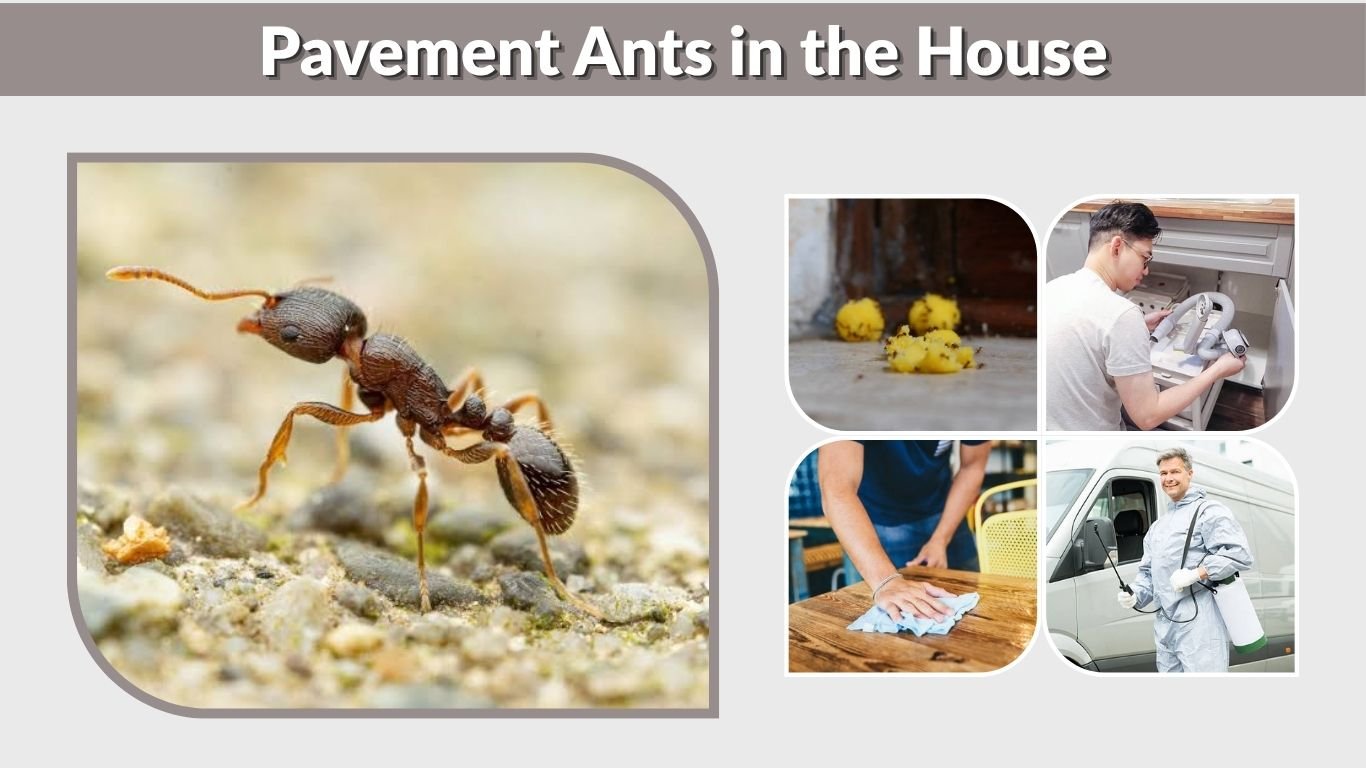
Pavement ants commonly nest beneath sidewalks, driveways, patios, concrete slabs, and building foundations. From these protected colonies, workers may enter a house through tiny cracks while searching for food, water, and warmth. Although they rarely cause structural damage, their large trails can contaminate food and become difficult to control. The best way to remove pavement ants is to identify their entry routes, use slow-acting bait, eliminate attractants, and seal openings after colony activity decreases.
Why Are Pavement Ants Coming Into My House?
Pavement ants usually enter homes because they have discovered an accessible source of food, moisture, or shelter. Their outdoor nests may be only a few feet from the foundation, allowing workers to move indoors through extremely small openings.
Food Attracts Foraging Workers
Pavement ants eat a wide range of foods, including sugar, grease, meat, seeds, pet food, and dead insects. Even small amounts of residue can support an active trail.
Common attractants include:
- Crumbs beneath appliances
- Grease around stoves
- Open sugar containers
- Unwashed dishes
- Pet food left overnight
- Sticky drink spills
- Overflowing garbage cans
Once workers find food, they leave a chemical trail that guides other colony members to the same location.
Moisture Encourages Indoor Activity
Leaking pipes, damp basements, condensation, and water beneath sinks can attract pavement ants. They may also appear around bathrooms, dishwashers, laundry rooms, and poorly ventilated crawl spaces.
Repairing moisture problems is an important part of long-term control. Bait may reduce the colony, but ants can return when reliable water sources remain available.
Cracks Provide Easy Access
Pavement ants can enter through narrow gaps around foundations, windows, doors, utility lines, baseboards, and plumbing. Homes built on concrete slabs may experience repeated activity because colonies can live directly beneath the floor.
How to Identify Pavement Ants Inside the House
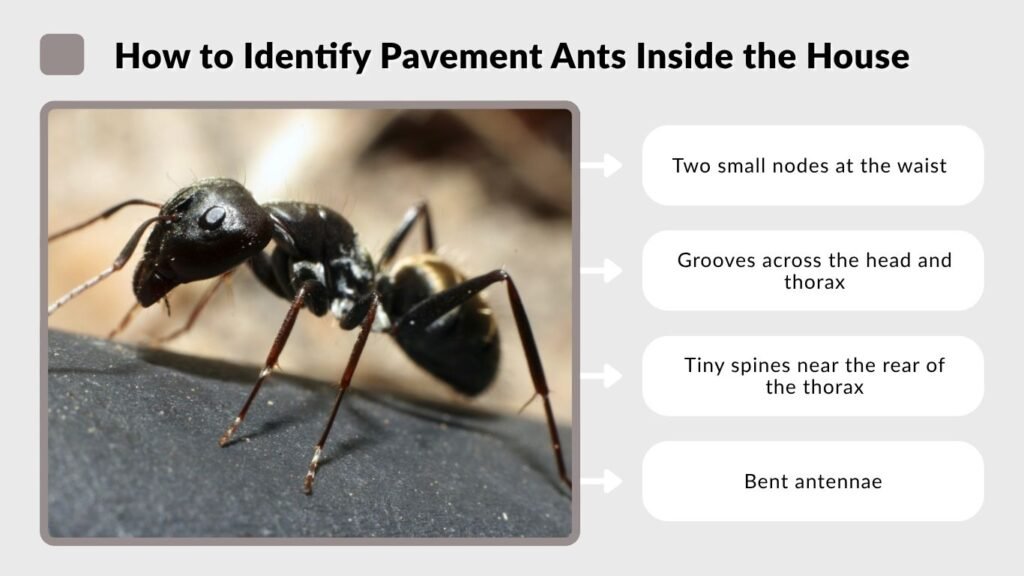
Correct identification helps determine whether you are dealing with pavement ants, odorous house ants, carpenter ants, or another small household species.
Pavement Ant Appearance
Pavement-ant workers are generally about 1/8 inch long. Their bodies range from reddish brown to dark brown or nearly black.
Important identification features include:
- Two small nodes at the waist
- Grooves across the head and thorax
- Tiny spines near the rear of the thorax
- Bent antennae
- Dense, organized foraging trails
- Small piles of soil near concrete cracks
Because these features are difficult to see without magnification, their nesting location and behavior may provide more useful clues.
Black and Red Pavement Ants
Pavement ants can appear black, brown, or reddish brown. Color alone should not be used for identification. Bright red ants that cause painful stings may be another species, particularly in regions where fire ants occur.
Do Pavement Ants Smell When Crushed?
Pavement ants do not usually release the strong rotten-coconut odor associated with odorous house ants. Crushing ants is not the best identification method, but a noticeable sweet or coconut-like smell suggests that the insects may be odorous house ants instead.
Pavement Ants vs. Odorous House Ants
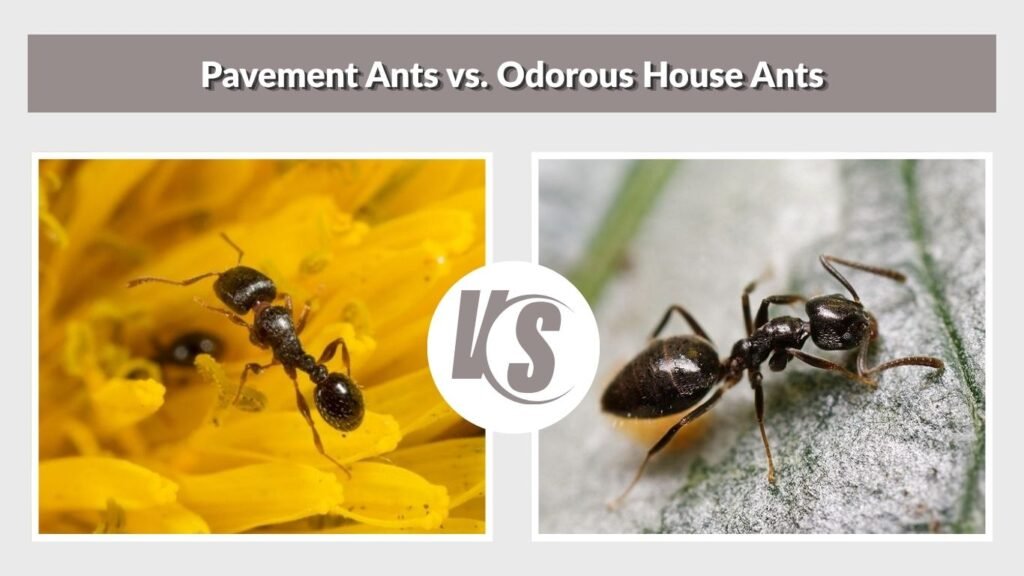
These species are similar in size and may both form trails through kitchens and bathrooms. However, their body structure, odor, and nesting habits differ.
| Feature | Pavement ants | Odorous house ants |
| Size | About 1/8 inch | About 1/16–1/8 inch |
| Waist | Two visible nodes | One hidden or flattened node |
| Color | Brown to nearly black | Brown to black |
| Odor when crushed | No strong coconut odor | Rotten coconut-like smell |
| Outdoor nest | Beneath pavement, stones, and slabs | Beneath mulch, debris, stones, and bark |
| Indoor nest | Slab cracks and wall voids | Wall voids, insulation, and moist areas |
| Food preference | Grease, protein, and sweets | Strong preference for sweets |
Odorous house ants frequently create multiple connected nests, which can make them difficult to control. Pavement ants more commonly originate from colonies beneath concrete or near foundations.
Do Pavement Ants Live or Nest in Houses?
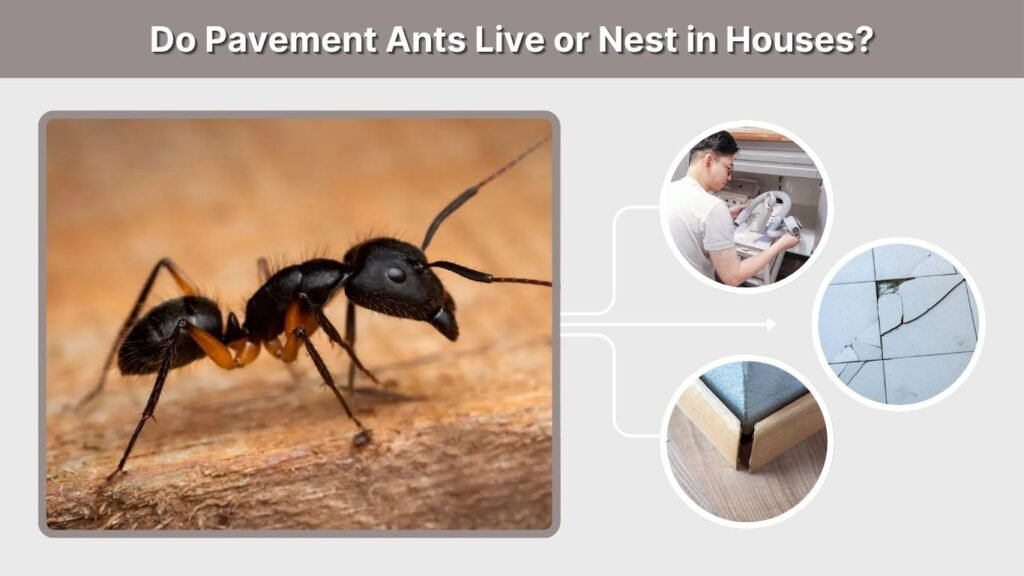
Pavement ants are naturally associated with soil, but they can establish colonies beneath slabs, inside foundation cracks, and occasionally within wall voids.
Nests Beneath Concrete Slabs
Slab homes provide favorable nesting areas because the soil beneath the concrete is protected from weather and temperature changes. Workers may emerge through expansion joints, plumbing openings, floor cracks, or gaps along baseboards.
Applying spray only to the visible opening does not usually eliminate a colony beneath a slab. Slow-acting bait is more likely to reach ants hidden underground.
Pavement Ants Inside Walls
Pavement ants can travel through wall voids even when the main nest is outdoors or beneath the foundation. Repeated activity around outlets, pipes, windows, and baseboards may indicate that a trail passes through the wall.
Never spray liquids into electrical outlets. Use enclosed bait nearby or contact a pest-control professional when the nesting area cannot be safely reached.
Pavement Ants in Basements
Basements often provide moisture, warmth, and access through foundation cracks. Inspect the edges of concrete floors, utility openings, drains, window wells, and areas around plumbing.
Small piles of sand or soil beside a basement crack may indicate excavation from a nearby nest.
Pavement Ants in the House During Winter
Finding pavement ants indoors during winter does not necessarily mean they entered from outside that day. A colony may be living beneath a heated slab, near the foundation, or inside a protected structural space.
Why Winter Activity Occurs
Indoor warmth can keep part of the colony active even when outdoor temperatures are low. Workers may emerge near furnaces, hot-water pipes, kitchens, or sunny walls.
Winter activity can indicate that the nest is close to—or within—the structure. However, an occasional ant may simply have survived indoors after entering earlier.
How to Control Winter Infestations
Place bait near active trails and avoid disturbing the ants while they feed. Indoor baiting can work well in winter because outdoor food sources are limited, making the bait more attractive.
Keep the area clean and replace bait if it dries out or becomes contaminated.
What Do Winged Pavement Ants in the House Mean?
Winged pavement ants are reproductive males and queens. They emerge from mature colonies to mate and establish new nests.
Identifying Winged Pavement Ants
Winged ants have:
- Bent antennae
- Narrow waists
- Front wings longer than rear wings
- Ant-like segmented bodies
Termites have straight antennae, broad waists, and four wings of approximately equal length.
Does an Indoor Swarm Mean There Is a Nest?
Several winged pavement ants emerging from a floor crack, basement, or wall may indicate a mature colony beneath or within the structure. One or two individuals near an open window may have flown in from outdoors.
Vacuum visible swarmers, dispose of the vacuum contents, and inspect the emergence area. Baiting and professional inspection may be needed when swarms recur.
Do Pavement Ants Damage a House?
Pavement ants are mainly nuisance pests. They do not eat wood like termites or excavate structural lumber like carpenter ants.
However, they can create several household problems:
- Contaminating stored food
- Entering appliances and cabinets
- Producing soil piles through slab cracks
- Nesting beneath patios and foundations
- Repeatedly invading kitchens and bathrooms
- Worsening minor gaps by removing loose soil
Serious structural damage is unlikely, but a persistent infestation should still be controlled.
How to Get Rid of Pavement Ants in the House
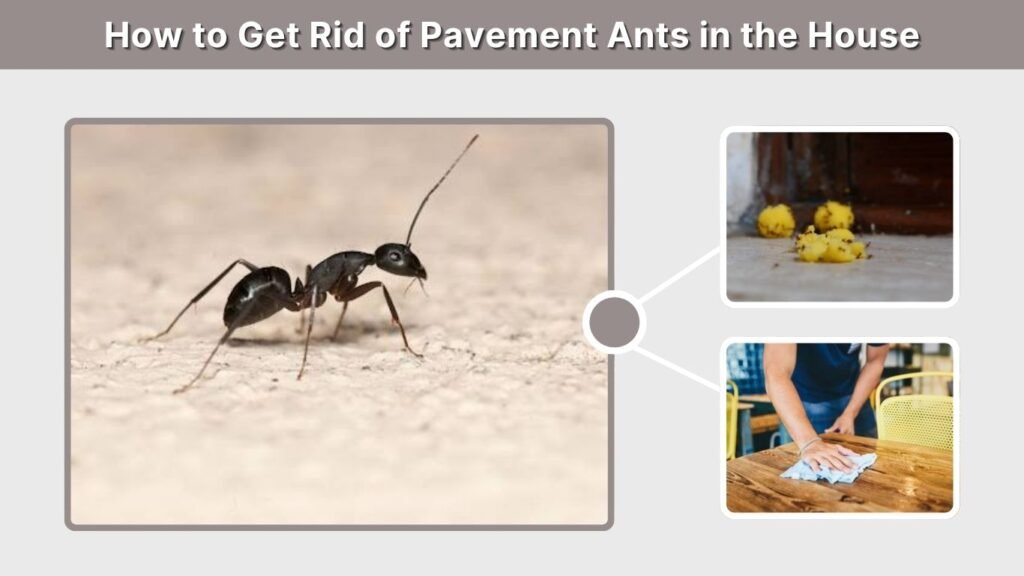
Successful control requires targeting the colony rather than killing only the workers you can see.
1. Follow the Ant Trail
Watch the ants to determine where they enter and where they are feeding. Check beneath sinks, around appliances, near baseboards, beside doors, and along concrete cracks.
Do not immediately erase every trail. Observing it can reveal the best location for bait.
2. Use Slow-Acting Ant Bait
Place liquid, gel, or enclosed bait stations beside active trails. Workers consume the bait and carry it back to the colony, where it can reach queens and developing ants.
Ant activity may temporarily increase after bait is placed. This can be a positive sign that workers are feeding.
Do not spray insecticide or strong cleaner near the bait. Repellent products may prevent workers from carrying it back to the nest.
3. Remove Food and Water
Improve bait performance by removing competing resources.
- Clean counters and floors
- Store food in sealed containers
- Rinse recyclables
- Empty garbage regularly
- Fix plumbing leaks
- Clean beneath appliances
- Store pet food overnight
4. Seal Entry Points
Wait until activity has significantly declined, then seal foundation cracks, plumbing gaps, door frames, window openings, and baseboard gaps.
Sealing too early may cause the colony to create another route into the house.
5. Treat Outdoor Colonies
Inspect sidewalks, driveways, patios, foundation edges, and paving stones for trails or soil piles. Place labeled outdoor bait near confirmed activity.
Reducing nearby colonies lowers the risk of repeated indoor invasion.
DIY and Natural Control Methods
Natural methods may remove visible ants, but they rarely eliminate a large colony hidden beneath concrete.
Soap and Water
Soapy water can kill exposed workers and remove trail chemicals from washable surfaces. Use it after identifying the trail and placing bait nearby.
Vinegar Solution
Diluted vinegar may temporarily disrupt ant trails. Test it first because acidic cleaners can damage stone, grout, and some floor finishes.
Vinegar does not normally kill the underground queen or entire colony.
Food-Grade Diatomaceous Earth
A product labeled for crawling insects can be applied lightly in dry, protected cracks. Avoid inhaling the dust and keep it away from children and pets. Never use pool-grade diatomaceous earth for pest control.
When to Call a Pest-Control Professional
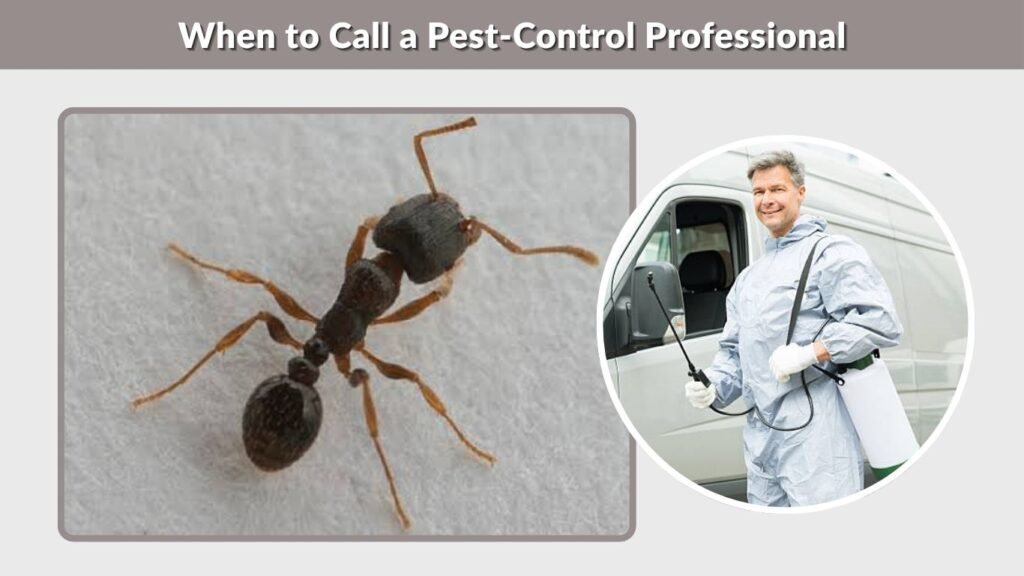
Professional help may be appropriate when pavement ants repeatedly emerge from walls or slab cracks, winged ants swarm indoors, several colonies surround the house, or baiting has not reduced activity.
A professional can identify the species, locate hidden nesting areas, and apply products safely in locations that are difficult to reach.
FAQs
What is the best way to kill pavement ants in a house?
Slow-acting ant bait is generally more effective than spraying visible workers. Place bait near active trails, remove competing food, and allow workers to carry it back to the colony.
Why do pavement ants keep returning?
The underground colony may still be active, multiple colonies may be present, or food and moisture remain available. Nearby nests can also reinvade the house through unsealed foundation openings.
Can pavement ants infest a clean house?
Yes. Cleanliness reduces food sources but does not prevent ants from entering for water, warmth, shelter, or small amounts of food that are difficult to detect.
Are pavement ants dangerous?
Pavement ants are not considered highly dangerous. They may contaminate food and occasionally bite when trapped, but bites are generally mild. They do not normally cause significant structural damage.
How long does it take to remove pavement ants?
Visible activity may decline within several days, but complete colony control can require a few weeks. Large colonies, multiple nests, or unsuitable bait can extend the process.