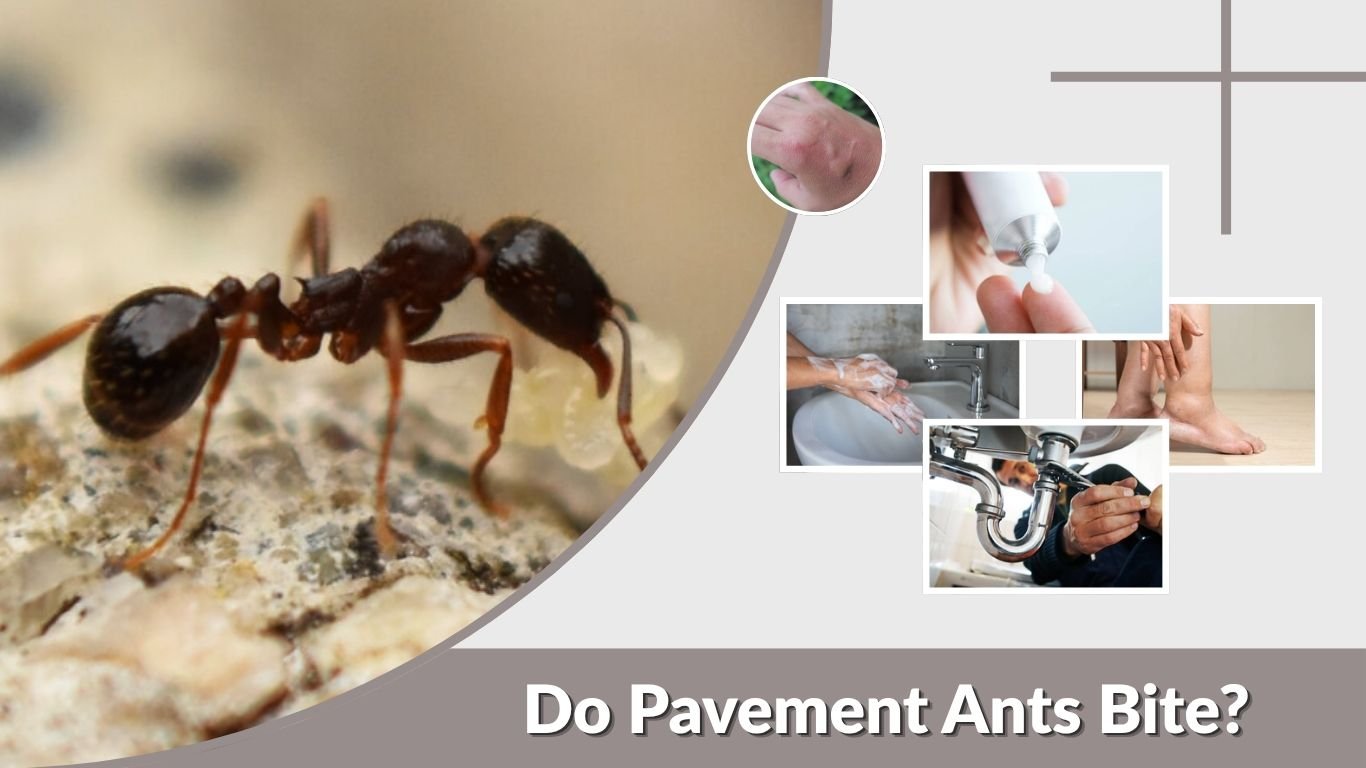
Pavement ants can bite humans, but they rarely do so unless trapped, disturbed, or handled. Because these ants are extremely small, most people feel little or nothing when bitten. Any reaction is usually limited to temporary redness, mild itching, or slight irritation. Pavement ants are primarily nuisance pests that invade homes for food rather than aggressive ants that actively attack people. Understanding the appearance of a pavement ant bite can help you distinguish it from fire-ant stings, flea bites, and other skin irritation.
Do Pavement Ants Bite Humans?
Pavement ants possess jaws that they use for collecting food, defending their colonies, and fighting rival ants. They can use these jaws to pinch human skin, although their small size makes the bite difficult to notice. Penn State Extension notes that ants can bite and that some species can also sting.
Are Pavement Ants Aggressive?
Pavement ants are not normally aggressive toward people. Workers are more likely to run away when disturbed than deliberately attack. A bite is most likely when an ant becomes:
- Trapped underneath clothing
- Pressed against the skin
- Picked up or handled
- Disturbed near its colony
- Caught between a person and an object
Large groups may fight intensely with neighboring pavement-ant colonies, but this aggression is generally directed at other ants rather than humans.
Can Pavement Ants Sting?
Pavement ants belong to a group of ants with functional stingers, but their stings are uncommon and generally too weak to cause a significant human reaction. Most reported encounters are better described as minor pinches or mild irritation.
The familiar burning sensation and white pustules associated with fire ants should not be expected from correctly identified pavement ants. The EPA identifies imported and southern fire ants—not ordinary pavement ants—as important ant species capable of causing painful reactions and characteristic pustules.
Do Black or Red Pavement Ants Bite?
Pavement-ant workers range from reddish brown to nearly black and are approximately 1/8 inch long. They have two small waist nodes, grooves across the head and thorax, and tiny spines near the rear of the thorax.
Both darker and reddish-brown pavement ants can bite. However, a bright red ant that causes immediate burning pain or a pus-filled bump may be a fire ant or another species rather than a pavement ant.
What Does a Pavement Ant Bite Look Like?
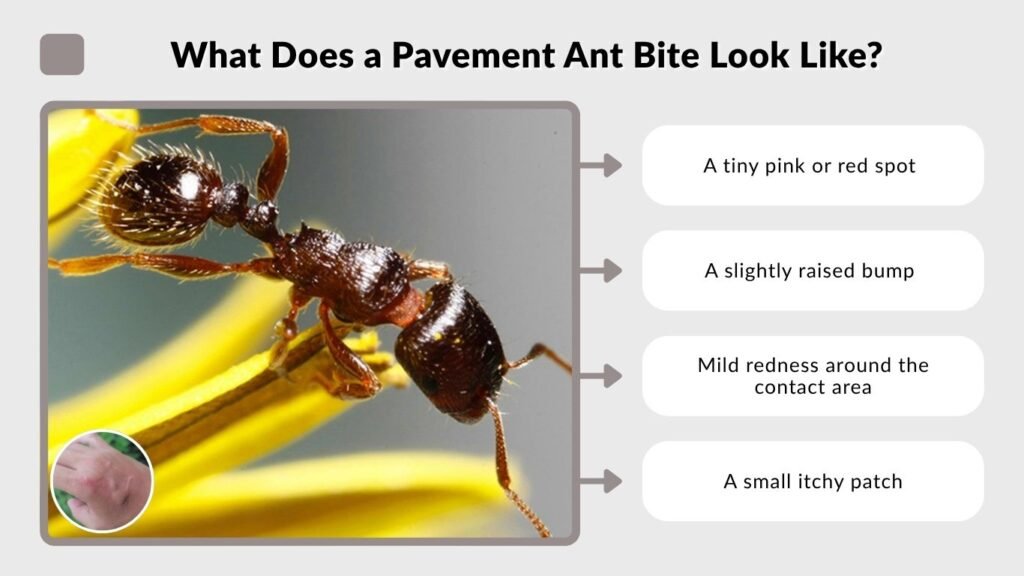
There is no single appearance that proves a skin mark came from a pavement ant. The reaction may be so mild that no visible mark develops. When one does appear, it commonly resembles a small area of ordinary insect irritation.
Common Appearance
A pavement-ant bite may look like:
- A tiny pink or red spot
- A slightly raised bump
- Mild redness around the contact area
- A small itchy patch
- Minor localized swelling
Most insect bites produce a small, red, itchy bump, although appearance varies according to the person’s sensitivity and the insect involved.
Pavement-Ant Bite Pictures
Images found online may be unreliable because several insects cause similar bumps. Mosquitoes, fleas, bed bugs, mites, fire ants, and skin allergies can all produce red or itchy marks.
Consider the circumstances rather than relying only on a picture. A pavement-ant bite is more plausible when pavement ants were seen crawling directly on the affected skin. Multiple unexplained marks that appear overnight, form lines, become blistered, or continue developing without visible ants may have another cause.
Pavement Ant Bite vs. Fire Ant Sting
| Feature | Pavement ant | Fire ant |
| Initial feeling | Often unnoticed or a slight pinch | Immediate burning or stinging |
| Typical mark | Tiny red spot or mild bump | Painful red welt |
| White pustule | Not typical | Common |
| Pain level | Usually minimal | Often moderate to severe |
| Multiple attacks | Uncommon | Common when a nest is disturbed |
The EPA reports that fire-ant encounters may result in welts, allergic reactions, and white pustules lasting several days. These symptoms are not typical of pavement ants.
Pavement Ant Bite Symptoms
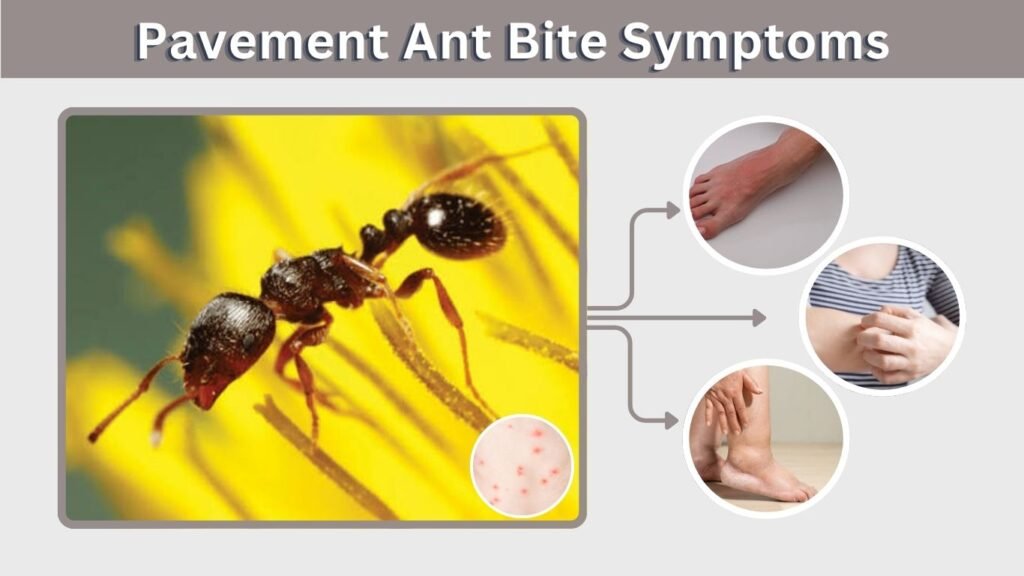
Most pavement-ant bites cause little more than brief discomfort. Symptoms, when present, usually remain limited to the immediate contact area.
Mild Symptoms
Possible symptoms include:
- A quick pinching sensation
- Minor redness
- Mild itching
- Slight swelling
- Temporary tenderness
The irritation should gradually improve rather than become increasingly painful. A bump may remain visible for a short time even after the itching has stopped.
Does a Pavement Ant Bite Hurt?
A bite may feel like a weak pinch, but many people do not notice it. Pavement ants are considerably smaller than carpenter ants and lack the powerful sting associated with fire ants.
Pain that is intense, burning, or worsening may suggest that a different insect was responsible. Identification becomes especially important in areas where stinging ant species are present.
Signs of Infection
Scratching can break the skin and allow bacteria to enter. Seek medical advice when the area develops:
- Increasing redness or swelling
- Growing pain or warmth
- Pus or drainage
- Red streaks moving away from the mark
- Fever or general illness
Medical guidance recommends monitoring insect bites for increasing redness, swelling, pain, and other signs of infection.
How to Treat a Pavement Ant Bite
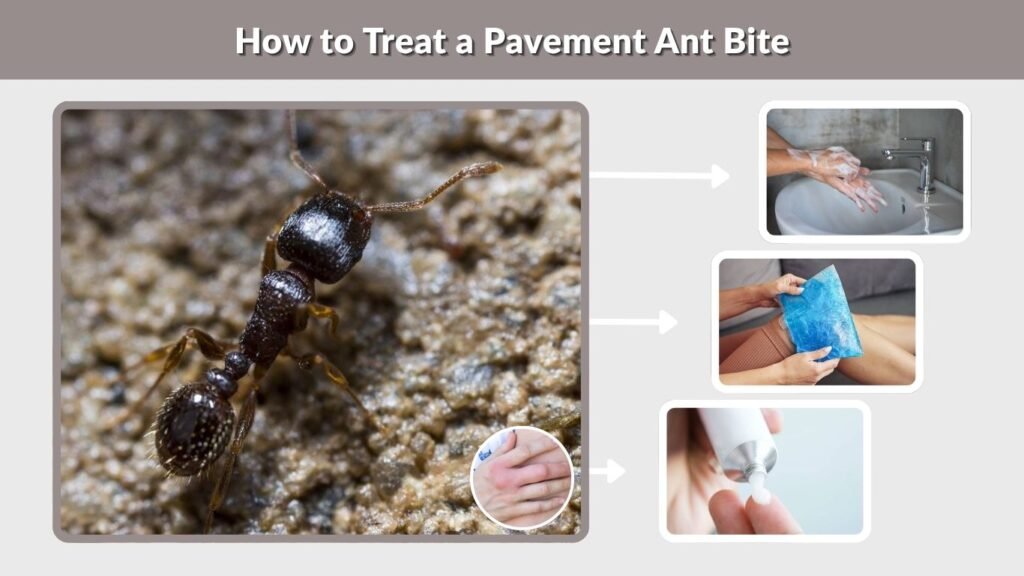
A mild pavement-ant bite can normally be managed with basic first aid. Treatment should focus on cleaning the skin, reducing irritation, and avoiding infection.
1. Wash the Skin
Wash the affected area gently with soap and water. This removes dirt and reduces the possibility of bacteria entering scratched or damaged skin.
2. Apply a Cold Compress
Place a cold, damp cloth or an ice pack wrapped in fabric over the area. Do not apply ice directly to bare skin. MedlinePlus recommends applying wrapped ice for approximately 10 minutes, removing it for 10 minutes, and repeating when necessary.
3. Control Itching and Swelling
An over-the-counter antihistamine or hydrocortisone cream may help with itching or swelling when it is safe for the affected person. Ask a pharmacist or healthcare professional when treating a young child, during pregnancy, while taking other medication, or when uncertain about the appropriate product. NHS guidance includes antihistamines and hydrocortisone among options for relieving insect-bite symptoms.
4. Avoid Scratching
Do not scratch or squeeze the bump. Scratching may damage the skin and increase the risk of infection. Keep children’s fingernails clean and short when they are having difficulty leaving the area alone.
Remedies to Avoid
Avoid applying bleach, undiluted essential oils, strong disinfectants, toothpaste, or harsh household chemicals. NHS guidance also advises against traditional remedies such as baking soda because they are unlikely to help.
Can You Be Allergic to a Pavement Ant Bite?
A serious allergic reaction to a pavement ant is considered unusual, but allergic responses to insect bites and stings are possible. A reaction that extends far beyond the contact site deserves medical attention.
Signs of a Serious Allergic Reaction
Call local emergency services immediately if the person develops:
- Difficulty breathing or wheezing
- Swelling of the lips, tongue, face, or throat
- Widespread hives
- Dizziness or fainting
- Confusion or extreme weakness
- Rapidly worsening symptoms
People who have been prescribed an epinephrine auto-injector should use it as directed at the first sign of a severe allergic reaction and obtain emergency medical care. Epinephrine is used with emergency treatment for life-threatening allergic reactions caused by insect bites and stings.
How to Prevent Pavement Ant Bites
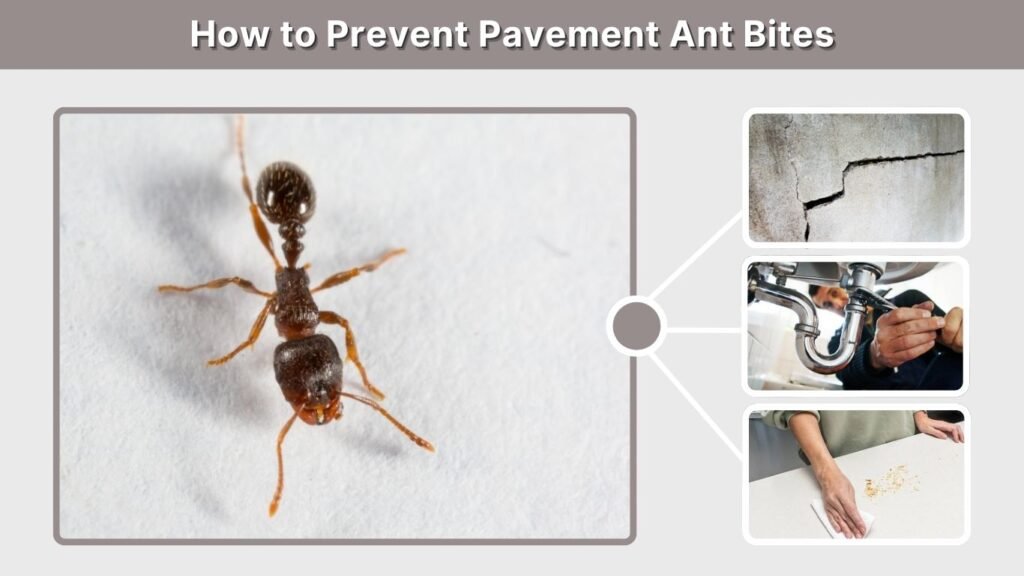
Avoiding direct contact is usually enough to prevent bites. The greater concern is controlling colonies that repeatedly enter kitchens, bathrooms, basements, patios, or pool areas.
Reduce Indoor Activity
Store food in sealed containers, clean grease and crumbs, rinse pet bowls, repair moisture leaks, and empty garbage regularly. Place ant bait near active trails rather than spraying individual workers. Bait allows foraging ants to carry the active ingredient back toward the colony.
Block Entry Points
After ant activity has declined, seal gaps around:
- Foundation cracks
- Doors and windows
- Plumbing pipes
- Baseboards
- Utility cables
- Concrete floor joints
Pavement ants commonly nest beneath sidewalks, foundations, stones, driveways, and concrete slabs before entering buildings through small openings.
Avoid Handling Ants
Do not crush ants against bare skin or pick them up. Wear gloves when moving stones, garden edging, firewood, paving blocks, or objects positioned near a colony.
FAQs
Do pavement ants bite people while sleeping?
Pavement ants do not normally seek sleeping people or feed on blood. An accidental bite could occur if an ant becomes trapped beneath clothing or bedding, but unexplained nighttime bites are more likely to have another source.
How long does a pavement-ant bite last?
A minor mark may improve within several hours or a few days. The healing period varies with skin sensitivity and scratching. Seek medical advice when redness, pain, heat, or swelling continues to increase.
Do pavement-ant bites leave white bumps?
White pustules are not typical of pavement-ant bites. A painful welt that develops a white center is more strongly associated with a fire-ant sting, although other skin conditions can appear similar.
Are pavement-ant bites dangerous to children?
They are generally mild, but children may scratch the area and introduce infection. Wash the skin, apply a wrapped cold compress, and consult a healthcare professional if symptoms are severe, widespread, or worsening.
Should I call a doctor after a pavement-ant bite?
Basic home care is usually sufficient for a small, improving bump. Obtain medical help for worsening pain, infection, extensive swelling, or persistent symptoms. Breathing difficulty or swelling of the mouth, tongue, face, or throat requires emergency treatment.