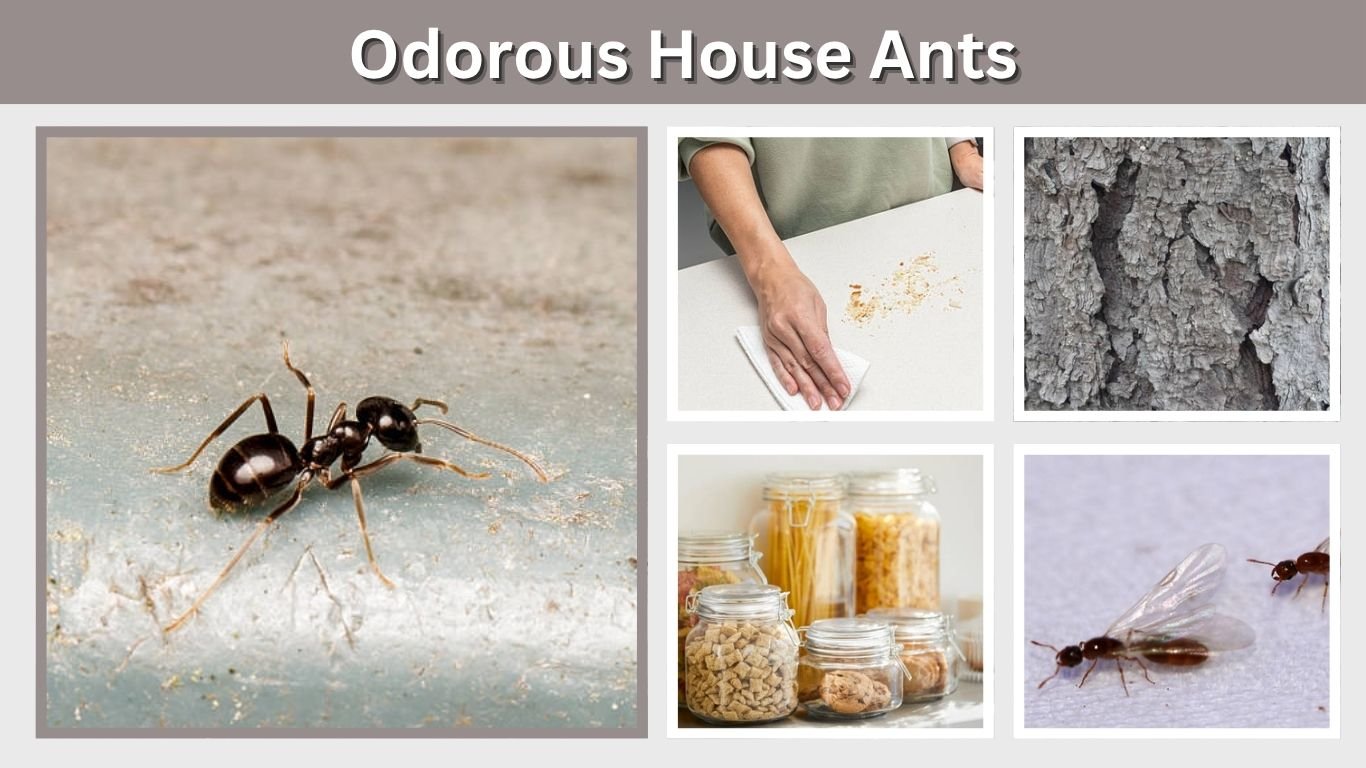
Odorous house ants are tiny brown or black ants commonly found around kitchens, bathrooms, foundations, and garden beds. Their name comes from the unusual rotten-coconut or blue-cheese odor they release when crushed. Although they do not eat wood or usually harm people, they can form persistent infestations containing many workers, queens, and connected nests. Successful control depends on identifying their trails, removing food and moisture, using slow-acting bait, and targeting outdoor colonies rather than merely spraying visible ants.
What Are Odorous House Ants?
The odorous house ant, scientifically known as Tapinoma sessile, is a widespread household pest. Workers forage in organized trails and can enter buildings through extremely small cracks while searching for sugary food, insects, water, and protected nesting sites.
Odorous House Ant Identification
Odorous house ants have several identifying features:
- Workers are approximately 1/10 to 1/8 inch long
- Bodies are uniformly brown to nearly black
- Antennae are bent or elbowed
- The waist has one flattened node that is difficult to see
- The thorax appears uneven when viewed from the side
- Workers form noticeable trails along structural edges
Their hidden waist node helps distinguish them from pavement ants, which have two visible nodes. However, magnification may be necessary to see these details.
What Do Odorous House Ants Smell Like?
When crushed, these ants produce an odor commonly compared with rotten coconut, blue cheese, rancid butter, or a pine-scented cleaning product. The exact smell can seem different to each person, and odor alone is not always reliable because some other ants produce similar scents.
Odorous House Ant Size
Workers are generally 2.5–3.5 millimeters long and remain relatively uniform in size. Queens are larger, with fuller abdomens designed for egg production. Winged queens and males may look noticeably larger than ordinary workers during seasonal swarming.
Where Do Odorous House Ants Live?
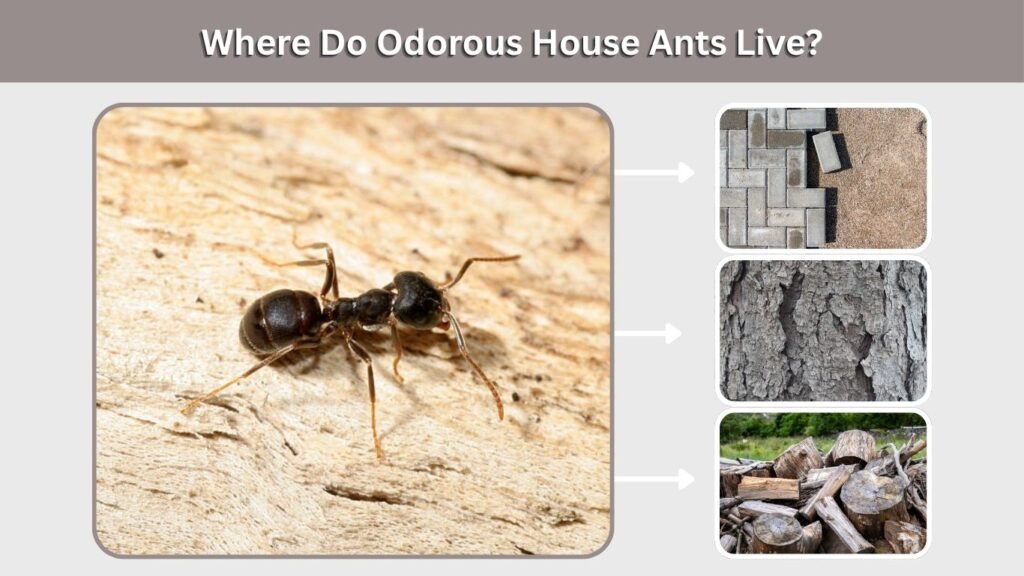
Odorous house ants are adaptable and can occupy natural habitats, landscaped areas, and buildings. They prefer sheltered locations near moisture and reliable food sources.
Outdoor Nesting Locations
Outside, nests may be found beneath:
- Stones and patio blocks
- Boards and firewood
- Mulch and leaf litter
- Loose tree bark
- Logs and stumps
- Landscape fabric
- Siding and shingles
- Objects lying on damp soil
Thick mulch placed directly against a foundation can provide shelter and increase the likelihood of ants entering nearby buildings.
Indoor Nesting Locations
Indoors, odorous house ants may occupy wall voids, floor spaces, crawl spaces, insulation, attics, and areas near plumbing fixtures or vents. They commonly favor warm, humid locations close to kitchens, bathrooms, leaking pipes, and other water sources.
Ants emerging from an electrical outlet may be traveling through the wall rather than nesting directly inside the outlet. Never apply liquid pesticide into an electrical fitting. Place labeled bait nearby or contact a pest-control professional when activity continues.
What Do Odorous House Ants Eat?
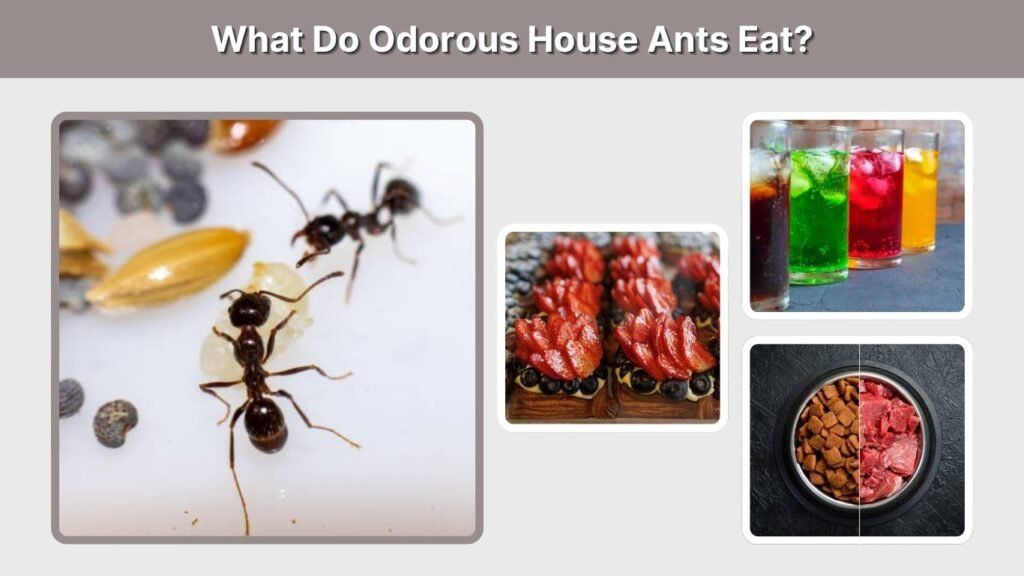
Odorous house ants strongly prefer sweet foods but have a varied diet. Their preferences may change according to the needs of the colony.
Common foods include:
- Honeydew produced by aphids and scale insects
- Nectar
- Syrup and sugary drinks
- Fruit and baked goods
- Meat and pet food
- Dairy products
- Living and dead insects
Removing indoor food sources can make bait more attractive and reduce the number of workers foraging inside. Outdoor aphid or scale infestations may also support nearby ant colonies by providing honeydew.
Odorous House Ant Queen and Colony
These ants can be unusually difficult to control because urban colonies may include numerous queens and a network of cooperating nests.
Queen and Worker Roles
Queens lay eggs, while wingless female workers gather food, care for larvae, maintain the nest, and defend the colony. Mature colonies also produce winged males and females for reproduction.
Multiple Nests and Budding
A colony may spread through “budding.” During this process, one or more queens leave with workers and developing ants to establish another nest nearby. Disturbance, environmental changes, or access to a new food source can encourage relocation. Related nests may exchange workers and food, creating a large interconnected infestation.
Odorous House Ant Life Cycle
Odorous house ants undergo complete metamorphosis:
- Egg
- Larva
- Pupa
- Adult
Development from egg to adult may require approximately five to eleven weeks under favorable conditions, although cooler temperatures can slow growth significantly. Queens and workers can live for several years, allowing established colonies to persist when control reaches only visible workers.
Odorous House Ants With Wings
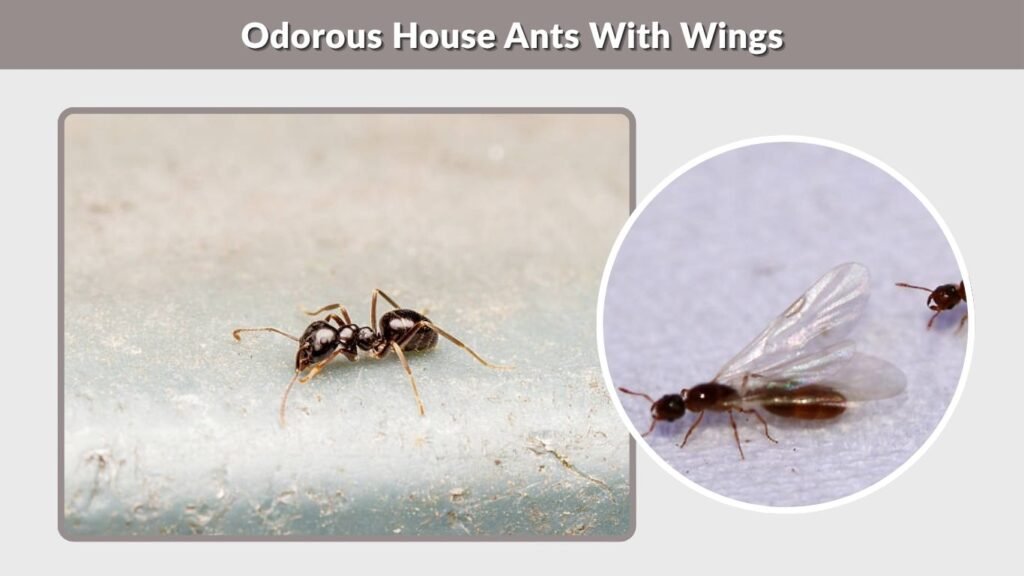
Winged odorous house ants are reproductive males and queens, often called swarmers. Outdoor mating activity usually occurs during late spring or summer, although timing varies by climate. Indoor colonies may remain active throughout the year.
Winged Ants vs Termites
| Feature | Winged odorous house ant | Winged termite |
| Antennae | Bent | Straight |
| Waist | Narrow | Broad |
| Wings | Front pair longer | Four similar-sized wings |
| Body color | Brown to black | Varies by species |
| Odor when crushed | Coconut-like | No characteristic coconut odor |
Several winged ants emerging from walls or floors may indicate an indoor nest. A single swarmer near an open window may simply have flown inside.
Do Odorous House Ants Bite?
Odorous house ants are not considered aggressive and rarely bite people. Their small jaws are unlikely to cause a noticeable injury, and they do not possess a medically significant sting.
A trapped ant might produce a tiny pinch, but redness, pain, pustules, or substantial swelling are not typical. Painful reactions may indicate fire ants, another biting insect, or an unrelated skin problem.
Are Odorous House Ants Dangerous?
These ants are mainly nuisance pests. They do not eat wood, excavate structural lumber like carpenter ants, or normally pose a serious health threat. However, workers can travel across garbage, drains, counters, and stored food, making sanitation important.
| Concern | Risk from odorous house ants |
| Structural wood damage | No |
| Painful stings | No |
| Significant bites | Unlikely |
| Food contamination | Possible |
| Large indoor infestation | Common |
| Strong odor when crushed | Yes |
How to Get Rid of Odorous House Ants
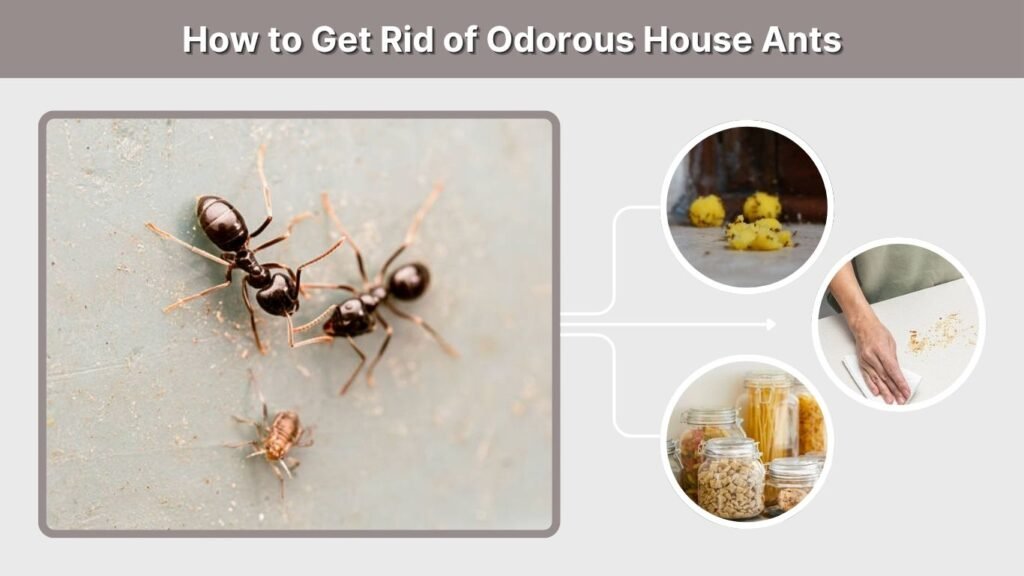
Baiting is generally more effective than killing individual workers because the bait can be carried back and shared throughout the colony.
1. Follow the Trails
Watch workers to locate entry points, food sources, and possible outdoor nests. Trails commonly follow baseboards, siding, counters, plumbing pipes, deck boards, and doorframes.
2. Place Slow-Acting Bait
Place a sweet liquid or gel ant bait labeled for indoor use beside active trails and entry points. Workers must remain alive long enough to transport the active ingredient back to queens and nestmates.
Do not spray contact insecticide near bait. Sprays may repel or kill workers before they distribute it through the colony. Replace bait when it dries out, becomes contaminated, or is consumed.
3. Remove Food and Moisture
Improve bait acceptance by:
- Cleaning spills and crumbs
- Storing food in sealed containers
- Rinsing recyclable containers
- Emptying garbage regularly
- Removing pet food overnight
- Fixing dripping taps and pipes
- Cleaning beneath appliances
Sanitation does not kill an established colony, but it removes competing food and discourages future indoor activity.
4. Inspect and Treat Outdoor Nests
Check beneath stones, mulch, boards, firewood, flowerpots, and objects close to the foundation. Use only bait or nest treatments labeled for the specific outdoor location, and follow all product directions.
5. Seal Entry Points
Once activity has declined, caulk cracks around windows, doors, pipes, siding, foundations, and utility openings. Trim vegetation touching the building and move firewood, dense mulch, and debris away from exterior walls.
Natural Control Methods
Soapy water can kill exposed ants and remove their trail from washable surfaces. Diluted vinegar may temporarily disrupt trails but does not eliminate queens or hidden nests. Homemade borax mixtures can be too strong, too weak, or accessible to children and pets; commercially prepared, labeled bait stations provide more consistent placement and instructions.
Odorous House Ants vs Other Ants
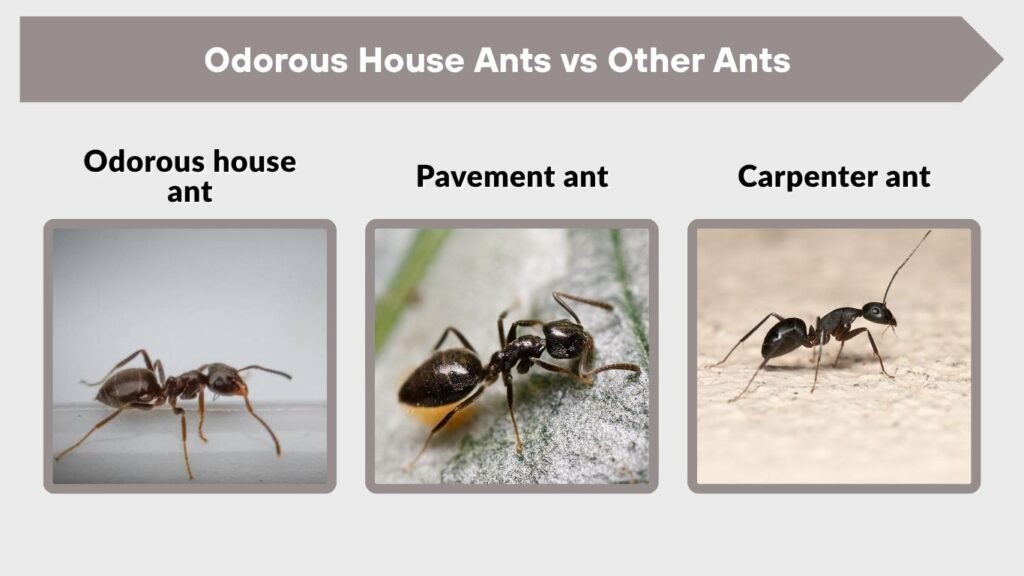
| Feature | Odorous house ant | Pavement ant | Carpenter ant |
| Worker size | About 1/10–1/8 inch | About 1/8 inch | About 1/4–1/2 inch |
| Waist nodes | One hidden node | Two visible nodes | One visible node |
| Smell when crushed | Rotten coconut-like | No strong odor | Acidic odor possible |
| Common nest | Moist voids, mulch, debris | Beneath soil and pavement | Damp or damaged wood |
| Wood damage | No | No | Can excavate wood |
| Colony structure | Often many nests and queens | Usually more localized | Main and satellite nests possible |
FAQs
Why do odorous house ants keep returning?
The infestation may consist of several connected nests and multiple queens. Killing visible workers leaves most of the colony untouched. Food, moisture, outdoor honeydew, mulch, and unsealed entry gaps can also support continued activity.
What is the best bait for odorous house ants?
A slow-acting sweet liquid or gel bait is often effective because these ants commonly prefer sugary foods. Place it directly beside trails, keep competing food unavailable, and avoid using repellent spray nearby.
Are odorous house ants active at night?
Yes. They may forage during both the day and night. Activity often becomes more noticeable when the house is quiet or when food and moisture are available overnight.
How long does it take to eliminate an infestation?
Activity may begin declining within several days, but a large, multi-queen infestation can require several weeks or professional treatment. Continue replacing accepted bait while workers remain active.
When should I call an exterminator?
Contact a licensed professional when ants emerge from several rooms, repeatedly appear from walls or outlets, return after baiting, or cannot be traced to a manageable nest. Persistent infestations may involve a large network of hidden colonies.