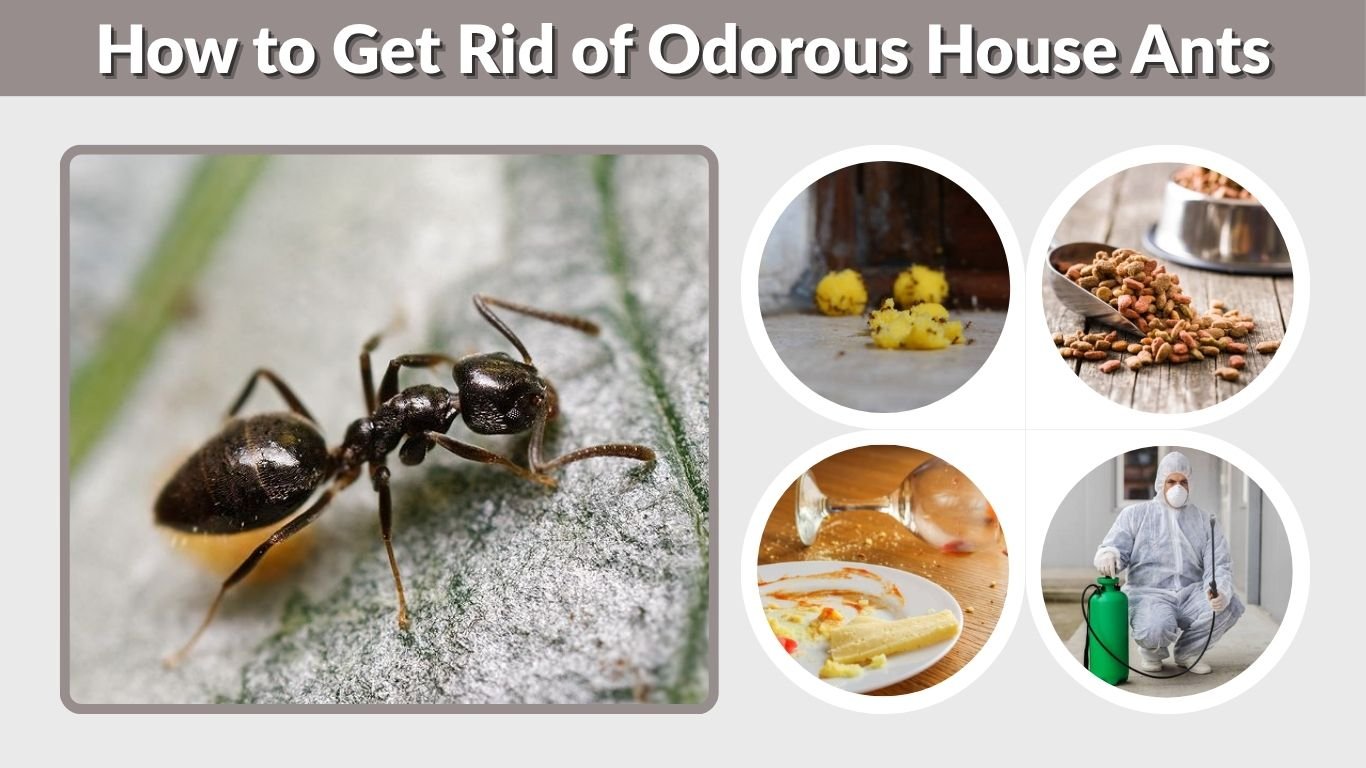
Odorous house ants are tiny brown or black ants that often invade kitchens, bathrooms, wall voids, and areas near plumbing. When crushed, they release a strong smell often compared to rotten coconut. Spraying visible ants may provide temporary relief, but it rarely eliminates the colony. The most effective approach is to identify their trails, use slow-acting ant bait, remove food and moisture, and seal entry points after activity declines. With consistent treatment, most indoor infestations can be controlled without excessive pesticide use.
How to Identify Odorous House Ants
Odorous house ants, scientifically known as Tapinoma sessile, are common household pests throughout much of North America. They form large colonies and may establish several connected nests around a property.
| Feature | Description |
| Size | Approximately 1/16 to 1/8 inch long |
| Color | Dark brown to black |
| Smell | Rotten coconut-like odor when crushed |
| Common locations | Kitchens, bathrooms, walls, foundations |
| Preferred foods | Sugary liquids, sweets, grease, and insects |
| Sting | No |
| Typical behavior | Travels in long, organized trails |
These ants can be confused with pavement ants and Argentine ants. The distinctive odor released when one is crushed is one of the easiest identification clues.
Common Signs of an Infestation
Look for narrow ant trails along countertops, baseboards, pipes, windows, and foundation edges. You may also notice ants gathering around sinks, pet bowls, food spills, trash cans, and sweet liquids.
Outdoors, colonies may nest beneath stones, mulch, boards, firewood, loose bark, and foundation materials. Indoors, they commonly occupy wall voids, insulation, window frames, and spaces near plumbing.
Why Odorous House Ants Enter Homes
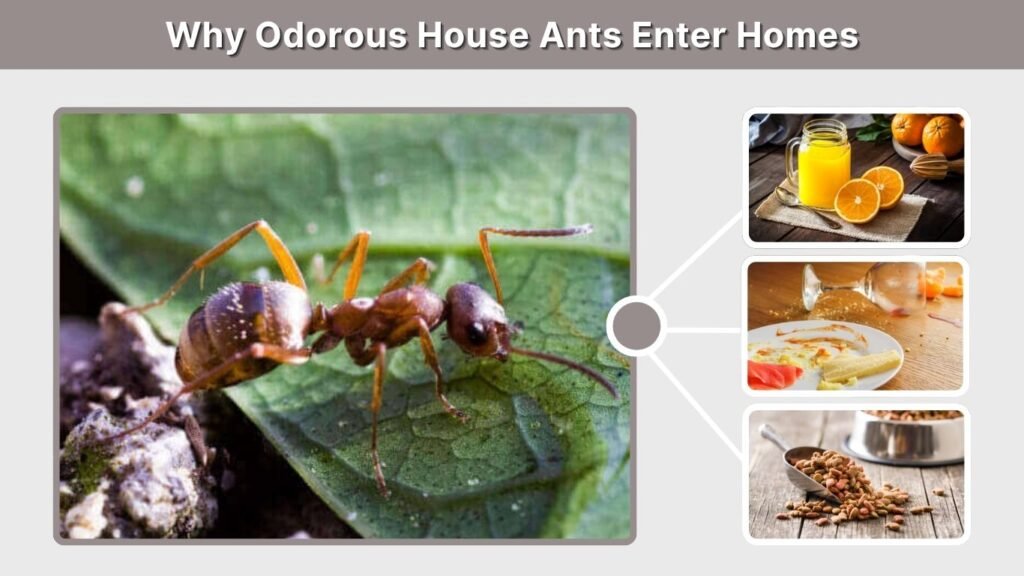
Odorous house ants usually enter buildings in search of food, water, or protection from changing weather. Heavy rain, drought, extreme heat, and cold temperatures can drive colonies indoors.
Food Sources
These ants are strongly attracted to sugary substances. Common indoor food sources include:
- Syrup, honey, and fruit juice
- Crumbs and spilled drinks
- Overripe fruit
- Pet food
- Greasy food residue
- Open trash and recycling containers
Even a small amount of food can support an active trail.
Moisture and Shelter
Bathrooms, kitchens, laundry rooms, and basements provide moisture and protected nesting spaces. Leaking pipes, damp wood, condensation, and poorly ventilated areas make a home more attractive to ants.
How to Get Rid of Odorous House Ants
The best control method combines baiting, sanitation, moisture reduction, and exclusion. Avoid relying only on contact sprays because they kill visible workers without necessarily reaching the queens.
1. Follow the Ant Trail
Observe the ants before cleaning or treating the area. Determine where they are entering and where the trail leads.
Check around:
- Windows and doors
- Plumbing openings
- Electrical outlets
- Baseboards
- Foundation cracks
- Cabinet edges
- Heating and air-conditioning lines
Locating the trail helps you place bait where workers are most likely to find it.
2. Use Slow-Acting Ant Bait
Ant bait is generally more effective than spraying individual workers. Foraging ants carry the bait back to the nest and share it with other workers, larvae, and queens.
Place small bait stations or drops of gel bait beside active trails. Do not place bait directly on food-preparation surfaces.
Odorous house ants may change their food preferences. They often prefer sweet bait, but some colonies may respond better to protein- or grease-based bait. Trying more than one bait formulation can improve results.
3. Avoid Spraying Near the Bait
Do not spray household insecticide or strong cleaners around bait placements. Repellent products may prevent ants from feeding on the bait.
Killing visible workers too quickly can also reduce the amount of bait carried back to the colony. Allow the ants to feed, even if activity temporarily increases around the bait.
4. Clean After Activity Declines
Once fewer ants are visiting the bait, clean the trail with soap and water. This helps remove the chemical scent that other ants use to follow the route.
Clean countertops, floors, cabinet shelves, and appliance edges regularly. Store food in sealed containers and wipe up sugary spills immediately.
5. Seal Entry Points
After the colony has been reduced, seal cracks and gaps to discourage reinfestation.
Use suitable sealant around:
- Window and door frames
- Plumbing pipes
- Utility cables
- Baseboards
- Foundation openings
- Exterior siding gaps
Do not seal an active indoor nest immediately if doing so could force the ants to create new routes through the house.
How to Get Rid of Odorous House Ants Naturally
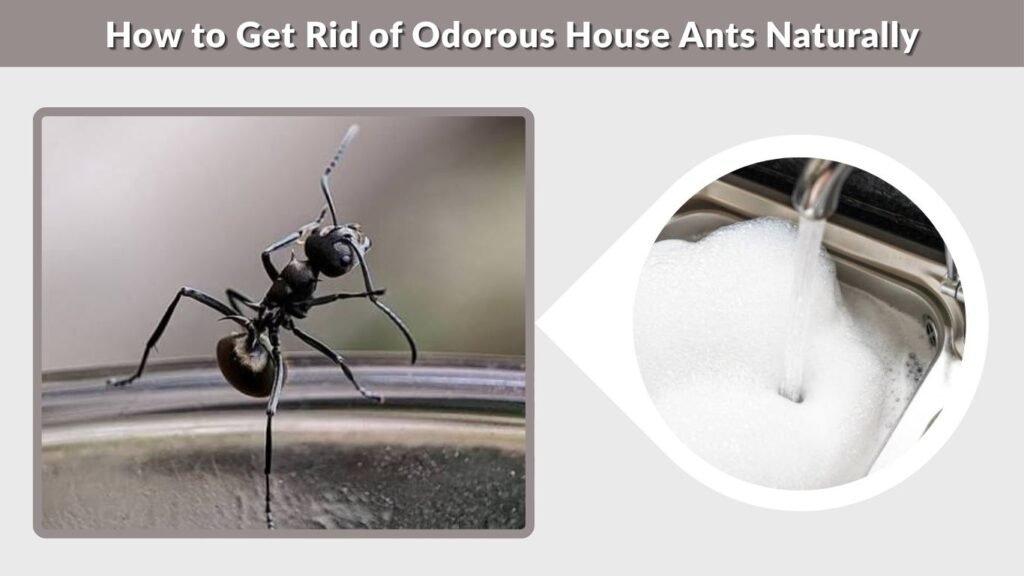
Natural methods may help with small infestations, but they are often less effective against large colonies hidden inside walls.
Soap and Water
A mixture of dish soap and water can kill ants that are sprayed directly. It also removes their scent trails when used to wipe surfaces.
However, this method does not usually reach the hidden nest. Use it for cleanup rather than as the only control measure.
Food-Grade Diatomaceous Earth
A thin layer of food-grade diatomaceous earth may be applied in dry cracks, gaps, and protected entry areas. The powder damages the ants’ outer coating and causes dehydration.
Avoid breathing the dust, and do not apply it to wet areas. Keep it away from children, pets, and food-preparation surfaces unless the product label specifically permits such use.
Remove Outdoor Nesting Materials
Reduce places where ants can nest near the foundation. Move firewood, boards, stones, and plant debris away from the house.
Trim tree branches and shrubs that touch the building because ants can use them as bridges to reach windows, roofs, and siding.
Getting Rid of Odorous House Ants in the Bathroom
Bathrooms attract ants because of water, humidity, soap residue, and hidden plumbing gaps. Begin by checking beneath sinks, around toilets, along bathtub edges, and near pipe openings.
Repair leaks and dry wet surfaces each evening. Improve ventilation by using an exhaust fan or opening a window when appropriate. Place enclosed ant bait near the trail, but keep it away from standing water and locations accessible to children or pets.
Seal plumbing gaps only after ant activity has significantly decreased.
Getting Rid of Odorous House Ants in Walls
Ants inside walls are difficult to reach directly. Spraying insecticide into random cracks may scatter the colony or push ants into other rooms.
Place bait near wall openings, baseboards, outlets, or plumbing areas where ants emerge. The workers can carry the active ingredient into the hidden colony.
Do not insert liquids or powders into electrical outlets. If ants repeatedly emerge from electrical fixtures, widespread wall areas, or several rooms, contact a licensed pest-control professional.
Outdoor Control Around the House
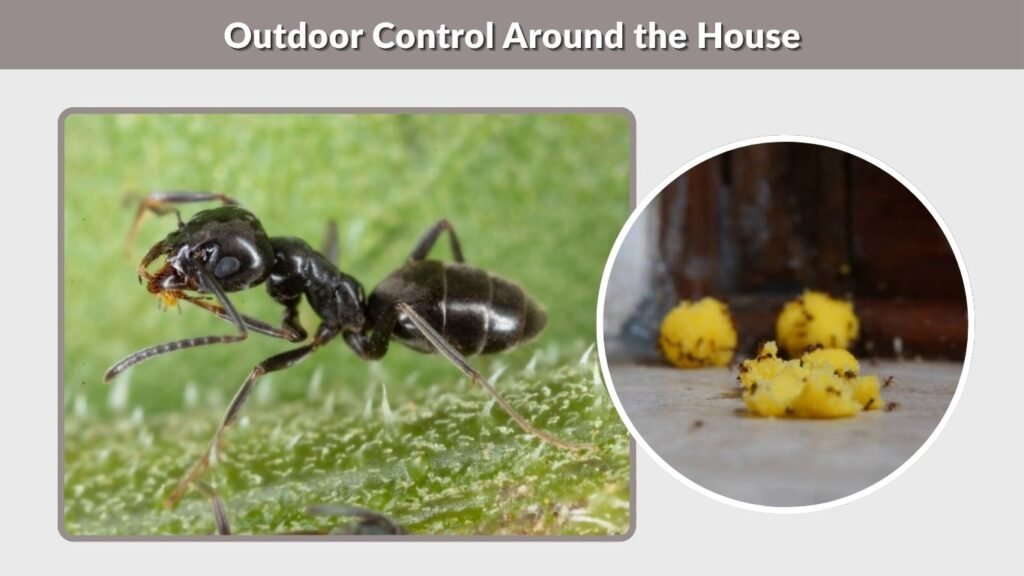
Outdoor management reduces the number of ants reaching the building. Inspect the foundation and follow exterior trails to possible nesting areas.
Reduce Attractive Conditions
Keep mulch several inches away from the foundation and avoid excessive watering near exterior walls. Repair damaged gutters and downspouts so water drains away from the house.
Remove unnecessary ground cover, fallen branches, and decaying wood close to the structure.
Use Outdoor Bait Carefully
Outdoor ant bait can be placed near trails or suspected nesting locations according to the product label. Protect bait from rain and avoid placing it where beneficial insects, pets, or children can access it.
A perimeter pesticide treatment may sometimes be useful, but it should not replace baiting, sanitation, and exclusion.
Mistakes That Make an Infestation Worse
Spraying Every Ant You See
Contact sprays kill foraging workers but may leave the main colony untouched. Some treatments may cause colonies to split or relocate, making the infestation harder to control.
Removing Bait Too Soon
Ant activity around a bait station may initially increase. This usually means workers have found the food source. Removing the bait immediately can prevent enough product from reaching the nest.
Leaving Competing Food Available
Ants may ignore bait when crumbs, grease, pet food, or sugary spills are nearby. Good sanitation makes the bait more attractive.
Sealing Entry Points Before Treatment
Sealing active routes too early may trap ants inside walls or cause them to emerge elsewhere. Reduce colony activity first and seal openings afterward.
When to Call a Pest-Control Professional
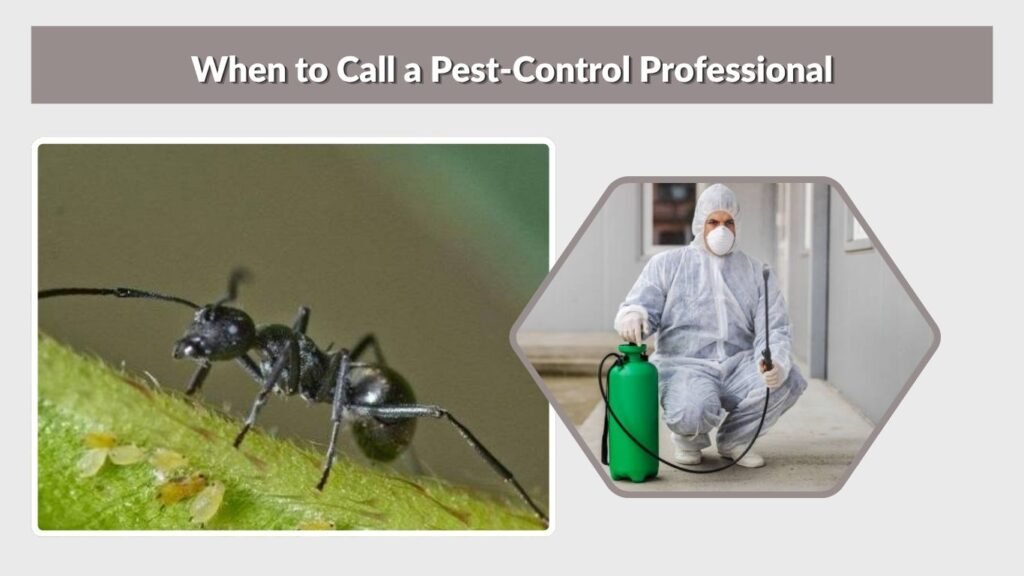
Professional treatment may be necessary when ants are appearing in several rooms, nesting inside walls, returning after repeated baiting, or entering from multiple outdoor colonies.
A professional can identify the species, locate hidden nesting zones, select suitable bait formulations, and treat exterior problem areas. This is especially useful in apartment buildings, where colonies may extend between several units.
FAQs
How long does it take to get rid of odorous house ants?
Small infestations may improve within several days, while large or multi-nest colonies can require two to four weeks of consistent baiting. Continue replacing bait while ants are actively feeding. Sanitation, moisture control, and exterior prevention are also necessary to reduce the chance of their return.
Why do odorous house ants keep coming back?
They often return because food, water, entry gaps, or nearby outdoor colonies remain available. Odorous house ants may have multiple queens and interconnected nests. Killing only visible workers does not eliminate the entire colony, so baiting and prevention must be used together.
What is the best bait for odorous house ants?
Sweet liquid or gel bait is often effective because these ants frequently seek sugary food. However, their preferences can change, so a protein- or grease-based bait may work better at certain times. Always follow the product label and place bait near active trails.
Are odorous house ants dangerous?
Odorous house ants do not sting and are not considered dangerous to people. They can contaminate food and become a persistent nuisance, particularly when they nest indoors. Their presence does not usually indicate structural damage, unlike termites or carpenter ants.
Can vinegar get rid of odorous house ants?
Vinegar can remove scent trails and temporarily discourage ants from crossing a cleaned surface. However, it normally does not eliminate the hidden colony. Avoid using vinegar close to bait because the strong smell may prevent ants from feeding on it.