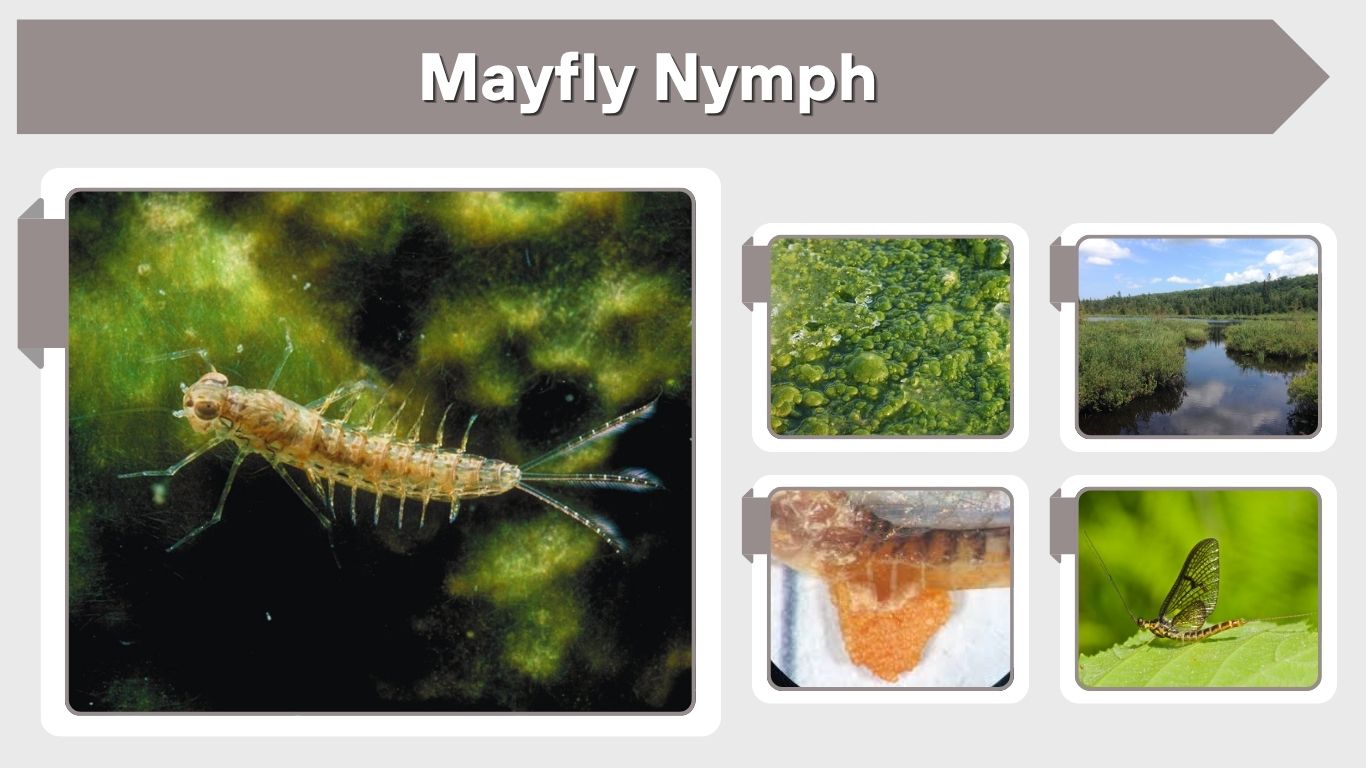
A mayfly nymph is the underwater juvenile stage of a mayfly, an insect that spends most of its life in freshwater before becoming a short-lived flying adult. These small aquatic insects are important in streams, rivers, ponds, and lakes because they feed fish, recycle organic material, and help indicate water quality. They are also highly important to fly fishing.
What Is a Mayfly Nymph?
A mayfly nymph is the immature stage of a mayfly. It is also called a mayfly larva or naiad, although “nymph” is the most common term used by anglers and aquatic insect observers.
Mayflies belong to the insect order Ephemeroptera. Their life cycle is different from insects such as butterflies because they do not have a pupal stage. Instead, they grow from egg to aquatic nymph, then emerge into winged adult stages.
Why Mayfly Nymphs Are Important
Mayfly nymphs are a major part of freshwater food chains. Fish, birds, frogs, and larger aquatic insects feed on them. Trout anglers pay close attention to mayfly nymphs because they are one of the most common foods eaten by trout below the surface.
They also matter in water-quality studies. Many mayfly nymphs need clean, oxygen-rich water, so their presence can suggest a healthier aquatic environment. However, tolerance varies by species, and not every mayfly reacts to pollution the same way.
Mayfly Nymph Identification
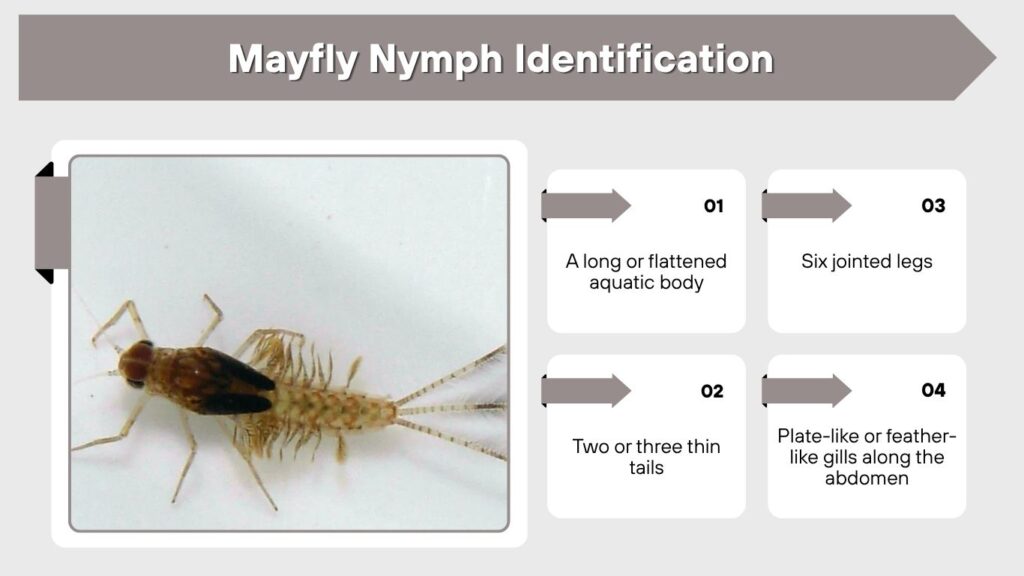
Mayfly nymph identification starts with body shape, tails, gills, and habitat. Most mayfly nymphs have a slim to flattened body, six legs, visible gills along the abdomen, and two or three tail filaments at the rear.
What Does a Mayfly Nymph Look Like?
A typical mayfly nymph has:
- A long or flattened aquatic body
- Six jointed legs
- Two or three thin tails
- Plate-like or feather-like gills along the abdomen
- Developing wing pads on older nymphs
- Brown, olive, yellow, cream, or dark coloring
The body shape depends on the type of mayfly. Some are slim swimmers, some are flat clingers, some crawl among plants, and others burrow into soft sediment.
Mayfly Nymph Size
Mayfly nymph size varies by species. Many are small, often around 5 to 20 mm long, while larger species such as giant mayflies and Hexagenia nymphs can grow much bigger. Young nymphs may be tiny and difficult to see without close inspection.
Color and size alone are not enough for perfect identification. Body shape, gills, tails, and where the nymph was found are more reliable clues.
Mayfly Nymph vs Stonefly Nymph
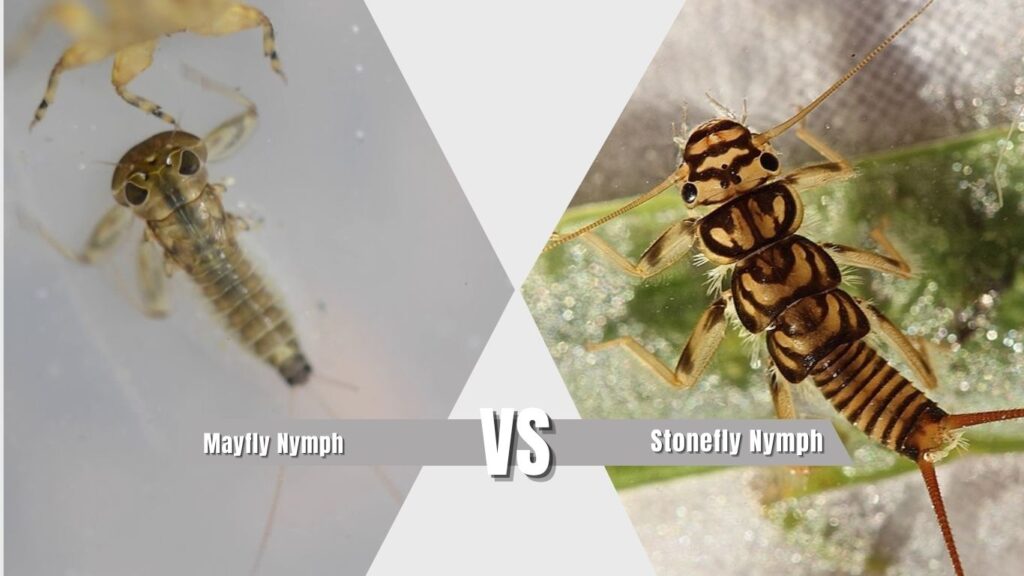
Mayfly and stonefly nymphs are often confused because both live underwater and have long bodies with tail filaments. The easiest difference is usually the number of tails.
| Feature | Mayfly Nymph | Stonefly Nymph |
| Tail filaments | Usually three, sometimes two | Usually two |
| Gills | Often visible along abdomen | Often near legs or thorax, not like mayfly abdominal plates |
| Body shape | Slim, flattened, swimming, crawling, or burrowing forms | Usually stronger, more crawler-like body |
| Habitat | Streams, rivers, ponds, lakes, and vegetation | Often cool, rocky, oxygen-rich streams |
| Fly fishing role | Major nymph group for trout | Also important, especially in rocky rivers |
Simple Identification Tip
If the insect has three tails and visible gills along the abdomen, it is likely a mayfly nymph. If it has two tails and a stronger stonefly-like body, it may be a stonefly nymph.
However, some mayfly nymphs also have two tails, so use more than one feature when identifying them. Look at the gills, body shape, legs, and habitat before deciding.
Mayfly Nymph Habitat
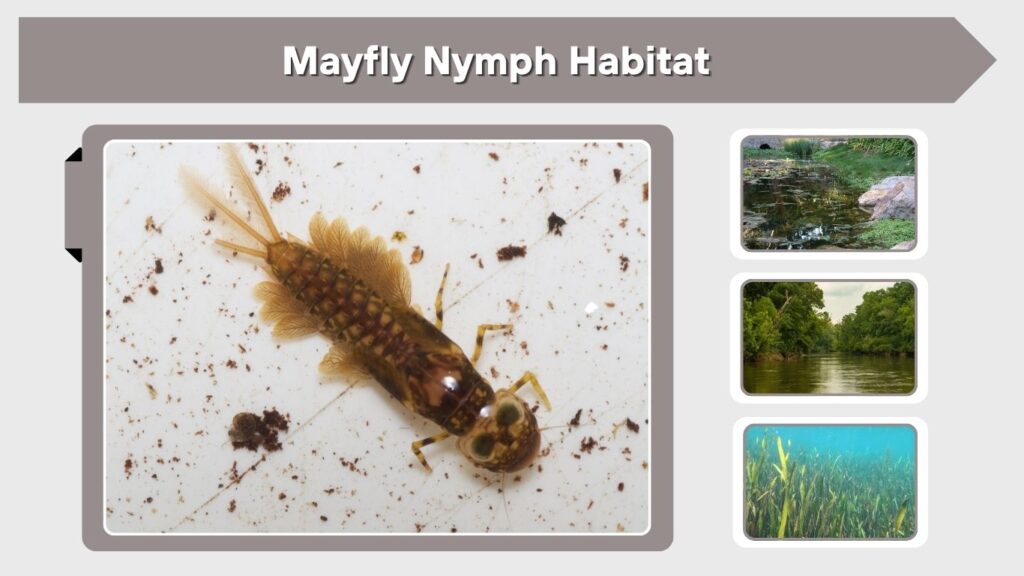
Mayfly nymphs live in freshwater. They are found in streams, rivers, ponds, lakes, wetlands, and sometimes slow backwaters. Different types prefer different microhabitats.
Common Places to Find Mayfly Nymphs
You may find mayfly nymphs:
- Under rocks in streams
- Among aquatic plants
- In leaf litter and organic debris
- On gravel or sand beds
- In soft mud or silt
- Along lake and pond margins
- In well-oxygenated flowing water
Some mayflies prefer fast riffles, while others prefer slow water or stillwater. This variety is one reason mayfly nymphs are so important to freshwater ecosystems and fly fishing.
Mayfly Nymphs in Water
Mayfly nymphs are adapted to living underwater. Their gills absorb oxygen from the water, and many species move in ways that keep water flowing across those gills. In streams, current can help supply oxygen. In stillwater, some nymphs move their gills or bodies to improve oxygen flow.
What Do Mayfly Nymphs Eat?
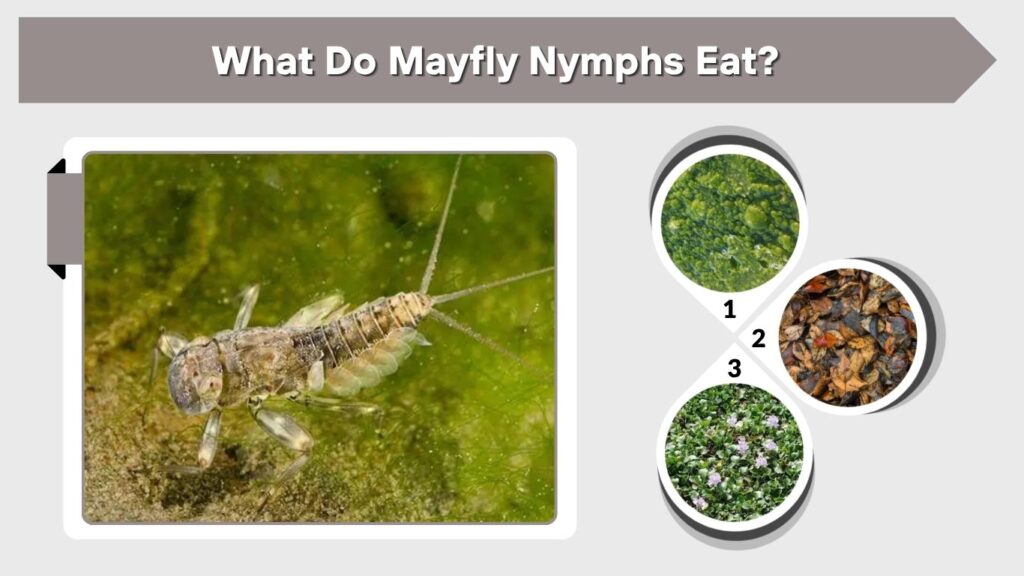
Most mayfly nymphs feed on plant material, algae, detritus, and tiny organic particles. Some scrape food from rocks, some collect fine material from the water or bottom, and a few species are more predatory.
Mayfly Nymph Diet
Depending on species, a mayfly nymph may eat:
- Algae
- Diatoms
- Decaying leaves
- Fine organic particles
- Aquatic plant material
- Biofilm on rocks
- Tiny invertebrates in some species
This diet makes mayfly nymphs important recyclers in freshwater systems. They help move energy from algae, leaves, and organic matter into the larger food chain.
What Eats Mayfly Nymphs?
Many animals eat mayfly nymphs. Trout, minnows, bass, panfish, frogs, salamanders, birds, dragonfly nymphs, and other aquatic predators may feed on them. For trout, mayfly nymphs are especially important because they are available underwater long before adults hatch at the surface.
Mayfly Nymph Life Cycle
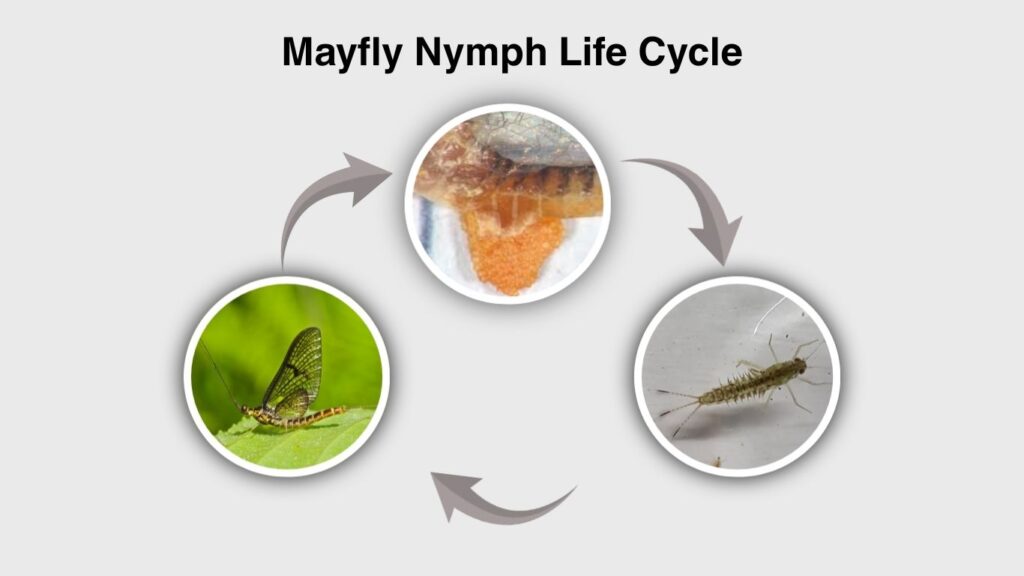
The mayfly life cycle has aquatic and flying stages. Although adults are famous for living briefly, the nymph stage can last much longer.
Egg Stage
Adult female mayflies lay eggs in or on water. Some drop eggs while flying, while others touch the water surface or deposit eggs more directly. The eggs sink or attach to underwater surfaces, depending on species.
Nymph Stage
After hatching, the young mayfly begins life as an aquatic nymph. It feeds, grows, and molts many times. This stage may last several months to more than a year, depending on species, water temperature, and habitat.
As the nymph matures, wing pads become more visible. When it is ready to emerge, it moves toward the surface, shoreline, rocks, or vegetation.
Subimago and Adult Stage
Mayflies are unusual because they have a winged subadult stage called the subimago, often known to anglers as a dun. This stage later molts into the sexually mature adult, called the imago or spinner.
The adult stage is usually short. Adult mayflies focus mainly on reproduction, not feeding. After mating and egg laying, the cycle begins again.
Types of Mayfly Nymphs
Anglers and aquatic insect watchers often group mayfly nymphs by movement and body shape. These groups are useful because they explain where nymphs live and how fish may feed on them.
Common Nymph Groups
The main types include:
- Swimmers: Slim, active nymphs such as Baetis and Callibaetis.
- Clingers: Flattened nymphs that hold tightly to rocks in current.
- Crawlers: Nymphs that move along plants, gravel, and debris.
- Burrowers: Larger nymphs that live in mud, silt, or soft bottom areas.
This classification is especially useful for fly fishing because each type behaves differently underwater.
Common Mayfly Names
Some common mayfly names and groups include Baetis, sulphur, sulfur, PMD, green drake, Hendrickson, March brown, Hexagenia, Callibaetis, and Trico. These names are often used in fly fishing to match local hatches and choose effective nymph patterns.
Mayfly Nymph Gills and Adaptations
Mayfly nymph gills are usually located along the sides or top edges of the abdomen. They may look like small plates, feathers, or leaf-like structures, depending on species.
Important Adaptations
Mayfly nymphs survive underwater because of several adaptations:
- Gills help them absorb oxygen from water.
- Flattened bodies help clingers resist current.
- Streamlined bodies help swimmers move quickly.
- Burrowing legs help some species dig into sediment.
- Camouflage protects them from fish and other predators.
- Molting allows them to grow through the nymph stage.
These features make mayfly nymphs successful in many freshwater habitats, from rocky trout streams to weedy ponds.
Mayfly Nymph Patterns for Fly Fishing
Mayfly nymph patterns are artificial flies designed to imitate underwater mayfly nymphs. Because trout feed heavily on nymphs, these patterns are some of the most useful flies in a fly box.
Popular Mayfly Nymph Patterns
Common mayfly nymph flies include:
- Pheasant Tail Nymph
- Hare’s Ear Nymph
- Copper John
- Baetis Nymph
- Micro Mayfly
- PMD Nymph
- Sulphur Nymph
- March Brown Nymph
- Green Drake Nymph
- Hex Nymph
The best pattern depends on the local insects, water type, season, and trout behavior. In many cases, size, shape, color, and drift matter more than exact imitation.
How to Fish a Mayfly Nymph
To fish a mayfly nymph effectively, focus on depth and natural movement. Most real nymphs drift near the bottom or move close to rocks, weeds, and structure.
Fish mayfly nymphs near riffles, seams, weed beds, drop-offs, and feeding lanes. Use smaller patterns for Baetis and Trico nymphs, medium patterns for sulphurs and PMDs, and larger patterns for green drakes or Hexagenia.
During a hatch, trout may feed on emerging nymphs higher in the water column. At that time, an unweighted or lightly weighted emerging mayfly nymph can be very effective.
Mayfly Nymph Facts
Mayfly nymphs are small but fascinating aquatic insects. They are easy to overlook, yet they play a huge role in freshwater ecosystems.
Quick Facts
- Mayfly nymphs are aquatic immature mayflies.
- They are also called naiads or larvae.
- Most have two or three tail filaments.
- Many have visible gills along the abdomen.
- They are major food for trout and other fish.
- Their nymph stage lasts much longer than the adult stage.
- Some species swim, some cling, some crawl, and some burrow.
- Many are sensitive to poor water quality.
- Fly anglers imitate them with nymph patterns.
- They are different from stonefly and damselfly nymphs.
FAQs
What is a mayfly nymph?
A mayfly nymph is the underwater juvenile stage of a mayfly. It lives in freshwater before emerging as a winged adult. Most mayfly nymphs have six legs, visible abdominal gills, and two or three thin tails. They are important food for fish and other aquatic animals.
What do mayfly nymphs eat?
Most mayfly nymphs eat algae, diatoms, decaying leaves, plant material, and fine organic particles. Some species may also eat tiny invertebrates. Their feeding helps recycle nutrients in streams, rivers, ponds, and lakes, making them important members of freshwater food chains.
How do you identify a mayfly nymph?
Look for an aquatic insect with six legs, two or three tail filaments, and gills along the abdomen. Body shape varies by type. Some are slim swimmers, some are flattened clingers, some crawl through plants, and others burrow into soft sediment.
What is the difference between a mayfly nymph and stonefly nymph?
Mayfly nymphs usually have three tails, although some have two, and they often show visible gills along the abdomen. Stonefly nymphs usually have two tails and a stronger crawling body. Stoneflies are often found in cool, rocky, oxygen-rich streams.
Are mayfly nymphs good for fly fishing?
Yes, mayfly nymphs are extremely important in fly fishing. Trout often eat them below the surface before, during, and between hatches. Popular mayfly nymph patterns include Pheasant Tail, Hare’s Ear, Copper John, Baetis Nymph, PMD Nymph, and Micro Mayfly.