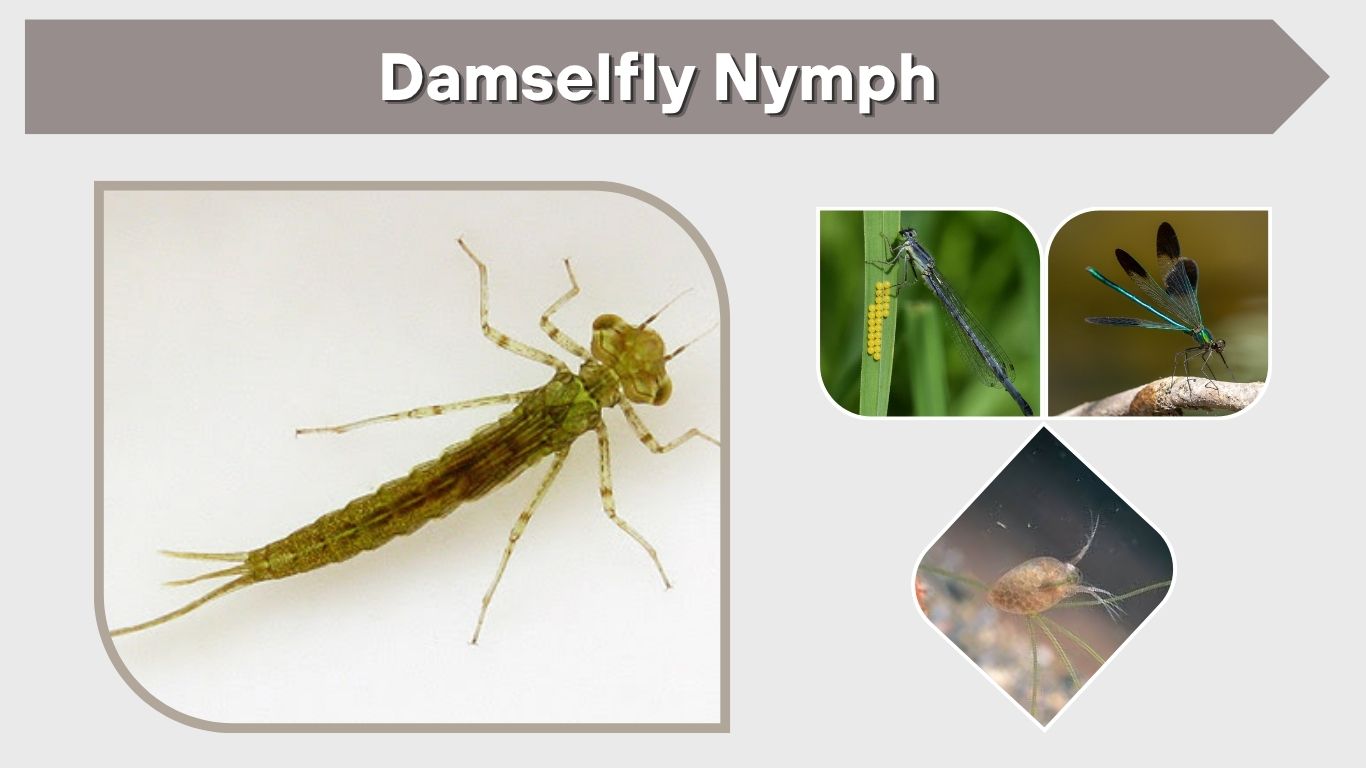
Damselfly nymphs are the aquatic young stage of damselflies, slender insects that spend much of their early life hidden among pond plants, lake weeds, slow streams, and aquarium vegetation. Although small, they are skilled predators with extendable mouthparts, long bodies, and three leaf-like gills at the end of the abdomen. Understanding them helps with pond study, aquarium care, insect identification, and even fly fishing.
What Is a Damselfly Nymph?
A damselfly nymph is the immature aquatic stage of a damselfly. Damselflies belong to the insect order Odonata and the suborder Zygoptera. Before they become delicate flying adults, they live underwater as nymphs, also called naiads.
Unlike butterflies or beetles, damselflies do not have a pupal stage. They go through incomplete metamorphosis, which means their life cycle has three main stages: egg, nymph, and adult. The nymph stage is often the longest and most active part of their life.
Why Damselfly Nymphs Matter
Damselfly nymphs are important in freshwater ecosystems because they help control populations of small aquatic animals. They feed on mosquito larvae, tiny worms, small insect larvae, and other soft-bodied prey. At the same time, they become food for fish, frogs, larger aquatic insects, and birds.
They are also useful for people who study pond health. Because they live in water and respond to changes in habitat quality, their presence can tell us something about the condition of a pond, stream, or wetland.
Damselfly Nymph Identification
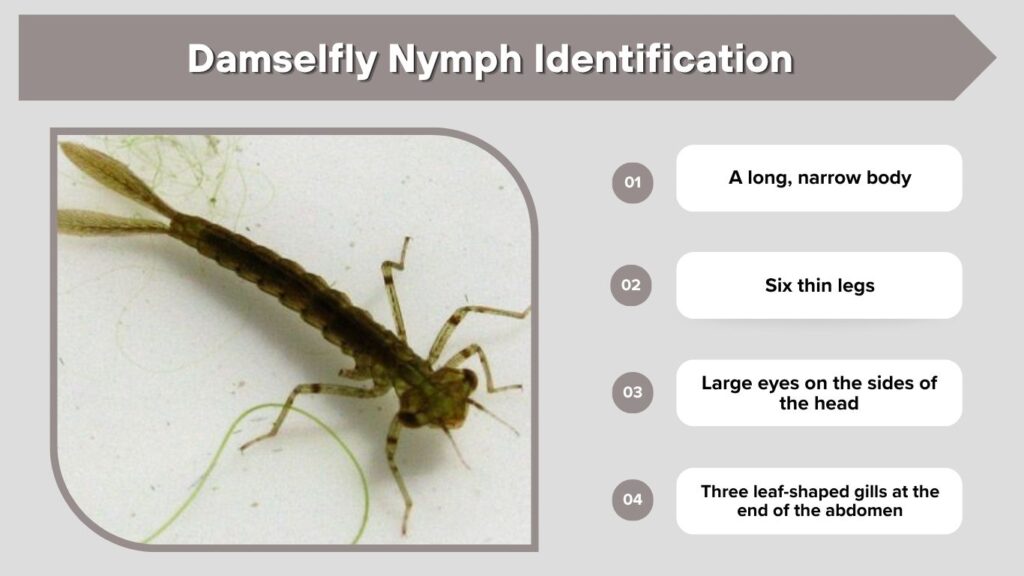
Identifying a damselfly nymph is easier once you know the key features. They are usually slim, delicate-looking, and built for climbing through vegetation rather than fast swimming in open water.
Key Features to Look For
A damselfly nymph usually has:
- A long, narrow body
- Six thin legs
- Large eyes on the sides of the head
- Three leaf-shaped gills at the end of the abdomen
- A hinged lower lip used to grab prey
- Brown, green, or tan coloring for camouflage
The three tail gills are the most useful clue. They look like tiny leaves or paddles attached to the rear of the body. These gills help the nymph breathe underwater and may also help with movement.
Damselfly Nymph Size
Most mature damselfly nymphs are small, often around 15 to 30 mm long, not including the tail gills. Younger nymphs can be much smaller and harder to notice. Their size depends on species, age, food supply, and water conditions.
In aquariums, people may first notice them when they reach a size large enough to be seen clinging to plants, glass, driftwood, or filter sponge surfaces.
Damselfly Nymph vs Dragonfly Nymph
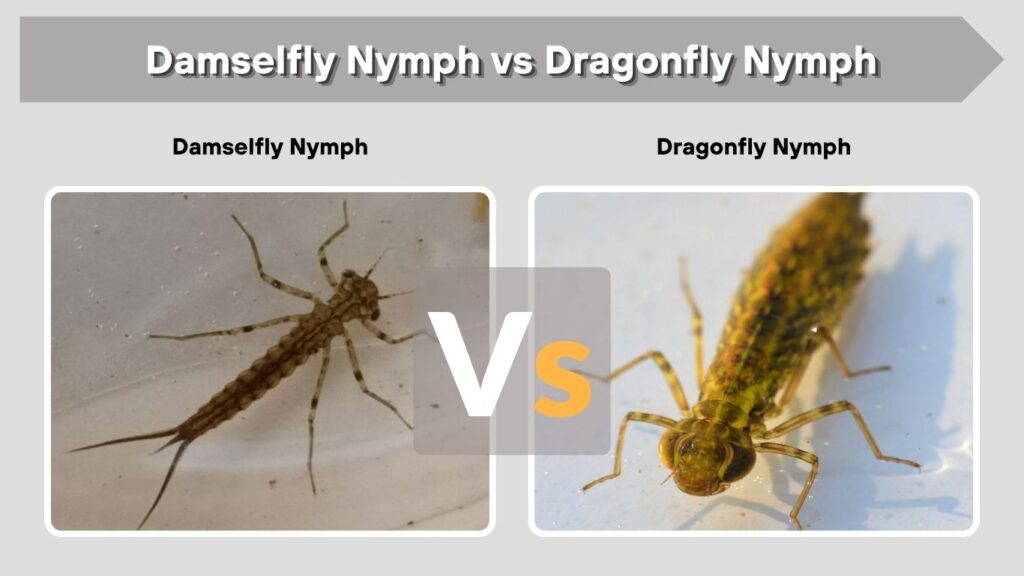
Damselfly and dragonfly nymphs are closely related, but they are not the same. Both are aquatic predators, but their body shape and breathing structures are different.
| Feature | Damselfly Nymph | Dragonfly Nymph |
| Body shape | Slender and narrow | Stockier and wider |
| Tail end | Three leaf-like external gills | No leaf-like tail gills |
| Movement | Often climbs on plants | Often crawls or propels through water |
| Habitat style | Common among vegetation | Often found in mud, debris, or open bottom areas |
| Appearance | Delicate and twig-like | Heavier and more compact |
Easiest Difference
The easiest way to tell them apart is to look at the tail. A damselfly nymph has three visible leaf-like gills at the back. A dragonfly nymph does not. Dragonfly nymphs breathe through internal gills inside the abdomen, so their rear end looks thicker and less leafy.
Damselfly Nymph Habitat
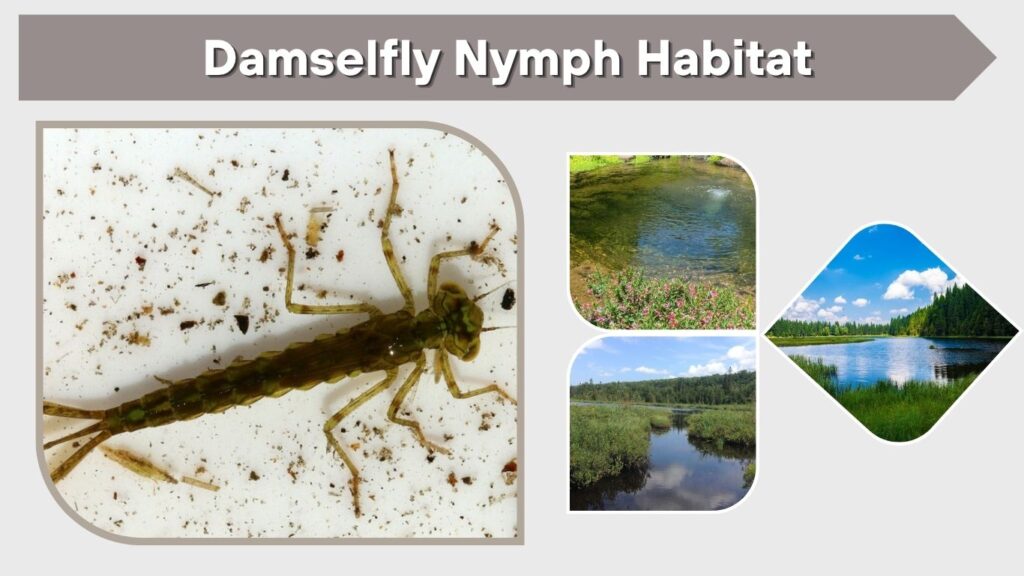
Damselfly nymphs live in freshwater habitats where they can hide, hunt, and breathe easily. They are commonly found in ponds, lakes, marshes, wetlands, slow-moving streams, and garden water features.
Common Places to Find Them
Damselfly nymphs are often found:
- Clinging to submerged plants
- Hiding among pond weeds
- Resting on sticks, roots, and leaf litter
- Crawling through shallow water vegetation
- Living near the edges of ponds and lakes
They prefer places with cover because they are both predators and prey. Plants help them ambush food while protecting them from fish and larger insects.
Damselfly Nymph in Pond Water
In pond water, damselfly nymphs are usually a normal and healthy part of the ecosystem. They help control mosquito larvae and other small aquatic organisms. If you collect pond water in a jar, you may see them moving slowly among plants or twitching their tail gills.
What Do Damselfly Nymphs Eat?
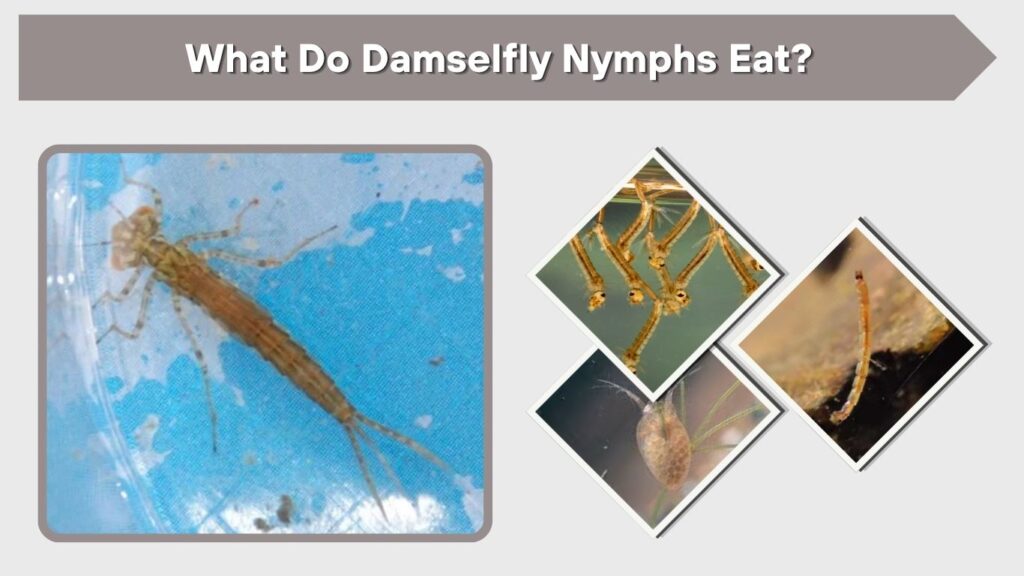
Damselfly nymphs are carnivores. They do not eat plants as a main food source. Instead, they hunt small animals that live in the water.
Common Foods
A damselfly nymph may eat:
- Mosquito larvae
- Midge larvae
- Tiny worms
- Water fleas
- Small insect larvae
- Small mayfly nymphs
- Tiny crustaceans
- Very small fish fry or shrimp if available
They hunt with a special extendable lower lip, often called a labium. This mouthpart shoots forward quickly and grabs prey before pulling it back to the mouth.
Are Damselfly Nymphs Herbivores?
No, damselfly nymphs are not herbivores. They are predators. Although they may sit on plants or hide in vegetation, they are using plants as shelter, not as their main food.
Damselfly Nymph Life Cycle
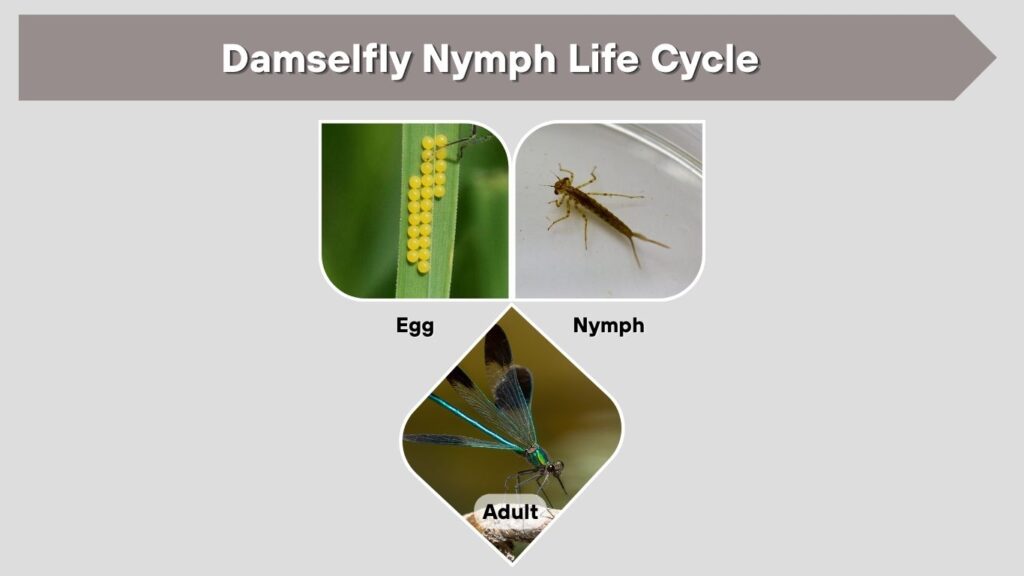
The damselfly life cycle begins when an adult female lays eggs in or near water. Some species insert eggs into aquatic plants, while others place them close to suitable freshwater habitats.
Egg Stage
The egg stage happens in or near water. After development, the young damselfly hatches as a tiny aquatic nymph. At this point, it already looks like a miniature predator, although it is much smaller than a mature nymph.
Nymph Stage
The nymph stage can last months or longer, depending on species and environment. During this time, the nymph eats, grows, and molts several times. Each molt allows it to become larger.
Adult Stage
When the nymph is ready to transform, it climbs out of the water onto a plant stem, rock, or other surface. The adult damselfly emerges from the old nymph skin, expands its wings, and begins its flying life.
Adult damselflies are usually seen near water, where they hunt small flying insects and return to mate and lay eggs.
Damselfly Nymph in Aquarium
A damselfly nymph in an aquarium can be a problem, especially in shrimp tanks, fry tanks, and small community tanks. While they are interesting insects in the wild, they are not welcome in most aquariums because they may eat tiny tank animals.
How Damselfly Nymphs Get Into Aquariums
They often enter aquariums through:
- Live plants from outdoor ponds
- Plants grown emersed or stored outdoors
- Wild-collected live foods
- Pond water accidentally added to a tank
- Eggs attached to plant stems or leaves
The eggs or tiny nymphs may be difficult to see at first. By the time the nymph is noticeable, it may already have been hunting in the tank for a while.
Can Damselfly Nymphs Eat Fish?
A damselfly nymph usually cannot eat healthy adult fish, but it may attack fish fry, tiny shrimp, baby snails, and very small weak tank mates. In shrimp aquariums, even one nymph can become a serious issue because shrimp are small and vulnerable after molting.
How to Get Rid of Damselfly Nymph in Aquarium
Removing damselfly nymphs from an aquarium takes patience because they are good at hiding. Chemical treatments are risky because anything strong enough to harm nymphs may also harm shrimp, snails, and fish.
Safe Removal Steps
Use these methods first:
- Inspect plants, moss, driftwood, and filter areas carefully
- Remove visible nymphs with tweezers or a small net
- Use a turkey baster to suck them out from dense plants
- Check the tank at night with a flashlight
- Move delicate shrimp or fry to a safe temporary tank if needed
- Quarantine new plants before adding them to the aquarium
Manual removal is usually the safest method. Look closely at fine-leaved plants and moss, because nymphs can hide there easily.
Prevention Tips
To prevent future problems, quarantine all new plants before placing them in a display tank. Rinse plants well, inspect stems and leaves, and avoid adding pond water to aquariums. If you collect plants or live food from outside, treat them as high risk.
Damselfly Nymph Gills and Adaptations
The three leaf-shaped gills at the end of the abdomen are one of the most important adaptations of a damselfly nymph. These gills help the nymph absorb oxygen from the water.
Adaptations That Help Them Survive
Damselfly nymphs have several useful adaptations:
- Camouflage coloring helps them blend with plants and debris
- Long legs help them cling to vegetation
- Large eyes help them detect movement
- Extendable mouthparts help them catch prey quickly
- Tail gills help them breathe underwater
- A slender body helps them move through plants
These features make damselfly nymphs successful ambush predators in freshwater habitats.
Damselfly Nymph Movement and Behavior
Damselfly nymphs usually move slowly compared with many fish or larger aquatic insects. They often crawl through vegetation, cling to stems, and wait for prey to come close.
Some can swim by moving their bodies and tail gills, but they are not as strong or fast as many dragonfly nymphs. Their hunting style is often patient and sneaky. They stay still, blend in, and strike when prey gets close enough.
Damselfly Nymph Fly Fishing
The keyword list shows strong interest in damselfly nymph fly patterns, especially for trout fishing. This makes sense because damselfly nymphs are natural food in many stillwaters, ponds, and lakes.
When Damselfly Nymph Patterns Work
Damselfly nymph fly patterns can be useful:
- In lakes and ponds with weed beds
- During warm months when nymphs are active
- Near shallow margins and aquatic vegetation
- When trout are feeding below the surface
- Before or during damselfly emergence periods
A good damselfly nymph fly usually has a slim body, olive or green color, and a soft swimming action. Many patterns are designed to imitate the natural wiggling movement of the real nymph.
Damselfly Nymph Facts
Damselfly nymphs are small, but they are fascinating once you observe them closely.
Interesting Facts
- They are aquatic before becoming flying adults.
- They breathe through three external tail gills.
- They are predators, not plant eaters.
- They help control mosquito larvae in ponds.
- They use a fast extendable mouthpart to catch prey.
- They often hide among aquatic plants.
- They can be confused with dragonfly nymphs.
- In aquariums, they may threaten shrimp and fish fry.
FAQs
What is a damselfly nymph?
A damselfly nymph is the young aquatic stage of a damselfly. It lives underwater before becoming an adult flying insect. It has a slender body, six legs, large eyes, and three leaf-like gills at the end of its abdomen.
What do damselfly nymphs eat?
Damselfly nymphs eat small aquatic animals such as mosquito larvae, midge larvae, tiny worms, water fleas, mayfly nymphs, and other small invertebrates. In aquariums, they may also attack tiny shrimp or fish fry.
How can I identify a damselfly nymph?
Look for a slim body, long legs, large eyes, and three leaf-shaped tail gills. These tail gills are the easiest identification clue. Dragonfly nymphs are usually stockier and do not have the same three external leaf-like gills.
Are damselfly nymphs harmful in aquariums?
They can be harmful in shrimp tanks, breeding tanks, and aquariums with tiny fish fry. They usually do not harm healthy adult fish, but they are predators and may eat small or vulnerable tank animals.
How do I remove a damselfly nymph from my aquarium?
The safest method is manual removal. Inspect plants, moss, driftwood, and filter areas. Use tweezers, a small net, or a turkey baster to remove visible nymphs. Quarantine new plants in the future to reduce the chance of introducing eggs or larvae.