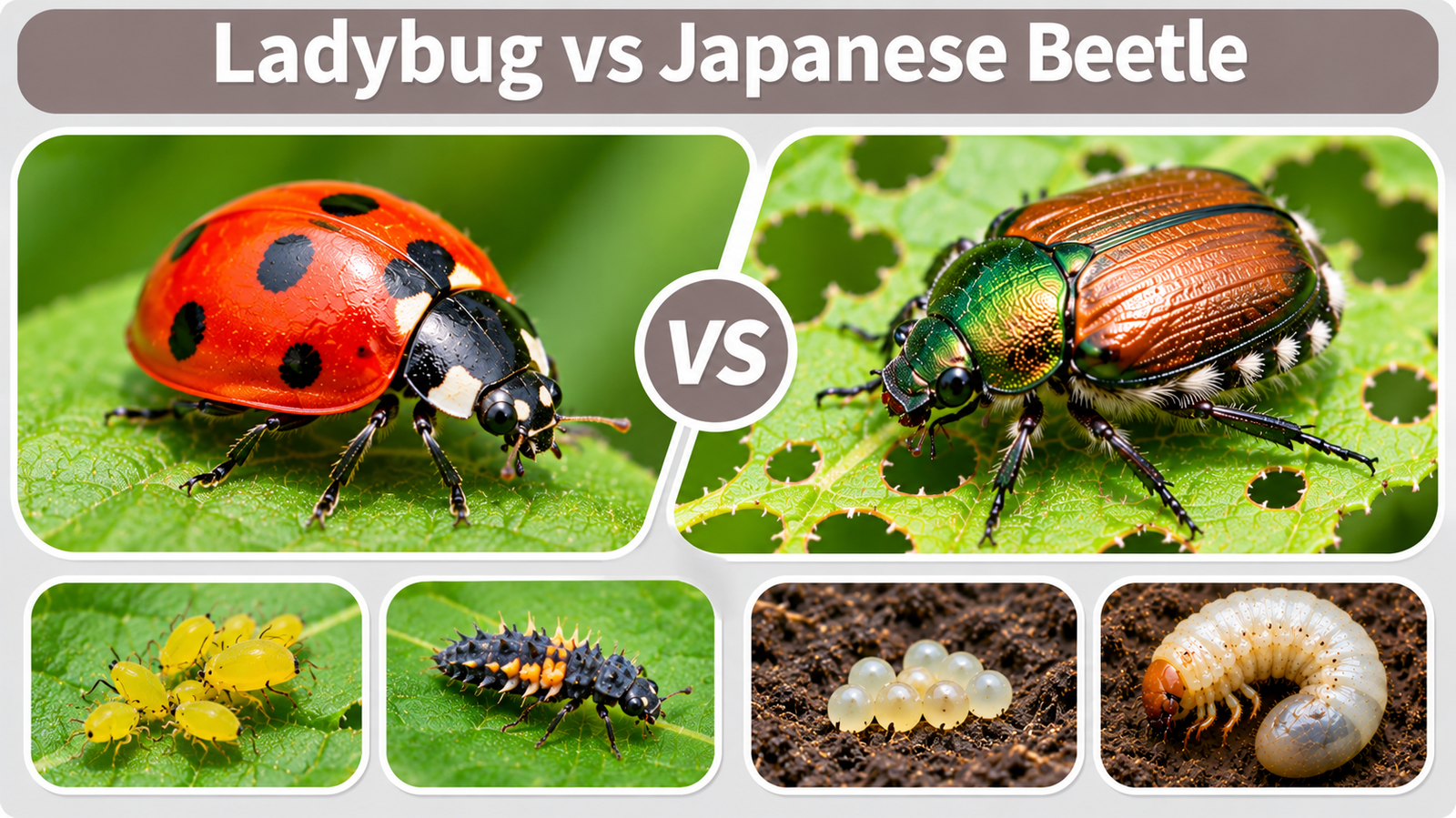
Ladybugs and Japanese beetles are common garden insects, but they play very different roles in the environment. Ladybugs are generally beneficial predators that feed on aphids and other small pests, while Japanese beetles damage leaves, flowers, and crops. Their appearance, feeding habits, habitats, and life cycles also differ significantly. Understanding the differences between ladybugs and Japanese beetles helps gardeners identify these insects and protect their plants. This guide explains seven key differences, including identification features, larvae, feeding behavior, and effects on gardens.
Are Ladybugs and Japanese Beetles the Same?
Ladybugs and Japanese beetles are not the same insects, although both belong to the order Coleoptera. Ladybugs, also called lady beetles or ladybirds, belong to the family Coccinellidae. Japanese beetles (Popillia japonica) belong to the family Scarabaeidae.
Most ladybugs are beneficial predators that help control garden pests. In contrast, Japanese beetles are invasive plant-feeding insects in North America, where they damage ornamental plants, fruit trees, and agricultural crops.
Ladybug vs Japanese Beetle: Quick Comparison
The easiest way to distinguish these insects is by examining their body colors, shapes, and markings. Ladybugs generally have rounded, dome-shaped bodies, while Japanese beetles are more elongated and have distinctive metallic coloration.
The table below summarizes their main characteristics.
| Feature | Ladybug | Japanese Beetle |
| Scientific classification | Family Coccinellidae | Popillia japonica |
| Body shape | Rounded, dome-shaped | Oval, somewhat elongated |
| Typical color | Red, orange, yellow, or black | Metallic green and copper |
| Size | Usually 3–10 mm | Approximately 8–11 mm |
| Wing markings | Often black or colored spots | Copper-brown wing covers |
| Main diet | Aphids and other small insects | Leaves, flowers, and some fruit |
| Garden role | Generally beneficial | Destructive plant pest |
7 Key Differences Between Ladybugs and Japanese Beetles
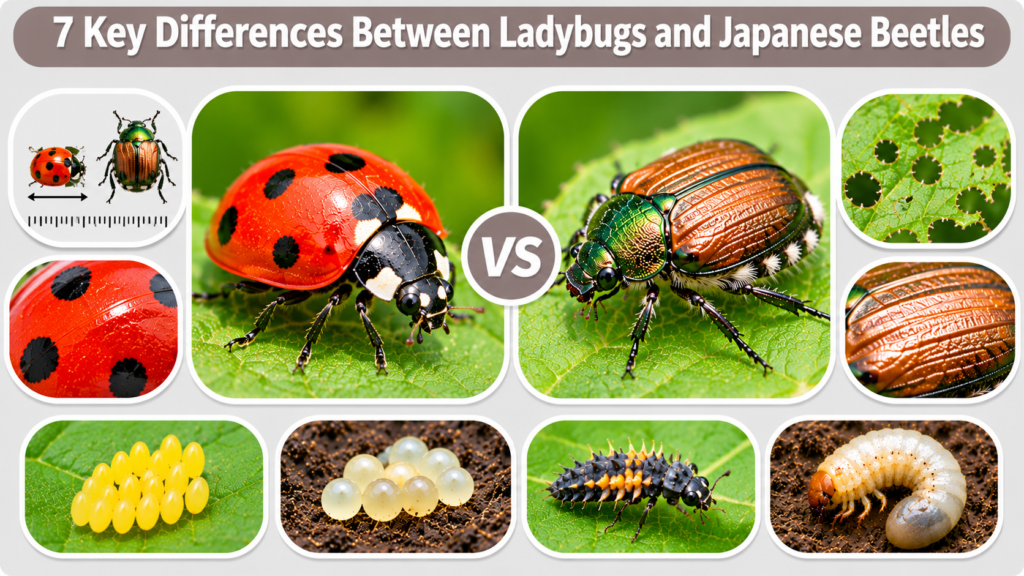
Although both insects have hardened wing covers and six legs, their physical characteristics and behavior are noticeably different. Examining these features helps gardeners avoid confusing helpful predators with destructive pests.
Here are seven important differences between ladybugs and Japanese beetles.
1. Body Color and Appearance
Ladybugs are commonly bright red or orange with black spots. However, some species appear yellow, pink, or black. Their coloration and spot patterns vary considerably between species.
Japanese beetles have metallic green heads and thoraxes with shiny copper-brown wing covers. Small white hair tufts along the sides of the abdomen are especially useful for identifying them.
2. Body Shape and Size
Ladybugs generally have compact, rounded bodies with a pronounced dome-shaped upper surface. Most familiar garden species measure approximately 3–10 millimeters long.
Japanese beetles have broader oval bodies measuring around 8–11 millimeters. Their legs are often more visible, and their bodies appear less rounded than typical ladybugs.
3. Feeding Habits
Most ladybugs are predators that feed on aphids, scale insects, whiteflies, and other soft-bodied pests. Both adults and larvae contribute to natural insect control.
Japanese beetles primarily consume plant material. Adults feed on leaves, flowers, and sometimes fruit, while their underground larvae feed on grass roots.
4. Effects on Garden Plants
Ladybugs generally protect garden plants by reducing populations of harmful insects. Their presence can help limit aphid infestations without chemical treatments.
Japanese beetles damage plants by consuming leaf tissue between the veins. This creates a lace-like appearance called skeletonization. Large infestations can weaken young plants and reduce ornamental value.
5. Habitat and Distribution
Ladybugs occur in gardens, forests, agricultural fields, and grasslands around the world. They are particularly common where aphids and other suitable prey are abundant.
Japanese beetles originated in Japan and are now established in many parts of North America. Adults gather on host plants, while larvae develop underground in grassy soil.
6. Seasonal Activity
Ladybugs may remain active throughout spring, summer, and autumn, depending on species and climate. Some gather in sheltered locations during colder months.
Adult Japanese beetles are most active during summer, frequently appearing from late June through August in many U.S. regions. Their activity varies with local temperatures.
7. Natural Garden Benefits
Ladybugs provide natural pest control and are widely considered beneficial garden insects. Encouraging existing ladybug populations can support healthier plants.
Japanese beetles provide no comparable pest-control benefit. Instead, they can damage hundreds of plant species, including roses, grapes, birches, lindens, and fruit trees.
Ladybug vs Japanese Beetle: Eggs, Larvae, and Life Cycle

Ladybugs and Japanese beetles both undergo complete metamorphosis, passing through egg, larva, pupa, and adult stages. However, their immature stages look very different and develop in different environments.
Recognizing their larvae is important because ladybug larvae are beneficial predators, while Japanese beetle grubs can damage lawns.
| Life Stage | Ladybug | Japanese Beetle |
| Eggs | Small, yellow-orange clusters on plants | Small white eggs in soil |
| Larvae | Dark, elongated, alligator-like | Creamy-white, C-shaped grubs |
| Larval food | Aphids and other small prey | Grass roots |
| Pupation | Usually attached to plants | Underground in soil |
| Generations | Varies by species and climate | Usually one annually |
Ladybug larvae often have dark bodies with orange markings and small spines. They move across plants searching for prey.
Japanese beetle grubs remain underground, feeding on roots. Heavy populations may cause patches of grass to turn brown and die.
Are Ladybugs Good and Japanese Beetles Bad for Gardens?
Most ladybugs are beneficial because they help control insect pests naturally. Japanese beetles, however, are generally considered destructive pests in gardens and landscapes.
The distinction is especially important when selecting pest-control methods. Broad-spectrum insecticides may kill both harmful Japanese beetles and helpful ladybugs.
| Garden Impact | Ladybug | Japanese Beetle |
| Aphid control | Excellent predator | Does not control aphids |
| Leaf damage | Usually minimal | Can be extensive |
| Flower damage | Generally minimal | May damage flowers |
| Lawn damage | Does not damage grass roots | Grubs can damage turf |
| Recommended action | Protect and conserve | Monitor and control when needed |
Although most ladybugs are beneficial, a few species feed on plants. Therefore, identification should consider the particular species rather than assuming every ladybug is a predator.
Japanese Lady Beetle vs Ladybug: Are They Different?
The Asian lady beetle (Harmonia axyridis), sometimes called the Japanese lady beetle, is actually a type of ladybug. It should not be confused with the Japanese beetle (Popillia japonica).
Asian lady beetles commonly appear orange, yellowish, or red with variable black spots. Many have a black M-shaped marking behind the head.
Like other predatory ladybugs, Asian lady beetles consume aphids and other small insects. However, they may gather in large numbers inside homes during autumn and can become household nuisances.
Despite their common names, Asian lady beetles and Japanese beetles belong to completely different beetle families.
How to Protect Ladybugs and Control Japanese Beetles
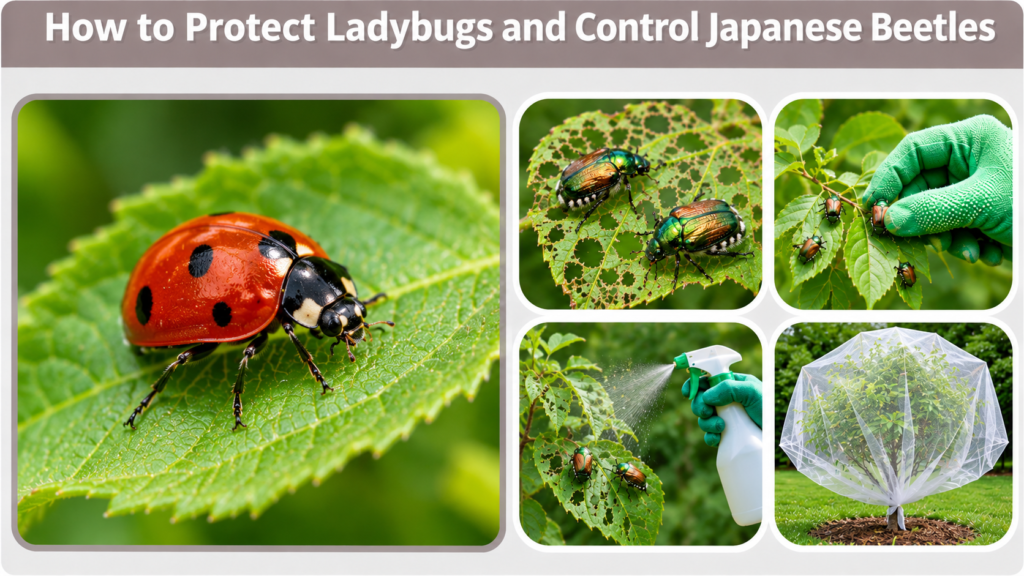
Managing these insects requires different approaches. Beneficial ladybugs should generally be protected, while Japanese beetle populations may need control when feeding damage becomes significant.
Gardeners can reduce Japanese beetle problems while minimizing unnecessary harm to natural predators.
Encourage Beneficial Ladybugs
Grow a variety of flowering plants and avoid unnecessary insecticide applications. Provide diverse garden habitats that support aphids’ natural enemies.
Existing ladybug populations can help reduce small pest infestations over time.
Remove Japanese Beetles by Hand
Inspect vulnerable plants regularly during summer. Remove adult Japanese beetles and drop them into a container of soapy water.
Handpicking is especially effective on small plants when beetle populations are relatively low.
Avoid Unnecessary Beetle Traps
Japanese beetle traps use chemical attractants that can draw beetles from surrounding areas.
Although they capture many insects, traps placed near valuable plants may increase local feeding damage. They are generally not recommended for protecting home gardens.
Use Targeted Pest Treatments
If significant damage occurs, choose a product specifically registered for Japanese beetles and the affected plants.
Follow label instructions and avoid unnecessary spraying, particularly around flowering plants where beneficial insects and pollinators are active.
FAQs
1. Do ladybugs eat Japanese beetles?
Ladybugs generally do not prey on adult Japanese beetles. They mainly consume aphids, scale insects, and other small, soft-bodied insects. Although some ladybug species may feed on small beetle larvae, they are not reliable natural enemies for controlling adult Japanese beetle infestations.
2. Are Japanese beetles and June bugs the same?
No. Japanese beetles and June bugs are different insects, although both belong to the family Scarabaeidae. Japanese beetles have metallic green and copper-colored bodies, while common May or June beetles are usually brown. Their feeding habits and activity periods also differ.
3. Are Asian lady beetles harmful to plants?
Asian lady beetles generally benefit plants by consuming aphids and other pests. However, they sometimes gather indoors during colder months and may become nuisances. They can also occasionally feed on damaged or ripening fruit, although serious plant damage is uncommon.
4. How can you tell a ladybug from a Japanese beetle?
Ladybugs typically have rounded, dome-shaped bodies with red, orange, or yellow coloration and often black spots. Japanese beetles have metallic green heads, copper-brown wing covers, and distinctive white hair tufts along their abdomens. These differences usually make identification straightforward.
5. Which beetle is better for your garden?
Ladybugs are generally better for gardens because most species feed on harmful insects, especially aphids. Japanese beetles damage leaves, flowers, and some fruit, while their larvae can injure grass roots. Protecting beneficial ladybugs helps maintain natural pest control.