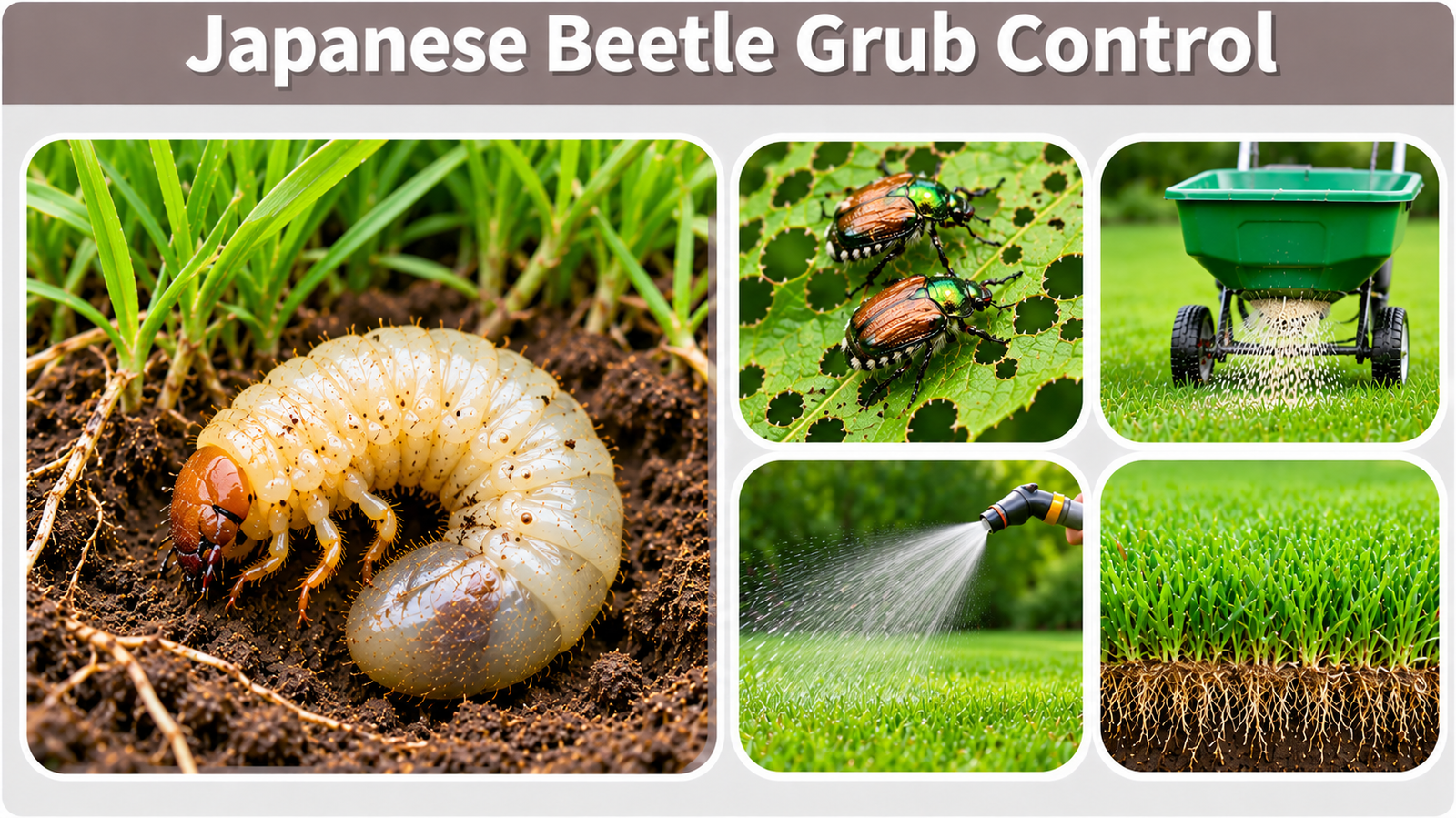
Japanese beetle grubs are underground lawn pests that feed on grass roots, causing brown patches, thinning turf, and damaged lawns. These white, C-shaped larvae develop beneath the soil before emerging as adult Japanese beetles during summer. Effective Japanese beetle grub control depends on identifying infestations early and choosing the right treatment at the right time. Natural options, biological products, and chemical insecticides can help reduce grub populations, but their effectiveness varies. This guide explains how to identify Japanese beetle grubs, when to apply treatments, and how to prevent future lawn damage.
What Are Japanese Beetle Grubs?
Japanese beetle grubs are the immature stage of the Japanese beetle (Popillia japonica), an invasive insect found throughout much of the eastern United States and in other established regions. Unlike adult beetles that feed on leaves and flowers, grubs live underground and consume grass roots.
These larvae are particularly troublesome in lawns, golf courses, and other grassy landscapes. Large populations can weaken turfgrass, making it vulnerable to drought and environmental stress.
Japanese Beetle Grub Identification
Japanese beetle grubs have several recognizable physical characteristics.
- Body color: Creamy white or pale yellow.
- Body shape: Distinctive C-shaped, curled body.
- Head: Brown or tan, with strong chewing mouthparts.
- Legs: Three pairs of short legs near the head.
- Size: Mature larvae can reach approximately one inch long.
- Habitat: Soil surrounding grass roots.
Other scarab beetle larvae look similar. Accurate species identification may require examining the arrangement of tiny hairs and spines on the underside of the grub’s abdomen.
Japanese Beetle Grub Life Cycle
Adult Japanese beetles emerge during summer, mate, and deposit eggs in grassy soil. The eggs generally hatch within approximately two weeks.
Young larvae begin feeding on grass roots during late summer and early autumn. As temperatures decrease, they move deeper underground to survive winter.
During spring, grubs return closer to the surface, feed briefly, and eventually pupate before emerging as adult beetles.
Signs of Japanese Beetle Grub Damage
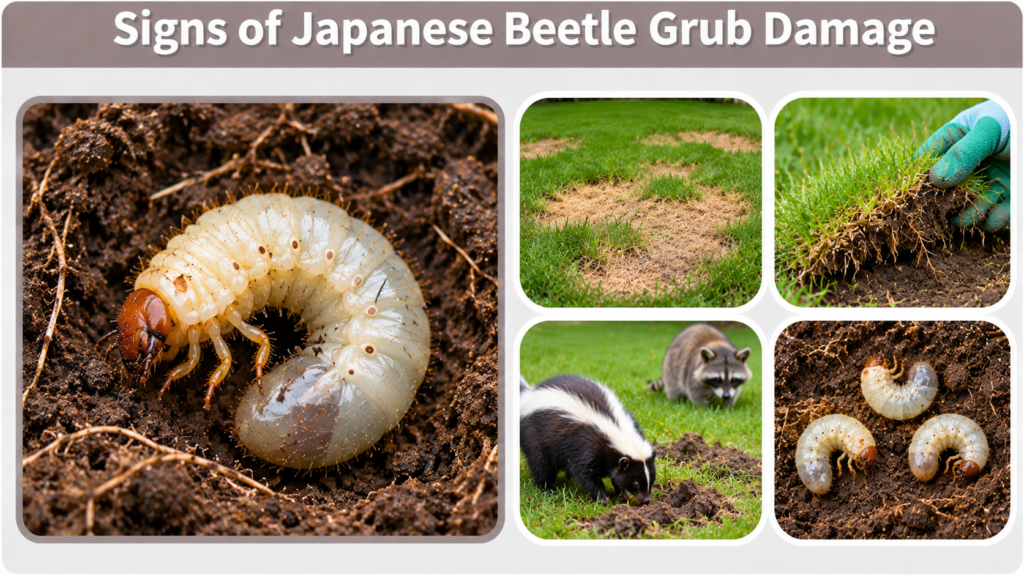
Japanese beetle grubs damage lawns by chewing grass roots, reducing the plants’ ability to absorb water and nutrients. Small populations may cause no noticeable problems, but heavy infestations can create large areas of weakened or dead turf.
Damage is often most visible during late summer and early autumn, particularly when lawns experience dry conditions.
Common Signs of Grub Infestation
Look for the following symptoms:
- Irregular brown or yellow patches in grass.
- Thinning or dying turf despite watering.
- Grass that pulls away easily from the soil.
- Reduced root growth beneath damaged areas.
- Skunks, raccoons, or birds digging for grubs.
- White, C-shaped larvae beneath the grass.
How Many Grubs Are Too Many?
Healthy lawns can often tolerate approximately 5–10 grubs per square foot without serious damage. Some well-maintained lawns tolerate even higher numbers.
To inspect your lawn, cut and lift a one-square-foot section of turf near a damaged area. Examine the soil and grass roots for grubs.
Treatment decisions should consider grub density, lawn condition, and visible damage rather than grub numbers alone.
When to Apply Grub Control for Japanese Beetles
Timing is one of the most important factors in successful Japanese beetle grub control. Young larvae are generally easier to control than large, mature grubs.
The best application period depends on whether you are using a preventive or curative treatment. Local climate and the insecticide’s active ingredient also influence application timing.
Preventive Grub Control Timing
Preventive insecticides are applied before or around the period when Japanese beetle eggs hatch.
In many northern U.S. locations, preventive treatments are typically used during spring or early summer. Some products require application as early as April or May, while others are commonly applied in June or July.
Always follow the timing recommended for the specific active ingredient.
Curative Grub Control Timing
Curative treatments target grubs already feeding beneath the lawn.
Late summer, particularly August and early September, is often an effective period because young grubs are active near the soil surface.
Treatments generally become less reliable as grubs mature or move deeper into the soil during cold weather.
How to Control Japanese Beetle Grubs Naturally
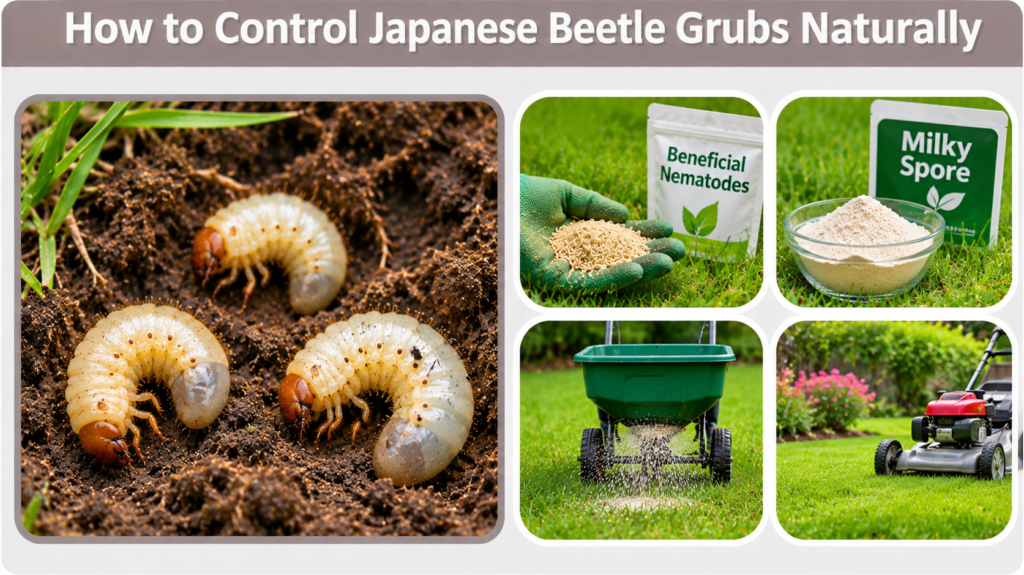
Natural Japanese beetle grub control relies on biological organisms and lawn-management techniques rather than conventional chemical insecticides. Some biological treatments can reduce grub populations, although their performance depends on soil conditions, application timing, and grub development.
A combination of monitoring, healthy turf maintenance, and targeted biological control is often more practical than routine treatment.
1. Apply Beneficial Nematodes
Beneficial nematodes are microscopic roundworms that attack certain soil-dwelling insects. Heterorhabditis bacteriophora is one species used against Japanese beetle grubs.
Apply nematodes when grubs are actively feeding near the soil surface. Water the lawn before and after application, and maintain adequate soil moisture.
Apply during cloudy conditions or evening hours to reduce exposure to sunlight and drying.
2. Use Milky Spore Treatment
Milky spore is a bacterial disease caused by Paenibacillus popilliae, which specifically infects Japanese beetle larvae.
Commercial milky spore products are marketed for long-term grub suppression. However, modern university research has not consistently demonstrated reliable control from these applications.
Because results vary considerably, milky spore should not be considered a guaranteed solution for Japanese beetle infestations.
3. Try Biological Grub Control Products
Certain biological insecticides contain Bacillus thuringiensis galleriae (Btg), a bacterial subspecies that produces proteins toxic to some beetle larvae.
Properly labeled Btg products may help suppress Japanese beetle grubs. Effectiveness varies with application timing, formulation, and environmental conditions.
Follow product instructions carefully and avoid confusing Btg with other Bacillus thuringiensis formulations intended for different insects.
4. Maintain Healthy Lawn Conditions
Healthy grass can tolerate moderate grub feeding better than weakened turf.
Mow at the recommended height, provide appropriate fertilizer, and water during prolonged dry periods. Avoid excessive irrigation during peak beetle egg-laying periods because moist soil may encourage egg deposition.
Best Insecticides for Japanese Beetle Grub Control
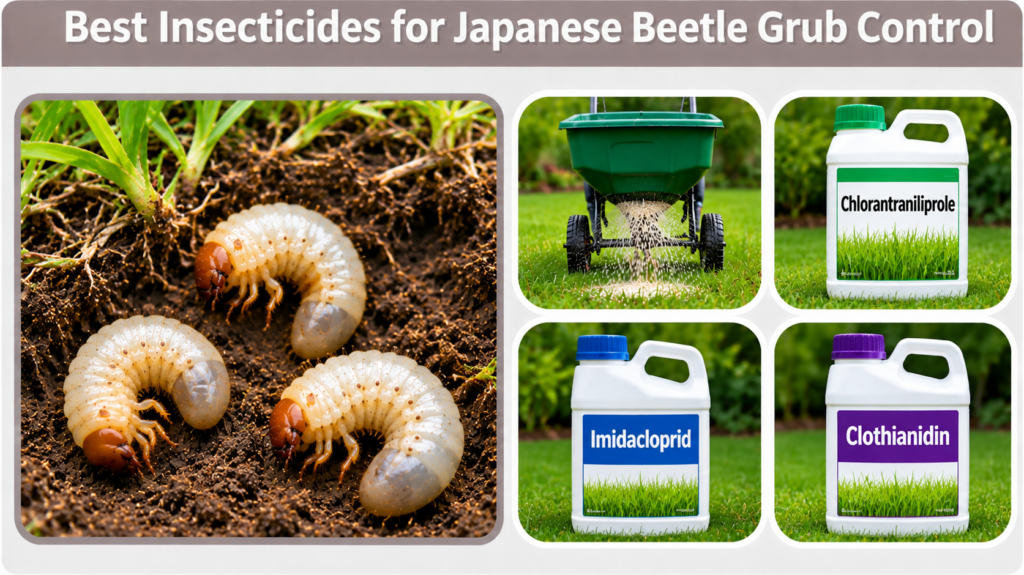
Insecticides can reduce Japanese beetle grub populations when applied correctly. However, products differ in their mode of action and treatment timing.
Preventive insecticides generally protect lawns against newly developing grubs, while curative products target established infestations.
Preventive Insecticides
Common preventive active ingredients include:
- Chlorantraniliprole: Provides extended protection against developing grubs.
- Imidacloprid: Targets young grubs when applied at the appropriate time.
- Clothianidin: Used in certain registered lawn grub-control formulations.
Preventive insecticides are most suitable for lawns with a history of serious grub damage.
Curative Insecticides
Trichlorfon is a commonly referenced curative active ingredient used to reduce actively feeding grubs.
Some registered carbaryl formulations may also control grubs, although product availability and formulations differ.
Curative treatments generally work best when grubs are relatively small and actively feeding near the soil surface.
Safe Application Practices
Follow product-label directions and verify that the treatment is registered for use on turfgrass in your location.
Many grub insecticides require watering into the root zone after application. Neonicotinoid products can pose risks to pollinators, especially when flowering lawn weeds are present.
Avoid unnecessary applications when grub populations remain below damaging levels.
Does Grub Control Kill Adult Japanese Beetles?
Grub-control treatments primarily target the underground larval stage, not adult Japanese beetles feeding on roses, trees, and other plants.
Reducing grubs in your lawn may decrease the number of beetles emerging from that particular area. However, adult Japanese beetles can fly considerable distances from neighboring properties.
Therefore, treating lawn grubs will not necessarily prevent adult beetles from visiting your garden. Managing adults and controlling grubs are separate pest-management strategies.
How to Prevent Japanese Beetle Grubs in Your Lawn

Preventing Japanese beetle infestations involves maintaining healthy turf, monitoring for larvae, and applying treatments only when necessary.
Lawns with strong root systems can generally tolerate more feeding than thin, drought-stressed grass. Regular observation also helps identify problems before substantial damage occurs.
Monitor Grub Activity
Inspect areas with a history of grub damage during late summer. Lift small sections of turf and count grubs near the root zone.
Improve Lawn Maintenance
Maintain appropriate mowing heights, avoid excessive fertilization, and water according to grass requirements. Repair damaged turf through overseeding when necessary.
Avoid routine annual insecticide applications unless previous infestations or current monitoring justify preventive treatment.
FAQs
1. What is the best grub control for Japanese beetles?
The best treatment depends on grub size and timing. Chlorantraniliprole is commonly used for preventive control, while trichlorfon may be suitable for established infestations. Biological options include beneficial nematodes, although results can be inconsistent.
2. When should I apply grub control for Japanese beetles?
Preventive treatments are generally applied during spring or early summer, depending on the active ingredient. Curative treatments are often most effective during August and early September when young grubs actively feed near the soil surface.
3. Do milky spores kill Japanese beetle grubs?
Milky spore bacteria can infect and kill Japanese beetle larvae. However, commercial milky spore applications have not consistently demonstrated effective population control in modern university trials. It should not be relied upon as the only treatment for severe infestations.
4. Does grub control stop Japanese beetles from coming back?
Grub control can reduce the number of adult beetles emerging from treated lawns, but it cannot prevent beetles from flying in from surrounding areas. Regular monitoring and separate adult-management methods may still be necessary.
5. Can Japanese beetle grubs kill an entire lawn?
Heavy grub infestations can destroy large sections of turf by consuming grass roots. However, healthy lawns usually tolerate small populations without serious injury. Timely treatment, proper irrigation, and reseeding can help restore damaged areas.