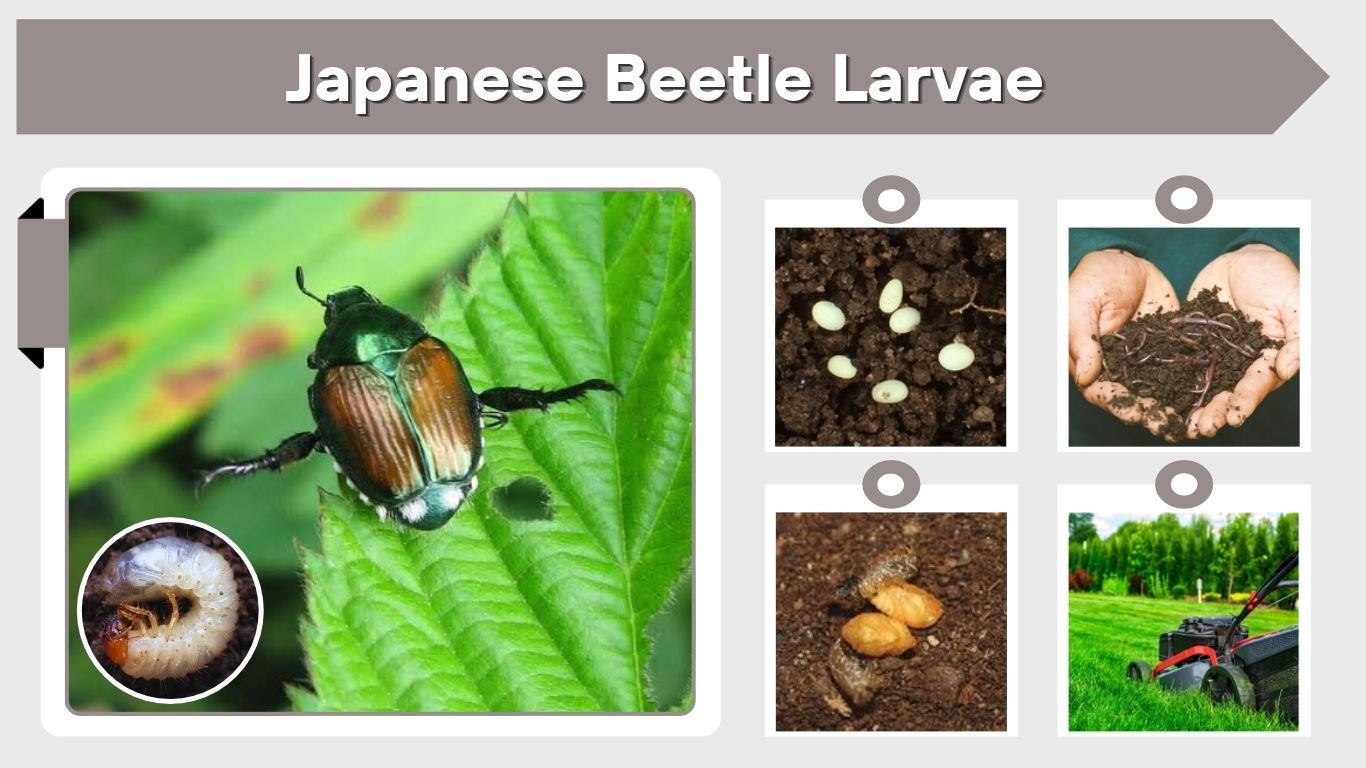
Japanese beetle larvae are destructive soil-dwelling grubs that feed on grass roots and damage lawns, gardens, and other landscapes. These creamy-white insects live underground for most of their development, making infestations difficult to recognize until brown patches appear. Although adult Japanese beetles are known for damaging leaves and flowers, their larvae can cause equally serious problems beneath the soil. Understanding Japanese beetle larvae identification, feeding habits, life cycle, and control methods is essential for maintaining healthy lawns. This guide explains how to identify grubs and manage infestations effectively.
What Are Japanese Beetle Larvae?
Japanese beetle larvae are the immature stage of the Japanese beetle (Popillia japonica), an invasive scarab beetle native to Japan. These larvae, commonly called white grubs, develop underground and feed primarily on grass roots.
Unlike adult beetles that consume foliage, larvae damage plants beneath the soil surface. Heavy infestations can weaken turfgrass, producing irregular brown patches and areas of dead grass.
Are Grubs Japanese Beetle Larvae?
Japanese beetle larvae are grubs, but not every grub belongs to this species.
Several scarab beetles, including June beetles and masked chafers, produce similar white, C-shaped larvae.
Correct identification is important because different grub species may have different life cycles, damage patterns, and treatment requirements.
What Do Japanese Beetle Larvae Look Like?
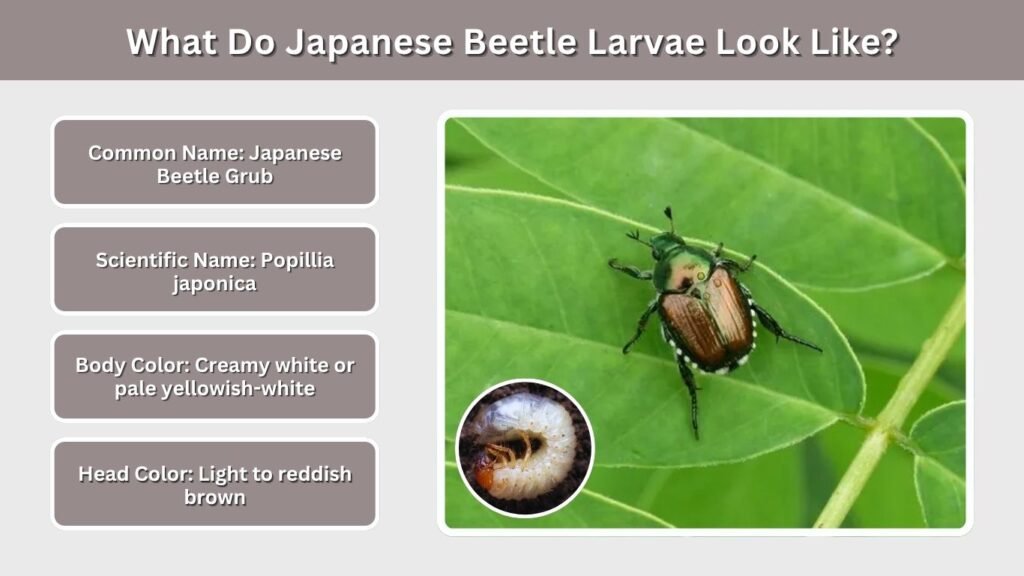
Japanese beetle larvae have soft, creamy-white bodies, brown heads, and six small legs near the front of their bodies. They usually curl into a C shape when disturbed.
Their appearance resembles many other scarab beetle larvae, making identification challenging without examining specific physical features.
Japanese Beetle Larvae Identification
- Common Name: Japanese Beetle Grub
- Scientific Name: Popillia japonica
- Family: Scarabaeidae
- Body Color: Creamy white or pale yellowish-white
- Head Color: Light to reddish brown
- Body Shape: Thick, segmented, and C-shaped
- Legs: Six short legs near the head
- Maximum Length: Approximately 1 inch
- Habitat: Soil beneath lawns, gardens, and grasslands
- Rastral Pattern: Two short rows of spines forming a V shape
Japanese Beetle Larvae Size
Newly hatched Japanese beetle grubs are relatively small, but they grow considerably while feeding underground.
Mature larvae typically reach approximately 25 millimeters, or one inch, in length.
Their bodies become thicker as they develop, while the brown head capsule remains a useful identification feature.
Japanese Beetle Larvae vs. June Bug Larvae
Japanese beetle and June beetle larvae are frequently confused because both are white, C-shaped grubs found underground.
However, these insects differ in size, development time, and identifying features.
How Can You Tell Them Apart?
Japanese beetle grubs have a distinctive V-shaped arrangement of short spines on the underside of their final abdominal segment. This area is called the raster.
Many May and June beetle grubs have two longer, nearly parallel rows of spines instead.
Some June beetle species also develop over multiple years, while Japanese beetles generally complete one generation annually.
A magnifying lens may be necessary to examine the raster accurately.
Japanese Beetle Larvae Life Cycle

Japanese beetles undergo complete metamorphosis, developing through egg, larva, pupa, and adult stages. Most populations complete their life cycle in approximately one year.
Seasonal timing varies with climate, but larvae typically spend autumn and winter underground.
Four Stages of Japanese Beetle Development
- Egg Stage: Adult females deposit eggs in moist soil during summer. Eggs generally hatch within one to two weeks.
- Larval Stage: Newly hatched grubs feed on grass roots and grow through three larval instars.
- Pupal Stage: Mature larvae form pupae underground during late spring or early summer.
- Adult Stage: Metallic-green beetles emerge during summer, feed on foliage, mate, and produce another generation.
Where Do Japanese Beetle Larvae Go in Winter?
As soil temperatures decline, Japanese beetle grubs move deeper underground to avoid freezing conditions.
They generally remain inactive during colder periods, returning toward the surface as temperatures increase in spring.
Because they can move below the frost line, ordinary winter weather does not reliably eliminate infestations.
What Do Japanese Beetle Larvae Eat?
Japanese beetle larvae primarily consume roots of turfgrass and other plants growing in suitable soil.
Their feeding reduces the plant’s ability to absorb water and nutrients. As damage increases, grass may become weak, discolored, or unable to survive dry conditions.
Do Japanese Beetle Larvae Eat Garden Plants?
Japanese beetle grubs may feed on roots of certain garden plants, including corn, beans, tomatoes, and strawberries.
However, they are especially associated with turfgrass damage.
Adult beetles have different feeding habits and consume leaves, flowers, and fruits from hundreds of plant species.
Japanese Beetle Larvae Damage to Lawns
Japanese beetle larvae can cause significant lawn damage when populations become high. Their root-feeding behavior is particularly harmful during dry or stressful growing conditions.
Grass with damaged roots may struggle to absorb sufficient moisture, resulting in irregular patches of brown or dying turf.
Signs of Japanese Beetle Grub Damage
- Brown Lawn Patches: Irregular areas of grass turning yellow or brown
- Loose Turf: Damaged grass that lifts easily because roots have been consumed
- Wilting Grass: Turf that struggles to recover after watering
- Visible Grubs: White, C-shaped larvae beneath the soil surface
- Animal Digging: Skunks, raccoons, or birds disturbing turf while searching for grubs
- Weak Root Systems: Reduced root growth and poor grass recovery
How Do You Check for Japanese Beetle Larvae?
Choose an affected lawn area and carefully lift a square-foot section of turf.
Examine the roots and upper few inches of soil for white grubs. Count the larvae and inspect their identifying features.
Some established lawns tolerate several grubs per square foot without serious damage. Treatment decisions should consider grub density, turf condition, and local recommendations.
How to Get Rid of Japanese Beetle Larvae Naturally

Natural control methods can help reduce Japanese beetle grub populations without relying entirely on conventional insecticides.
Effectiveness varies according to soil temperature, moisture, pest density, and treatment timing.
Natural Japanese Beetle Larvae Control Methods
- Beneficial Nematodes: Apply appropriate insect-parasitic nematodes, such as Heterorhabditis bacteriophora, when young grubs are present. Results can be inconsistent.
- Maintain Healthy Grass: Proper mowing, fertilization, and watering help lawns tolerate limited root damage.
- Manage Summer Irrigation: Avoid unnecessary watering during peak egg-laying periods, while considering the lawn’s health and water requirements.
- Encourage Natural Predators: Birds and other animals consume grubs, although excessive digging can damage turf.
- Use Biological Products Carefully: Products containing Bacillus thuringiensis galleriae may affect grubs, but effectiveness varies.
Milky spore products are sometimes advertised for Japanese beetle control, but recent university research has not demonstrated consistent benefits from commercial applications.
Japanese Beetle Larvae Chemical Control
When grub populations are high enough to threaten lawn health, properly selected insecticides may provide effective control.
Products differ in their active ingredients, application timing, and ability to control different larval stages.
What Insecticides Kill Japanese Beetle Larvae?
Chlorantraniliprole is commonly used as a preventive treatment before grub populations become established.
Trichlorfon is an example of a curative active ingredient that can control actively feeding grubs.
Some products containing imidacloprid or clothianidin are used preventively, although they may present risks to pollinators.
Always choose a product registered for turfgrass grub control in your location and follow its label directions.
When to Treat Japanese Beetle Larvae
Treatment timing is one of the most important factors in successful grub management.
Small, newly hatched larvae are generally easier to control than large, mature grubs.
Best Time for Japanese Beetle Grub Treatment
Preventive treatments are commonly applied during late spring or early summer, depending on the active ingredient and local beetle activity.
Curative treatments are generally most effective during late summer or early autumn, when young grubs are actively feeding near the soil surface.
Spring treatments are usually less effective because overwintered grubs are larger and feed for a relatively short period before pupation.
FAQs
1. What Do Japanese Beetle Larvae Look Like?
Japanese beetle larvae are creamy-white, C-shaped grubs with brown heads and six small legs. Mature larvae reach approximately one inch long. Their distinctive V-shaped raster pattern helps distinguish them from other white grubs commonly found beneath lawns.
2. How Do You Kill Japanese Beetle Larvae in Soil?
Japanese beetle grubs can be controlled using appropriately timed, registered turfgrass insecticides or biological treatments such as beneficial nematodes. Treatment works best when young grubs are actively feeding. Confirm the infestation before applying any control product.
3. When Should You Treat Japanese Beetle Larvae?
Late summer is generally an effective period for treating newly hatched Japanese beetle grubs. Preventive insecticides may require application earlier in the growing season. Exact timing depends on geographic location, weather conditions, and the product being used.
4. Will Vinegar Kill Japanese Beetle Larvae?
Vinegar is not a recommended or reliable treatment for Japanese beetle larvae. Pouring concentrated vinegar onto lawns can damage grass and other plants. Use proven grub-management practices or registered products designed for soil-dwelling insect pests instead.
5. What Eats Japanese Beetle Larvae?
Japanese beetle larvae are eaten by several predators, including birds, skunks, raccoons, and certain soil-dwelling animals. Beneficial nematodes and naturally occurring pathogens can also infect grubs. However, natural enemies alone may not control severe infestations.