

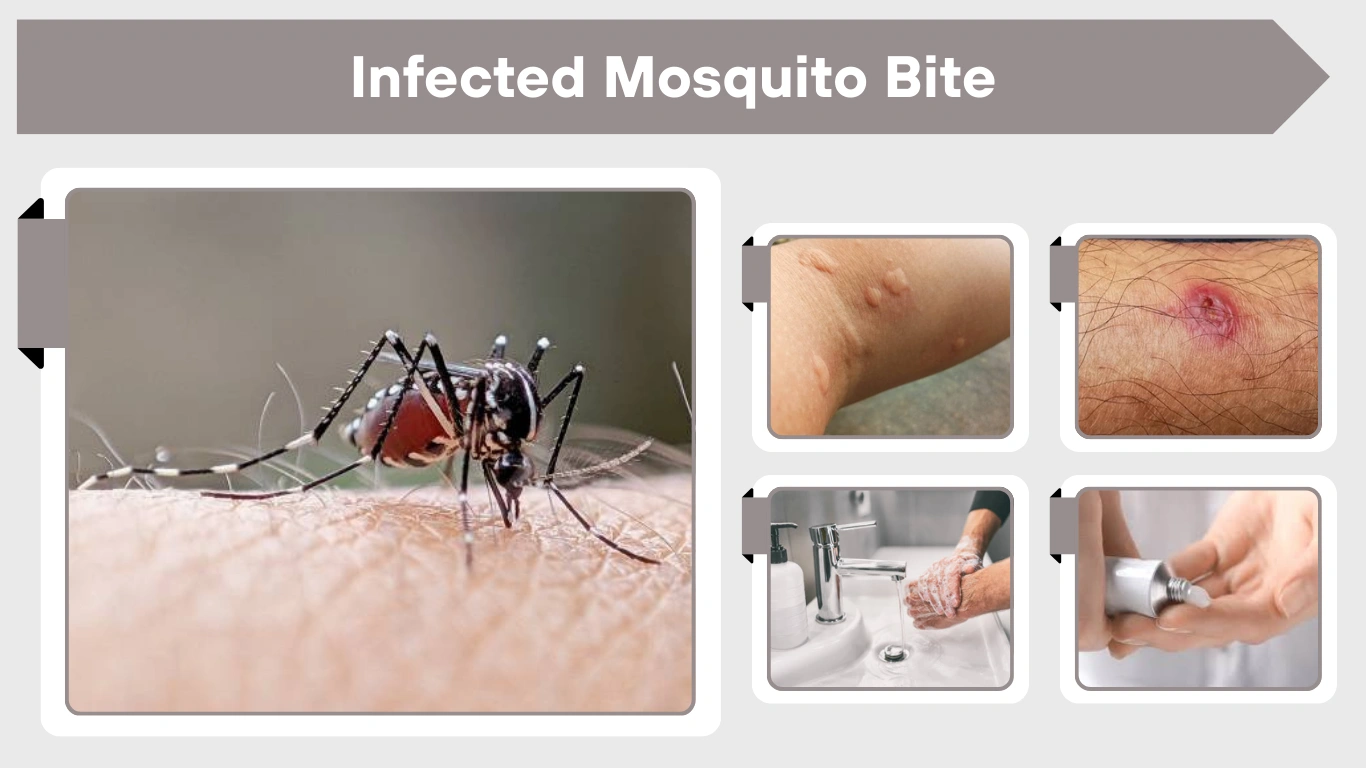
Mosquito bites are usually harmless, itchy bumps that fade within a few days. However, in some cases, a mosquito bite can become infected, leading to pain, swelling, pus, or spreading redness. Infection often happens when scratching breaks the skin and allows bacteria to enter. While most infected mosquito bites are mild, some can develop into more serious conditions like cellulitis or staph infections if left untreated. Knowing how to identify, manage, and treat an infected mosquito bite early can help prevent complications.
What Is an Infected Mosquito Bite?
An infected mosquito bite occurs when bacteria enter the skin through the bite wound, causing inflammation beyond the normal healing process. A typical mosquito bite causes redness, swelling, and itching due to an allergic reaction to mosquito saliva. Infection, on the other hand, involves bacterial growth, usually from organisms already present on the skin.
The most common bacteria responsible are Staphylococcus aureus and Streptococcus species. These bacteria enter when the bite is scratched, picked at, or exposed to dirt. Infected bites often become painful rather than itchy and may worsen over time instead of improving.
What Does an Infected Mosquito Bite Look Like?

Early Signs of Infection
In the early stages, an infected mosquito bite may look similar to a normal bite but shows signs that do not improve after 24–48 hours. Common early signs include increased redness around the bite, warmth to the touch, and mild pain or tenderness. The swelling may appear firmer, and the bite may feel sore instead of itchy.
Some bites may ooze a clear or cloudy fluid, which can be an early warning sign that bacteria are present.
Advanced or Severe Signs
As the infection progresses, symptoms become more obvious. The bite may produce yellow or green pus, develop a blister, or form a crusted surface. Redness may spread outward in a circular pattern, and the surrounding skin can become tight and painful.
In more severe cases, red streaks extending from the bite may appear, which can indicate cellulitis. Fever, chills, or swollen lymph nodes are signs that the infection may be spreading and requires medical attention.
Pictures and Images of Infected Mosquito Bites
Images of infected mosquito bites often show visible differences compared to normal bites. Common features seen in photos include pus-filled centers, blisters, open sores, or widespread redness. Some images show raised abscesses caused by staph infections, while others display flat, spreading redness typical of cellulitis.
While pictures can help people recognize potential infection, they should not be used alone for diagnosis. Skin conditions, allergic reactions, and insect bites can look similar. When symptoms worsen or do not improve, professional evaluation is always recommended.
How Do Mosquito Bites Get Infected?

Mosquito bites become infected primarily due to scratching. Fingernails can break the skin and introduce bacteria from the hands or under the nails into the bite. Once the protective skin barrier is damaged, bacteria can multiply quickly in the warm, moist environment.
Poor hygiene, such as not cleaning the bite area, also increases the risk of infection. Bites on areas like the legs, ankles, fingers, and feet are more likely to become infected because they are frequently exposed to dirt and friction.
Children and toddlers are at higher risk because they tend to scratch more aggressively and may not understand the importance of keeping bites clean. Pets, such as dogs, can also develop infected mosquito bites due to licking and chewing at irritated skin.
How to Know If a Mosquito Bite Is Infected
Infection vs Normal Healing
A normal mosquito bite usually peaks within the first 24 hours and gradually improves over the next few days. The redness fades, itching decreases, and the skin returns to normal without pain or discharge.
An infected mosquito bite follows the opposite pattern. Instead of improving, symptoms worsen after 48 hours. Redness expands, pain increases, and signs like pus or warmth become noticeable. If the bite continues to grow larger or more painful, infection is likely.
Infection vs Allergic Reaction
Mosquito bite infections are often confused with allergic reactions. Allergic reactions usually cause swelling, redness, and itching shortly after the bite occurs. The skin may look dramatic but typically remains soft and painless.
Infections tend to develop later and cause pain, tenderness, and discharge. Unlike allergic reactions, infected bites often feel hot and may spread unevenly beyond the original bite area.
Symptoms of a Mosquito Bite Infection
Common symptoms of an infected mosquito bite include persistent redness, swelling, and pain around the bite. The skin may feel warm or tight, and pus or fluid may leak from the center. Blistering, crusting, or open sores can also occur.
In more serious infections, systemic symptoms such as fever, fatigue, or swollen lymph nodes may develop, indicating that the body is actively fighting the infection.
Infected Mosquito Bite Cellulitis
Cellulitis is a deeper skin infection that can develop when bacteria from an infected mosquito bite spread into surrounding tissue. It usually appears as rapidly expanding redness, swelling, and warmth that may feel tight or painful. Unlike a localized infected bite, cellulitis does not stay confined to a small area and often worsens quickly.
Symptoms of cellulitis may include fever, chills, fatigue, and red streaks extending from the bite site. These streaks indicate that the infection may be spreading through the lymphatic system. Cellulitis should always be treated by a healthcare professional, as it typically requires oral antibiotics to prevent serious complications.
Staph Infection From a Mosquito Bite

A mosquito bite can sometimes become infected with Staphylococcus aureus, commonly known as a staph infection. This usually happens when scratching introduces bacteria into the skin. Staph infections often cause raised, painful lumps that may fill with pus, forming abscesses.
These infected bites may look swollen and feel firm or tender. In some cases, the center may appear white or yellow. While mild staph infections can sometimes be treated with topical antibiotics, larger or worsening abscesses often require oral antibiotics or drainage performed by a medical professional.
Infected Mosquito Bite With Pus or Blisters
Pus indicates that the body is fighting a bacterial infection. When an infected mosquito bite fills with pus, it means white blood cells are actively responding to bacteria in the area. Blisters may also form as the skin reacts to inflammation or trapped fluid.
It is important not to squeeze or pop an infected mosquito bite with pus or blisters. Doing so can force bacteria deeper into the skin, increase scarring, and raise the risk of spreading infection. Proper treatment and hygiene are essential for safe healing.
How to Treat an Infected Mosquito Bite

At-Home Treatment for Mild Infections
Mild infections can often be managed at home if symptoms are limited to a small area and there is no fever. Start by washing the area gently with soap and warm water. Apply an antiseptic solution, followed by a thin layer of over-the-counter antibiotic ointment.
Cover the bite with a clean bandage and keep it dry. Avoid scratching, and monitor the area daily for changes. If redness or pain begins to spread, medical care may be needed.
Medical Treatment for Moderate to Severe Infections
If the bite produces pus, becomes increasingly painful, or shows signs of cellulitis, a doctor may prescribe antibiotics. These may be topical or oral depending on the severity of the infection. In some cases, drainage of an abscess may be required.
Improvement usually begins within 24 to 72 hours after starting antibiotics. Completing the full course of medication is essential to prevent recurrence or antibiotic resistance.
Antibiotics for Mosquito Bite Infections
Antibiotics are not always necessary for infected mosquito bites, but they are essential when bacteria have spread or symptoms are worsening. Topical antibiotics are often used for mild infections, while oral antibiotics are reserved for deeper or spreading infections.
Doctors choose antibiotics based on the suspected bacteria and severity. Self-prescribing antibiotics or using leftover medication is unsafe and can delay proper treatment. Medical guidance ensures effective and appropriate care.
Home Remedies for Infected Mosquito Bites
Some home remedies can support healing when used alongside proper wound care. Warm compresses can improve circulation and help the body clear infection. Honey and turmeric are known for antibacterial properties, while aloe vera can soothe irritated skin.
These remedies should never replace medical treatment for severe infections. If symptoms worsen or do not improve within two days, professional care is necessary.
Infected Mosquito Bites in Special Cases
Infected Mosquito Bites in Toddlers and Children
Children are more likely to develop infected mosquito bites because they scratch frequently and may not keep the area clean. Parents should watch for redness that spreads, pus, fever, or increased pain. Prompt treatment helps prevent complications.
Infected Mosquito Bites on Dogs
Dogs can also develop infected mosquito bites, especially if they lick or chew the area. Swelling, redness, hair loss, or oozing skin may indicate infection. A veterinarian should be consulted if symptoms persist.
How Long Does an Infected Mosquito Bite Take to Heal?
Healing time depends on the severity of the infection. Mild infections may improve within 3 to 7 days. Moderate infections can take one to two weeks with proper treatment. Cellulitis or staph infections may require longer recovery periods and follow-up care.
When to See a Doctor
Seek medical attention if redness spreads rapidly, pain increases, fever develops, or symptoms do not improve within 48 hours. People with weakened immune systems should seek care earlier to avoid complications.
How to Prevent Mosquito Bite Infections
Preventing infection starts with avoiding scratching. Clean bites early, use anti-itch treatments, and keep nails trimmed. Wearing insect repellent and protective clothing reduces the risk of bites and infection.
FAQs
Can mosquito bites become infected?
Yes, mosquito bites can become infected when scratching breaks the skin and allows bacteria to enter.
Do infected mosquito bites heal on their own?
Some mild infections may improve with proper care, but worsening symptoms require medical treatment.
Are mosquito bite infections dangerous?
Most are mild, but untreated infections can lead to cellulitis or more serious complications.
Should you pop an infected mosquito bite?
No, popping can worsen infection and increase scarring.
How can you tell if a mosquito bite is infected?
Pain, spreading redness, warmth, pus, and delayed healing are key signs of infection.
