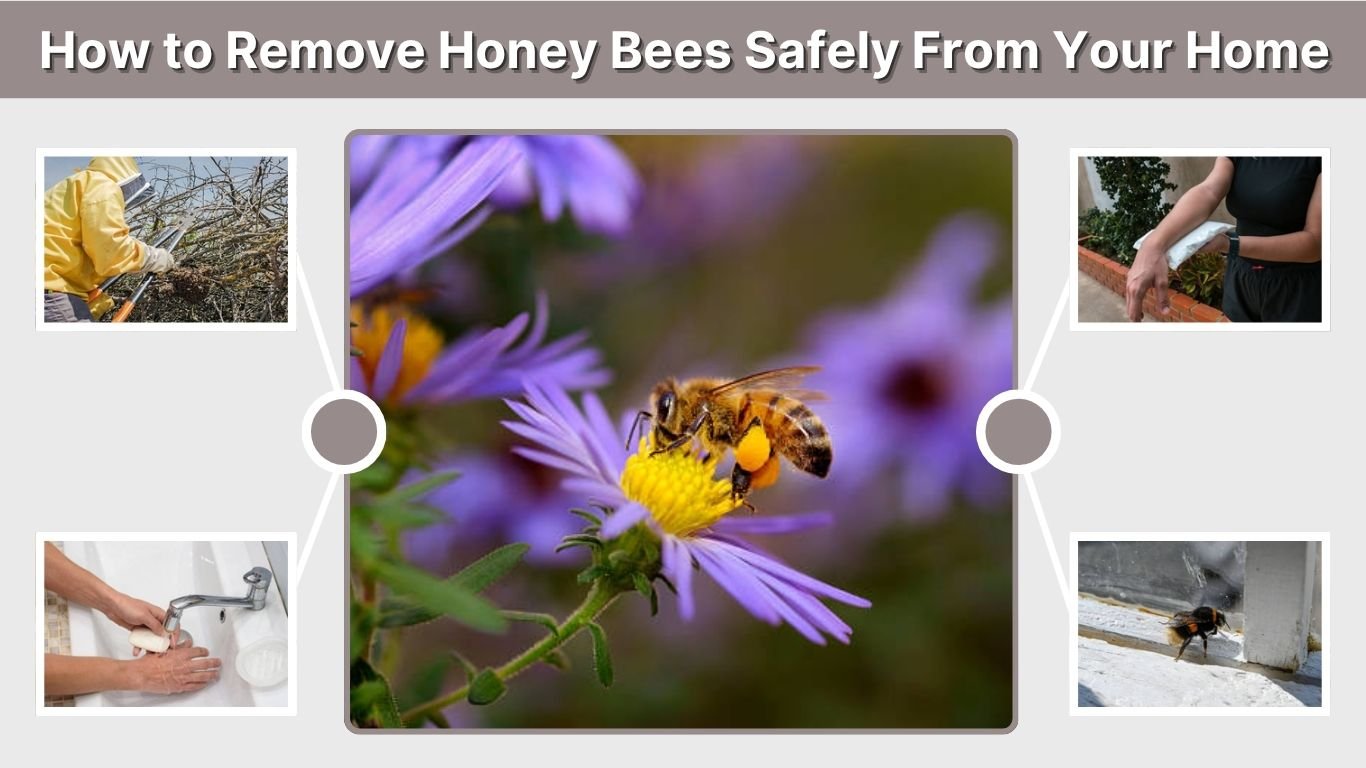
To remove honey bees safely, first determine whether you are dealing with one wandering bee, a temporary swarm, or an established nest. A single bee may leave through an open window, but a colony inside a wall usually needs professional removal. Keep children and pets away, avoid spraying or disturbing the bees, and never block an occupied entrance. An experienced beekeeper or bee-removal specialist can assess whether relocation is practical and arrange removal of honeycomb and honey when a building is involved.
Identify the Bee Problem Before Taking Action
The correct response depends on where the bees are and what they are doing. Observe from a safe distance rather than approaching the insects or opening a suspected nesting cavity.
A Single Bee Indoors
One honey bee near a window does not necessarily indicate a nest. It may have entered accidentally through an open door or damaged screen.
Repeated sightings, especially alongside bees entering a particular outside opening, justify a professional inspection.
A Temporary Swarm
A swarm often resembles a dense cluster hanging from a branch, fence, or overhang. The bees are searching for a nesting location and may leave within hours or a few days.
Swarms are generally less defensive than established colonies, but they are not sting-free. Keep your distance and arrange assessment if the cluster is near people.
An Established Nest
Regular traffic through the same opening, visible wax comb, or persistent buzzing inside a wall can indicate an established colony.
A nest may extend far beyond the entrance you can see. Its apparent size from outside does not reliably indicate how many bees or combs are present.
How to Remove a Honey Bee From a Room
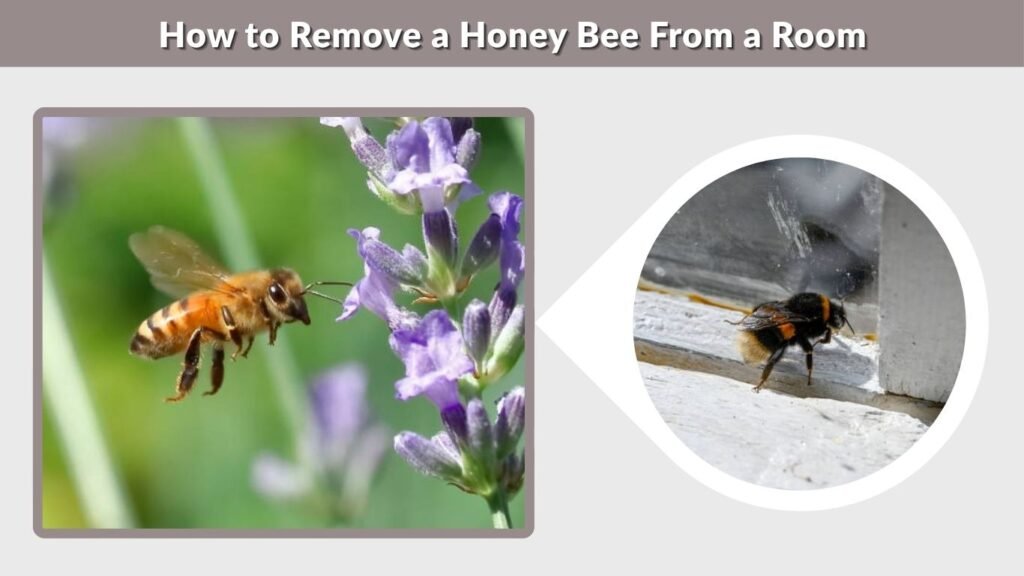
For one bee that accidentally enters a room, giving it an unobstructed exit is a reasonable first step. This approach is different from dealing with bees emerging from a wall or ceiling.
Give the Bee Space to Leave
Keep people and pets out of the room. If accessible without approaching the bee, open an exterior window or door and close interior doors leading farther into the house.
Stand back rather than swatting, chasing, or handling it. Anyone with a known sting allergy should avoid attempting close-contact removal.
If several bees continue appearing, leave the area and contact a specialist instead of repeatedly trying to catch them.
How to Remove a Honey Bee Swarm From a Tree
A resting swarm on a branch is not necessarily an established tree nest. However, bees repeatedly entering a hollow trunk—or covering a visible comb—require a different assessment.
Arrange Experienced Swarm Collection
Contact a local beekeeping association or bee-removal service. Provide the location, approximate height, and a photograph taken using zoom from a safe position.
Do not shake the branch, climb toward the swarm, or try to knock it into a container. An experienced collector can determine whether the swarm is accessible and suitable for relocation.
Treat Tree Cavities as Established Nests
Do not cut into an occupied tree or fill the entrance. Removal may require coordination between a bee specialist and an arborist.
Where there is little risk to people, professional assessment may support leaving the colony undisturbed. Species, location, and tree condition affect the decision.
How to Remove a Honey Bee Nest From a House
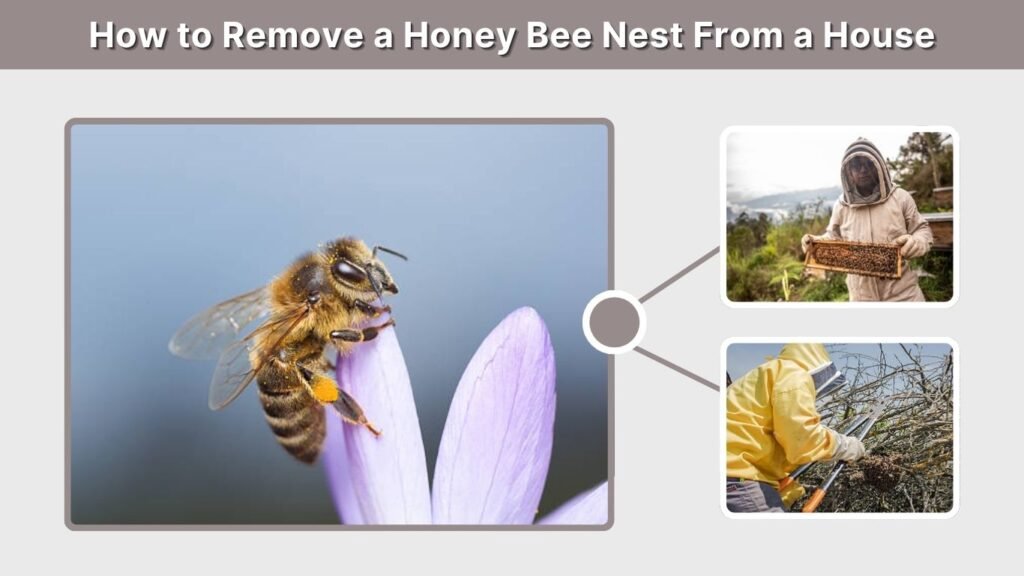
Removing honey bees from a wall, roof, or ceiling involves more than stopping visible activity. A complete plan must address the colony, its stored materials, and the building’s entry points.
Follow These Initial Steps
- Keep people and pets away from the entrance and flight path.
- Avoid drilling, hammering, or other disturbances near the suspected nest.
- Contact someone experienced in structural honey bee removal.
- Explain whether pesticides have already been applied.
- Leave the occupied entrance unblocked until the specialist advises otherwise.
Sealing an active entrance can force bees deeper into a building and potentially into living spaces.
Understand Professional Removal
The specialist locates the colony and determines whether access requires opening siding, roofing, or an interior surface. Live removal may be possible, but it is not guaranteed for every species or situation.
Ask whether the quote includes building access, cleanup, repairs, and follow-up. Collecting an exposed swarm and removing a colony behind masonry are very different services.
Remove Honeycomb and Honey
Honey and comb left behind can attract other pests and cause leaks or staining. Dead bees can also create cleanup problems.
Consequently, spraying bees or watching activity stop does not establish that the job is finished. Structural removal should include a plan for the remaining nest materials.
Do not assume honey recovered from a building is suitable to eat, particularly when pesticide exposure is possible or unknown.
How to Remove Honey Bees Without Killing Them
Professional live collection or relocation is often possible, especially for accessible swarms. “Natural removal,” however, should not mean experimenting with substances that may injure bees or expose people to stings.
Avoid Unreliable Home Remedies
Do not attempt removal using:
- Fire or smoke directed into a wall or chimney.
- Boiling water or forceful hose spraying.
- Gasoline, bleach, or mixed household chemicals.
- Household vacuums or attempts to knock down comb.
Vinegar, cinnamon, and essential oils are not dependable solutions for an established colony. Even temporarily driving away some adults does not remove hidden brood, honey, or wax.
Ask About Relocation Before Booking
Explain that you prefer live removal where practical. Confirm that the provider handles the particular nesting situation rather than assuming every beekeeper offers wall or roof removals.
Prevent Bees From Returning After Removal
Exclusion should follow removal and cleanup. Closing openings beforehand can trap the colony, while incomplete repairs can leave the same cavity available to another swarm.
Repair Access Points
Repair damaged siding, deteriorated wood, and gaps around service penetrations. Use appropriate screening where suitable, without blocking essential ventilation or drainage.
Ask the provider how long to monitor the area and what returning-bee activity should prompt a callback.
How to Remove a Honey Bee Stinger
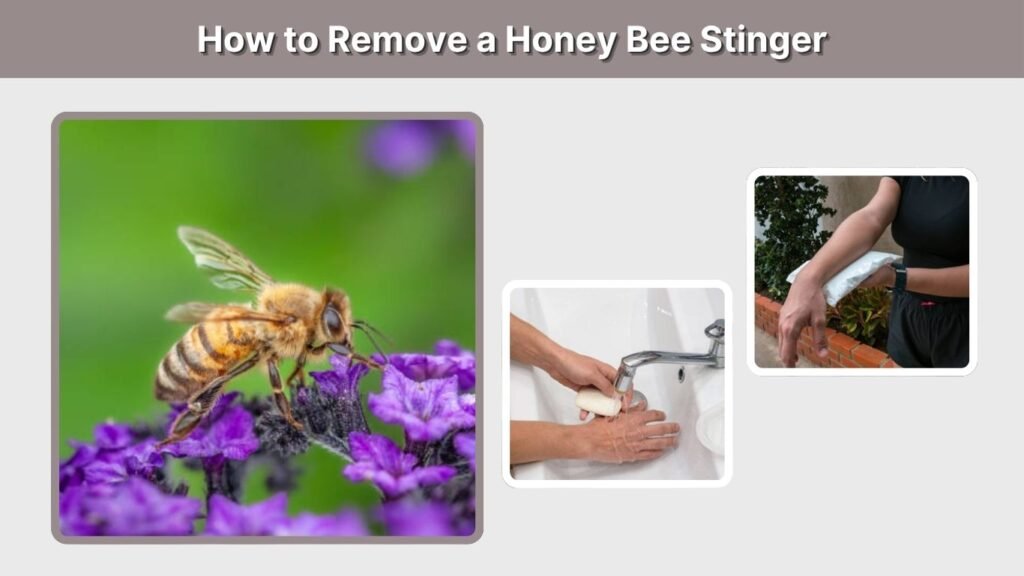
A sting is a separate problem from nest removal. Breathing difficulty, throat or tongue swelling, or faintness after a sting requires emergency help. Use prescribed epinephrine immediately if available and call your local emergency number.
Basic Stinger Removal and Care
For a localized sting without emergency symptoms:
- Move away from the bees.
- Remove any visible stinger promptly; scraping sideways with a fingernail is one option. Do not delay while searching for a particular tool.
- Wash the area with soap and water.
- Apply a cloth-wrapped cold pack for 10–20 minutes.
Seek medical advice for numerous stings, worsening symptoms, or a sting near the eye or inside the mouth.
FAQs
Can I remove a small honey bee nest myself?
A small visible cluster may conceal a larger colony, and even a small nest can defend itself. Seek professional identification and removal advice rather than handling the nest.
Will honey bees leave my house naturally?
A temporary resting swarm may move on. An established colony inside a building should not be expected to leave promptly or remove its comb and honey afterward.
Is removing a honey bee hive free?
Some beekeepers collect accessible swarms without charge. Structural removals commonly involve paid labor, equipment, cleanup, and repairs. Request a written quote specifying what is included.
Does nighttime make bee removal safe?
No. Many bees may be inside the nest at night, and disturbing them can still trigger defensive behavior. Darkness does not make untrained removal safe.
Can I remove honeycomb after the bees disappear?
Do not assume the colony is gone because activity has stopped temporarily. Have the cavity checked before opening it or handling comb, especially where wiring, pesticides, or hidden bees may be present.