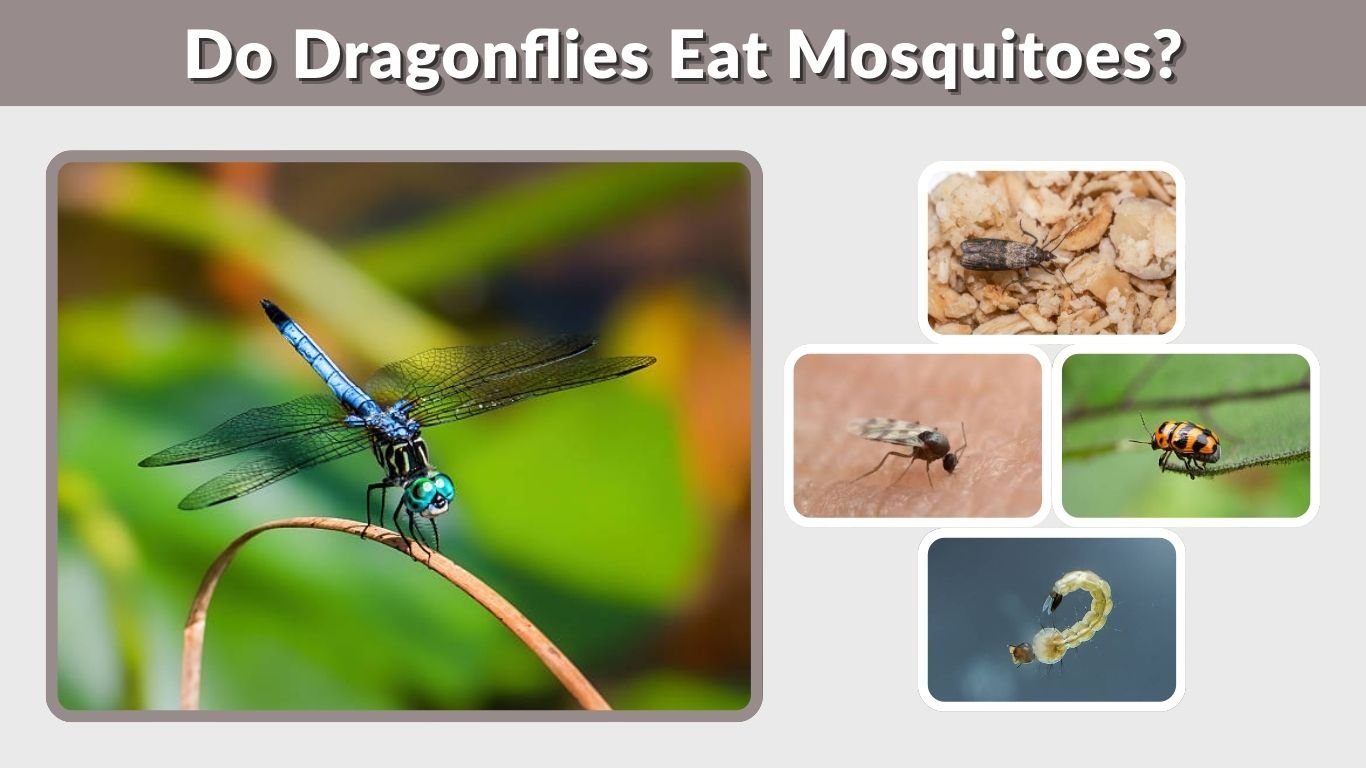
Yes, dragonflies eat mosquitoes. Adults catch flying mosquitoes, while aquatic dragonfly nymphs can consume mosquito larvae underwater. This makes them predators of mosquitoes at two different life stages. However, dragonflies eat many other insects too, and their presence does not guarantee fewer bites around your home. Claims that every dragonfly eats hundreds of mosquitoes daily oversimplifies a much more variable relationship. Understanding what they hunt, how much researchers have measured, and where they live helps explain both their benefits and their limits.
Do Adult Dragonflies Eat Mosquitoes?
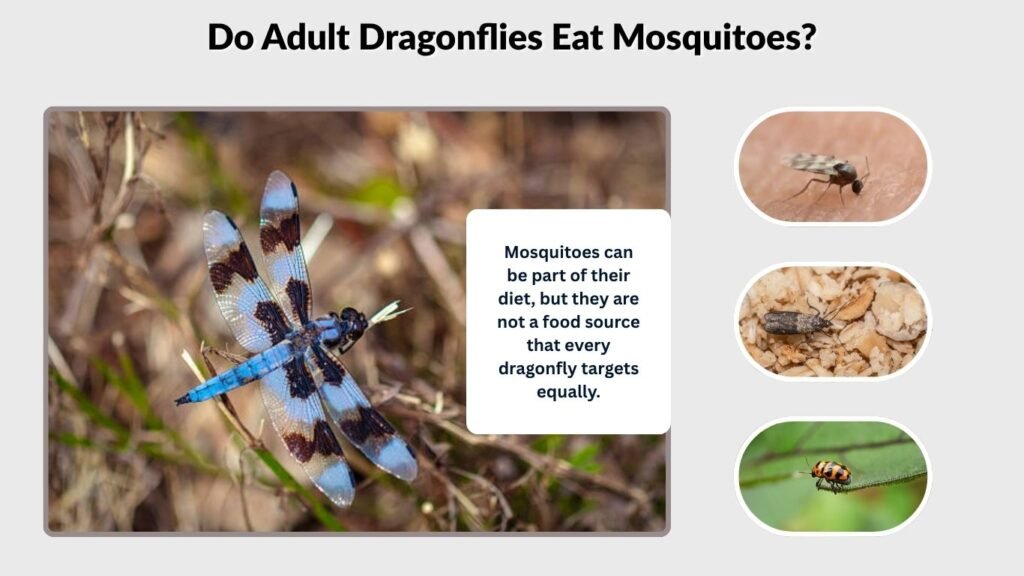
Adult dragonflies are predators that capture other insects. Mosquitoes can be part of their diet, but they are not a food source that every dragonfly targets equally.
Mosquitoes Are One of Many Prey Types
Dragonflies generally take prey they can detect, catch, and handle. Their food choices depend on body size, hunting behavior, and the insects available nearby.
Other prey can include:
- Midges and other small flies.
- Moths and butterflies.
- Flying beetles.
- Bees and wasps.
- Smaller dragonflies and damselflies.
Their diet is therefore much broader than mosquitoes alone.
Why Do Dragonflies Eat Mosquitoes?
Mosquitoes provide nutrients and energy for flight, growth, and reproduction. Dragonflies hunt them for food—not specifically because mosquitoes bite humans.
A dragonfly can eat either male or female mosquitoes. Predation is not restricted to the blood-feeding females responsible for bites.
How Do Dragonflies Eat Mosquitoes?
Dragonflies combine keen vision with maneuverable flight. Their hunting methods allow them to intercept small insects rather than simply follow them until they tire.
Detecting and Capturing Prey
Large compound eyes help a dragonfly detect movement and track a potential meal. It adjusts its flight path and uses its legs to seize the insect.
Some dragonflies patrol continuously, while others launch from perches when prey comes within reach. Mosquitoes passing through these hunting areas may be captured.
Eating in Flight
Dragonflies use their jaws, called mandibles, to bite and chew prey. They can consume small insects while flying, although they may perch to handle larger prey.
They do not suck a mosquito’s blood. They eat its body, just as they would another suitably sized insect.
How Many Mosquitoes Do Dragonflies Eat in a Day?
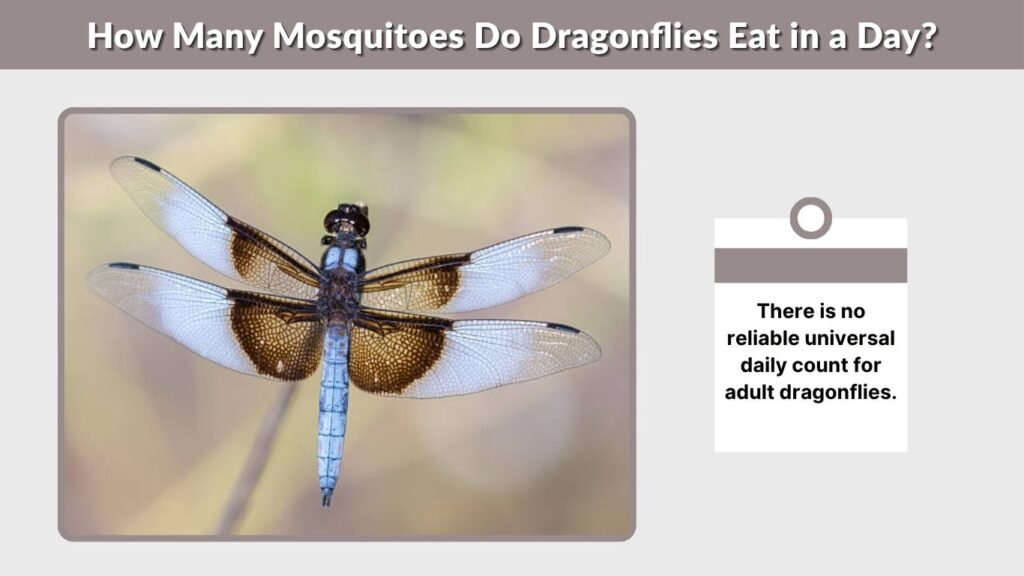
There is no reliable universal daily count for adult dragonflies. Statements such as “100 mosquitoes every day” should not be treated as established averages for every species or garden.
Why Adult Feeding Counts Vary
Daily consumption depends on:
- Dragonfly species and body size.
- Mosquito abundance and accessibility.
- Availability of alternative prey.
- Temperature, rain, and other flying conditions.
- The individual’s hunger and activity.
Eating many insects does not necessarily mean eating many mosquitoes. A dragonfly hunting a cloud of nonbiting midges may consume mostly midges.
Research on exact adult mosquito consumption in natural settings remains limited.
What Researchers Have Measured in Nymphs
A 2023 meta-analysis combining 31 studies estimated that a single dragonfly or damselfly nymph consumed an average of about 40 mosquito larvae per day in experimental containers.
That finding concerns aquatic predators eating mosquito larvae. It is not a measurement of adult dragonflies eating flying mosquitoes, and it is not a guaranteed rate for a backyard pond.
There is likewise no dependable mosquitoes-per-hour figure that applies to all dragonflies.
Do Dragonfly Larvae Eat Mosquito Larvae?
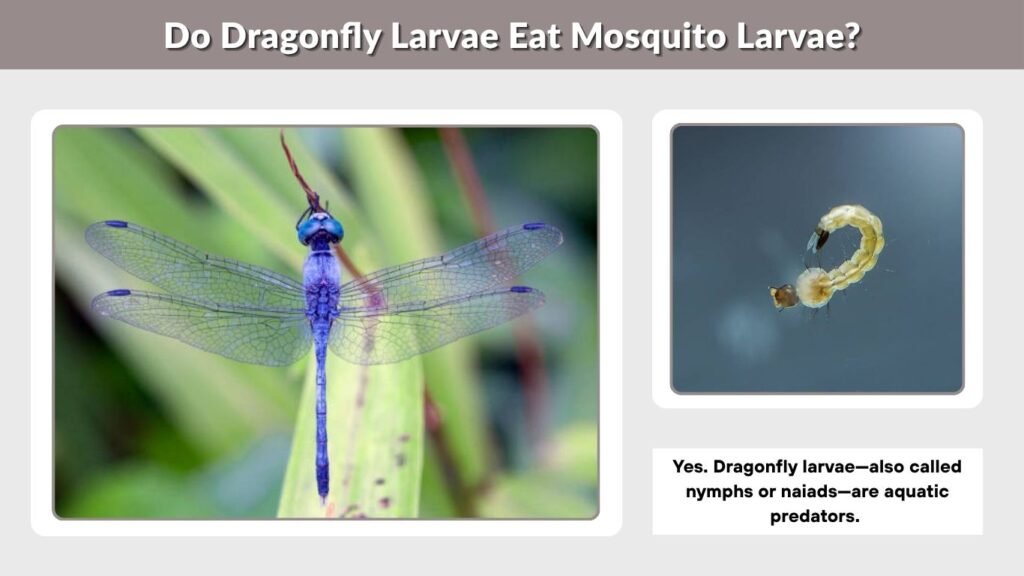
Yes. Dragonfly larvae—also called nymphs or naiads—are aquatic predators. They can eat mosquito larvae when both occupy the same habitat and the prey is accessible.
How Underwater Hunting Works
A nymph uses an extendable lower lip, called the labium, to seize prey and bring it toward its mouthparts. Different species hunt among plants, along sediment, or in other underwater hiding places.
Their diet can include mosquito larvae, other aquatic insects, small crustaceans, and occasionally small vertebrates, depending on the nymph’s size.
Why Habitat Overlap Matters
Mosquito larvae must actually share water with dragonfly nymphs for this predation to occur. Mosquitoes developing in a neglected bucket, flowerpot saucer, or blocked gutter may have no dragonfly predators nearby.
Seeing adults over your garden does not mean their offspring occupy every mosquito-breeding container.
Laboratory research confirms that dragonfly nymphs can consume mosquito larvae, but consumption varies among predator species and experimental conditions.
Can Dragonflies Control Mosquitoes in Your Yard?
Dragonflies contribute to natural predation, but that is different from providing dependable mosquito control. A garden can support both abundant dragonflies and troublesome mosquitoes.
Natural Predators Have Limits
Adult dragonflies move freely and may leave your property. They also switch among available prey instead of concentrating exclusively on mosquitoes.
Nymphs cannot reach larvae in every small water container, and mosquito populations can replenish through breeding and immigration.
Encouraging dragonflies is worthwhile for wildlife, but their presence should not replace measures that prevent mosquito breeding or bites.
Releasing Dragonflies Is Not a Guaranteed Solution
Buying and releasing adults does not ensure they will remain nearby. Moving nymphs between water bodies can also introduce unwanted organisms or unsuitable species.
Supporting existing local populations is a more responsible approach than treating dragonflies as a product with a predictable pest-removal rate.
How to Attract Dragonflies Responsibly
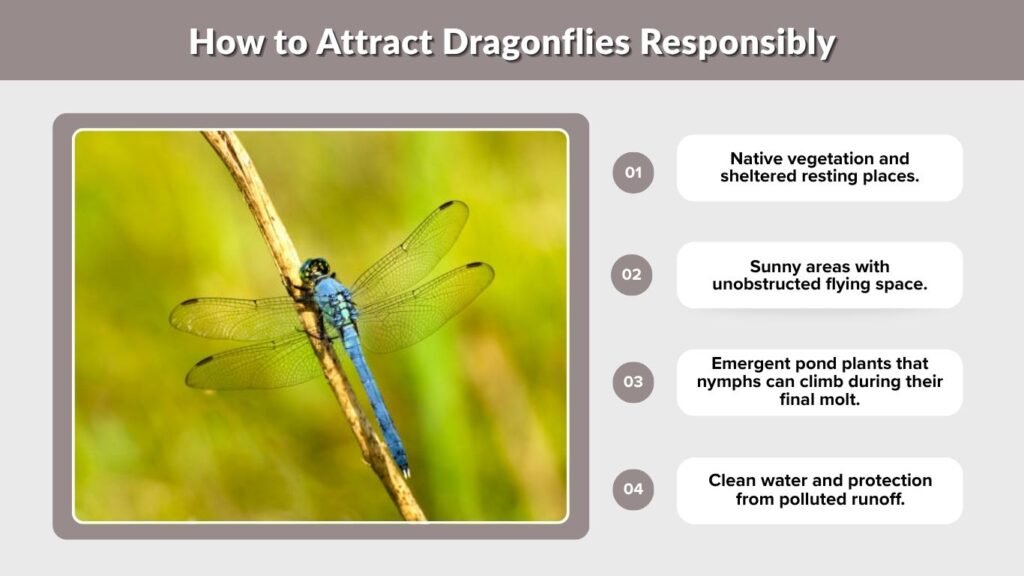
Dragonflies need suitable habitat, not merely a large supply of mosquitoes. Gardens can provide resting places and hunting areas, while appropriate freshwater habitats support their immature stages.
Provide Shelter and Breeding Habitat
Helpful features include:
- Native vegetation and sheltered resting places.
- Sunny areas with unobstructed flying space.
- Emergent pond plants that nymphs can climb during their final molt.
- Clean water and protection from polluted runoff.
Fish can eat dragonfly nymphs, so a fish-free wildlife pond may better support their development than a heavily stocked ornamental pond.
Do Not Create Unmanaged Standing Water
Leaving buckets or neglected containers full of water to attract dragonflies can instead produce mosquitoes.
A wildlife pond requires planning and monitoring; it should not be advertised as automatically mosquito-proof. If mosquito larvae become abundant, consult your local mosquito-control or public-health service about appropriate management.
What Else Helps Reduce Mosquitoes?
The most useful household actions target breeding sites and prevent contact. These remain important even when dragonflies visit regularly.
Practical Prevention Measures
- Empty and scrub water-holding containers at least weekly.
- Keep water-storage containers securely covered.
- Repair window and door screens.
- Use an approved insect repellent according to its label.
- Wear protective clothing when mosquito exposure is likely.
Dragonflies can complement a healthy outdoor environment, but they do not establish that an area is free from mosquito-borne disease risk.
FAQs
Do all dragonflies eat mosquitoes?
Mosquitoes are potential prey for many dragonflies, but diets differ among species and habitats. It is not accurate to assume every individual regularly eats them.
Do dragonflies eat mosquitoes at night?
Most dragonflies hunt mainly during daylight, although some remain active around dusk. Mosquito activity varies by species, so dragonflies do not provide continuous protection against biting mosquitoes.
Will a dragonfly eat mosquitoes inside my house?
It might capture an insect indoors, but a house is not an appropriate hunting habitat. Let a trapped dragonfly leave through an open exterior door or window rather than keeping it for pest control.
Do mosquitofish eat dragonfly larvae?
Mosquitofish can harm aquatic insect communities, including dragonflies and damselflies. Adding them may work against the goal of supporting these predators, particularly outside the fish’s native range.
Do dragonflies or bats eat more mosquitoes?
There is no universal winner. Consumption depends on predator species, prey availability, and conditions. Neither the number of dragonflies nor bats nearby can reliably predict how many mosquito bites you will experience.