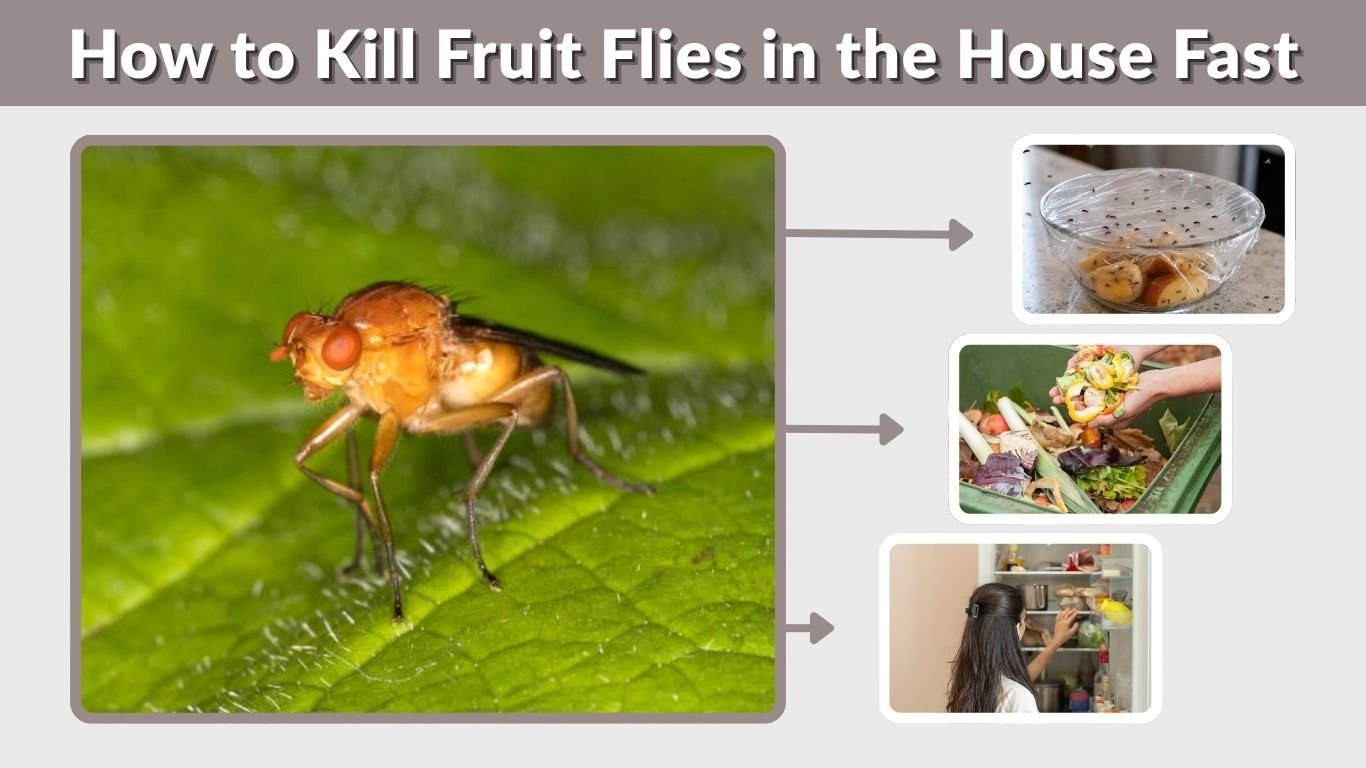
Fruit flies can quickly become a serious kitchen nuisance because they reproduce around ripe produce, food waste, spills, drains, and garbage cans. Killing the adult flies may provide temporary relief, but the infestation will continue unless you find and remove their breeding source. The most effective approach combines cleaning, food removal, homemade traps, and targeted treatment of drains and garbage containers. Here is how to kill fruit flies in your house and stop them from returning.
How to Kill Fruit Flies in the House Quickly
To eliminate fruit flies, begin by removing anything that attracts or supports them. Then use traps to capture the adult flies that remain.
Remove Their Food Sources
Fruit flies are strongly attracted to fermenting and decaying organic matter. Inspect your kitchen carefully and remove:
- Overripe or damaged fruit
- Rotting potatoes and onions
- Open juice, soda, beer, or wine
- Food scraps in garbage cans
- Unwashed recycling containers
- Sticky spills under appliances
- Dirty dishes and food containers
- Damp mops, sponges, and cleaning cloths
Place spoiled food in a sealed bag and take it outside immediately. Do not leave the bag in an indoor garbage can because fruit flies may continue breeding inside it.
Store Produce Properly
Wash newly purchased produce and inspect it for damaged or soft areas. Refrigerate ripe fruit when possible and keep unrefrigerated produce inside covered containers.
Fruit flies can arrive inside homes on bananas, tomatoes, peaches, melons, and other fresh produce. Removing damaged items before they begin fermenting can prevent a new infestation.
Vacuum Visible Fruit Flies
A vacuum cleaner can remove a large number of adult fruit flies immediately. Use the hose attachment around windows, fruit bowls, garbage cans, sinks, and other gathering areas.
Empty the vacuum container outdoors afterward. Vacuuming does not eliminate eggs or larvae, but it can quickly reduce the number of flying adults while you clean their breeding areas.
Best Homemade Fruit Fly Traps
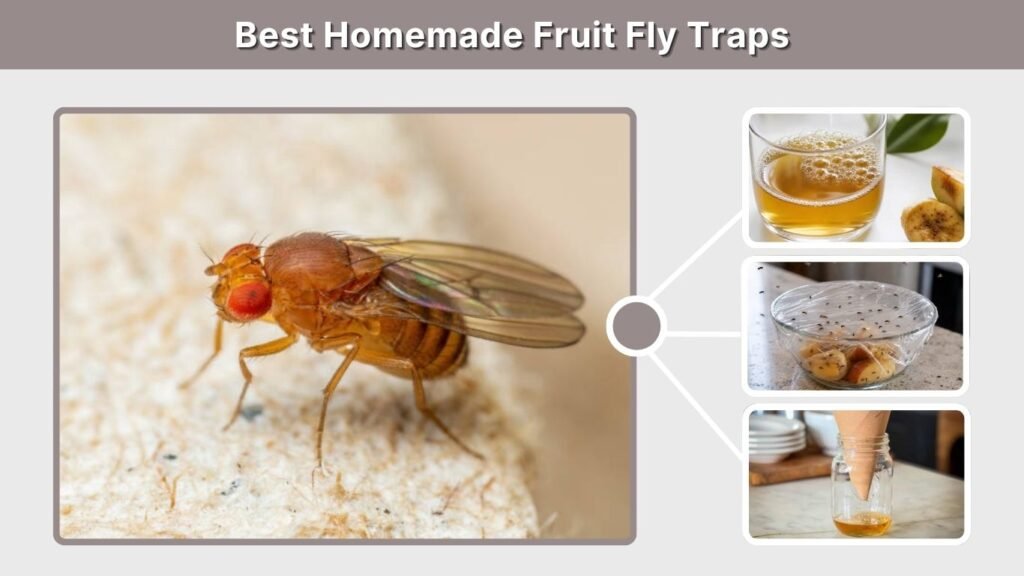
Homemade traps are useful for killing adult fruit flies. Place several traps near the sink, garbage can, recycling bin, or fruit storage area.
Apple Cider Vinegar and Dish Soap Trap
Apple cider vinegar is one of the most effective fruit fly baits because its fermented odor resembles overripe fruit.
To make the trap:
- Pour a small amount of apple cider vinegar into a bowl or jar.
- Add one or two drops of liquid dish soap.
- Place the trap where fruit flies are active.
- Replace the mixture every one or two days.
The vinegar attracts the flies, while the dish soap reduces the liquid’s surface tension. When the flies land, they fall into the mixture and drown.
Fruit and Plastic-Wrap Trap
Place a small piece of overripe banana or another soft fruit inside a jar. Cover the opening tightly with plastic wrap and make several tiny holes in the top.
Fruit flies enter through the holes to reach the bait but often have difficulty escaping. Dispose of the contents outdoors and wash the jar regularly.
Paper Funnel Trap
Put apple cider vinegar, wine, or a piece of ripe fruit into a jar. Roll a piece of paper into a funnel and place the narrow end inside the jar without allowing it to touch the bait.
The wide opening guides flies into the jar, while the small lower opening makes it difficult for them to leave.
Can White Vinegar Kill Fruit Flies?
White vinegar can be used in a fruit fly trap, especially when combined with dish soap. However, it is usually less attractive than apple cider vinegar because it lacks the strong, fruity fermentation odor.
Adding a small piece of ripe fruit or a drop of juice may make a white vinegar trap more appealing.
How to Kill Fruit Flies Coming From Drains
Fruit flies may gather near drains containing food residue and fermenting organic material. However, fuzzy, moth-like insects emerging from drains may actually be drain flies rather than fruit flies.
Check Whether the Drain Is the Source
Cover the drain overnight with clear tape, leaving the sticky side facing downward. Do not seal the opening completely.
If flies become trapped on the tape or collect underneath it, the drain may be one of their breeding locations.
Scrub the Inside of the Drain
Pouring liquid into a drain may not remove the organic film attached to the pipe walls. This buildup can provide food for developing larvae.
Use a stiff drain brush to clean:
- The drain opening
- The sink stopper
- The underside of the stopper
- The garbage disposal splash guard
- The accessible inside walls of the pipe
After scrubbing, flush the drain with hot water. Repeat the process for several days if flies continue to appear.
Can Bleach Kill Fruit Flies in Drains?
Bleach may kill fruit flies or larvae that it contacts, but it is not always an effective long-term solution. Bleach can flow through the drain without removing the organic buildup where flies breed.
Physical scrubbing or an appropriate enzyme-based drain cleaner is generally more useful for removing the material supporting an infestation. Never mix bleach with vinegar, ammonia, drain cleaners, or other household chemicals because dangerous gases may form.
Clean the Garbage Disposal
Food can become trapped underneath the rubber splash guard and around the grinding chamber. Turn off the disposal, then carefully scrub all accessible surfaces.
Do not put your hand inside the disposal. Use a long-handled brush and follow the manufacturer’s safety instructions.
How to Kill Fruit Flies in Garbage Cans
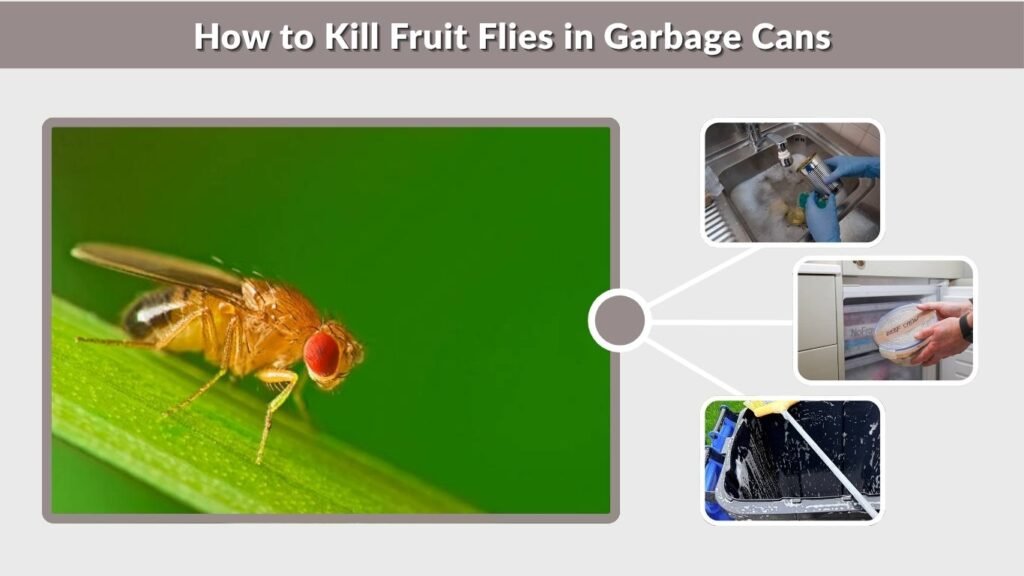
Garbage cans are common fruit fly breeding sites because they contain moisture, food residue, and fermenting waste.
Empty and Wash the Can
Remove the garbage bag and take it outdoors. Wash the inside, bottom, lid, handles, and rim with hot, soapy water.
Pay special attention to liquid that may have leaked beneath the bag. Allow the container to dry completely before adding a new liner.
Keep Food Waste Sealed
Place fruit peels, vegetable scraps, and other wet food waste inside a smaller sealed bag before putting it in the garbage. Empty kitchen garbage frequently, especially during warm weather.
A garbage can with a tight-fitting lid can reduce fruit fly access, but the container must still be cleaned regularly.
Clean Recycling Containers
Rinse soda cans, juice bottles, beer bottles, and wine containers before placing them in recycling. Even a small amount of fermented liquid can attract fruit flies.
Keep recycling covered or store it outside when possible.
Can Bug Spray or Raid Kill Fruit Flies?
Many household flying-insect sprays can kill adult fruit flies on contact. However, sprays usually do not reach the eggs and larvae hidden in drains, garbage cans, spills, or damaged produce.
Always read and follow the product label. Avoid spraying insecticide directly on food, dishes, countertops, cooking equipment, pet bowls, or food-preparation surfaces unless the label specifically permits that use.
In most kitchens, sanitation and traps are safer and more effective than repeatedly spraying insecticide.
Why Fruit Flies Keep Coming Back
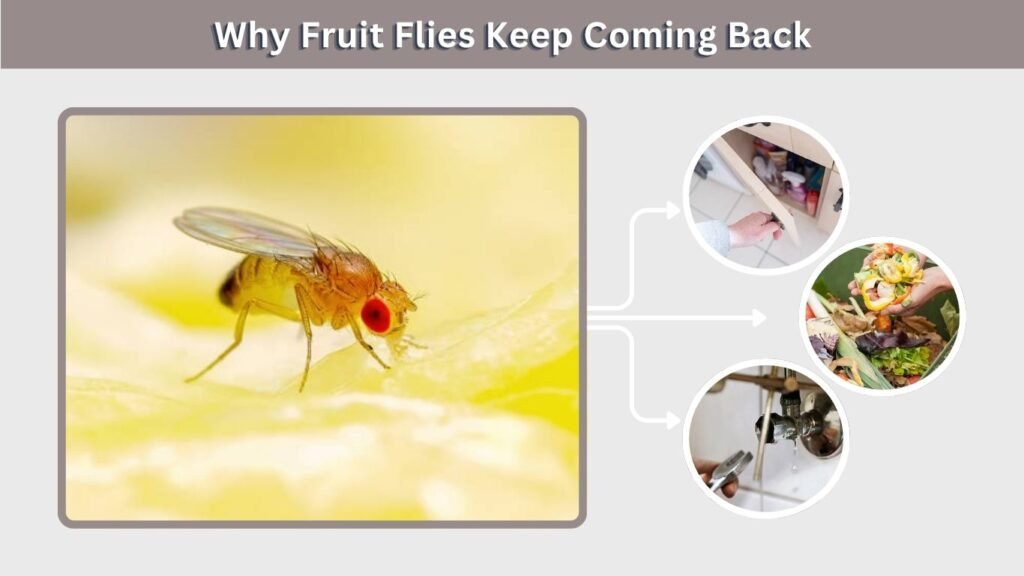
Fruit flies continue appearing when an unnoticed breeding source remains inside the house. Killing visible adults without removing that source only interrupts the infestation temporarily.
Hidden Sources to Inspect
Check less obvious locations such as:
- Under refrigerators and ovens
- Beneath garbage-can liners
- Inside empty beverage bottles
- Around dishwasher seals
- Under kitchen cabinets
- Inside forgotten lunch bags
- Near compost containers
- Around leaking pipes
- Beneath pet feeding areas
- Inside stored potatoes or onions
A single rotting vegetable hidden in a cabinet can support many fruit flies.
How Fast Do Fruit Flies Reproduce?
Fruit flies develop quickly under warm, moist conditions. Females lay eggs on fermenting materials, and the larvae feed in the same substance after hatching.
Because new adults can appear soon after the original flies are killed, continue cleaning and trapping for at least several days after activity decreases.
How to Prevent Fruit Flies in the House
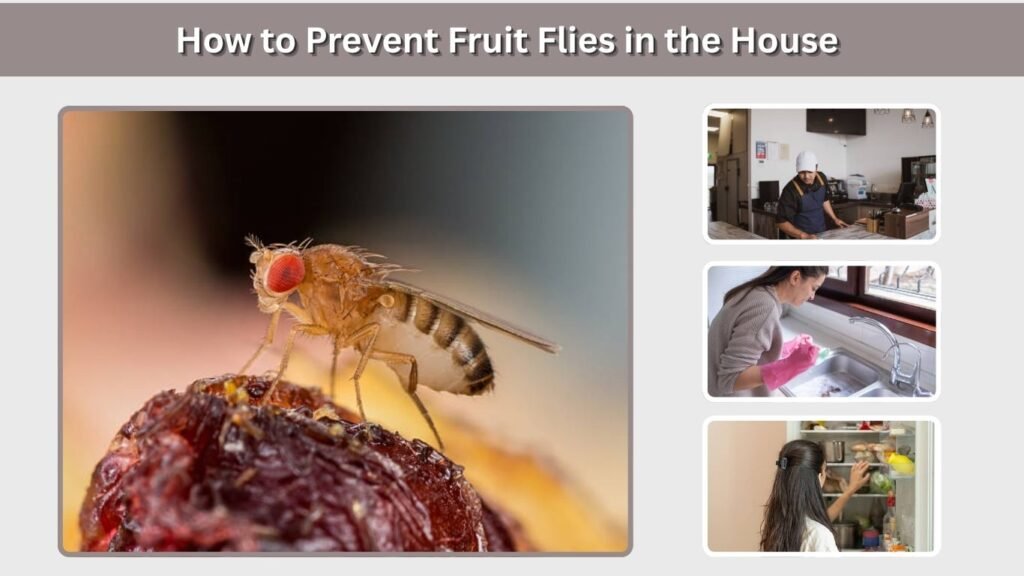
Prevention depends on eliminating fermenting food and moisture before fruit flies can use them.
Keep the Kitchen Clean
Wipe counters after preparing food, wash dishes promptly, and clean spills immediately. Check underneath small appliances where juice, crumbs, or food particles may accumulate.
Do not leave open drinks, used glasses, or food containers on the counter overnight.
Maintain Drains
Clean sink drains and garbage disposals regularly. Repair leaks and avoid allowing food residue to remain in the sink.
Running water alone may not clean the pipe walls, so occasional brushing is important.
Inspect Produce Regularly
Check fruit and vegetables every day. Eat, refrigerate, or discard items that are becoming soft, split, or overripe.
Wash fruit bowls and storage containers to remove juice and residue that may attract flies.
FAQs
What kills fruit flies immediately?
A vacuum cleaner, dish-soap spray, or properly labeled insect spray can kill visible adult fruit flies immediately. However, traps and source removal are necessary for complete control because eggs and larvae may remain in drains, garbage, or spoiled food.
How do I get rid of fruit flies overnight?
Remove all ripe produce and food waste, clean counters and drains, empty the garbage, and set several apple cider vinegar traps before bedtime. This can significantly reduce the adult population overnight, although complete elimination may require several days.
Can I spray fruit flies with dish soap?
A mixture of water and a small amount of dish soap can kill fruit flies when sprayed directly on them. Avoid spraying the mixture near electrical appliances or onto food. Wipe and dry treated surfaces afterward to prevent slips or residue.
Will pouring boiling water down the drain kill fruit flies?
Very hot water may kill some larvae and loosen residue, but it may not remove all organic buildup inside the pipe. Scrubbing the drain walls is more reliable. Avoid boiling water if your plumbing materials or manufacturer’s instructions warn against it.
When should I call an exterminator?
Contact a pest-control professional when fruit flies remain after you have removed produce, cleaned garbage and recycling containers, scrubbed drains, and treated hidden spills. Persistent activity may indicate an inaccessible breeding source, plumbing problem, or incorrectly identified insect.