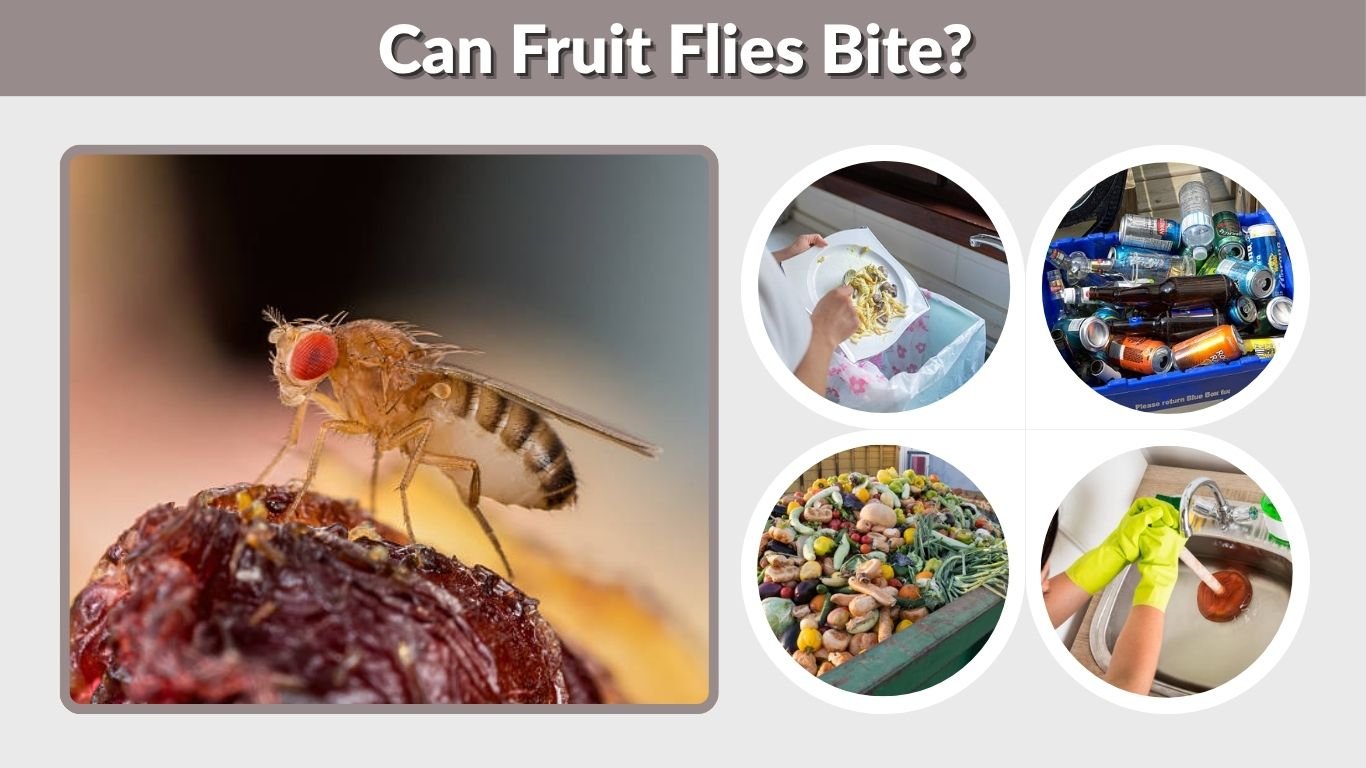
Fruit flies are tiny insects commonly found around ripe fruit, garbage cans, drains, and other damp areas containing fermenting organic material. When they gather in kitchens, many people wonder whether fruit flies can bite humans or cause health problems. The reassuring answer is that fruit flies do not bite. However, they can still create sanitation concerns by landing on contaminated surfaces and then visiting uncovered food. Understanding what fruit flies can and cannot do will help you respond to an infestation safely and effectively.
Can Fruit Flies Bite Humans?
No, fruit flies cannot bite humans. Common fruit flies have mouthparts designed for feeding on liquids, yeast, and decaying organic matter. They do not possess the piercing mouthparts required to puncture human skin.
Fruit flies may land on your arms, face, food, or clothing, but landing should not be mistaken for biting. They are generally attracted to odors rather than people themselves.
Why Fruit Flies Do Not Bite
Fruit flies feed by absorbing liquids from soft, fermenting materials. Their mouthparts are not strong enough to break human skin. Unlike mosquitoes, fleas, biting midges, and some other flies, fruit flies do not need blood to reproduce.
Their main food sources include:
- Overripe or damaged fruit
- Fermenting vegetables
- Fruit juice and soft drinks
- Alcoholic beverages
- Yeast and microorganisms
- Food residue inside garbage cans
- Organic buildup around drains
Can Fruit Flies Bite Pets?
Fruit flies do not normally bite cats, dogs, or other household pets. They may fly around pet food, water bowls, litter boxes, or animal waste because these areas can contain moisture and organic matter.
A pet scratching repeatedly is more likely to have fleas, mites, allergies, or another skin problem. Fruit flies should not produce visible bite marks or ongoing irritation.
Why Do People Think Fruit Flies Bite?
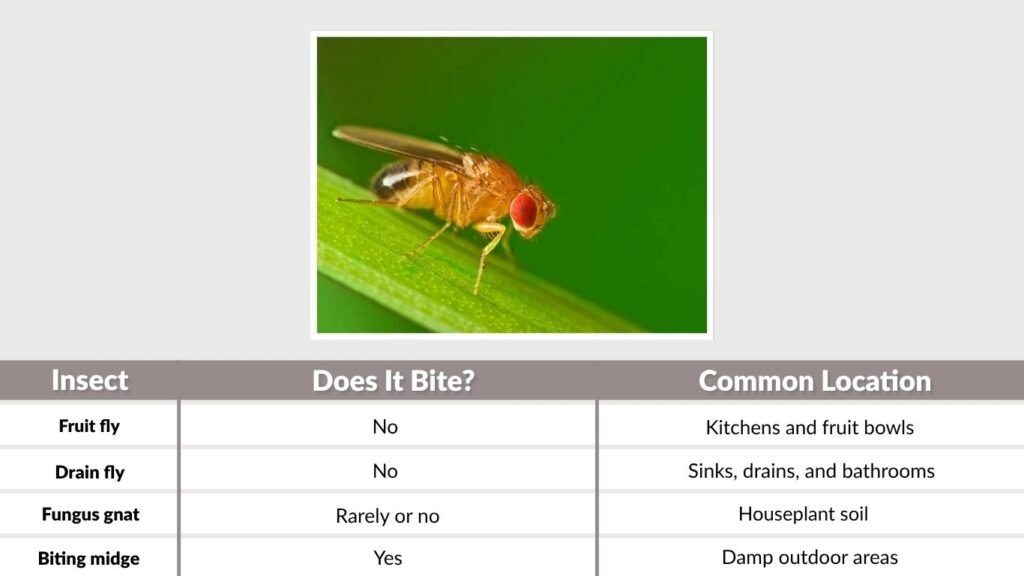
People sometimes assume fruit flies are biting because several other tiny insects look similar. Small biting midges, gnats, mosquitoes, and fleas may be present in the same general environment.
| Insect | Does It Bite? | Common Location |
| Fruit fly | No | Kitchens and fruit bowls |
| Drain fly | No | Sinks, drains, and bathrooms |
| Fungus gnat | Rarely or no | Houseplant soil |
| Biting midge | Yes | Damp outdoor areas |
| Flea | Yes | Pets, carpets, and furniture |
| Mosquito | Yes | Indoors and outdoors |
Fruit Flies Versus Biting Gnats
Fruit flies are usually tan, yellowish brown, or light brown and often have noticeable red eyes. They remain close to fermenting food, bottles, recycling bins, and garbage.
Biting gnats are more likely to be encountered outdoors near wet soil, vegetation, lakes, or streams. Their bites may cause small, itchy, red bumps.
Other Causes of Unexplained Bites
Finding fruit flies in the house does not necessarily mean they caused your skin irritation. Possible causes include mosquitoes, fleas, bed bugs, mites, contact dermatitis, or an allergic reaction.
Check where the irritation occurs and whether other signs are present. Fleas, for example, often bite around the ankles, while bed bug bites may appear after sleeping.
Can Fruit Flies Make You Sick?
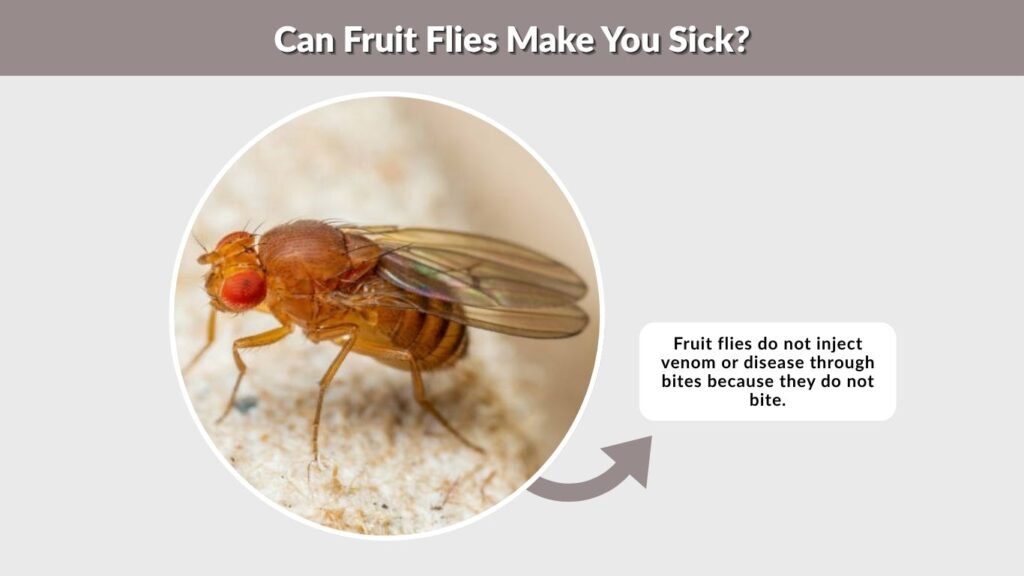
Fruit flies do not inject venom or disease through bites because they do not bite. However, they may contribute to food contamination.
These insects frequently visit garbage, decaying produce, dirty drains, spills, and other unsanitary materials. They may then land on fruit, kitchen counters, dishes, or prepared food.
Can Fruit Flies Carry Disease?
Fruit flies can pick up microorganisms from contaminated materials and mechanically move them to other surfaces. This does not mean every fruit fly carries dangerous pathogens or that seeing one will automatically make you sick.
The potential risk becomes more concerning when many flies are present around uncovered food, restaurant preparation areas, garbage, or heavily contaminated surfaces.
Can Fruit Flies Contaminate Food?
Yes, fruit flies can contaminate food by walking and feeding on it. They may also lay eggs on suitable fermenting materials, particularly damaged or overripe produce.
Throw away food that is heavily covered with fruit flies, visibly spoiled, leaking, or showing signs of larvae. Firm, undamaged fruit can usually be washed thoroughly, although removing the source of the infestation remains essential.
What Happens If You Accidentally Eat a Fruit Fly?
Accidentally swallowing a single fruit fly is unlikely to cause a serious problem for most healthy people. The insect itself is tiny and is normally broken down during digestion.
The condition of the food is more important. Food that has been left uncovered, spoiled, or exposed to many flies may have a greater contamination risk and should be discarded.
Where Do Fruit Flies Come From?
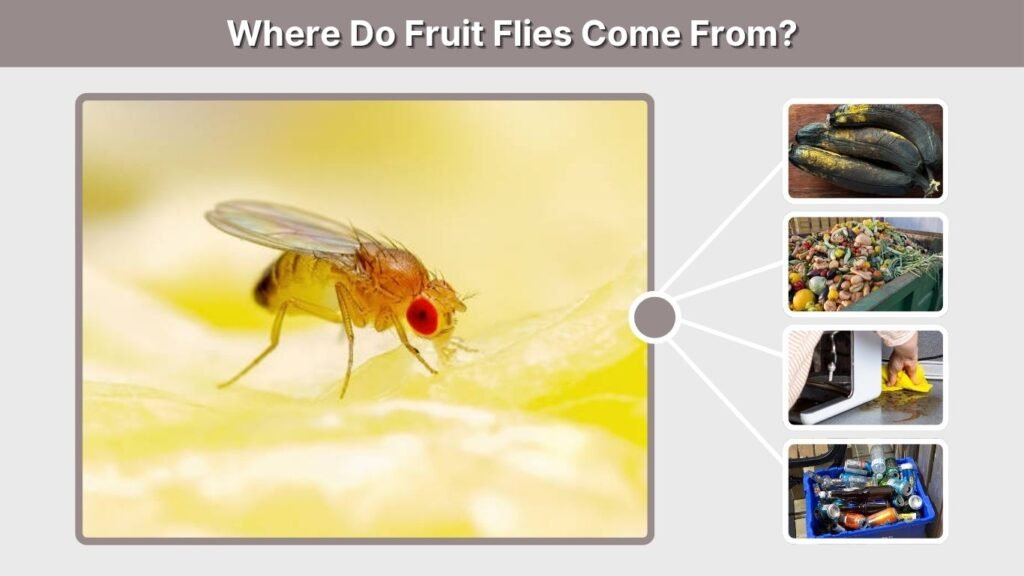
Fruit flies can enter through doors, windows, screens, vents, and small openings. They may also arrive inside the home on produce purchased from grocery stores, markets, gardens, or farms.
Once they find suitable food, they can reproduce quickly. A small number of flies may therefore become a noticeable infestation within a relatively short period.
Common Breeding Sources
Fruit flies need moist organic material in which to feed and reproduce. Common sources include:
- Overripe bananas, peaches, tomatoes, or melons
- Potatoes and onions stored in cabinets
- Garbage and compost containers
- Recycling containing drink residue
- Empty beer, wine, or juice bottles
- Sticky spills under appliances
- Dirty mops, sponges, and cleaning cloths
- Food waste inside garbage disposals
- Organic buildup around sink drains
Can Fruit Flies Come From Drains?
Fruit flies can sometimes breed in drains when fermenting organic matter has collected inside them. However, insects emerging directly from a drain may actually be drain flies.
Fruit flies are smooth-bodied and commonly hover near produce. Drain flies have fuzzy, moth-like wings and often rest on bathroom or kitchen walls.
Pouring chemicals into the drain without removing the organic buildup may provide only temporary results. The inside walls of the drain must be physically scrubbed to remove the material supporting larvae.
Can Fruit Flies Live in the Refrigerator?
Cold refrigerator temperatures greatly reduce fruit fly activity and development. Adult flies are unlikely to remain active for long inside a properly working refrigerator.
However, eggs or larvae may already be present on damaged produce. Refrigeration can slow their development without necessarily eliminating every life stage immediately. Inspect produce, clean spills, and remove spoiled food.
How to Get Rid of Fruit Flies
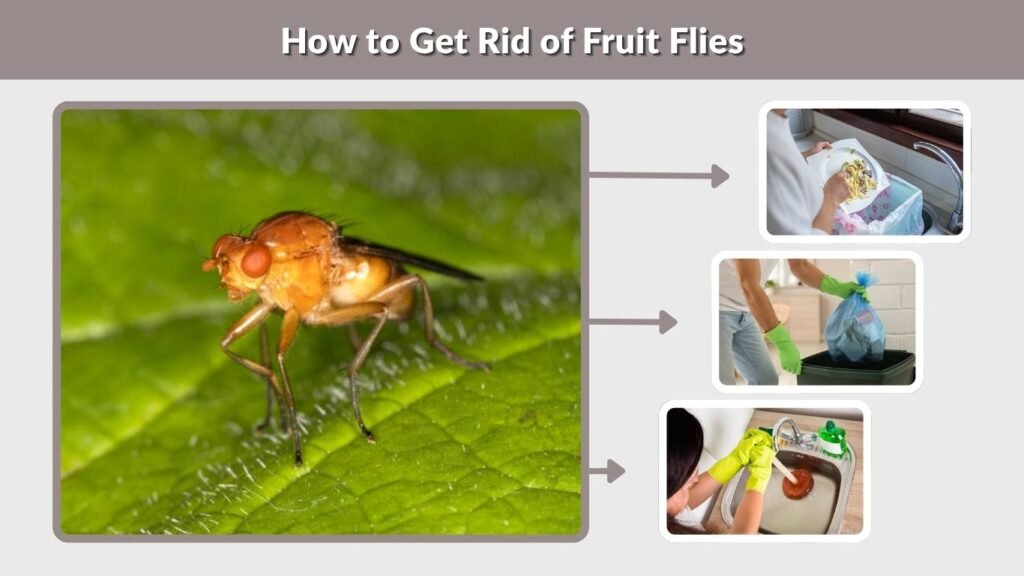
Successful fruit fly control requires removing their breeding source. Traps can reduce the number of adult flies, but they will not solve the infestation if larvae continue developing in hidden food residue.
Remove Infested Food
Inspect fruit bowls, cabinets, pantry shelves, garbage cans, and areas underneath appliances. Discard rotting or leaking produce in a sealed bag and take it outside promptly.
Refrigerate ripe produce when possible. Wash reusable containers and wipe away juice, alcohol, syrup, and other sweet residues.
Clean Garbage and Recycling Bins
Empty garbage regularly and rinse the inside of the bin. Residue under the liner or around the lid can provide enough food for fruit flies.
Rinse bottles and cans before placing them in recycling. Keep recycling containers covered, especially when they hold juice, soda, beer, or wine containers.
Clean Sinks and Drains
Remove visible food from the sink and garbage disposal. Scrub the drain opening, stopper, rubber splash guard, and accessible pipe walls with a stiff drain brush.
Avoid relying entirely on bleach. Bleach may kill some insects it contacts, but it may pass through the pipe without removing the sticky organic film where larvae develop. Never mix bleach with vinegar, ammonia, drain cleaner, or other household chemicals.
Make a Simple Fruit Fly Trap
Place apple cider vinegar or a small piece of ripe fruit in a jar. Add a drop of dish soap to liquid bait so flies are less likely to remain on the surface.
Covering the jar with plastic wrap and making several tiny holes can also help trap flies. Replace the bait regularly and keep the trap away from food preparation areas.
When to Contact Pest Control
Consider professional pest control when fruit flies continue appearing after all food, garbage, recycling, and drains have been thoroughly cleaned. A technician may help locate hidden sources such as plumbing leaks, damaged food containers, inaccessible drain buildup, or organic material under equipment.
How to Prevent Fruit Flies
Prevention depends mainly on sanitation and proper food storage. Inspect produce before bringing it inside and avoid leaving ripe fruit uncovered for long periods.
Keep counters dry, clean spills immediately, rinse beverage containers, and empty indoor garbage frequently. Repair leaking pipes and clean drains regularly. These habits remove the moisture and fermenting material fruit flies require.
FAQs
Can fruit flies bite you while you sleep?
Fruit flies cannot bite you while you sleep because their mouthparts cannot pierce human skin. They may fly around a bedroom if food, drinks, garbage, or damp organic material is nearby, but unexplained nighttime bites probably come from another insect.
Do fruit flies leave red or itchy marks?
Fruit flies do not normally leave red, swollen, or itchy bite marks. Skin irritation may be caused by fleas, mosquitoes, bed bugs, biting midges, allergies, or contact with an irritating substance. Persistent or severe symptoms should be evaluated by a medical professional.
Can fruit flies lay eggs in human hair?
Fruit flies do not normally lay eggs in human hair. They prefer moist, fermenting organic materials such as damaged fruit, food waste, and residue inside containers. Small insects repeatedly found in hair may be lice, fleas, or another type of pest.
How fast can fruit flies multiply?
Fruit flies can reproduce quickly when warm temperatures, moisture, and fermenting food are available. Because their life cycle can be completed in a relatively short period, infestations may grow rapidly. Removing breeding materials is more effective than killing adult flies alone.
Does white vinegar kill fruit flies?
White vinegar may attract or trap some fruit flies, particularly when combined with dish soap, but apple cider vinegar is often more attractive because of its fermented odor. Vinegar traps capture adults but do not eliminate eggs and larvae developing elsewhere.