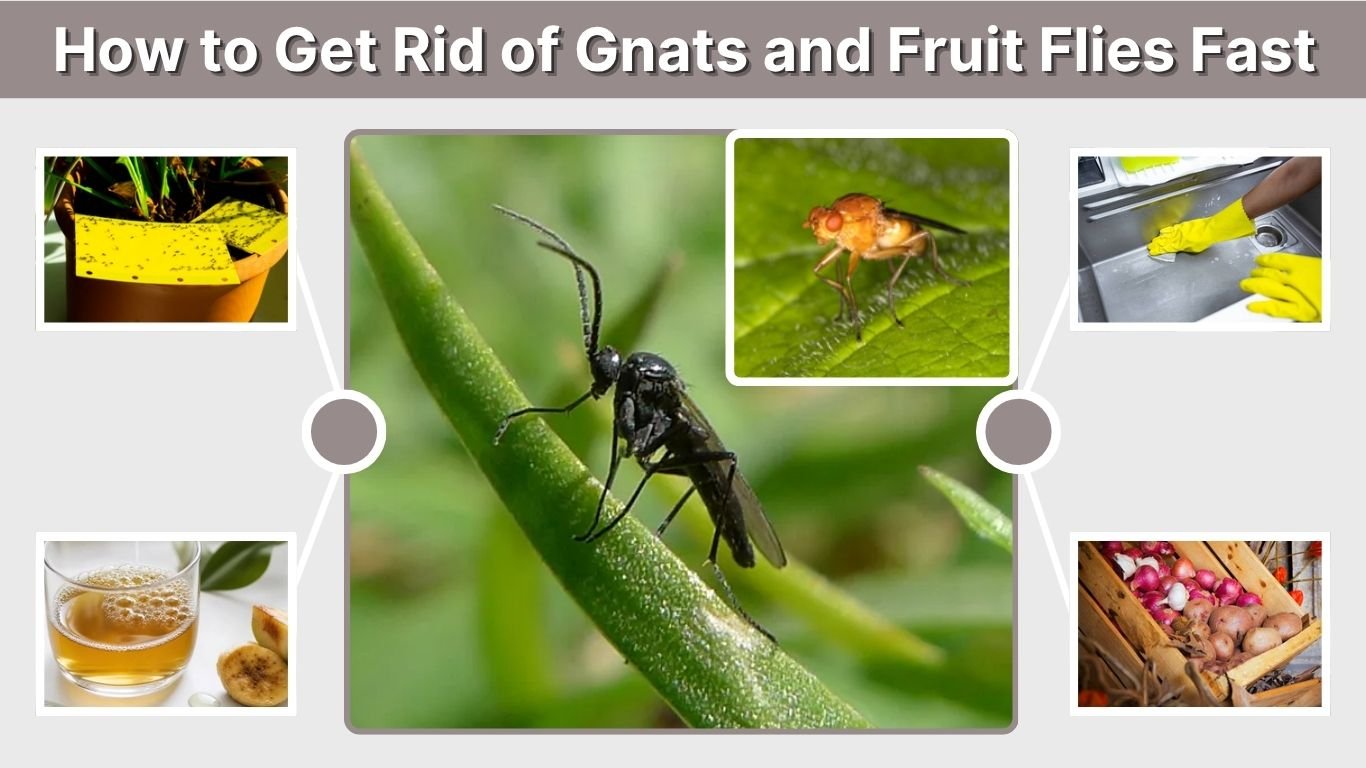
Gnats and fruit flies can quickly fill kitchens, bathrooms, and rooms with houseplants. Although these tiny flying insects may look similar, they usually come from different sources. Fruit flies breed around fermenting food and drink residue, while fungus gnats develop in damp potting soil. Drain flies may also appear around sinks. To eliminate them permanently, you must identify the insect, remove its breeding material, and trap the remaining adults.
Are They Fruit Flies or Gnats?
Correct identification is important because one treatment may not work for every small flying insect. Fruit flies are most common around produce and garbage, while fungus gnats usually hover around houseplants.
| Feature | Fruit Flies | Fungus Gnats | Drain Flies |
| Appearance | Tan or brown, often with red eyes | Dark, slender, mosquito-like | Fuzzy with moth-like wings |
| Common location | Kitchen, fruit bowls, trash | Houseplants and damp soil | Sinks, showers, and drains |
| Breeding source | Fermenting food and liquids | Moist potting soil | Organic buildup in pipes |
| Best control | Remove food and use vinegar traps | Dry soil and treat larvae | Scrub drain walls |
Signs of Fruit Flies
Fruit flies are small, rounded insects that often gather around bananas, tomatoes, juice, wine, recycling bins, and garbage cans. They are attracted to yeast and fermenting organic material.
Signs of Fungus Gnats
Fungus gnats are darker and more slender than fruit flies. They often crawl across potting soil or fly upward when a plant is moved or watered. Their larvae live in moist soil and feed mainly on fungi and decaying plant material.
Signs of Drain Flies
Drain flies have fuzzy bodies and broad wings. They often rest on walls near sinks, showers, floor drains, or garbage disposals. Their larvae develop in the slimy organic film that forms inside pipes.
How to Get Rid of Fruit Flies and Gnats Fast
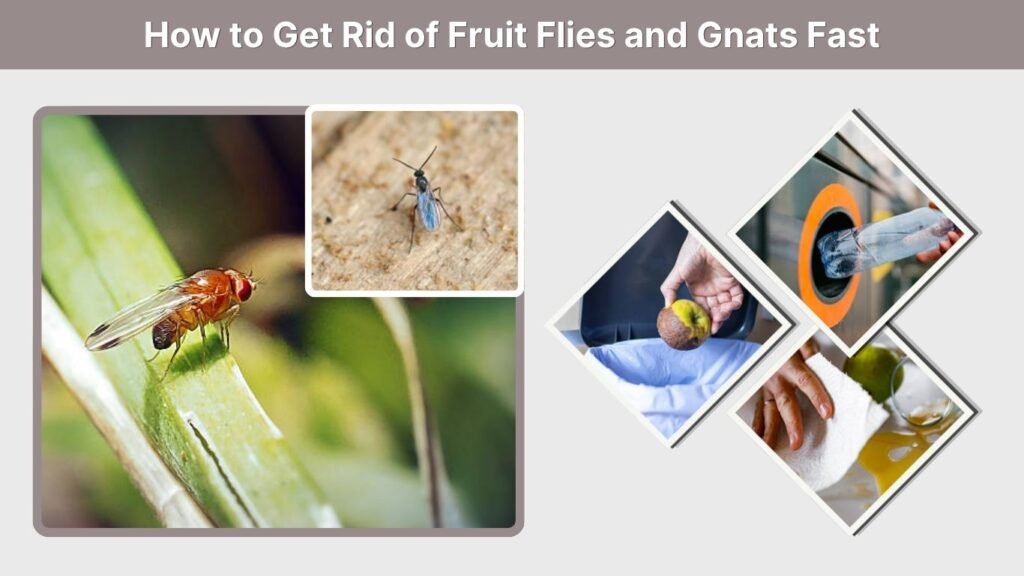
Begin by removing every possible breeding source. Killing the visible adults will not solve the problem if eggs and larvae continue developing nearby.
Remove Ripe and Rotting Produce
Inspect fruit bowls, pantry shelves, and cabinets for damaged produce. Potatoes, onions, tomatoes, bananas, peaches, and melons can become hidden breeding sites.
Throw spoiled produce into a sealed bag and take it outdoors immediately. Refrigerate ripe fruit when possible and wash the fruit bowl before using it again.
Empty Garbage and Recycling
Fruit flies can breed in small amounts of juice, wine, soda, or food residue. Empty kitchen garbage, compost containers, and recycling bins.
Wash the inside of each container with hot, soapy water. Clean the lid, rim, handles, and area beneath the garbage bag. Rinse bottles and cans before recycling them.
Clean Food and Drink Spills
Check beneath refrigerators, stoves, microwaves, coffee machines, and trash cans. A small sticky spill can support an infestation.
Wipe counters, wash dishes promptly, and avoid leaving open drinks overnight. Clean reusable bottles, lunch containers, and pet feeding areas.
Best DIY Traps for Fruit Flies
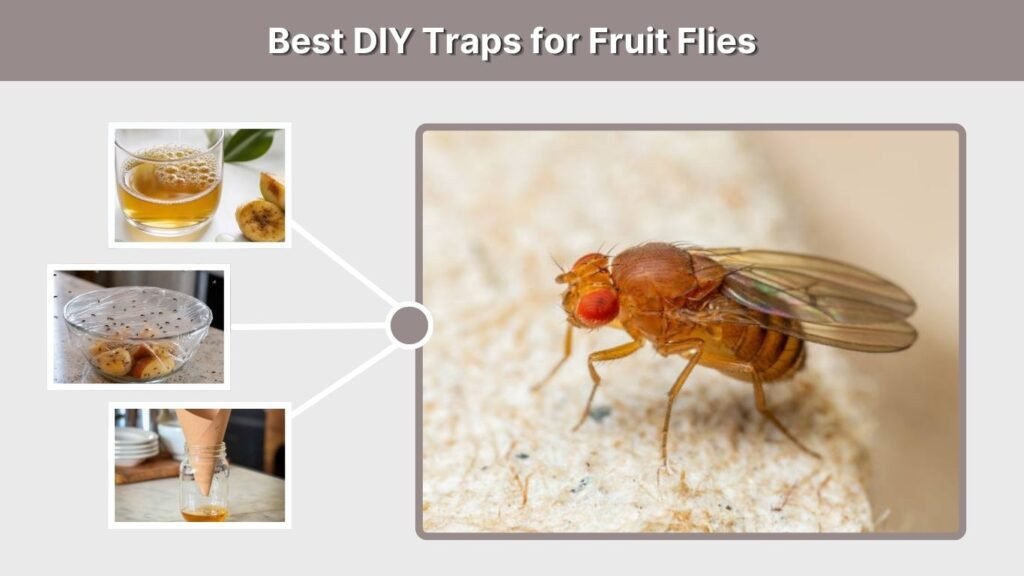
Traps help reduce the number of adult fruit flies while you remove their breeding sources. Place traps near sinks, garbage cans, fruit storage areas, and recycling containers.
Apple Cider Vinegar Trap
Pour a small amount of apple cider vinegar into a bowl or jar. Add one or two drops of liquid dish soap.
The fermented odor attracts fruit flies, while the dish soap makes it harder for them to remain on the liquid’s surface. Replace the mixture every day or two.
Fruit and Plastic-Wrap Trap
Place a piece of overripe banana inside a jar. Cover the opening tightly with plastic wrap and make several small holes.
Fruit flies enter through the holes to reach the bait but often struggle to escape. Empty and clean the trap regularly.
Paper Funnel Trap
Add vinegar, wine, or ripe fruit to a jar. Roll a piece of paper into a funnel and place the narrow end inside without letting it touch the bait.
The flies move through the funnel toward the bait and become trapped inside the container.
Can White Vinegar Be Used?
White vinegar may attract some fruit flies, but apple cider vinegar is usually more effective because its smell resembles fermenting fruit. You can improve a white vinegar trap by adding fruit juice or a small piece of ripe produce.
How to Get Rid of Fungus Gnats
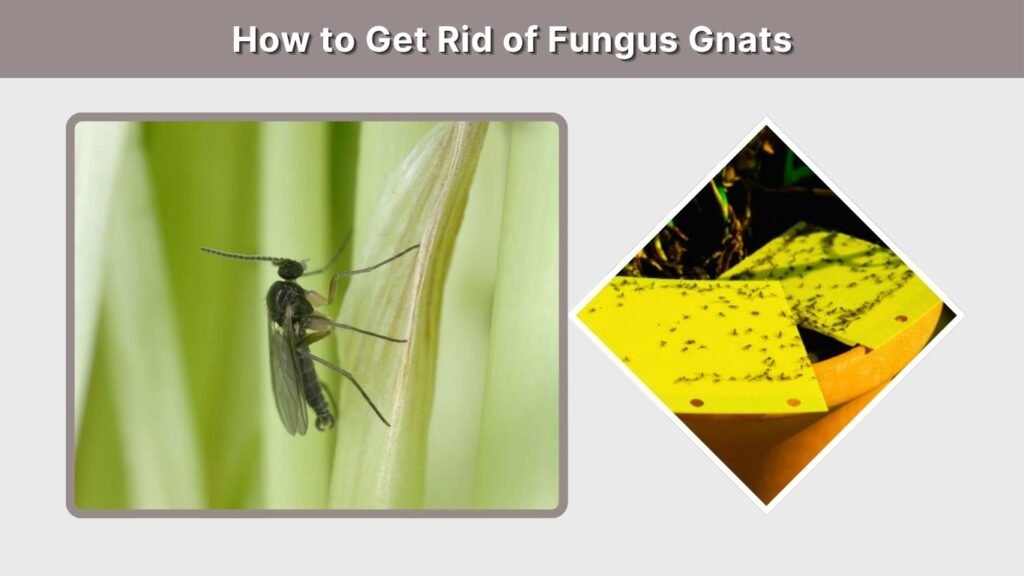
Vinegar traps may capture a few fungus gnats, but they will not eliminate the larvae living in plant soil. Fungus gnat control requires reducing soil moisture and treating the growing medium.
Allow the Soil to Dry
Fungus gnats prefer consistently damp potting soil. Allow the upper one or two inches of soil to dry before watering again, provided the plant can tolerate it.
Water plants only when necessary and empty drainage saucers. Avoid leaving standing water around pots.
Use Yellow Sticky Traps
Place yellow sticky cards close to the soil surface. Adult fungus gnats are attracted to the color and become trapped on the adhesive.
Sticky traps reduce the number of egg-laying adults and help reveal which plants are infested. However, they do not kill larvae already in the soil.
Remove Decaying Plant Material
Dead leaves, fallen flowers, algae, and decomposing roots provide food for fungus gnat larvae. Remove organic debris from the soil surface and clean around plant containers.
Check that pots have proper drainage holes. Replace severely compacted or contaminated potting soil when necessary.
Treat the Larvae
Products containing Bacillus thuringiensis israelensis, commonly called BTI, may be used according to label directions to control fungus gnat larvae.
Beneficial nematodes may also be used in plant soil. Always select a product labeled for the intended plant and indoor use, and follow all application instructions.
How to Get Rid of Gnats and Fruit Flies Naturally
Natural control works best when cleaning and moisture reduction are combined with nonchemical traps.
Use Soap and Water
A light mixture of water and dish soap can kill adult flies when sprayed directly. Avoid spraying food, electrical equipment, delicate plants, or surfaces that may become slippery.
Soap spray only kills the insects it contacts. It will not remove eggs and larvae hidden in soil, drains, or food residue.
Use a Vacuum Cleaner
A vacuum can quickly collect adult flies from windows, walls, plant areas, and kitchen surfaces. Use the hose attachment and empty the vacuum outdoors afterward.
This method provides immediate reduction but must be combined with source removal.
Improve Airflow Around Plants
Better airflow helps the soil surface dry more quickly. Space crowded plants apart, open curtains, and use gentle ventilation where appropriate.
Avoid directing strong airflow at delicate plants or allowing soil to become excessively dry.
How to Treat Flies Around Drains
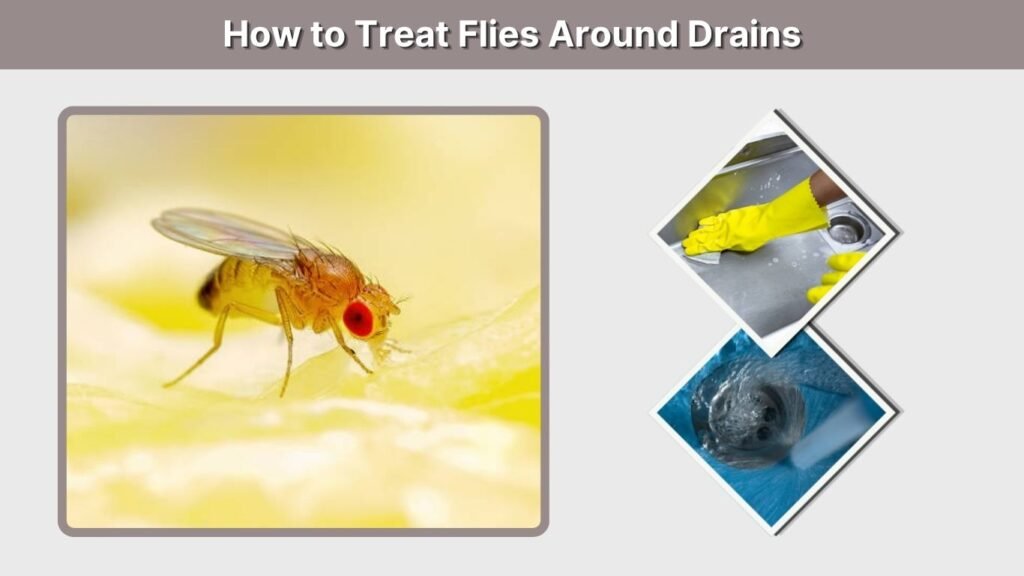
Fruit flies and drain flies may gather near sinks when food residue and organic film accumulate inside the pipes.
Scrub the Drain
Remove the stopper and scrub the drain opening, accessible pipe walls, garbage-disposal splash guard, and underside of the stopper with a long drain brush.
Physical scrubbing is important because pouring liquid into the drain may not remove the organic film where larvae develop.
Flush After Cleaning
After scrubbing, rinse the drain with hot water. An enzyme-based drain cleaner may help break down organic material when used according to its label.
Do not mix bleach with vinegar, ammonia, drain cleaner, or other household chemicals. These combinations can release dangerous gases.
Test the Drain
Place clear tape over part of the drain overnight with the sticky side facing downward. Leave a small opening for airflow.
Flies caught on the tape may indicate that the drain is a breeding location. Continue cleaning until activity stops.
How to Get Rid of Them Overnight
You may not eliminate every egg and larva in one night, but you can greatly reduce the infestation by taking several steps at once.
Before going to bed:
- Discard spoiled produce.
- Refrigerate ripe fruit.
- Empty and wash the garbage can.
- Rinse recycling containers.
- Wash dishes and wipe counters.
- Clean sink drains and garbage disposals.
- Set vinegar traps for fruit flies.
- Place sticky traps near infested plants.
- Allow damp potting soil to begin drying.
Repeat these actions for several days. New adults may appear after treatment because larvae were already developing.
Why Fruit Flies and Gnats Keep Coming Back
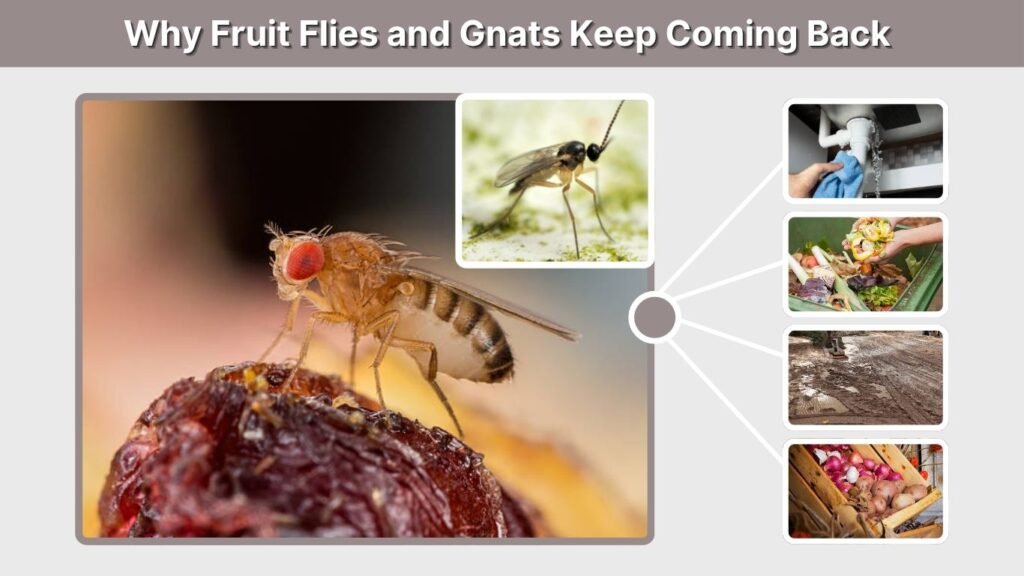
Persistent infestations usually indicate that a breeding source has been missed. Adult insects may also enter through doors, windows, damaged screens, or newly purchased produce and plants.
Hidden Sources to Check
Inspect the following areas:
- Beneath kitchen appliances
- Inside forgotten drink containers
- Under garbage-can liners
- Around leaking pipes
- Inside compost containers
- Beneath plant pots
- In damp potting soil
- Around dishwasher seals
- Inside garbage disposals
- Near stored potatoes and onions
Avoid Treating Only the Adults
Sprays and traps may kill adult flies, but they do not necessarily affect eggs or larvae. Long-term control requires cleaning fermenting material, drying plant soil, and removing buildup from drains.
How to Prevent Fruit Flies and Gnats
Keep produce refrigerated or covered, clean spills immediately, and empty food waste frequently. Rinse beverage containers before recycling and keep garbage cans dry.
For fungus gnats, avoid overwatering houseplants and use containers with proper drainage. Quarantine newly purchased plants briefly and inspect their soil before placing them beside other plants.
Regularly scrub drains and repair plumbing leaks. Screens should fit tightly around windows and doors to reduce insects entering from outdoors.
FAQs
What is the fastest way to get rid of gnats and fruit flies?
Remove spoiled produce, food waste, sticky spills, and standing water first. Set apple cider vinegar traps for fruit flies and yellow sticky cards for fungus gnats. Clean drains and allow plant soil to dry so the insects cannot continue breeding.
Can one vinegar trap kill both gnats and fruit flies?
Vinegar traps are most effective against fruit flies. They may catch a few other gnats, but fungus gnats usually require sticky traps and soil treatment. Identifying where the insects gather will help you choose the correct method.
Why are there gnats in my house without fruit?
The insects may be fungus gnats developing in houseplant soil or drain flies breeding inside plumbing. They may also be attracted to garbage, recycling, pet waste, damp cleaning tools, or a hidden food spill.
Will fruit flies and gnats disappear on their own?
They may disappear only after their breeding material dries out or is removed. As long as food residue, damp soil, drain buildup, or decaying organic matter remains available, the insects can continue reproducing.
When should I call pest control?
Consider professional help when the infestation continues after you have cleaned food sources, treated plant soil, and scrubbed drains. A technician may identify hidden plumbing problems, inaccessible organic buildup, or another small fly species requiring different treatment.