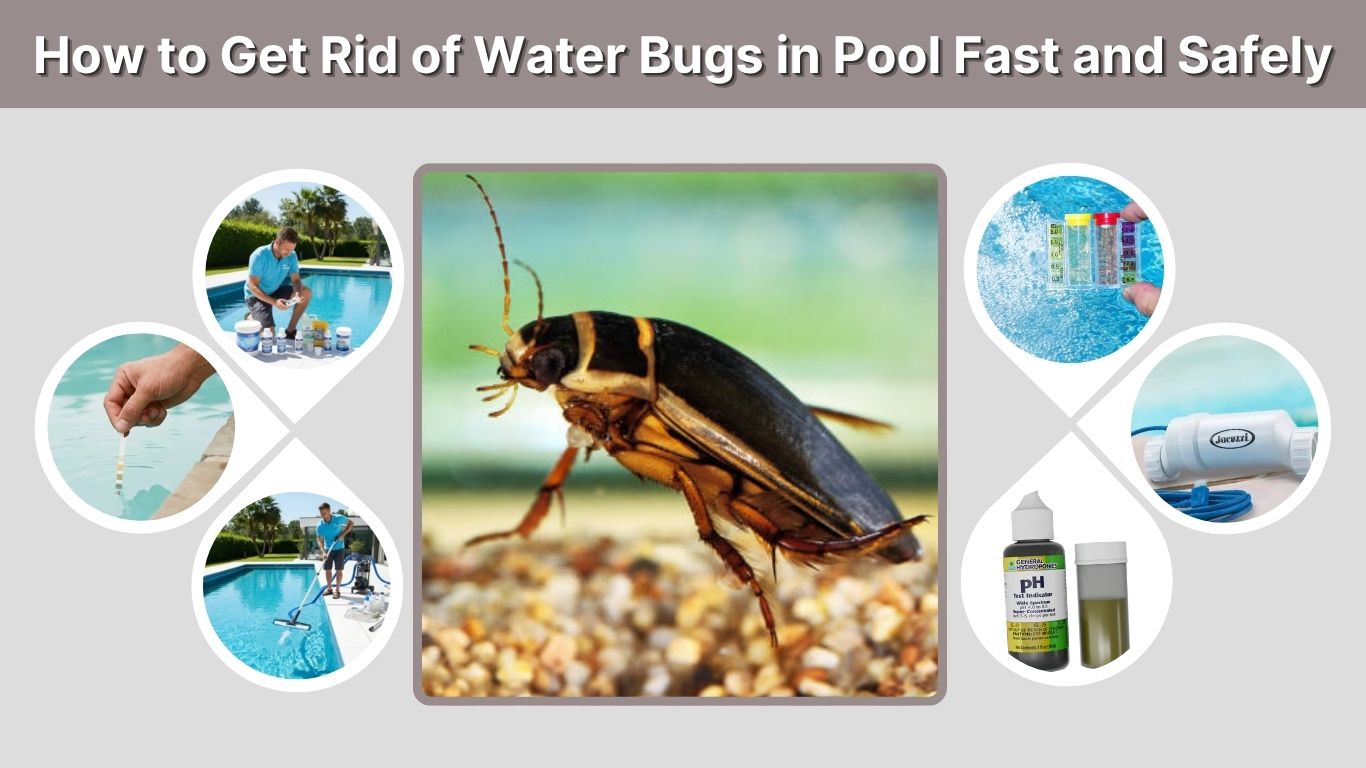
Water bugs in a pool usually appear when the water gives them food, shelter, or a place to breed. Some are harmless, while others can bite if touched. The best way to get rid of water bugs in pool water is to remove visible bugs, clean hidden algae, balance the chemicals, and prevent insects from returning. With the right steps, most pool bug problems can be controlled without using unsafe household pesticides.
What Are Water Bugs in a Pool?
Water bugs in a swimming pool are usually insects that naturally live near water, damp soil, or outdoor lights. They may fly, crawl, or fall into the pool and then stay if the water has algae, small insects, or organic debris.
The most common pool water bugs include water boatmen, backswimmers, giant water bugs, mosquito larvae, and tiny black insects. Water boatmen are often linked with algae because they feed on plant material. Backswimmers may appear when there are smaller insects to hunt. Giant water bugs are less common but can show up near outdoor lights or natural water sources.
Not every bug in pool water is dangerous. Many are just annoying. However, some aquatic bugs can bite, especially if someone grabs them or presses them against the skin. That is why identification and safe removal are important.
Common Signs of Pool Water Bugs
- Small bugs swimming under the water
- Insects floating near the pool surface
- Bugs gathering around pool lights at night
- Tiny black bugs near steps or pool edges
- Oval-shaped bugs moving with paddle-like legs
- Upside-down swimmers that look like small beetles
- Large brown bugs appearing after dark
- More bugs after rain, heat, or low chlorine
Why Do I Have Water Bugs in My Pool?
Water bugs usually enter a pool because something is attracting them. In most cases, the main reason is algae or other small insects already living in the water. Even if the pool looks clear, thin algae can grow on steps, ladders, corners, walls, or behind pool lights.
Outdoor pools are open environments, so bugs can easily fly or crawl in. They may come from nearby ponds, drains, wet grass, trees, garden beds, or standing water. Bright pool lights can also attract flying aquatic insects at night.
What Causes Water Bugs in Pools?
- Low chlorine or poor sanitizer level
- Algae growing on pool walls or steps
- Leaves, grass, pollen, or dirt in the water
- Standing water near the pool area
- Bright outdoor lights at night
- Poor filtration or weak circulation
- Overgrown plants close to the pool
- Uncovered pool water
- Nearby ponds, lakes, ditches, or wetlands
- Warm weather that increases insect activity
Water bugs do not usually appear for no reason. Their presence often means the pool needs deeper cleaning or better water balance.
How Do Water Bugs Get in Your Pool?
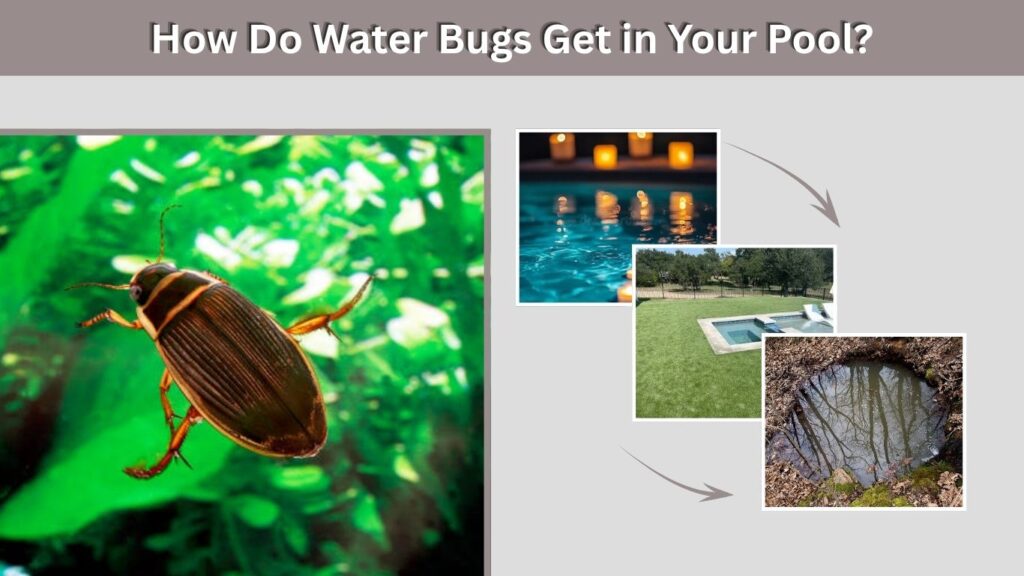
Water bugs can get into your pool in several ways. Some fly in at night because pool lights attract them. Others come from nearby water sources, wet soil, or garden areas. Wind can also blow small insects into the water.
Water boatmen and backswimmers are strong swimmers and may stay in the pool if they find food. Mosquito larvae appear when water becomes still or poorly treated. Tiny black bugs may come from mulch, grass, soil, plants, or damp surfaces around the pool.
Common Entry Points
- Flying into the pool at night
- Crawling from wet grass or garden beds
- Falling from nearby trees and plants
- Coming from ponds, drains, or puddles
- Entering through uncovered pool water
- Getting trapped after rain or wind
- Breeding in nearby standing water first
- Following smaller insects already in the pool
If you remove the bugs but ignore the cause, they may return within a few days.
How to Get Rid of Water Bugs in Pool Water
The best way to get rid of water bugs in a pool is to clean the pool thoroughly, remove algae, balance the water, and stop the food source. Simply scooping out the bugs is not enough if algae or small insects remain.
Start with physical removal, then treat the water. This method works for water boatmen, backswimmers, small black bugs, and many other swimming pool insects.
Step-by-Step Pool Bug Removal
- Skim the pool surface: Use a pool net to remove floating bugs, leaves, and debris.
- Remove bugs from the bottom: Vacuum the pool floor if dead bugs or dirt have settled.
- Brush all surfaces: Scrub walls, steps, corners, ladders, and tile lines.
- Check hidden areas: Look behind lights, around drains, and under pool steps.
- Test the water: Check chlorine, pH, alkalinity, and stabilizer levels.
- Shock the pool: Use pool shock according to the product label if algae or bugs are active.
- Run the pump: Keep the filtration system running to clear the water.
- Clean the filter: Backwash or rinse the filter after heavy cleaning.
- Repeat brushing: Brush again the next day if bugs or algae remain.
This process removes the bugs and also removes what attracts them.
What Kills Water Bugs in Pool Water?
Pool shock is one of the most common treatments used when water bugs are connected to algae or poor water balance. Chlorine shock can help kill algae and reduce small organisms that attract insects. However, it should be used correctly and only according to the product instructions.
Water bugs may die after proper shocking, but the real goal is to remove their food source. If algae stays in the pool, water boatmen can return. If smaller insects remain, backswimmers may return too.
| Method | What It Does | Best For |
| Pool net | Removes visible bugs | Immediate cleanup |
| Brushing | Removes hidden algae | Walls, steps, ladders |
| Vacuuming | Removes dirt and dead bugs | Pool floor |
| Pool shock | Kills algae and organic matter | Bug and algae control |
| Filter cleaning | Removes trapped debris | Better circulation |
| Pool cover | Blocks future bugs | Prevention |
Avoid using household bug spray, dish soap, bleach not approved for pools, or garden pesticides in swimming pool water. These products can irritate skin, damage equipment, and make the pool unsafe.
How to Kill Water Bugs in Pool Safely
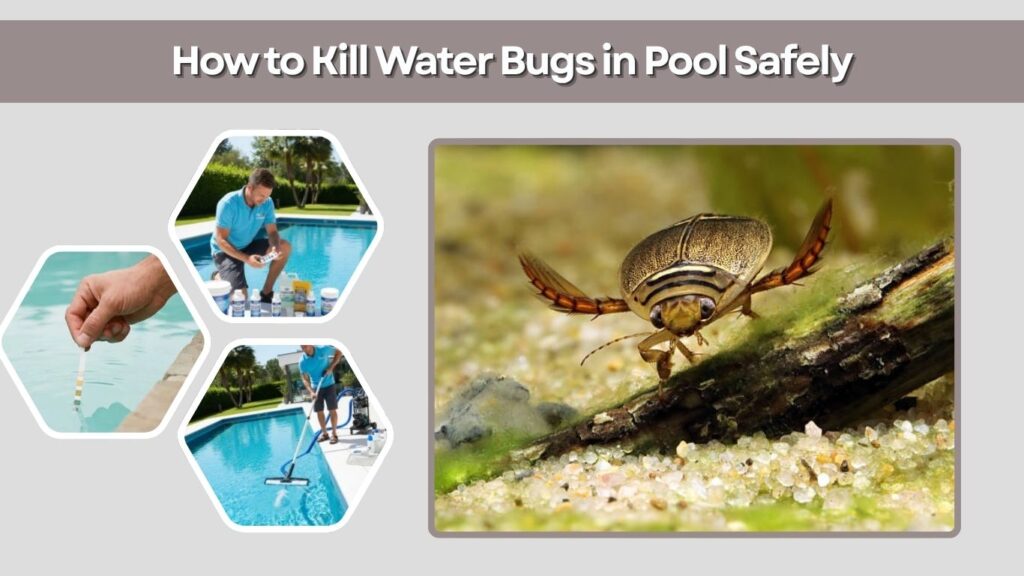
To kill water bugs safely, focus on pool-approved treatments. Do not pour insecticide into the pool. Pool water must remain safe for swimmers, pets, liners, filters, pumps, and other equipment.
Use a pool net first, then shock the pool if needed. After shocking, wait until the water is safe again before swimming. Always follow the chemical label and test the water before use.
Safe Treatment Tips
- Use only pool-approved chemicals.
- Follow the exact dosage on the label.
- Do not mix pool chemicals together.
- Keep children and pets away during treatment.
- Run the pump after shocking.
- Test chlorine before swimming again.
- Clean the filter after treatment.
- Store chemicals in a dry, safe place.
If the pool has heavy algae, bugs may not disappear after one treatment. You may need to brush, shock, filter, and vacuum more than once.
How to Get Rid of Water Boatmen Bugs in Pool
Water boatmen are common pool bugs because they feed on algae and organic material. They usually do not bite, but they can multiply quickly if the pool has enough food.
To remove water boatmen, clean the pool as if you are treating algae. Brush the walls, vacuum the floor, shock the pool, and keep chlorine at the correct level. Skimming alone may not solve the problem because more bugs can return if algae remains.
Water Boatmen Control Steps
- Skim out all visible bugs.
- Brush the entire pool surface.
- Vacuum dead bugs and debris.
- Shock the pool if algae is suspected.
- Clean the filter after treatment.
- Maintain chlorine daily.
- Remove leaves and grass quickly.
- Cover the pool when not in use.
Once the algae is gone, water boatmen usually leave or die off because the pool no longer supports them.
How to Get Rid of Backswimmer Water Bugs in Pool
Backswimmers are more concerning because they can bite. They often appear when there are other small insects in the pool. Unlike water boatmen, backswimmers are predators.
To remove backswimmers, you need to remove both the insects and their prey. Treating only the backswimmers may not work if water boatmen or mosquito larvae remain.
Use a net to remove them carefully. Do not pick them up with your fingers. Then clean, brush, vacuum, and balance the pool. If needed, shock the pool to reduce algae and smaller insects.
Do Water Bugs in Pool Bite?
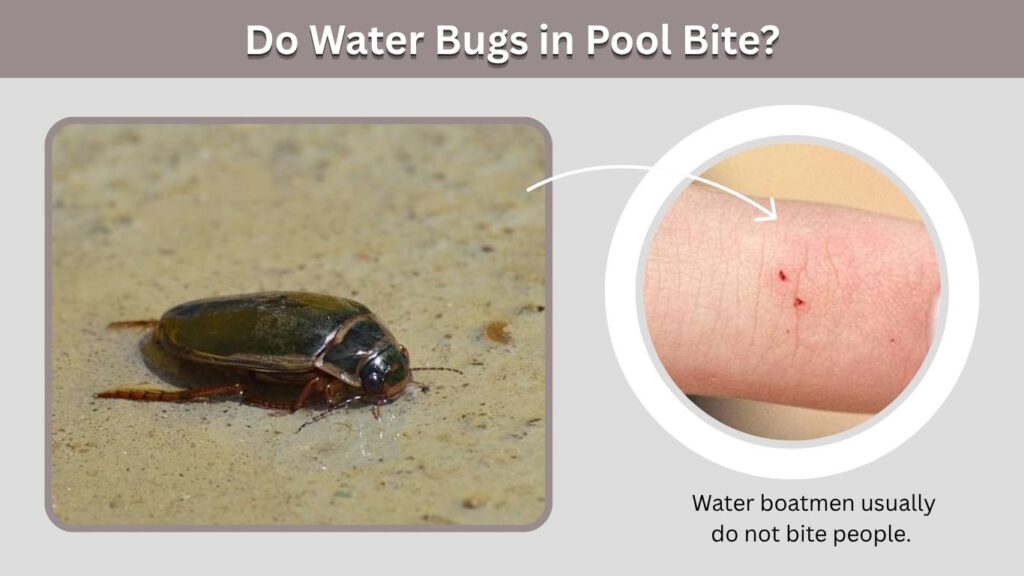
Some water bugs in pools can bite, but many do not. Water boatmen usually do not bite people. Backswimmers can bite and may cause a sharp sting. Giant water bugs can also bite and may cause more pain than smaller pool insects.
Most bites happen when someone touches the bug, grabs it, or accidentally traps it against the skin. Water bugs do not usually chase swimmers, but it is still best to remove them before using the pool.
What to Do If a Water Bug Bites
- Wash the area with soap and clean water.
- Apply a cold compress to reduce pain.
- Avoid scratching the bite.
- Watch for swelling or irritation.
- Seek medical help if symptoms are severe.
If someone has trouble breathing, dizziness, severe swelling, or signs of an allergic reaction, get medical care immediately.
Can Bed Bugs Live in Pool Water?
Bed bugs are not aquatic insects, so they do not live in pool water like water boatmen or backswimmers. They may fall into a pool accidentally, but they cannot survive long as swimming pool bugs.
If you see small bugs in the pool, they are more likely to be outdoor insects, springtails, beetles, gnats, mosquito larvae, or aquatic bugs. Bed bugs are usually found indoors near sleeping areas, furniture, luggage, or cracks in walls.
A swimming pool is not a normal bed bug habitat.
How to Prevent Water Bugs in Pool
Prevention is the most effective way to stop water bugs from returning. A clean, balanced, and well-circulated pool is much less attractive to insects.
The main goal is to remove food sources. That means controlling algae, clearing debris, and reducing other bugs around the pool area.
Pool Bug Prevention Checklist
- Keep chlorine balanced: Test the water often and adjust when needed.
- Brush weekly: Clean walls, steps, ladders, corners, and tile lines.
- Vacuum regularly: Remove dirt, dead insects, and debris from the floor.
- Run the pump daily: Good circulation helps prevent stagnant water.
- Clean the filter: A dirty filter can reduce water quality.
- Use a pool cover: Covering the pool blocks many flying and crawling insects.
- Turn off extra lights: Reduce night lighting when the pool is not in use.
- Remove standing water: Empty buckets, toys, pots, and birdbaths.
- Trim plants: Keep grass, shrubs, and tree branches away from the pool.
- Clean the deck: Remove leaves, food crumbs, and organic debris.
Prevention should continue even after the bugs are gone. If maintenance drops again, water bugs may come back.
How to Stop Water Bugs in Saltwater Pools
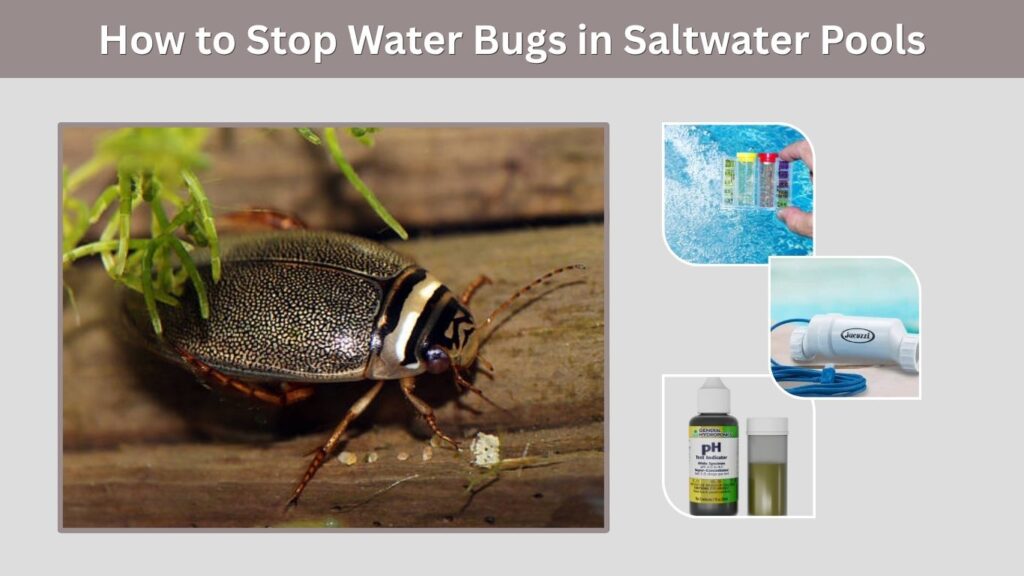
Saltwater pools can still get water bugs. A saltwater pool produces chlorine through a salt cell, but if the system is not working properly, sanitizer levels can drop. When chlorine is too low, algae and insects may appear.
To get rid of water bugs in a saltwater pool, test the water, check the salt level, inspect the salt cell, and clean the pool surfaces. You may also need to shock the pool with a product suitable for your system.
Saltwater Pool Care Tips
- Test free chlorine regularly.
- Check salt level and generator output.
- Clean the salt cell if it has buildup.
- Keep pH under control.
- Brush pool walls and steps weekly.
- Remove leaves and debris quickly.
- Run the pump long enough each day.
- Shock the pool if algae or bugs remain.
Saltwater does not automatically repel water bugs. Proper sanitation and cleaning are still necessary.
Why Water Bugs Keep Coming Back
Water bugs keep coming back when the pool still has algae, low chlorine, poor filtration, or nearby insect sources. Sometimes the water looks clean, but thin algae remains on rough surfaces, steps, ladders, and corners.
Outdoor conditions can also cause repeated problems. If your pool is near a pond, ditch, garden, or bright light, more bugs may arrive from outside. In that case, pool care and yard care should work together.
Common Reasons Bugs Return
- Algae was not fully removed.
- Chlorine drops too low overnight.
- The pool filter is dirty.
- The pump does not run long enough.
- Pool lights attract insects.
- Yard debris falls into the water.
- Standing water nearby breeds bugs.
- The pool is left uncovered for long periods.
For long-term control, treat both the pool and the surrounding area.
FAQs
How do I get rid of water bugs in my pool?
Skim out the bugs, brush the pool walls and steps, vacuum the floor, test the water, and shock the pool if algae is present. Clean the filter afterward and keep chlorine balanced. Removing algae and debris is the most important step because these attract many pool water bugs.
What kills water bugs in a swimming pool?
Pool shock can help kill algae and reduce the small organisms that attract water bugs. However, you should also skim, brush, vacuum, and clean the filter. Do not use household insect sprays or outdoor pesticides in pool water because they can make the pool unsafe for swimming.
Why are there water bugs in my pool?
Water bugs appear when your pool has algae, low chlorine, organic debris, or small insects they can feed on. They may also come from nearby ponds, drains, wet grass, or outdoor lights. Their presence often means the pool needs better cleaning, circulation, or chemical balance.
Do water bugs in pools bite?
Some water bugs can bite. Water boatmen usually do not bite, but backswimmers and giant water bugs can bite if touched or trapped against the skin. Their bites may feel sharp or painful, so remove them with a pool net instead of handling them with bare hands.
How can I prevent water bugs in my pool?
Keep chlorine balanced, brush the pool weekly, vacuum regularly, clean the filter, and use a pool cover when the pool is not in use. Also remove standing water nearby, reduce bright lights at night, trim plants, and keep leaves or grass out of the pool.