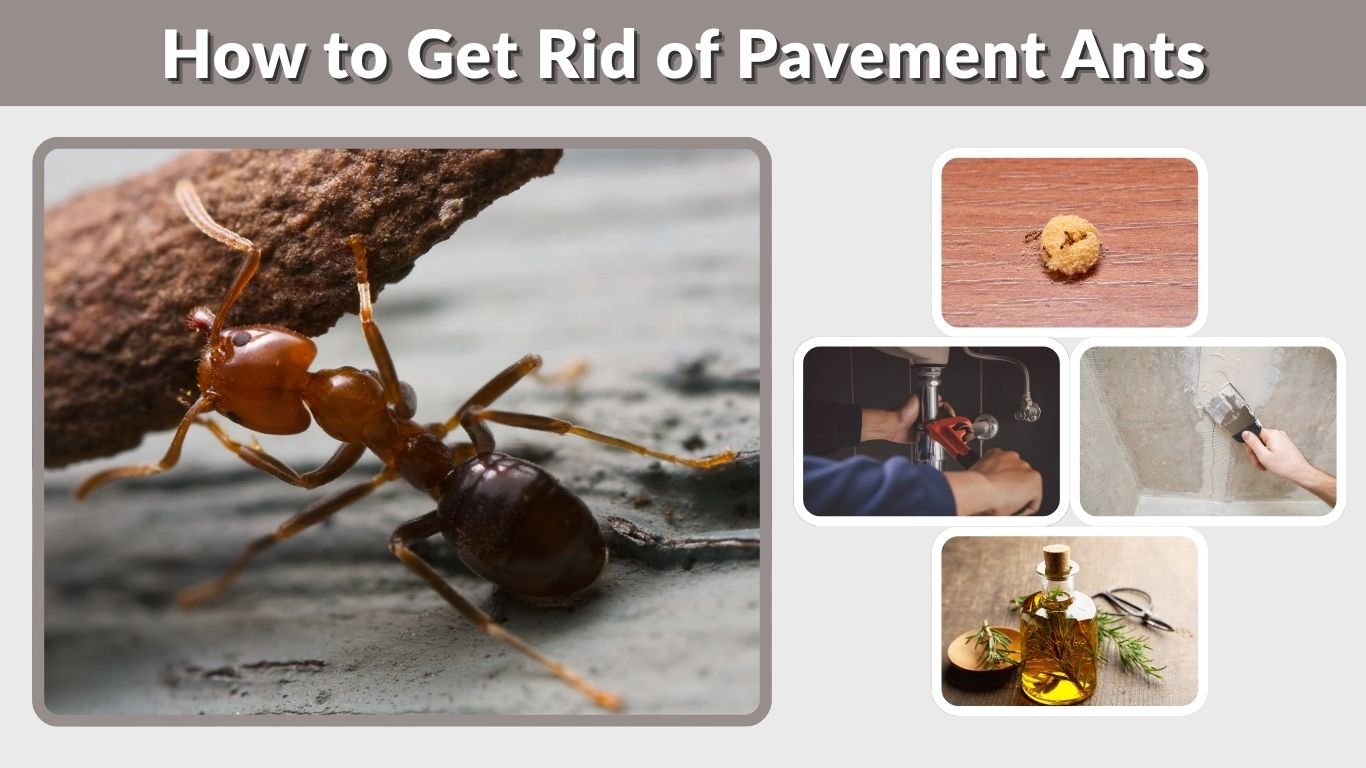
Pavement ants commonly build colonies beneath sidewalks, driveways, patios, concrete slabs, stones, and building foundations. From these hidden nests, workers may enter kitchens, basements, bathrooms, and wall spaces while searching for food and moisture. Killing the ants you see provides only temporary relief because most of the colony—including the queen—remains protected underground. The most effective approach combines baiting, sanitation, entry-point sealing, nest treatment, and regular outdoor maintenance.
How to Identify a Pavement Ant Problem
Correct identification matters because different ants may require different control methods. Pavement ants are small, usually brown to nearly black, and commonly travel in noticeable trails along concrete edges, walls, pipes, and baseboards.
Common Signs of Pavement Ants
Look for the following evidence:
- Trails of tiny brown or black ants
- Small piles of soil or sand beside pavement cracks
- Ants emerging from gaps around foundations
- Activity beneath patio stones or concrete slabs
- Ants around greasy, sugary, or protein-rich foods
- Winged ants appearing indoors during a swarm
Pavement ants frequently enter buildings through cracks in foundation walls and concrete slabs. They may remain active indoors throughout the year and can become particularly noticeable during winter.
Where Pavement Ants Usually Nest
Their colonies are commonly located beneath:
- Sidewalks and driveways
- Patios and paving stones
- Concrete foundations
- Garage floors
- Basement slabs
- Landscape rocks
- Pool decking
- Cracks beside curbs
Indoor activity does not always mean the main colony is inside the house. Workers often travel indoors from an outdoor nest to find food or water.
How to Get Rid of Pavement Ants in the House
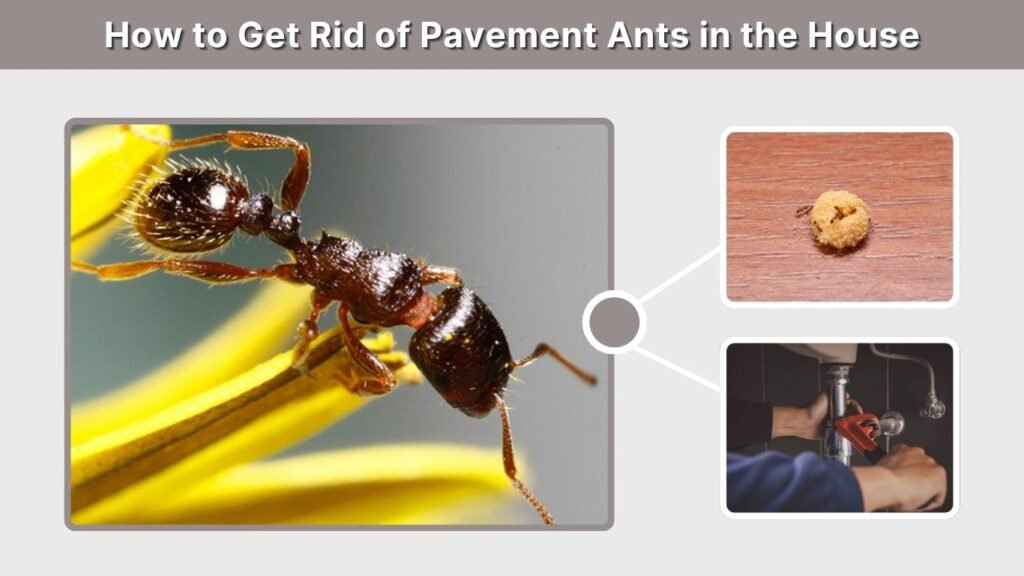
The best indoor strategy is to let worker ants carry a slow-acting bait into the colony. Spraying every visible ant may reduce activity briefly, but it rarely reaches the queen or the thousands of workers remaining in the nest.
1. Follow the Ant Trail
Watch the ants for several minutes to determine where they are entering. Common entry points include gaps around pipes, foundation cracks, window frames, doors, baseboards, and electrical outlets.
Do not immediately wipe away every trail. Observing the ants can help you locate their nest, entry point, or main feeding area. Ants follow chemical trails between food and the colony, so their movements often reveal where treatment should be placed.
2. Place Ant Bait Near Active Trails
Use enclosed liquid, gel, or bait-station products labeled for household ants. Place them close to trails, beneath appliances, beside baseboards, or near cracks where ants appear.
Worker ants consume the bait and share it with other colony members. Because bait acts slowly, increased ant activity around it during the first few days can be normal. Depending on the colony and bait, control may require several weeks.
Avoid spraying insecticide, strong cleaner, or repellent directly around the bait. These products may kill or repel workers before they can transport the bait back to the nest.
3. Remove Competing Food and Water
Make the bait the ants’ most attractive food source by cleaning the surrounding area.
- Wipe grease and crumbs from counters
- Store sugar, cereal, and snacks in sealed containers
- Rinse food containers before recycling
- Empty garbage regularly
- Clean beneath stoves and refrigerators
- Do not leave pet food out overnight
- Repair dripping faucets and leaking pipes
Removing food, water, and shelter makes indoor baiting more effective and reduces future pest activity.
Pavement Ants in the Kitchen
Clean around sinks, cabinets, trash cans, dishwashers, and food-storage areas. Place bait beside trails but away from exposed food and food-preparation surfaces. Keep every bait station where children and pets cannot reach it.
Do not spray countertops or entire rooms. Pesticides should be used only in locations allowed by the product label, and targeted treatments are generally preferable to widespread indoor spraying.
Pavement Ants in Basements and Walls
Inspect foundation seams, utility openings, floor cracks, and gaps around plumbing. Use labeled bait near active routes. After the colony activity declines, seal accessible openings with caulk or another suitable material.
Ants repeatedly emerging from wall outlets, heating ducts, or inaccessible slab areas may require professional treatment. Never inject an unlabeled pesticide into an electrical outlet or wall.
How to Get Rid of Pavement Ants Outside
Outdoor control should focus on locating the colonies and preventing workers from entering the building.
1. Locate the Outdoor Nest
Follow trails toward pavement cracks, foundation edges, patio joints, or piles of excavated soil. Check during mild weather when ants are actively foraging.
Treating a confirmed nest is generally more effective than spraying random sections of pavement because it targets the source of the infestation.
2. Use Outdoor Ant Bait
Place weather-resistant bait stations near trails, nest entrances, foundation edges, and places where ants enter the house. Use only products labeled for outdoor use and follow the required placement instructions.
Protect bait from rain, irrigation, pets, children, and non-target wildlife. Replace it when it becomes empty, contaminated, or dried out.
3. Treat a Confirmed Nest When Necessary
A pesticide labeled for direct ant-nest treatment may be applied according to its instructions. Some outdoor products are granules, dusts, liquids, or ready-to-use treatments.
The treatment must reach the nesting area to work well. Surface spraying alone may kill exposed workers without eliminating the underground colony. Outdoor nest treatments sometimes need to be repeated if activity resumes.
Never pour gasoline, bleach, kerosene, or other hazardous chemicals into an ant nest. Do not use an outdoor pesticide inside the house, apply more than the label directs, or transfer pesticides into food and drink containers.
How to Get Rid of Pavement Ants Naturally
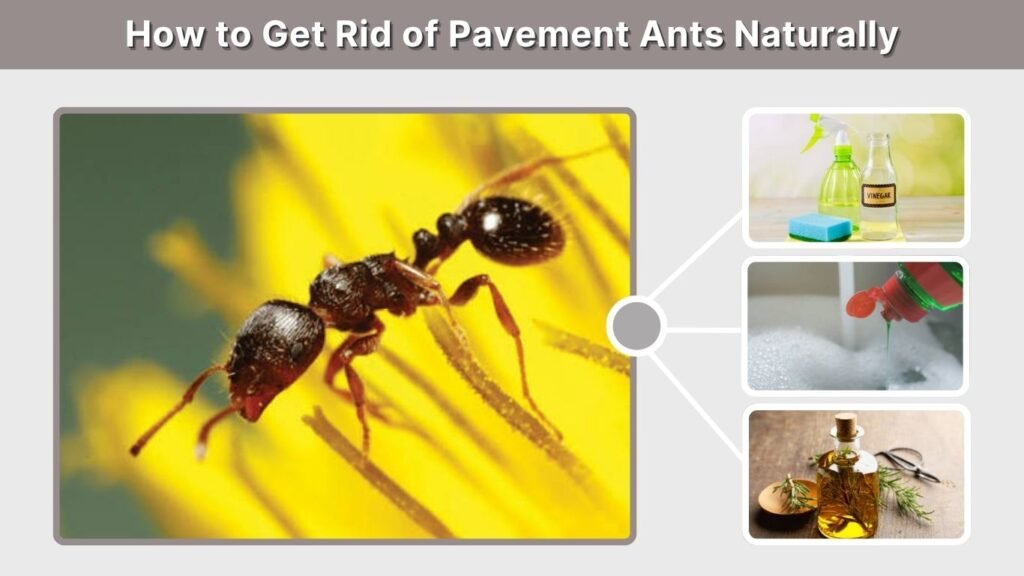
Natural methods can reduce visible ants and remove attractants, but they may not eliminate a large underground colony.
Soap and Water
Wiping ants with soapy water kills exposed workers and removes some of their chemical trail. This is useful for immediate cleanup but does not normally destroy the nest.
Vinegar and Water
A mild vinegar-and-water solution can be used on suitable washable surfaces to temporarily disrupt trails. Test it on a hidden area first because vinegar may damage natural stone, grout, waxed floors, or certain finishes. Trail wiping alone does not kill the colony.
Food-Grade Diatomaceous Earth
A product specifically labeled for insect control may be applied in dry, protected cracks according to its directions. Avoid breathing the dust, creating airborne clouds, or applying it where children and pets will disturb it. Do not use pool-grade diatomaceous earth.
Are Essential Oils Effective?
Peppermint, cinnamon, citrus, and similar scented products may temporarily repel a few workers, but they are unreliable for eliminating established colonies. Strong repellents may also redirect ants to another entrance rather than solving the infestation. University guidance does not consider herbs or essential oils dependable nest-eradication methods.
How to Keep Pavement Ants Away Permanently
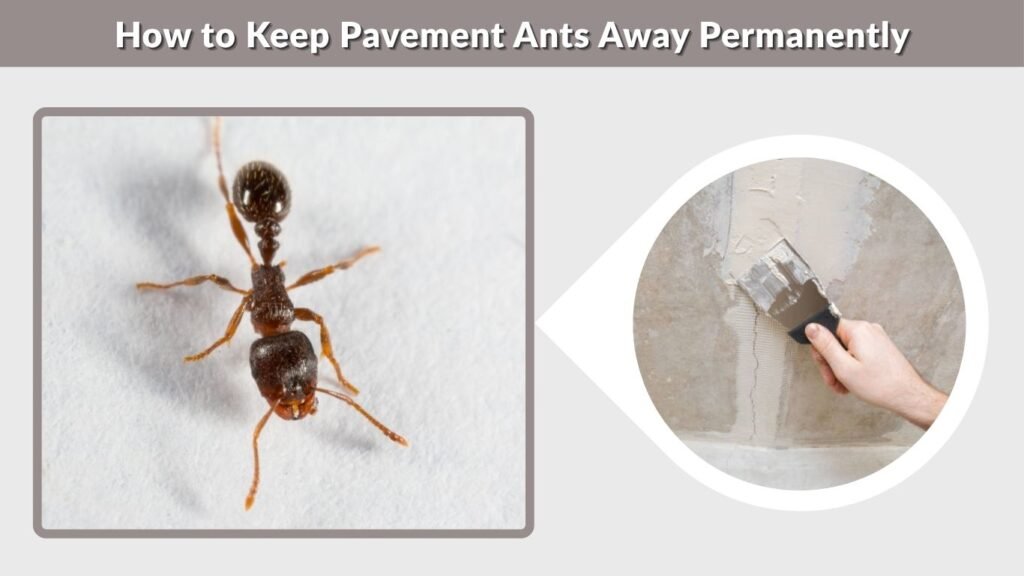
No single treatment can guarantee that pavement ants will never return. Nearby colonies can expand, relocate, or reinvade treated areas. Long-term prevention requires removing access, food, moisture, and favorable nesting sites.
Seal Entry Points
Once baiting has reduced activity, seal:
- Foundation cracks
- Gaps around utility lines
- Openings around windows and doors
- Cracks along baseboards
- Spaces around plumbing
- Damaged mortar and concrete joints
Sealing too early can cause active ants to find a different route, so reduce the colony before closing the main entry point.
Maintain the Area Around the Foundation
Move firewood, boards, stones, leaf litter, and unnecessary debris away from the house. Trim branches touching the building and avoid keeping thick mulch directly against the foundation. These changes remove shelter and easy access routes.
Repair Pavement Cracks
Repair damaged driveway joints, patio gaps, foundation openings, and spaces between paving blocks when practical. Although ants can still nest beneath intact surfaces, closing obvious openings makes colonies less likely to appear in high-traffic areas.
Control Moisture
Repair outdoor leaks, improve drainage, clean gutters, and avoid constantly wet soil beside the foundation. Indoors, address plumbing leaks and condensation in kitchens, bathrooms, crawl spaces, and basements.
Pavement Ants Around Pools and Gardens
Use extra care near swimming pools, ponds, vegetable beds, flowering plants, and storm drains. Choose only products whose labels specifically permit use in that location.
Around a pool, focus on bait stations positioned away from the water, trail cleanup, joint repair, and removal of food and drink spills. Never allow pesticide granules, dust, or liquid treatments to enter pool water.
In gardens, tolerate colonies that are not entering the house or interfering with plants. When control is necessary, use targeted baiting or a labeled nest treatment rather than applying pesticide across the entire garden.
Common Mistakes to Avoid
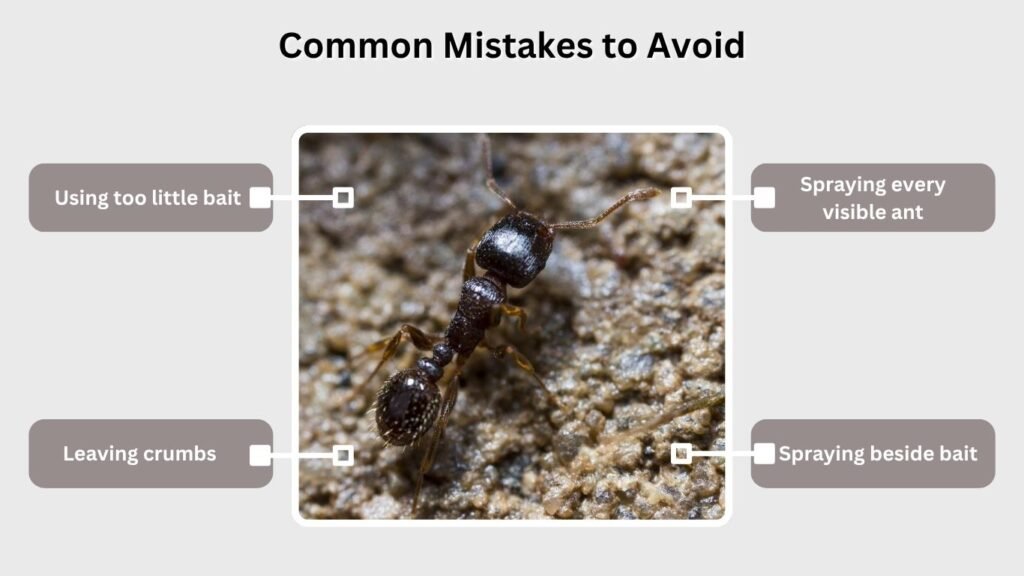
| Mistake | Why It Fails |
| Spraying every visible ant | Most colony members remain inside the nest |
| Spraying beside bait | Workers may avoid or die before carrying bait home |
| Using too little bait | Large or multiple colonies may remain active |
| Leaving crumbs and grease nearby | Ants may ignore the bait |
| Sealing trails before control | Ants may create new indoor routes |
| Flooding the nest with water | The colony may survive or relocate |
| Using outdoor pesticide indoors | It may create unnecessary exposure and violate the label |
FAQs
How long does it take to get rid of pavement ants?
A small infestation may decline within several days, but eliminating a colony with bait can take a few weeks or longer. Continue supplying fresh bait while ants are feeding and avoid spraying around it. Multiple nests can extend the treatment period.
What is the best bait for pavement ants?
The best bait is a slow-acting product that the workers are actively accepting and that is labeled for the treatment location. Because ant food preferences can change, trying both sweet liquid bait and protein- or grease-based bait may improve results.
Why do pavement ants keep coming back?
They may return because the main colony survived, multiple colonies are present, food and water remain available, or entry cracks were not sealed. Treating only visible workers provides temporary control without removing the source.
Do pavement ants cause structural damage?
Pavement ants are primarily nuisance pests. They do not consume wood like termites. However, colonies can excavate soil beneath slabs, create small sand piles, contaminate food, and repeatedly enter buildings through cracks.
When should I call a pest-control professional?
Contact a licensed professional when ants repeatedly emerge from walls or slab cracks, several colonies are present, the nest cannot be located, or careful baiting has not reduced activity. Professional help is also appropriate when treatments would be needed near electrical systems, water, or inaccessible structural spaces.