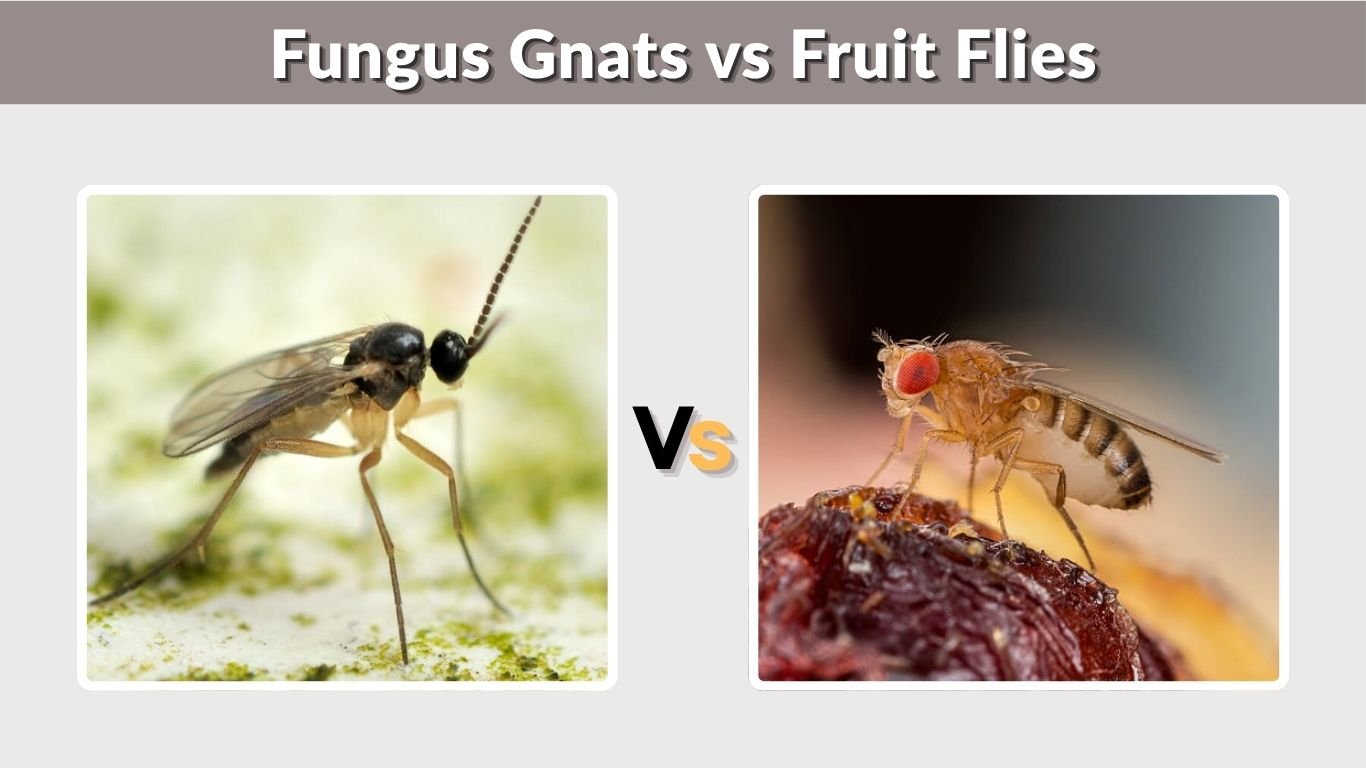
Fungus gnats and fruit flies are tiny flying insects commonly found inside homes. Although they may look similar at first, they live, feed, and reproduce in different places. Fungus gnats usually develop in damp houseplant soil, while fruit flies gather around overripe produce, garbage, and fermenting liquids. Correct identification is essential because a vinegar trap that works for fruit flies may not eliminate fungus gnat larvae living underground.
Fungus Gnats vs Fruit Flies: Quick Comparison
The easiest way to distinguish these pests is to examine their appearance and where they spend most of their time. Fungus gnats resemble tiny mosquitoes, while fruit flies have rounder bodies and are generally found in kitchens.
| Feature | Fungus Gnat | Fruit Fly |
| Size | About 1/16–1/8 inch | About 1/8 inch |
| Body shape | Slender and mosquito-like | Short and rounded |
| Color | Gray, dark brown, or black | Tan, brown, or yellowish |
| Eyes | Small and dark | Often bright red |
| Antennae | Long and noticeable | Short |
| Common location | Houseplant soil | Kitchens and fruit bowls |
| Larval habitat | Moist potting soil | Fermenting organic matter |
Fungus Gnat Identification
Fungus gnats have thin bodies, long legs, transparent wings, and long antennae. Adults often crawl across potting soil or fly weakly around plants.
Important identification features include:
- Dark gray or black body
- Long, delicate legs
- Slender mosquito-like appearance
- Long, threadlike antennae
- Clear or smoky wings
- Weak, irregular flight
- Frequent activity near houseplants
Fruit Fly Identification
Fruit flies have compact, rounded bodies and relatively short legs. Many common species have red eyes, although some may have darker eyes.
They are commonly recognized by:
- Tan, yellowish, or light-brown body
- Round abdomen
- Short antennae
- Prominent red or dark eyes
- Faster, more direct flight
- Activity around food, drinks, and garbage
Where Do Fungus Gnats and Fruit Flies Come From?
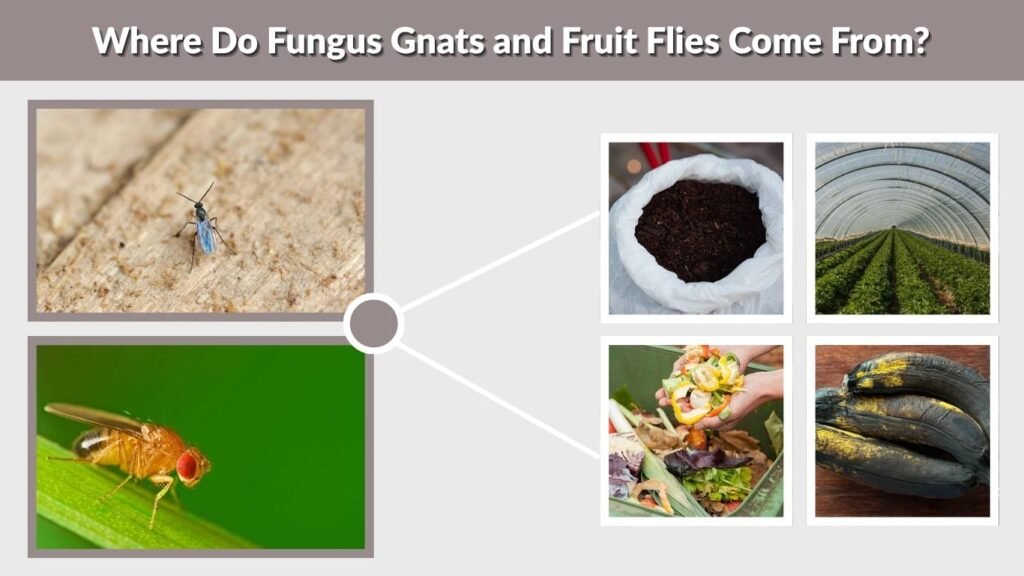
These insects enter homes through open doors, windows, produce, plants, or contaminated materials. Once inside, they reproduce wherever suitable moisture and food are available.
Where Fungus Gnats Breed
Fungus gnat females lay eggs in damp, organic-rich potting soil. Their larvae feed on fungi, algae, decaying roots, and other organic matter.
Common breeding areas include:
- Overwatered houseplants
- Seed-starting trays
- Damp potting mix
- Plant drainage saucers
- Bags of moist soil
- Greenhouses
- Terrariums
- Decaying plant material
Adult fungus gnats may also appear around windows because they are attracted to light. However, the main infestation usually remains connected to moist soil.
Where Fruit Flies Breed
Fruit flies reproduce in fermenting or decaying organic material. They may enter the home on produce or follow food odors through doors and windows.
Common breeding sources include:
- Overripe bananas and peaches
- Rotting tomatoes or melons
- Potatoes and onions
- Fruit juice and soda residue
- Beer and wine bottles
- Garbage and compost containers
- Recycling bins
- Food buildup in drains
- Sticky spills beneath appliances
Fungus Gnat Larvae vs Fruit Fly Larvae
The larvae of both insects are small and pale, but they develop in different materials. Finding the larvae can help confirm which pest is present.
| Characteristic | Fungus Gnat Larvae | Fruit Fly Larvae |
| Appearance | Clear or white with a black head | Cream-colored and maggot-like |
| Location | Beneath damp soil | Inside fermenting food |
| Main food | Fungi and decaying roots | Yeast and decomposing material |
| Plant damage | Possible | Unlikely |
| Movement | Crawls through soil | Crawls through wet food residue |
Can Fungus Gnat Larvae Harm Plants?
A small number of larvae usually cause limited damage. However, large populations may feed on tender roots, seedlings, and organic material around the roots.
Affected plants may display:
- Slow growth
- Yellowing leaves
- Wilting despite moist soil
- Weak seedlings
- Root damage
- Increased risk of fungal disease
Young plants, cuttings, and seedlings are generally more vulnerable than mature plants.
Can Fruit Fly Larvae Harm Plants?
Fruit fly larvae do not normally attack healthy plant roots. They feed mainly on yeast and microorganisms found in fermenting fruit, food waste, and liquid residue.
Fruit flies around a plant may be attracted to fallen fruit, compost, or decaying material rather than the living plant itself.
Fungus Gnats vs Fruit Flies vs Drain Flies
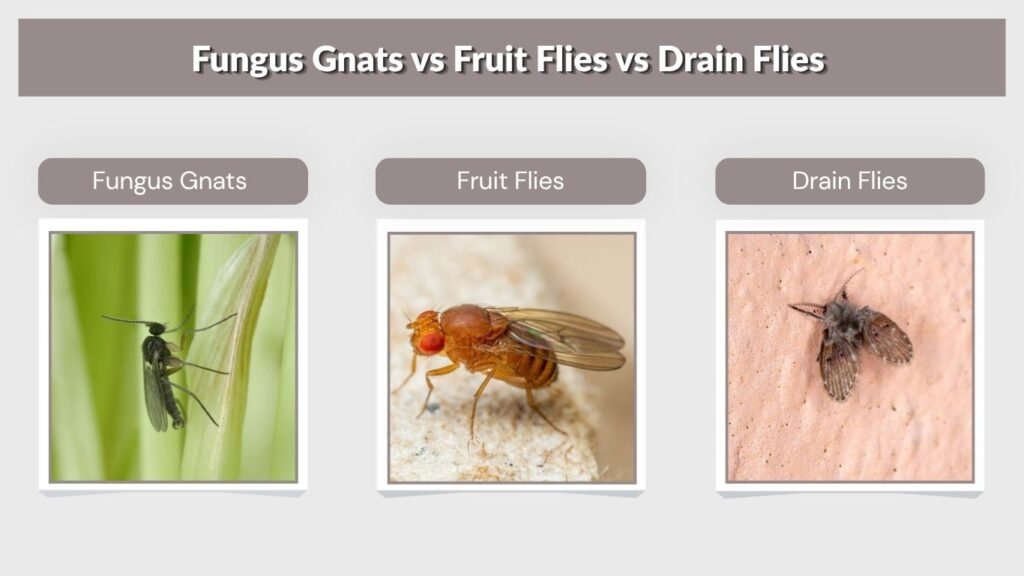
Drain flies are another small indoor fly frequently confused with fungus gnats and fruit flies. They develop in the organic film that accumulates inside drains.
| Feature | Fungus Gnat | Fruit Fly | Drain Fly |
| Shape | Slender | Rounded | Fuzzy and moth-like |
| Main source | Plant soil | Fermenting food | Drain buildup |
| Flight | Weak and slow | Quick and active | Short, hopping flight |
| Common resting area | Plant pots and windows | Counters and cabinets | Walls near drains |
| Best trap | Yellow sticky trap | Vinegar trap | Drain tape test |
Drain flies have broad, hairy wings that create a fuzzy appearance. They often remain close to sinks, showers, floor drains, and sewage lines.
How to Test Which Fly You Have
Before choosing a treatment, determine where the insects are most active. Their location usually provides the strongest clue.
Test Houseplant Soil
Gently tap or move each plant pot. If dark, slender flies rise from the soil, fungus gnats are likely present.
You can also place a yellow sticky card horizontally above the soil. Numerous dark, mosquito-like insects on the card indicate fungus gnat activity.
Another option is to place a raw potato slice on the soil. Fungus gnat larvae may gather beneath it after a day or two.
Test for Fruit Flies
Place a small bowl containing apple cider vinegar and one drop of dish soap near the suspected area. Fruit flies are strongly attracted to the fermented odor.
If round, tan flies collect in the trap, the infestation probably comes from produce, garbage, recycling, or another fermenting material.
Test the Drain
Cover part of a suspected drain with clear tape, placing the sticky side downward. Leave a small opening for airflow and check the tape the following morning.
Fuzzy insects trapped near the drain are more likely to be drain flies. Fruit flies may also breed in drains containing food residue, particularly in kitchens.
How to Get Rid of Fungus Gnats
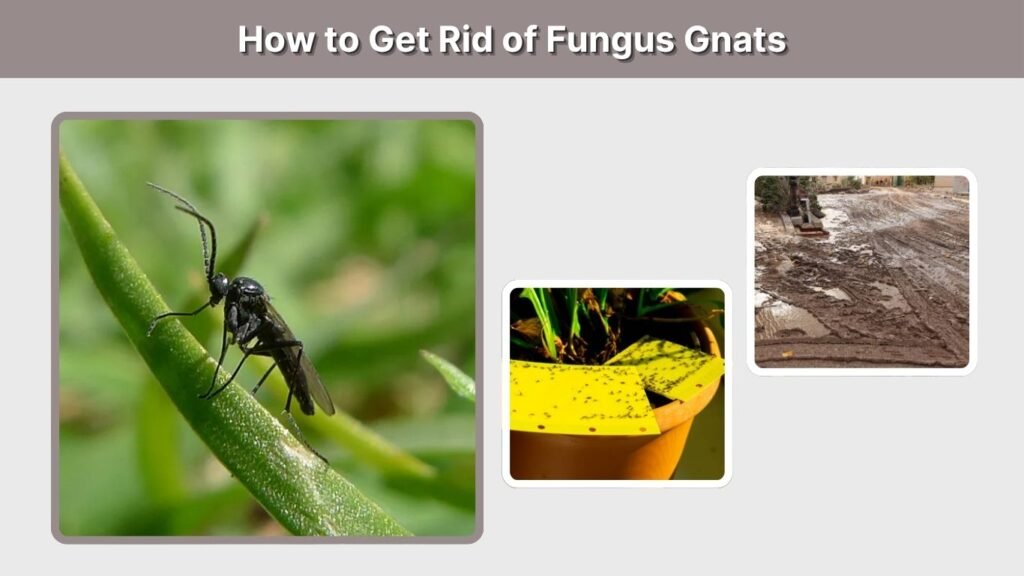
Fungus gnat control must target both the flying adults and the larvae developing in soil. Trapping adults alone will not stop the infestation.
Allow the Soil to Dry
Let the top one or two inches of potting soil dry before watering again, provided the plant can tolerate drier conditions. Fungus gnat eggs and larvae need consistently moist soil.
Avoid watering on a fixed schedule. Check the soil first and empty excess water from plant saucers.
Use Yellow Sticky Traps
Place yellow sticky cards close to the soil surface. The traps capture adults before they can lay additional eggs.
Replace the cards when they become covered with insects or dust. Sticky traps also help identify which plants have the largest infestations.
Treat the Larvae
A product containing Bacillus thuringiensis israelensis, or BTI, may help control fungus gnat larvae when applied according to label directions.
Beneficial nematodes can also be introduced into potting soil. They attack developing larvae without relying on conventional insecticides.
Clean the Plant Area
Remove fallen leaves, dead flowers, algae, and decaying plant material. Confirm that each container has working drainage holes.
Severely infested plants may need to be repotted in clean, well-draining soil. Wash the container before reusing it.
How to Get Rid of Fruit Flies
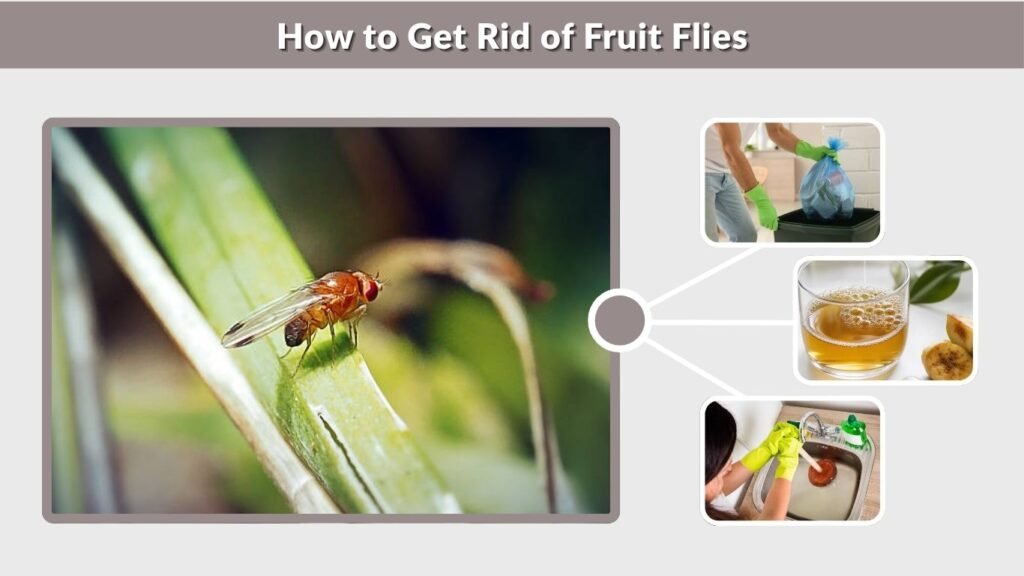
Fruit fly control depends on finding and removing the fermenting material supporting their reproduction. Traps should be used as a secondary measure.
Remove the Breeding Source
Discard overripe produce and inspect cabinets for forgotten potatoes or onions. Refrigerate ripe fruit and clean all food-storage containers.
Empty garbage, compost, and recycling bins. Wash the containers thoroughly to remove spilled liquid and food residue.
Make a Vinegar Trap
Pour apple cider vinegar into a small jar and add one or two drops of dish soap. The vinegar attracts fruit flies, and the soap prevents them from remaining on the surface.
Place several traps near active areas and refresh the bait regularly. White vinegar may work, but apple cider vinegar is generally more attractive.
Clean Drains and Garbage Disposals
Scrub the drain opening, stopper, pipe walls, and garbage-disposal splash guard with a long-handled brush. Simply pouring hot water or bleach into the drain may not remove the organic film where larvae develop.
Never mix bleach with vinegar, ammonia, drain cleaner, or other cleaning chemicals.
Do Fungus Gnat and Fruit Fly Traps Work the Same Way?
No. Fruit flies are attracted to fermenting liquid, making vinegar traps effective. Fungus gnats are more attracted to moist soil and yellow surfaces.
Use apple cider vinegar traps for fruit flies and yellow sticky cards for adult fungus gnats. Soil drying and larval treatments are necessary to control fungus gnats completely.
Are Fungus Gnats or Fruit Flies Dangerous?
Neither insect normally bites humans. Their main effects are annoyance, sanitation concerns, and possible plant damage.
Fruit flies may move microorganisms from garbage or decaying material onto food and kitchen surfaces. Fungus gnats are mainly a concern for plants, particularly when larvae become numerous around delicate roots.
FAQs
Are fungus gnats bigger than fruit flies?
Fungus gnats and fruit flies are similar in size, but fungus gnats often appear longer because of their slender bodies and long legs. Fruit flies look more compact, rounded, and robust.
Do fungus gnats have red eyes?
Fungus gnats generally have small, dark eyes. Bright red eyes are more commonly associated with fruit flies, although eye color should be considered with body shape, location, and behavior.
Will apple cider vinegar kill fungus gnats?
Apple cider vinegar may catch a few adult fungus gnats, but it is much more effective against fruit flies. Yellow sticky traps, reduced watering, and soil treatments are better choices for fungus gnats.
Why are tiny flies coming from my plants?
Tiny, dark flies emerging from plant soil are probably fungus gnats. They commonly develop when potting soil remains damp for long periods or contains abundant decaying organic material.
Can fungus gnats and fruit flies live together?
Yes. A home can have fungus gnats around overwatered plants and fruit flies around produce or garbage at the same time. Each infestation must be treated according to its separate breeding source.