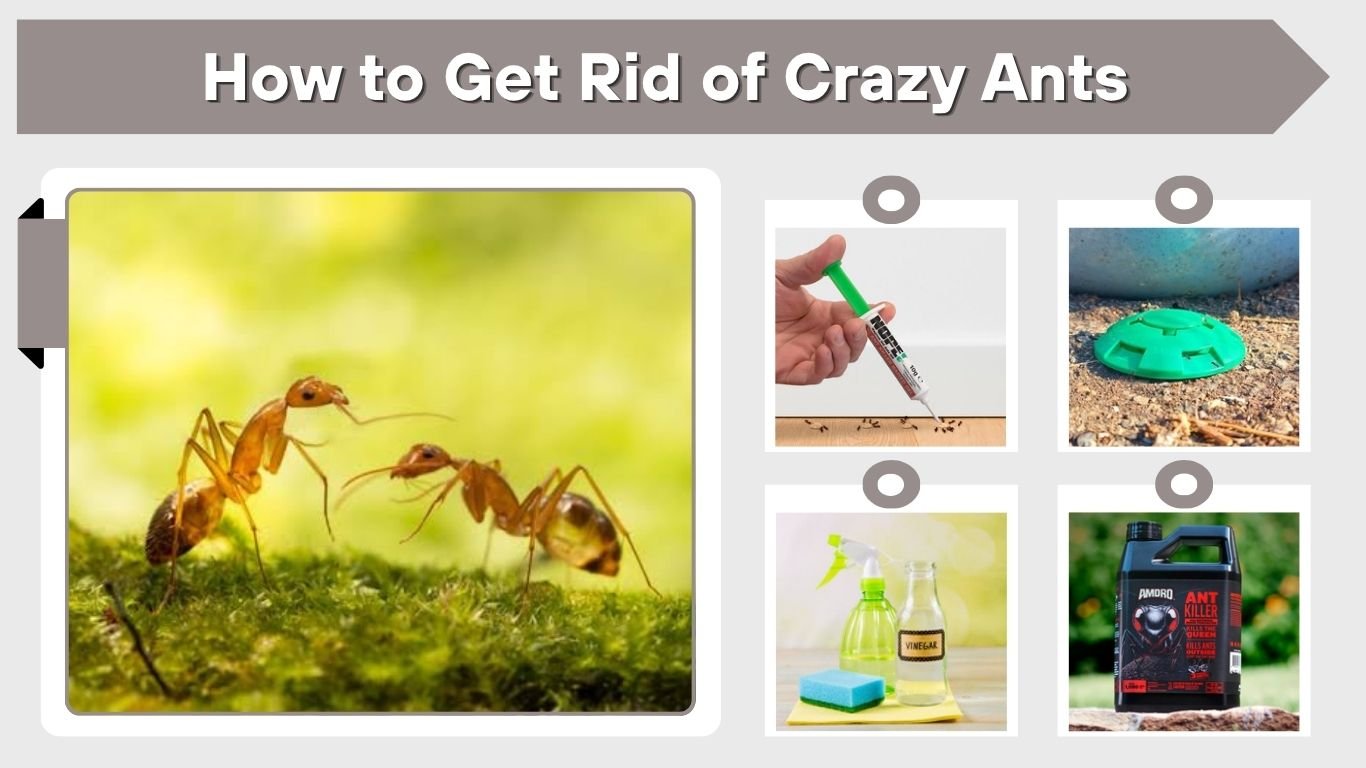
Crazy ants can quickly become one of the most frustrating pests around a home. They move rapidly, form large colonies, invade kitchens and electrical equipment, and often return after ordinary ant sprays are used. Unlike ants that follow neat trails, crazy ants run in irregular directions, making their nesting areas difficult to locate. Learning how to get rid of crazy ants requires a combination of identification, sanitation, baiting, exclusion, and repeated monitoring.
What Are Crazy Ants?
Crazy ants are small ants known for their fast, erratic movement. Several species are commonly called crazy ants, including tawny crazy ants, longhorn crazy ants, and yellow crazy ants. Their appearance and geographic range may differ, but they share similar habits.
Crazy ants often form colonies with multiple queens and many connected nesting sites. This allows an infestation to spread across gardens, lawns, wall voids, sheds, and neighboring properties.
Common Signs of Crazy Ants
You may have a crazy ant infestation if you notice:
- Large numbers of small ants moving unpredictably
- Ants running along foundations, walls, pipes, or sidewalks
- Ants gathering around electrical outlets or appliances
- Activity beneath flowerpots, logs, stones, or yard debris
- Ants appearing indoors after heavy rain or hot weather
- Repeated infestations after using ordinary contact sprays
Correct identification is important because some treatment methods that work for fire ants or pavement ants may be less effective against crazy ants.
Why Are Crazy Ants Difficult to Control?
Crazy ants are challenging to eliminate because they rarely depend on one central nest. A large infestation may contain many queens and numerous nesting areas spread over a wide space.
When a visible group is sprayed, only a small percentage of the colony may be killed. The surviving ants can move to a new location, and queens continue producing workers.
Crazy ants may also change their food preferences. At certain times, they may prefer sugary liquids, while at other times they may feed more heavily on protein, grease, dead insects, or honeydew produced by aphids.
For this reason, successful crazy ant control usually requires more than one treatment method.
How to Get Rid of Crazy Ants Indoors
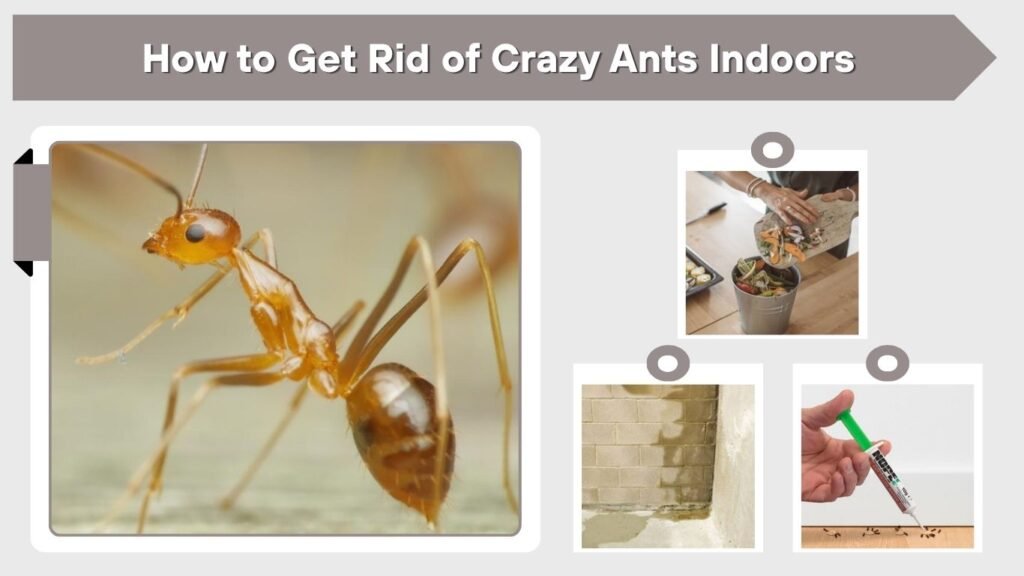
Indoor control should focus on removing food, blocking entry points, and using slow-acting ant bait rather than spraying every ant you see.
1. Clean Up Food Sources
Crazy ants will feed on crumbs, grease, sugar, fruit, pet food, and other household materials. Cleaning reduces the food available to the colony and makes ant bait more attractive.
Wipe counters, sweep floors, clean beneath appliances, and wash sticky containers. Store food in sealed containers and keep pet bowls clean. Do not leave pet food out overnight when ants are active.
Garbage cans should have tight-fitting lids and be emptied regularly.
2. Eliminate Moisture
Crazy ants often enter buildings in search of moisture, particularly during dry weather.
Check for:
- Leaking faucets
- Damp cabinets
- Condensation around pipes
- Roof or window leaks
- Moisture beneath sinks
- Poorly ventilated bathrooms
- Water collecting near appliances
Repairing leaks and drying damp areas can make the indoor environment less attractive to ants.
3. Use Ant Bait
Slow-acting bait is generally more useful than fast-acting spray for eliminating hidden colonies. Worker ants eat the bait and carry it back to queens, larvae, and other workers.
Place bait near active trails, entry points, kitchen corners, cabinets, or plumbing openings. Avoid placing it directly on surfaces that have recently been sprayed with insecticide, because the ants may avoid the area.
Crazy ants may respond to different types of bait, including:
- Sugar-based liquid bait
- Gel ant bait
- Protein-based bait
- Grease-based bait
- Granular outdoor bait
Using two different bait types may improve results when you do not know what the colony currently prefers.
Keep all pesticide products away from children and pets, and follow the label instructions carefully.
4. Avoid Spraying Near Bait
Contact sprays can kill visible ants quickly, but they may interfere with baiting. If workers die before returning to the colony, they cannot distribute the bait.
Spraying can also cause colonies to relocate or split into smaller groups. Use contact products only where necessary and avoid applying them directly around active bait stations.
5. Seal Entry Points
After activity begins to decline, seal cracks and openings that ants use to enter.
Common entry points include:
- Gaps around doors and windows
- Cracks in foundations
- Spaces around pipes and cables
- Openings around air conditioners
- Damaged weather stripping
- Wall vents
- Utility lines
Use caulk, weather stripping, mesh, or another suitable sealing material. Sealing too early may simply cause ants already inside the walls to emerge elsewhere, so baiting should usually come first.
How to Get Rid of Crazy Ants Outside
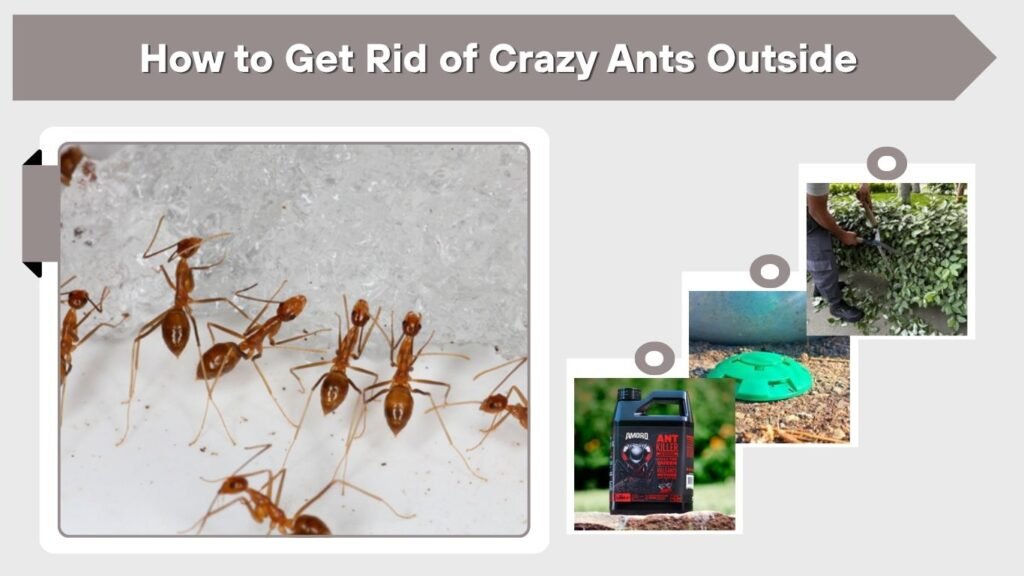
Outdoor colonies are often the main source of indoor infestations. Treating only the ants inside the house may provide temporary relief, but they are likely to return if nearby nests remain active.
Remove Nesting Materials
Crazy ants frequently nest beneath objects that provide shade and moisture. Reduce shelter around the property by removing or reorganizing:
- Fallen branches
- Leaf piles
- Unused boards
- Bricks and stones
- Thick mulch
- Yard waste
- Empty containers
- Stacks of firewood
- Abandoned equipment
Store firewood above the ground and away from the house. Avoid placing thick mulch directly against the foundation.
Trim Vegetation
Tree branches, vines, shrubs, and other plants can create bridges that allow ants to reach roofs, windows, and siding.
Trim vegetation so that it does not touch the building. Remove dead plant material and maintain space between shrubs and exterior walls.
Crazy ants may also feed on honeydew produced by aphids, scale insects, whiteflies, and mealybugs. Controlling these plant pests can reduce an important food source.
Apply Outdoor Bait
Granular or liquid outdoor bait may help reduce colonies when applied to active foraging areas. Place or spread the product according to its label, especially around foundations, trails, garden borders, and nesting locations.
Do not apply bait before heavy rain or irrigation unless the product is designed to tolerate water. Wet weather may wash away or spoil certain baits.
Recheck treated areas regularly. Large infestations may require repeated applications because new ants can move in from neighboring properties.
Use a Labeled Perimeter Treatment
A perimeter insecticide may help prevent ants from entering the building, but it should not be the only treatment. These products usually work best when combined with baiting and sanitation.
Treat cracks, foundation edges, door thresholds, window frames, and other entry areas only as directed on the product label.
Avoid unnecessary spraying across flowers, vegetable gardens, waterways, or areas visited by pollinators.
Crazy Ants in Electrical Equipment
Crazy ants are known to invade electrical boxes, air-conditioning systems, pumps, computers, outlets, and other devices. Their bodies can collect around electrical contacts and may contribute to short circuits or equipment failure.
Do not spray liquid insecticide directly into energized electrical equipment. Turn off the power when it is safe to do so and contact a qualified electrician or pest-control professional.
Ant bait can sometimes be placed near the exterior of the affected equipment, but it should never block ventilation or create another safety hazard.
If an appliance sparks, overheats, stops working, or repeatedly trips a breaker, stop using it until it has been professionally inspected.
Will Vinegar Get Rid of Crazy Ants?
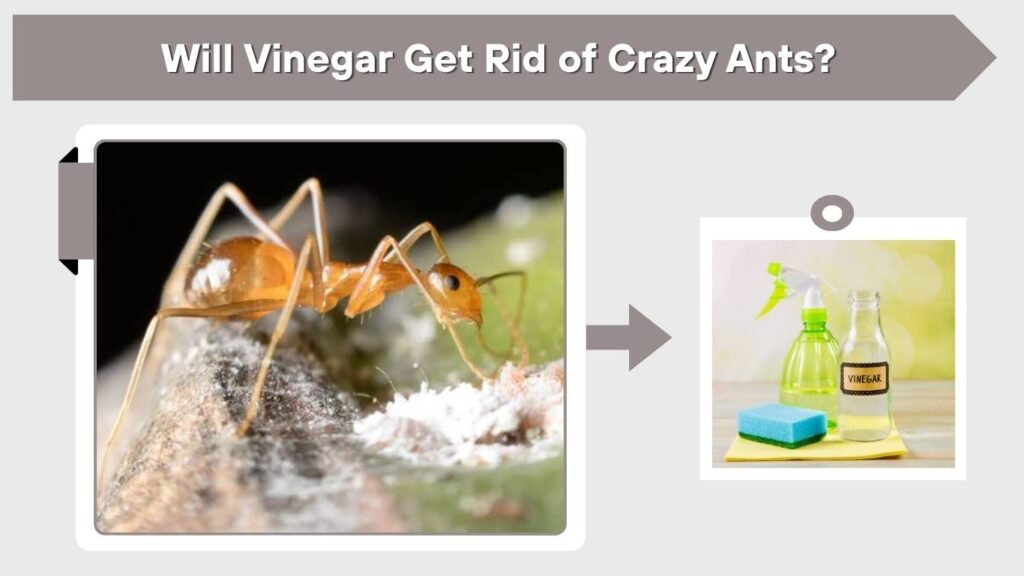
Vinegar may remove scent trails and kill a few ants through direct contact, but it is unlikely to eliminate a colony. It does not normally reach queens or hidden nests.
A vinegar-and-water cleaning solution may be useful for wiping surfaces after the main infestation has been controlled. However, it should not be applied near bait stations because its strong odor may discourage ants from feeding.
Does Boric Acid Kill Crazy Ants?
Boric acid can kill crazy ants when it is used as part of a properly formulated bait. It works slowly, giving workers time to carry contaminated food back to the colony.
However, homemade mixtures can fail if they contain too much boric acid. A strong mixture may kill the worker before it reaches the nest, while a weak or unattractive mixture may be ignored.
Commercially prepared ant bait is usually easier and safer to use because the concentration and food attractant are already balanced. Always follow the product label and place bait where children and pets cannot reach it.
How Long Does It Take to Get Rid of Crazy Ants?
Small indoor infestations may begin to decline within several days of successful baiting. Large outdoor infestations can require several weeks or longer.
Complete elimination may be difficult when colonies extend across neighboring yards or natural areas. In these situations, the realistic goal may be long-term suppression and preventing ants from entering the home.
Continue monitoring even after visible activity stops. Replace bait when needed and inspect common nesting areas after rainfall, flooding, landscaping work, or seasonal weather changes.
When to Call a Pest-Control Professional
Professional treatment may be necessary when ants cover a large area, repeatedly invade electrical equipment, or continue returning despite careful baiting and sanitation.
A licensed pest professional can:
- Identify the ant species
- Locate major nesting areas
- Select suitable bait formulations
- Apply perimeter treatments safely
- Treat difficult wall or crawl-space infestations
- Develop a long-term monitoring plan
Because crazy ant colonies may spread across multiple properties, neighboring homeowners may need to coordinate control efforts.
How to Prevent Crazy Ants From Returning
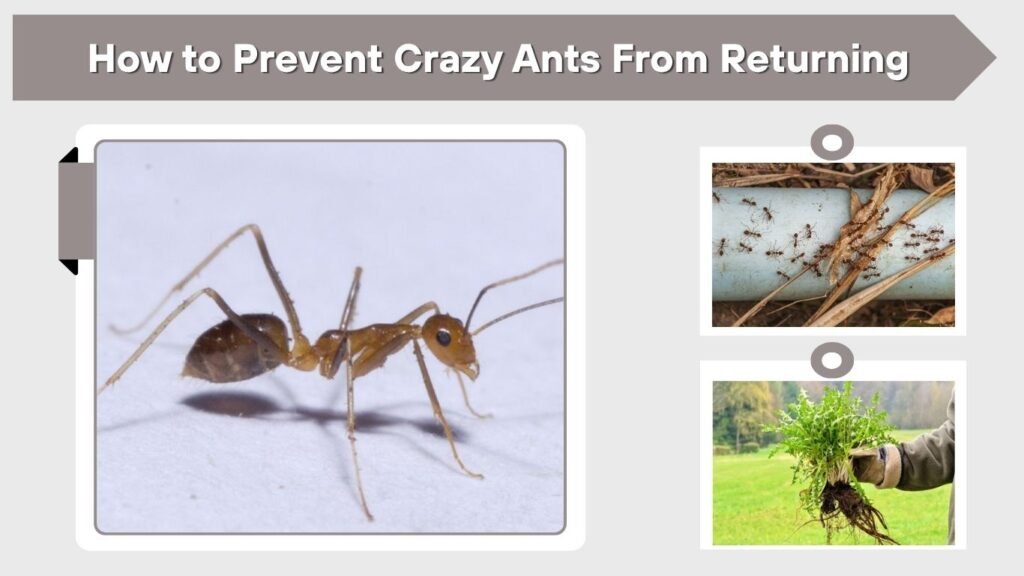
Prevention is easier when food, water, and nesting opportunities are kept to a minimum.
Inspect the foundation regularly, repair leaks, remove yard debris, trim vegetation, and keep food sealed. Check outdoor electrical boxes, potted plants, firewood, and stored materials for ant activity.
Avoid moving infested soil, mulch, plants, or equipment to another property. Crazy ants can spread to new areas when colonies are transported in landscaping materials and household items.
FAQs
What is the fastest way to get rid of crazy ants?
The fastest effective approach combines sanitation, moisture control, baiting, outdoor nest reduction, and sealing entry points. Contact spray may kill visible workers immediately, but bait is usually more helpful for reaching hidden queens and colony members.
Why do crazy ants keep coming back?
Crazy ants often return because the main colony remains outdoors or inside wall voids. Large infestations may contain multiple queens and connected nests, so killing only the workers visible inside the home does not remove the source.
Do crazy ants bite people?
Crazy ants can bite, but their bites are generally mild compared with fire ant stings. Some species may also release formic acid, which can cause temporary irritation. Wash the affected skin and seek medical care for a serious reaction.
Can crazy ants damage a house?
Crazy ants do not normally eat structural wood like termites, but they can invade appliances, electrical systems, wall spaces, and stored food. Very large infestations can contaminate surfaces and contribute to electrical equipment problems.
What attracts crazy ants to a home?
Crazy ants are attracted to food, moisture, shelter, warmth, insects, plant honeydew, pet food, and protected nesting spaces. Leaks, clutter, thick mulch, unsealed cracks, overgrown plants, and outdoor debris can make a property more attractive.