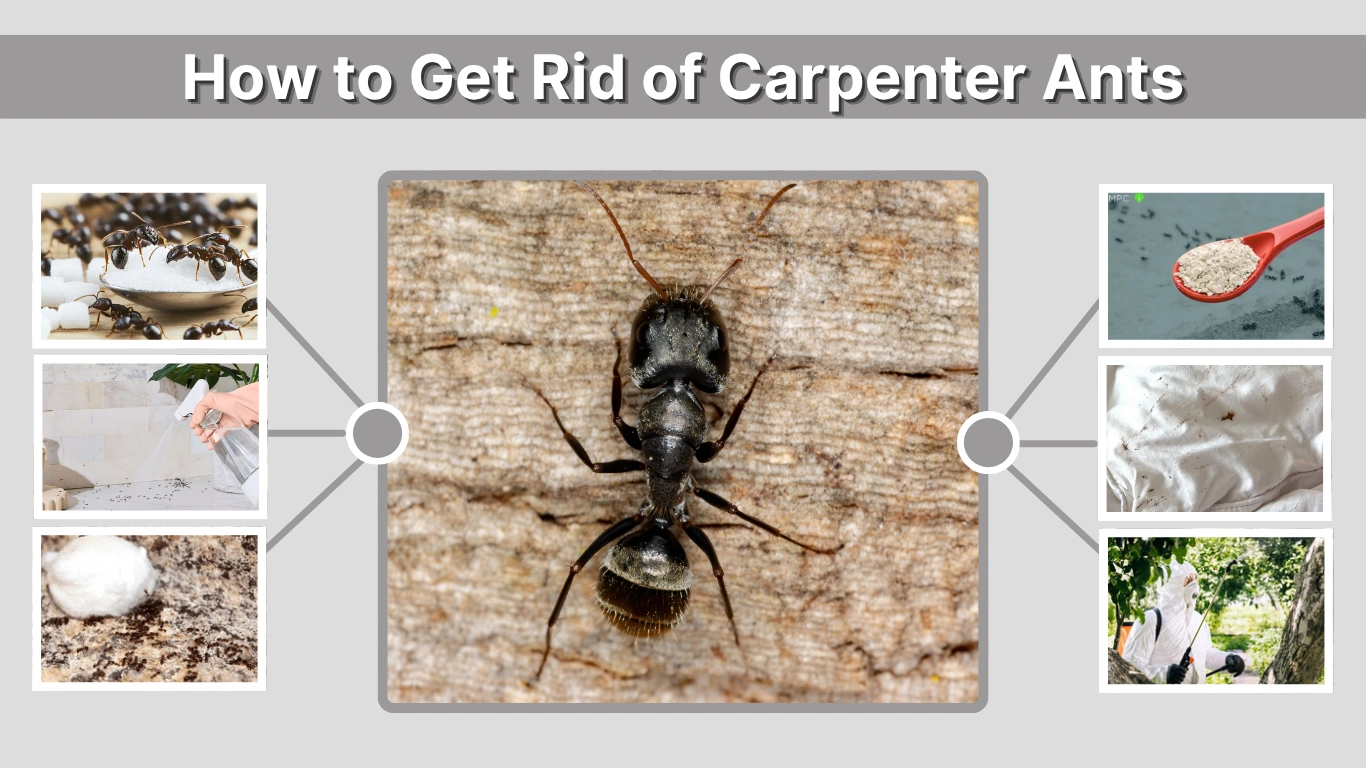
Carpenter ants are one of the most common household pests, often mistaken for termites due to their wood-damaging behavior. Unlike termites, carpenter ants don’t eat wood — they tunnel through it to create nests. Over time, these tunnels can weaken structures, leading to costly repairs. Whether you’re dealing with black carpenter ants in your walls, trees, or attic, learning how to get rid of them quickly and naturally is essential to protect your home.
Understanding Carpenter Ants

Carpenter ants are large, black or reddish-brown insects that live in colonies. They’re most active at night and prefer damp, decaying wood. Their name comes from their habit of excavating wood to build smooth tunnels and nesting chambers.
Unlike termites, carpenter ants don’t consume wood for food. Instead, they feed on sweet substances, insects, and plant juices. However, their tunneling weakens wooden beams, doors, and window frames — a problem that often goes unnoticed until serious damage occurs.
Common Signs of Carpenter Ants
- Fine piles of frass (wood shavings mixed with debris).
- Rustling sounds inside walls, especially at night.
- Winged ants near windows or lights in spring and summer.
- Large black ants (¼ to ½ inch) moving around food or water sources.
If you see these signs, you likely have an active infestation that needs immediate attention.
Identifying Carpenter Ants in Your Home

Carpenter ants are distinct from other ants because of their size and behavior. Identifying them correctly helps you choose the right removal method.
Appearance
- Large body (6–12 mm long), usually black or dark reddish-brown.
- Narrow waist and elbowed antennae.
- Winged carpenter ants appear during mating season and resemble flying termites but have uneven wings and narrow waists.
Behavior
- Active mostly at night.
- Travel in lines to search for food or water.
- Build nests inside moist, softened wood.
Spotting one or two carpenter ants often means a colony is nearby — either inside your home or in a nearby tree or stump.
Signs of a Carpenter Ant Infestation

Detecting an infestation early can save you from major repairs later. Carpenter ants often nest deep inside walls or roofs, making them hard to notice until they multiply.
Key warning signs include:
- Wood shavings (frass): Found near windows, doors, or baseboards.
- Clicking sounds: Faint rustling noises inside walls or ceilings.
- Winged ants indoors: A clear indicator of a mature colony.
- Hollow wood: Tap wooden furniture or beams — a hollow echo suggests tunneling.
- Visible trails: Large ants moving along floors or kitchen counters, especially at night.
If multiple signs appear, it’s likely there’s both a main nest (often outdoors) and one or more satellite nests inside your home.
Where Carpenter Ants Nest

Carpenter ants prefer moist, damaged, or decaying wood. They create smooth galleries inside wood structures that weaken over time.
Indoors
- Inside walls, ceilings, and window sills.
- Behind bathroom tiles, near sinks, or under flooring.
- In attics, basements, and garages where condensation is common.
- Inside foam insulation or behind siding.
Outdoors
- Tree trunks and stumps with soft or rotting cores.
- Wooden decks, sheds, and garden fences.
- Firewood piles stored too close to the house.
- Mulch and moist soil areas near foundations.
These nests may start outside and expand indoors as the colony grows, so addressing both areas is crucial.
What Causes Carpenter Ants in the House

Carpenter ants enter homes seeking moisture, shelter, and food. They often establish satellite colonies indoors while keeping the main nest outdoors.
Common causes include:
- Leaky pipes or roofs creating moist wood.
- Rotting wood in window frames or attics.
- Tree branches touching your home’s siding.
- Crumbs and sugary spills that attract foraging ants.
- Old mulch or firewood stored against the house.
Once they find a damp or decayed area, carpenter ants carve smooth tunnels for nesting — eventually spreading into walls and ceilings.
How to Get Rid of Carpenter Ants Indoors
When you discover carpenter ants inside your home, quick action prevents further damage. Here’s how to eliminate them effectively.
6.1 Locate the Source
- Follow ant trails to identify where they enter.
- Inspect wood for soft spots or sawdust piles.
- Tap walls or floors to detect hollow-sounding sections.
6.2 Eliminate the Infestation
- Ant bait stations: Place near entry points and moisture-prone areas. The bait attracts ants, which carry poison back to the colony.
- Insecticidal dust: Apply into cracks, wall voids, or behind baseboards.
- Non-repellent sprays: Use around doors, windows, and baseboards for lasting protection.
- Seal openings: Use caulk or foam sealant to block entry routes.
Cleaning up frass and sealing cracks afterward helps prevent re-entry once the colony dies out.
How to Get Rid of Carpenter Ants Naturally

If you prefer chemical-free methods, natural remedies can be highly effective in removing carpenter ants while keeping your home safe for pets and children. These eco-friendly options target both visible ants and hidden colonies.
- Vinegar and water solution: Mix equal parts vinegar and water in a spray bottle. Spray directly on ants, their trails, and potential nesting areas to destroy scent trails and deter re-entry.
- Boric acid and sugar bait: Combine one part boric acid with three parts sugar. Place small amounts near ant trails or suspected nests. The sugar attracts ants, while the boric acid kills them slowly, allowing time to spread it through the colony.
- Essential oils: Peppermint, tea tree, and lemon oils act as strong repellents. Add 10–15 drops to a cup of water and spray in areas like window frames and doorways.
- Diatomaceous earth (DE): A natural powder that kills ants by dehydrating them. Sprinkle along cracks, baseboards, and entry points.
- Soap and water spray: A few drops of dish soap in water create a mixture that suffocates and kills ants on contact.
Regularly reapply these remedies for a few weeks to ensure the colony is fully eliminated.
How to Get Rid of Carpenter Ants in Walls
Carpenter ants commonly hide behind walls and insulation, making them difficult to reach. To treat wall infestations effectively:
- Locate the nest: Tap lightly on walls; a hollow sound indicates tunneling.
- Drill small holes: Create openings near the affected area to access the cavity.
- Apply insecticidal dust or boric acid: Use a bulb duster to inject the product deep into the voids.
- Vacuum out debris: Remove dead ants and wood shavings to prevent further infestation.
- Seal the holes: After treatment, fill holes with caulk or wood filler to block future nesting.
Avoid relying solely on surface sprays, as they often kill visible ants without reaching the main colony.
How to Get Rid of Carpenter Ants in Trees

Carpenter ants frequently nest in trees with decaying or hollow trunks. Though they rarely kill trees directly, they can spread to nearby structures.
Steps to eliminate them:
- Inspect the tree: Look for holes, sawdust piles, or ant activity on the bark.
- Apply boric acid or insecticidal dust: Inject directly into hollow sections using a squeeze bulb.
- Trim affected branches: Remove rotting or damaged limbs to limit nesting sites.
- Use a perimeter barrier: Spray insecticide or sprinkle diatomaceous earth around the tree base.
- Keep the area dry: Remove mulch buildup and avoid overwatering.
Natural treatments like neem oil or citrus sprays can also help repel ants without harming the tree.
How to Get Rid of Carpenter Ants Outside
Outdoor infestations are common around decks, sheds, fences, and gardens. Addressing outdoor colonies helps stop ants from invading indoors.
- Remove decayed wood: Dispose of fallen logs, tree stumps, and wet mulch.
- Treat nests with outdoor granules: Ant killer granules or bait stations target large colonies effectively.
- Elevate firewood piles: Keep firewood stored off the ground and away from house walls.
- Trim vegetation: Cut back trees and bushes that touch your home’s exterior.
- Spray perimeter barriers: Apply non-repellent sprays or borate-based treatments around your foundation for ongoing protection.
A dry, well-maintained yard is the best deterrent against carpenter ants building new nests near your home.
How to Prevent Carpenter Ants from Returning
Once you’ve eliminated carpenter ants, preventive measures are essential to keep them away permanently.
- Fix leaks immediately: Repair leaking roofs, pipes, and gutters to reduce moisture.
- Seal entry points: Close all cracks around doors, windows, and vents with caulk.
- Store wood properly: Keep firewood and lumber at least 20 feet from your home.
- Maintain ventilation: Use dehumidifiers in basements and attics to reduce humidity.
- Clean regularly: Wipe counters, vacuum floors, and store food in airtight containers.
- Inspect annually: Check attics, basements, and wooden structures for early signs of damage or ant activity.
Consistent inspection and moisture control ensure your home remains unappealing to future carpenter ant colonies.
When to Call a Professional
If carpenter ants keep reappearing or you can’t locate the main nest, professional pest control may be necessary.
Call an exterminator if:
- You hear persistent rustling inside walls.
- Large swarms appear indoors or in ceilings.
- Wood structures are visibly weakening.
- DIY and natural methods fail after several weeks.
Pest control experts use advanced tools like borescopes and non-repellent treatments to reach deep nests and ensure full colony elimination.
FAQs
How do I permanently get rid of carpenter ants?
Eliminate both the main and satellite nests using baits and insecticidal dust. Address moisture problems, seal entry points, and replace damaged wood to ensure ants don’t return.
How do I get rid of carpenter ants naturally?
Use a mixture of boric acid and sugar, spray vinegar on ant trails, and apply diatomaceous earth around baseboards and windows. Essential oils like peppermint also repel ants effectively.
Can carpenter ants damage my house?
Yes. Carpenter ants tunnel through wood, weakening beams, floors, and walls. Although they don’t eat wood like termites, their excavation can still cause structural issues over time.
How do I get rid of carpenter ants in trees?
Locate the hollow area, apply boric acid or neem oil, and trim affected branches. Keeping the tree base dry and debris-free prevents future nesting.
What attracts carpenter ants to my home?
Moisture, decayed wood, and uncovered food attract carpenter ants. Leaky pipes, wet basements, and wood stored near the house create perfect nesting conditions.