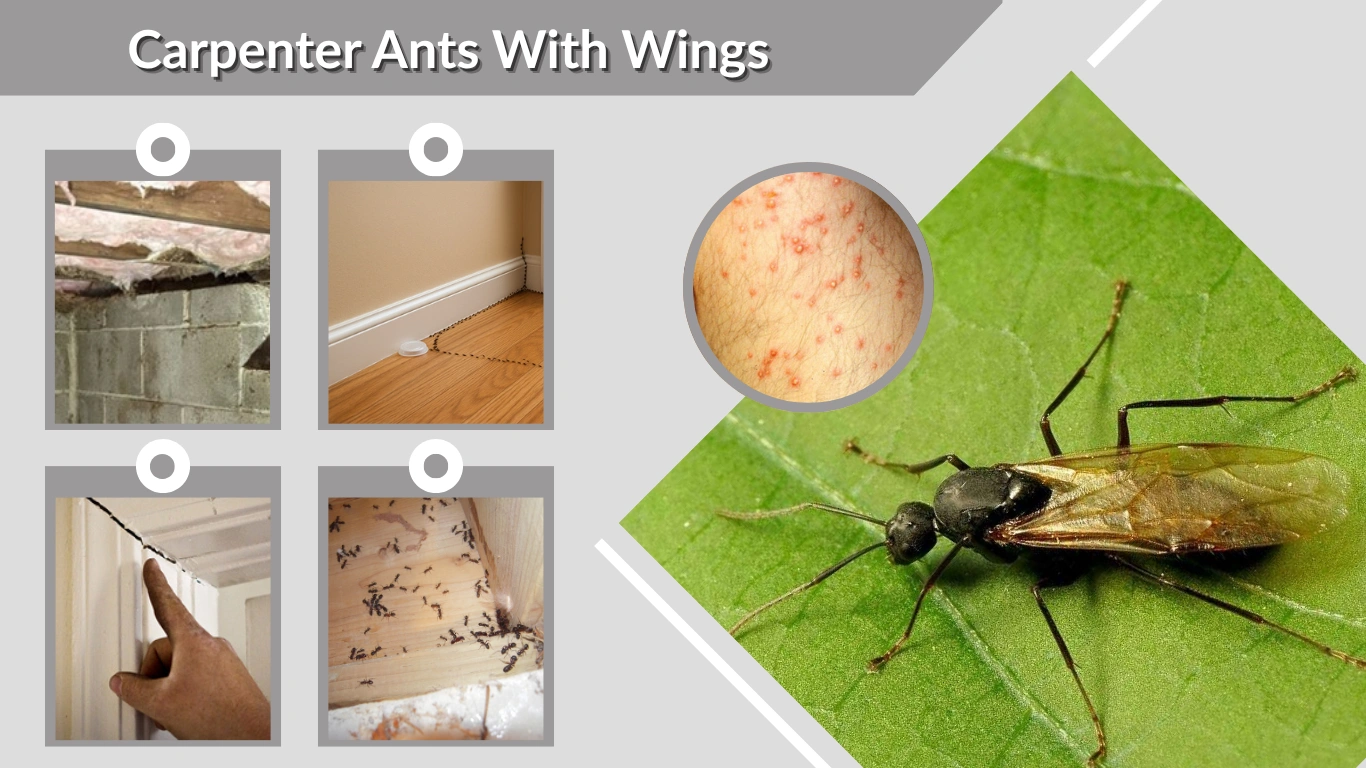
Carpenter ants with wings often alarm homeowners when seen indoors. These winged ants are not just random insects; they signal that a mature colony is reproducing and expanding. Mistaking them for termites is common, but knowing how to identify and control them early can save your home from potential damage. Let’s explore how to recognize, differentiate, and handle carpenter ants with wings effectively.
What Are Carpenter Ants With Wings?
Carpenter ants with wings, known as alates, are reproductive members of the colony. Their main purpose is to leave the nest during warm seasons to mate and start new colonies. Once mated, females lose their wings and begin new nests, while males usually die shortly after mating. Seeing flying carpenter ants indoors often indicates a nearby nest inside walls or wooden structures.
Identification of Carpenter Ants With Wings

Physical Appearance
Carpenter ants with wings are larger than most other ants, ranging from ½ to ⅝ inches long. They have:
- A narrow waist and elbowed antennae
- Two pairs of wings, with the front pair longer than the back
- Dark or reddish-black color, depending on the species
Differences Between Males and Queens
- Queens: Larger, with thicker bodies and strong jaws for establishing new nests.
- Males: Smaller, sleeker, and their main purpose is to mate during the swarm season.
Both sexes can be seen during spring and early summer, particularly near windows or lights as they try to leave the nest.
Carpenter Ants With Wings vs Termites

Carpenter ants are often mistaken for termites, but several features set them apart:
| Feature | Carpenter Ants | Termites |
| Waist | Narrow and defined | Broad and thick |
| Antennae | Bent (elbowed) | Straight |
| Wings | Front pair longer | Both pairs equal length |
| Color | Black, red, or brown | Pale or cream-colored |
| Damage Type | Hollowed wood (clean tunnels) | Consumed wood (mud tunnels) |
Tip: If you see flying insects around wood structures, inspect the wings left behind — carpenter ants shed them after mating, while termites often remain in the area longer.
Are All Ants With Wings Carpenter Ants?
No. Not every ant with wings is a carpenter ant. Other species like pavement ants and odorous house ants also develop winged reproductives. To confirm a carpenter ant:
- Look for large size (over ½ inch).
- Notice dark coloration and bent antennae.
- Check if they’re emerging from wooden beams or moist structures.
Identifying the correct species ensures you choose the right pest control approach.
Carpenter Ant Behavior Indoors

Carpenter ants with wings inside the house suggest an active indoor colony. They don’t eat wood like termites but excavate it to build nests, weakening beams over time.
Common indoor nesting spots include:
- Bathrooms and kitchens (high moisture areas)
- Wall voids near plumbing lines
- Attics and wooden window frames
Winged ants swarm mostly at night, attracted to light sources such as bulbs or lamps. Spotting even a few indoors indicates that you should inspect for hidden colonies nearby.
Signs of a Carpenter Ant Infestation
If you suspect carpenter ants, look for these warning signs:
- Wing piles near windowsills or baseboards.
- Rustling sounds inside wooden walls or ceilings.
- Wood shavings (frass) that resemble sawdust.
- Ant trails emerging during nighttime.
- Winged ants in bathrooms or basements, often near moisture-damaged wood.
Seeing multiple flying ants in your home usually means the colony has matured and expanded within your structure.
Do Carpenter Ants With Wings Bite or Sting?

Carpenter ants can bite, but they don’t sting or carry venom. Their bite may feel like a mild pinch and sometimes release formic acid, causing slight irritation. However, they’re not dangerous or poisonous to humans or pets.
They bite mainly in defense, not aggression. If bitten, wash the area and apply antiseptic — medical attention is rarely needed.
Carpenter Ant Queen With Wings
The queen carpenter ant is the largest member of the colony, often up to ¾ inch long. During the swarm:
- She mates midair, then finds a wooden crack or crevice to start a new nest.
- She sheds her wings and begins laying eggs.
- Once her first workers mature, they expand the nest and gather food.
Spotting a winged queen indoors is a red flag — it means a satellite nest is developing somewhere in your home.
How to Get Rid of Carpenter Ants With Wings

Carpenter ants with wings can be controlled effectively with a combination of DIY treatments and professional pest services.
DIY Methods:
- Use boric acid or diatomaceous earth near entry points and nesting sites.
- Apply ant bait stations along walls, windows, or corners.
- Seal cracks and gaps in foundations, doors, and wooden areas.
- Trim trees or shrubs touching your home to reduce access routes.
Professional Help:
If you see large numbers of winged ants or damage in wooden beams, hire a licensed pest control expert. They’ll identify nest locations using moisture sensors and apply targeted treatments safely.
Damage and Risks Caused by Carpenter Ants
Though they don’t eat wood, carpenter ants tunnel through it to build nests, weakening structures over time. Their smooth, polished galleries can reduce the strength of wooden beams and frames.
Typical damage includes:
- Hollow-sounding wood when tapped.
- Warped window frames or doors.
- Small exit holes and sawdust-like residue.
Left untreated, an infestation can grow into multiple satellite nests, costing hundreds in repairs.
Common Species of Winged Carpenter Ants

Carpenter ants vary by color and region, but the following are the most common:
- Black Carpenter Ant (Camponotus pennsylvanicus) – Found in most U.S. states; large, black-bodied species.
- Red Carpenter Ant – Smaller, reddish-brown ants commonly found in southern regions.
- Florida Carpenter Ant (Camponotus floridanus) – Bright orange-red with black abdomen, active in humid areas.
- Eastern Black Carpenter Ant – Found in wooded northern regions; often seen near damp structures.
- Chestnut Carpenter Ant – Medium-sized ants with a dark chestnut hue; prefer forested environments.
Knowing your species helps determine nesting habits and the right elimination approach.
Pictures and Identification Gallery
Photographs are vital for confirming a carpenter ant infestation. When observing or capturing images, focus on:
- The size and body segments (head, thorax, abdomen).
- Wing length and whether the front wings are longer than the rear.
- The antennae bend, a defining feature.
- Color variations such as black, red, or a mix of both.
These photos can help you distinguish carpenter ants from termites and smaller flying ant species.
Regional Focus
Florida and Southern States
High humidity and warm temperatures create ideal conditions for carpenter ants. Infestations often occur in attics, decks, and soffits, where moisture is abundant.
Northeast and North Carolina
Cooler regions experience swarms mainly in late spring. Indoor nests are common in basements, wall voids, and insulation.
Midwest and Michigan
In these regions, tiny black ants with wings can resemble carpenter ants but are often smaller and harmless. Proper identification prevents unnecessary treatments.
When to Call Pest Control
Call professional pest control when:
- You see dozens of winged ants inside or near your home.
- You notice repeated wood damage or hollow sounds in walls.
- DIY treatments fail to stop sightings after a week.
Experts can locate hidden satellite nests, apply non-toxic insecticides, and offer long-term preventive solutions such as barrier sprays and moisture reduction.
FAQs
What does a carpenter ant with wings look like?
Carpenter ants with wings are large, dark, and have elbowed antennae with a narrow waist. Their front wings are longer than the back pair, helping differentiate them from termites. They usually swarm indoors or near wooden structures during warm seasons.
Are carpenter ants with wings dangerous to my home?
Yes, they can weaken wooden beams and window frames by nesting inside them. While they don’t eat wood like termites, their tunneling weakens structures over time, leading to costly repairs if ignored.
Do all carpenter ants have wings?
No. Only the reproductive members—known as alates—develop wings. These ants fly during mating seasons and shed their wings afterward. Worker ants remain wingless throughout their lives.
Can carpenter ants with wings bite humans?
Yes, but bites are rare and harmless. They may pinch when threatened, releasing mild formic acid that causes slight irritation. Washing the bite area with soap and water is usually enough to relieve discomfort.
How can I permanently prevent carpenter ants with wings in my house?
Keep wood dry and well-ventilated, seal cracks, remove decaying wood, and store firewood away from walls. Regularly inspect for moisture damage and schedule professional pest checks annually to prevent re-infestation.