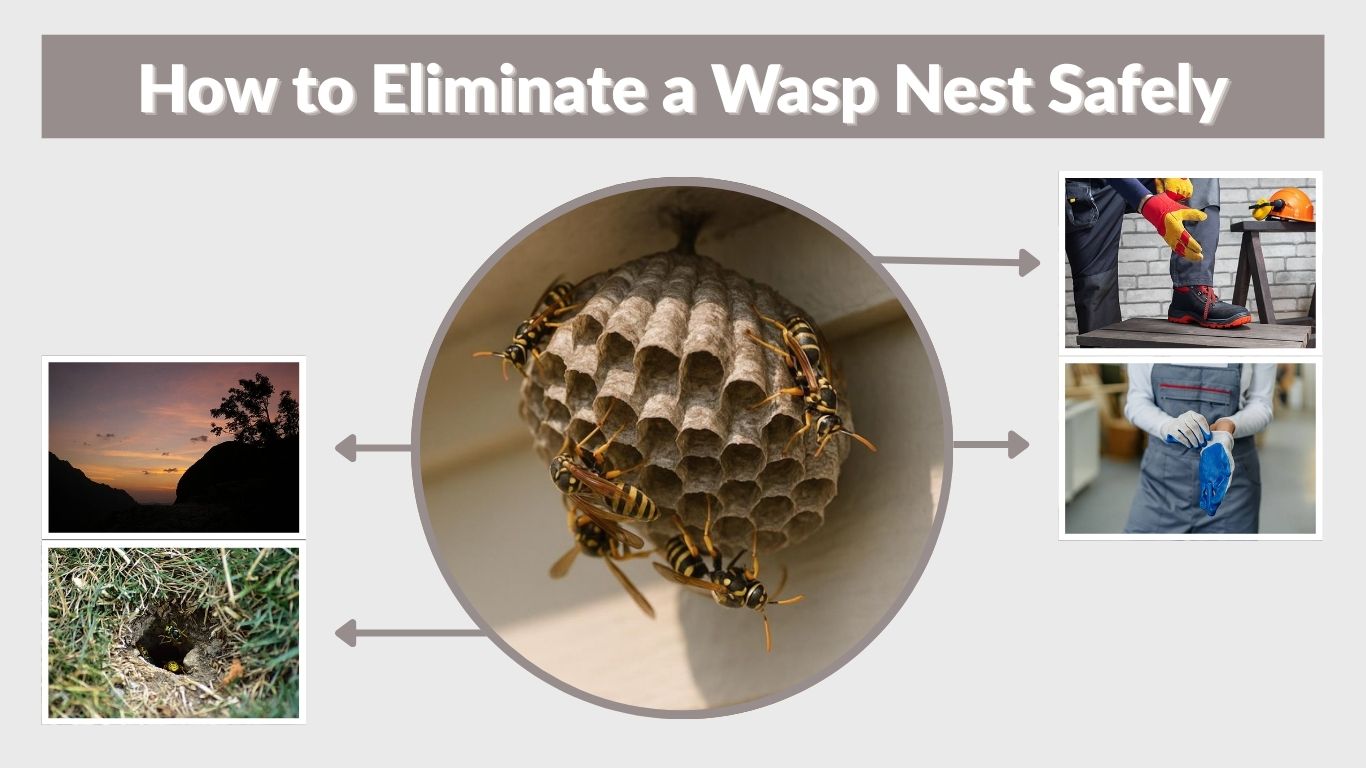
Wasp nests can quickly become dangerous when colonies grow larger during warm weather. Attempting removal without the right timing, tools, or safety precautions may lead to painful stings and aggressive swarming. Whether the nest is underground, attached to a porch, or hidden in roof cracks, understanding proper elimination methods is essential for safe removal. This guide explains how to identify different nest types, choose the best time for treatment, use effective insecticides, and safely eliminate wasp nests while reducing the risk of future infestations around your property.
Understanding Different Types of Wasp Nests
Different wasp species build nests in different locations, and identifying the nest type is important before attempting removal. Some nests are openly visible under eaves or trees, while others remain hidden underground or inside walls. Understanding these differences helps determine the safest removal method and the level of danger involved before treatment begins.
Paper Wasp Nests
- Open umbrella-shaped nests
- Usually found under roof eaves or porch ceilings
- Smaller colonies compared to hornets
Ground and Underground Nests
- Built in soil holes or abandoned animal burrows
- Common in gardens and lawns
- Often difficult to notice until disturbed
Roof Crack and Wall Void Nests
- Hidden inside structural gaps
- Wasps enter through small openings
- Can spread inside attic or wall spaces
Why Wasp Nests Should Be Removed Carefully
Wasp colonies become extremely defensive when they sense danger near their nest. Removing or disturbing the nest improperly may trigger aggressive swarming behavior, especially during summer when colonies are largest. Some wasps can sting repeatedly, making nest elimination dangerous for children, pets, and anyone allergic to insect venom.
Unlike bees, wasps are more territorial and unpredictable during removal attempts. A poorly planned treatment can leave surviving workers nearby, increasing the chances of repeated attacks and rebuilding activity. Hidden nests inside walls or roofs can also create structural issues if left untreated for long periods.
Best Time to Eliminate a Wasp Nest
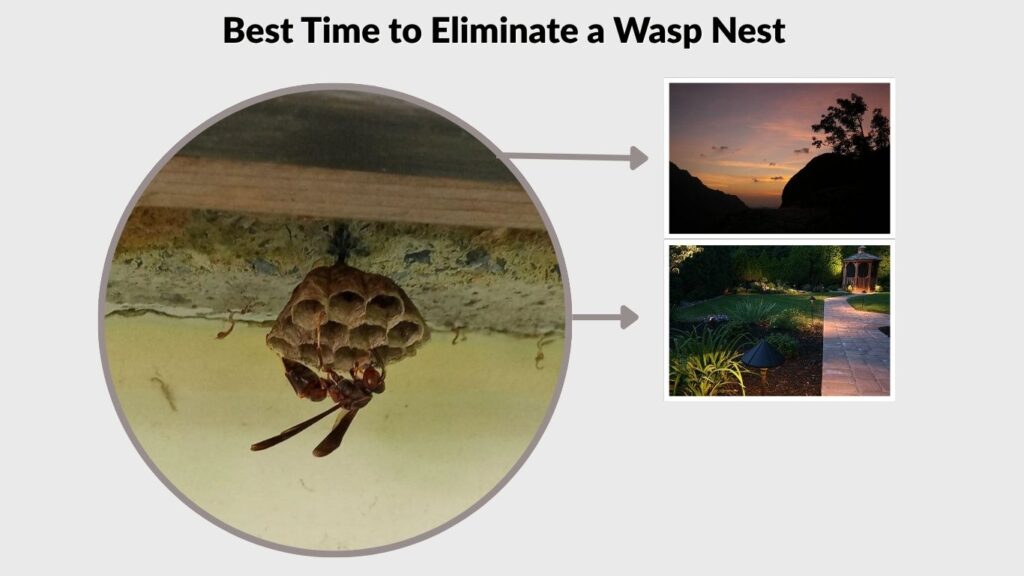
Choosing the right time greatly improves the safety and success of nest elimination. Wasps are less active during cooler hours, making evening and early morning the ideal treatment periods. Seasonal timing also matters because nest size changes throughout the year, affecting both risk and removal difficulty.
Best Time of Day
- Before sunrise when temperatures are cooler
- After sunset when most wasps return to the nest
- Avoid treatment during hot afternoons
Best Season for Removal
- Spring nests are smaller and easier to destroy
- Summer colonies contain more aggressive workers
- Fall colonies decline naturally but may still remain active
Safety Precautions Before Removing a Nest
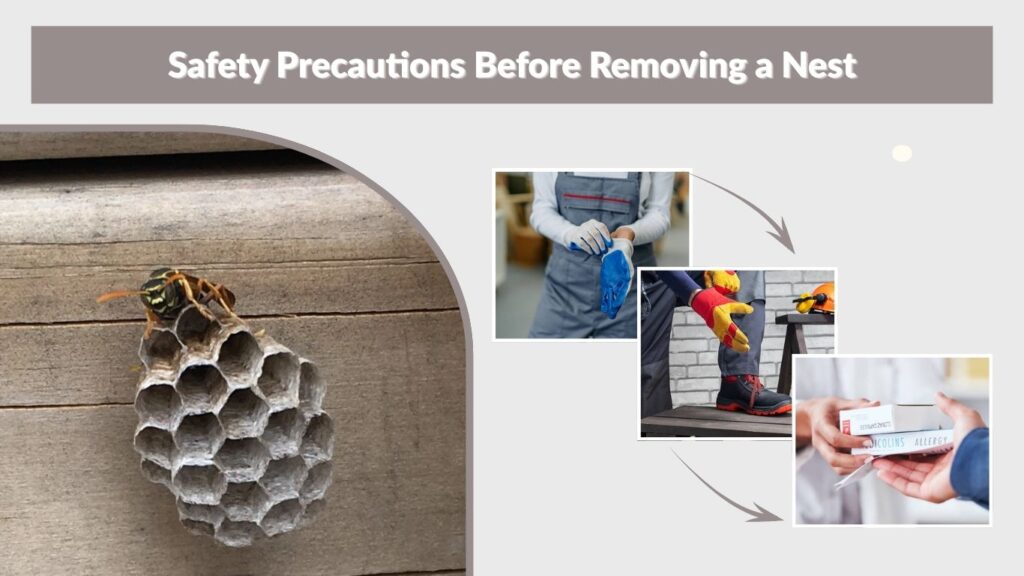
Protective preparation is one of the most important parts of wasp nest elimination. Even a small nest can release dozens of defensive workers within seconds after disturbance. Proper clothing and emergency planning help reduce injuries while making the treatment process safer and more controlled.
Protective Gear You Should Wear
- Thick long-sleeved shirt and pants
- Gloves and closed-toe footwear
- Protective goggles or face shield
- Hat or hood for head protection
Emergency Safety Tips
- Keep pets and children indoors
- Have allergy medication nearby
- Plan an escape route before spraying
- Never trap yourself near the nest location
Tools and Products Needed for Wasp Nest Elimination
Using the correct tools improves treatment effectiveness while reducing the risk of getting stung. Long-range sprays allow you to maintain a safer distance, while specialized insecticides help eliminate hidden or underground colonies more effectively than standard household products.
Recommended Wasp Sprays
- Long-range aerosol sprays for exposed nests
- Foaming insecticides for wall voids and cracks
- Dust insecticides for underground colonies
Helpful Removal Equipment
- Flashlight with red filter for nighttime use
- Ladder for elevated nests
- Thick garbage bags for disposal
- Protective face covering and gloves
Step-by-Step Guide to Eliminating a Wasp Nest
Successful wasp nest removal requires patience and careful planning. Rushing the process can provoke aggressive behavior and increase the risk of multiple stings. Following a structured approach helps eliminate the colony more effectively while keeping you at a safer distance throughout the treatment process.
Step 1 – Identify the Nest Location
Observe the wasps from a safe distance during the daytime to identify where they enter and leave the nest. Common nesting areas include roof eaves, decks, wall gaps, sheds, trees, and underground holes. Avoid standing too close or making sudden movements that may disturb the colony.
Step 2 – Wait for the Right Conditions
The safest time to spray is during early morning or late evening when most wasps are inside the nest and less active. Calm weather with little wind helps the insecticide reach the nest more accurately while reducing chemical drift around the treatment area.
Step 3 – Apply the Insecticide
Wear all protective gear before approaching the nest. Use a long-range aerosol spray or insecticide dust depending on the nest type. Aim directly at the nest entrance and spray steadily for several seconds to ensure the chemical reaches as many wasps as possible.
Step 4 – Leave the Area Immediately
After spraying the nest, move away from the area quickly and calmly. Avoid standing nearby to watch the wasps react because surviving workers may become aggressive within seconds. Giving the insecticide time to work reduces the chances of being stung and allows the treatment to spread throughout the colony more effectively.
What to Do After Spraying
- Stay indoors or far from the nest area
- Avoid shining bright lights near the nest
- Keep pets and children away for several hours
- Wait at least 24 hours before checking activity
Signs the Treatment Worked
- Little or no wasp movement around the nest
- Dead wasps near the entrance
- No buzzing sounds from hidden wall spaces
How to Eliminate Ground Wasp Nests
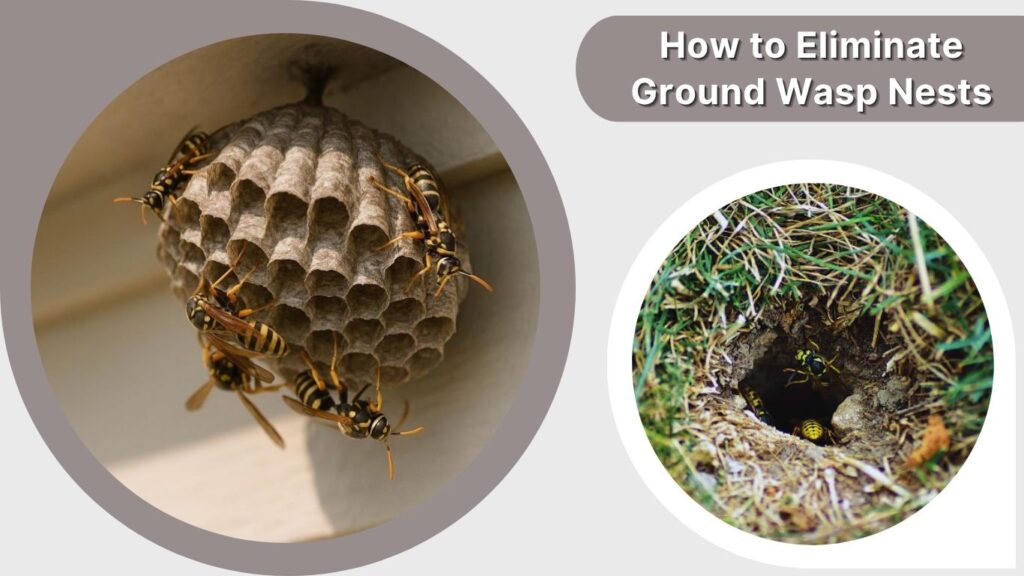
Ground wasp nests are especially dangerous because they are difficult to detect before disturbing them. Lawn mowing, gardening, or stepping near the entrance can trigger aggressive swarming. These colonies often contain many workers, making nighttime treatment the safest option for homeowners attempting removal.
Identifying Underground Wasp Nests
- Small holes in lawns or garden soil
- Frequent wasp traffic near the ground
- Buzzing sounds from underground areas
Best Treatment Methods
- Apply insecticide dust directly into entrance holes
- Spray at night when activity is lowest
- Keep a safe distance after treatment
- Repeat treatment if activity continues after 24 hours
Removing Paper Wasp Nests Safely
Paper wasp nests are commonly found around homes and are usually easier to remove because they remain exposed. Despite their smaller colony size, paper wasps still defend their nests aggressively if threatened. Proper timing and careful spraying help reduce the risk of painful stings during removal.
Safe Removal Steps
- Spray the nest thoroughly during evening hours
- Aim directly at the open nest cells
- Wait 24–48 hours before touching the nest
Cleaning the Area After Removal
- Scrape the nest into a sealed trash bag
- Wash the surface with soap and water
- Inspect nearby areas for new starter nests
How to Eliminate Wasp Nests in Roof Cracks
Wasp nests hidden inside roof gaps or wall voids are more difficult to eliminate because the colony is protected within the structure. These nests may expand over time, allowing wasps to enter attics or indoor living spaces. Specialized treatment methods are often needed for complete elimination.
Signs of Hidden Wasp Nests
- Wasps repeatedly entering small cracks
- Buzzing sounds inside ceilings or walls
- Increased indoor wasp sightings near windows
Best Treatment Options
- Insecticide dust injected into wall openings
- Foaming sprays for roof gaps
- Professional pest control for large infestations
Common Mistakes to Avoid
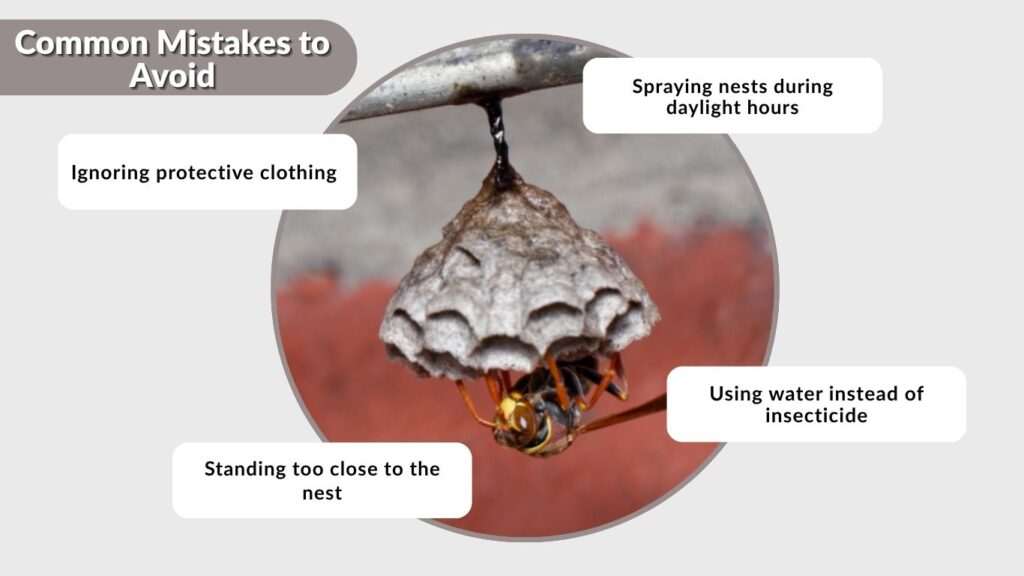
Many DIY wasp nest removal attempts fail because homeowners use unsafe techniques or incorrect products. Avoiding common mistakes improves safety and increases the chances of completely eliminating the colony without repeated infestations or unnecessary stings.
Dangerous Removal Mistakes
- Spraying nests during daylight hours
- Using water instead of insecticide
- Standing too close to the nest
- Ignoring protective clothing
When DIY Removal Is Unsafe
- Very large nests with heavy activity
- Hidden nests inside walls or attics
- Severe allergies to wasp stings
- Aggressive hornet colonies near entryways
Preventing Future Wasp Infestations
Preventive maintenance helps reduce the chances of wasps building nests around your property again. Removing food sources and sealing structural gaps can discourage queens from choosing your home as a nesting site during spring and summer.
Prevention Tips
- Seal roof cracks and siding gaps
- Keep outdoor trash containers tightly closed
- Remove sugary drinks and food quickly
- Inspect porches, decks, and sheds regularly
- Destroy small starter nests early in spring
FAQs
What is the best way to eliminate a wasp nest?
The safest method is using a long-range insecticide spray during evening or early morning hours when wasps are least active.
How do you eliminate a ground wasp nest safely?
Apply insecticide dust or spray directly into the nest entrance at night, then avoid the area until all activity stops.
Can I remove a wasp nest myself?
Small exposed nests can often be removed safely with proper gear, but hidden or large nests may require professional pest control.
How long should I wait before removing a sprayed nest?
Wait at least 24–48 hours after treatment to ensure all wasps are dead before physically removing the nest.
What time of day is best for wasp nest removal?
Early morning and late evening are best because cooler temperatures make wasps less active and less aggressive.