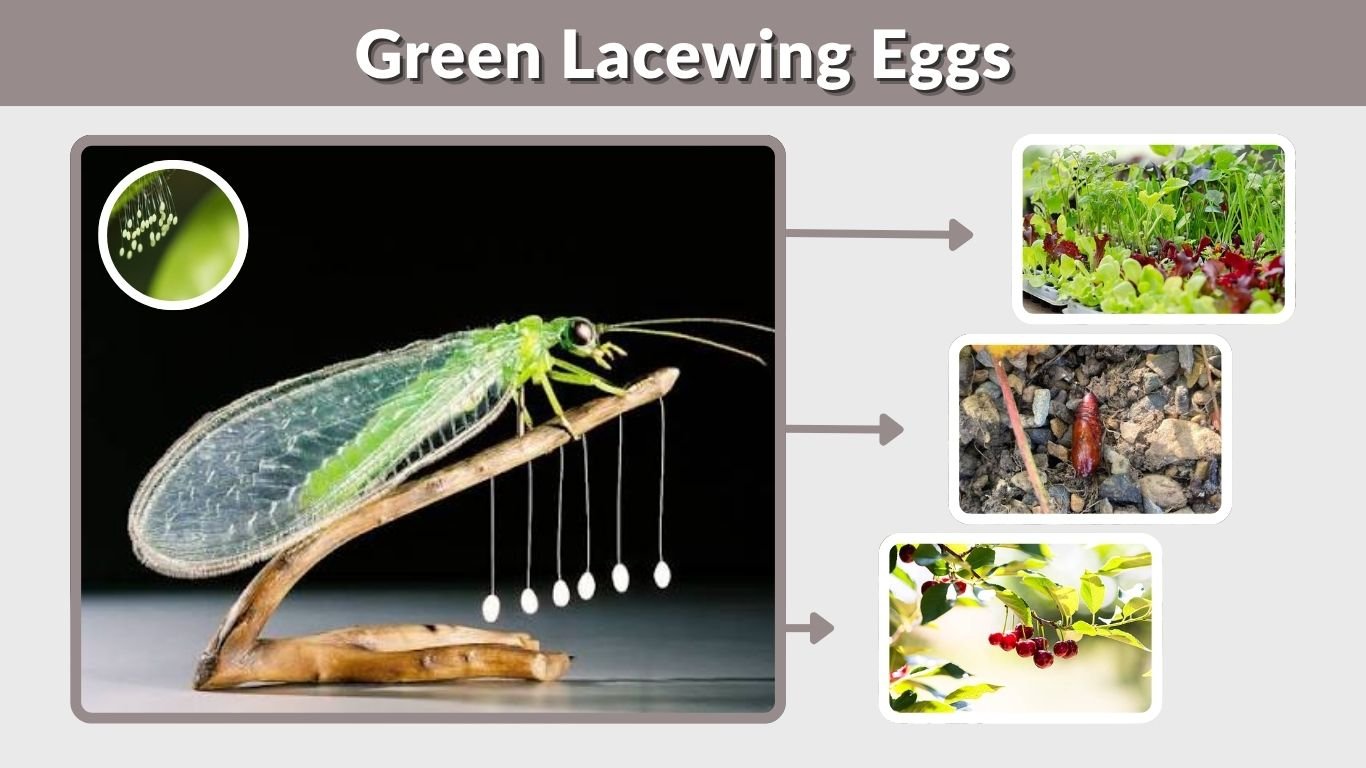
Green lacewing eggs are tiny but highly distinctive eggs produced by beneficial insects in the family Chrysopidae. They are usually found on plants, with each egg sitting at the end of a delicate, hair-like stalk. After hatching, the young lacewing larvae become active predators of aphids and other small garden pests. Green lacewing eggs are also commercially available for biological pest control in gardens, greenhouses, and indoor growing areas. Understanding what the eggs look like, how long they take to hatch, and how to release them properly can help you protect these valuable insects.
What Do Green Lacewing Eggs Look Like?
Green lacewing eggs are relatively easy to recognize once you know what to look for. Unlike most insect eggs, they are usually elevated above the surface of a leaf by an extremely thin stalk.
A female lacewing attaches the stalk to vegetation and places the egg at its tip.
Green Lacewing Egg Identification
Look for these characteristics:
- Very small oval or elongated egg
- Pale white, cream, or greenish coloration when fresh
- A single thin stalk below the egg
- Usually attached to leaves or stems
- Sometimes found singly
- Sometimes several occur close together
From a distance, a group of lacewing eggs can resemble tiny white dots floating above a leaf.
The unusual stalk is one of the easiest ways to distinguish lacewing eggs from aphid eggs, moth eggs, scale insects, or fungal growth.
Why Are Green Lacewing Eggs on Stalks?
The stalk is more than an unusual structural feature. It helps separate individual eggs from the plant surface and from one another.
Green lacewing larvae are active predators, and newly hatched larvae can sometimes attack other small organisms nearby. Keeping eggs separated may help reduce interactions between newly emerging larvae.
Colorado State University also describes the stalked egg as an adaptation that can help reduce predation or parasitism by other arthropods.
The stalk also makes green lacewing eggs immediately recognizable compared with the eggs of many other beneficial insects.
Where Do Green Lacewings Lay Their Eggs?
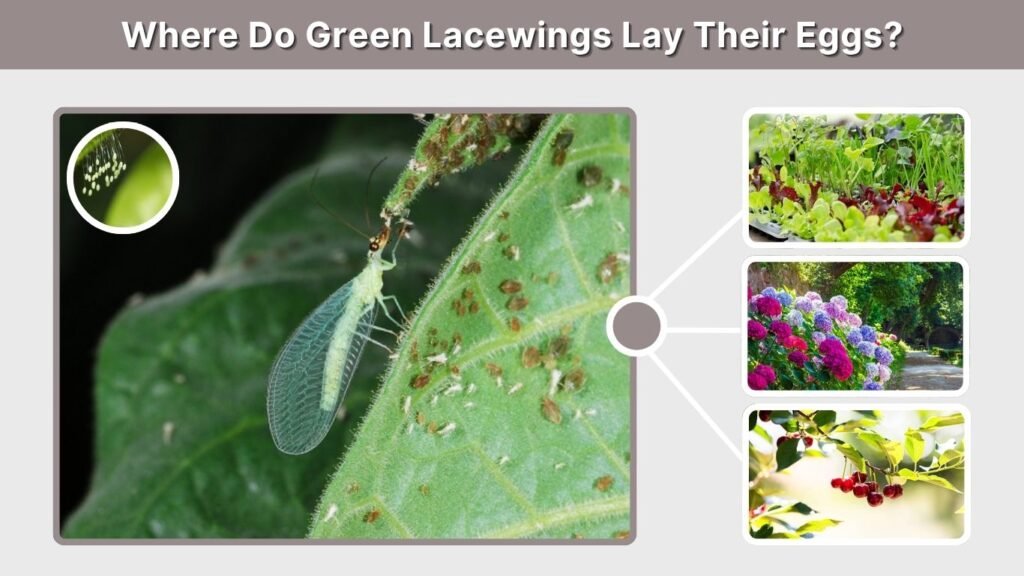
Female green lacewings generally choose vegetation where their young will have a reasonable chance of finding prey after hatching.
Eggs may be found on:
- Vegetable plants
- Flowers
- Shrubs
- Fruit trees
- Ornamental plants
- Houseplants
- Greenhouse crops
- Leaves near aphid colonies
Finding eggs around aphid-infested plants is particularly useful because newly hatched larvae can begin hunting soon after they emerge.
Are Green Lacewing Eggs Good for Plants?
Yes. The eggs themselves do not harm plants.
Once they hatch, the larvae prey on a variety of small arthropods. Lacewing larvae are particularly well known as predators of aphids and can also consume other small insects.
For gardeners, finding lacewing eggs is therefore usually a positive sign rather than evidence of another plant pest.
How Long Do Green Lacewing Eggs Take to Hatch?
Hatching time varies with species, temperature, and environmental conditions.
Colorado State University reports that green lacewing larvae may emerge from their eggs in approximately 4 to 10 days.
Warm conditions generally speed insect development, while cooler temperatures can slow it.
Signs Green Lacewing Eggs Are Close to Hatching
As an egg develops, you may notice subtle changes in its appearance. Depending on the species and lighting, an egg may become darker as the developing larva becomes more mature.
After hatching, the stalk and empty eggshell can remain attached to the plant.
So, seeing an apparently empty lacewing egg does not necessarily mean the egg failed. The larva may already be somewhere nearby hunting prey.
What Happens After Green Lacewing Eggs Hatch?
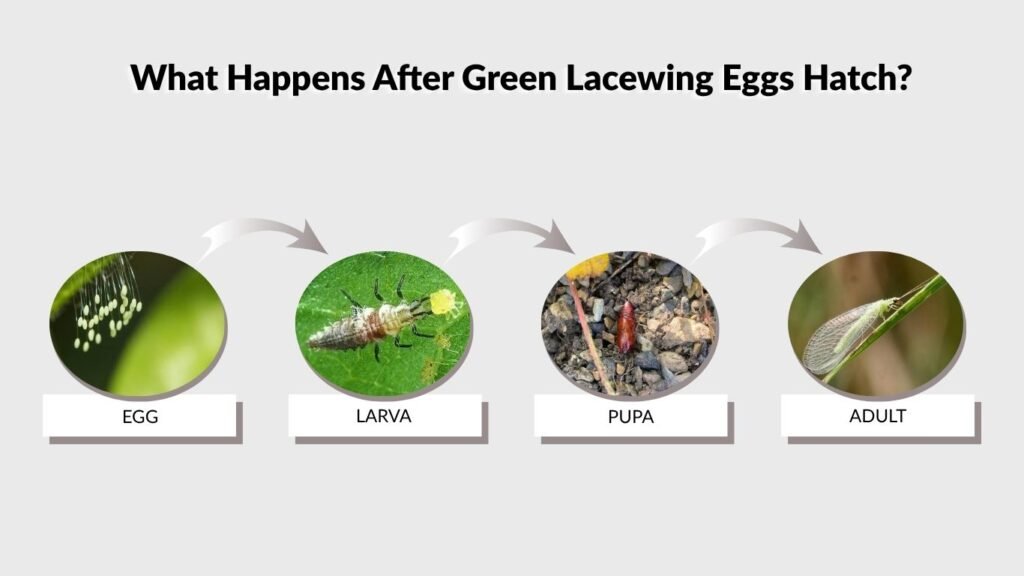
Once the egg opens, a tiny lacewing larva emerges.
The larva looks completely different from the delicate green adult. It has an elongated body with prominent curved jaws and quickly begins searching for prey.
Green lacewings develop through four basic stages:
Egg → Larva → Pupa → Adult
The larvae pass through three increasingly larger stages before pupating.
What Do Newly Hatched Lacewing Larvae Eat?
Young lacewing larvae can attack several small garden pests, including:
- Aphids
- Small caterpillars
- Other tiny soft-bodied insects
- Insect eggs
Because of their appetite for aphids, lacewing larvae are often called aphid lions.
The egg itself is therefore only the beginning of the beneficial stage gardeners are usually trying to encourage.
Green Lacewing Eggs for Aphid Control
Green lacewing eggs are commonly associated with natural aphid management.
Instead of directly killing aphids with an insecticide, gardeners can encourage or introduce beneficial predators. Once lacewing eggs hatch, the larvae search plants for prey.
This can be particularly useful around:
- Roses
- Vegetable gardens
- Greenhouses
- Fruit plants
- Indoor growing systems
- Ornamental shrubs
Colorado State University notes that mass releases of green lacewing eggs can be useful as a biological control option for aphids and other insects.
Green Lacewing Eggs for Sale
Green lacewings are commercially produced as beneficial insects. Depending on the supplier, they may be sold as eggs, larvae, or adults.
Buying eggs can be convenient when you want to establish many predators across a larger growing area.
Eggs vs Larvae
| Feature | Lacewing Eggs | Lacewing Larvae |
|---|---|---|
| Life stage | Before predator emerges | Active predator |
| Pest control begins | After hatching | Immediately |
| Easy to distribute | Yes | Yes |
| Main purpose | Establish beneficial insects | Rapid pest predation |
| Best for | Preventive/early treatment | Active infestations |
If aphid numbers are already very high, active larvae may begin feeding sooner. Eggs can be useful when you are planning biological control before pest populations become severe.
How to Release Green Lacewing Eggs
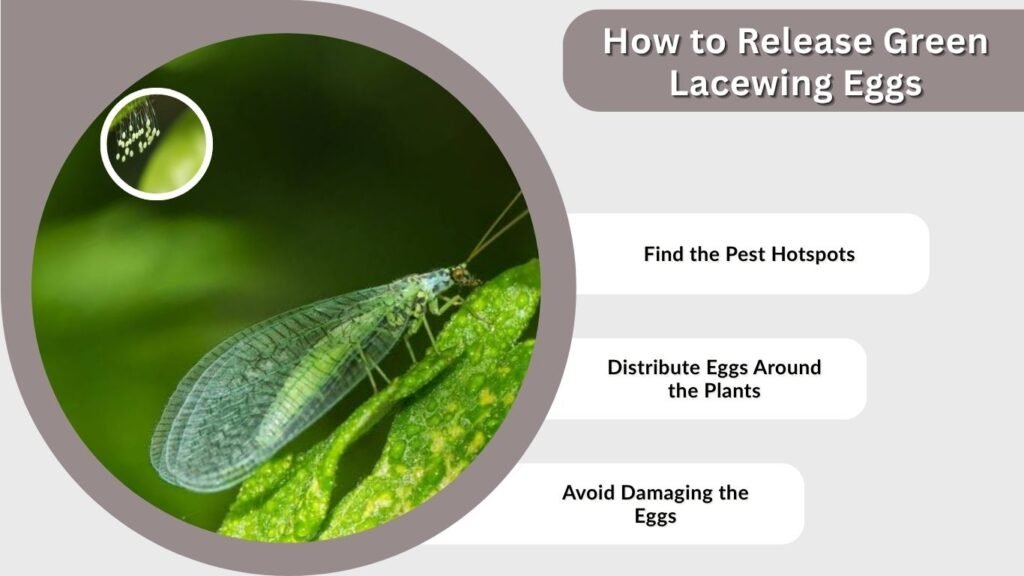
Commercial green lacewing eggs should always be released according to the supplier’s specific instructions because packaging and recommended application rates vary.
In general, the goal is to position eggs near the pests the larvae will need after hatching.
1. Find the Pest Hotspots
Check plants for aphids, mealybugs, whiteflies, or other small pests.
Pay particular attention to:
- New growth
- Undersides of leaves
- Flower buds
- Young stems
Place lacewing eggs close enough for newly hatched larvae to locate prey easily.
2. Distribute Eggs Around the Plants
Do not put every egg in one location unless your product specifically instructs you to do so.
Spreading eggs throughout affected plants can distribute predators more evenly and may reduce competition after hatching.
3. Avoid Damaging the Eggs
Green lacewing eggs are small and delicate.
Do not crush, rub, or expose them unnecessarily to extreme conditions while handling them.
Some commercial products come with cards, containers, or other release systems that make placement easier.
4. Avoid Broad-Spectrum Pesticides
A pesticide that kills aphids may also kill beneficial lacewing larvae.
If you are intentionally releasing lacewings, check whether any pesticide previously applied to the plants could affect beneficial insects.
5. Monitor After Hatching
Look closely at the plants several days later.
You may see small lacewing larvae moving quickly among leaves. At this point, they should begin actively hunting available prey.
When Should You Release Green Lacewing Eggs?
The best time is generally when pest populations are present but before they become overwhelming.
Releasing eggs too early when there is almost no prey available may leave emerging larvae with limited food. Waiting until pests completely cover plants may make biological control slower to catch up.
Early signs of aphid activity can therefore provide a useful release window.
For commercially purchased eggs, always prioritize the supplier’s temperature, timing, and release instructions.
Green Lacewing Egg Cards and Hanging Packs
Some commercial lacewing products use egg cards or hanging release packs.
These products are designed to make distribution easier. Instead of handling individual eggs, the card or container is placed directly among affected plants.
This method can be especially useful in:
- Greenhouses
- Indoor gardens
- Grow tents
- Nurseries
- Vegetable gardens
Once eggs hatch, larvae leave the release material and begin searching surrounding plants for prey.
Should You Remove Green Lacewing Eggs?
Usually, no.
If you discover naturally occurring green lacewing eggs on your plants, leaving them alone is generally the best choice.
They do not damage the plant, and the larvae that emerge can help suppress unwanted insects.
Avoid:
- Scraping the eggs off
- Spraying them with insecticide
- Crushing them
- Removing the leaf unnecessarily
If an egg is located somewhere inconvenient, remember that it will not remain an egg permanently. Under suitable conditions, hatching can occur within days.
Green Lacewing Eggs vs Other Small Eggs
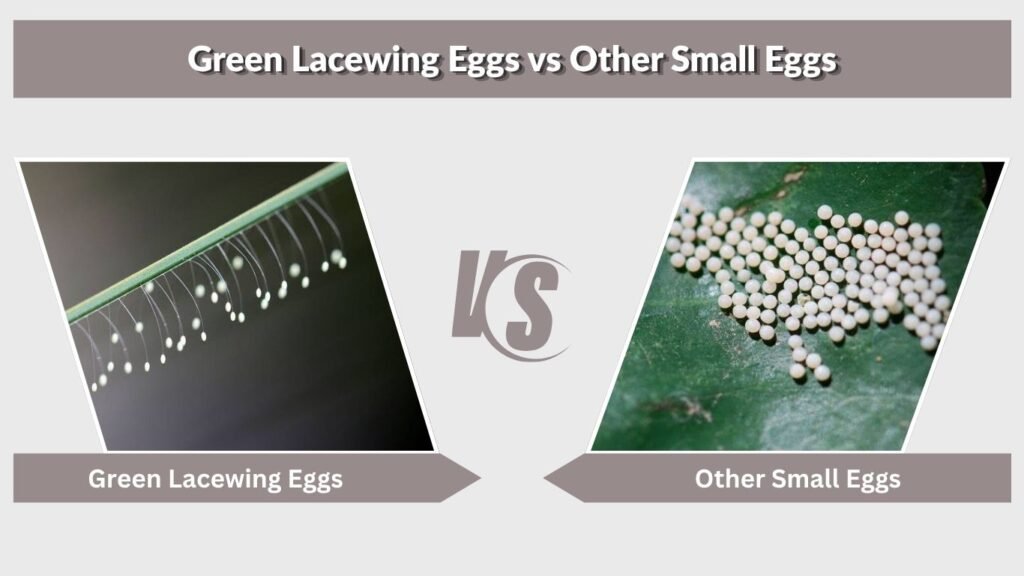
Tiny objects on plants are easy to misidentify.
| Characteristic | Green Lacewing Eggs | Many Other Insect Eggs |
|---|---|---|
| Raised on stalk | Usually yes | Usually no |
| Shape | Small and oval | Varies |
| Location | Leaves and stems | Varies |
| Plant damage | None from egg | Depends on species |
| Result after hatching | Predatory larva | Depends on insect |
The hair-like stalk remains the most recognizable clue.
Green Lacewing Life Cycle
After the egg stage, green lacewings continue through larval, pupal, and adult stages.
Adult females can lay many eggs during their lifetime; UC IPM reports approximately 100 to 300 eggs during a several-week adult lifespan.
The larvae then pass through three instars before forming a cocoon and pupating.
The adult eventually emerges with:
- A slender body
- Long antennae
- Large transparent wings
- Fine net-like wing veins
- Often pale green coloration
The cycle then begins again when adult females lay another generation of eggs.
FAQs
What do green lacewing eggs look like?
Green lacewing eggs are tiny, pale, oval eggs positioned at the ends of thin, hair-like stalks. They are commonly attached to leaves and stems. Their distinctive stalked appearance makes them easier to identify than many other small insect eggs.
How long do green lacewing eggs take to hatch?
Green lacewing eggs commonly hatch in approximately 4 to 10 days, although actual development depends on species, temperature, and other environmental conditions. Warmer suitable temperatures generally allow insects to develop faster than cool conditions. CSU Engagement & Extension
Are green lacewing eggs good for the garden?
Yes. The eggs themselves do not harm plants, and the larvae that emerge are beneficial predators. They are especially valuable because they feed on aphids and other small insects that can damage garden and greenhouse plants.
How do you release green lacewing eggs?
Place commercially purchased eggs near pest-infested plants and distribute them according to the supplier’s instructions. Avoid crushing the eggs or using incompatible broad-spectrum pesticides. Positioning them near aphids or other suitable prey gives newly hatched larvae easier access to food.
Should I remove green lacewing eggs from my plants?
No. Naturally occurring green lacewing eggs are generally worth protecting. When they hatch, the larvae become predators of aphids and other small garden pests. Leaving the eggs undisturbed allows these beneficial insects to contribute to natural pest control.