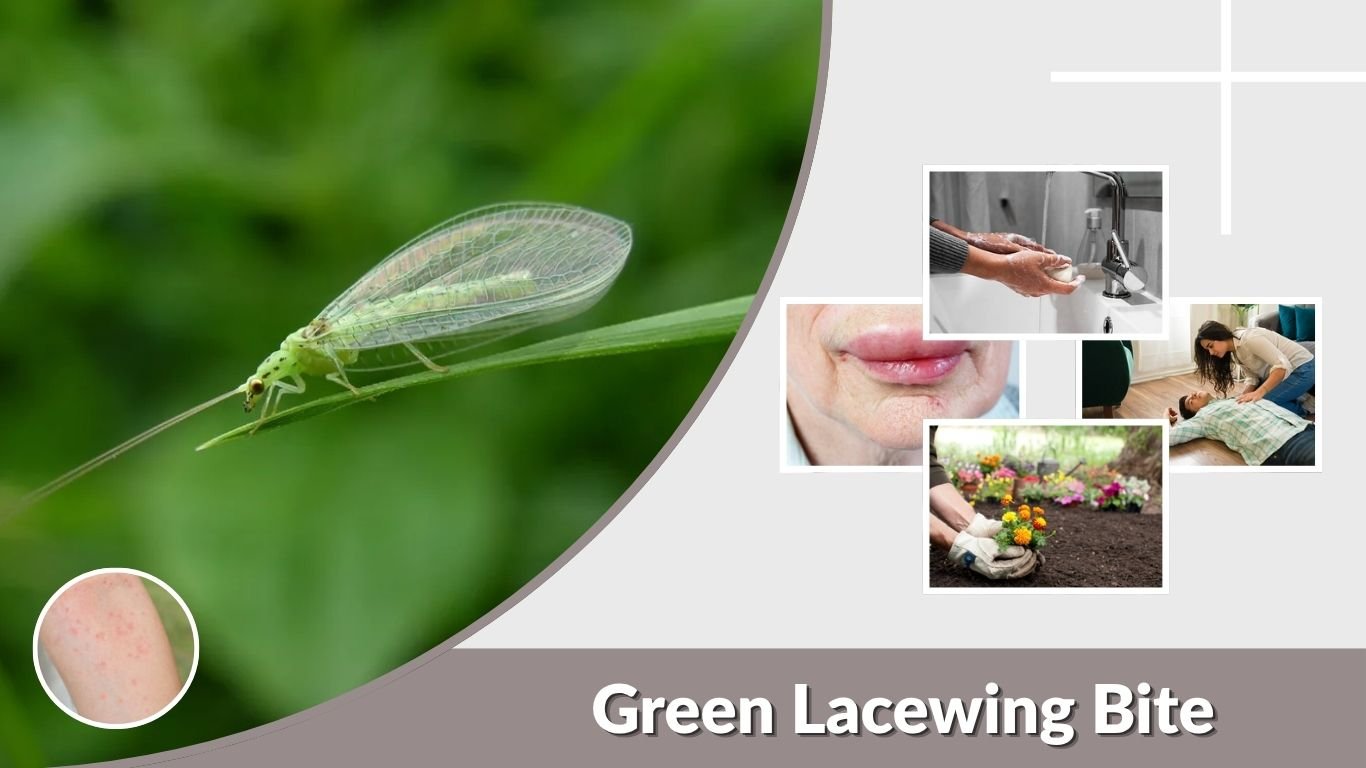
A green lacewing bite can be surprising because these delicate green insects are generally considered beneficial and harmless. Adult green lacewings rarely cause problems for people, but their predatory larvae have strong, curved mouthparts and can occasionally pinch or bite human skin. Most encounters cause only brief discomfort, mild redness, itching, or a small raised spot.
Green lacewings do not feed on human blood, and they do not normally seek people out to bite. Accidental bites are more likely when a larva becomes trapped against the skin, lands on a person, or is handled. Serious reactions are uncommon, but knowing what symptoms to watch for can make an unexpected lacewing bite easier to manage.
Do Green Lacewings Bite Humans?
Yes, green lacewing larvae can occasionally bite humans, although bites are uncommon.
The larvae are active predators that normally use their curved mouthparts to capture small insects such as aphids, mites, thrips, and other soft-bodied prey. Human skin is not part of their natural diet.
A bite is more likely to occur when a larva:
- Crawls onto exposed skin
- Becomes trapped beneath clothing
- Is handled with bare hands
- Is pressed against the body
- Feels disturbed while resting on a person
Adult green lacewings are much less likely to cause this type of encounter.
Why Would a Green Lacewing Bite You?
A green lacewing larva does not bite because it wants to feed on a person. The behavior is generally accidental or defensive.
These larvae constantly explore their environment while searching for prey. If one encounters skin, it may briefly use its mouthparts before realizing the surface is unsuitable.
This explains why someone may suddenly feel a small prick while gardening even though the insect was not deliberately attacking them.
What Does a Green Lacewing Bite Feel Like?
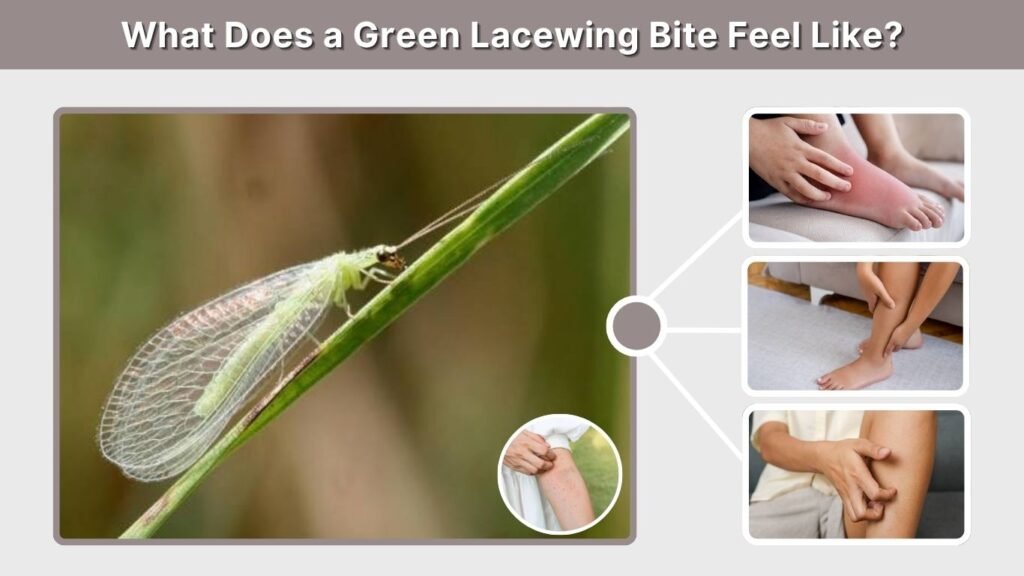
Most people describe a lacewing larva bite as a quick pinching, stinging, or needle-like sensation.
The discomfort is generally localized to a very small area.
Possible symptoms include:
- Mild pain
- Brief burning or stinging
- Redness
- Minor swelling
- Itching
- A small raised bump
For most people, symptoms remain mild and improve without complications.
What Does a Green Lacewing Bite Look Like?
There is no single appearance that identifies every green lacewing bite.
A bite may look like:
- A tiny red spot
- A slightly raised bump
- A small irritated area
- Mild swelling around the bite site
These signs can resemble bites or irritation caused by many other small insects.
Because of this similarity, a skin mark alone usually cannot confirm that a green lacewing was responsible. Seeing the insect bite or finding the larva immediately afterward makes identification much more reliable.
Green Lacewing Larvae Bite vs Adult Lacewing Bite
The larval stage is responsible for most reported biting encounters.
Green lacewing larvae look very different from adults. They are small, elongated predators with prominent jaws and are sometimes called aphid lions.
| Feature | Green Lacewing Larva | Adult Green Lacewing |
|---|---|---|
| Appearance | Small, elongated, alligator-like | Delicate green winged insect |
| Large predatory jaws | Yes | No |
| Main food | Small insects and mites | Often nectar, pollen, honeydew, or small prey depending on species |
| Human bites | Occasionally | Very uncommon |
| Dangerous to people | Generally no | Generally no |
If you were bitten by a small lacewing-like insect while working around aphid-infested plants, the larval stage is usually the more likely explanation.
Are Green Lacewing Bites Dangerous?
For most people, a green lacewing bite is not considered dangerous.
Green lacewings are not known as blood-feeding insects, and their occasional bites generally produce only temporary local irritation.
They are very different from insects such as mosquitoes, ticks, fleas, or bed bugs, which deliberately feed on people or animals.
Are Green Lacewings Venomous?
Green lacewings do not have a venomous sting like bees or wasps.
The larvae use specialized mouthparts to capture and feed on much smaller prey. The brief irritation associated with an accidental human bite is usually limited to the immediate area.
A lacewing bite should therefore not be confused with a wasp sting.
Can a Green Lacewing Bite Cause an Allergic Reaction?
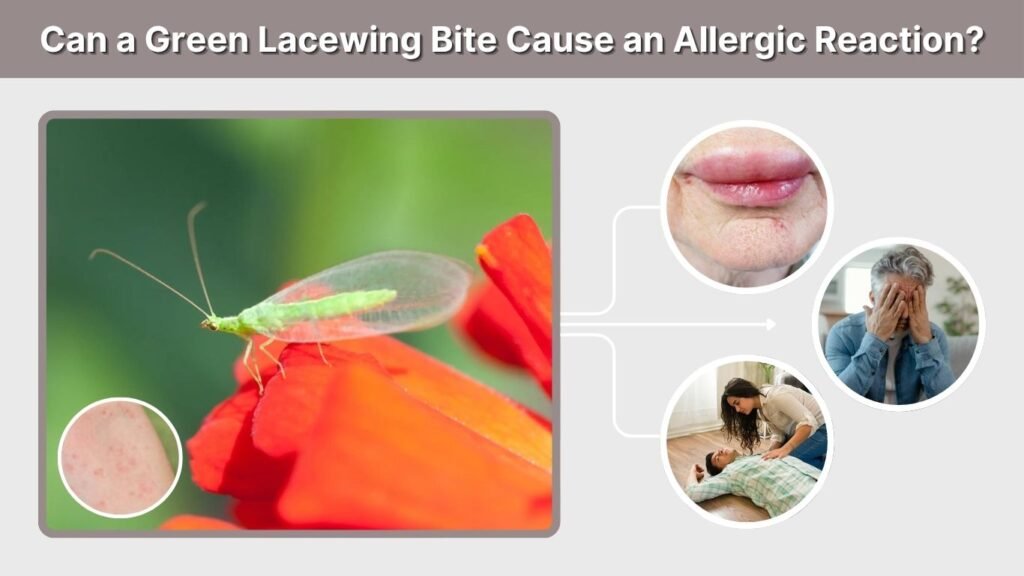
A strong allergic reaction would be unusual, but people can respond differently to insect bites.
A typical minor reaction may involve:
- Local redness
- Mild itching
- Slight swelling
- Temporary tenderness
More extensive swelling or irritation deserves closer attention, especially when symptoms continue to worsen rather than improve.
Signs That Need Urgent Attention
Seek urgent medical help if an insect bite is followed by symptoms such as:
- Difficulty breathing
- Swelling of the lips, mouth, tongue, or throat
- Widespread hives
- Fainting or severe dizziness
- Rapidly increasing swelling
- Other severe whole-body symptoms
These symptoms are not typical of a normal green lacewing bite and can indicate a serious allergic reaction to an insect exposure.
How to Treat a Green Lacewing Bite
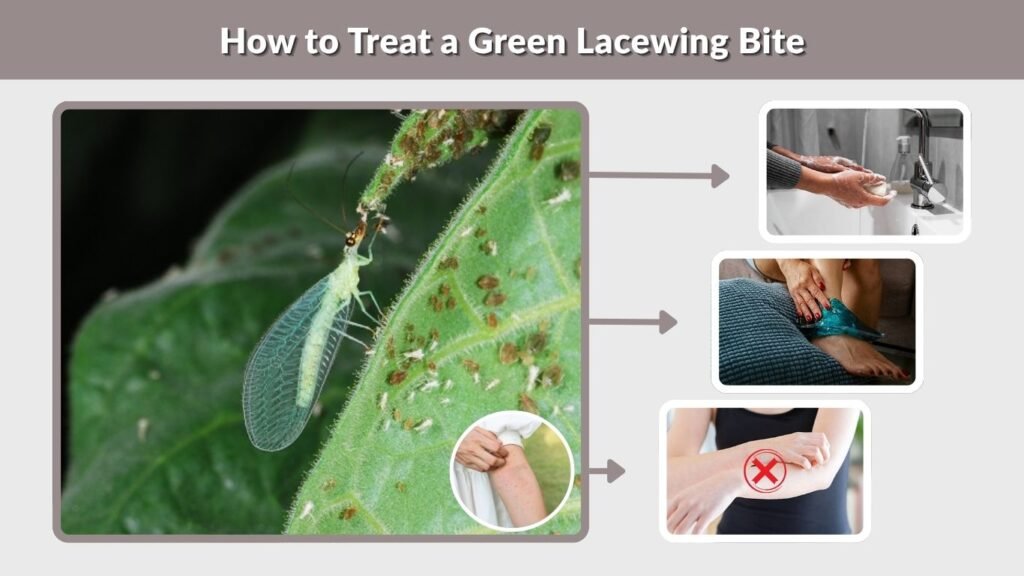
Most minor lacewing bites can be managed with simple first aid.
1. Wash the Area
Clean the skin gently with soap and water.
This helps remove dirt or other material that may have been present on the skin when the bite occurred.
2. Apply a Cool Compress
If the area becomes uncomfortable or slightly swollen, place a cool, clean compress over the skin for several minutes at a time.
This may help reduce temporary discomfort.
3. Avoid Scratching
Itching can make people repeatedly scratch the area, which may damage the skin.
Keeping the bite clean and avoiding unnecessary scratching reduces additional irritation.
4. Monitor the Symptoms
Minor redness and discomfort should generally improve rather than become progressively worse.
If the area becomes increasingly painful, severely swollen, unusually warm, or otherwise concerning, seek appropriate medical advice.
How Long Does a Green Lacewing Bite Last?
A mild reaction is usually short-lived.
The initial pinching or stinging sensation may last only briefly, while a small red or itchy area may remain for longer.
The exact duration varies depending on:
- Individual skin sensitivity
- How strongly the insect contacted the skin
- Whether the area was scratched
- The body’s inflammatory response
Persistent or worsening symptoms should not automatically be assumed to be caused by a lacewing, especially when the insect was never positively identified.
Why Are Lacewing Larvae Able to Bite?
Green lacewing larvae are built for hunting.
Their most noticeable features are the long, curved mouthparts extending from the front of the head. These structures allow them to capture and feed on soft-bodied arthropods.
Common prey includes:
- Aphids
- Mealybugs
- Thrips
- Mites
- Whiteflies
- Insect eggs
- Small caterpillars
Because their feeding structures are strong enough to penetrate tiny prey, people can occasionally feel them when a larva tests or pinches the skin.
Do Green Lacewings Bite Dogs or Cats?
Green lacewings are not considered important pests of dogs or cats.
A larva could theoretically pinch exposed skin if trapped against a pet, but lacewings do not live on animals or use them as hosts.
They do not behave like:
- Fleas
- Ticks
- Lice
- Mosquitoes
Finding green lacewings around a home with pets usually indicates nearby vegetation, lights, or populations of small insects rather than a pet infestation.
Green Lacewing Bite or Mosquito Bite?
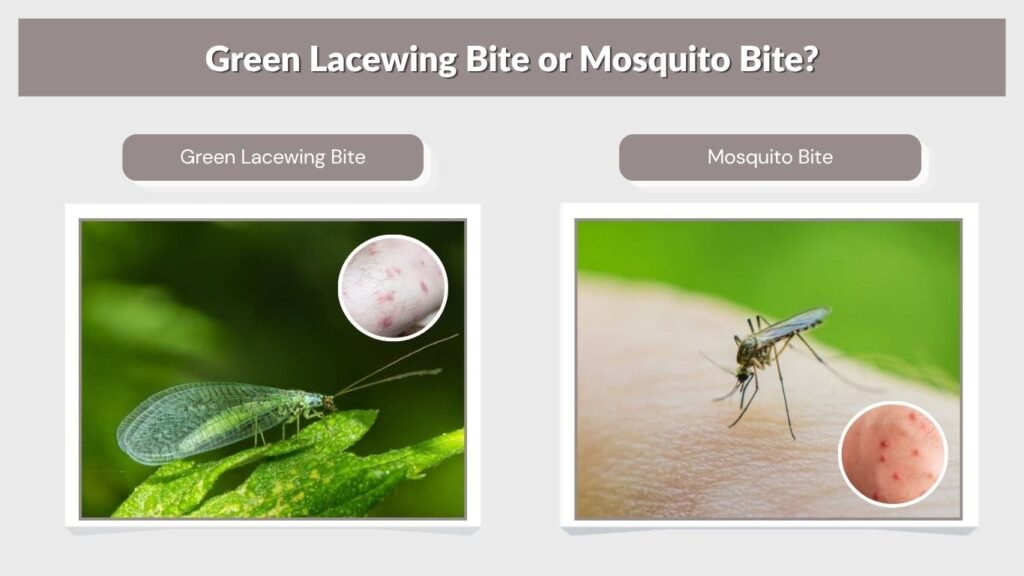
Because small insect bites can look similar, identification based only on the skin reaction can be difficult.
| Feature | Green Lacewing Bite | Mosquito Bite |
|---|---|---|
| Reason for biting | Usually accidental | Blood feeding |
| Frequency | Uncommon | Very common |
| Immediate sensation | May feel like a pinch | Often unnoticed initially |
| Typical reaction | Small irritated spot | Itchy raised bump |
| Repeated bites | Unusual | Common where mosquitoes are active |
If the insect was not seen, other causes of the skin irritation should remain possible.
Green Lacewing Bite or Bed Bug Bite?
Green lacewings do not behave anything like bed bugs.
Bed bugs deliberately feed on blood and hide near sleeping areas. Green lacewings are outdoor beneficial insects associated primarily with plants and other insects.
A lacewing larva does not:
- Establish an infestation in bedding
- Feed repeatedly on sleeping humans
- Depend on blood
- Hide in mattresses as part of its life cycle
Repeated unexplained bites during sleep are therefore unlikely to be caused by green lacewings.
Why Are Green Lacewings Around Your House?
Seeing green lacewings near a home does not mean they are looking for humans.
Adults may enter buildings because they are attracted to lights or accidentally pass through:
- Windows
- Doors
- Screens
- Small openings
Larvae may occasionally arrive indoors on:
- Houseplants
- Flowers
- Vegetables
- Garden materials
They generally do not reproduce as household pests.
If you find one indoors, it can usually be moved outside carefully without touching it directly.
Should You Kill Green Lacewings Because They Bite?
Usually, no.
Green lacewings are valuable beneficial insects, and occasional bites do not outweigh their ecological usefulness.
Their larvae naturally reduce populations of several common plant pests.
Benefits of Green Lacewing Larvae
They may feed on:
- Aphids
- Mealybugs
- Whiteflies
- Thrips
- Mites
- Scale insects
- Small caterpillars
- Insect eggs
Gardeners even purchase lacewing eggs and larvae specifically for biological pest control.
Instead of killing one, gently move it away from exposed skin or relocate it onto vegetation.
How to Avoid Green Lacewing Larvae Bites
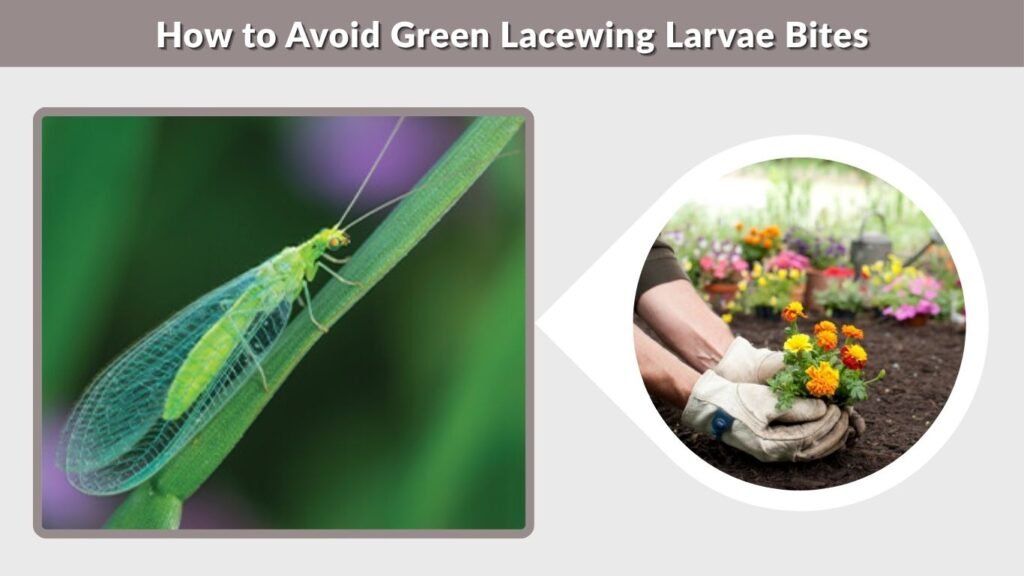
No major precautions are normally necessary, but you can reduce accidental encounters by:
- Wearing gardening gloves
- Avoiding direct handling
- Checking clothing after working in vegetation
- Gently brushing insects away rather than crushing them
- Shaking out gardening gloves before putting them on
If you see a small lacewing larva on a plant, leave it there whenever possible. It is probably hunting pests.
FAQs
Do green lacewings bite people?
Green lacewing larvae can occasionally bite or pinch human skin, but this behavior is uncommon. They do not seek humans for food and normally use their specialized mouthparts to capture aphids and other small arthropods.
What does a green lacewing bite look like?
A bite may produce a small red spot, minor bump, slight swelling, or localized irritation. Because these symptoms resemble many other insect bites, appearance alone usually cannot confirm that a green lacewing caused the reaction.
Does a green lacewing larvae bite hurt?
It can produce a brief pinching, stinging, or needle-like sensation. Most reactions remain mild and localized rather than causing significant or lasting pain.
How do you treat a green lacewing bite?
Wash the affected skin with soap and water, use a cool compress if needed, avoid scratching, and monitor the area. Seek medical attention if severe or rapidly worsening symptoms develop.
Can you have an allergic reaction to a green lacewing bite?
Most reported reactions are minor and localized. However, any insect exposure can potentially be followed by an unusual reaction. Difficulty breathing, widespread hives, faintness, or swelling of the face or throat requires urgent medical attention.