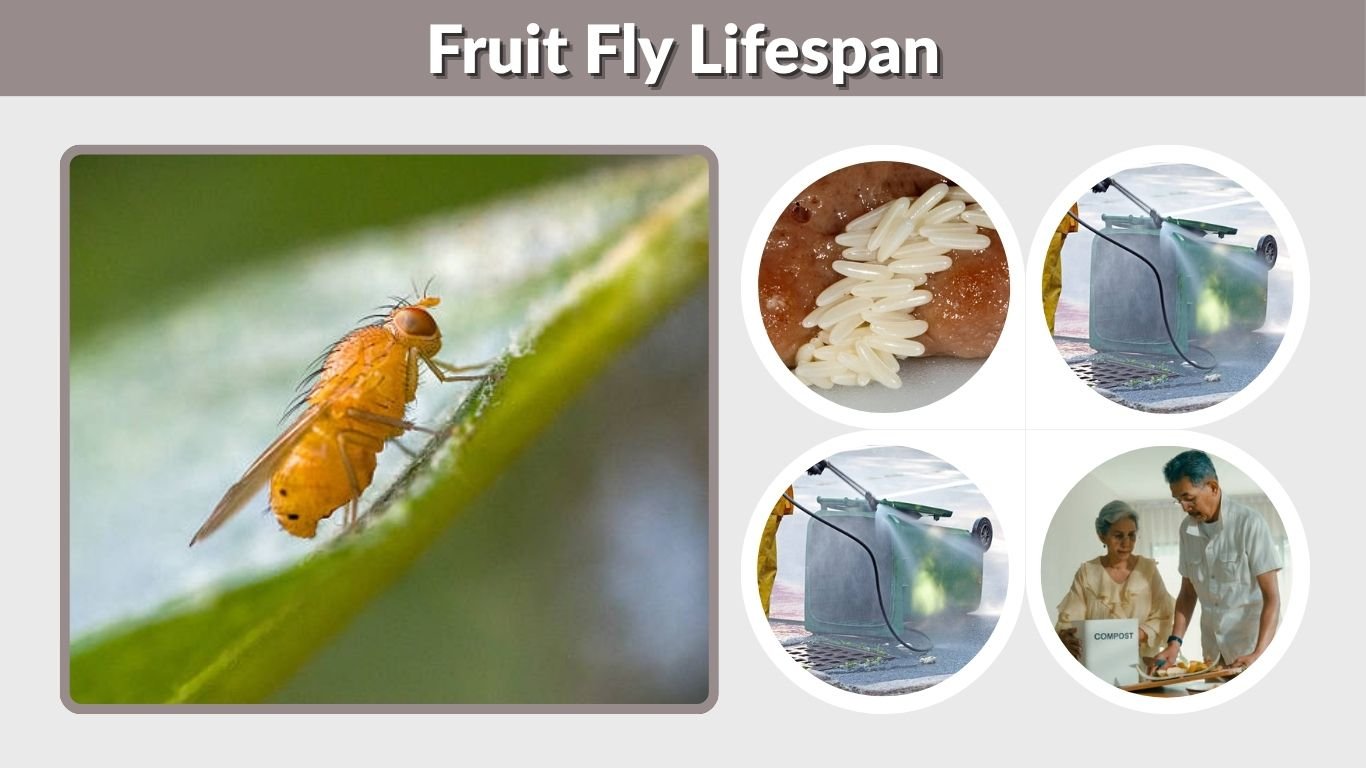
The average fruit fly lives for approximately 30 to 50 days as an adult, although temperature, food, humidity, and species can shorten or extend its life. A fruit fly does not live for only 24 hours, as is sometimes believed.
Under warm indoor conditions, the complete development from egg to adult may take just 8 to 12 days. This rapid life cycle allows a few flies around ripe fruit, trash, or drains to become a noticeable infestation within a short period.
What Is the Average Lifespan of a Fruit Fly?
The common kitchen fruit fly, Drosophila melanogaster, normally survives for around 30 to 50 days after reaching adulthood. Some individuals die earlier because of dehydration, temperature extremes, lack of food, predators, or pest-control treatments.
Under carefully controlled laboratory conditions, certain fruit flies may survive for approximately two months or longer. However, flies living inside a house often face less predictable conditions.
Their lifespan should not be confused with their development time. Although a fruit fly may become an adult within about 8 to 12 days, it can continue living and reproducing for several more weeks.
| Fruit fly stage | Approximate duration |
| Egg | About 1 day |
| Larva | 4–6 days |
| Pupa | 4–6 days |
| Adult | 30–50 days |
| Complete lifespan | Around 5–8 weeks |
These timeframes vary according to temperature, moisture, food quality, and fruit fly species.
Fruit Fly Life Cycle
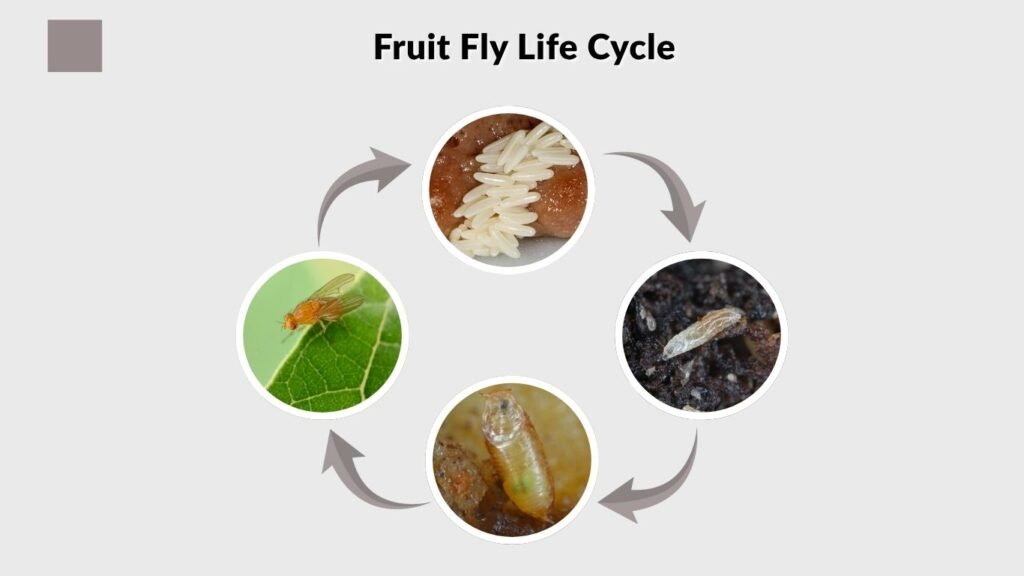
Fruit flies undergo complete metamorphosis. Their life cycle contains four stages: egg, larva, pupa, and adult.
Each stage can develop quickly when the environment is warm and suitable breeding material is available.
Egg Stage
Female fruit flies lay their eggs on moist, fermenting organic material. Common egg-laying locations include overripe fruit, spilled juice, trash residue, compost, and dirty recycling containers.
The eggs are extremely small and difficult to see without magnification. Under warm conditions, they may hatch within approximately 24 hours.
A female can lay hundreds of eggs during her adult life. This high reproductive rate is one reason a small fruit fly problem can quickly become a large infestation.
Larval Stage
After hatching, the larvae look like tiny cream-colored maggots. They remain inside or near the fermenting material and feed mainly on yeast, bacteria, and decomposing organic matter.
The larval stage commonly lasts four to six days. During this period, the larvae grow rapidly and molt several times.
Because larvae remain hidden inside food residue or decaying produce, removing only the flying adults does not eliminate the infestation.
Pupal Stage
A mature larva usually moves toward a slightly drier location before becoming a pupa. It may attach itself to the side of a trash container, fruit bowl, cabinet surface, or another area close to the breeding source.
Inside the pupal case, the larva transforms into an adult fruit fly. This stage generally lasts four to six days.
Pupae may remain after spoiled food has been discarded. Consequently, new adults can continue appearing for several days after the original breeding material is removed.
Adult Stage
A newly emerged fruit fly becomes sexually mature very quickly. Females may begin laying eggs within one or two days after becoming adults.
Adult flies spend their time feeding, mating, and searching for new breeding sites. They are strongly attracted to fermenting fruit, vinegar, wine, beer, juice, and sugary residue.
An adult may live for 30 to 50 days when it has access to suitable food and moisture.
Do Fruit Flies Live for Only 24 Hours?
No. The idea that fruit flies live for only 24 hours is a myth.
Fruit fly eggs may hatch in approximately one day, but that does not represent the insect’s entire lifespan. Development from egg to adult usually requires at least eight days under favorable conditions.
Once mature, the adult fly can survive for several weeks. Its complete lifespan may therefore extend beyond one month.
The 24-hour myth may result from confusion with mayflies. Some adult mayfly species survive for only a few hours or days, but fruit flies have much longer adult lives.
How Long Do Fruit Flies Live Indoors?
Fruit flies living indoors commonly survive for several weeks. A warm kitchen can provide ideal conditions for both adults and developing larvae.
Indoor fruit fly populations may have access to:
- Ripe or damaged produce
- Trash and compost
- Open beverage containers
- Food residue in drains
- Dirty recycling bins
- Sugary spills
- Forgotten vegetables
- Pet food residue
Because different generations overlap, an infestation may seem to continue for months. This does not mean one individual fly has lived for the entire period. New adults are continually emerging from eggs, larvae, and pupae.
Even if the visible adults are killed, the infestation can return unless every breeding source is removed.
How Long Do Fruit Flies Live Without Food?
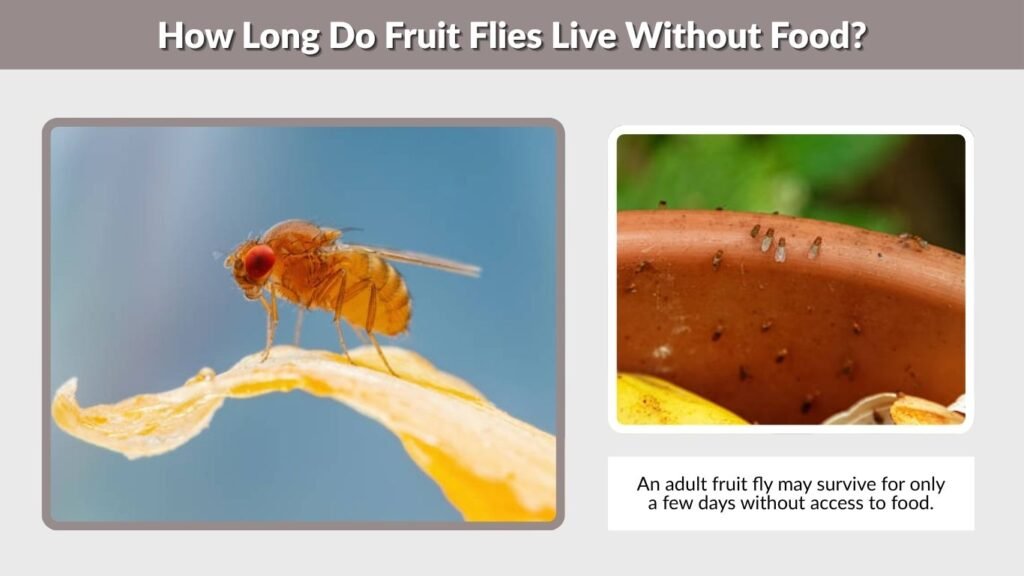
An adult fruit fly may survive for only a few days without access to food. The exact time depends on whether water or another source of moisture remains available.
Fruit flies are small and can lose water quickly. Complete deprivation of both food and moisture may kill them within approximately one to three days. With access to water but no useful food, they may survive somewhat longer.
However, eliminating obvious fruit is not always enough to starve them. Fruit flies can feed on tiny amounts of organic material, including:
- Residue inside bottles
- Juice beneath appliances
- Moisture in trash bins
- Fermented material in drains
- Food particles on cleaning cloths
- Spilled syrup or soda
- Compost residue
A source that appears insignificant to a person may provide enough food for multiple fruit flies.
How Temperature Affects Fruit Fly Lifespan
Temperature strongly influences fruit fly development, activity, reproduction, and survival.
Warm Temperatures
Warm conditions speed up development. At approximately 75°F to 80°F, or 24°C to 27°C, eggs and larvae can develop rapidly.
This is why fruit fly infestations often increase during summer or in consistently warm kitchens. Females reproduce quickly, and new adults may emerge within little more than a week.
Extremely high temperatures are harmful, however. Excessive heat can cause dehydration, reduce fertility, and increase mortality.
Cool Temperatures
Cooler conditions slow the fruit fly’s metabolism and development. Eggs take longer to hatch, larvae grow more slowly, and adults become less active.
Moderately cool conditions may extend the adult lifespan in some situations because the fly uses energy more slowly. However, very cold conditions can prevent reproduction or kill the insects.
Refrigeration is an effective way to protect ripe fruit because low temperatures greatly reduce fruit fly activity and development.
Common Fruit Fly Lifespan in a House
The common kitchen fruit fly is usually Drosophila melanogaster, but other small flies may be mistakenly identified as fruit flies.
Different species have different lifespans and breeding habits.
Dark-Eyed Fruit Flies
Dark-eyed fruit flies resemble red-eyed kitchen fruit flies but may be more strongly associated with drains, sewage residue, and decaying organic material.
Their development time and adult lifespan are similar enough that sanitation remains the main control method.
Flightless Fruit Flies
Flightless fruit flies are commonly raised as food for fish, frogs, reptiles, and other small animals. They are strains of fruit flies bred with genetic traits that prevent normal flight.
Their lifespan is generally similar to that of flying fruit flies. A culture may remain productive for several weeks because new generations continue developing within it.
Oriental and Queensland Fruit Flies
Oriental and Queensland fruit flies are not the same as the tiny Drosophila flies commonly found around kitchen bananas.
They belong to a different group of agricultural pests and attack developing fruit. Their adult lifespans and life cycles can differ considerably from those of common household fruit flies.
Why Do Fruit Fly Infestations Last So Long?
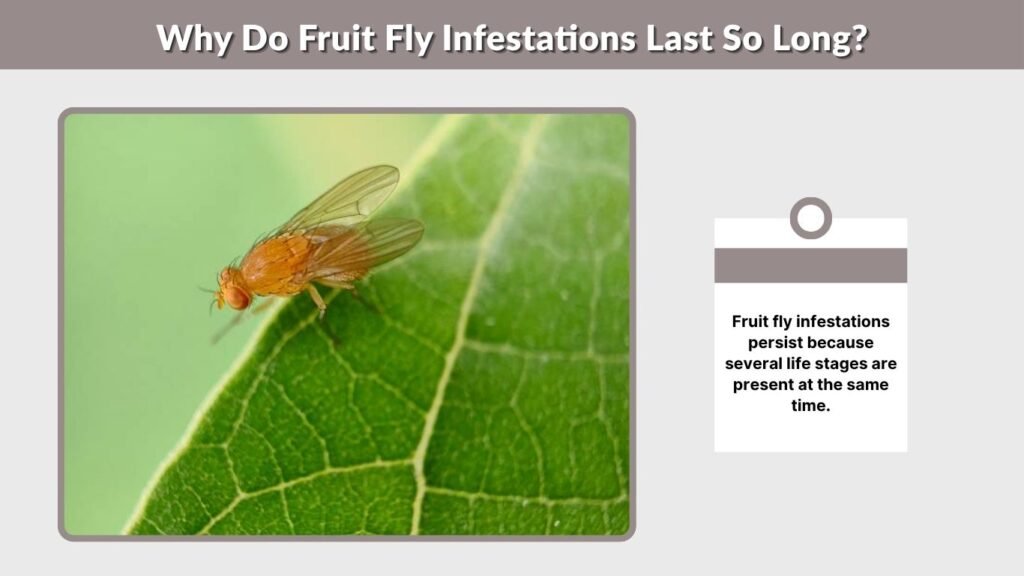
Fruit fly infestations persist because several life stages are present at the same time.
Adults may be flying around the kitchen while eggs are hatching inside a piece of fruit. Larvae may be feeding in the trash, and pupae may be attached to a nearby dry surface.
Killing the visible adults leaves the immature stages unaffected. Within several days, new adults emerge and the infestation appears to return.
A female that survives can also continue laying eggs in any remaining breeding material.
How to Shorten a Fruit Fly Infestation
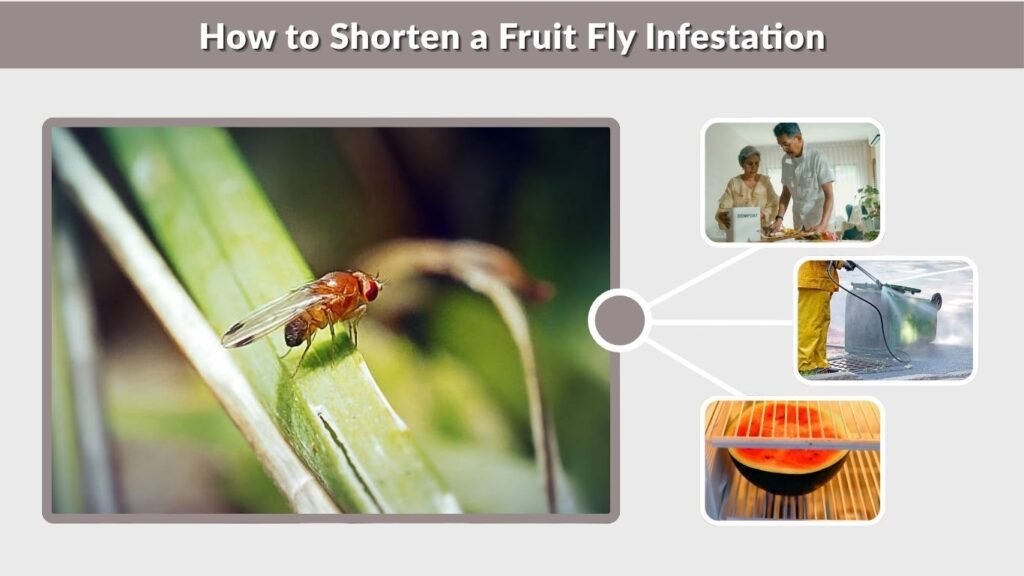
Removing the breeding source is more important than simply waiting for the adult flies to die.
Remove Fermenting Material
Discard spoiled fruit and vegetables. Inspect stored potatoes, onions, tomatoes, and bananas for soft or damaged areas.
Empty trash and indoor compost containers daily until the infestation ends.
Clean Hidden Residue
Wash trash bins, recycling containers, fruit bowls, bottle openings, and the areas beneath kitchen appliances.
Clean spilled wine, juice, soda, vinegar, and syrup immediately.
Scrub Drains
Use a stiff drain brush to remove organic film from the inner walls of kitchen drains and garbage disposals.
Pouring liquid cleaner into the opening may not remove the material where larvae are developing.
Refrigerate Ripe Produce
Move ripe fruit into the refrigerator when possible. Keep produce that must remain at room temperature covered and inspect it regularly.
Trap Remaining Adults
An apple cider vinegar trap can reduce the adult population. Add vinegar and one drop of dish soap to a small container, then place it near the area with the most activity.
Traps will not kill eggs, larvae, or pupae, so they must be combined with cleaning.
Fruit Fly Lifespan vs. Gnat Lifespan
Fruit flies and gnats are often confused, but they may come from different breeding sources.
Fungus gnats usually develop in moist houseplant soil. Drain flies breed in organic slime inside drains. Fruit flies prefer fermenting food and sugary liquids.
Their adult lifespans may all extend for several days or weeks. Therefore, waiting for them to die naturally is rarely an effective solution when the breeding environment remains available.
Correct identification helps determine whether you need to clean food residue, dry plant soil, or scrub a drain.
FAQs
What Is the Lifespan of an Adult Fruit Fly?
An adult common fruit fly normally lives for approximately 30 to 50 days. Temperature, moisture, food availability, genetics, and environmental conditions can make the actual lifespan shorter or longer.
How Long Can Fruit Flies Live in a House?
Individual adults may survive indoors for several weeks. An infestation can continue much longer because new generations constantly emerge from eggs, larvae, and pupae hidden in fermenting material.
How Long Do Fruit Flies Live Without Food?
Fruit flies may survive for only a few days without food. They die faster when they also lack water. Tiny amounts of juice, residue, moisture, or organic material can allow them to survive longer than expected.
How Quickly Do Fruit Flies Reproduce?
A female may begin laying eggs within one or two days of becoming an adult. In warm conditions, her offspring can complete development from egg to adult in approximately 8 to 12 days.
Will Fruit Flies Eventually Go Away on Their Own?
They may disappear when all food and breeding material are removed. However, they usually continue reproducing if ripe produce, trash residue, dirty drains, or spilled liquids remain available.