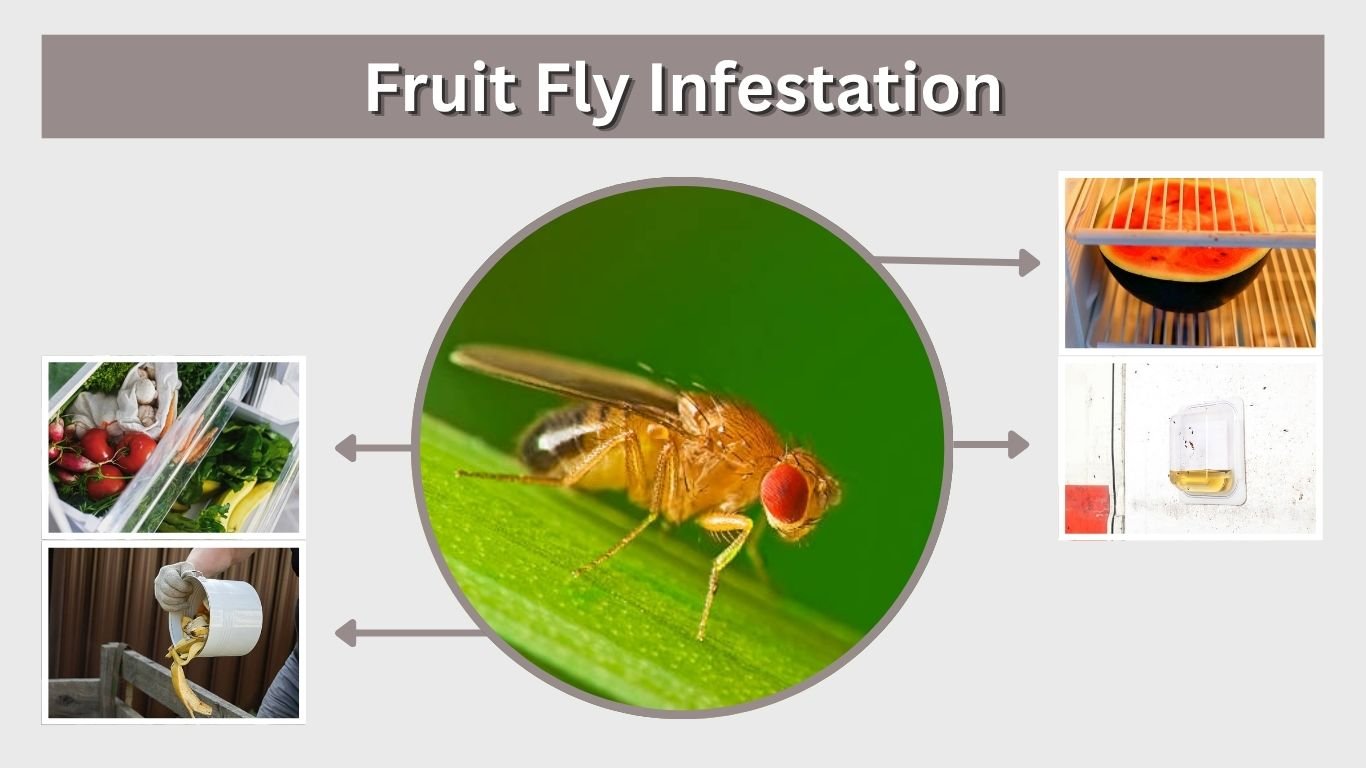
A fruit fly infestation can develop quickly when ripe fruit, spilled drinks, food waste, or other fermenting material remains exposed. Although the adult flies are easy to notice, the real problem is usually hidden eggs and larvae developing near the food source.
The fastest way to eliminate fruit flies is to locate and remove every breeding area, clean nearby surfaces, and trap the remaining adults. Sprays may kill visible flies, but they rarely solve the infestation unless the source is removed.
What Causes a Fruit Fly Infestation?
Fruit flies are attracted to moist organic material undergoing fermentation. Adult females lay tiny eggs on or near this material, allowing newly hatched larvae to feed immediately.
Common causes include:
- Overripe or damaged fruit
- Rotting vegetables
- Open wine, beer, juice, or soda
- Food residue in trash cans
- Indoor compost containers
- Dirty recycling bins
- Sugary spills under appliances
- Food buildup around garbage disposals
- Forgotten potatoes or onions
- Wet mops and cleaning cloths
- Unwashed pet food bowls
A female fruit fly can lay hundreds of eggs during her life. Under warm conditions, the complete development from egg to adult may take little more than a week. This rapid reproduction explains why a small problem can suddenly become a severe infestation.
Signs of a Fruit Fly Infestation
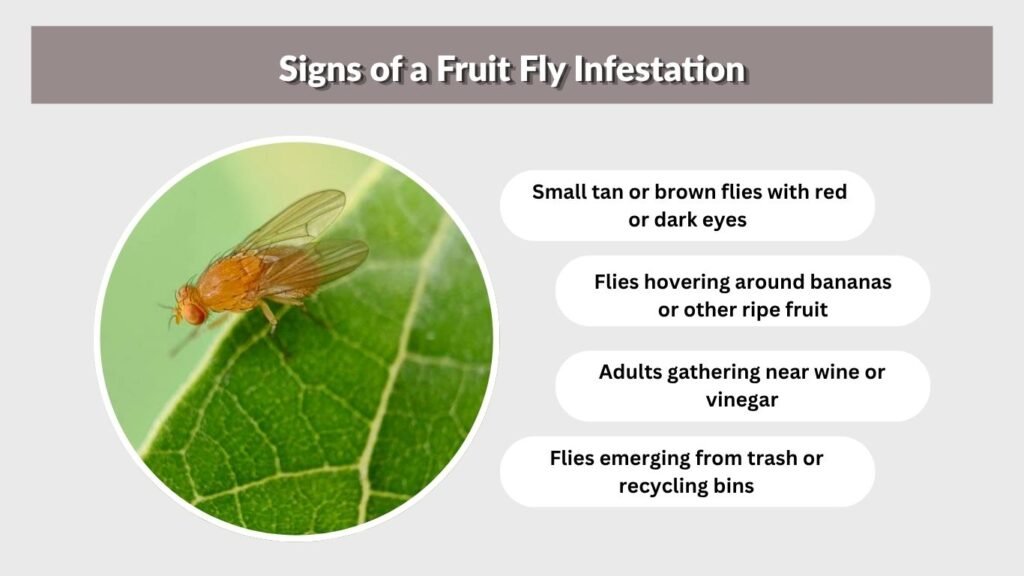
The clearest sign is the repeated appearance of tiny flies around food, drinks, drains, or trash.
Common Signs
Look for:
- Small tan or brown flies with red or dark eyes
- Flies hovering around bananas or other ripe fruit
- Adults gathering near wine or vinegar
- Flies emerging from trash or recycling bins
- Tiny cream-colored larvae in rotting produce
- Small brown pupae attached near a breeding source
- New flies appearing shortly after cleaning
- Large numbers returning despite using traps
Fruit flies are usually about 1/8 inch long. They have rounded bodies and are weaker fliers than common houseflies.
Why Is My House Suddenly Infested With Fruit Flies?
A sudden infestation usually means that fruit flies have completed a hidden life cycle somewhere inside the home.
The original source may have been only one damaged fruit, a small drink spill, or residue inside a recycling container. By the time adults become noticeable, eggs, larvae, and pupae may already be present.
Warm indoor temperatures speed up development. Several generations can overlap, making it seem as though the flies are appearing from nowhere.
Produce can also bring fruit fly eggs into a home. The eggs are too small to see easily and may be present around damaged areas or stems.
Where Fruit Flies Breed in a House
Finding the source is the most important step in controlling an infestation.
Kitchen
The kitchen is the most common breeding location because it contains food, moisture, and fermenting material.
Check:
- Fruit bowls
- Trash cans
- Recycling bins
- Compost containers
- Garbage disposals
- Drains
- Open bottles
- Cupboards containing produce
- Areas beneath refrigerators and stoves
- Dishcloths, sponges, and mop heads
Inspect bags of potatoes and onions carefully. One rotten vegetable hidden at the bottom can support many larvae.
Bathroom
A true fruit fly infestation is less common in a clean bathroom. Small flies near bathroom drains may actually be drain flies.
Possible bathroom sources include dirty drains, damp trash, spilled sugary products, drink containers, or wet cleaning materials.
Drain flies have fuzzy, moth-like bodies. Fruit flies are smoother and more commonly associated with fermenting food.
Bedroom
Fruit flies in a bedroom usually come from food or beverages rather than bedding or furniture.
Look for:
- Unwashed cups
- Open drink bottles
- Snack wrappers
- Forgotten fruit
- Trash containing food
- Spilled juice or soda
- Pet food
Removing these materials usually stops the bedroom activity.
Houseplants
Fruit flies may visit houseplants, but flies emerging directly from moist soil are more likely to be fungus gnats.
Fungus gnats have slender bodies and long legs. Their larvae develop in damp potting soil. Fruit flies have rounder bodies and prefer fermenting food or liquid.
Fruit Fly Infestation With No Visible Source
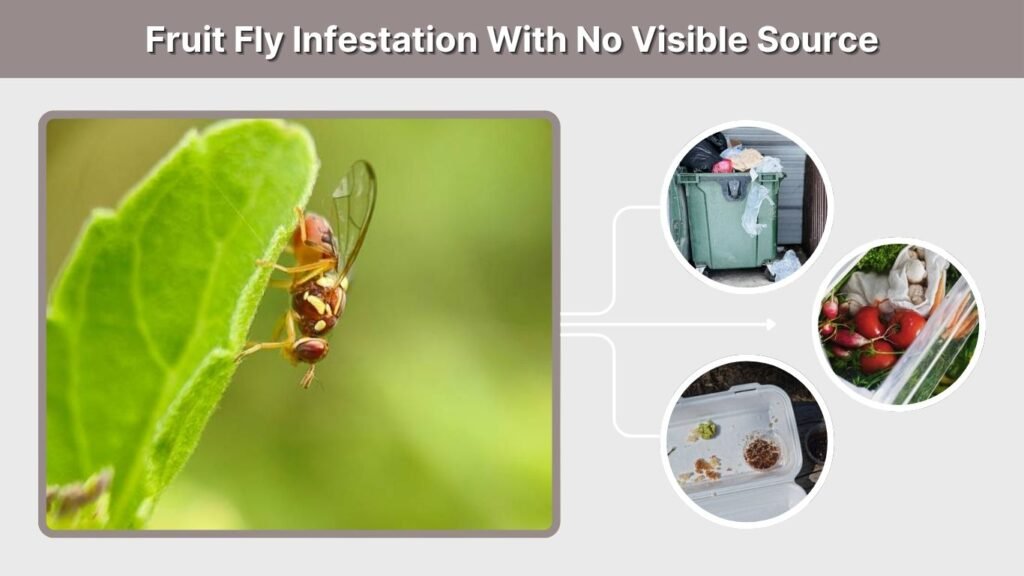
When no source is obvious, inspect less noticeable areas.
Possible hidden breeding sites include:
- Liquid beneath trash bags
- Residue under removable appliance trays
- Empty wine and beer bottles
- Leaking garbage bags
- Dirty floor drains
- Food behind cabinets
- Produce stored in drawers
- Old lunch boxes
- Reusable grocery bags
- Mop buckets
- Wet rags
- Pet feeding areas
Move appliances carefully and inspect beneath them with a flashlight. A small patch of dried or sticky liquid can continue attracting adults.
If the flies remain concentrated around drains after all food sources are removed, they may be drain flies or phorid flies rather than fruit flies.
How to Get Rid of a Fruit Fly Infestation
Successful control requires sanitation, breeding-source removal, and adult trapping.
1. Remove Ripe and Rotting Produce
Discard spoiled fruit and vegetables immediately. Refrigerate ripe produce when possible.
Check every storage area, including cupboards, baskets, drawers, reusable bags, and pantry shelves. Do not assume the visible fruit bowl is the only source.
2. Empty and Wash Trash Containers
Remove household trash, compost, and recycling. Wash the inside, outside, lid, and bottom of each container with soap and water.
Simply replacing the bag may not remove fermented liquid trapped beneath the liner.
Allow the container to dry before adding a new bag.
3. Clean Spills and Food Residue
Wipe counters, floors, cabinet shelves, and appliance surfaces. Clean beneath refrigerators, ovens, microwaves, and trash cans.
Pay particular attention to:
- Wine
- Beer
- Juice
- Soda
- Syrup
- Vinegar
- Fruit juice
- Fermented sauces
Even a small spill can support larvae.
4. Clean the Garbage Disposal
Food can become trapped under rubber splash guards and around disposal components.
Turn off the power before cleaning removable or accessible parts. Scrub visible residue with a brush and suitable cleaner.
Running water through the disposal without scrubbing may leave the breeding material in place.
5. Scrub the Drains
Use a stiff drain brush to remove organic film from the inner walls of the drain.
Pouring bleach, vinegar, or boiling water alone may kill some organisms, but it often does not remove the sticky material where larvae develop.
Clean overflow openings and floor drains as well.
6. Rinse Recycling
Wash bottles, cans, and jars before storing them for recycling. Pay special attention to containers that hold wine, beer, soda, juice, or sweet sauces.
Keep recycling containers covered and remove them frequently during an infestation.
7. Wash Cleaning Materials
Clean or replace damp sponges, mop heads, dishcloths, and reusable cleaning pads.
Allow them to dry completely between uses. Fermented residue on a wet cloth may provide a hidden food source.
Best Fruit Fly Infestation Traps
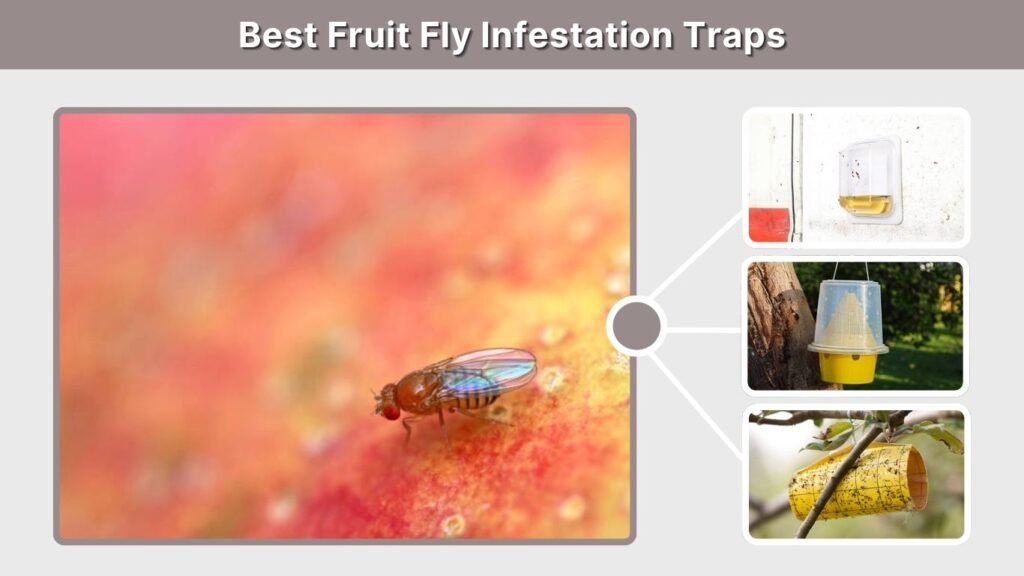
Traps help reduce adult numbers but cannot eliminate eggs or larvae.
Apple Cider Vinegar Trap
Pour a small amount of apple cider vinegar into a glass and add one drop of dish soap.
The fermented odor attracts the flies, while the soap breaks the surface tension and causes them to sink.
Place the trap near the strongest activity.
Funnel Trap
Add vinegar or a small piece of overripe fruit to a jar. Make a paper funnel with a small opening and place it inside the jar.
Fruit flies enter through the funnel and have difficulty escaping.
Commercial Traps
Commercial fruit fly traps may be useful in kitchens, apartments, bars, and restaurants. Replace the lure according to the label.
Traps should be placed near breeding areas but away from uncovered food preparation surfaces.
Will Sprays Eliminate a Fruit Fly Infestation?
Aerosol sprays can kill exposed adults, but they offer only temporary control. Eggs, larvae, and pupae remain protected inside breeding material.
Spraying around food preparation areas also creates unnecessary exposure concerns. Never apply a pesticide to food, dishes, utensils, counters, or surfaces unless the product label specifically permits it.
Sanitation is generally more important than insecticide use for household fruit flies.
Severe Fruit Fly Infestation
A severe infestation indicates that a productive breeding source remains available.
Take these additional steps:
- Remove all exposed produce for several days.
- Empty trash and compost every day.
- Clean every recycling container.
- Inspect behind and beneath appliances.
- Scrub all nearby drains and disposals.
- Use several traps to identify high-activity areas.
- Continue cleaning after adult numbers decline.
In an apartment, the source may be in a neighboring unit, shared trash room, recycling area, or building drain. Notify the property manager when sanitation inside your unit does not stop the problem.
Professional pest control may be necessary when flies emerge from damaged plumbing, sewage leaks, inaccessible wall spaces, or commercial food-service equipment.
How Long Does an Infestation Last?
Adult numbers may decrease within a few days after the breeding source is removed. However, pupae already present can continue producing new flies for one to two weeks.
Continue sanitation and trapping until no flies appear for at least several days.
An infestation that continues beyond two weeks usually means that a source was missed or the insect was incorrectly identified.
How to Prevent Another Infestation
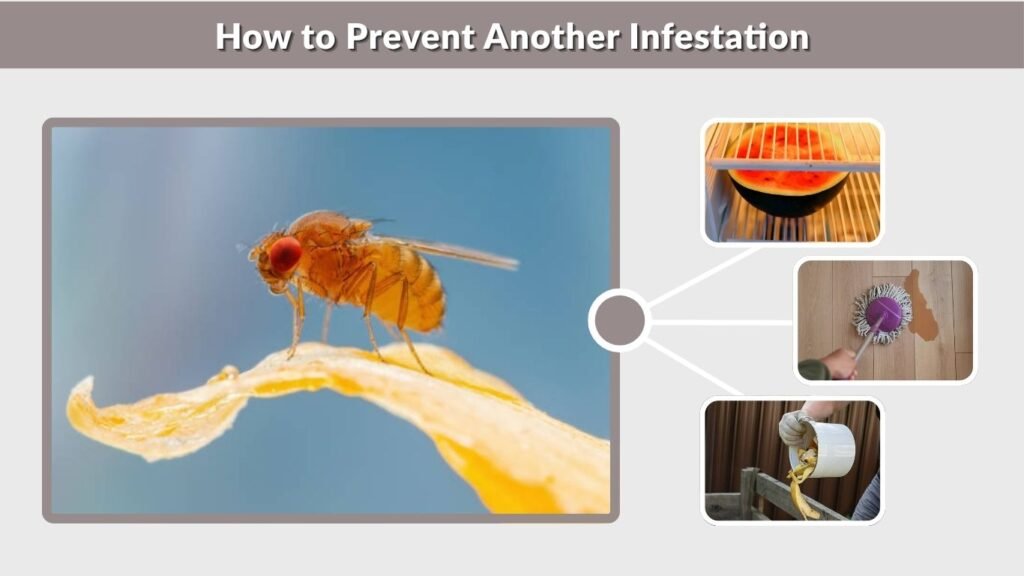
Store ripe fruit in the refrigerator and discard damaged produce promptly.
Keep trash, recycling, and compost containers clean and covered. Rinse drink containers before storing them.
Clean food spills immediately, especially beneath appliances and furniture. Maintain drains and garbage disposals before heavy residue develops.
Inspect produce regularly and avoid leaving dirty dishes, cups, or drink bottles overnight.
FAQs
Can Fruit Flies Infest Humans?
No. Fruit flies do not live, reproduce, or lay eggs inside people. They breed in fermenting organic material. Their presence around a person is usually related to nearby food, drinks, trash, or sweet residue.
What Is the Fastest Way to Eliminate Fruit Flies?
Remove every breeding source, clean trash and recycling containers, scrub drains, refrigerate produce, and use vinegar traps for the adults. Trapping alone will not stop an infestation.
Why Are Fruit Flies Still Present After Cleaning?
Eggs, larvae, or pupae may still be developing. A hidden source may also remain beneath an appliance, inside a drain, or in stored produce. New adults may emerge for one to two weeks after cleaning.
Can Fruit Flies Infest a Refrigerator?
Fruit flies may enter a refrigerator with produce, but cold temperatures slow their activity and development. Spilled juice, rotten fruit, or dirty drain pans can still attract them and should be cleaned.
When Should I Call Pest Control?
Seek professional help when a severe infestation continues after two weeks of thorough cleaning or when flies appear to originate from sewage, broken pipes, walls, shared building areas, or inaccessible equipment.