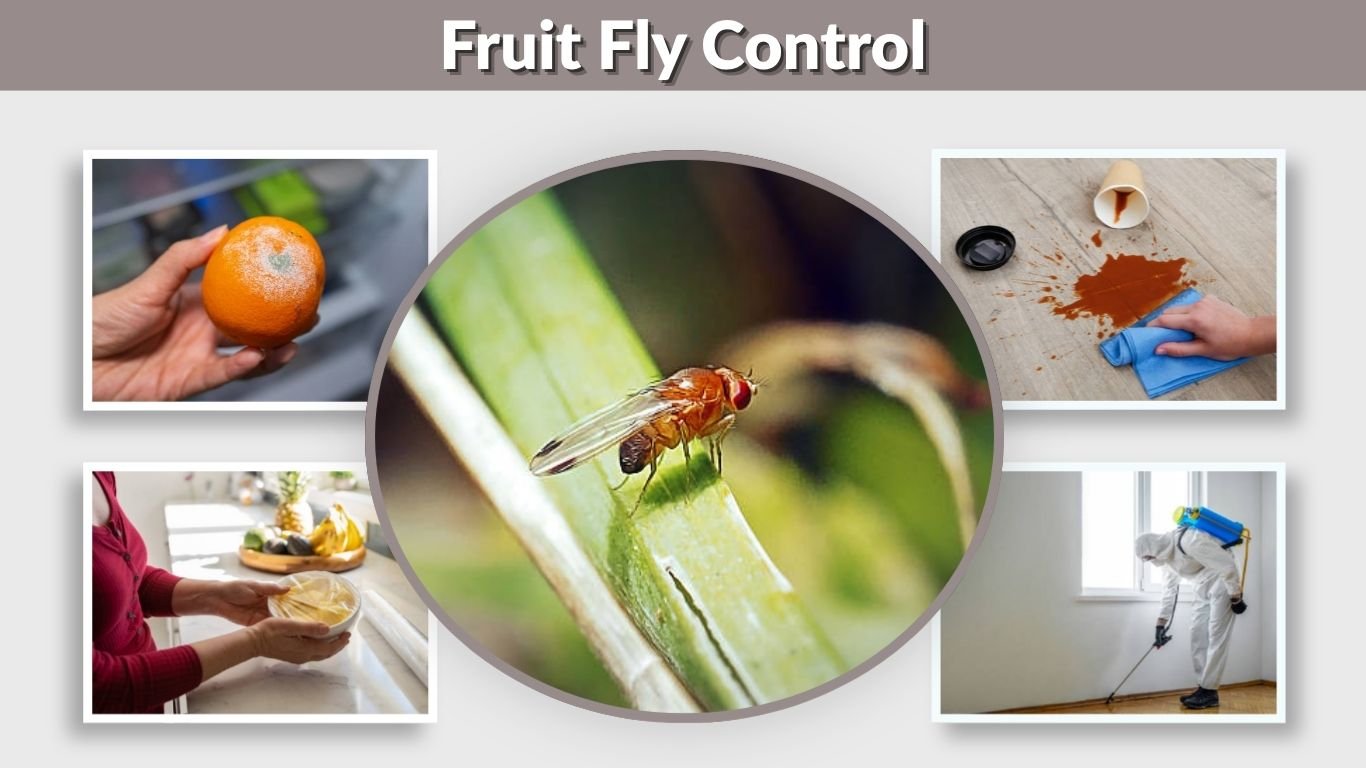
Effective fruit fly control begins with removing the material in which the flies are breeding. Traps can catch visible adults, but they will not stop an infestation if eggs and larvae remain in overripe produce, trash residue, recycling containers, drains, or spilled drinks.
Common household fruit flies are small vinegar flies that feed and reproduce around fermenting organic material. A complete control plan should combine sanitation, source removal, trapping, exclusion, and careful monitoring. Insecticides are rarely the first or most effective option inside a home.
How to Identify Fruit Flies
Common household fruit flies are approximately 2 to 3 millimeters long. They usually have tan or light-brown bodies, clear wings, and prominent red eyes, although some species have darker eyes.
They are commonly found hovering around:
- Ripe or damaged fruit
- Open wine and beer
- Juice and soft drinks
- Trash and compost
- Dirty recycling containers
- Garbage disposals
- Fermenting vegetables
- Sugary spills
Their larvae develop in yeast-rich, fermenting material. Fruit flies can complete their development quickly, so a small unnoticed source may produce many adults within a short period.
Fruit Flies vs. Other Small Flies
Correct identification is essential because different small flies require different control methods.
| Small fly | Common breeding source | Best control |
| Fruit fly | Fermenting food and drinks | Remove food residue and use baited traps |
| Fungus gnat | Moist houseplant soil | Reduce watering and improve drainage |
| Drain fly | Organic film inside drains | Mechanically scrub the drain |
| Phorid fly | Decaying material or damaged plumbing | Locate the source and repair plumbing |
Fruit flies have rounded bodies and are strongly attracted to fermentation. Fungus gnats look more like tiny mosquitoes, while drain flies appear fuzzy or moth-like.
What Causes a Fruit Fly Problem?
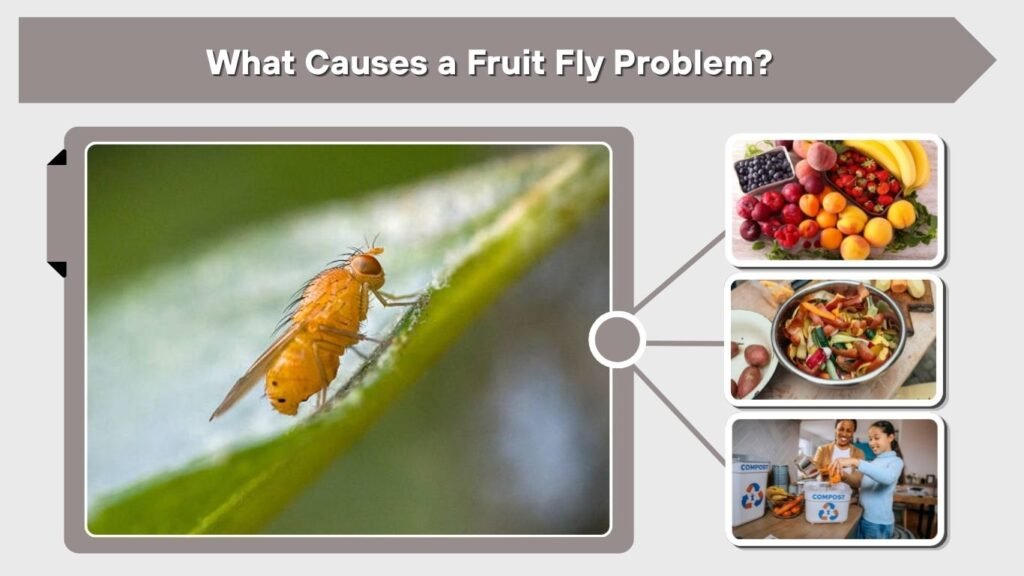
Fruit flies may enter through doors and windows or arrive on produce. Once indoors, females lay eggs near moist fermenting material.
Frequent breeding sources include:
- Bananas, peaches, tomatoes, and melons
- Rotten potatoes or onions
- Wine or beer left in bottles
- Liquid beneath a trash-bag liner
- Food residue in a garbage disposal
- Juice underneath an appliance
- Indoor compost containers
- Dirty mops, sponges, or cleaning cloths
- Unrinsed bottles and cans
The flies may continue appearing even after the fruit bowl is removed because larvae and pupae can remain in surrounding areas. Adult flies already present may also survive for a week or longer after the breeding source is eliminated.
How to Control Fruit Flies at Home
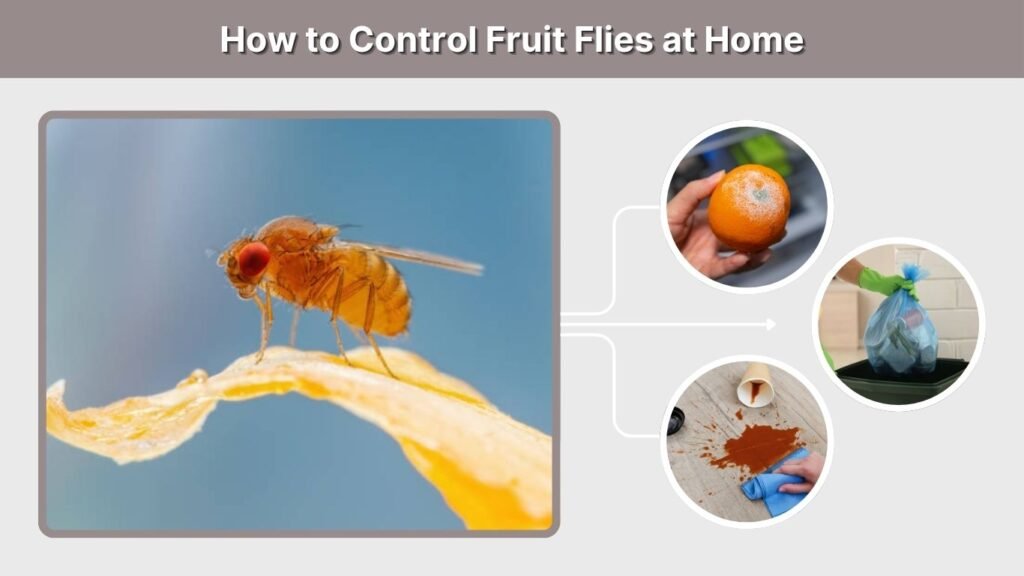
The best control program targets every stage of the infestation rather than only the flying adults.
1. Remove Ripe and Damaged Produce
Inspect all fruit and vegetables. Discard anything leaking, moldy, bruised, or excessively soft.
Store ripe produce in the refrigerator for at least a week during an infestation. Check cupboards, baskets, drawers, and reusable grocery bags for forgotten potatoes, onions, or fruit.
Place discarded produce in a sealed bag and move it to an outdoor trash container promptly. Removing or refrigerating susceptible produce prevents adult flies from finding new egg-laying sites.
2. Clean Trash and Compost Containers
Empty kitchen trash and compost daily until the infestation is controlled.
Wash the inside, outside, bottom, and lid of each container with soap and water. Pay particular attention to the area beneath the liner, where fermented liquid may collect.
Use containers with tight-fitting lids and keep them away from food-preparation areas whenever possible. Regular sanitation is the most important part of indoor fly management.
3. Rinse Recycling Containers
Fruit flies can reproduce in the small amount of wine, beer, soda, or juice remaining inside an empty container.
Rinse bottles, jars, and cans before placing them in recycling. Wash the recycling bin regularly and store it outdoors during a serious infestation when practical.
Remember to clean bottle caps, openings, and the surface beneath the bin.
4. Clean Hidden Spills
Move small appliances and inspect beneath the refrigerator, stove, microwave, coffee maker, and trash can.
Clean any residue from:
- Juice
- Soda
- Syrup
- Wine
- Beer
- Vinegar
- Fruit
- Fermented sauces
A small amount of liquid in a crack or underneath an appliance may support an entire breeding population.
5. Clean Garbage Disposals
Food particles can collect beneath rubber splash guards and around the internal walls of a garbage disposal.
Turn off the power before cleaning accessible parts. Scrub away visible buildup with a suitable brush and cleaner, then rinse thoroughly.
Running water or grinding ice may reduce odors but may not remove all of the organic film attracting the flies.
How to Control Fruit Flies in Drains
Fruit flies may use drains when food and fermented residue are present. However, repeated activity directly around a bathroom or floor drain may indicate drain flies or phorid flies instead.
Mechanically scrub the inside walls of the drain with a stiff drain brush. Clean the drain opening, overflow channel, trap, and surrounding fixtures.
Pouring bleach, vinegar, or boiling water into a drain may not solve the problem because liquids can pass over the film without removing it. Drain-associated flies are best controlled by physically eliminating the semisolid material in which their larvae develop. Plumbing leaks or breaks must also be repaired.
Natural Fruit Fly Control
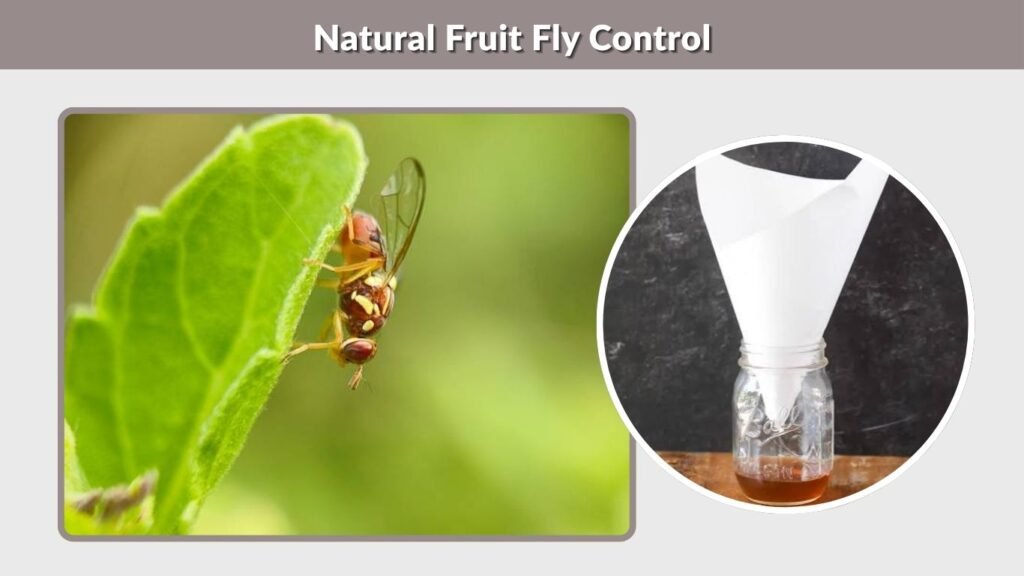
Natural control methods can reduce adults without applying pesticides around food.
Apple Cider Vinegar Trap
Pour a small amount of apple cider vinegar into a jar or glass. Add one or two drops of unscented dish soap.
The fermented odor attracts adult flies, while the soap reduces the liquid’s surface tension so they sink.
Place the trap near the most active area, but not directly beside uncovered food.
Paper Funnel Trap
Put cider vinegar, red wine, or a small piece of ripe banana in a jar. Roll paper into a cone with a small opening and position it inside the jar without allowing the bottom to touch the bait.
Flies enter through the funnel and have difficulty finding their way back out.
Fruit-fly traps are useful when combined with sanitation, but no trap provides satisfactory control by itself.
Controlling Fruit Flies in Compost Bins
Indoor compost can become a major breeding source when fruit scraps remain exposed.
Use a container with a secure lid and empty it frequently. Cover fresh scraps with dry material, such as shredded paper, when appropriate for your composting system.
Wipe residue from the rim and exterior. Clean the container whenever liquid accumulates at the bottom.
Moving an active indoor compost bin outside may be necessary until the infestation ends.
Restaurant Fruit Fly Control
Restaurants, bars, cafés, grocery stores, and commercial kitchens require stricter sanitation because small amounts of food and beverage residue accumulate in many locations.
Important control points include:
- Bar mats and drink dispensers
- Floor drains
- Soda nozzles
- Beer taps
- Empty bottles
- Mop sinks
- Garbage rooms
- Produce-storage areas
- Floor and wall junctions
- Equipment wheels and undersides
Remove culled or decaying produce daily. Clean floors, drains, walls, utensils, and food-processing equipment on a regular schedule. Commercial traps can monitor adult activity, but reducing breeding material remains the foundation of control.
In a restaurant, traps should be positioned where they will not contaminate food or draw flies across food-preparation surfaces.
Does Pest Control Get Rid of Fruit Flies?
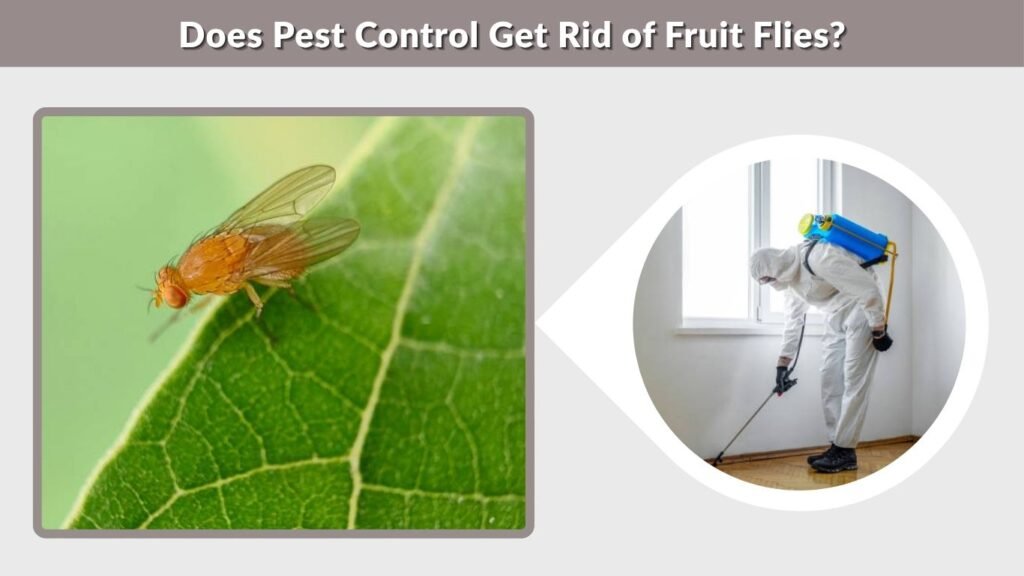
A professional pest-control company can help when the infestation is severe, recurring, or connected to an inaccessible source.
A technician may:
- Confirm the species
- Trace flies to hidden breeding sites
- Inspect commercial equipment
- Examine drains and plumbing
- Install monitoring traps
- Recommend sanitation changes
- Apply an appropriately labeled treatment when necessary
Professional service is particularly valuable when flies originate from damaged plumbing, sewage, wall voids, shared apartment areas, or equipment that cannot be moved easily.
However, chemical treatment alone will not permanently control fruit flies if fermenting material remains available.
Should You Use Fruit Fly Spray?
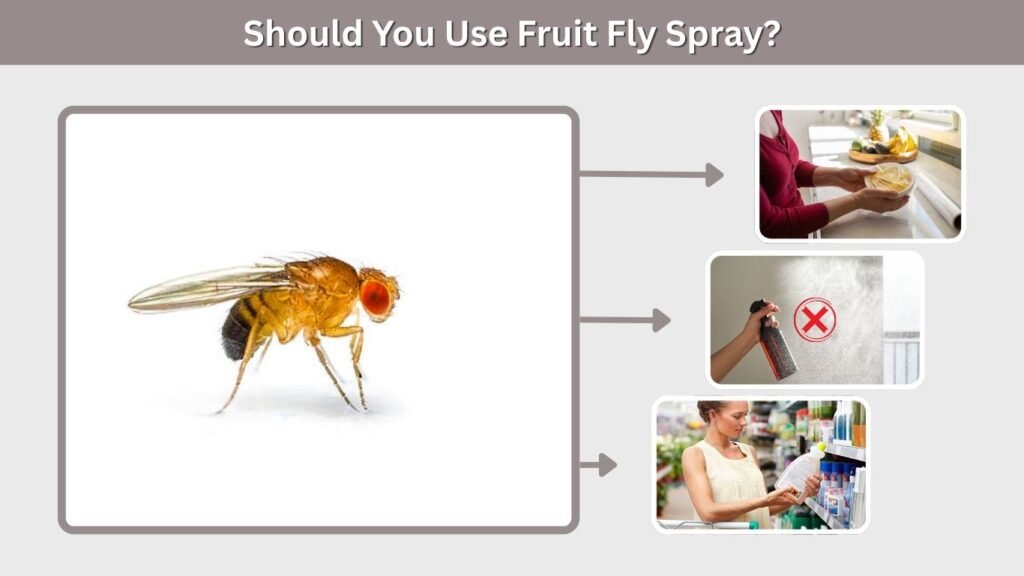
Household sprays may kill exposed adults but usually provide only short-term relief. They do not reach eggs, larvae, or pupae hidden inside organic material.
Nonchemical methods should be used first. In most residential situations, sanitation and trapping are sufficient, and pesticides are not necessary.
When using any pesticide:
- Choose a product labeled for the site and pest.
- Follow every label direction.
- Cover or remove food and utensils.
- Keep children and pets away.
- Avoid spraying food-preparation surfaces.
- Never mix pesticide products.
A product should not be used merely because it is described online as effective against flies.
How Long Does Fruit Fly Control Take?
Adult numbers may decline noticeably within several days after all breeding sources are removed. However, pupae already present may continue producing new adults for one to two weeks.
Continue cleaning and trapping until no new flies appear for several days. Persistent activity usually means that a source has been overlooked or that the insects are fungus gnats, drain flies, or another small-fly species.
FAQs
What Is the Best Way to Control Fruit Flies?
Remove fermenting food, refrigerate ripe produce, wash trash and recycling containers, clean spills, scrub affected drains, and trap remaining adults. Source removal is more important than spraying visible flies.
Can Vinegar Completely Eliminate Fruit Flies?
Vinegar traps can catch many adults, but they cannot kill hidden eggs, larvae, or pupae. They should be used as one part of a wider sanitation and monitoring program.
Why Are Fruit Flies Still Present After Cleaning?
A hidden breeding source may remain under an appliance, inside a container, around a drain, or among stored produce. New adults can also emerge from pupae for several days after the original source is removed.
When Should You Call Pest Control?
Call a professional when fruit flies continue after one to two weeks of thorough sanitation, appear in extremely large numbers, or seem to originate from plumbing, walls, sewage, or inaccessible commercial equipment.
How Can You Prevent Fruit Flies?
Refrigerate ripe produce, remove spoiled food promptly, rinse recycling, use covered waste containers, clean spills immediately, maintain drains, and avoid allowing wet organic residue to accumulate.