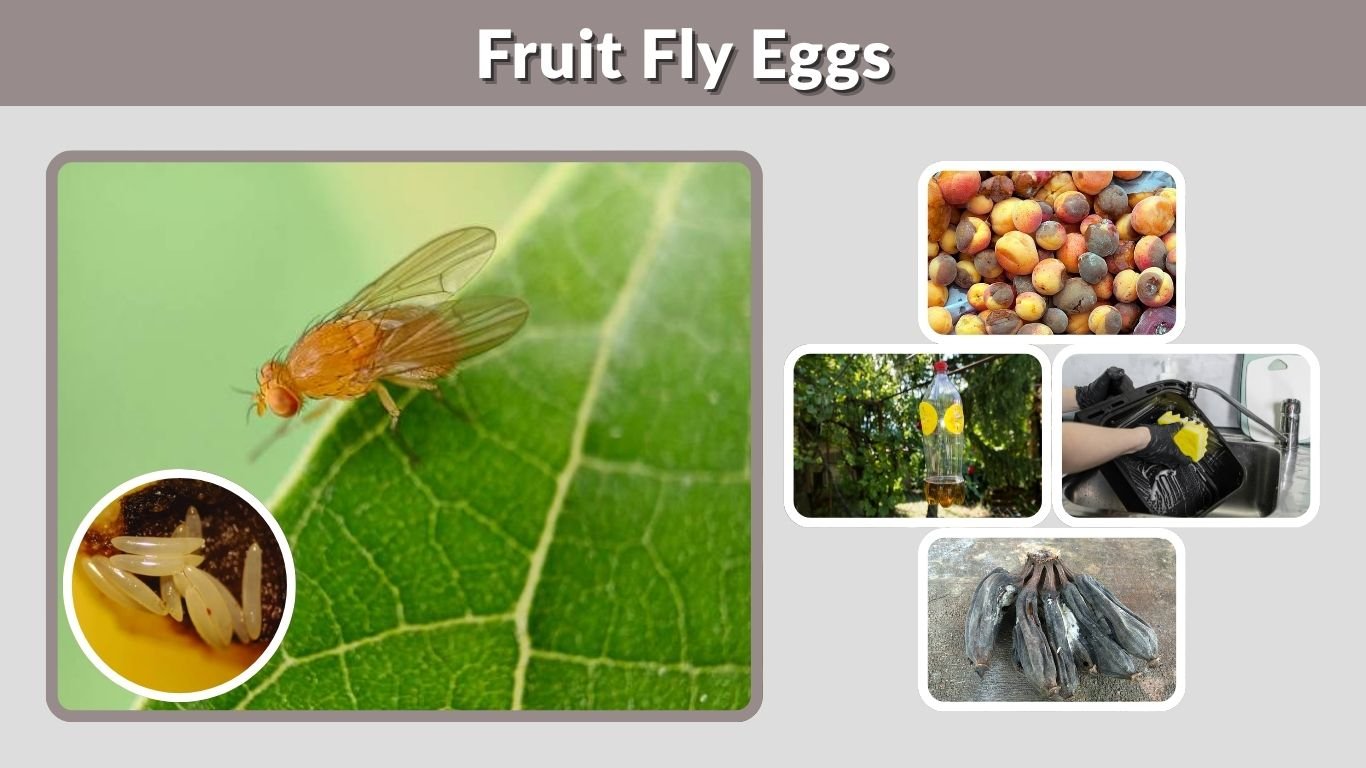
Fruit fly eggs are extremely small, pale structures deposited on moist, fermenting organic material. Household fruit flies commonly lay them on overripe fruit, food residue, garbage, recycling containers, and dirty drains. Under warm conditions, the eggs may hatch in about 24 hours, allowing an infestation to grow rapidly. Finding and removing the breeding source is therefore more effective than simply trapping the adult flies.
What Do Fruit Fly Eggs Look Like?
Common household fruit fly eggs are pearly white or translucent and shaped like tiny grains of rice. Each egg is approximately 0.5 millimeters long, making it difficult to see without magnification.
The eggs of Drosophila melanogaster have two thin projections called respiratory filaments at one end. These structures help the developing embryo obtain oxygen when the egg is placed in soft, wet, or fermenting material.
Fruit Fly Egg Identification
Fruit fly eggs generally have these characteristics:
- White, cream, or nearly transparent color
- Long, oval, or cylindrical shape
- Approximately 0.5 mm in length
- Two tiny threadlike projections at one end
- Usually deposited in moist organic material
- Often difficult to distinguish from food particles
Although the eggs are technically visible, most people will not notice them without a hand lens or magnifying glass. They may look like tiny white specks on the surface of damaged fruit or fermenting residue.
Where Do Fruit Flies Lay Eggs?
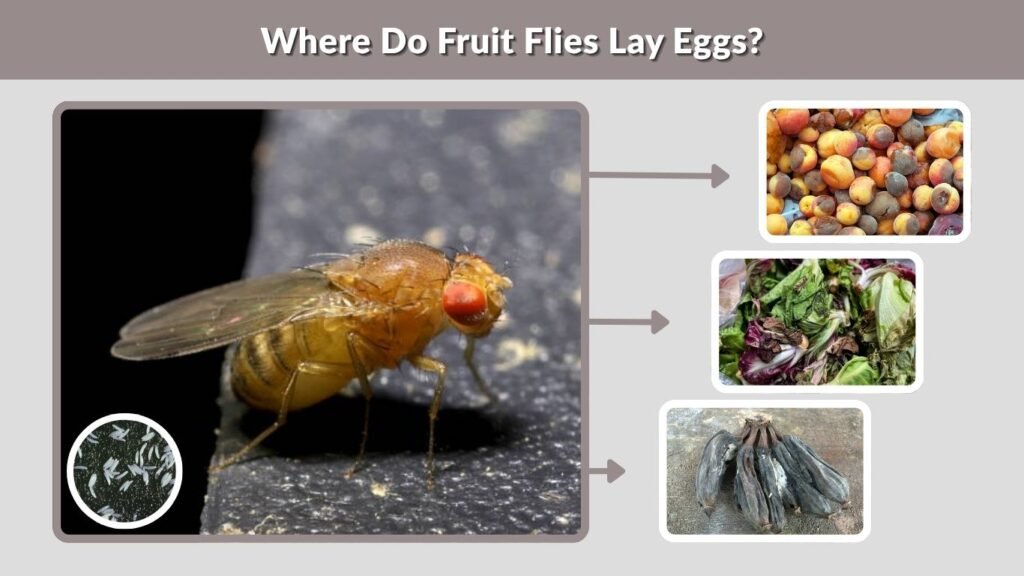
Female fruit flies choose moist places containing yeast, bacteria, and fermenting organic material. The newly hatched larvae need immediate access to food, so eggs are normally placed directly on or beside a suitable breeding source.
Common egg-laying locations include:
- Overripe or damaged fruit
- Rotting vegetables
- Banana stems and damaged peels
- Wine, beer, juice, or soda residue
- Garbage and compost containers
- Unwashed bottles and cans
- Food underneath kitchen appliances
- Dirty garbage disposals
- Damp mops, sponges, or cleaning cloths
- Organic residue around sink drains
Vinegar flies lay their eggs near the surface of fermenting fruits and vegetables and in poorly cleaned garbage containers. Even a small amount of forgotten food or sweet liquid can support developing larvae.
Do Fruit Flies Lay Eggs on Food?
Yes. Fruit flies commonly lay eggs on soft, damaged, overripe, or fermenting food. They are particularly attracted to fruit whose skin has cracked, bruised, or begun to decay.
The eggs hatch into pale, legless larvae commonly called maggots. These larvae feed on microorganisms and decomposing material rather than fresh, dry food. Most household vinegar flies prefer fruit that is already damaged or fermenting.
Do Fruit Flies Lay Eggs on Bananas?
Fruit flies may lay eggs around damaged areas, splits, soft spots, exposed fruit, and moist residue on banana peels. The stem area can also attract flies because it may hold small amounts of sugary organic material.
Ordinary household fruit flies generally do not easily penetrate a completely intact banana peel. However, once a banana becomes bruised, cracked, overripe, or partially peeled, it provides a suitable breeding site.
Wash or wipe bananas after bringing them home, keep them away from already infested produce, and refrigerate them once they become very ripe.
Do Fruit Flies Lay Eggs in Drains?
Fruit flies can lay eggs around a sink or drain when fermenting organic material has collected inside it. They may breed in residue around a garbage disposal, drain cover, rubber splash guard, or pipe wall.
However, tiny flies emerging directly from drain slime may be drain flies rather than fruit flies. Drain flies have broad, fuzzy wings, while fruit flies have compact tan bodies and usually gather near produce or sweet liquids.
Fruit Fly Eggs on Walls
Fruit flies do not normally choose clean, dry walls for egg laying because their larvae require moist food. White specks found on a wall are therefore unlikely to be fruit fly eggs.
Small brown objects attached to nearby walls may be fruit fly pupae. Mature larvae often leave wet food and move to a drier location before changing into adults. Other insect eggs, food splashes, or debris may also be mistaken for fruit fly eggs.
Do Fruit Flies Lay Eggs in Houseplants?
Household fruit flies generally prefer fermenting food rather than ordinary potting soil. Tiny flies consistently emerging from moist houseplant soil are more likely to be fungus gnats.
Fruit flies may visit a plant pot if fallen fruit, sweet liquid, compost, or decomposing food is present in or around it. Remove the organic material rather than automatically treating the plant.
How Many Eggs Do Fruit Flies Lay?
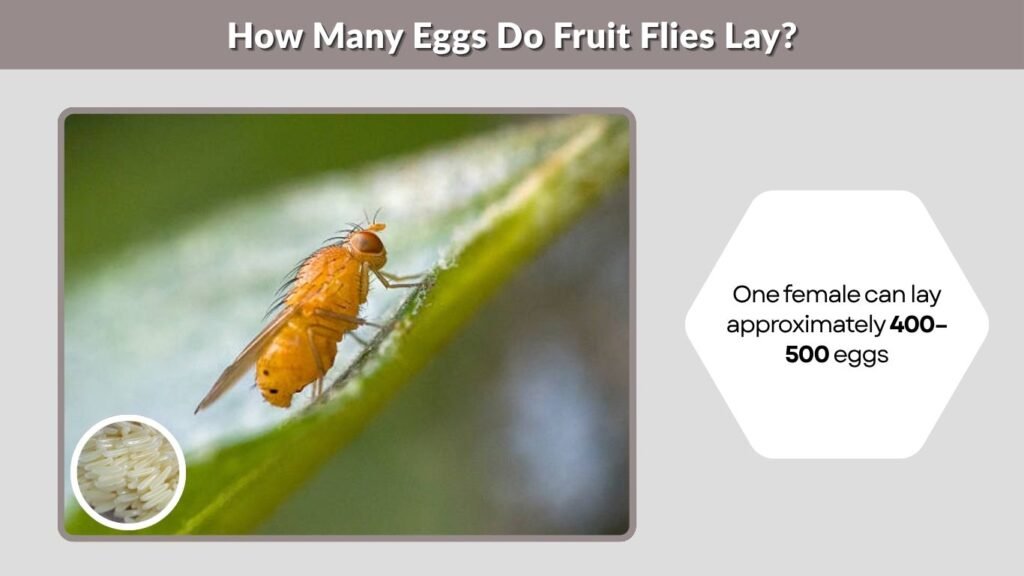
A female fruit fly may deposit several hundred eggs during her lifetime. Under favorable conditions, one female can lay approximately 400–500 eggs, often in small groups rather than all at once.
This reproductive capacity explains why a few flies can become a noticeable infestation. Numerous eggs, larvae, pupae, and adults may be present simultaneously when a breeding source remains undisturbed.
How Long Do Fruit Fly Eggs Take to Hatch?
At approximately 77°F or 25°C, common fruit fly eggs usually hatch in around 20–24 hours. Temperature affects development, so hatching may take longer in cooler conditions.
After hatching, the larvae feed for several days before becoming pupae. The complete journey from egg to adult may take approximately 8–10 days in warm conditions. This rapid life cycle means that delaying cleanup by even a few days can allow another generation to appear.
| Life stage | Approximate development |
| Egg | Around 20–24 hours in warm conditions |
| Larva | Approximately 4–5 days |
| Pupa | Approximately 4 days |
| Egg to adult | Around 8–10 days |
How to Get Rid of Fruit Fly Eggs
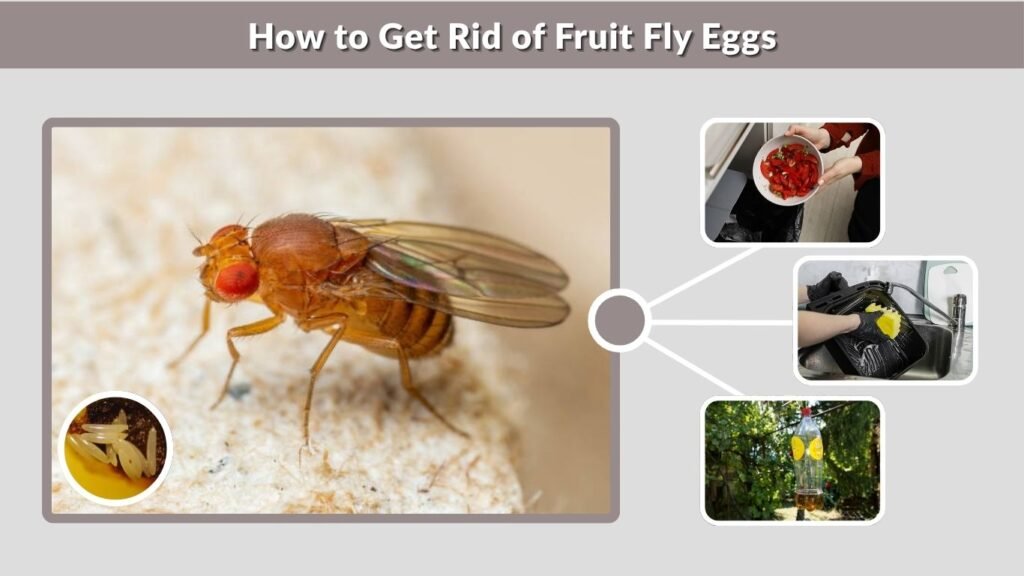
There is usually no practical reason to search for and kill individual eggs. They are too small and may be scattered throughout sticky organic residue. Instead, remove or clean every possible breeding source.
1. Discard Infested Food
Place overripe, damaged, or visibly infested produce inside a sealed bag and move it to an outdoor garbage container. Do not leave discarded fruit in an open indoor trash can.
Refrigerate ripe produce that you plan to keep. Cold storage slows fruit fly activity and prevents adults from reaching the food.
2. Wash Food Containers and Surfaces
Clean fruit bowls, counters, shelves, recycling containers, and garbage cans with hot water and dish soap. Inspect underneath refrigerators, ovens, cabinets, and trash containers for forgotten spills.
Rinse wine bottles, soda cans, juice containers, and jars before recycling them. A small amount of fermented liquid at the bottom can support eggs and larvae.
3. Scrub Drains and Garbage Disposals
Remove the drain cover and physically scrub the interior surface with a drain brush and hot, soapy water. Clean the garbage disposal splash guard and sink overflow opening as well.
Pouring liquid into a drain may not remove eggs protected inside thick organic buildup. Scrubbing removes the residue that both adults and larvae require.
Never combine bleach with vinegar, ammonia, or other household cleaners. Dangerous gases can result.
4. Clean Damp Household Items
Wash or replace old sponges, mop heads, dishcloths, and cleaning brushes. Allow these items to dry between uses.
Empty and clean compost containers frequently. Keep indoor compost tightly covered or store scraps in a refrigerator or freezer until disposal.
5. Trap the Remaining Adults
After removing the eggs and breeding material, use an apple cider vinegar trap to capture adults.
Pour a small amount of apple cider vinegar into a jar and add two or three drops of dish soap. Place it near the former breeding area. Traps reduce the adult population but cannot replace sanitation.
What Happens If You Eat Fruit Fly Eggs?
Accidentally consuming a tiny number of ordinary fruit fly eggs is unlikely to result in an infestation inside the body. Household vinegar flies are adapted to breeding in fermenting organic material, not human tissue.
However, fruit containing eggs may already be damaged, fermenting, or contaminated by microorganisms. Discard food that contains visible eggs, larvae, mold, an unpleasant odor, or significant decay. Wash intact produce before eating and refrigerate cut fruit within two hours.
FAQs
Can you see fruit fly eggs?
Fruit fly eggs are technically visible but extremely difficult to notice without magnification. They measure approximately 0.5 mm and resemble tiny white or translucent grains with thin projections at one end.
Do fruit fly eggs turn into maggots?
Yes. The eggs hatch into small, pale, legless larvae commonly called maggots. These larvae feed on fermenting organic material before crawling to a drier location and becoming pupae.
Does bleach kill fruit fly eggs?
Bleach may kill exposed eggs, but it is not a reliable solution for an infestation hidden inside organic buildup. Removing food sources and physically scrubbing contaminated surfaces is more effective. Never mix bleach with vinegar or ammonia.
Does boiling water kill fruit fly eggs in a drain?
Very hot water may kill exposed eggs, but it may not reach those protected within thick residue. It may also damage certain plumbing materials. Scrub the drain walls and garbage disposal components with hot, soapy water instead.
How can I prevent fruit fly eggs?
Refrigerate ripe produce, discard damaged fruit quickly, clean spills, rinse recycling containers, empty garbage regularly, and scrub drains. Continue sanitation for at least a week after adult flies disappear to break the life cycle.