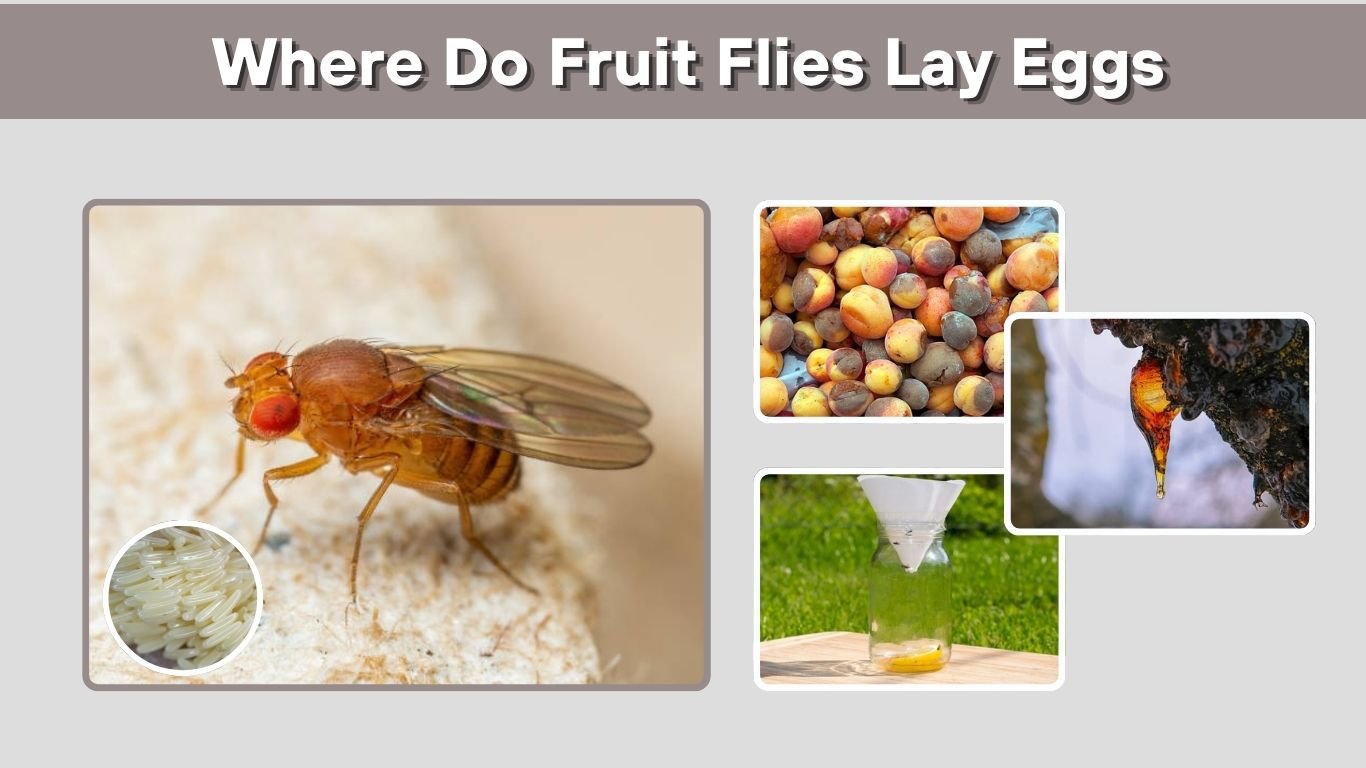
Fruit flies lay their eggs on moist, fermenting organic material where newly hatched larvae can immediately find food. Inside a house, their favorite locations include overripe fruit, garbage bins, recycling containers, spilled drinks, compost buckets, and dirty drains. The eggs are extremely small and usually hidden inside soft food or sticky residue. Removing these breeding areas is the most effective way to stop fruit flies from multiplying.
Where Do Fruit Flies Lay Their Eggs?
Fruit flies do not lay eggs randomly around a room. Female flies search for warm, damp locations containing yeast, bacteria, and decaying organic matter.
They usually deposit their eggs directly on or beside the material that will feed the larvae. Common egg-laying locations include:
- Overripe or damaged fruit
- Rotting vegetables
- Fermented drinks
- Garbage and compost
- Dirty recycling containers
- Sticky food spills
- Garbage disposals
- Organic buildup inside drains
- Damp cleaning tools
A fruit fly may lay hundreds of eggs during its life. Because the eggs can hatch within about a day under warm conditions, a small problem can quickly become a noticeable infestation.
Where Do Fruit Flies Lay Eggs in the Kitchen?
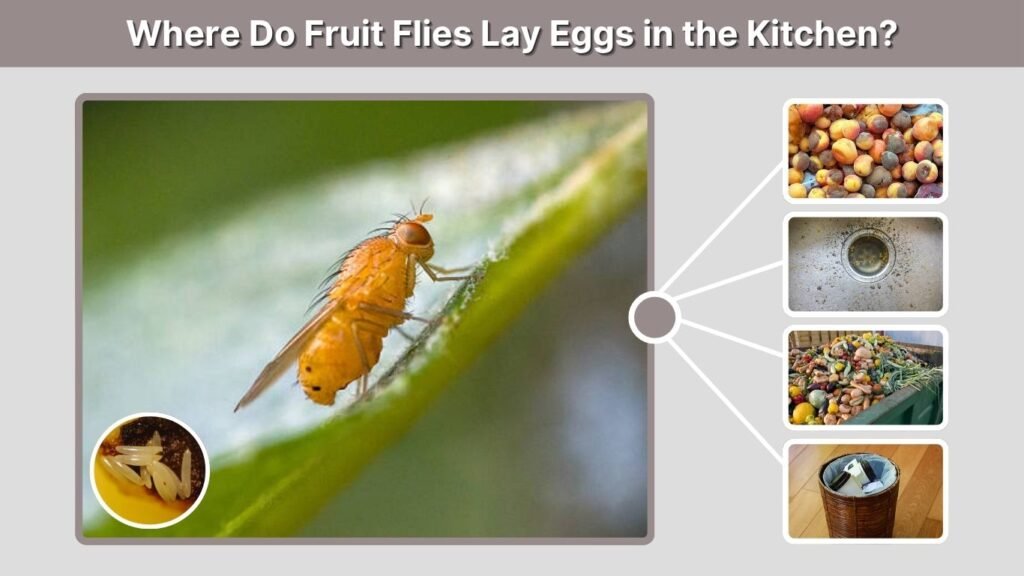
The kitchen is the most common place for fruit flies because it offers food, moisture, and warmth. Even a small amount of fermenting material can support eggs and larvae.
Overripe Fruit and Vegetables
Fruit flies commonly lay eggs on produce that is bruised, cracked, cut, or beginning to ferment. Bananas, peaches, grapes, tomatoes, melons, and apples are frequent sources.
The flies are especially attracted to:
- Split banana peels
- Soft or leaking fruit
- Cut fruit left uncovered
- Rotten onions or potatoes
- Damaged tomatoes
- Fruit juice collecting inside a bowl
Fresh produce with undamaged skin is less suitable. However, fruit flies may lay eggs near stems, bruised areas, or sticky residue on the surface.
Garbage and Compost Containers
Kitchen garbage provides an ideal breeding environment. Fruit scraps, vegetable peels, drink residue, and other damp waste begin fermenting quickly.
Eggs may be hidden:
- Under the garbage bag
- Around the rim of the bin
- In liquid collected at the bottom
- On food stuck to the sides
- Inside an uncovered compost bucket
Emptying the bag may not solve the problem if residue remains inside the container. Wash the entire bin with warm, soapy water and allow it to dry.
Recycling Bottles and Cans
Empty soda cans, beer bottles, wine bottles, juice containers, and food jars may contain enough residue to support fruit fly larvae.
Fruit flies may lay eggs around:
- Bottle openings
- Can rims
- Sticky labels
- Liquid remaining at the bottom
- Spills underneath the recycling bin
Rinse recyclable containers before storing them indoors. Keep the recycling bin covered and empty it regularly.
Kitchen Sinks and Drains
Fruit flies may lay eggs around drains when fermenting organic material has accumulated inside them. They are attracted to food particles, grease, juice, and slime near the drain opening or garbage disposal.
Possible breeding locations include:
- Under the drain cover
- Inside the garbage disposal
- Beneath the rubber splash guard
- Around the sink overflow opening
- On residue coating the pipe walls
Fruit flies do not normally breed in clean water. They need organic material that provides food for the larvae.
Scrub the drain and garbage disposal components with a long brush and hot, soapy water. Pouring liquid cleaner down the drain may not remove eggs protected inside thick buildup.
Hidden Food Spills
Fruit fly eggs may develop in food residue that is difficult to see. Check underneath and behind kitchen appliances if the infestation continues after visible fruit has been removed.
Common hidden sources include:
- Juice beneath the refrigerator
- Food under the oven
- Spills inside cabinets
- Syrup beneath bottles
- Dirty mop water
- Forgotten lunch containers
- Residue inside reusable shopping bags
Where Do Fruit Flies Lay Eggs in the Bathroom?
Bathrooms are less attractive to fruit flies than kitchens because they usually contain less fermenting food. However, fruit flies may appear there when organic residue is present.
Possible bathroom breeding sites include:
- A trash can containing food or drink waste
- Sweet liquids spilled near the sink
- Dirty drains containing organic buildup
- Damp cleaning cloths
- Used beverage containers
- Fermenting material inside a nearby room
Tiny flies emerging from bathroom drains may actually be drain flies. Drain flies have fuzzy, moth-like wings, while fruit flies generally have smooth tan bodies and rounded red or dark eyes.
Fungus gnats may also be mistaken for fruit flies if houseplants are kept in the bathroom. Fungus gnats are slender, dark flies that breed in consistently moist potting soil.
Do Fruit Flies Lay Eggs on Bananas?
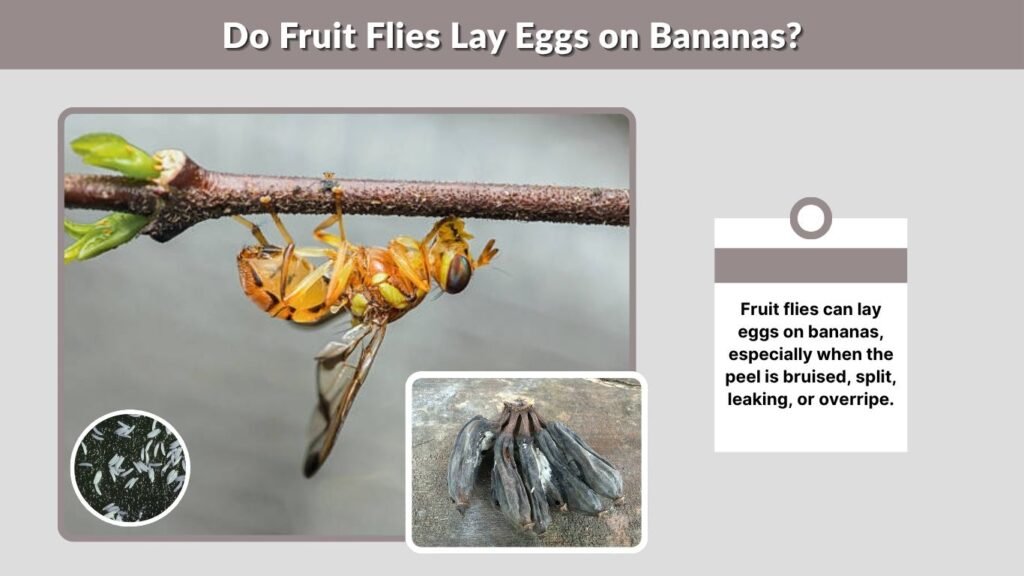
Fruit flies can lay eggs on bananas, especially when the peel is bruised, split, leaking, or overripe. The stem area may also hold sugary residue that attracts adult flies.
They generally prefer exposed or fermenting material rather than the firm interior of a completely intact banana. Once the peel becomes damaged, however, females may deposit eggs around the opening.
To prevent eggs on bananas:
- Inspect bananas for damaged areas.
- Wipe sticky residue from the peel.
- Keep them away from infested produce.
- Refrigerate them when they become very ripe.
- Discard leaking or rotten bananas promptly.
Do Fruit Flies Lay Eggs on Walls?
Fruit flies rarely lay eggs on clean, dry walls because their larvae require moist organic food. Tiny white marks on a wall are unlikely to be fruit fly eggs unless food or drink has splashed onto the surface.
Small brown objects near a breeding area may be pupae rather than eggs. After feeding, mature larvae may crawl away from wet food and attach themselves to a nearby dry surface before becoming adults.
Clean walls around garbage bins, fruit bowls, sinks, and recycling areas to remove food residue and possible pupae.
Do Fruit Flies Lay Eggs in Houseplants?
Common household fruit flies do not usually breed in ordinary potting soil. They may be attracted to a plant pot when it contains:
- Fallen or rotting fruit
- Compost containing food scraps
- Sweet drink residue
- Decaying plant material
- Fermenting organic fertilizer
Flies consistently emerging from damp soil are more likely to be fungus gnats. Reducing watering and using yellow sticky traps are more appropriate for fungus gnats than vinegar traps.
Where Do Fruit Flies Lay Eggs in Nature?
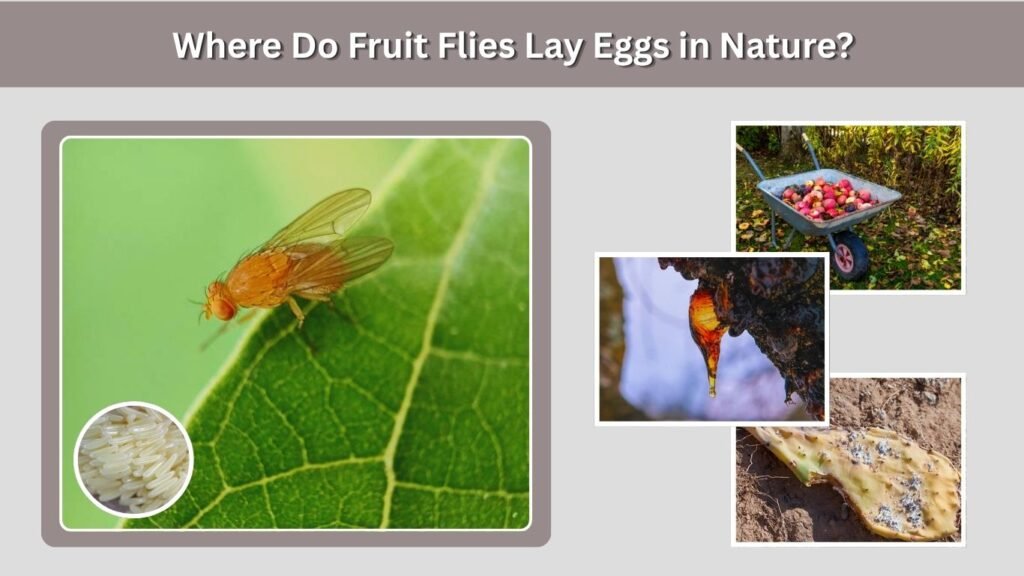
Outdoors, fruit flies lay eggs on naturally fermenting plant material. They are often found around orchards, gardens, compost piles, fallen fruit, and damaged crops.
Natural breeding sources include:
- Fallen fruit
- Cracked or bird-damaged produce
- Rotting vegetables
- Tree sap
- Composting plant material
- Fermenting mushrooms
- Decaying cactus tissue
- Other moist organic matter
The exact breeding material varies among fruit fly species. Household vinegar flies are especially associated with yeast and fermentation.
What Do Fruit Fly Eggs Look Like?
Fruit fly eggs are approximately 0.5 millimeters long. They are usually white, cream, or nearly transparent and may resemble tiny grains of rice.
Each egg has a narrow oval shape and small projections that help it breathe while resting in moist material. Although the eggs are technically visible, they are difficult to recognize without magnification.
The larvae that hatch from them are pale, legless, worm-like creatures commonly described as tiny maggots.
How Long Do Fruit Fly Eggs Take to Hatch?
Fruit fly eggs may hatch in approximately 20–30 hours under warm conditions. Cooler temperatures can slow their development.
The larvae feed for several days before moving to a drier location and becoming pupae. An entire generation may develop from egg to adult in roughly 8–10 days when temperatures and food conditions are favorable.
This rapid development explains why adult traps alone rarely solve an infestation. Eggs, larvae, and pupae may continue producing new flies after the visible adults have been captured.
How to Remove Fruit Fly Eggs
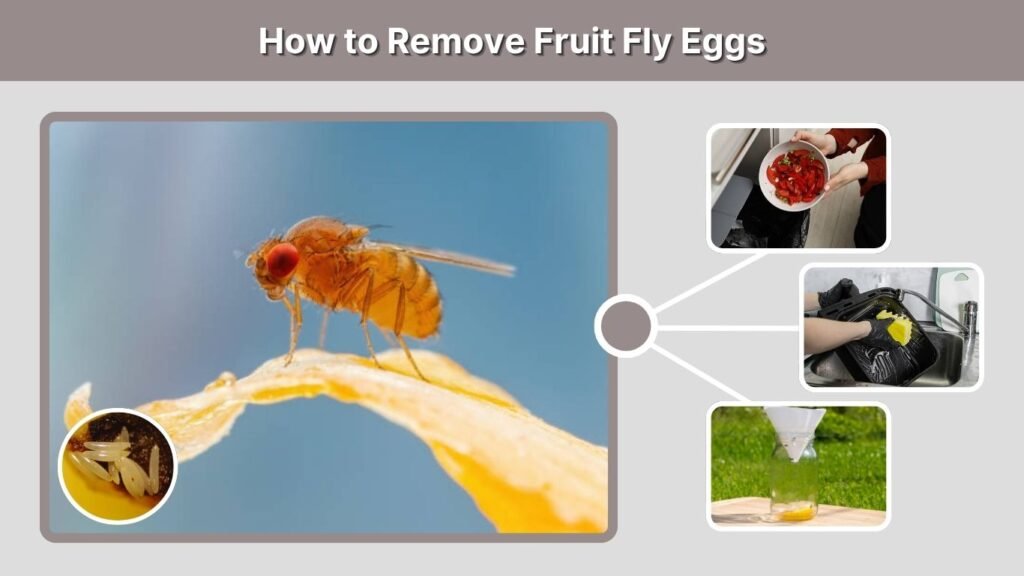
Fruit fly eggs are too small to collect individually. The best approach is to remove or clean the material on which they were deposited.
Remove Infested Food
Place overripe, damaged, or rotten produce inside a sealed bag and take it to an outdoor garbage bin. Refrigerate ripe fruit that you plan to keep.
Do not leave discarded produce inside an open kitchen trash can.
Clean Every Breeding Area
Wash fruit bowls, garbage bins, compost containers, counters, and recycling bins with warm, soapy water.
Check underneath appliances, shelves, and storage containers for forgotten spills. Replace or wash damp sponges, mop heads, and cleaning cloths.
Scrub Drains
Remove the drain cover and scrub the inside walls with a drain brush. Clean the garbage disposal splash guard and other removable components.
Hot water may help loosen residue, but physical scrubbing is usually necessary to remove the material protecting eggs and larvae.
Never mix bleach with vinegar, ammonia, or other household cleaners.
Trap Adult Flies
After cleaning, pour apple cider vinegar into a small jar and add a few drops of dish soap. Place the trap near the former breeding location.
Traps reduce the number of adults capable of laying new eggs, but they should always be combined with source removal.
FAQs
Where do fruit flies lay most of their eggs?
Fruit flies lay most of their eggs on moist, fermenting organic matter. Overripe fruit, garbage, compost, beverage residue, recycling containers, and dirty drains are common household breeding locations.
Can fruit flies lay eggs in clean water?
Fruit flies generally cannot reproduce successfully in clean water alone. Their larvae need yeast, bacteria, and decaying organic material. They may breed in liquid containing juice, alcohol, food residue, or other fermenting substances.
Do fruit flies lay eggs on people?
Household fruit flies do not normally lay eggs on human skin, hair, ears, or clothing. They are adapted to breeding in fermenting food and decaying plant material rather than living human tissue.
How do I find a hidden fruit fly nest?
Fruit flies do not build nests. Follow the adults and inspect the places where they repeatedly land. Check produce, garbage, recycling, compost, drains, beverage containers, and hidden food spills beneath appliances.
How can I prevent fruit flies from laying eggs?
Refrigerate ripe produce, discard damaged fruit, rinse recycling containers, clean spills immediately, empty garbage regularly, and scrub drains. Continue cleaning for at least a week after adult activity stops.