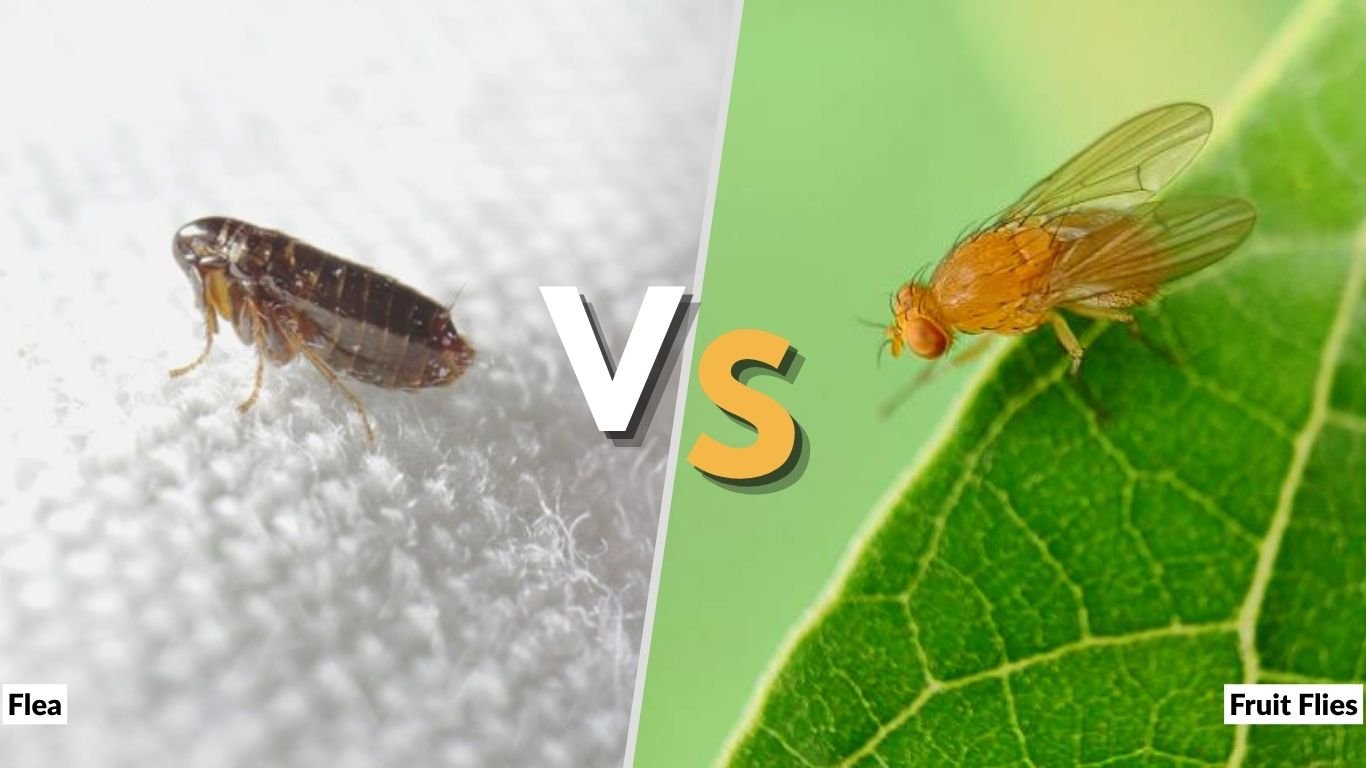
Fleas and fruit flies are tiny household pests, but they differ greatly in appearance, behavior, diet, and health risks. Fleas are wingless, blood-feeding parasites that jump and may bite people or pets. Fruit flies are winged insects that gather around overripe produce, fermented drinks, garbage, and food residue. Identifying which pest you have is essential because fruit-fly traps will not control fleas, while pet flea treatments will not eliminate fruit flies.
Flea vs. Fruit Fly: Quick Comparison
The easiest distinction is movement. Fleas jump rapidly but cannot fly, while fruit flies use their wings to hover around food and containers. Fleas are usually associated with animals, carpets, and bedding; fruit flies concentrate around fermenting organic material.
| Feature | Flea | Fruit Fly |
|---|---|---|
| Insect type | Wingless parasite | Small winged fly |
| Size | About 1.5–3.3 mm | About 2–4 mm |
| Typical color | Dark reddish-brown | Tan, yellow-brown, or brown |
| Movement | Jumps | Flies and hovers |
| Body shape | Narrow and flattened from side to side | Short, rounded, and compact |
| Wings | None | One functional pair |
| Food | Blood from animals or people | Fermenting liquids and organic material |
| Common location | Pets, carpets, furniture, and bedding | Kitchens, fruit bowls, bins, and drains |
| Human bites | Yes | No |
| Best control | Treat pets and the home together | Remove breeding material and trap adults |
What Does a Flea Look Like?
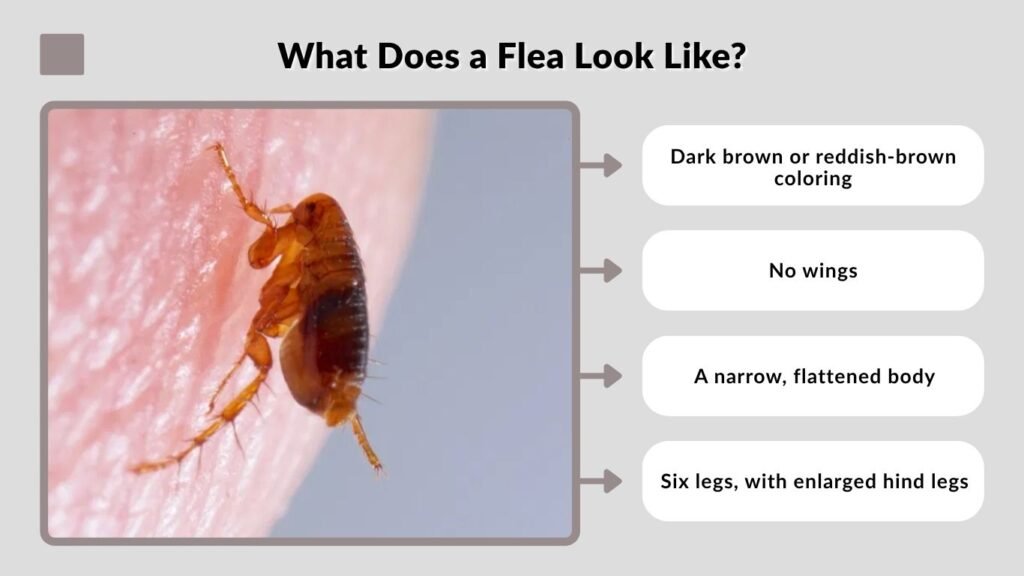
Fleas are very small, reddish-brown insects with hard bodies and powerful hind legs. Their bodies are compressed from side to side, allowing them to move easily through animal fur.
Flea Identification
Look for these characteristics:
- Dark brown or reddish-brown coloring
- No wings
- A narrow, flattened body
- Six legs, with enlarged hind legs
- Fast jumping movement
- Small adults resembling dark moving specks
Because fleas are tiny and move quickly, they may be easier to detect on a light surface. Flea dirt—dark particles made from digested blood—may also appear in a pet’s fur or sleeping area.
Where Do Fleas Live?
Adult fleas normally feed on animal hosts such as cats and dogs. Eggs can fall from the host into carpeting, furniture, cracks, bedding, and other resting areas. This means treating only the visible adult fleas may not end an infestation.
Common flea locations include:
- Pet bedding
- Carpets and rugs
- Upholstered furniture
- Floorboard cracks
- Kennels and carriers
- Shaded outdoor resting areas
- Blankets used by pets
Effective control normally requires veterinarian-recommended treatment for every pet and repeated cleaning of the home.
What Does a Fruit Fly Look Like?
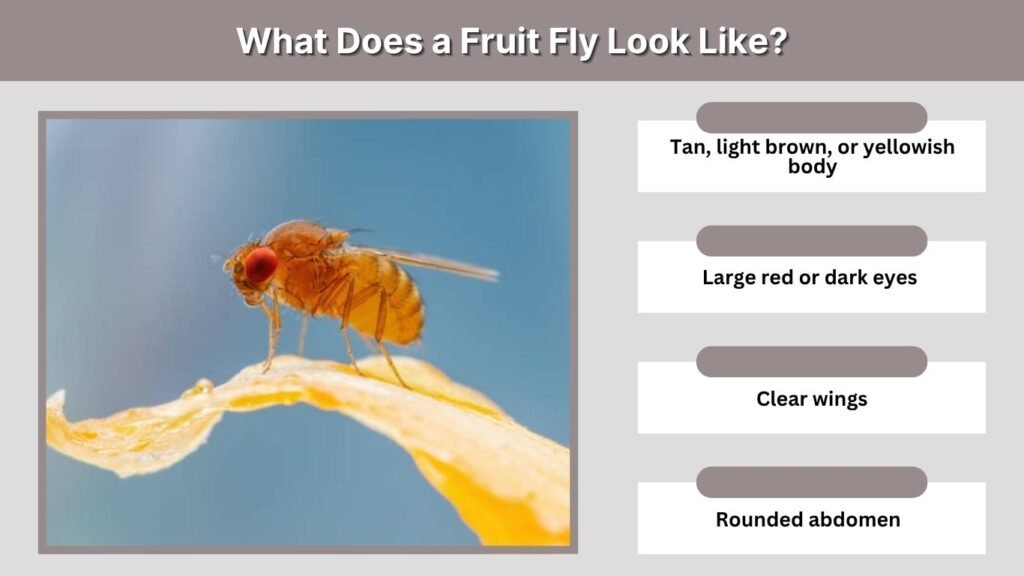
Fruit flies are compact flies with wings, short legs, and rounded bodies. Many common household fruit flies have tan or yellow-brown bodies and noticeable reddish eyes.
Fruit Fly Identification
Typical features include:
- Tan, light brown, or yellowish body
- Large red or dark eyes
- Clear wings
- Rounded abdomen
- Short antennae
- Hovering or circling flight
- Attraction to fruit and fermented liquids
Fruit flies cannot jump like fleas. They usually fly short distances between produce, drains, glasses, garbage containers, and nearby walls.
Where Do Fruit Flies Live?
Fruit flies breed in moist, fermenting organic material. Kitchens are common problem areas because they provide both food and suitable egg-laying sites.
Common sources include:
- Overripe or damaged fruit
- Rotting vegetables
- Open wine, beer, juice, or soda
- Unwashed bottles and cans
- Garbage and compost containers
- Food residue beneath appliances
- Sticky spills
- Organic buildup around garbage disposals
Flea vs. Fruit Fly Size
Fleas and fruit flies are similar enough in size to cause confusion. Most fleas measure approximately 1.5–3.3 millimeters, while common fruit flies are usually around 2–4 millimeters long.
The body shape provides a better clue than size alone. A flea appears narrow when viewed from above because its body is laterally compressed. A fruit fly has a broader body, clearly visible wings, and relatively large eyes.
Do Fleas or Fruit Flies Bite?
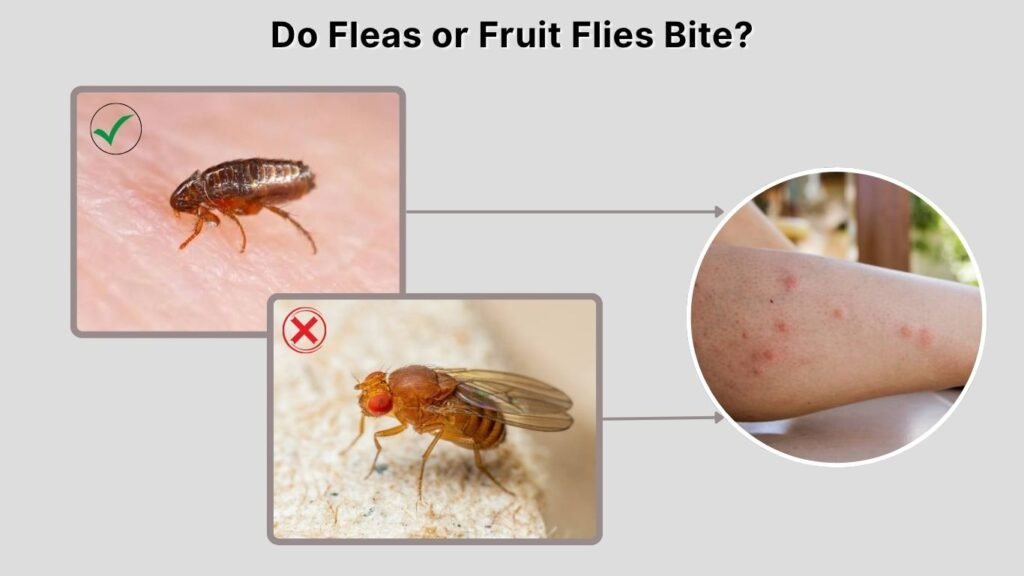
Fleas bite because they require blood to survive and reproduce. Fruit flies do not feed on blood and do not bite people or pets.
Flea Bite Symptoms
Flea bites may cause:
- Small red bumps
- Intense itching
- A red area around each bite
- Several bites grouped together
- Bites around the ankles or lower legs
- Skin irritation caused by scratching
Flea bites frequently appear as clusters of small red bumps. Scratching can damage the skin and increase the risk of a secondary infection.
Some fleas can carry disease-causing organisms, although the risk varies by flea species and geographic region. Flea prevention for pets and prompt control of household infestations help reduce exposure.
Can Fruit Flies Harm People?
Fruit flies do not sting or bite. Their main concern is sanitation because they breed and feed around decomposing food, garbage, and fermented residue.
Discard food that has become heavily infested and clean surrounding surfaces. Removing the breeding material is more effective than spraying the visible adults.
How to Tell Fleas From Fruit Flies Quickly
Observe the pest for a few seconds before trying to catch it.
- It jumps but does not fly: It is probably a flea.
- It circles fruit or drinks: It is probably a fruit fly.
- It bites people or pets: Fleas are more likely.
- It has visible wings and red eyes: It is probably a fruit fly.
- It appears in pet bedding or carpet: Check for fleas.
- It gathers near garbage or produce: Check for fruit flies.
Place a white sheet of paper near the suspected area. Fleas may jump across it as dark specks. Fruit flies will usually take off and fly when disturbed.
How to Get Rid of Fleas
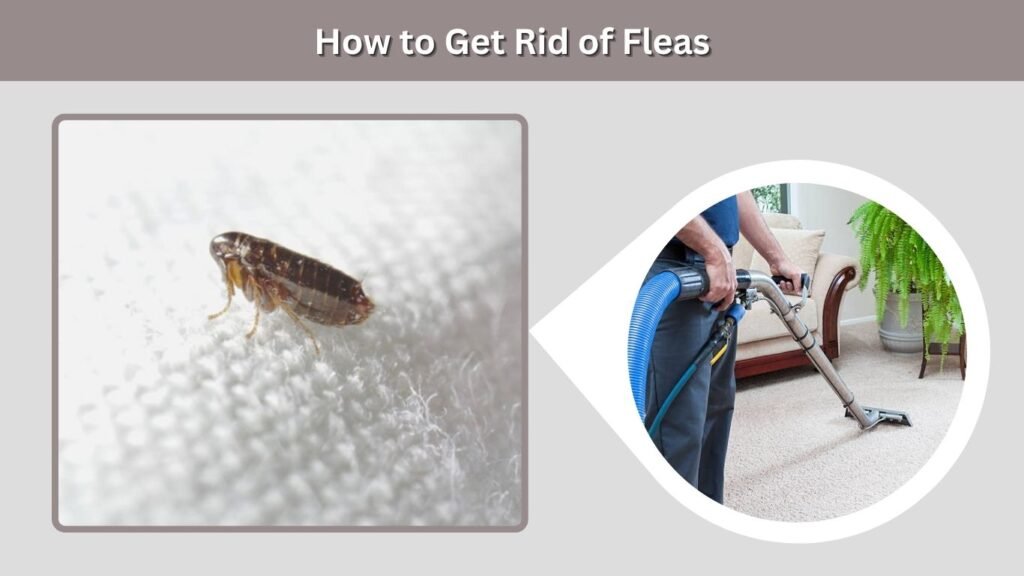
Flea control must address pets, adult insects, eggs, larvae, and pupae. Treating only the carpet or only the pet may allow the infestation to continue.
Treat Every Pet
Ask a veterinarian to recommend a suitable flea-control product for each animal. Use the product exactly as directed and do not apply dog-only medication to cats unless the label and veterinarian confirm that it is safe.
All pets in the household usually need treatment at the same time because untreated animals can continue supporting the flea population.
Clean the House Thoroughly
Vacuum carpets, rugs, upholstered furniture, floor edges, and spaces beneath furniture. Empty the vacuum outdoors in a sealed bag.
Wash pet bedding, blankets, and washable covers using the hottest appropriate setting. Continue vacuuming frequently because immature fleas may emerge over time.
Severe or persistent infestations may require treatment by a licensed pest-control professional.
How to Get Rid of Fruit Flies
Fruit-fly control starts with removing every source where the larvae can develop. Traps reduce the adults but will not stop the infestation if fermenting material remains.
Remove the Breeding Source
Discard spoiled produce, refrigerate ripe fruit, rinse recycling containers, and empty garbage daily. Clean beverage spills and inspect beneath appliances.
Wash garbage cans and compost containers with warm, soapy water. Clean the garbage disposal and scrub residue around the drain opening.
Make a Vinegar Trap
Pour a small amount of apple cider vinegar into a jar and add a few drops of dish soap. The fermented odor attracts fruit flies, and the soap helps trap them in the liquid.
Place traps beside the fruit bowl, garbage container, sink, or recycling area. Replace the bait regularly while continuing to clean. Vinegar traps are useful for adults, but sanitation remains the primary control method.
Flea vs. Fruit Fly vs. Gnat
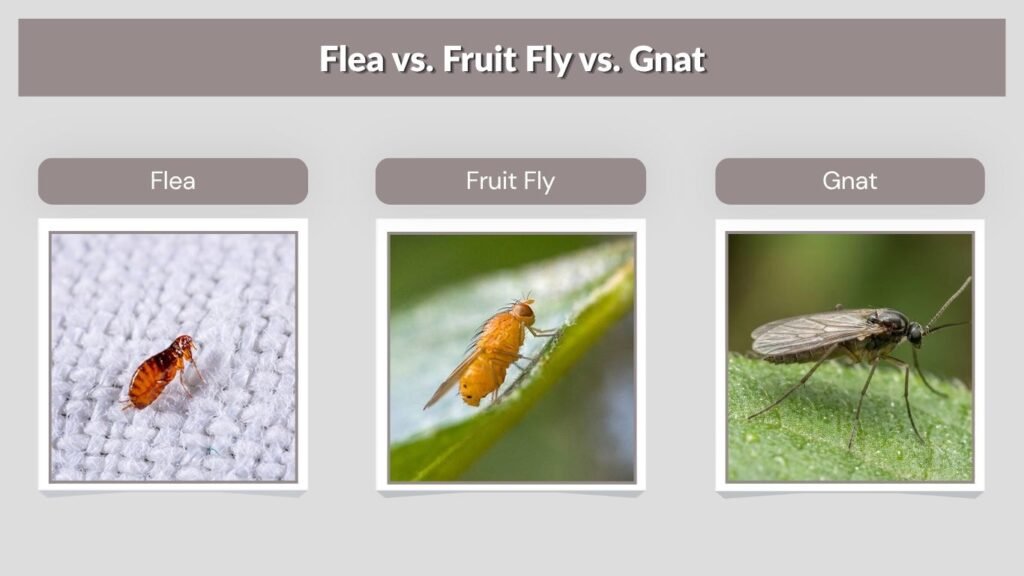
Gnats introduce another source of confusion. Fungus gnats are slender, dark insects often found around wet houseplant soil.
| Feature | Flea | Fruit Fly | Fungus Gnat |
|---|---|---|---|
| Wings | No | Yes | Yes |
| Movement | Jumps | Flies quickly | Weak, erratic flight |
| Body | Flat and reddish-brown | Rounded and tan | Thin and dark |
| Main location | Pets and carpets | Fruit and garbage | Houseplant soil |
| Bites people | Yes | No | No |
| Main control | Treat pets and home | Remove fermenting sources | Reduce soil moisture |
FAQs
Can fruit flies jump like fleas?
Fruit flies may make short, sudden flights that look like jumping, but they move primarily with their wings. Fleas have no wings and use powerful hind legs to jump from surfaces or onto hosts.
Can fleas fly around the kitchen?
Fleas cannot fly. A tiny insect visibly hovering around fruit, drinks, garbage, or the sink is more likely to be a fruit fly, fungus gnat, or drain fly.
Why are tiny bugs biting me but I cannot see them?
Fleas are one possibility, especially when pets are present or bites appear around the ankles. However, mosquitoes, bed bugs, mites, and other causes can produce similar reactions. Inspect pets and sleeping areas before assuming the cause.
Will a fruit-fly trap catch fleas?
No. Fleas are not strongly attracted to vinegar or fermenting fruit. Fruit-fly traps may capture flying insects but will not control fleas living on pets, carpets, bedding, or furniture.
Which is harder to eliminate, fleas or fruit flies?
Fleas are generally more difficult because several life stages may be distributed across pets and the home. Fruit flies can usually be controlled by removing fermenting material, cleaning thoroughly, and trapping the remaining adults.