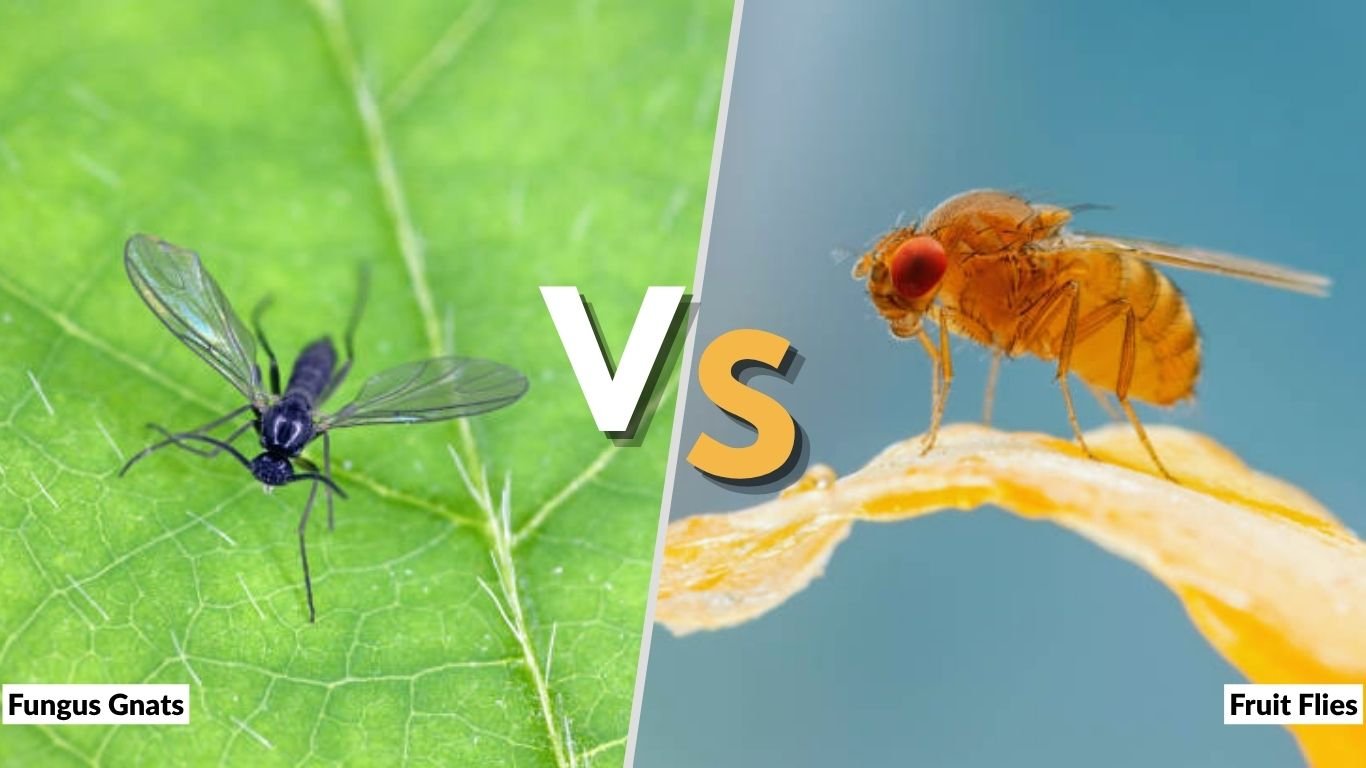
Fungus gnats and fruit flies are tiny household pests that are frequently mistaken for each other. However, they differ in appearance, breeding location, behavior, and control. Fungus gnats are dark, slender flies commonly found around moist houseplant soil. Fruit flies have rounder, tan-colored bodies and gather near overripe produce, fermented drinks, garbage, and food residue. Correct identification is essential because a vinegar trap may catch fruit flies but will not eliminate fungus gnat larvae developing in potting soil.
Fungus Gnats vs. Fruit Flies: Quick Comparison
The easiest way to identify these insects is to observe their body shape and where they spend most of their time. Fungus gnats normally remain close to houseplants, whereas fruit flies concentrate around food and fermenting material.
| Feature | Fungus Gnats | Fruit Flies |
| Body shape | Slender and mosquito-like | Compact and rounded |
| Color | Dark gray or black | Tan, yellowish-brown, or brown |
| Eyes | Small and dark | Often bright red |
| Legs | Long and thin | Shorter |
| Antennae | Long and noticeable | Short and less visible |
| Typical size | About 1.5–3 mm | About 2–3 mm |
| Main location | Houseplant soil | Kitchens and food-storage areas |
| Breeding source | Moist potting mix | Fermenting food and drinks |
| Flight | Weak, slow, and erratic | Faster and more direct |
| Plant risk | Larvae may affect roots | Generally no plant damage |
What Do Fungus Gnats Look Like?
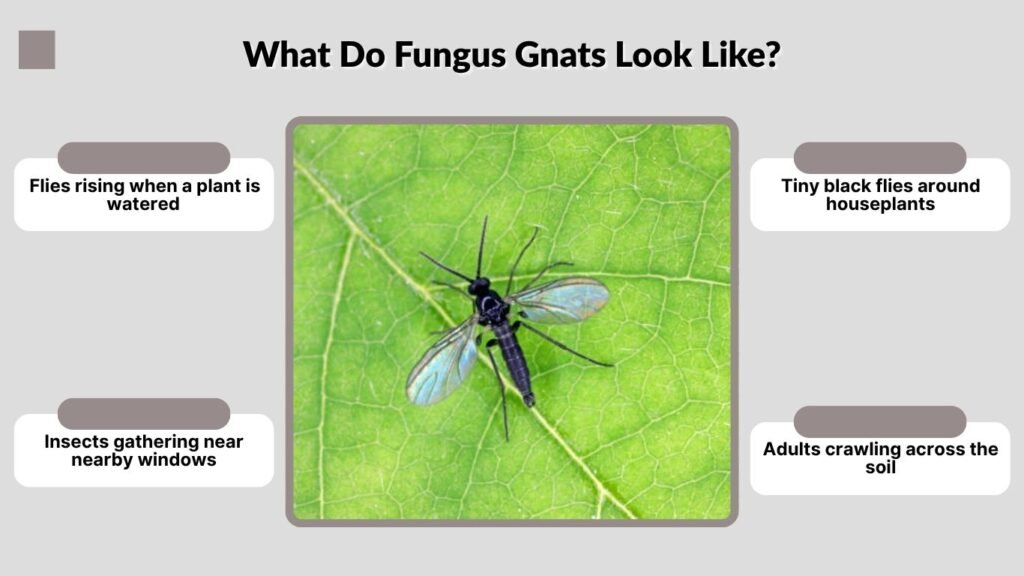
Adult fungus gnats are small, delicate flies with dark bodies, long legs, clear wings, and relatively long antennae. Their narrow bodies make them resemble miniature mosquitoes. Most adults measure approximately 1/16 to 1/8 inch long.
When resting, their wings are usually folded over or behind the body. You may see the adults crawling across potting soil, hovering around plants, or gathering near windows and lights.
Where Do Fungus Gnats Come From?
Fungus gnats develop mainly in consistently moist potting soil containing fungi, decaying roots, algae, and decomposing organic matter. Adult females lay their eggs in the upper portion of the growing medium.
The larvae are translucent or whitish, legless, worm-like creatures with dark heads. They primarily consume fungi and decaying material, although large populations may feed on delicate plant roots. Overwatering and poor drainage create ideal conditions for them.
Signs of Fungus Gnats
Common signs include:
- Tiny black flies around houseplants
- Adults crawling across the soil
- Flies rising when a plant is watered
- Insects gathering near nearby windows
- Clear larvae with black heads in the soil
- Constantly wet or poorly drained potting mix
Placing a slice of raw potato on the soil can help detect larvae. After several days, larvae may gather beneath the slice to feed. Yellow sticky cards are also useful for detecting and monitoring adults.
What Do Fruit Flies Look Like?
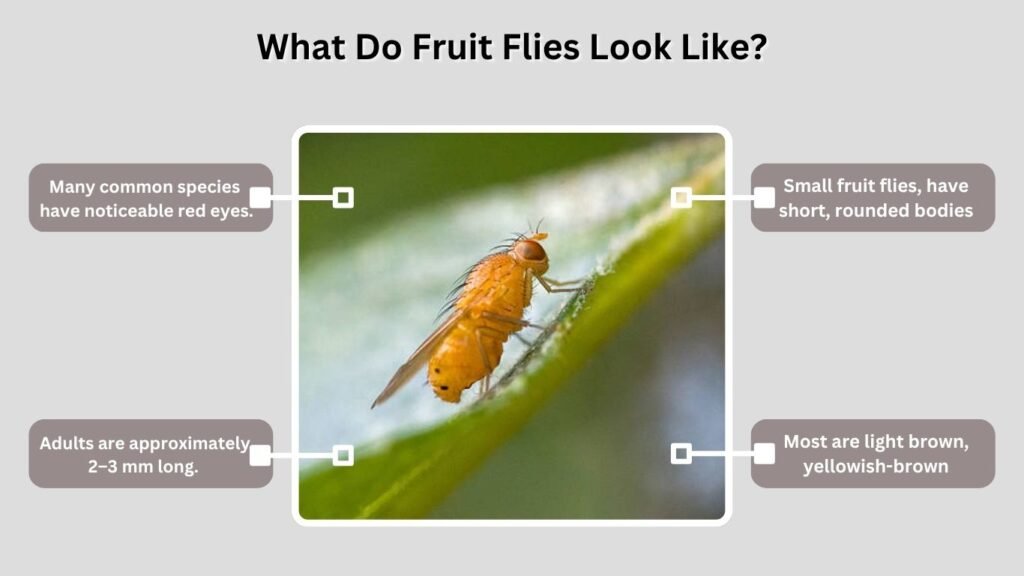
Fruit flies, also called vinegar flies or small fruit flies, have short, rounded bodies. Most are light brown, yellowish-brown, or tan, and many common species have noticeable red eyes.
Adults are approximately 2–3 mm long. They generally look broader and more compact than fungus gnats and do not have the same long, mosquito-like legs and antennae.
Where Do Fruit Flies Come From?
Fruit flies breed in moist, fermenting organic material. Their larvae feed on yeast and microorganisms developing around overripe produce, food residue, and sweet liquids.
Common breeding sources include:
- Overripe bananas and other fruit
- Rotting vegetables
- Open wine, beer, juice, or soda
- Unwashed bottles and cans
- Garbage and recycling containers
- Food residue beneath appliances
- Compost buckets
- Dirty garbage disposals
Fruit flies may also appear around drains, but their presence does not necessarily mean they are breeding deep inside the plumbing. Fermenting material around the drain opening or garbage disposal may be attracting them.
Differences in Behavior and Breeding
Both pests reproduce in moist organic material, but they choose very different environments. Watching where the adults land is often more useful than trying to examine their tiny bodies.
| Behavior | Fungus Gnats | Fruit Flies |
| Hovering area | Around plant pots and leaves | Around produce, drinks, and garbage |
| Adult movement | Slow and weak flight | Quick, active flight |
| Larval habitat | Damp soil | Fermenting food residue |
| Main attraction | Fungi and moist growing media | Yeast and fermentation odors |
| Common entry source | Infested soil or a new plant | Produce or outdoor entry |
| Best adult trap | Yellow sticky card | Vinegar or wine trap |
Do Fungus Gnats or Fruit Flies Bite?
Neither fungus gnats nor common household fruit flies normally bite people. They are primarily nuisance pests.
Fungus gnat larvae live in soil, while adults spend their short lives reproducing and searching for suitable growing media. Fruit flies are attracted to fermenting foods and liquids rather than people or pets. Fungus gnats are not considered harmful to humans and usually cause little or no plant damage at low numbers.
How to Get Rid of Fungus Gnats
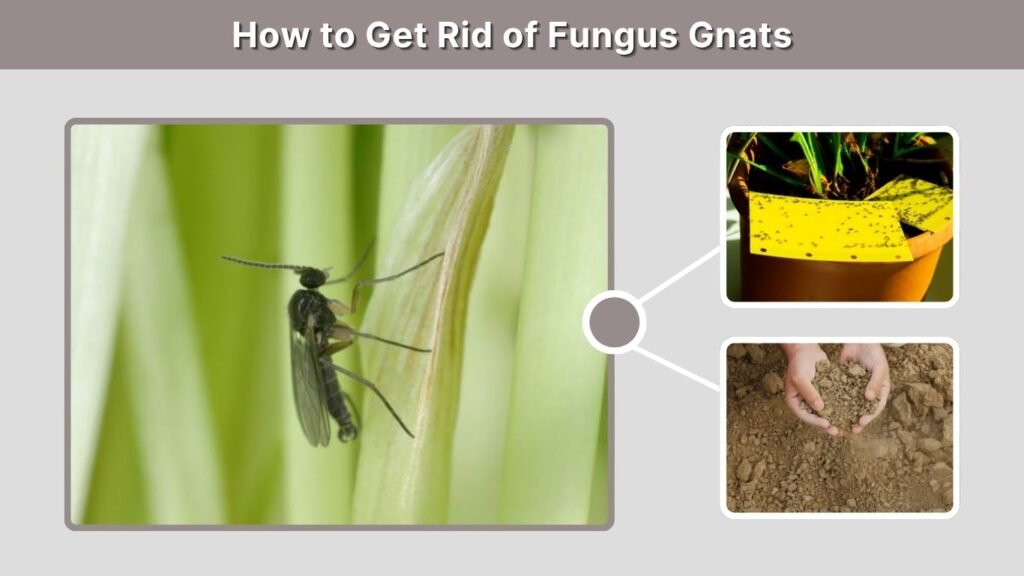
Controlling fungus gnats requires treating both the flying adults and the larvae in the soil. Sticky traps alone may reduce adult numbers, but they will not stop new adults from emerging.
Let the Soil Dry
Allow the upper portion of the potting mix to dry between waterings as much as the plant can safely tolerate. Fungus gnat eggs and larvae depend on moisture, so reducing unnecessary watering makes the soil less suitable for reproduction.
Ensure that each container has drainage holes, and empty water from saucers after watering. Remove dead leaves, flowers, and other decomposing plant material from the soil surface.
Use Yellow Sticky Traps
Place yellow sticky cards horizontally or vertically near the soil. Adults are attracted to the yellow surface and become trapped.
Sticky cards help reduce the number of egg-laying adults and allow you to monitor the infestation. However, they should be combined with soil management because they do not kill larvae.
Treat the Larvae
Products containing Bacillus thuringiensis subspecies israelensis, commonly abbreviated as BTI, can be applied to potting soil according to label instructions. BTI targets fly larvae rather than adult gnats.
Severely infested plants may need to be repotted in fresh, clean growing medium. Wash the container and remove as much old soil from the roots as the plant can safely tolerate.
How to Get Rid of Fruit Flies
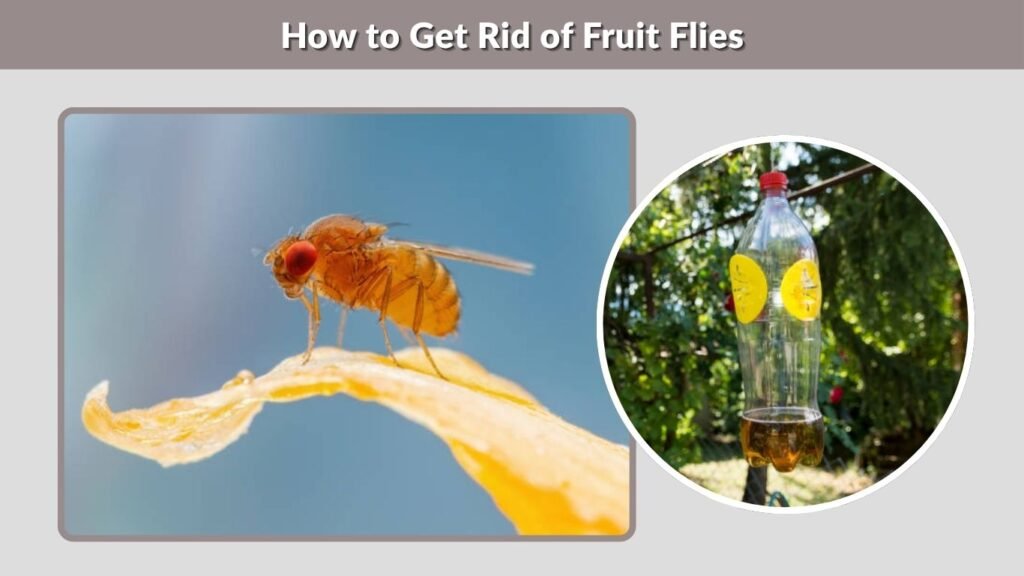
Fruit fly control begins with finding and removing every source of fermentation. Traps catch adults, but they cannot solve the infestation while eggs and larvae continue developing elsewhere.
Remove Breeding Sources
Discard spoiled fruit and vegetables in a sealed outdoor garbage container. Refrigerate ripe produce for at least several days while managing the infestation.
Wash recycling bottles, beverage cans, garbage containers, compost buckets, and garbage disposals. Check beneath refrigerators, ovens, cabinets, and trash cans for forgotten spills or food.
Make a Vinegar Trap
Pour apple cider vinegar into a jar and place a paper funnel over the opening. The fermented odor attracts adult fruit flies, which enter through the narrow opening and have difficulty escaping.
Red wine, beer, or mashed banana can also work as bait. Traps may catch many adults, but sanitation and source removal remain the most important control measures.
Fungus Gnats vs. Fruit Flies vs. Drain Flies
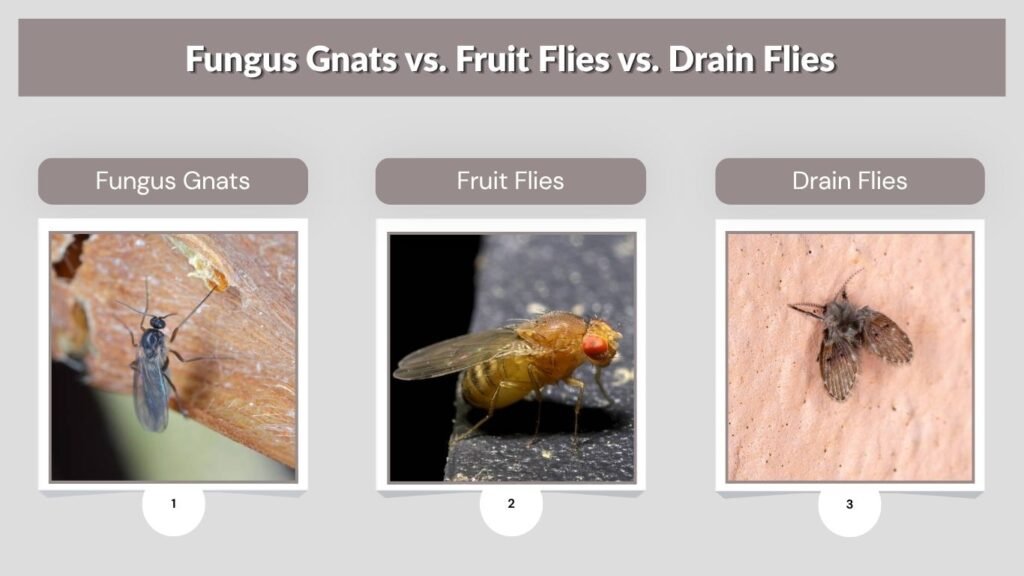
Drain flies are another common source of confusion. They are also called moth flies because their bodies and wings are densely covered with hairs.
| Feature | Fungus Gnat | Fruit Fly | Drain Fly |
| Appearance | Thin and mosquito-like | Round and tan | Fuzzy and moth-like |
| Wings | Clear and narrow | Clear and rounded | Broad and hairy |
| Main location | Plant soil | Fruit and food waste | Sinks and drains |
| Breeding source | Wet potting mix | Fermenting material | Organic drain slime |
| Best control | Dry soil and treat larvae | Remove food sources | Physically scrub drains |
Drain flies frequently rest on walls beside sinks, showers, and floor drains. Their broad wings may appear heart-shaped when held over the body. They breed in the gelatinous organic film that accumulates inside neglected drains and other consistently wet areas.
How to Test the Source
Place a yellow sticky card beside a plant. Captured slender black flies strongly suggest fungus gnats.
Place a vinegar trap beside produce or garbage. Strong activity around the bait suggests fruit flies.
For suspected drain flies, cover the drain with a clear container or loosely place transparent tape over part of the opening overnight. Finding fuzzy flies around the covered drain suggests that the plumbing is the breeding source. The drain must then be physically scrubbed to remove the organic film.
FAQs
How can I quickly tell fungus gnats from fruit flies?
Look at where they gather. Dark, slender flies hovering around moist houseplant soil are probably fungus gnats. Rounder, tan flies with reddish eyes gathering around fruit, garbage, wine, or sweet drinks are more likely fruit flies.
Will vinegar traps catch fungus gnats?
Vinegar traps may catch an occasional fungus gnat, but they are much more effective against fruit flies. Yellow sticky cards placed near potting soil are better for adult fungus gnats, while reduced watering and larval treatments address the breeding population.
Can fungus gnats come from kitchen drains?
Fungus gnats primarily develop in damp soil, but they may occasionally use other areas containing moisture and fungal growth. Flies breeding directly in drain slime are more likely to be drain flies or another moisture-associated fly.
Why are tiny flies around my cat’s litter box?
Fruit flies may be attracted to food residue or organic waste near a litter area, while fungus gnats could come from nearby plants. Clean the litter box and surrounding floor thoroughly, inspect nearby food containers, and check any houseplant soil for adults.
Can fruit flies live in houseplant soil?
Typical fruit flies prefer fermenting fruit, beverages, and food residue rather than ordinary potting soil. Tiny flies consistently emerging from wet houseplant soil are much more likely to be fungus gnats.