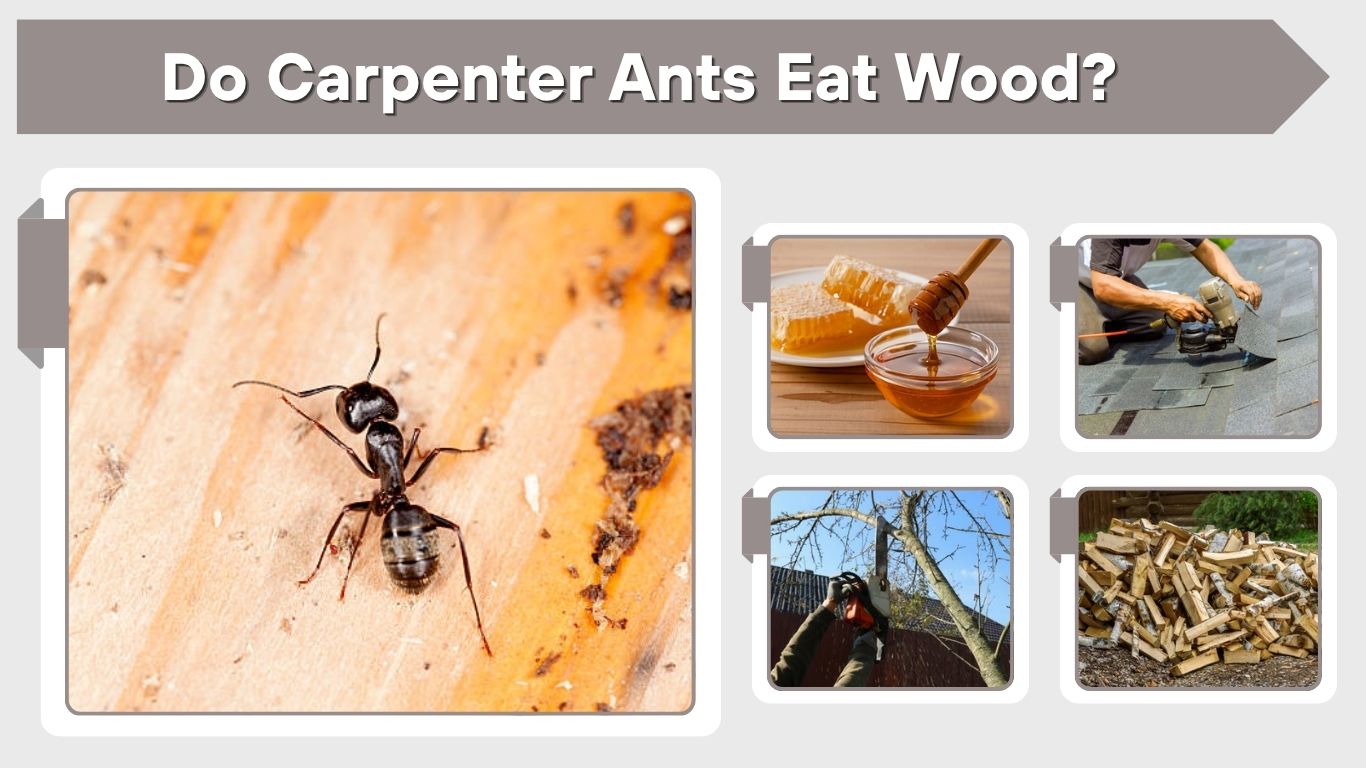
Carpenter ants are famous for damaging wood, so many people believe they eat it like termites. The truth is different. Carpenter ants do not eat wood. They chew and remove wood to create nesting tunnels, then feed on sugars, proteins, insects, honeydew, and food scraps. This difference matters because carpenter ant control is not just about protecting wood. It is also about finding nests, fixing moisture problems, and removing the conditions that attract them.
Do Carpenter Ants Eat Wood?
No, carpenter ants do not eat wood. They chew through wood with their jaws and remove pieces to build tunnels and nesting galleries. The wood is not their food source. University of Minnesota Extension explains that carpenter ants feed on protein and sugar sources, but they remove wood only while creating galleries and tunnels for nesting.
This is why carpenter ant damage often leaves behind piles of rough sawdust-like material called frass. The ants push this material out of the nest as they expand their galleries.
Why Do Carpenter Ants Chew Wood?
Carpenter ants chew wood to make space for the colony. Their tunnels are used for movement, shelter, brood care, and nesting. They are called “carpenter” ants because they excavate wood, not because they eat it.
New Hampshire Extension notes that carpenter ant galleries are usually clean and smooth, unlike termite galleries that may contain mud-like material.
What Carpenter Ant Galleries Look Like
Inside damaged wood, carpenter ant galleries may look smooth, hollow, and carved out. The tunnels often follow the grain of the wood. Since the ants remove the wood instead of eating it, frass may collect below openings, baseboards, window frames, deck boards, or tree cavities.
Common signs include:
- Coarse sawdust-like frass
- Smooth tunnels inside wood
- Large black or reddish ants nearby
- Rustling sounds inside walls
- Ants appearing around damp wood
- Winged ants indoors during swarming season
What Do Carpenter Ants Eat Instead of Wood?
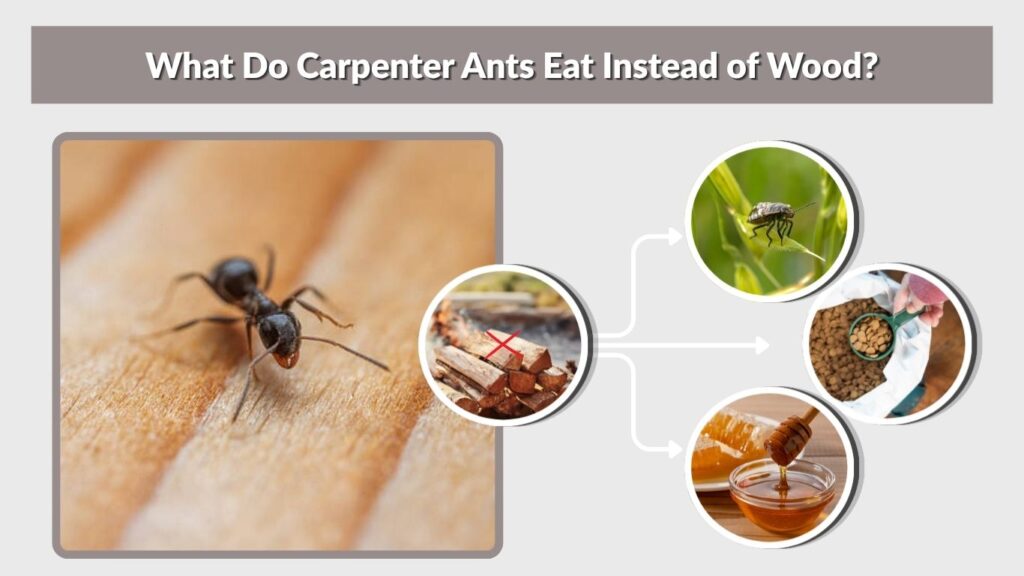
Carpenter ants eat a mix of protein and sugar. Outdoors, they feed on insects, dead insects, plant juices, and honeydew produced by aphids and scale insects. Indoors, they may feed on meats, pet food, syrup, honey, sugar, jelly, and other sweet foods.
| Food Source | Do Carpenter Ants Eat It? | Notes |
| Wood | No | They chew it for nesting only |
| Insects | Yes | Living or dead insects can provide protein |
| Honeydew | Yes | A common outdoor sugar source |
| Meat or pet food | Yes | Can attract ants indoors |
| Syrup, honey, sugar | Yes | Common indoor attractants |
| Plant juices | Yes | Used as a natural sugar source |
This is why carpenter ants may appear in kitchens even when the nest is in a wall, tree, attic, or outdoor stump.
Do Carpenter Ants Eat Wood Like Termites?
No, carpenter ants do not eat wood like termites. Termites consume cellulose from wood, while carpenter ants only excavate wood for nesting. North Carolina State Extension states that carpenter ants tunnel through wood while building or expanding nests, but unlike termites, they do not consume it.
Carpenter Ants vs Termites
| Feature | Carpenter Ants | Termites |
| Eat wood? | No | Yes |
| Reason for wood damage | Nest building | Feeding |
| Gallery appearance | Smooth and clean | Often rough or muddy |
| Debris | Sawdust-like frass | Mud tubes or pellets, depending on type |
| Visibility | Workers often seen foraging | Often hidden |
| Main attraction | Damp or damaged wood | Wood/cellulose and moisture |
If you see wood damage but are not sure whether it is carpenter ants or termites, look for frass, mud tubes, insect bodies, and the texture of the tunnels.
Do Carpenter Ants Eat Pressure Treated Wood?
Carpenter ants do not eat pressure treated wood because they do not eat any wood. However, that does not mean pressure treated wood is always safe from carpenter ants. If treated wood becomes old, wet, cracked, softened, or decayed, carpenter ants may still tunnel into it for nesting.
This is especially possible in decks, fence posts, porch supports, and landscape timbers where wood stays damp or touches soil. Georgia Extension explains that moisture-damaged wood attracts carpenter ants because damp wood is easier for them to chew than sound, dry wood.
Do Carpenter Ants Eat Treated Wood?
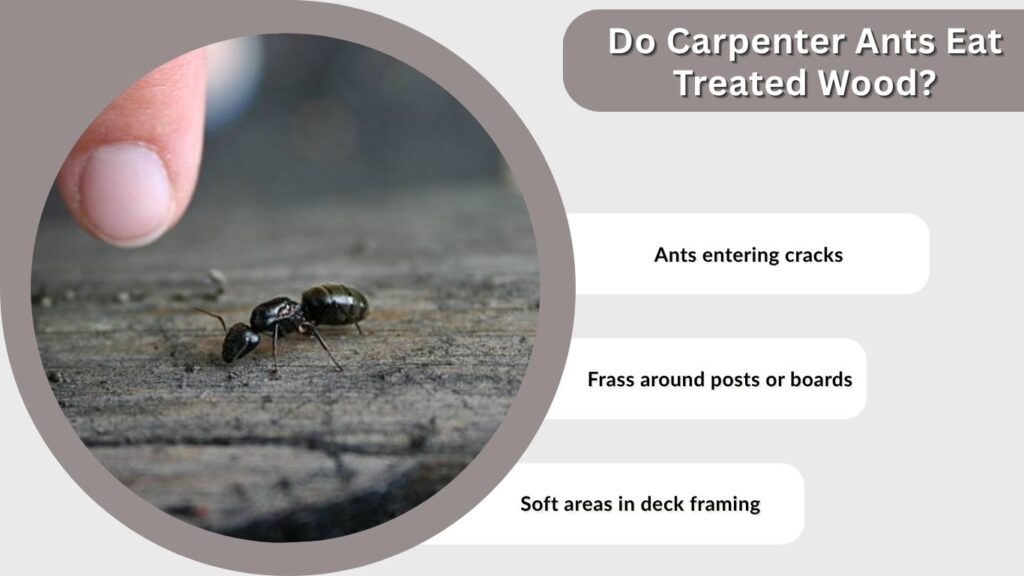
No, carpenter ants do not eat treated wood. But they may excavate treated wood if it becomes suitable for nesting. Treated wood can still develop cracks, rot pockets, fungal decay, or water damage over time.
Check treated wood carefully if you notice:
- Ants entering cracks
- Frass around posts or boards
- Soft areas in deck framing
- Damp wood near soil contact
- Rot around fasteners or joints
The real issue is not whether the wood is “food.” The issue is whether the wood has become easy to tunnel through.
Do Carpenter Ants Eat Cedar Wood?
Carpenter ants do not eat cedar wood. Cedar is often more naturally resistant to some insects and decay than many softwoods, but it is not impossible for carpenter ants to nest in it. If cedar becomes damp, weathered, or decayed, carpenter ants may use it as a nesting site.
This can happen in cedar siding, fences, outdoor furniture, shingles, or old boards that stay wet. Carpenter ants are much more interested in protected, moist nesting space than in the wood species itself.
Do Carpenter Ants Eat Dry Wood?
Carpenter ants prefer damp or decayed wood, but they are not limited to it. They may expand from damp wood into drier, sound wood as the colony grows. Ask Extension notes that carpenter ants can build nests in sound, dry wood as well as in wall voids, crawl spaces, foam, and insulation.
However, dry wood is usually less attractive than wood softened by leaks, rot, or moisture. If carpenter ants are found in dry-looking wood, look nearby for hidden water damage, roof leaks, plumbing leaks, condensation, or old decay.
Do Carpenter Ants Eat Healthy Wood?
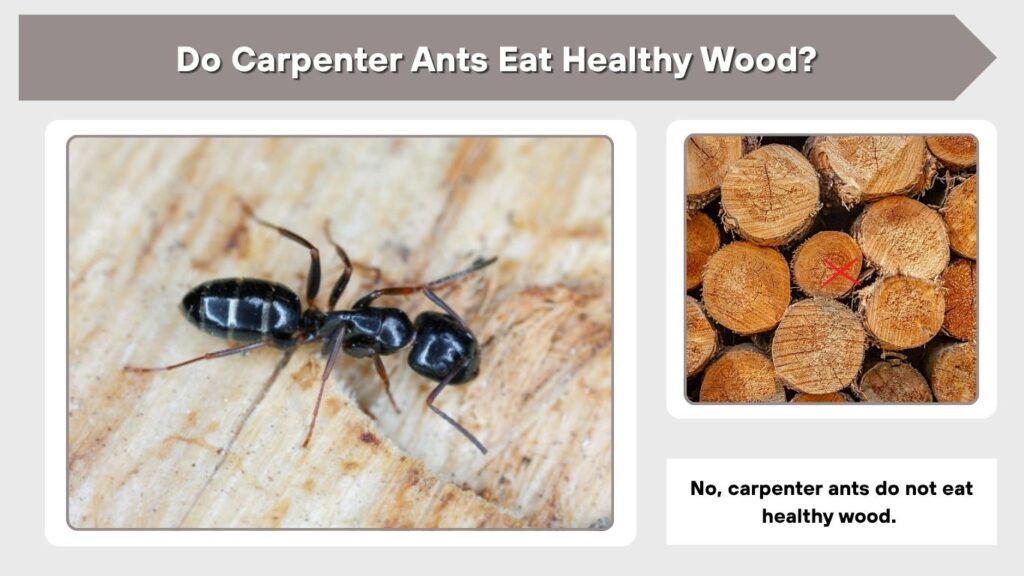
No, carpenter ants do not eat healthy wood. They may tunnel into healthy wood if a colony is already established nearby or if the wood is connected to a damp nesting area. In many homes, the infestation begins in water-damaged wood and later spreads.
Common risk areas include:
- Window frames
- Door frames
- Roof edges
- Deck posts
- Porch supports
- Crawl spaces
- Attic framing
- Bathroom walls
- Kitchen plumbing areas
- Wood near foundation moisture
Because healthy-looking surfaces can hide damp interior wood, carpenter ant activity should not be ignored.
Do Black Carpenter Ants Eat Wood?
Black carpenter ants do not eat wood either. Like other carpenter ants, they excavate wood for nesting and feed on proteins and sugars. Black carpenter ants are among the most commonly noticed types because of their large size and dark color.
If you see large black ants indoors, it does not always mean there is a nest inside. They may be foraging outdoors. But repeated indoor sightings, especially at night or during winter, can suggest a hidden indoor nest.
Do Flying Carpenter Ants Eat Wood?
Flying carpenter ants do not eat wood. Winged carpenter ants are reproductive ants. Their role is to leave the colony, mate, and start new colonies. After mating, a queen sheds her wings and searches for a suitable nesting site.
Seeing a few flying carpenter ants near lights or windows may happen during swarming season. Seeing many winged ants indoors can be more concerning because it may indicate a mature nest inside or near the home.
What Type of Wood Do Carpenter Ants Prefer?
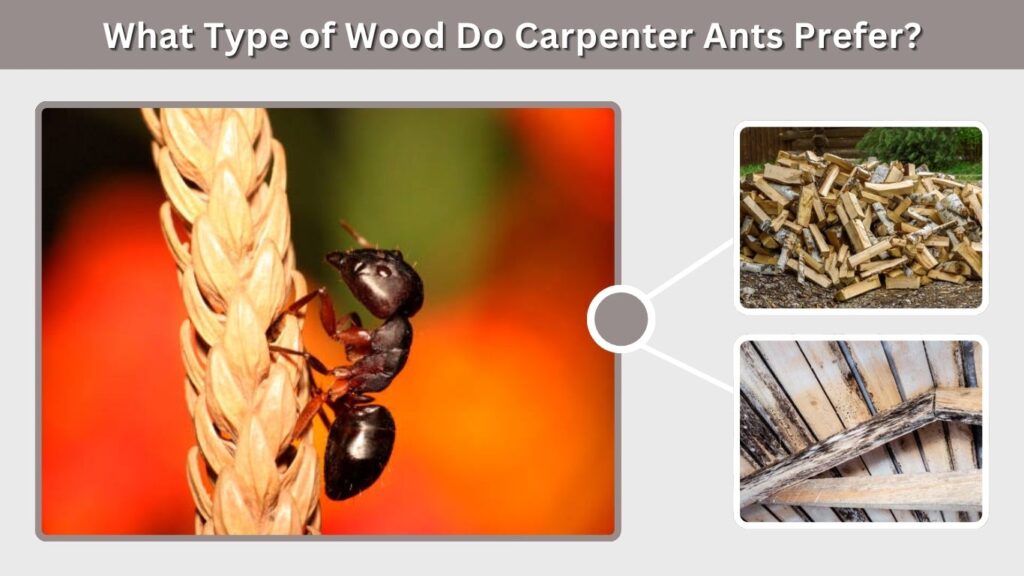
Carpenter ants usually prefer wood that is damp, softened, decayed, or already damaged. They are commonly found in dead trees, stumps, logs, planter boxes, firewood, fence posts, wall voids, and moisture-damaged structural wood. North Carolina State Extension lists tree holes, stumps, logs, standing dead trees, and planter boxes as typical outdoor nesting sites.
Wood More Likely to Attract Carpenter Ants
- Rotten wood
- Damp wood
- Water-damaged framing
- Decaying tree wood
- Firewood piles
- Fence posts touching soil
- Old deck boards
- Soft window or door trim
- Wood near roof or plumbing leaks
Wood Less Likely to Attract Carpenter Ants
- Dry, well-maintained wood
- Painted or sealed wood
- Properly ventilated framing
- Wood kept away from soil
- Firewood stored off the ground
- Boards protected from leaks
Less likely does not mean impossible. Carpenter ants can still move into protected spaces if conditions are right.
Why It Looks Like Carpenter Ants Are Eating Wood
It may look like carpenter ants are eating wood because they leave damage behind. However, the damage is from excavation. They chew pieces loose, carry them out, and dump them near the nest opening.
That dumped material is the key clue. If you find sawdust-like grass under a window, near a baseboard, below a deck, or around a tree cavity, carpenter ants may be nesting nearby.
How to Stop Carpenter Ants from Damaging Wood
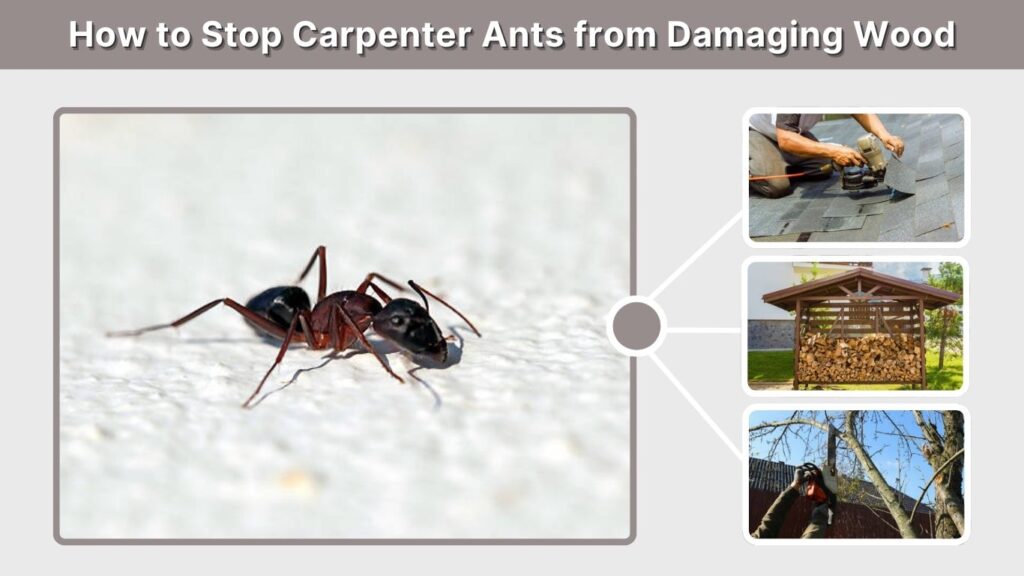
The best way to stop carpenter ant wood damage is to remove the nest and fix the conditions that attracted the ants. Spraying visible ants may kill some workers, but it may not reach the queen or main colony.
Helpful steps include:
- Find the nest by following ant trails at night.
- Look for grass near wood, walls, decks, or trees.
- Fix roof, gutter, window, and plumbing leaks.
- Replace rotten or damp wood.
- Store firewood away from the house.
- Keep mulch away from siding and wood trim.
- Seal cracks around pipes, wires, doors, and windows.
- Trim branches that touch the roof or siding.
- Use labeled carpenter ant baits or treatments carefully.
- Call a pest professional for wall, attic, or structural nests.
NPIC explains that carpenter ants chew through wood to make nests but do not eat wood like termites. Correct identification matters before using any pesticide treatment.
FAQs
Do carpenter ants actually eat wood?
No, carpenter ants do not actually eat wood. They chew and remove wood to build nesting tunnels, but their diet is based on sugars, proteins, insects, honeydew, and household food sources.
Why do carpenter ants chew wood?
Carpenter ants chew wood to create galleries for nesting. These tunnels give the colony space to move, protect young ants, and expand. They usually prefer damp or decayed wood because it is easier to excavate.
Do carpenter ants only eat rotted wood?
No. They do not eat rotted wood or any other wood. They prefer to nest in rotted or damp wood, but they may also tunnel into dry or sound wood if the colony expands.
Do carpenter ants eat wood in your house?
No, but they can damage wood in your house by tunneling through it. They may nest in wall voids, window frames, door frames, subfloors, crawl spaces, attics, or damp structural wood.
What should I do if I see carpenter ants near wood?
Watch where the ants travel, look for frass, check for damp or rotten wood, and try to locate the nest. Fix moisture problems and remove damaged wood. If ants are inside walls or structural areas, professional treatment is often safer.