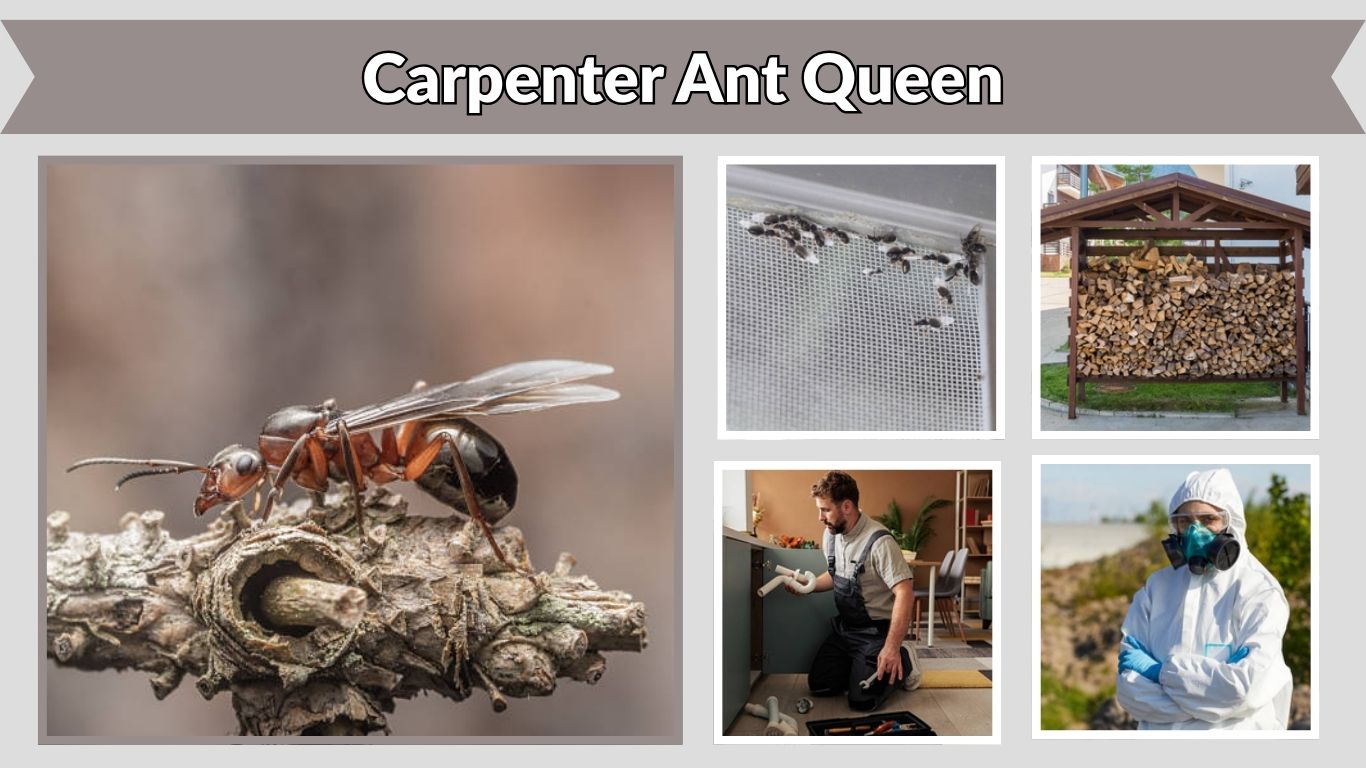
A carpenter ant queen is the reproductive center of a carpenter ant colony. She lays eggs, helps start the colony, and usually stays hidden in the main nest. Many people search for the queen after seeing large black ants, winged ants, or carpenter ants inside the house. Identifying the queen can help you understand whether you found a random swarmer, a new colony starter, or a sign of a bigger infestation.
What Is a Carpenter Ant Queen?
A carpenter ant queen is a reproductive female carpenter ant. Her main job is to lay eggs and build the colony population. After mating, a young queen finds a nesting site, sheds her wings, and begins raising the first group of workers. Males usually die after mating, while mated females start the next generation of colonies.
Carpenter ant colonies often have a main parent nest and may also have satellite nests. UC IPM notes that queens and broods are in the main nest, while satellite nests may contain workers, alates, and pupae.
What Does a Carpenter Ant Queen Look Like?
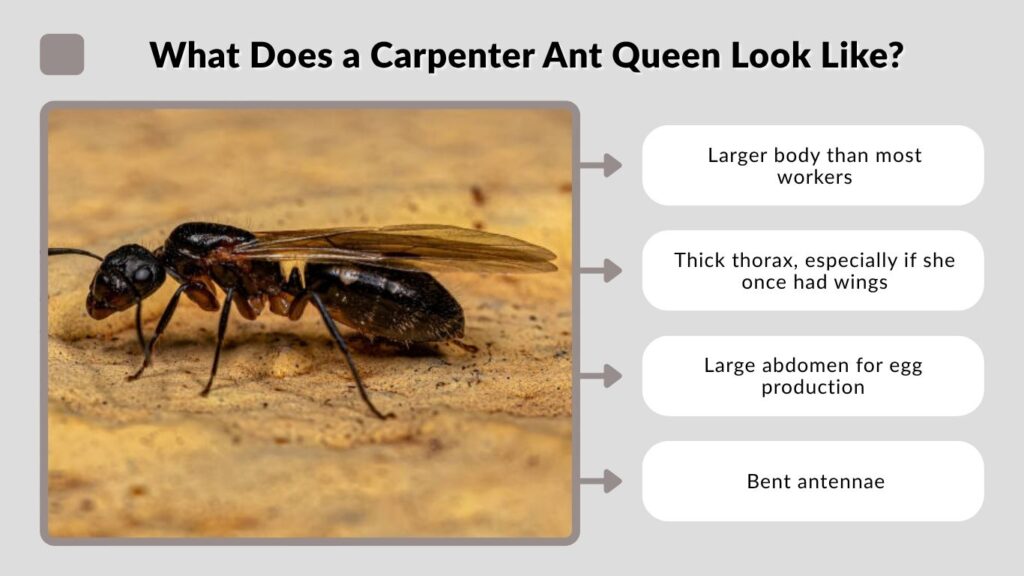
A carpenter ant queen looks like a larger, heavier version of a worker ant. She usually has a broad chest area, a larger abdomen, and a more solid body shape. Her color depends on the species. Many are black, while others may be red, reddish brown, chestnut, or red and black.
Common carpenter ant queen features include:
- Larger body than most workers
- Thick thorax, especially if she once had wings
- Large abdomen for egg production
- Bent antennae
- Narrow “waist” between body sections
- Black, red-black, brown, or chestnut color
- Wings or wing scars, depending on life stage
Carpenter ants have elbowed antennae and a narrow waist, which helps separate them from termite swarmers. Winged ants also have front wings that are longer than the back wings, while termite wings are more equal in size.
Carpenter Ant Queen Size
A carpenter ant queen is usually larger than workers, but size depends on species. Carpenter ants are among the larger household ants, and workers vary in size because colonies include minor and major workers. Missouri Extension notes that carpenter ant colonies contain workers of several sizes, including major and minor workers.
| Carpenter Ant Type | General Size/Look |
| Minor worker | Smaller worker, usually seen foraging |
| Major worker | Larger worker with a bigger head |
| Queen | Largest or among the largest ants in the colony |
| Winged queen | Large ant with wings before mating |
| Dealate queen | Mated queen that has shed her wings |
Because major workers can be large, people sometimes mistake them for queens. The queen usually has a thicker thorax and larger abdomen than a major worker.
Carpenter Ant Queen vs Worker
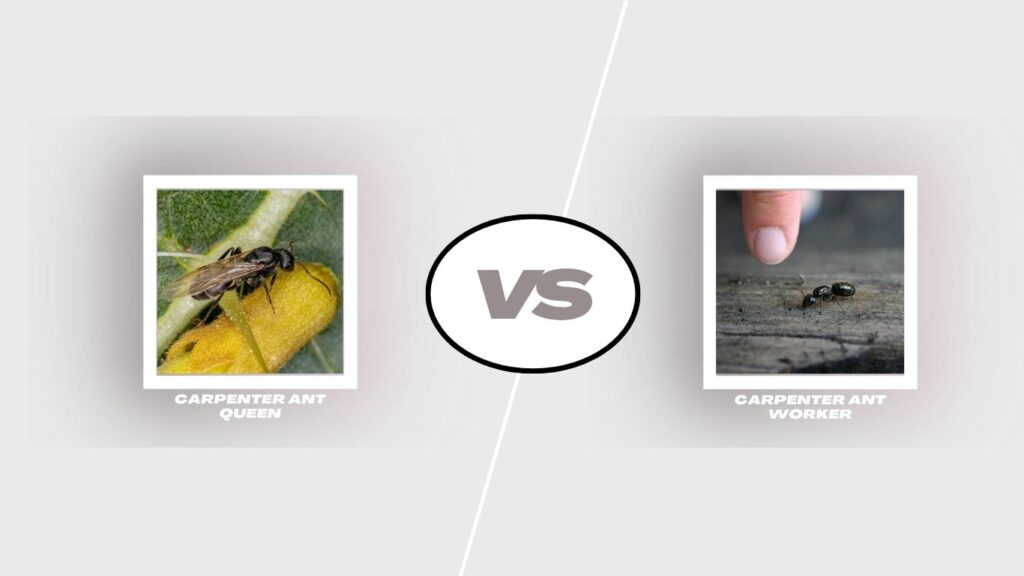
The queen and worker ants have different jobs. The queen lays eggs and stays hidden, while workers search for food, care for young, expand tunnels, and move between nests.
Main Differences
| Feature | Carpenter Ant Queen | Carpenter Ant Worker |
| Main role | Lays eggs | Forages, builds, cares for brood |
| Size | Usually larger | Smaller to large, depending on caste |
| Wings | May have wings before mating | No wings |
| Abdomen | Larger and fuller | Smaller and slimmer |
| Location | Usually hidden in main nest | Seen indoors or outdoors |
| Lifespan | Can live many years | Usually much shorter |
A worker ant found in the kitchen or bathroom is not usually the queen. Queens normally stay protected inside the parent nest, while workers are the ants most people see.
Do Carpenter Ant Queens Have Wings?
Yes, young carpenter ant queens have wings before mating. These winged queens are called reproductive ants or alates. They leave the colony during swarming periods, mate, and then the fertilized females shed their wings to start a new colony.
A carpenter ant queen with wings may be seen during a mating flight. A carpenter ant queen with no wings may be a mated queen that has already shed them. Wing scars may still be visible on the thorax.
Winged Queen vs Termite Swarmer
Winged carpenter ant queens are often confused with termite swarmers. This table helps with quick identification.
| Feature | Winged Carpenter Ant Queen | Termite Swarmer |
| Antennae | Bent or elbowed | Straight |
| Waist | Narrow and pinched | Broad and thick |
| Wings | Front wings longer than back wings | Four wings similar in size |
| Body shape | Three clear body sections | More straight-sided body |
| Behavior | May be seen near ant trails or nest areas | Often linked to termite colonies |
Correct ID matters because carpenter ants and termites require different control methods.
Carpenter Ant Queen in House
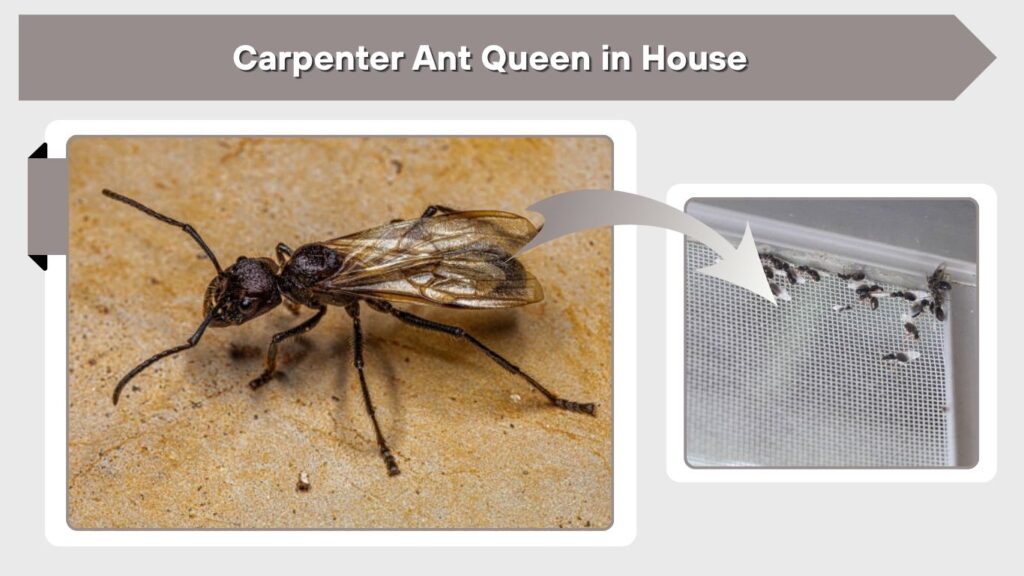
Finding a carpenter ant queen in the house can mean different things. A winged queen near a window or light may have flown in from outdoors during a swarm. A queen without wings found indoors may be trying to start a nest, or she may be connected to an indoor colony.
Indoor carpenter ant activity is more concerning when you see:
- Large ants repeatedly in the same room
- Winged ants indoors
- Sawdust-like frass near wood
- Ants coming from walls or baseboards
- Rustling sounds in walls
- Damp or damaged wood nearby
The Illinois Department of Public Health explains that a carpenter ant colony may have a parent nest with the queen and satellite nests with workers, older larvae, and pupae.
How Many Queens Are in a Carpenter Ant Colony?
Many carpenter ant colonies are built around one main queen, but some colonies can have more than one queen. UC IPM notes that carpenter ant colonies can have multiple queens and may also have many satellite nests.
This matters for control because killing one visible ant does not always solve the infestation. The queen is usually hidden in the main nest, and workers may continue moving between satellite nests and the parent colony.
What Happens When You Kill the Queen Carpenter Ant?
If you kill the only queen in the main nest, the colony may eventually fail because no new workers are being produced. However, this does not always give instant results. Existing workers may continue moving around for a while, and satellite nests may still appear active.
If the colony has multiple queens, killing one queen may not eliminate the colony. UC IPM notes that some carpenter ant colonies can have multiple queens, so full control depends on locating and treating the colony system, not just killing one ant.
How Long Does a Carpenter Ant Queen Live?
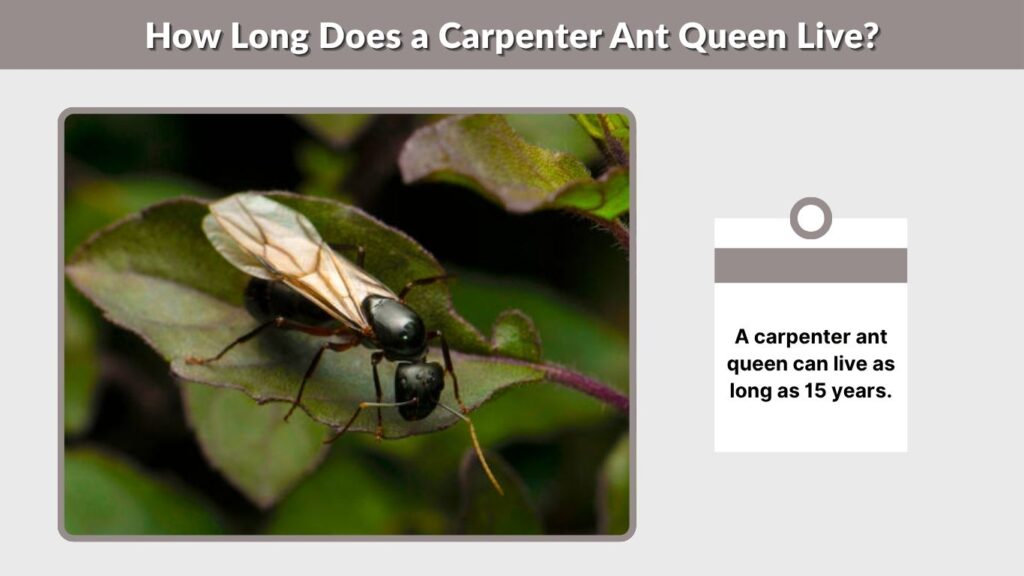
A carpenter ant queen can live for many years. North Carolina State Extension states that each queen can live as long as 15 years.
A long-lived queen allows the colony to grow slowly over time. Orkin notes that carpenter ant colonies may take three to six years to become large and stable.
Pregnant Queen Carpenter Ant
People often use the phrase “pregnant queen carpenter ant,” but a better term is “mated queen.” After mating, the queen stores sperm and can lay fertilized eggs over time. She does not stay pregnant like a mammal. Instead, she begins an egg-laying colony cycle.
A newly mated queen may hide in a small protected space, seal herself in, and raise her first brood. Once the first workers mature, they begin foraging and caring for later broods.
How to Find a Carpenter Ant Queen
Finding the queen is difficult because she usually stays deep in the main nest. In many infestations, people only see workers or winged reproductives. The better strategy is to locate the parent nest and satellite nests.
Look for:
- Ant trails at night
- Frass near wood
- Ants entering cracks or holes
- Damp wood around windows or plumbing
- Activity near stumps, trees, firewood, or fence posts
- Rustling noises in walls
University of Minnesota Extension notes that indoor carpenter ant nests are often satellite nests connected to a parent colony outdoors.
Carpenter Ant Queen Control
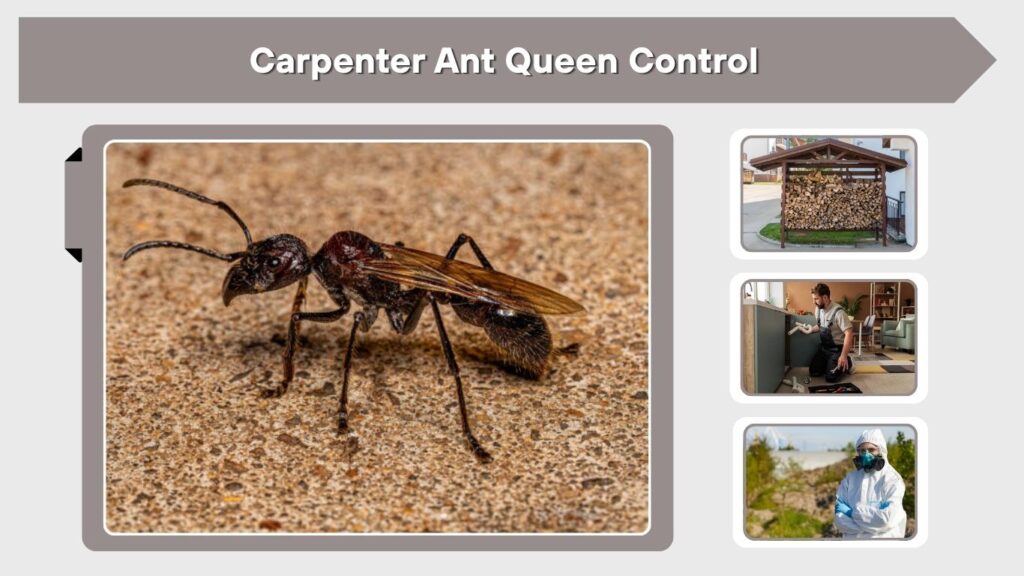
Controlling carpenter ants requires more than killing visible ants. The nest system must be located and treated. If only foraging workers are killed, the queen may continue laying eggs in the parent nest.
Helpful control steps include:
- Follow ant trails to locate nesting areas.
- Check damp wood and moisture-damaged areas.
- Remove rotting wood, stumps, and wood debris.
- Store firewood away from the house.
- Seal cracks and entry points.
- Fix roof, plumbing, and window leaks.
- Use labeled carpenter ant bait or treatment.
- Call a pest professional for hidden wall or structural nests.
UC IPM explains that the main colony is often outdoors in dead or dying wood, while satellite colonies may occur inside homes.
FAQs
Do carpenter ants have a queen?
Yes, carpenter ants have a queen. The queen lays eggs and helps maintain the colony population. She is usually hidden in the main nest, not walking around with the foraging workers.
What does a queen carpenter ant look like?
A queen carpenter ant looks like a large carpenter ant with a thick thorax and large abdomen. She may have wings before mating or wing scars after shedding them.
Do queen carpenter ants leave the nest?
Young winged queens leave the nest during mating flights. After mating, a queen usually sheds her wings and finds a protected place to start a new colony.
How big is a carpenter ant queen?
A carpenter ant queen is usually larger than most workers. Exact size depends on the species, but queens are generally recognized by their larger abdomen, thicker body, and wing scars or wings.
Can you get rid of carpenter ants by killing the queen?
Killing the only queen can eventually stop a colony, but finding her is difficult. Some colonies may also have multiple queens or satellite nests, so full control usually requires locating and treating the nest system.