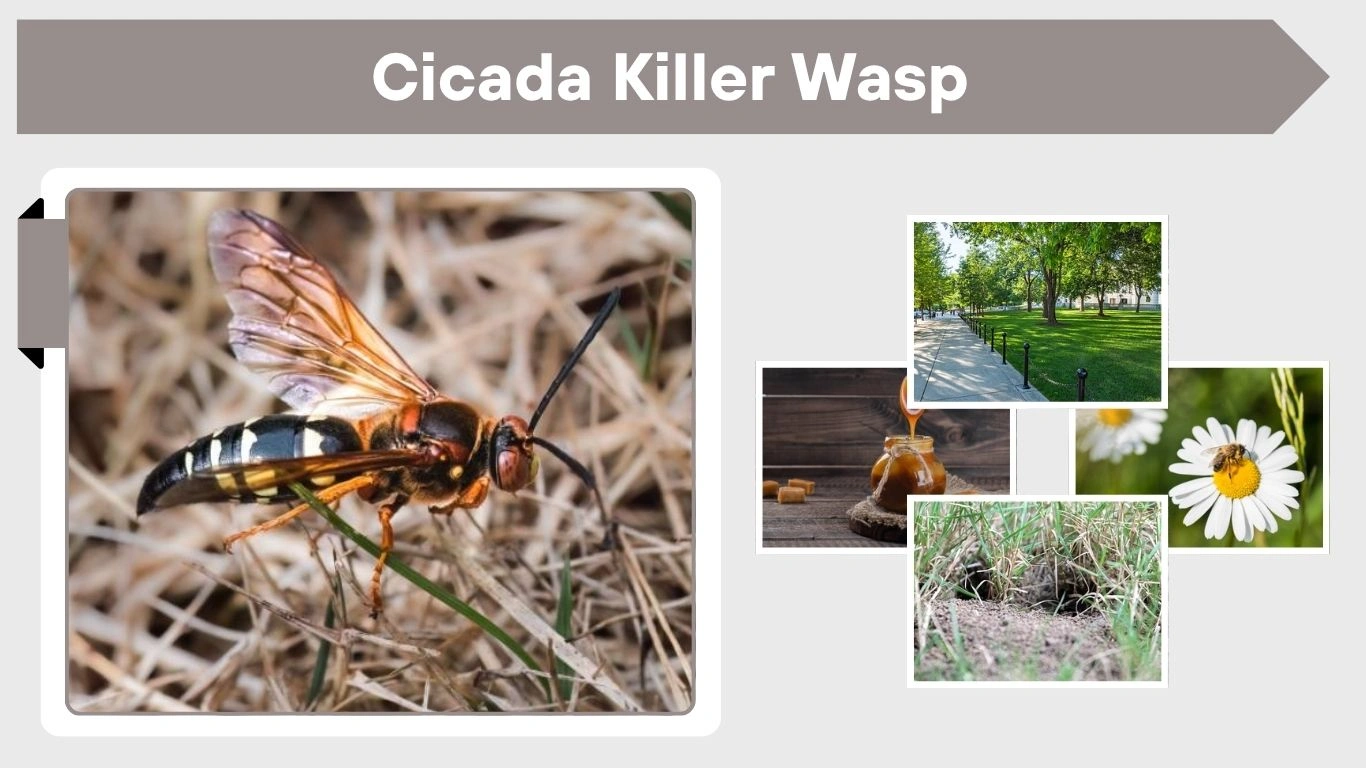
Cicada killer wasps are large solitary wasps commonly found in lawns, gardens, and sandy soil during summer. Their enormous size and loud flight often frighten homeowners, leading many people to mistake them for aggressive hornets. Despite their intimidating appearance, cicada killer wasps are usually calm insects that rarely sting humans. They are known for hunting cicadas and creating underground burrows where they raise their young. Understanding how these wasps behave, where they nest, and whether they are dangerous can help homeowners respond safely and avoid unnecessary panic or extermination.
What Is a Cicada Killer Wasp?
Cicada killer wasps are giant ground-nesting wasps that belong to the species Sphecius speciosus. They are famous for hunting cicadas, which they paralyze and carry into underground burrows as food for developing larvae.
Unlike yellow jackets or hornets, cicada killer wasps are solitary insects. Each female creates her own nest and raises offspring independently rather than living in colonies.
Why They Are Called Cicada Killers
Female cicada killer wasps actively hunt cicadas during warm summer months. After catching a cicada, the female stings and paralyzes it before dragging it into a burrow underground.
Inside the burrow, the wasp places:
- One egg
- One or more paralyzed cicadas
- A sealed underground chamber
When the larva hatches, it feeds on the cicada until it matures into an adult wasp.
Eastern Cicada Killer Wasp
The eastern cicada killer wasp is the most common species found in the eastern and central United States. These wasps are frequently seen in:
- Texas
- Florida
- Ohio
- Georgia
- Michigan
- Illinois
- Indiana
- Tennessee
They are especially active during mid-to-late summer when cicadas are abundant.
What Does a Cicada Killer Wasp Look Like?

Many people are shocked by the size of cicada killer wasps. They are among the largest wasps in North America and can appear very intimidating when flying close to people.
Cicada Killer Wasp Size
Adult cicada killer wasps usually measure between 1.5 and 2 inches long. Females are often larger than males because they hunt cicadas and dig burrows.
Their size is one reason people commonly refer to them as giant cicada killer wasps.
Physical Characteristics
These wasps have several distinctive features that make identification easier:
- Black or reddish-brown body
- Bright yellow abdominal bands
- Rust-colored wings
- Thick abdomen
- Large reddish legs
Their appearance is often compared to oversized yellow jackets, although cicada killers are much less aggressive.
Male vs Female Cicada Killer Wasps
Male cicada killer wasps behave differently from females. Males aggressively patrol nesting areas and may dive toward people or animals that approach their territory.
However, male cicada killer wasps do not have stingers.
Females possess stingers but usually sting only when handled or threatened directly.
Cicada Killer Wasp Nest

Cicada killer wasps build underground nests instead of hanging paper nests in trees or buildings.
These burrows are one of the most noticeable signs of cicada killer activity in yards.
What Does a Cicada Killer Wasp Nest Look Like?
A cicada killer wasp nest usually appears as a round hole in the ground surrounded by loose dirt or a small mound.
The entrance hole is often about half an inch wide and commonly found in:
- Dry lawns
- Sandy soil
- Flower beds
- Garden edges
- Sidewalk cracks
The burrows may extend several inches underground and contain multiple chambers for larvae.
Cicada Killer Wasp Holes
Homeowners often discover cicada killer wasp holes before seeing the insects themselves.
These holes are usually:
- Circular in shape
- Surrounded by loose soil
- Located in sunny dry areas
- Grouped near other burrows
Although the holes can look alarming, they typically cause only cosmetic lawn damage.
Cicada Killer Wasp Sting

One of the most common concerns about cicada killer wasps is whether they sting humans.
Despite their enormous size, these wasps are surprisingly non-aggressive.
Do Cicada Killer Wasps Sting Humans?
Female cicada killer wasps can sting humans, but stings are uncommon because the wasps prefer avoiding conflict.
Most stings happen only when:
- The wasp is grabbed
- A nest is disturbed
- The insect becomes trapped
Male cicada killer wasps may appear aggressive because they dive-bomb intruders, but they cannot sting at all.
What Does the Sting Feel Like?
A cicada killer wasp sting is usually described as mild to moderate compared to hornet or yellow jacket stings.
Common symptoms include:
- Sharp temporary pain
- Mild swelling
- Redness
- Minor irritation
For most people, symptoms disappear within a short period without medical treatment.
Are Cicada Killer Wasps Dangerous?
Cicada killer wasps are generally considered low-risk insects. Their intimidating appearance causes fear, but they are much less aggressive than social wasps.
Where Do Cicada Killer Wasps Live?

Cicada killer wasps prefer warm sunny environments with loose soil that makes digging easier. They are commonly found throughout much of the United States during summer months when cicadas are active.
These wasps usually choose areas with minimal vegetation and dry ground conditions for nesting.
Common Cicada Killer Wasp Locations
Cicada killer wasps are especially common in:
- Residential lawns
- Parks
- Golf courses
- Gardens
- Sidewalk edges
- Sandy playgrounds
They are frequently reported in states such as Texas, Florida, Ohio, Georgia, and Kansas because warm temperatures support both cicada and wasp activity.
Why They Prefer Sandy Soil
Loose sandy soil allows female wasps to dig underground burrows more efficiently. Hard compacted soil is much more difficult for nesting.
Sunny areas are also attractive because warmth helps larvae develop underground.
Cicada Killer Wasp Life Cycle
The life cycle of a cicada killer wasp is closely connected to cicada activity during summer.
Female wasps spend most of their adult lives digging nests and hunting prey for developing larvae.
Egg Stage
After creating a burrow chamber underground, the female places a paralyzed cicada inside and lays a single egg on the insect.
The chamber is then sealed with soil to protect the developing larva.
Larval Stage
Once the egg hatches, the larva feeds on the stored cicada. The prey remains alive but paralyzed, which keeps the food fresh during development.
The larva continues feeding until it becomes fully grown underground.
Adult Emergence
New adult cicada killer wasps emerge the following summer. Adult activity usually peaks between July and September depending on climate and location.
Most adults live only a few weeks during the warm season.
What Do Cicada Killer Wasps Eat?

Adult cicada killer wasps and their larvae have different diets.
Adult Diet
Adult cicada killer wasps mainly feed on:
- Flower nectar
- Plant juices
- Sweet liquids
They are often seen visiting flowers during summer.
Larvae Diet
Larvae feed entirely on paralyzed cicadas placed inside underground chambers by the female wasp.
This hunting behavior is what gives the species its famous name.
How to Get Rid of Cicada Killer Wasps
Although cicada killer wasps are beneficial predators, many homeowners want to remove them because of their size and burrowing activity.
In most cases, populations disappear naturally after summer ends.
Natural Cicada Killer Wasp Control
Simple yard maintenance can make nesting areas less attractive:
- Water dry soil regularly
- Improve lawn thickness
- Reduce bare sandy patches
- Compact loose soil
These methods help discourage future burrowing activity.
Cicada Killer Wasp Spray Options
Some homeowners use insecticide sprays designed for ground-nesting wasps.
Treatments work best:
- During evening hours
- When wasps are less active
- Directly near burrow entrances
Always follow pesticide label instructions carefully for safety.
Insecticide Dust for Cicada Killer Wasp
Dust insecticides are commonly applied inside active burrows because they reach underground chambers more effectively than surface sprays.
The dust is usually placed directly into nest openings before sealing the hole lightly with soil.
Professional Cicada Killer Wasp Removal
Professional pest control may be necessary when:
- Large nesting groups develop
- Burrows appear near entrances
- Family members have sting allergies
- Pets frequently disturb nesting areas
Professionals can safely identify and treat active burrows without increasing sting risks.
Cicada Killer Wasp vs Hornet

Cicada killer wasps are often mistaken for hornets because both insects are large and loud.
However, important differences separate the two species.
Appearance Differences
Hornets usually have:
- Thicker bodies
- Larger heads
- Paper nests
- More compact shape
Cicada killer wasps have:
- Narrower waists
- Rust-colored wings
- Ground burrows
- Longer bodies
Aggression Comparison
Hornets aggressively defend nests and may attack in groups when disturbed.
Cicada killer wasps are solitary and much calmer around humans. Even females prefer escaping instead of stinging.
FAQs
Are cicada killer wasps dangerous to humans?
Cicada killer wasps are generally not dangerous to humans. They are solitary wasps that rarely sting unless directly handled or threatened. Most prefer avoiding people rather than attacking.
Do cicada killer wasps sting people?
Female cicada killer wasps can sting people, but stings are uncommon. Male cicada killers may act aggressively around nests, but they cannot sting because they do not have stingers.
What does a cicada killer wasp hole look like?
A cicada killer wasp hole is usually a round opening in dry soil surrounded by loose dirt or a small mound. These burrows are commonly found in sunny lawns, gardens, and sandy areas.
How do I get rid of cicada killer wasps?
You can reduce cicada killer wasps by watering dry soil, improving lawn coverage, sealing burrows, and using insecticide dust or sprays when necessary. Severe infestations may require professional pest control.
Are cicada killer wasps dangerous to dogs?
Cicada killer wasps are usually low risk for dogs. Problems typically occur only if a dog disturbs a nest or tries to catch a wasp, which may result in a sting from a female wasp.