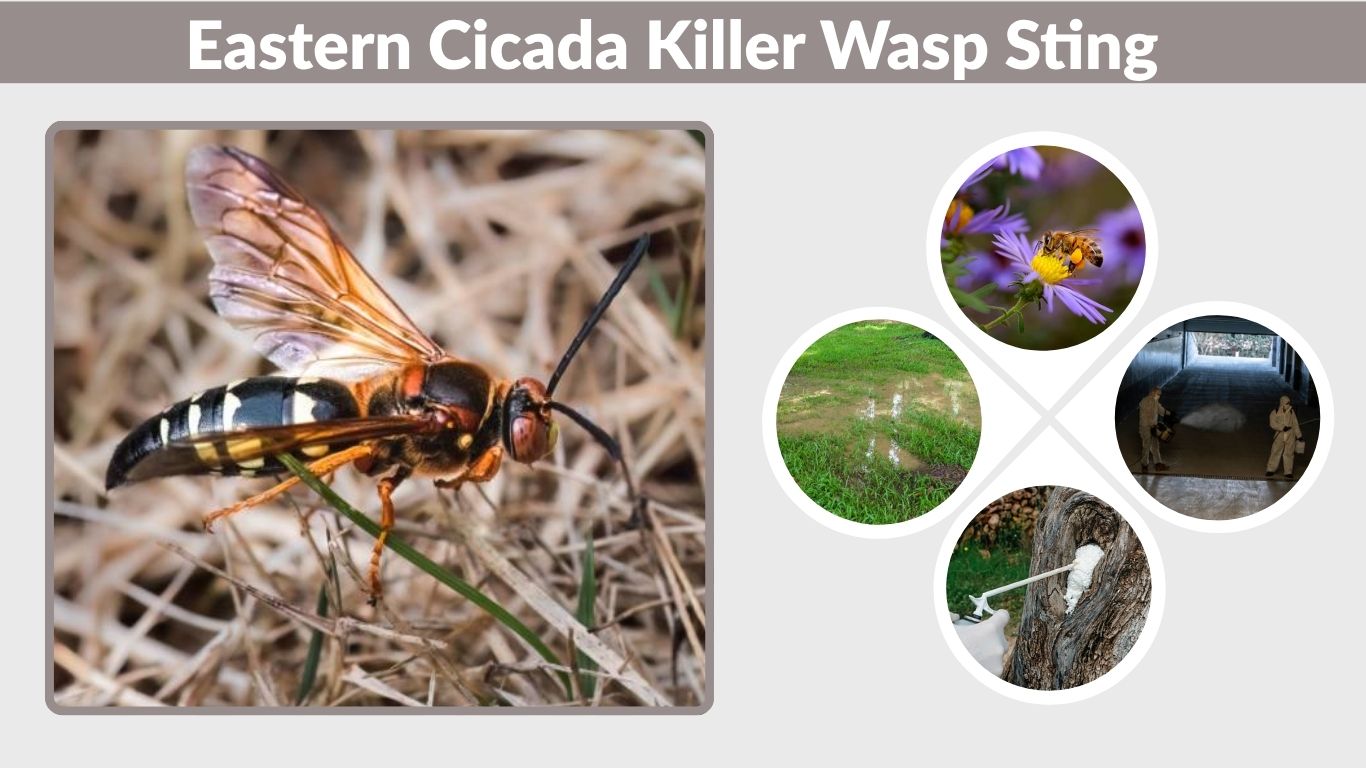
The eastern cicada killer wasp is one of the largest wasps commonly seen across many parts of the United States during summer. Its massive size, loud buzzing, and fast flight often cause people to mistake it for dangerous hornets or aggressive stinging insects. Despite its intimidating appearance, the eastern cicada killer is usually a solitary and non-aggressive wasp that mainly hunts cicadas for its young. These wasps commonly nest in sandy soil, lawns, gardens, and open sunny areas where they dig underground tunnels for egg-laying and larval development.
What Is an Eastern Cicada Killer Wasp?
The eastern cicada killer wasp is a large solitary wasp species known for hunting cicadas and building underground nests. Unlike social wasps such as yellowjackets, cicada killers do not live in colonies with queens and worker groups. Each female creates and maintains her own nest independently.
Eastern Cicada Killer Wasp Traits
These wasps are powerful hunters with strong flying abilities and impressive digging behavior. Their appearance and movement patterns often make them stand out immediately in yards and gardens.
Common traits include:
- Large black body with yellow markings
- Loud buzzing flight
- Strong digging ability
- Solitary nesting behavior
- Seasonal summer activity
Why Eastern Cicada Killers Are Common in Summer
Eastern cicada killer wasps become highly active during the warmest months of the year because cicadas are abundant during this period. Female wasps rely on cicadas as food for their developing larvae, so hunting activity increases significantly in summer.
Homeowners usually notice them flying low across lawns, carrying cicadas, or digging holes in dry soil during hot afternoons.
What Does an Eastern Cicada Killer Wasp Look Like?
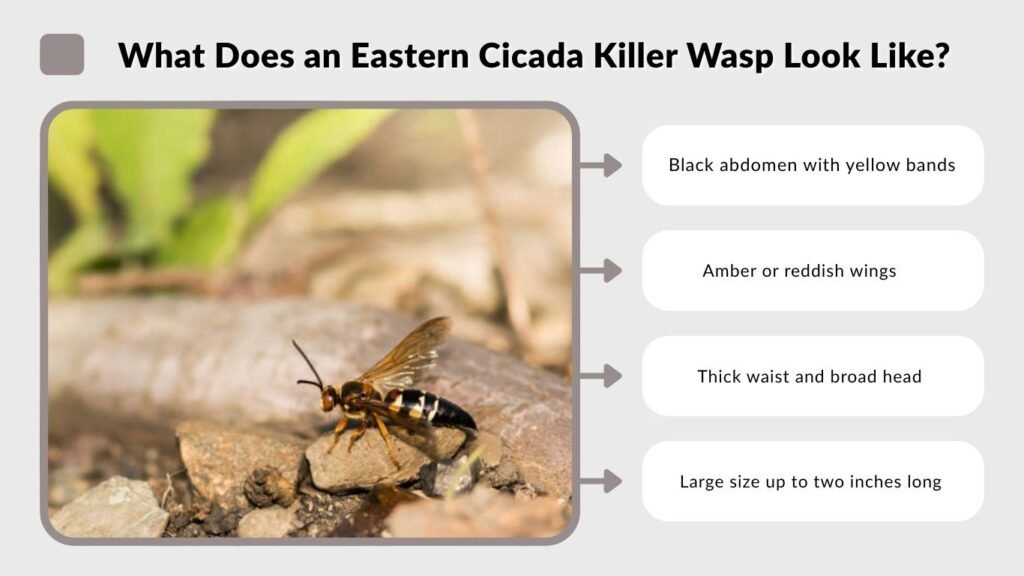
The eastern cicada killer wasp has a striking appearance that often causes fear among homeowners. Although they resemble giant hornets from a distance, their behavior and body structure are different from aggressive social wasps.
Physical Features of Eastern Cicada Killer Wasps
These wasps have thick muscular bodies built for carrying heavy cicadas back to underground nests. Their wings produce a loud buzzing sound during flight.
Common identifying features include:
- Black abdomen with yellow bands
- Amber or reddish wings
- Thick waist and broad head
- Large size up to two inches long
- Fast and powerful flight
Eastern Cicada Killer Wasp Size
Female eastern cicada killers are usually larger than males because they must hunt cicadas and dig underground tunnels. Some females appear enormous when flying close to people or pets.
Their large size is one of the main reasons they are mistaken for dangerous hornets or invasive giant wasps.
Eastern Cicada Killer Wasp Male vs Female
Male and female eastern cicada killer wasps behave very differently. Understanding these differences can help reduce fear around these insects.
Main Differences Between Males and Females
Female cicada killers are responsible for hunting, nesting, and laying eggs. Males mainly patrol nesting areas and defend territory from other insects.
Important differences include:
- Females can sting while males cannot
- Females are larger and heavier
- Males hover aggressively near movement
- Females dig underground tunnels
- Males spend more time flying patrol routes
Which Eastern Cicada Killer Is More Aggressive?
Male cicada killers often appear more aggressive because they fly directly toward people, pets, and moving objects. However, males are harmless because they do not possess stingers.
Females are capable of stinging, but they are generally calm and prefer to avoid humans unless directly threatened or handled roughly.
Do Eastern Cicada Killer Wasps Sting?
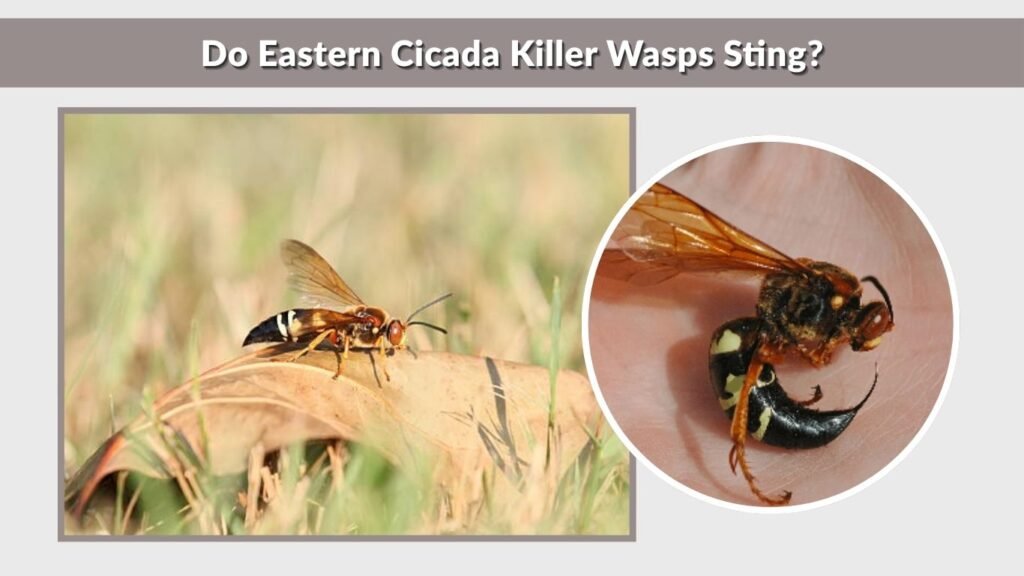
Eastern cicada killer wasps are capable of stinging, but stings are relatively uncommon. Most females focus on hunting cicadas and maintaining nests rather than defending territory aggressively.
Are Eastern Cicada Killer Wasps Dangerous to Humans?
For most people, eastern cicada killer wasps pose very little danger. They rarely attack humans and are considered much less aggressive than social wasps such as yellowjackets or hornets.
The biggest concern usually comes from their intimidating appearance rather than actual aggressive behavior. Female cicada killers may sting if stepped on or trapped, but they usually avoid confrontation whenever possible.
People with severe insect sting allergies should still exercise caution around all wasp species, including cicada killers.
Eastern Cicada Killer Wasp Diet
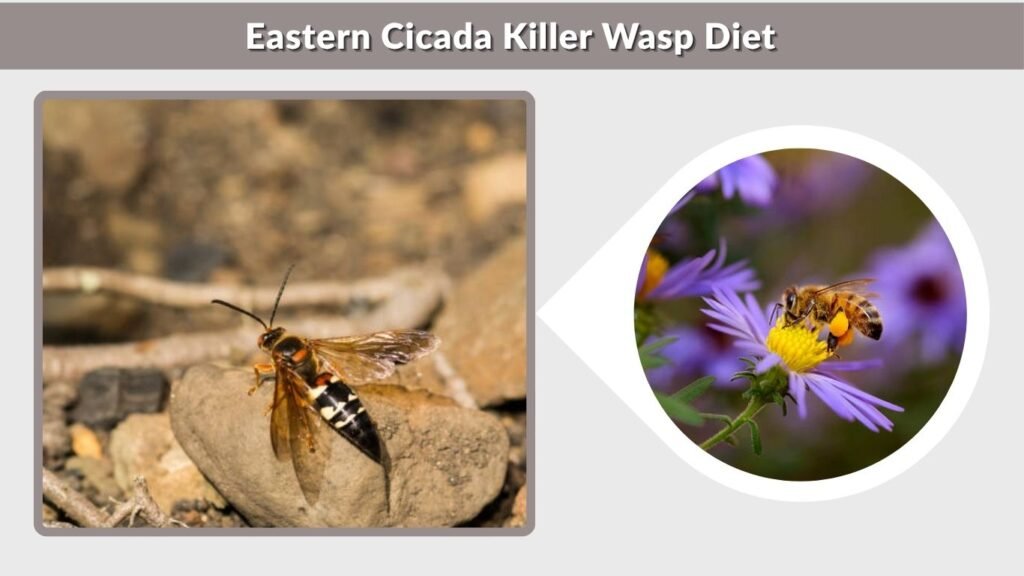
Adult eastern cicada killer wasps mainly feed on nectar and plant juices. Female wasps hunt cicadas not for themselves, but for their developing larvae underground.
How Eastern Cicada Killers Hunt Cicadas
Female cicada killers capture cicadas by stinging and paralyzing them. The immobilized cicada is then dragged or flown back to an underground tunnel where an egg is laid nearby.
After hatching, the larva feeds on the cicada until development is complete. This hunting behavior helps naturally control cicada populations in many outdoor ecosystems.
Eastern Cicada Killer Wasps by State
Eastern cicada killer wasps are found across many parts of the United States, especially in warmer regions with strong cicada populations.
Eastern Cicada Killer Wasps in Georgia and Texas
Warm climates in Georgia and Texas create excellent conditions for cicada killer activity. Sandy soil and long summers often lead to increased nesting activity in lawns and gardens.
Eastern Cicada Killer Wasps in North Carolina and Tennessee
Eastern cicada killers are also common throughout North Carolina and eastern Tennessee. Woodland edges and suburban neighborhoods provide ideal hunting and nesting environments.
Eastern Cicada Killer Wasps in Missouri, Michigan, and New Jersey
These wasps are frequently seen during summer in Midwestern and northeastern states. Activity levels usually peak during the warmest months when cicadas become most abundant.
Eastern Cicada Killer Wasp vs Asian Giant Hornet
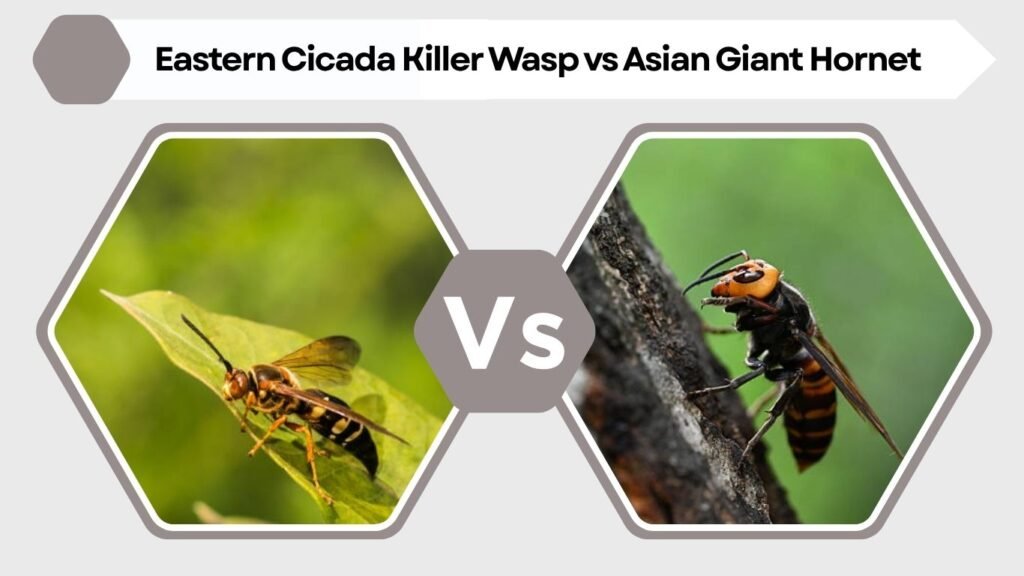
Eastern cicada killer wasps are often mistaken for Asian giant hornets because both insects are large and intimidating. However, they differ greatly in behavior, aggression, and nesting habits.
Key Differences Between the Species
Eastern cicada killers are solitary hunters, while Asian giant hornets are social insects that defend colonies aggressively.
Important differences include:
- Cicada killers are less aggressive
- Asian giant hornets live in colonies
- Cicada killers hunt cicadas instead of bees
- Nesting behaviors are completely different
- Cicada killers rarely attack humans
How to Tell Them Apart
Eastern cicada killers usually have slimmer bodies and reddish wings, while Asian giant hornets have broader orange heads and more aggressive behavior.
Watching flight patterns can also help with identification because cicada killers often fly low over lawns while searching for nesting sites.
How to Get Rid of Eastern Cicada Killer Wasps
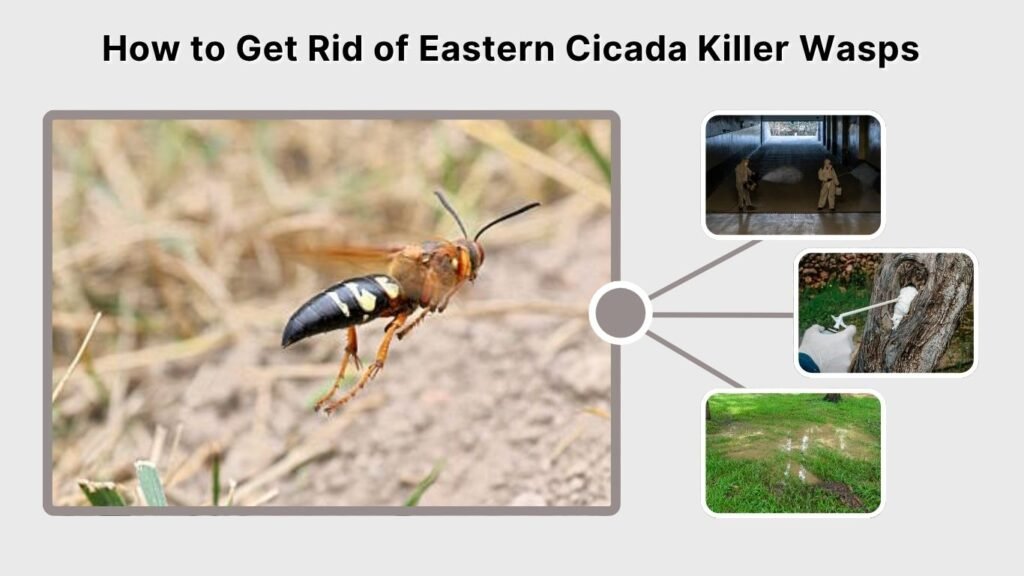
Most eastern cicada killer infestations can be controlled safely through proper lawn care and targeted nest treatments.
Best Cicada Killer Wasp Control Methods
Several treatment options can reduce nesting activity and discourage future infestations.
- Apply dust insecticides into tunnels
- Use foam wasp sprays for nests
- Water dry lawn areas regularly
- Improve grass thickness
- Contact pest control for severe infestations
Best Time to Treat Cicada Killer Nests
Evening is usually the safest time to treat nests because most wasps are underground and less active. Treating nests during cooler hours also reduces the chance of disturbing flying adults.
Consistent lawn maintenance and reducing exposed soil can greatly lower the risk of recurring infestations.
FAQs
Do eastern cicada killer wasps live in colonies?
No. Eastern cicada killer wasps are solitary insects, meaning each female builds and manages her own nest independently.
What time of year are eastern cicada killer wasps most active?
They are usually most active during mid-to-late summer when cicadas are abundant and soil conditions are warm enough for nesting.
Can eastern cicada killer wasps damage lawns?
Yes. Their digging activity can create noticeable holes and dirt mounds in lawns, gardens, and landscaping areas.
Why do male eastern cicada killer wasps hover near people?
Male cicada killers defend nesting territories and may hover near movement, but they cannot sting and are generally harmless.
Are eastern cicada killer wasps beneficial insects?
Yes. They help naturally control cicada populations and contribute to the balance of local ecosystems.