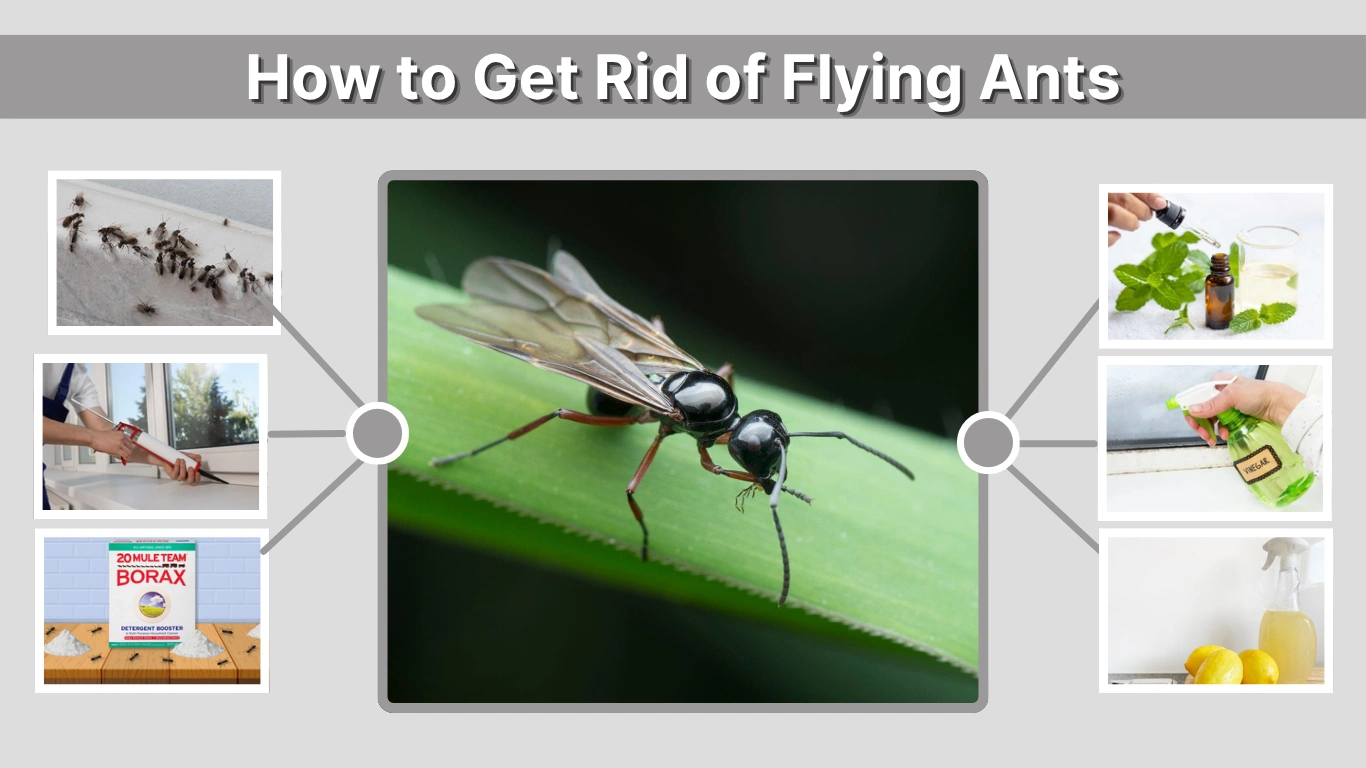
Flying ants often appear during warm or humid weather, especially after rain, swarming around homes and gardens in search of new nesting sites. While these insects aren’t harmful, they can become a serious nuisance indoors and outdoors. Understanding how to identify, control, and prevent flying ants helps you maintain a pest-free home. This guide explains practical solutions, natural remedies, and prevention techniques for every possible scenario.
What Are Flying Ants?

Flying ants, also known as alates, are reproductive ants that develop wings during mating season. They are a natural part of the ant life cycle and usually appear in warm months. After mating, males die, and fertilized females (queens) shed their wings to start new colonies.
Common types of flying ants include:
- Carpenter ants – large, often black or red, known for nesting in wood.
- Black garden ants – small and often swarm outdoors after rainfall.
- Red ants – smaller and more aggressive, often nesting in soil or pavement cracks.
Although they’re temporary visitors, flying ants indoors can signal a nearby colony that needs attention.
Identifying Flying Ants vs Termites

Many people mistake flying ants for termites, but their appearance and habits differ significantly. Recognizing these differences ensures you apply the right treatment.
2.1 Key Differences
- Body shape: Flying ants have a narrow waist, while termites have straight, uniform bodies.
- Antennae: Ants have bent (elbowed) antennae; termites have straight ones.
- Wings: Ants’ front wings are longer than their back wings; termite wings are equal in size and shape.
2.2 Why It Matters
Using termite treatment on ants—or vice versa—wastes time and money. Termites feed on wood and cause structural damage, while flying ants primarily indicate a breeding swarm.
Common Places Flying Ants Appear

Flying ants can appear in both indoor and outdoor spaces depending on humidity, warmth, and access to food.
Indoors, you might find them in:
- Kitchens and bathrooms (attracted to moisture and crumbs)
- Basements and wall cavities (dark, damp nesting zones)
- Bedrooms or near light sources (especially at night)
Outdoors, flying ants are often seen:
- In gardens, lawns, and patios
- Around pools or decks after rain
- Near lights or windows when swarming
These locations provide the ideal combination of warmth, moisture, and shelter that encourage colony formation.
How to Get Rid of Flying Ants Indoors

If you notice flying ants inside your home, swift action is essential to prevent breeding.
- Use ant baits and traps: Place near windows, vents, and suspected entry points. Baits attract worker ants, which carry poison back to the colony.
- Vacuum them up: Use a vacuum with a hose attachment to remove visible ants. Dispose of the bag immediately to avoid re-infestation.
- Seal entry points: Close cracks in walls, window gaps, or baseboards where ants enter.
- Apply insecticidal sprays: Use ant-specific sprays or boric acid solutions in hidden areas like under sinks or behind appliances.
These methods not only remove visible ants but also reduce the chance of another swarm indoors.
How to Get Rid of Flying Ants Outdoors
When flying ants swarm in the yard or garden, the key is targeting their nests and preventing access to your home.
- Locate and destroy nests: Look for small mounds or cracks in soil or pavement. Pour boiling water or vinegar directly into them.
- Use outdoor granules: Ant killer granules can treat large lawns effectively.
- Keep the yard clean: Remove fallen fruits, crumbs, and food scraps that attract ants.
- Eliminate standing water: Puddles or leaky sprinklers attract swarms during humid weather.
- Trim vegetation: Cut back branches or shrubs that touch the house to limit access points.
Outdoor management is crucial, as most indoor infestations start from colonies outside.
Natural Home Remedies for Flying Ants

For a chemical-free approach, natural remedies can help repel or kill flying ants safely.
- Vinegar spray: Mix equal parts vinegar and water, then spray on visible ants and trails.
- Lemon juice: Works as both a disinfectant and natural repellent.
- Peppermint oil: Add 10 drops to a cup of water and spray in entry zones.
- Diatomaceous earth: Sprinkle along cracks, windowsills, and floors—it dehydrates ants on contact.
- Soap and water mixture: A few drops of dish soap in warm water breaks the ants’ outer layer, killing them instantly.
These solutions are especially useful in kitchens, bathrooms, or around children and pets.
How to Get Rid of Flying Ants Around Pools and Patios
Pools and patios are prime targets for flying ants, especially during summer evenings.
- Turn off lights: Flying ants are strongly attracted to light sources.
- Remove food and drinks: Clear away sugary beverages or crumbs after gatherings.
- Use cinnamon or coffee grounds: Both act as natural repellents when sprinkled around pool edges or seating areas.
- Apply waterproof barriers: Outdoor insecticides or repellents form a shield around pool decks.
By managing lighting and moisture, you can reduce flying ant swarms in open areas significantly.
Dealing with Flying Carpenter Ants

Flying carpenter ants are a more serious concern than regular flying ants because they can cause wood damage similar to termites. These ants prefer moist, decaying wood to build their nests, which can weaken structures over time.
To get rid of flying carpenter ants:
- Inspect for wood damage: Tap wooden beams or furniture to detect hollow sounds.
- Remove infested wood: Replace or repair damaged sections to stop the colony from spreading.
- Use borax powder or gel baits: These kill carpenter ants gradually by targeting the nest.
- Seal entry points: Fix cracks in walls, windows, or wooden frames.
- Call a professional: If the infestation extends into structural wood, professional pest control ensures complete removal.
Preventing Future Flying Ant Infestations
Prevention is the most effective way to keep flying ants from returning year after year. Since they’re drawn to moisture, light, and food, addressing these factors is crucial.
- Keep the home dry: Repair leaks under sinks, around bathrooms, and near air conditioners.
- Seal all entry points: Caulk gaps in doors, walls, and window frames.
- Clean regularly: Vacuum and wipe surfaces to remove crumbs and sugary residues that attract ants.
- Inspect wooden furniture: Check for moisture or decay, especially in basements or attics.
- Maintain the yard: Trim tree branches touching your home and clear debris piles where ants might nest.
Applying these preventive steps ensures your home remains less inviting to swarming ants in the future.
When to Call Pest Control
While DIY solutions can handle small infestations, certain signs suggest it’s time to contact a pest control professional:
- A large swarm appearing inside your house or multiple rooms.
- Recurrent sightings of flying ants even after treatment.
- Carpenter ants damaging wooden beams or floors.
- Ant activity behind walls or near the ceiling, indicating hidden nests.
Professional exterminators use specialized tools like ant dust injectors and thermal imaging to locate nests, ensuring a complete and lasting solution.
FAQs
How do I get rid of flying ants naturally?
To remove flying ants naturally, mix equal parts vinegar and water in a spray bottle and apply it directly to the ants and their entry points. You can also use peppermint or tea tree oil as repellents, or sprinkle diatomaceous earth along cracks to dehydrate and kill them effectively without harsh chemicals.
Are flying ants the same as termites?
No, flying ants and termites are entirely different insects. Flying ants have bent antennae, thin waists, and uneven wings, while termites have straight antennae, thick bodies, and uniform wings. Correct identification ensures you use the right treatment method—ant baits for ants and wood-targeted pesticides for termites.
Why do I suddenly have flying ants in my house?
Flying ants appear during their mating season, which usually occurs after warm rain. They’re drawn to moisture, light, and open windows. If you see them indoors, it might mean a nearby colony is expanding, and sealing entry points or treating potential nests can prevent future invasions.
How do I get rid of flying ants in my bathroom or kitchen?
Since flying ants thrive in moist environments, focus on reducing humidity. Seal cracks, fix leaks, and clean drains. Use ant bait near sinks or corners, and wipe surfaces with vinegar to remove scent trails. Regular cleaning and proper sealing help keep these areas free from future swarms.
How can I prevent flying ants from coming back?
To stop flying ants from returning, keep your environment clean and dry. Store food in airtight containers, use dehumidifiers, and maintain well-sealed windows and doors. Outdoors, keep your yard clean, remove debris, and use ant barriers around entry points to discourage nesting near your home.