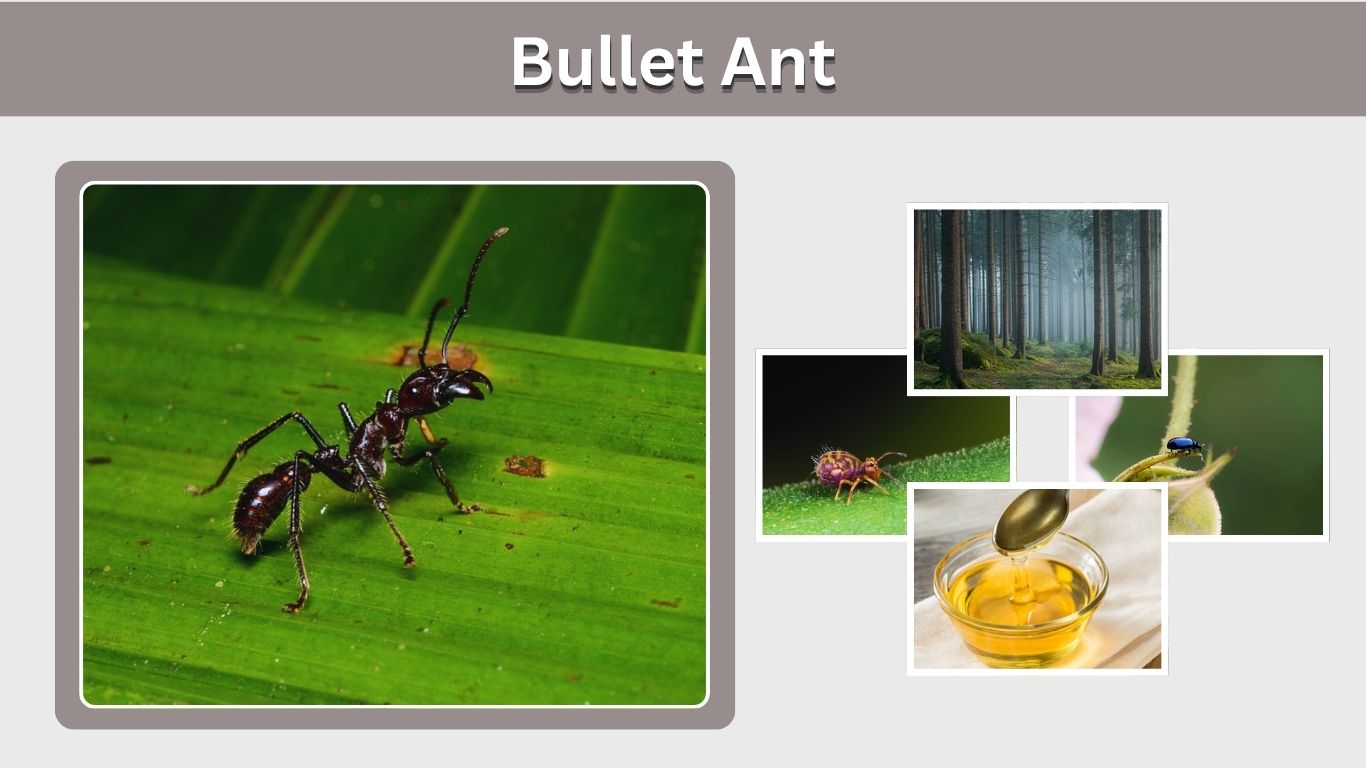
The bullet ant is one of the most famous ants in the world because of its extremely painful sting. Also known by its scientific name, Paraponera clavata, this large tropical ant lives mainly in the rainforests of Central and South America. Many people search for the bullet ant because they want to know how painful its sting is, where it lives, how big it gets, and whether it can kill a person.
What Is a Bullet Ant?
The bullet ant is a large rainforest ant known for its powerful sting and dark reddish-brown to black body. Its common name comes from the way people describe the sting: painful enough to feel like being hit by a bullet. The species is Paraponera clavata, and it is found in humid tropical forests from Central America into South America.
| Feature | Bullet Ant Details |
| Common name | Bullet ant |
| Scientific name | Paraponera clavata |
| Main range | Central and South American rainforests |
| Body size | Often over 2 cm long |
| Famous for | Extremely painful sting |
| Main habitat | Humid lowland tropical forest |
Bullet Ant Identification
A bullet ant is easier to recognize than many small household ants because it is much larger and has a strong, wasp-like appearance.
- Large ant, often more than 2 cm long
- Dark reddish-brown or blackish body
- Long legs compared with many common ants
- Powerful mandibles
- Visible stinger at the end of the abdomen
- Usually seen in tropical forest areas, not ordinary homes
Why Is It Called a Bullet Ant?
The name “bullet ant” comes from the intense pain of its sting. People often compare the feeling to being shot, although that description is based on pain experience rather than a medical measurement. The Natural History Museum’s page on the Schmidt Sting Pain Index lists the bullet ant among the most painful insect stings.
Bullet Ant Size and Appearance
Bullet ants are among the larger ants in the world. Workers are often described as more than 2 cm long, and some popular wildlife sources place them around 2.5 cm. They look strong, glossy, and intimidating because of their long legs, large head, and long body.
Unlike many ant species, the queen bullet ant is not dramatically larger than the workers. This can make it harder for a non-expert to identify the queen just by size. Workers are the ants most people notice because they forage outside the nest and defend the colony.
Where Do Bullet Ants Live?
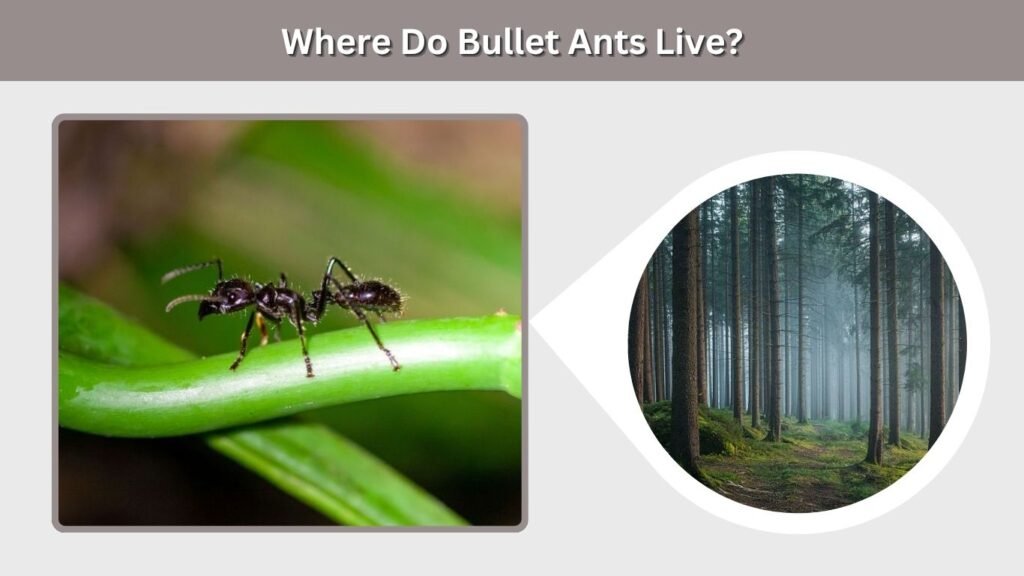
Bullet ants live in tropical regions of Central and South America. Their range includes countries such as Honduras, Nicaragua, Costa Rica, Panama, Colombia, Venezuela, Ecuador, Peru, Bolivia, and Brazil. They are strongly associated with humid lowland rainforests.
Bullet Ant Habitat
Bullet ants usually live in warm, wet forests where there are large trees, vines, leaf litter, and plenty of nectar and small prey. They are often linked to forest floors and tree bases because many colonies nest underground near tree roots. AntWiki notes that workers forage in trees and that nests are commonly found underground at the bases of trees.
Are Bullet Ants in the United States?
True bullet ants are not native to the United States. Search terms like “Texas bullet ant” often appear because people may confuse large local ants or wasps with bullet ants. Real bullet ants are tropical Neotropical ants, mainly found from Central America into South America.
Bullet Ant Sting vs Bite
Many people search for “bullet ant bite,” but the famous pain comes from the sting, not a normal bite. Bullet ants have mandibles and can bite, but their defensive weapon is the venomous stinger. When people talk about a bullet ant bite mark or bullet ant bite pain, they usually mean the wound and pain caused by a sting.
| Search phrase | Better meaning |
| Bullet ant bite | Usually refers to the sting |
| Bullet ant sting | Venom injected by the stinger |
| Bullet ant bite mark | Local sting wound or swelling |
| Stung by bullet ant | Correct phrase for the painful event |
How Painful Is a Bullet Ant Sting?
The bullet ant sting is famous because it causes severe, burning, long-lasting pain. The Field Museum describes bullet ants as having one of the most intense insect stings, and the sting is strongly associated with the venom chemistry of Paraponera clavata.
The pain may last for hours, and some sources call the ant the “24-hour ant” because the pain can continue for a long time. The exact reaction depends on the person, the sting location, and whether there is an allergic response.
Why Does the Bullet Ant Sting Hurt So Much?
Bullet ant venom contains a peptide called poneratoxin. Scientific summaries describe poneratoxin as a neurotoxic peptide linked with the intense pain caused by Paraponera clavata venom.
In simple words, the venom affects nerve signaling. That is why the pain can feel sharp, burning, electric, and persistent rather than like a quick pinch.
Can a Bullet Ant Kill You?
For most healthy people, a single bullet ant sting is extremely painful but not usually deadly. However, any insect sting can become dangerous if the person has a serious allergic reaction. Mayo Clinic notes that insect venom can trigger anaphylaxis, a severe allergic reaction that may include breathing problems, rash, nausea, vomiting, weak pulse, or shock.
Seek urgent medical help after a sting if there is trouble breathing, swelling of the face or throat, dizziness, fainting, widespread hives, chest tightness, or repeated vomiting.
What Do Bullet Ants Eat?
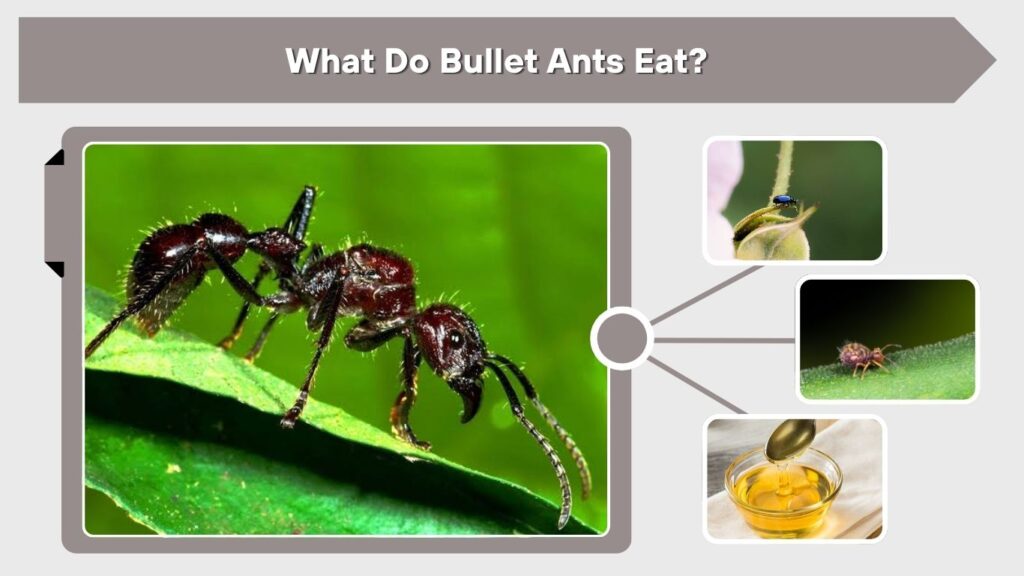
Bullet ants are foragers. They feed on nectar, especially from extrafloral nectaries, and they also hunt small live prey. AntWiki describes workers as foraging on live prey and extrafloral nectar, while a research summary from the Field Museum also connects the species with lowland rainforest ecology.
Common Bullet Ant Food Sources
- Nectar from plants
- Small insects
- Tiny arthropods
- Plant secretions
- Sugary liquids
- Protein-rich prey for the colony
This diet helps the colony balance energy from sweet liquids with protein from prey.
Bullet Ant Nest and Colony
Bullet ant colonies are usually found near trees. The nests are commonly underground at the base of trees, giving workers access to both the forest floor and the tree canopy. Workers may climb and forage at different heights, making them both ground-active and tree-active ants.
Some reports describe colonies ranging from a few hundred to several thousand workers. Colony size can vary depending on location, age, food supply, and habitat conditions.
Bullet Ant Ritual and Gloves
One reason bullet ants are widely searched online is the bullet ant glove ritual. This refers to an initiation ceremony associated with the Sateré-Mawé people of Brazil, where bullet ants are woven into gloves and worn during a rite of passage. Because this topic involves a living Indigenous culture, it should be discussed respectfully and not treated as entertainment or a challenge.
Why People Search for Bullet Ant Gloves
People often search for this topic after seeing videos online. Related terms include:
- Bullet ant glove
- Bullet ant gloves
- Bullet ant ritual
- Bullet ant initiation
- Bullet ant ceremony
- Bullet ant mittens
These keywords show that many readers are curious about the cultural story behind the ant, not only the insect’s biology.
Bullet Ant vs Fire Ant
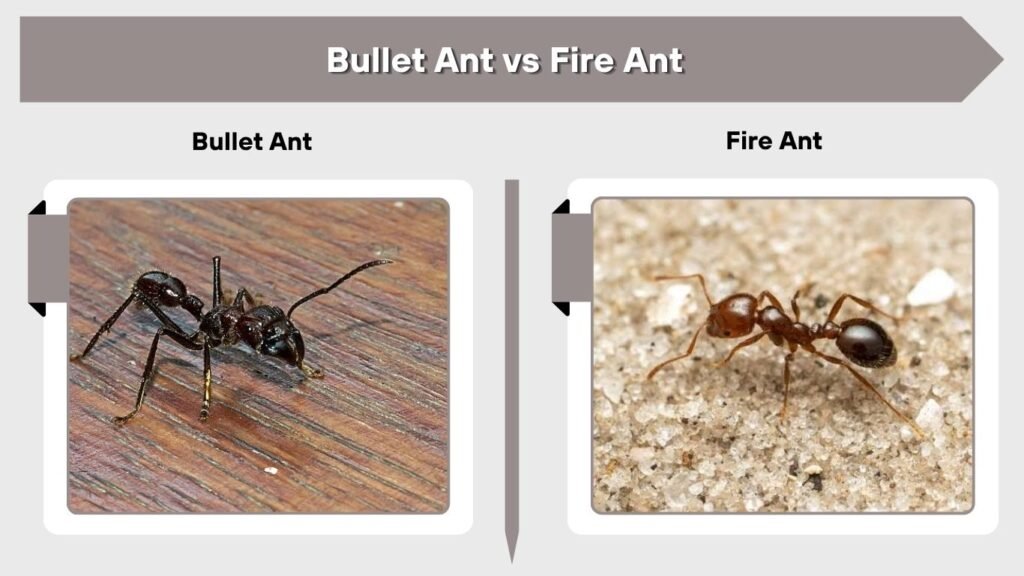
Bullet ants and fire ants are both stinging ants, but they are very different. Fire ants are smaller, often live in disturbed areas, and can sting in groups. Bullet ants are much larger, tropical rainforest ants with a single sting famous for extreme pain.
| Feature | Bullet Ant | Fire Ant |
| Size | Much larger | Much smaller |
| Habitat | Tropical rainforest | Lawns, fields, disturbed soil |
| Range | Central and South America | Many warm regions worldwide |
| Sting | Extremely painful single sting | Painful, often multiple stings |
| Nest | Often near tree bases | Soil mounds |
Are Bullet Ants Aggressive?
Bullet ants are not usually searching for humans to sting. However, they can defend themselves and their nest strongly when disturbed. The safest rule is simple: never touch or handle a bullet ant, and avoid standing near a nest. In rainforest areas, watch where you place your hands, feet, camera gear, and bags.
FAQs
Do bullet ants bite or sting?
Bullet ants can use their mandibles, but the famous pain comes from their sting. When people say “bullet ant bite,” they usually mean a sting. The stinger injects venom, which causes the intense burning pain that made this ant famous.
Where are bullet ants found?
Bullet ants are found in Central and South America, especially in humid tropical forests. Their range includes rainforest regions from countries such as Honduras and Costa Rica down into parts of Brazil, Bolivia, Peru, Colombia, and nearby areas.
How big is a bullet ant?
A bullet ant worker is usually more than 2 cm long, making it much larger than many common household ants. Some wildlife sources describe them as around 2.5 cm long. Their long legs and dark body make them look even bigger.
Can bullet ants fly?
Worker bullet ants do not fly. Like many ant species, reproductive males and young queens may have wings during mating periods. The large wingless ants people usually notice are workers foraging or defending the colony.
What does a bullet ant sting feel like?
A bullet ant sting is often described as burning, sharp, electric, and deeply painful. It can last for hours and is ranked among the most painful insect stings. Reactions vary, but serious allergy symptoms need urgent medical attention.