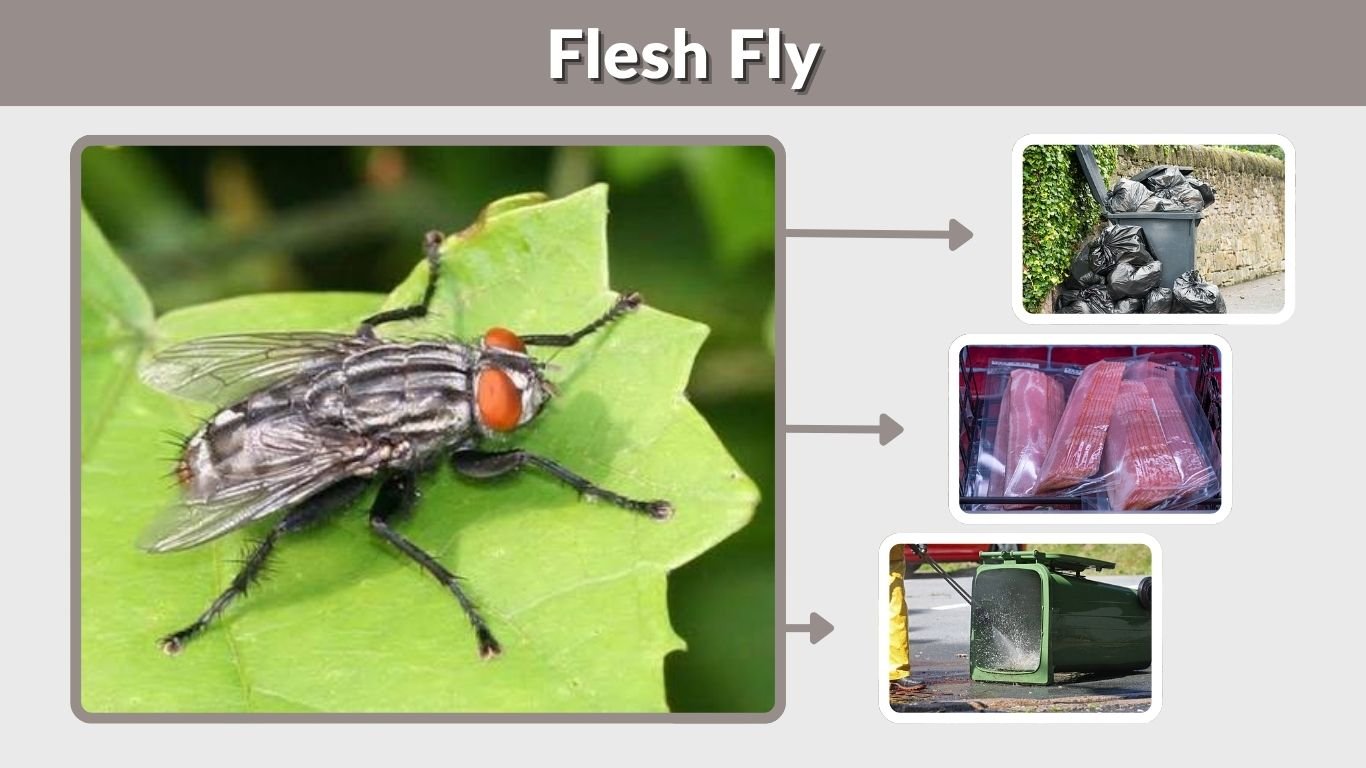
Flesh flies are large gray flies commonly found around dead animals, garbage, animal waste, and other decomposing organic material. Their striped thorax, checkered abdomen, and reddish eyes make them relatively easy to distinguish from ordinary house flies. Although their name sounds alarming, most flesh flies do not bite people or consume healthy human flesh. However, their association with decay means they can contaminate food and occasionally cause health problems. Finding several flesh flies indoors may also indicate a hidden dead animal or another breeding source nearby.
What Is a Flesh Fly?
Flesh flies belong to the family Sarcophagidae, a large group containing thousands of species worldwide. They are important natural decomposers because their larvae feed on carrion, animal waste, and other decaying material.
Some species develop in dead insects, snails, earthworms, or animal nests. Others may act as parasites of insects and other invertebrates. A small number can develop in open wounds, although this is uncommon in healthy people and properly cared-for animals.
The term “flesh-eating fly” is sometimes used for flesh flies, but it can be misleading. Their larvae usually consume dead or decomposing tissue rather than attacking healthy people.
Flesh Fly Identification
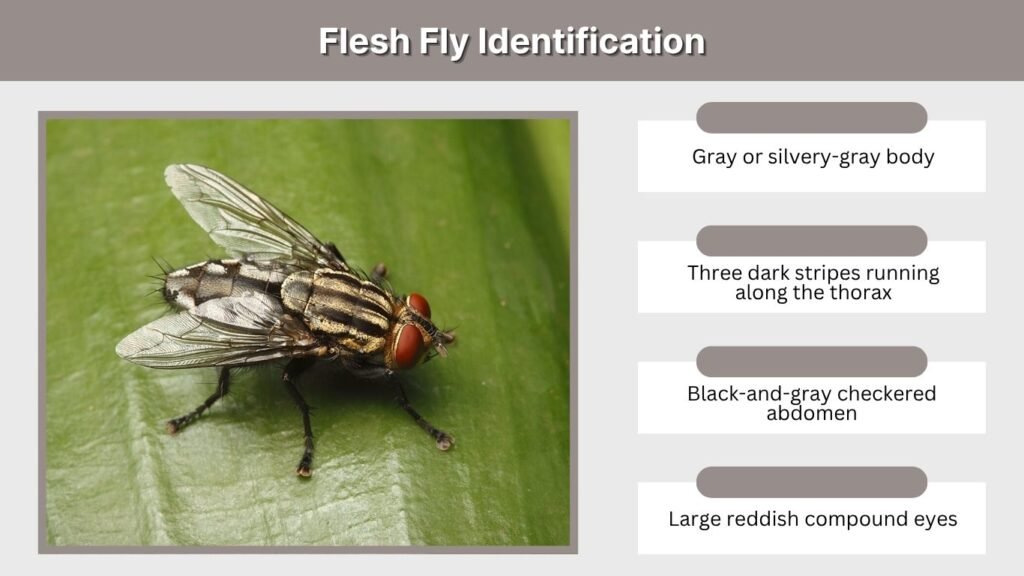
Flesh flies are generally larger and more heavily built than common house flies. Adults usually measure approximately 8–14 millimeters long, although some species may be larger.
Common Identification Features
- Gray or silvery-gray body
- Three dark stripes running along the thorax
- Black-and-gray checkered abdomen
- Large reddish compound eyes
- Transparent wings
- Bristly body and legs
- Rounded or slightly pointed abdomen
- Strong, direct flight
Some species, including the red-tailed flesh fly, have reddish or orange coloring near the end of the abdomen. However, coloration varies, and closely related species may require microscopic examination for accurate identification.
Flesh Fly vs. House Fly
Flesh flies and house flies may occur around the same materials, but they differ in appearance and breeding behavior.
| Feature | Flesh Fly | House Fly |
| Typical size | 8–14 mm | 6–8 mm |
| Body color | Gray with a checkered abdomen | Dull gray |
| Thorax pattern | Three dark stripes | Usually four narrow stripes |
| Abdomen | Black-and-gray checkerboard pattern | Yellowish or gray without checks |
| Reproduction | Often deposits live larvae | Lays eggs |
| Common breeding sites | Carrion, feces and dead insects | Garbage, manure and food waste |
Flesh flies are usually larger than house flies and have a more obvious checkerboard pattern on the abdomen.
Flesh Fly vs. Cluster Fly, Blow Fly, and Horse Fly
Flesh Fly vs. Cluster Fly
Cluster flies are dark gray, slow-moving flies with golden hairs on the thorax. They often gather inside buildings during fall and winter. Flesh flies have distinct black thoracic stripes, a checkered abdomen, and are usually more active.
Flesh Fly vs. Blow Fly
Blow flies often have shiny metallic blue, green, bronze, or black bodies. Flesh flies are generally dull gray rather than metallic. Both groups may develop in carrion and can indicate a dead animal nearby.
Flesh Fly vs. Horse Fly
Horse flies have large colorful eyes and cutting mouthparts. Female horse flies bite animals and humans to obtain blood. Flesh flies have red eyes, striped gray bodies, and do not normally bite.
Where Do Flesh Flies Come From?
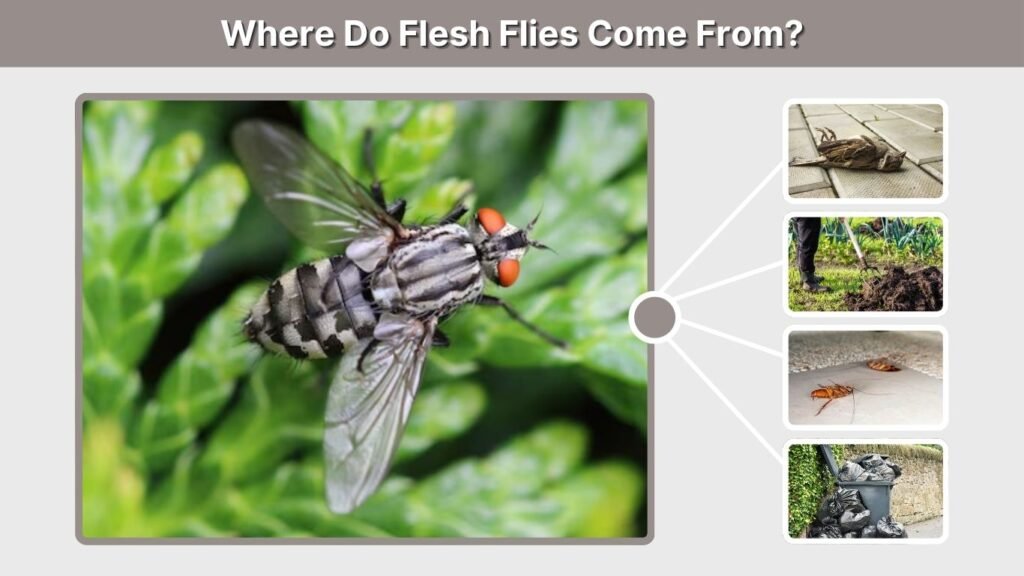
Flesh flies are strongly attracted to the odor of decomposing organic material. Adults can detect suitable breeding sources from a considerable distance and may arrive quickly after an animal dies.
Common sources include:
- Dead mice, rats, birds, or squirrels
- Animal feces
- Spoiled meat or fish
- Uncovered garbage
- Dirty outdoor bins
- Dead insects or snails
- Pet waste and animal bedding
- Compost containing animal products
- Open wounds on neglected animals
A single flesh fly indoors may have entered through an open door or window. Numerous flies appearing suddenly usually suggest that larvae developed somewhere inside or close to the building.
Why Are Flesh Flies in My House?
Indoor flesh fly infestations are often connected to a hidden dead animal. A mouse may die inside a wall, attic, chimney, crawl space, or ceiling. Flesh fly larvae feed on the carcass, move away to pupate, and later emerge as adults.
Other possible sources include forgotten meat, overflowing garbage, pet feces, or animal waste beneath appliances and furniture.
Signs of an Indoor Infestation
- Several large gray flies appearing suddenly
- Flies gathering around windows
- Persistent activity in one room
- An unpleasant or decaying smell
- Cream-colored larvae crawling across floors
- Brown pupal cases near walls or furniture
- Flies emerging from fireplaces, vents, or light fixtures
Flesh flies are attracted to light, so newly emerged adults commonly gather at windows while trying to leave the building.
Do Flesh Flies Bite Humans?
Flesh flies do not normally bite humans. Their mouthparts are designed for feeding on liquids and softened organic matter rather than piercing skin.
Reports of flesh fly bites are usually caused by another insect, such as:
- Horse flies
- Deer flies
- Stable flies
- Biting midges
- Sand flies
- Mosquitoes
A flesh fly may land on sweaty or injured skin to obtain moisture, but this is not the same as biting.
Are Flesh Flies Dangerous?
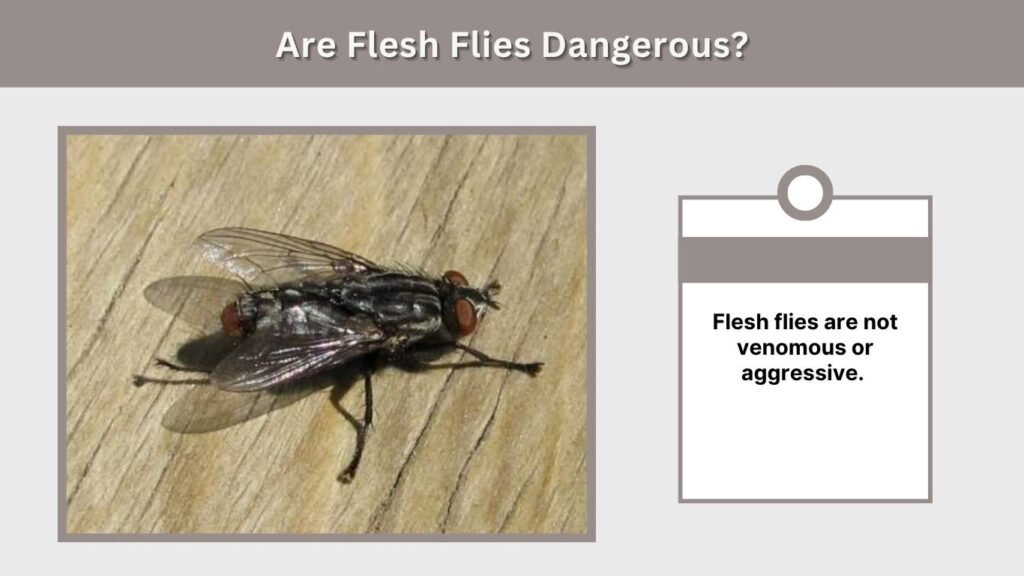
Flesh flies are not venomous or aggressive. They do not hunt people or consume healthy human flesh. Their primary risk is their ability to visit decaying material and then land on food or kitchen surfaces.
They may mechanically carry microorganisms from garbage, feces, or carcasses. Food contaminated by flies or larvae should be discarded.
Some flesh fly larvae can cause myiasis, a condition in which fly larvae develop in wounds or body tissue. This is rare and is more likely to occur in untreated wounds, neglected livestock, or animals unable to clean themselves.
Anyone who discovers moving larvae in a wound should seek medical or veterinary attention rather than attempting home treatment.
Do Flesh Flies Lay Eggs?
Most familiar flesh fly species do not deposit visible groups of eggs. Instead, females retain the eggs inside their bodies until they hatch and then place live first-stage larvae directly onto suitable material.
This reproductive method allows the larvae to begin feeding immediately and gives flesh flies an advantage when competing for temporary food sources such as carrion.
Some species may deposit eggs, but live-larva production is one of the family’s best-known characteristics.
Flesh Fly Life Cycle
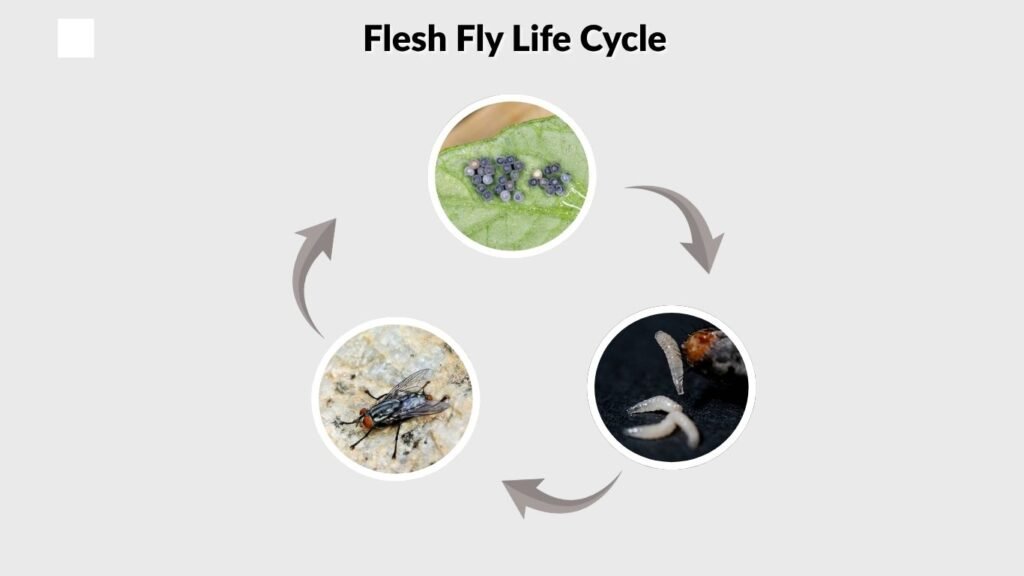
The flesh fly life cycle includes larval, pupal, and adult stages.
1. Larvae
The female deposits small cream-colored larvae onto carrion, feces, garbage, or another food source. The larvae feed rapidly and pass through several growth stages.
2. Pupae
Mature larvae leave the wet breeding material and crawl toward a dry, protected location. Their outer skin hardens into a dark reddish-brown puparium.
3. Adults
The adult fly develops inside the puparium and eventually emerges. After feeding and mating, females search for suitable material where they can deposit larvae.
Under warm conditions, development may be completed within two to four weeks. Cooler temperatures, limited food, and species differences can extend the process.
Adult flesh flies commonly live for several weeks, although their lifespan varies with temperature, food, predators, and environmental conditions.
What Do Flesh Flies Eat?
Adult flesh flies mainly consume liquids. They may feed on:
- Flower nectar
- Fruit juices
- Sugary liquids
- Fluids from carrion
- Animal waste
- Moisture from decaying material
Flesh fly larvae usually feed on dead animal tissue, feces, rotting organic material, or dead invertebrates. Certain species develop as parasites or predators of insects, snails, and other small animals.
They do not normally eat living, healthy humans.
How to Get Rid of Flesh Flies
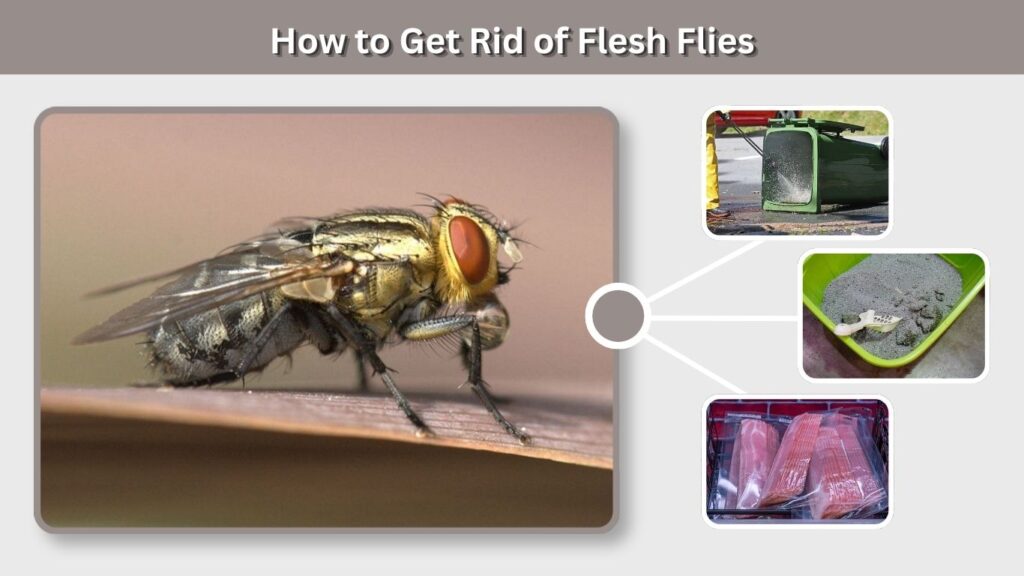
Successful flesh fly control depends on finding and removing the breeding source. Killing adults alone will not stop new flies from emerging.
Locate the Source
Inspect garbage bins, pet areas, kitchens, attics, chimneys, crawl spaces, basements, vents, and spaces beneath appliances. Look for spoiled food, animal waste, or a dead animal.
A strong odor or concentrated fly activity may help identify the source.
Remove and Clean
Place decaying material in a sealed bag and dispose of it safely. Clean surrounding surfaces with warm water and an appropriate household cleaner. Wear gloves when handling dead animals or contaminated waste.
Control Adult Flies
Use a vacuum, fly swatter, sticky trap, or electric fly trap to remove adult flies. Properly labeled indoor insecticides may provide temporary control, but they should never be applied to food, dishes, pets, or food-preparation surfaces.
Prevent Future Infestations
- Keep garbage containers tightly closed
- Clean bins regularly
- Remove pet waste promptly
- Store meat and food in sealed containers
- Repair window and door screens
- Seal gaps around vents and pipes
- Check attics and crawl spaces for animal entry points
- Avoid placing meat in open compost piles
FAQs
Why are flesh flies so big?
Flesh flies naturally have heavier bodies than ordinary house flies. Their larger size helps females carry developing larvae and allows adults to travel efficiently while searching for carrion, feces, or other breeding material.
Do flesh flies lay eggs on humans?
Flesh flies do not normally reproduce on healthy humans. In rare situations, certain species may deposit larvae in untreated wounds or damaged tissue, causing myiasis. Clean wounds and proper medical care greatly reduce this risk.
Why did flesh flies suddenly appear indoors?
A sudden appearance usually means adults recently emerged from a nearby breeding source. Common causes include a dead rodent in a wall or attic, spoiled meat, dirty garbage, or accumulated pet waste.
How long do flesh flies live?
Adult flesh flies generally survive for several weeks. Their complete development from larva to adult may take approximately two to four weeks in warm conditions, although temperature and species can significantly affect the timing.
Will a flesh fly trap eliminate an infestation?
Traps can reduce the number of adult flies, but they will not eliminate larvae developing in a carcass or other organic material. The breeding source must be found, removed, and cleaned for lasting control.